Gordon Ramsay's lobster spaghetti is whole lobster boiled just to done, the meat pulled from the tail, claws and knuckles, and folded at the last minute into a light, creamy tomato sauce built from cherry tomatoes, scallion, garlic, chili, butter and white wine, then tossed with spaghetti and finished with basil and a shaving of Parmesan. That is the version he published in one of his own cookbooks, and it is the shape of the dish on Hell's Kitchen: sweet lobster, a sauce that clings without drowning it, and heat from the chili rather than weight from the cream. The one upgrade this page adds is a 20-minute stock from the shells, which is how a restaurant gets a sauce that tastes of lobster instead of tomato with lobster in it.
The recipe card at the bottom has the amounts and numbered steps for four main-course plates from two 1¼-pound lobsters. This guide covers what makes Ramsay's version work, how to buy and boil the lobster to 140°F without turning it to rubber, the shell stock, the creamy tomato sauce and why the cream does not split, finishing the spaghetti in the pan, and the frozen-tail and shrimp shortcuts. For pulling the meat out of a whole lobster, the site's how to cook and shell a whole lobster guide has the step-by-step.
What Makes Gordon Ramsay's Lobster Spaghetti Different
Four things. The lobster is cooked once, briefly, and only warmed in the sauce at the end, because the meat is done at 140°F and every minute past that squeezes it dry. The sauce starts with fresh cherry tomatoes softened in butter with scallion, garlic and a chopped chile, not a jar of marinara, so it stays bright and slightly sweet. The cream is a splash, about a third of a cup for four people, stirred in at the end to round the tomato's acidity rather than to make an alfredo. And the pasta finishes in the sauce with a ladle of its own cooking water, which is what turns a thin sauce into one that coats every strand. The Post Bulletin printed Ramsay's spaghetti with lobster in creamy tomato sauce from his book "Gordon Ramsay Makes It Easy," and that recipe is the spine of this one.
The Hell's Kitchen version leans harder on the chili and finishes with lemon and torn basil, and the restaurant habit that makes the biggest difference at home is the stock. Ramsay's rule with a lobster is that nothing goes in the bin: the tail is the main course, the claws and knuckles go into ravioli or, here, the pasta, and the shells are roasted and simmered into stock or bisque. A cup of that stock in place of the water in the sauce is the difference between good and restaurant-good.
Buying the Lobster: Live, Heavy for Its Size, Never Frozen Whole
Buy two live lobsters of about 1¼ pounds each for four people; that yields roughly a pound of meat once the tails, claws and knuckles are picked. Ramsay's test is weight: pick the lobster up, and if it feels solid and compact for its size and the tail is still snapping, it is fresh and full; a lobster that feels light has been in a tank too long and has burned through its own reserves. He is blunt about the rest: never buy a dead lobster, never cook one that has died, and never cook a frozen whole lobster, which "tastes of nothing but water." The FDA's seafood guidance says the same for any live shellfish: the legs should move, and lobster flesh, once cooked, should be firm, pearly and opaque.
Advertisement
Most of what you will find is American lobster; NOAA Fisheries notes the fishery runs from Maine to North Carolina and that each animal carries two different claws, a heavy crusher and a finer-edged ripper, which is why one claw always seems to have more meat. Keep live lobsters in the refrigerator wrapped in damp newspaper, never in fresh water, and cook them the day you buy them. If live lobster is not an option, frozen raw tails are the honest substitute, and the lobster tail guide covers thawing and cooking them to the same 135 to 140°F finish; you lose the claws and the shell stock, and you gain twenty minutes.
| Ingredient | What it does | Do not substitute with |
|---|---|---|
| Two 1¼-lb live lobsters | About 1 lb of tail, claw and knuckle meat plus shells for stock | Frozen whole lobster (watery) or imitation lobster |
| Cherry tomatoes | Sweet, low-acid, collapse into a fresh sauce in minutes | Canned crushed tomatoes (fine in a pinch, but heavier and more acidic) |
| Scallions, garlic, one red chile | The aromatics of Ramsay's version; the chile brings the Hell's Kitchen heat | Dried chili powder (muddy) or a whole minced jalapeño (grassy) |
| Unsalted butter and olive oil | Butter softens the aromatics without browning; oil finishes the plate | Cooking the aromatics in oil over high heat (garlic burns) |
| Dry white wine | Deglazes and adds acidity; most of the alcohol cooks off in the reduction | Sweet wine or cooking wine (salty, flat) |
| Heavy cream, about ⅓ cup | Rounds the tomato; at 36% fat it will not split in an acidic sauce | Milk, half-and-half or sour cream (they curdle in tomato) |
| Spaghetti | Long strands coat evenly in a loose sauce | Short pasta (the lobster sits at the bottom of the bowl) |
| Basil, lemon, Parmesan | Basil and lemon at the end lift the lobster; a light shaving of cheese is Ramsay's finish | Heavy grated cheese (it fights the shellfish) |
Boil the Lobster to 140°F, Then Stop It Cold
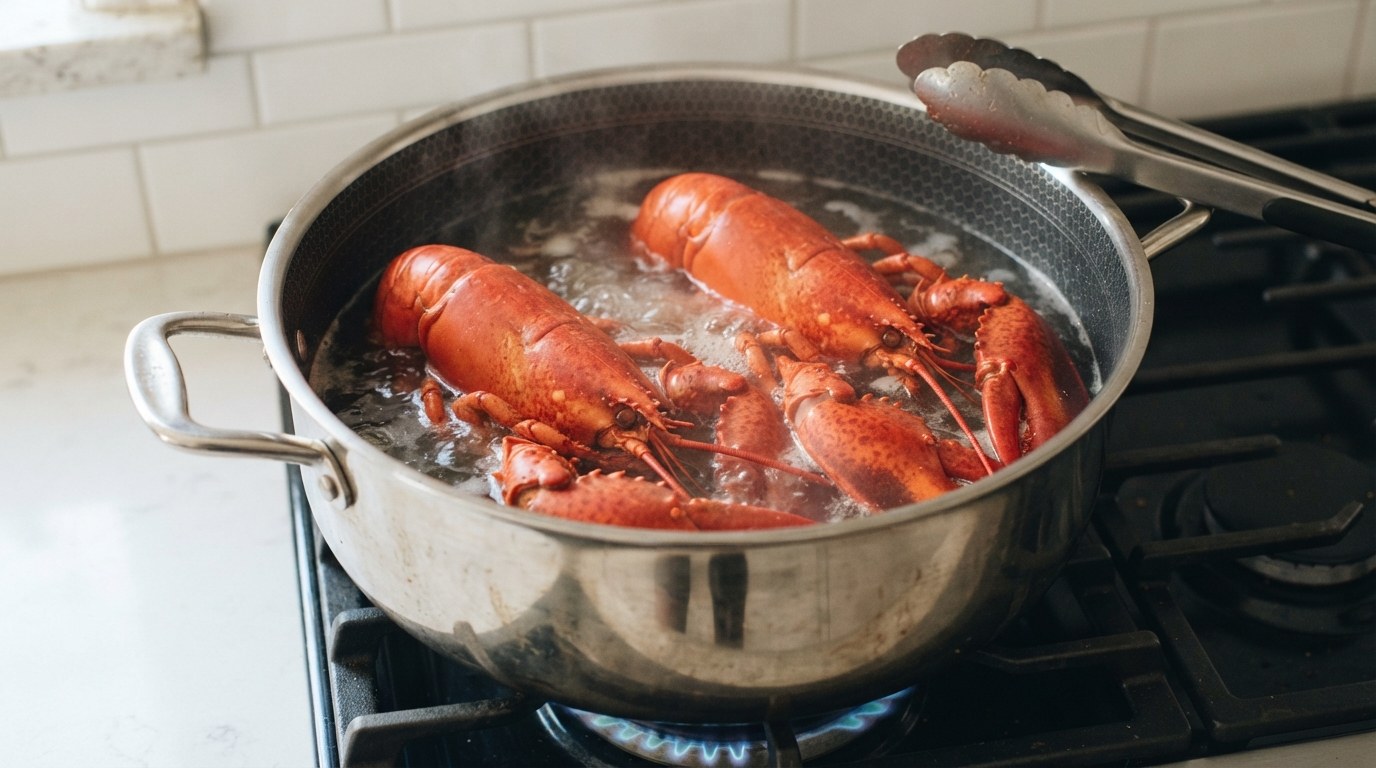
Bring a large pot of well-salted water to a full boil, put the lobsters in head first, cover until the water comes back to a boil, then uncover and cook at a steady boil. Ramsay's rule of thumb is about 10 minutes per pound at a slow boil; for two 1¼-pound lobsters that works out to 9 to 11 minutes, and the finish line is the tail meat reading 135 to 140°F on a thermometer pushed into the thickest part of the tail through the underside. The Maine lobster industry's own guidance puts the target at 135 to 145°F. Then lift them straight into a big bowl of ice water for 5 minutes.
The ice bath is not optional. Lobster muscle is closer to fish than to beef: its proteins begin to set from about 104°F and are fully coagulated by around 140°F, so the window between tender and rubbery is a few degrees wide, and a hot lobster left on the counter keeps cooking from its own stored heat. Cold water stops that at once. Shell colour is no guide, either; a lobster turns red long before the tail is done, because the red pigment in the shell is freed the moment heat breaks the protein that was masking it. Use the thermometer, then the ice. Once cool, twist off the tail and claws, crack them and pick the meat, keeping the tail in one piece to slice into medallions, and save every scrap of shell, including the legs and the body, for the stock.
A 20-Minute Stock from the Shells
Break the shells and body into pieces, roast them in a dry skillet over high heat for 3 or 4 minutes until they smell toasted, then cover with 3 cups of water, add a sliced shallot, a chopped carrot, a few fennel fronds or a piece of fennel if you have it, and simmer gently for 20 minutes. Strain, then boil the strained stock down to about a cup. This is the reduced lobster essence Ramsay uses under his lobster ravioli, made from shells that were slowly roasted with fennel, carrot and onion, and it goes into the sauce in place of the water or broth most recipes call for.
Advertisement
Roasting first is what makes it taste of lobster rather than of boiled shell. Dry heat above about 284°F starts the Maillard browning on the shell's proteins and sugars and drives off the raw, fishy notes, which wet simmering alone never does. Reducing afterward concentrates that flavour into a cup. If you are short on time, skip the stock and use water; the sauce will still be good, just less deep. Do not use the lobster boiling water, which is mostly salt.
The Creamy Tomato Sauce, and Why the Cream Does Not Split
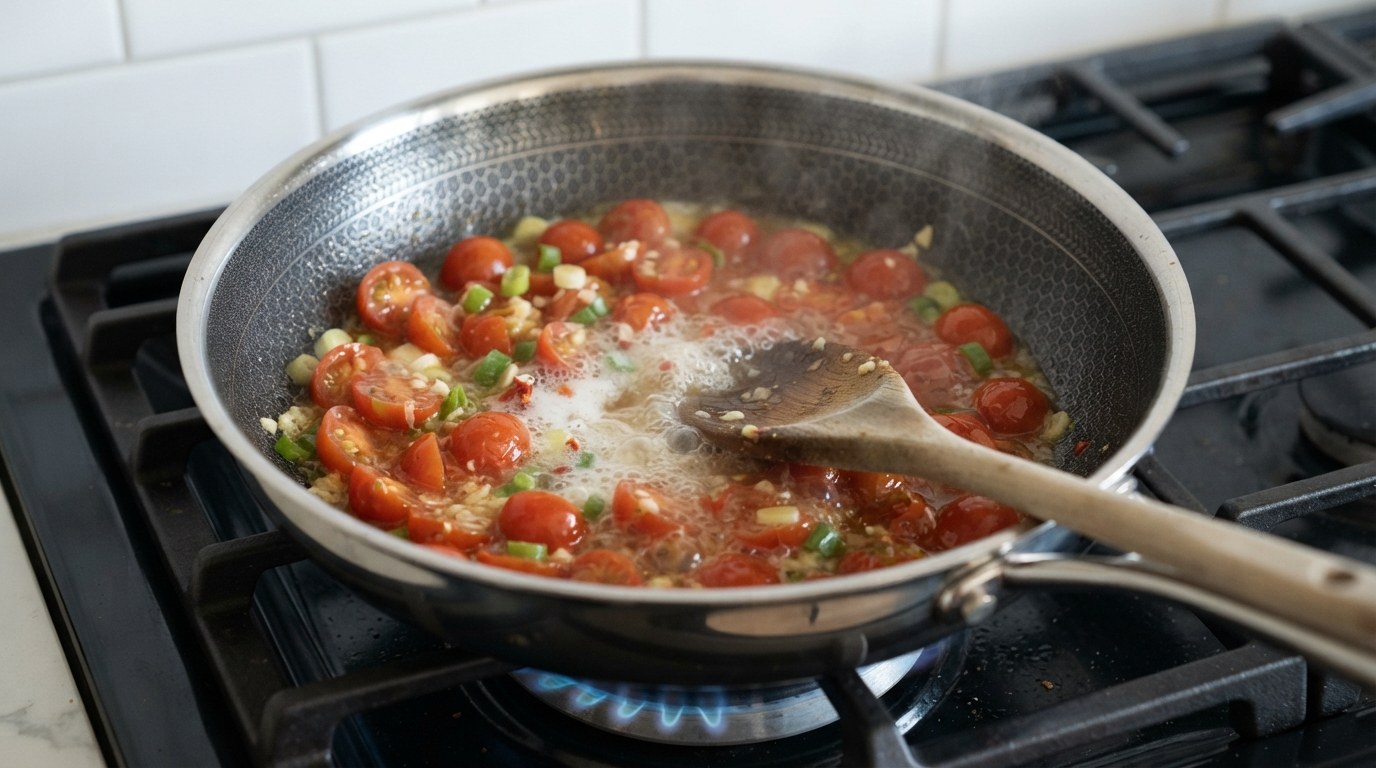
Put the halved cherry tomatoes, sliced scallions, chopped garlic, the chile and the butter into a wide heavy pan over medium heat and cook them together, as Ramsay does, until the tomatoes have collapsed and the aromatics are soft but not coloured, 6 to 8 minutes. Season with pepper, pour in the wine and let it cook down until almost gone, then add the reduced shell stock and simmer 5 minutes more to a loose sauce. Keep the heat moderate the whole way: garlic's sugars brown fast and burn faster, and a scorched clove turns a delicate seafood sauce bitter.
Two bits of science decide the finish. The wine has to reduce, not just warm through; alcohol never fully cooks off, and a quick splash left in a sauce tastes raw, while a proper reduction leaves only its acidity and fruit. And the cream goes in last, off a hard boil: heavy cream at around 36% fat has enough fat to keep its proteins from clumping when it meets the tomato's acid, which is why it stirs in smoothly where milk, half-and-half or sour cream would curdle into grains. A third of a cup is the whole point; enough to turn the sauce from red to coral, not enough to make it heavy. The chile's heat lives in the white membrane, not the seeds, so seed it and keep the ribs if you want more fire, or strip them for less.
Finish the Spaghetti in the Sauce
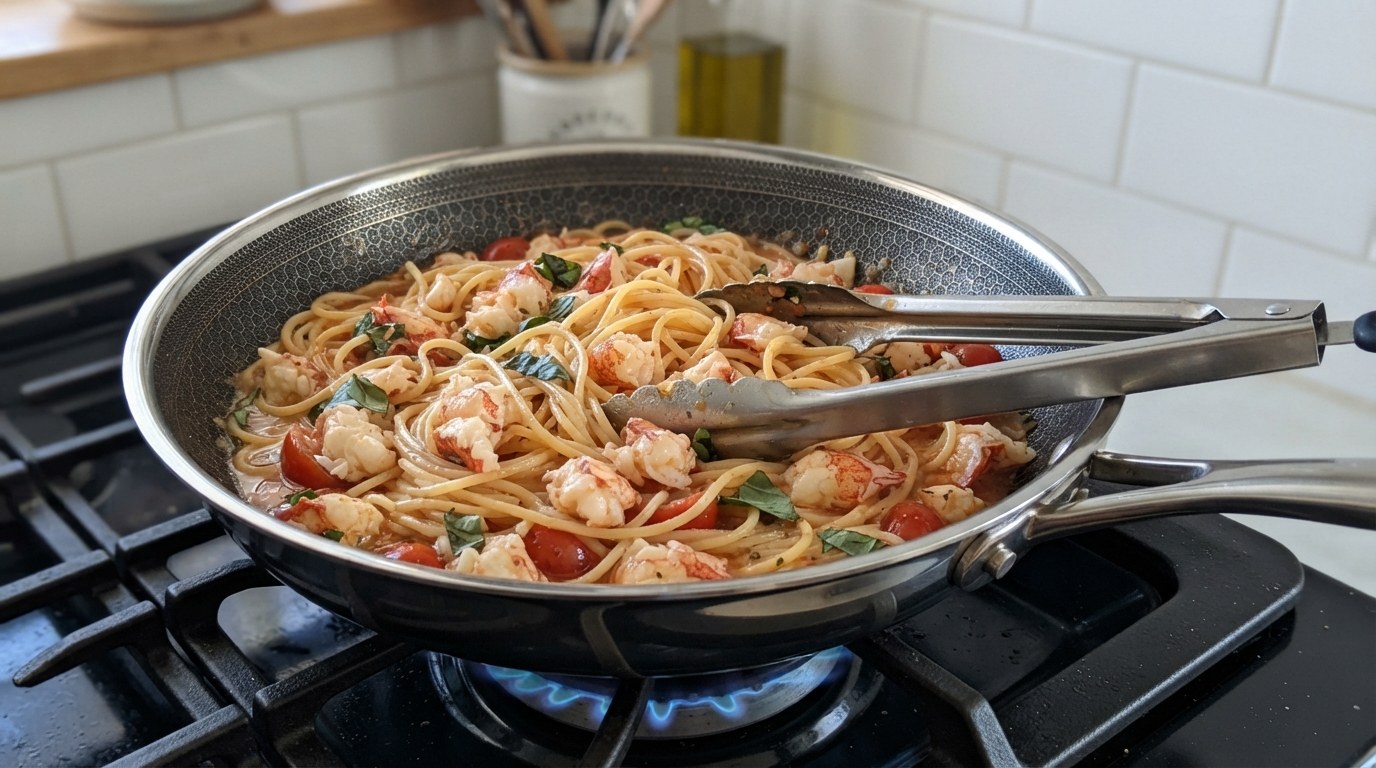
Cook the spaghetti in plenty of salted water, stirring for the first minute so the strands do not glue together while their surface starch is still gelling, and pull it a minute before the package time. Drag it straight into the sauce with tongs, add a ladle of the pasta water, and toss over medium heat for a minute until the sauce clings and the pasta finishes cooking in it. Then add the lobster, the cream and the basil, and toss for one more minute, just long enough to warm the meat through. Off the heat, a squeeze of lemon, a drizzle of olive oil and a few shavings of Parmesan.
Advertisement
The pasta water is the emulsifier. The starch that cooked out of the spaghetti is gelatinized, and a ladle of it lets the butter, cream and tomato juices bind into one glossy sauce instead of separating into oil and liquid at the bottom of the bowl; oil in the boiling water does nothing for this and keeps the sauce from clinging, so leave it out. The lobster gets one minute because it is already cooked. Its proteins tightened once in the pot, and heating them again past 140°F does not make them more done, only more contracted, which is the rubber everyone complains about. Warm it, plate it, eat it.
Lobster Doneness and Timing
| Stage | Number | What you see |
|---|---|---|
| Boiling two 1¼-lb lobsters | 9 to 11 minutes, about 10 min per lb | Shells fully red, antennae pull out easily |
| Tail meat, done | 135 to 140°F | Opaque, pearly white with red edges, firm but springy |
| Ice bath | 5 minutes | Stops carryover; meat picks cleanly from the shell |
| Lobster back in the sauce | 1 minute, warm through only | Hot, still tender; longer and it tightens |
| USDA-safe endpoint | 145°F | Reached by carryover after a 140°F pull |
Cook to the thermometer and the clock is only a guide. A hard-shell lobster carries more meat and takes the longer end of the range; a soft-shell summer lobster of the same weight cooks faster and yields less. If you are working from a pound of cooked lobster meat from the fish counter, skip the boil and the ice bath entirely and add the meat to the sauce for the final minute; that meat has already been to 140°F once.
Variations, Shortcuts and What to Serve With Lobster Spaghetti
For a spicy lobster spaghetti, double the chile and add a spoon of Calabrian chili paste with the tomatoes. For the lobster spaghetti with cream sauce that a lot of searches are really after, raise the cream to ⅔ cup and drop the wine to a splash, but keep the tomato; without it the dish turns into a lobster alfredo. Shrimp and lobster pasta works with a dozen large shrimp seared 1 minute a side in the pan before the aromatics go in, and a pound of shrimp alone makes an honest weeknight version along the lines of the site's garlic butter shrimp. Fresh pasta, which Ramsay uses in his book version, cooks in about 3 minutes; the site's fresh pasta dough guide is the from-scratch route.
Advertisement
Serve it in warm shallow bowls with nothing heavier than a green salad and bread for the sauce; a dry, crisp white with acidity, a Vermentino, Gavi or lightly oaked Chardonnay, suits the cream and tomato. Start the meal with Hell's Kitchen pan-seared scallops if it is a special night. If you have more lobster than the pasta needs, Ramsay's lobster risotto and the butternut squash lobster risotto use the same stock, and king crab capellini is the same idea with crab. The full recipes collection has the rest of the seafood menu.
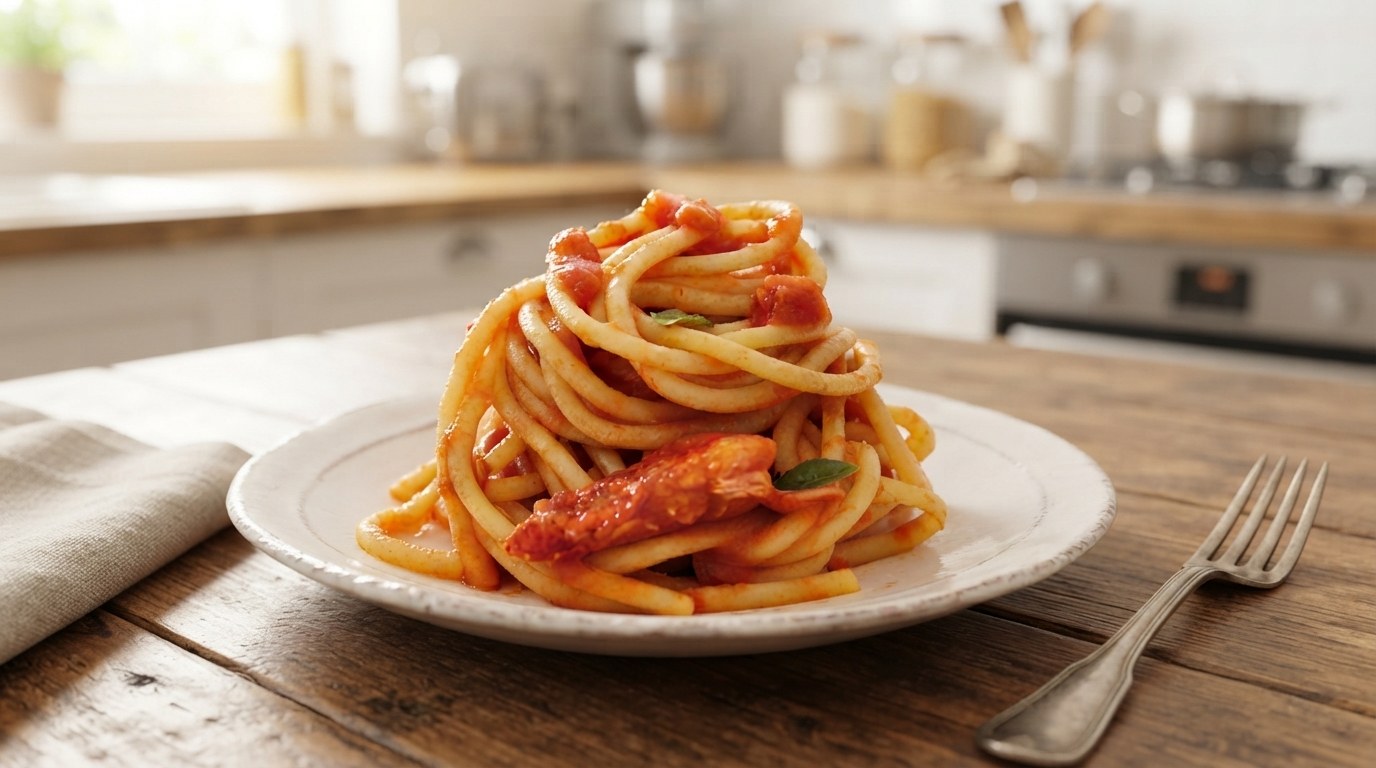
Gordon Ramsay's Lobster Spaghetti (Creamy Tomato and Chili Sauce)
Ingredients
- 2 live lobsters, about 1¼ lb each (or 1 lb cooked lobster meat)
- For the shell stock (optional but worth it)
- 3 cups water
- 1 shallot, sliced, plus 1 small carrot, chopped, and a few fennel fronds or a small piece of fennel
- For the sauce and pasta
- 1 lb cherry tomatoes, halved
- 3 scallions, thinly sliced
- 2 garlic cloves, finely chopped
- 1 red chile, seeded and finely chopped (2 for a spicy version)
- 4 Tbsp unsalted butter
- ¾ cup dry white wine
- 12 oz spaghetti
- ⅓ cup heavy cream
- 1 handful basil leaves, torn, plus 2 Tbsp chopped parsley
- ½ lemon
- Sea salt, freshly ground black pepper, olive oil to finish, and a little shaved Parmesan
Instructions
- Bring a very large pot of well-salted water to a full boil and set a large bowl of ice water beside the stove. Add the lobsters head first, cover until the water returns to a boil, then uncover and boil 9 to 11 minutes, until a thermometer in the thickest part of the tail reads 135 to 140°F.
- Lift the lobsters into the ice water for 5 minutes. Twist off the tails and claws, crack the shells, and pick out the tail, claw and knuckle meat. Slice the tail into thick medallions and keep the claws whole. Refrigerate the meat; keep all the shells.
- Make the stock: break the shells and body into pieces and toast them in a dry large skillet over high heat 3 to 4 minutes, until fragrant. Add the water, shallot, carrot and fennel, simmer gently 20 minutes, strain, then boil the stock down to about 1 cup. (Skip this step and use ¾ cup water if short on time.)
- Put the cherry tomatoes, scallions, garlic, chile and butter in a wide heavy pan over medium heat. Cook, stirring now and then, 6 to 8 minutes, until the tomatoes collapse and the aromatics are soft but not coloured. Season with pepper.
- Add the wine and let it reduce until almost gone, 3 to 4 minutes. Add the reduced stock and simmer 5 minutes to a loose sauce. Taste for salt.
- Meanwhile bring a large pot of salted water to a boil and cook the spaghetti, stirring for the first minute, until 1 minute short of the package time. Scoop out 1 cup of the pasta water.
- Lift the spaghetti straight into the sauce with tongs, add ½ cup of the pasta water and toss over medium heat for 1 minute until the sauce clings to the strands, adding more water if it tightens.
- Add the lobster meat, the cream and the basil and toss for 1 minute more, just until the lobster is warmed through. Take the pan off the heat, squeeze in the lemon and check the seasoning.
- Divide between four warm shallow bowls, setting a claw on each, and finish with the parsley, a drizzle of olive oil and a few shavings of Parmesan. Serve at once.
Notes
Advertisement
Lobster Spaghetti FAQs
The questions that come up most: how Gordon Ramsay makes lobster spaghetti, how long to boil the lobster, whether frozen lobster works, why the sauce splits, whether to use cream or tomato, how to make it spicy, what wine to serve, and whether linguine works instead.
How does Gordon Ramsay make lobster spaghetti?
He boils a whole lobster about 10 minutes per pound, picks the tail and claw meat, and cooks halved cherry tomatoes with scallion, garlic, a chopped chile and butter until soft, then reduces white wine into it. The cooked lobster goes into the sauce with a splash of cream and chopped basil just long enough to warm through, and the spaghetti is tossed in and finished with Parmesan and olive oil. That is the recipe from his book Gordon Ramsay Makes It Easy; this page adds a quick stock from the shells.
How long do you boil lobster for lobster spaghetti?
About 10 minutes per pound at a steady boil: 9 to 11 minutes for a 1¼-pound lobster, until the tail meat reads 135 to 140°F on a thermometer. Then straight into ice water for 5 minutes to stop the cooking. The meat goes back into the sauce for only a minute at the end, because it is already cooked.
Can I use frozen lobster for lobster spaghetti?
Frozen raw lobster tails, yes: thaw them overnight in the refrigerator, cook them to 135 to 140°F and slice the meat into the sauce. A frozen whole lobster, no; Ramsay's rule is never to cook one, because it tastes of water. Cooked lobster meat from the fish counter also works, added for the final minute only.
Why did my lobster pasta sauce split?
Too little fat in the dairy, or too much heat. Tomato is acidic, and milk, half-and-half and sour cream do not have enough fat to keep their proteins from clumping when acid and heat hit them. Heavy cream at about 36% fat, or crème fraîche, stays smooth. Stir it in at the end over gentle heat, and add a ladle of starchy pasta water to bind the sauce.
Is lobster spaghetti better with tomato or cream sauce?
Ramsay's version uses both, with the tomato in charge: cherry tomatoes cooked down with aromatics and wine, then about a third of a cup of cream to round the acidity. For a creamier version, raise the cream to two-thirds of a cup and keep a little tomato. Cream alone makes a lobster alfredo, which hides the sweetness of the lobster.
How do I make spicy lobster spaghetti?
Use two red chiles instead of one and leave the white ribs in, since that membrane holds most of the heat, or stir a spoon of Calabrian chili paste into the tomatoes. Hell's Kitchen leans this way. Add a squeeze of lemon at the end; acid and heat together keep the sauce from tasting heavy.
What wine goes with lobster spaghetti?
A dry white with good acidity and little or no oak: Vermentino, Gavi, Pinot Grigio, or a lightly oaked Chardonnay for the creamier version. The same dry white you cooked with is a fine choice. Avoid sweet or heavily oaked wines, which flatten the lobster.
Can I use linguine instead of spaghetti?
Yes. Linguine and tagliatelle carry a slightly creamier sauce well, and fresh pasta of any long shape cooks in about 3 minutes, which is what Ramsay uses in his book. Short pasta is the one to avoid, because the lobster ends up at the bottom of the bowl instead of tangled in the strands.

About the Author
John Siracusa is the founder of Hell’s Kitchen Recipes. He focuses on technique-first, reproducible home cooking and researches recipes & kitchen equipment from published food science and professional chef methods since 2016.