Shepherd's pie vs cottage pie comes down to one ingredient: shepherd's pie is made with lamb, and cottage pie is made with beef. Everything else is the same dish, a savory ground-meat filling in a thick gravy, covered with mashed potato and baked until the top turns golden. Below you'll find the full comparison, where the two names come from, and a Gordon Ramsay-style shepherd's pie with a one-line swap that turns it into cottage pie.
What's the Difference Between Shepherd's Pie and Cottage Pie?
The difference between shepherd's pie and cottage pie is the meat. The Oxford Learner's Dictionaries define shepherd's pie as a dish of lamb cut into very small pieces and covered with mashed potato, and give cottage pie the same definition with beef. The name is the memory aid: shepherds look after sheep, so the shepherd's version holds lamb. Jamie Oliver's team puts it the same way, saying shepherd's pie should only carry that name if it contains lamb, while cottage usually applies to one made with beef.
| Shepherd's pie | Cottage pie | Cumberland pie | |
|---|---|---|---|
| Meat | Ground lamb, or chopped leftover roast lamb | Ground beef, or chopped leftover roast beef | Usually beef |
| Where the name comes from | Shepherds, who tend sheep | The cottages of rural workers, who could afford potatoes | The county of Cumberland in northern England |
| Flavor | Richer and sweeter, with a slightly gamey edge | Deeper and beefier, a little milder | Beefy, with a crunchy top |
| Best stock | Chicken or lamb stock | Beef stock | Beef stock |
| Topping | Mashed potato, forked into ridges | Mashed potato, forked into ridges | Mashed potato under a breadcrumb crust |
| Safe temperature for the mince | 160°F | 160°F | 160°F |
Read across the table and only two rows really change: the meat and the stock that suits it. The technique, the bake and the timings are identical, which is why one recipe covers both. The one extra cousin worth knowing is Cumberland pie; Jamie Oliver's team notes that topping the potato with breadcrumbs turns the dish into a Cumberland pie.
Is Shepherd's Pie Lamb and Cottage Pie Beef?
Yes, by modern British convention shepherd's pie is lamb and cottage pie is beef, but the rule is younger than the dishes. According to Jamie Oliver's team, the name cottage pie is older than shepherd's pie by nearly a century, and it dates to the time potatoes became an affordable food for poor families living in rural cottages. For a long stretch the two names were used for the same thing, whatever meat went in, and the lamb-versus-beef split settled in later.
Advertisement
In the United States the line is blurrier still. Plenty of American recipes and restaurant menus call a ground-beef version shepherd's pie. If you're cooking for someone who grew up in Britain or Ireland, though, expect them to call that a cottage pie. Both dishes began as thrifty food, and chopped leftover roast meat stretched with gravy and potato still makes one of the best versions. Leftover lamb from a herb-crusted rack of lamb or a roast leg makes a very good shepherd's pie.
How to Make Gordon Ramsay-Style Shepherd's Pie
A Gordon Ramsay-style shepherd's pie comes down to three moves: brown the lamb hard, cook the filling down until it's thick, and top it with a rich, riced mash that browns in the oven. The flavor base is tomato paste, Worcestershire sauce, red wine, thyme and rosemary. The topping borrows from Ramsay's own fish pie, where the potatoes are pushed through a ricer, loosened with butter and hot milk, cooled slightly and then enriched with egg yolks. It's the same idea here, and it's what gives the top those deep golden ridges.
Ramsay's habits apply at every step. Heat the pan before the oil goes in, use a high-smoke-point oil such as grapeseed for the meat, season as you go, and taste the filling before it goes under the potato. Once the mash is on, you can't fix the seasoning underneath.
Brown the Lamb in Batches
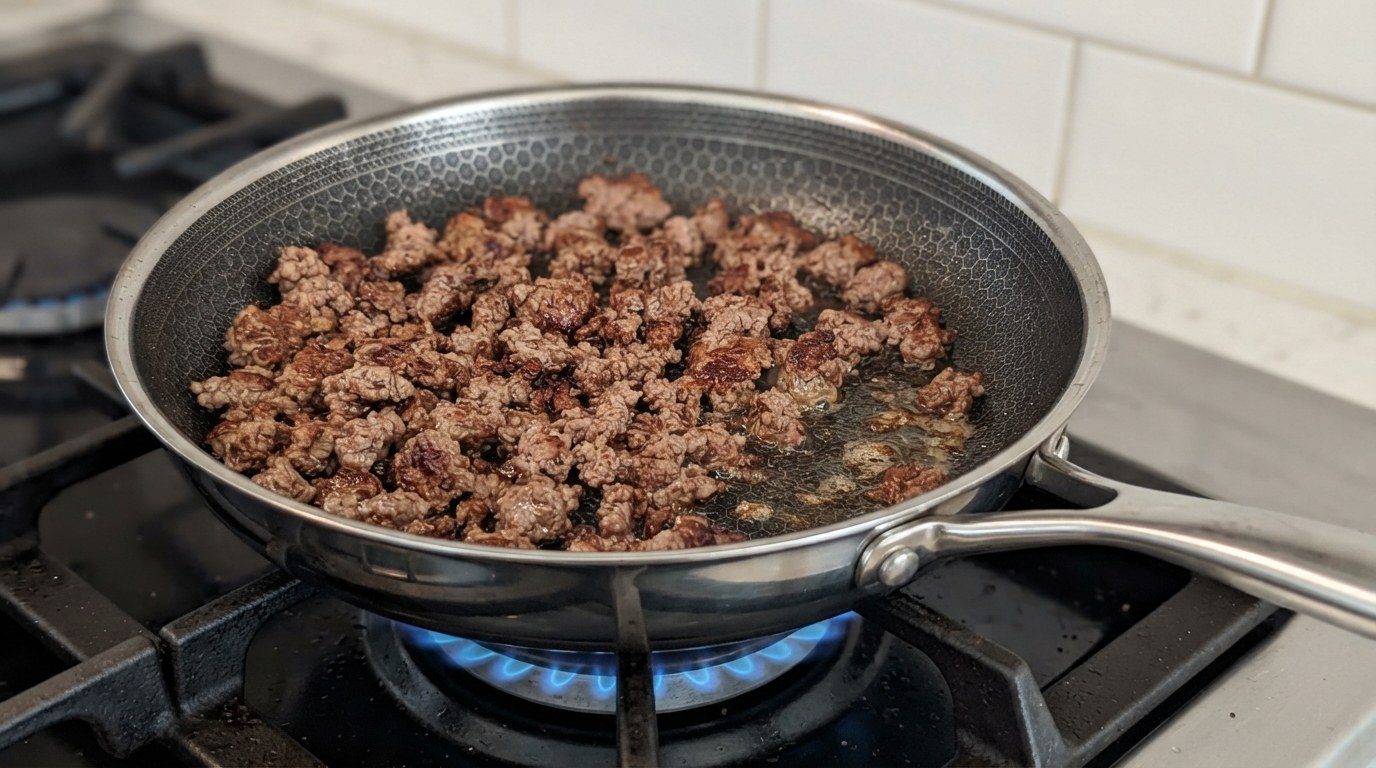
Brown the lamb in two batches in a very hot pan, and leave it alone long enough to build a dark crust before you break it up. Browning is the Maillard reaction, and it only gets going once the meat's surface passes about 284°F (140°C). Pile two pounds of cold mince into one pan and it releases more water than the pan can boil off; the meat then sits in its own juices at 212°F (100°C), the boiling point of water, and turns gray instead of brown. The American Lamb Board says the same: add too much ground lamb at once and it steams, so cook it in batches.
Advertisement
Lamb is fatty, and a lot of that fat renders out as it browns. Spoon off all but about a tablespoon before the vegetables go in, or the filling turns greasy. Ground lamb and ground beef both need to reach 160°F (71°C), the safe minimum for ground meat on the USDA's safe temperature chart; well-browned crumbles simmered in the filling for 20 minutes get there with room to spare. A wide, heavy skillet gives the mince room to brown in a single layer.
HexClad
HexClad 12-Inch Hybrid Nonstick Frying Pan
- Stainless steel and ceramic nonstick hybrid surface, built to sear hard and release easily
- Tri-ply with an aluminum core for quick, even heat; works on induction
- Oven safe to 900°F and metal-utensil safe (lid not included)
Why Shepherd's Pie Turns Runny (and How to Fix the Filling)
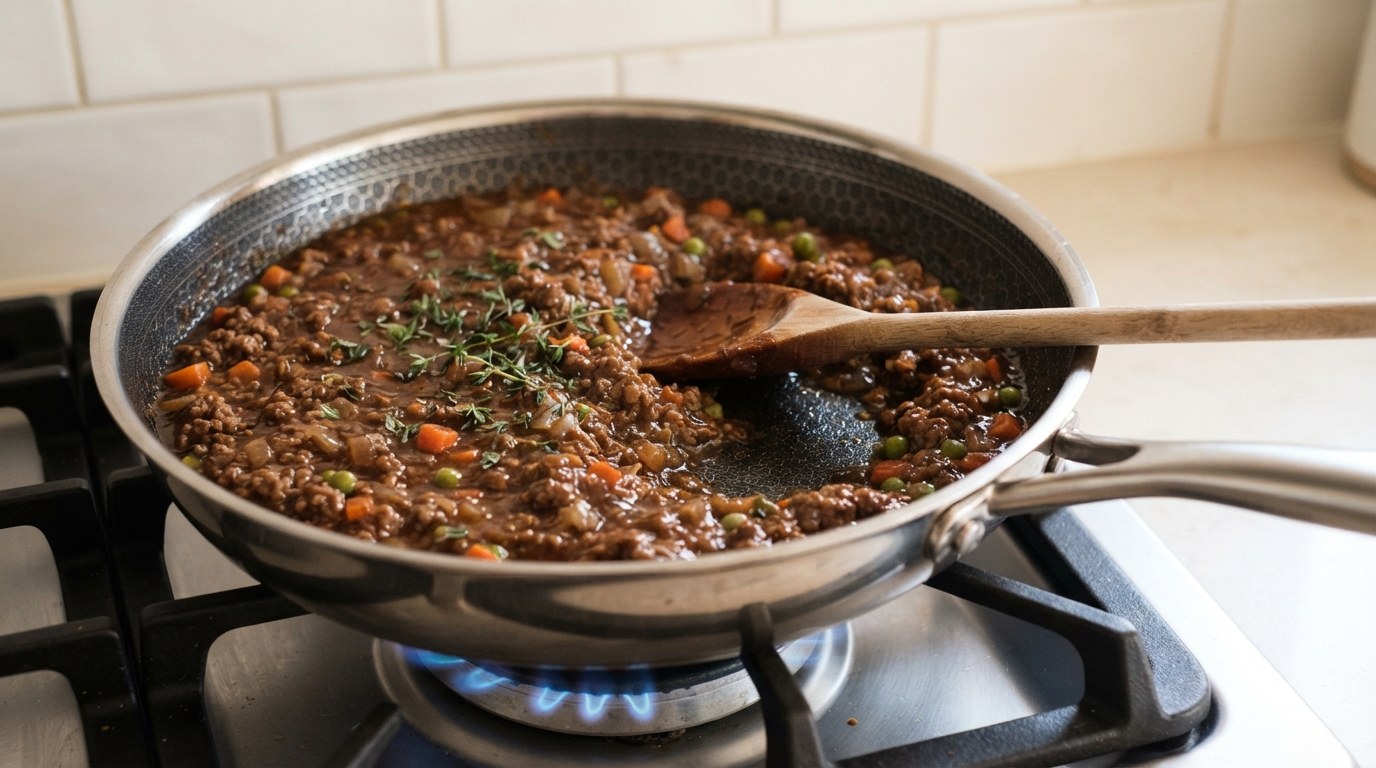
Shepherd's pie turns runny when the filling goes into the dish with too much liquid, or with nothing to thicken it. Three steps fix it. First, cook the tomato paste in the pan for a couple of minutes until it darkens to brick red; its sugars caramelize and the raw, tinny taste cooks off. Second, stir in the flour and cook it for a minute in the fat before any liquid goes in, so it disperses without lumps. Its starch granules then swell and gelatinize as the gravy comes to a simmer, and that's what gives the sauce body.
Third, simmer uncovered. Evaporation concentrates the wine and stock, and the filling is ready when a spoon dragged across the pan leaves a clear trail that fills in slowly. Let it cool for 10 minutes before topping it. A hot, loose filling lets the mash sink in patches, while a slightly cooled, thick one holds the potato on top in a clean layer. Our chilli con carne uses the same brown-then-reduce approach for a slow-simmered mince.
The Mashed Potato Topping: Floury Potatoes, Riced, Never Whipped
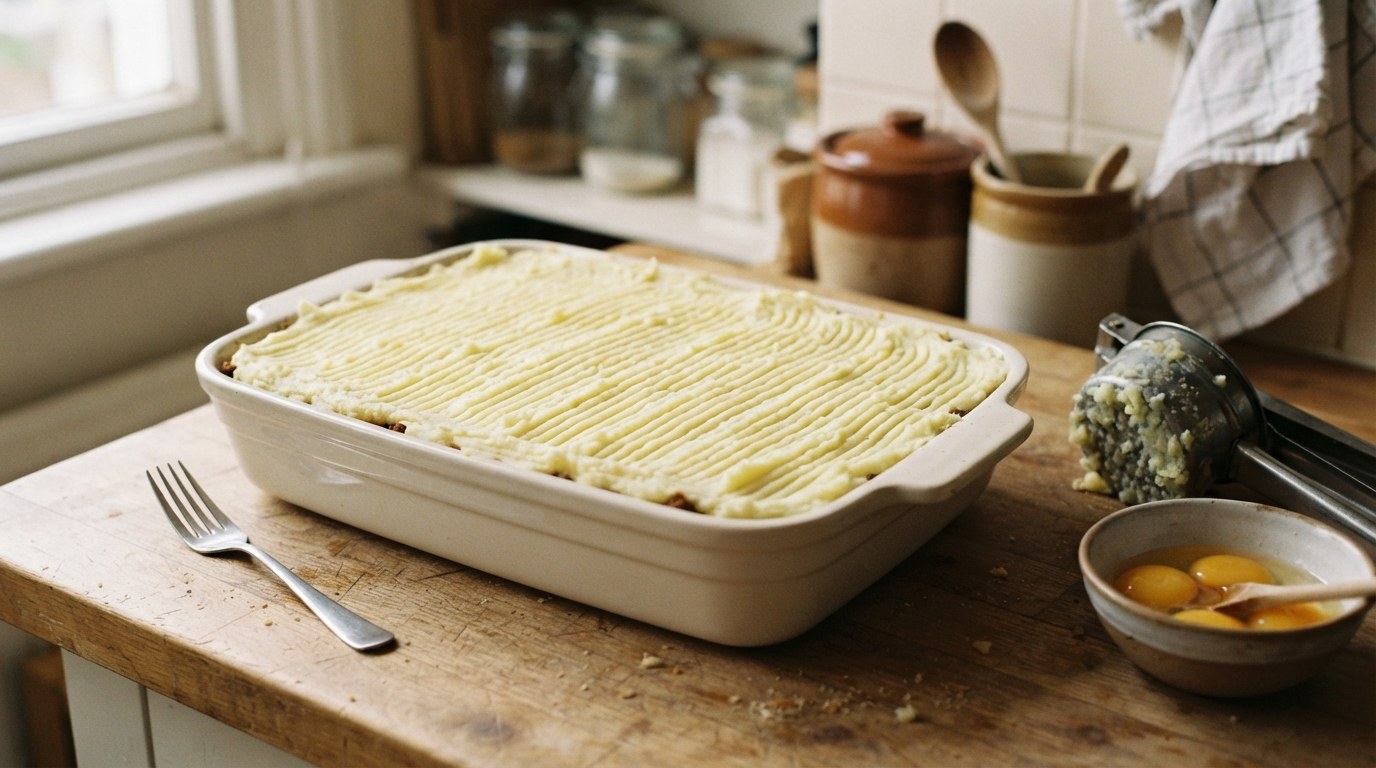
The best mash for a shepherd's pie topping is made from floury russets, riced or hand-mashed, and never beaten in a food processor. The University of Minnesota Extension recommends mealy, dry-fleshed potatoes like russets for mashing because they don't turn gluey, while waxy potatoes can become sticky. The glue comes from starch: every cooked potato cell is packed with swollen starch, and hard beating bursts those cells and releases it into a paste. A ricer or a hand masher breaks the potato up without tearing the cells open. Yukon Golds work too; our Yukon Gold mashed potatoes go deeper on that route.
Advertisement
Cut the potatoes into even pieces so they cook at the same rate. The Idaho Potato Commission suggests 1 1/2- to 2-inch chunks, because an undercooked center mashes stiff. Drain them well and put them back in the hot pot for a minute or two so the surface water steams off. Dry potato takes in more butter and milk, and the topping stays fluffy on the filling.
Egg yolks go in last, once the mash has cooled for a few minutes so they don't scramble. Their proteins and fat help the top brown in the oven, and they give the mash enough body to hold sharp ridges. Rake the surface with a fork: more ridges means more edges for browning, and those crisp golden peaks are the best part.
How Long to Bake Shepherd's Pie
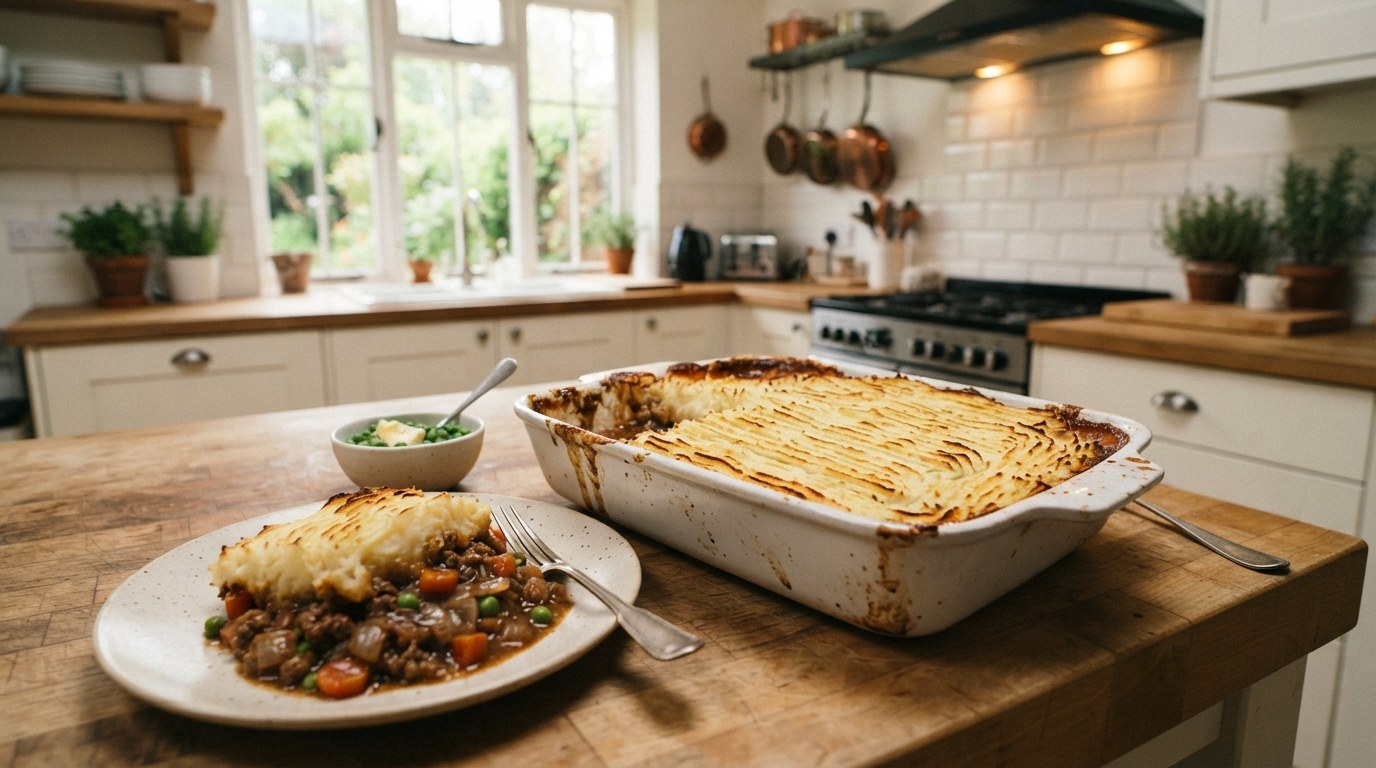
Bake shepherd's pie at 400°F (200°C) for 25 to 30 minutes, until the filling bubbles up at the edges and the ridges are deep golden. For extra color, finish under the broiler for 2 to 3 minutes and watch it closely. If you assembled it ahead and it's going in straight from the fridge, add 15 to 20 minutes and cover it loosely with foil if the top browns before the center is hot.
Let it rest for 10 minutes before serving. As the filling cools slightly, the starch-thickened gravy sets, so each portion holds its shape on the plate instead of flooding it. Cut it straight from the oven and the filling runs across the plate.
Storing, Freezing and Reheating Shepherd's Pie
Shepherd's pie keeps for 3 to 4 days in the fridge and freezes well. The USDA Food Safety and Inspection Service advises refrigerating leftovers within 2 hours, using them within 3 to 4 days, and reheating them to 165°F (74°C). To freeze, cool it, wrap the dish tightly (or freeze individual portions) and freeze it within that window. The USDA notes frozen food stays safe indefinitely, although the quality slowly drops, so eat it within a few months for the best texture.
Advertisement
Cold mash firms up because its starch recrystallizes as it chills, a process called retrogradation. The butter and yolks in this topping slow that down, which is one reason a rich mash reheats better than a lean one. Reheat covered with foil at 350°F until the center reads 165°F, then uncover for the last 10 minutes to crisp the top again.
How to Make It a Cottage Pie, Plus Other Variations
To turn this shepherd's pie into a cottage pie, swap the ground lamb for the same weight of 85/15 ground beef and use beef stock in place of chicken stock. Keep the thyme, drop the rosemary if you like, and add a bay leaf to the simmer. Beef releases less fat than lamb, so you may only need to spoon off a little. Everything else, from the reduced filling to the yolk-enriched mash and the bake, stays exactly the same.
For a Cumberland pie, scatter a mix of fresh breadcrumbs and grated sharp cheddar over the mash before it goes in the oven. Neither shepherd's pie nor cottage pie needs cheese, but a handful of cheddar on the ridges is a common addition. For a thriftier pie, use 1 1/2 pounds of finely chopped leftover roast lamb and shorten the simmer to 10 minutes, since it's already cooked; leftover red wine lamb sauce can stand in for part of the stock. A sweet potato topping is another easy swap; our sweet potato puree spreads the same way.
What to Serve With Shepherd's Pie
Serve shepherd's pie or cottage pie with something green and simple: buttered peas, steamed green beans, braised red cabbage or a sharp green salad to cut the richness. For another British classic from the same kitchen, try the Gordon Ramsay beef Wellington, and read our guide to buying lamb cuts for the roast that becomes next week's pie. Whichever meat you pick, the shepherd's pie vs cottage pie question has a simple answer: lamb makes it shepherd's pie, beef makes it cottage pie, and the method stays the same.
Gordon Ramsay-Style Shepherd's Pie (with Cottage Pie Swap)
Ingredients
Filling
- 2 lb ground lamb (900 g), or 85/15 ground beef for cottage pie
- 1 tbsp grapeseed or other high-smoke-point oil
- 1 large onion, finely diced
- 2 medium carrots, finely diced
- 3 garlic cloves, minced
- 2 tbsp tomato paste
- 2 tbsp all-purpose flour
- 1/2 cup dry red wine
- 1 1/2 cups chicken or lamb stock (beef stock for cottage pie)
- 1 tbsp Worcestershire sauce
- 2 tsp fresh thyme leaves
- 1 tsp fresh rosemary, finely chopped
- 3/4 cup frozen peas
- Kosher salt and freshly ground black pepper
Mashed potato topping
- 2 1/2 lb russet potatoes (1.1 kg), peeled and cut into 1 1/2- to 2-inch chunks
- 4 tbsp unsalted butter
- 1/2 cup whole milk, warmed
- 2 large egg yolks
- 1 tsp kosher salt, plus more for the cooking water
Instructions
- Put the potatoes in a large pot, cover with cold well-salted water and bring to a boil. Simmer 15 to 20 minutes, until a knife slides through with no resistance. Meanwhile, start the filling.
- Heat a large, heavy skillet over high heat until very hot, then add the oil. Add half the lamb, season with salt and pepper, press it flat and leave it 3 to 4 minutes until deeply browned underneath. Break it up and cook until browned all over. Transfer to a bowl and repeat with the rest. Spoon off all but about 1 tablespoon of the fat.
- Lower the heat to medium. Add the onion and carrots and cook 6 to 8 minutes until soft. Add the garlic for 1 minute, then the tomato paste; cook 2 minutes, stirring, until it darkens to brick red.
- Return the meat to the pan, sprinkle over the flour and stir for 1 minute. Pour in the wine and let it bubble until reduced by half, scraping up the browned bits. Add the stock, Worcestershire, thyme and rosemary.
- Simmer uncovered, stirring now and then, for 15 to 20 minutes, until thick enough that a spoon leaves a trail. Stir in the peas, taste and adjust the seasoning. Spread in a 2 1/2- to 3-quart baking dish and let it cool for 10 minutes. Heat the oven to 400°F (200°C).
- Drain the potatoes, return them to the hot pot for 1 to 2 minutes to steam dry, then push them through a ricer or mash them by hand. Stir in the butter, warm milk and salt. Let it cool for a few minutes, then beat in the egg yolks.
- Spoon the mash over the filling, starting at the edges to seal it in, and spread it evenly. Rake the top with a fork into ridges.
- Set the dish on a baking sheet and bake 25 to 30 minutes, until the filling bubbles at the edges and the top is golden. Broil 2 to 3 minutes for extra color if you like. Rest 10 minutes before serving.
Notes
Advertisement
Shepherd's Pie vs Cottage Pie FAQs
The questions that come up most: what the difference is, whether shepherd's pie is always lamb, which one is better, why shepherd's pie turns runny, how long to bake it, whether it freezes, and whether it has cheese.
What is the difference between shepherd's pie and cottage pie?
The meat. Shepherd's pie is made with lamb and cottage pie is made with beef. Both are a ground-meat filling in gravy topped with mashed potato and baked until golden, and the method is otherwise the same.
Is shepherd's pie always made with lamb?
In Britain and Ireland, yes: a shepherd's pie made with beef is called a cottage pie. In the United States many recipes and restaurants use the name shepherd's pie for a beef version, but the traditional distinction is lamb for shepherd's pie and beef for cottage pie.
Which is better, shepherd's pie or cottage pie?
It depends on the meat you prefer. Shepherd's pie tastes richer and slightly gamey from the lamb; cottage pie is beefier and a little milder. The technique is identical, so you can make either from the same recipe.
Why is my shepherd's pie runny?
The filling had too much liquid or nothing to thicken it. Cook a little flour into the fat before adding liquid, then simmer uncovered until a spoon leaves a trail, and let the filling cool for 10 minutes before topping it. Resting the baked pie for 10 minutes also lets the gravy set.
How long do you bake shepherd's pie?
25 to 30 minutes at 400°F (200°C), until the filling bubbles at the edges and the potato is golden. Add 15 to 20 minutes if it goes into the oven straight from the fridge.
Can you freeze shepherd's pie?
Yes. Cool it, wrap it tightly and freeze it whole or in portions within 3 to 4 days of cooking. Thaw it in the fridge and reheat until the center reaches 165°F.
Does shepherd's pie have cheese?
Not traditionally. A classic shepherd's pie or cottage pie is topped with plain mashed potato. Grated cheddar on top is a common addition, and adding a breadcrumb crust makes it a Cumberland pie.

About the Author
John Siracusa is the founder of Hell’s Kitchen Recipes. He focuses on technique-first, reproducible home cooking and researches recipes & kitchen equipment from published food science and professional chef methods since 2016.