
Gordon Ramsay’s tomato soup is a roasted soup, not a boiled one: you roast the tomatoes, onion, and garlic first so their sugars caramelize, then blend everything into a smooth, deep-flavored bowl finished with a swirl of cream and a sun-dried tomato pesto. It takes about 45 minutes and turns a handful of ripe tomatoes into a bowl that tastes like far more work than it is. This guide covers the roasting method, the flavor science behind it, and how to fix a soup that comes out too thin, too acidic, or grainy.
Why Gordon Ramsay’s Tomato Soup Stands Out
Unlike many quick stovetop tomato soups, Ramsay emphasizes roasting tomatoes, onions, and garlic to achieve a richer flavor. High heat caramelizes their natural sugars, producing a deep, smoky-sweet flavor that forms the backbone of the soup.
This technique transforms what could be a thin, sharp tomato broth into a velvety, layered dish that balances acidity with richness. According to the California Tomato Growers Association, Roma and San Marzano varieties are prized for their low water content and high natural sweetness, both key qualities for a smooth soup. Ripe tomatoes are roughly 95% water, USDA figures show, so roasting drives off moisture and concentrates their flavor.
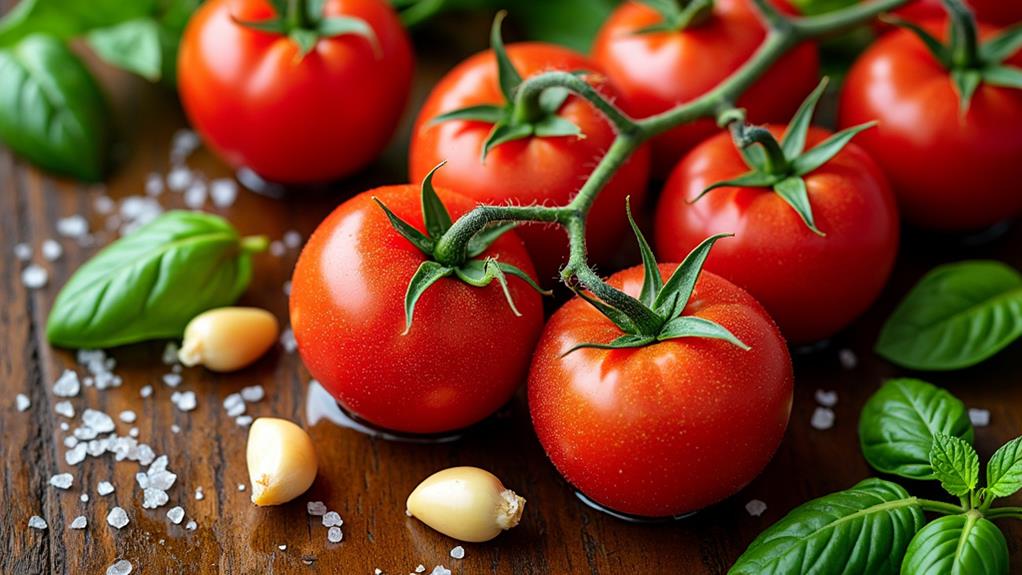
Key Ingredients & Flavor Science
– Tomatoes: Roma or San Marzano give the richest base. Out of season? High-quality canned tomatoes can outperform watery fresh ones.
– Acidity Balancers: Balsamic vinegar adds complexity, while a pinch of baking soda reduces harsh acidity.
– Olive Oil: Use high-quality extra virgin olive oil — its fruitiness deepens flavor and carries aromatics.
– Cream or Alternatives: Traditional cream makes the soup silky, but dairy-free options (cashew cream, coconut milk) provide body without overpowering the tomatoes.
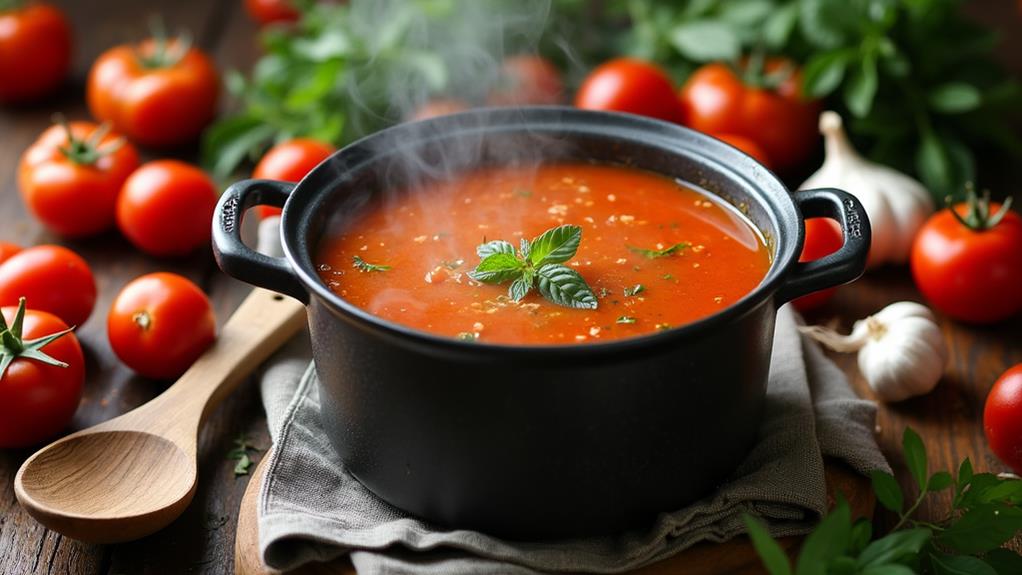
Ramsay’s Technique — Roasting, Blending, Finishing
The method is a simple sequence: roast, then simmer, then blend.
- Roast at 400°F for 20–25 minutes, until the tomatoes blister and the onions caramelize.
- Deglaze with broth to scrape up flavorful browned bits.
- Blend until smooth with an immersion blender, then strain for a restaurant-style finish.
- Finish with cream or a dairy-free alternative, adjusting the consistency until it is velvety but not heavy.
Pro tip: If your soup curdles, temper the cream by whisking in small amounts of hot soup before adding it back.
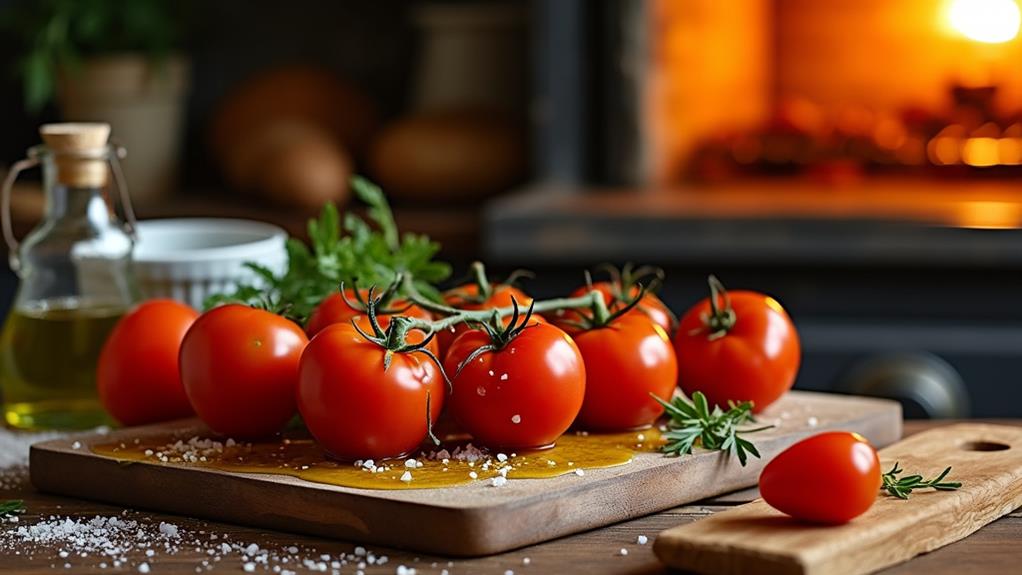
Healthy & Dairy-Free Variations
– Swap cream for coconut milk (adds a subtle sweetness).
– Try cashew cream for a neutral, silky mouthfeel.
– Use vegetable stock for a vegetarian-friendly base.
| Finish | Texture & flavor | Best for |
|---|---|---|
| Heavy cream | Silky and rich, the classic finish | The traditional velvety bowl |
| Coconut milk | Silky with a subtle sweetness | Dairy-free, and good when you lean into the cayenne |
| Cashew cream | Neutral and silky, adds body without flavor | Dairy-free without changing the taste |
| No cream (broth only) | Lighter and brighter, more tomato-forward | A cleaner, lower-fat soup |
For a dairy-free bowl that still tastes like the original, cashew cream is the closest match; reach for coconut milk when you want its sweetness to play off the heat.
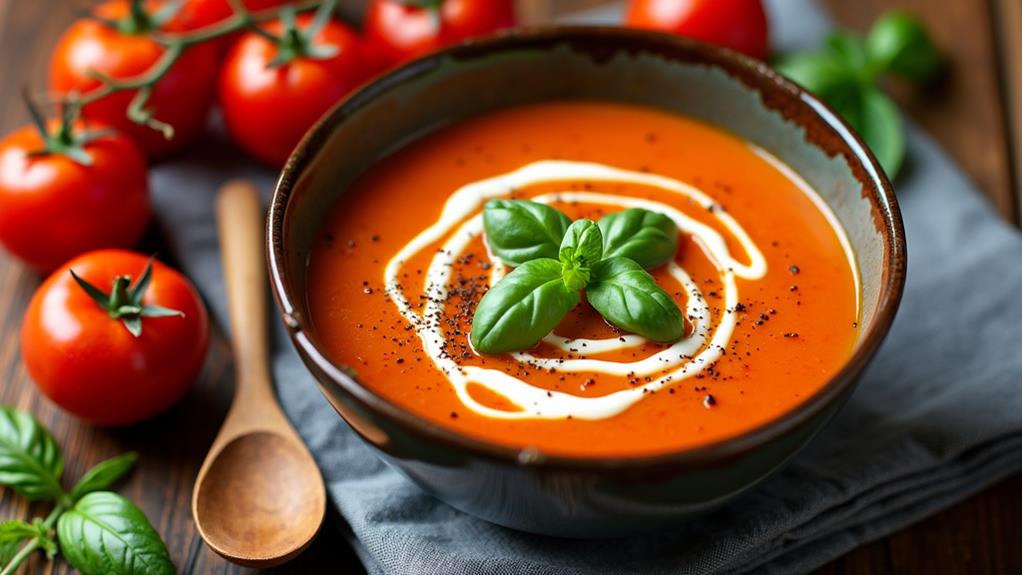
Serving Suggestions & Pairings
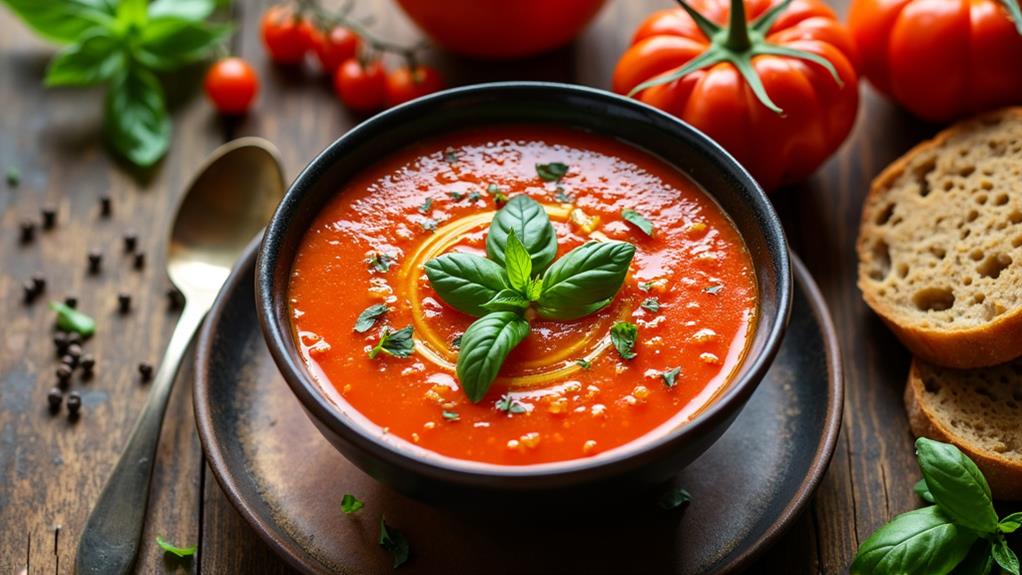
The right garnish turns a simple soup into a memorable dish. Ramsay often finishes with pesto or Parmigiano-Reggiano, but you can mix it up:
- Artisanal bread or grilled cheese: Perfect for dipping.
- Fresh basil pesto drizzle: Adds vibrant green contrast.
- Parmigiano shards or crème fraîche: Introduces richness and tang.
- Toasted pine nuts: Provide crunch and nutty depth.
For another cozy bowl, try our velvety pumpkin soup, French onion soup, or chicken noodle soup.
Common Mistakes & Fixes
– Too acidic: Add a pinch of baking soda or a splash of cream.
– Too thin: Simmer longer to reduce, or stir in tomato paste.
– Grainy texture: Blend thoroughly and pass through a sieve.
– Bitter flavor: Tomatoes roasted too long; balance with sugar or balsamic.
The Role of Cayenne Pepper & Spice Options
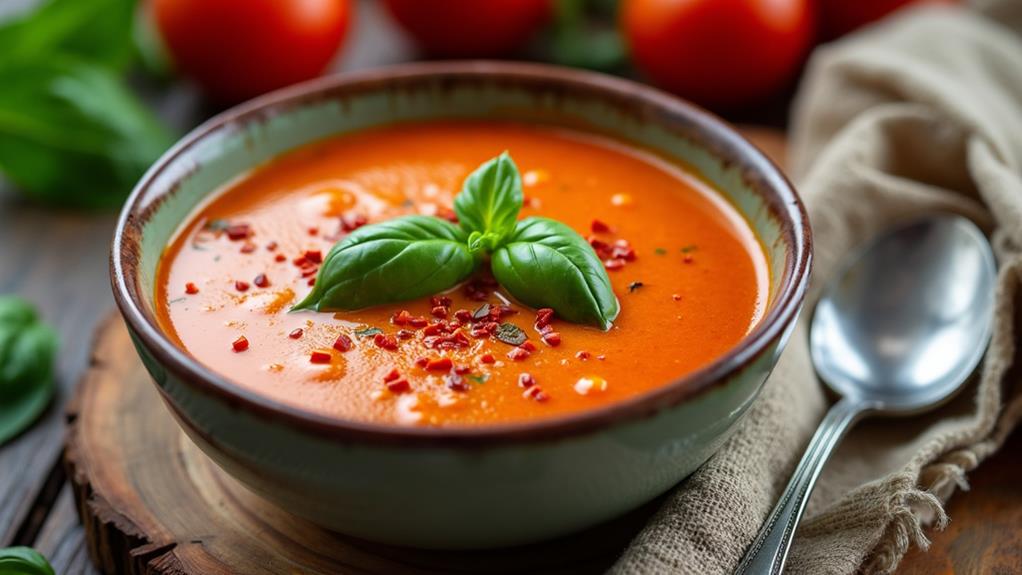
A hallmark of Ramsay’s recipe is the subtle warmth from cayenne pepper. At 30,000 to 50,000 Scoville heat units on the Scoville scale, it adds a gentle warmth without overwhelming the palate. For family-friendly versions, substitute Aleppo pepper or smoked paprika.
Tomato soup FAQs
The questions that come up most: which tomatoes to use, whether to peel them, how to fix a soup that is too acidic, dairy-free swaps, and how to store leftovers.
What tomatoes are best for tomato soup?
Roma or San Marzano tomatoes, which are meatier and lower in water. Out of season, good canned San Marzano tomatoes beat watery fresh ones and give a rounder flavor.
Do you need to peel the tomatoes?
No. Roasting softens the skins, and blending plus a pass through a sieve breaks them down. Peel only if you want an ultra-smooth soup and are not straining.
Why is my tomato soup too acidic or bitter?
Acidity is natural to tomatoes; balance it with a pinch of sugar, a splash of cream, or a little baking soda, which neutralizes acid. Bitterness usually means the tomatoes roasted too long, so pull them at a deep caramel, not a char.
Can you make it dairy-free?
Yes. Swap the cream for coconut milk (slightly sweet) or cashew cream (neutral and silky), and use vegetable stock. You keep the body without the dairy.
How do you freeze and reheat tomato soup?
Cool it and refrigerate or freeze it within two hours, as FoodSafety.gov advises. Freeze it flat in bags, thaw overnight in the fridge, and reheat gently so the cream does not separate.
Gordon Ramsay Tomato Soup Recipe
Ingredients
- 10 Med-Size Vine Ripe tomatoes
- 2 cups Vegetable or chicken stock
- 6 oz Cream (optional)
- 1 red onion, finely sliced
- 2 cloves Garlic, finely sliced
- 1 tsp. Olive oil
- Salt and pepper, to taste
- 2 tsp. cayenne pepper
- 1 tsp. Sugar to intensify the sweetness
- 1 tsp. Aged balsamic vinegar
- Fresh basil leaves (for garnish, optional)
For the Sun-Dried Tomato Pesto:
- 6 oz Sun-dried tomatoes in oil
- 2 oz Pine nuts
- 2 oz Parmesan cheese, grated
- 1 tsp. Extra virgin olive oil
- Salt (optional) Parmesan may be enough
For the Welsh Rarebit:
- 50 grams butter
- 3 tablespoons flour
- 2 oz Stout beer (to taste)
- 1 tsp. Dijon mustard
- 1 tsp. Worcestershire sauce (to taste)
- 8 oz Grated mature white Cheddar cheese
- Rustic country bread
Instructions
For Roasted Tomatoes
- Preheat your oven to 180°C (356°F).
- Prepare vine tomatoes by slicing them in half and placing them in a roasting tray.
- Add sliced red onion and garlic to the tray.
- Drizzle with olive oil and season with salt, pepper, cayenne, and sugar. Splash a bit of aged balsamic vinegar on top.
- Roast in the oven for 20-25 minutes until the tomatoes are soft and caramelized.
For the Pesto:
- In a dry pan, toast pine nuts until fragrant.
- In a pestle and mortar, combine sun-dried tomatoes, toasted pine nuts, grated Parmesan cheese, and extra virgin olive oil to form a pesto.
To Finish the Soup:
- Remove tomatoes from the oven and pour vegetable or chicken stock over them, just enough to come halfway up the tomatoes.
- Break up tomatoes with a spoon and simmer for 3-4 minutes.
- Add cream if a creamier texture is desired.
- Use a stick blender to blend the soup until smooth.
For the Welsh Rarebit:
- Make a roux with butter and flour.
- Add stout beer gradually, stirring to a smooth consistency.
- Mix in Dijon mustard, a dash of Worcestershire sauce, and grated cheese until melted and combined.
- Toast both sides of a slice of rustic bread.
- Spread the cheesy mixture over the toast and place under the grill until bubbly and browned.
To Serve:
- Pour the soup into bowls, drizzle with the sun-dried tomato pesto, and garnish with fresh basil leaves if desired.
- Serve the soup alongside slices of Welsh rarebit.
Notes

About the Author
John Siracusa is the founder of Hell’s Kitchen Recipes. He focuses on technique-first, reproducible home cooking and researches recipes & kitchen equipment from published food science and professional chef methods since 2016.