Gordon Ramsay chicken wings come in more than one style, and this recipe is the sticky, spicy one: split wings dried overnight with baking powder and salt, roasted on a rack at 425°F until the skin is crisp, then tossed in a dark tamarind glaze sharpened with chilli flakes, toasted cumin and fennel. The flavors come from the tamarind spiced chicken wings published by his restaurant group, a deep-fried dish with a sauce that simmers for two hours. Here that sauce is cut down to a 10-minute glaze you reduce in a saucepan while the wings roast, so it works on a weeknight or a game day.
Ramsay has a soft spot for the cut. In his MasterClass lesson on breaking down a whole chicken he calls the wing one of a cook's most useful pieces, good for lollipops, canapés and stock, and his way of breaking down a chicken is how you get wings for almost nothing if you buy the bird whole. Save the wing tips from this recipe in the freezer for the next pot of stock; nothing goes in the bin.
Gordon Ramsay's Chicken Wing Recipes, Compared
Gordon Ramsay has three wing recipes you can check for yourself, and each one takes a different route to the plate. The baked chicken wings on his own site are lollipopped, seasoned with garlic powder, smoked paprika and salt, browned in oil and butter in an oven-proof sauté pan, then finished in a 375°F oven for about 15 minutes and tossed with the pan juices, hot sauce and a little more butter. The restaurant group's tamarind version marinates the wings in a spiced egg and Dijon mix, flours and deep-fries them at 180°C (350°F), then tosses them in that long-simmered tamarind sauce. His daughter Tilly's sticky chicken wings on the Gordon Ramsay Academy site roast in a sriracha, honey, soy and orange glaze, with the leftover glaze reduced in a saucepan and brushed on at the end.
| Detail | Ramsay's baked wings | Restaurant tamarind wings | Tilly Ramsay's sticky wings | This recipe |
|---|---|---|---|---|
| Cooking method | Browned in a sauté pan, finished in the oven | Floured and deep-fried | Roasted on a baking tray | Dried overnight, roasted on a rack |
| Heat and time | 375°F, about 15 min after browning | 350°F oil, 4 to 6 min per batch | 400°F, 30 to 35 min | 425°F, 40 to 45 min, then 4 to 5 min glazed |
| Seasoning | Garlic powder, smoked paprika, salt | Paprika, cumin, coriander, garam masala in egg | Glaze only | Baking powder, salt, smoked paprika |
| Sauce | Pan juices, hot sauce, butter | Tamarind, honey, sugar, Worcestershire, spices, stock | Sriracha, honey, soy, orange | Quick tamarind, honey, chilli and spice glaze |
| Best for | Buffalo-style heat with butter | A restaurant project | Sweet heat with little effort | Crisp skin and a sticky glaze from the oven |
Read across the rows and the pattern is clear: the crisp comes from dry heat on dry skin, and the sauce goes on last in every version. This recipe keeps both rules and swaps the deep-fryer for the oven.
Why Baking Powder Makes Baked Chicken Wings Crispy
Baking powder makes baked chicken wings crispy because it dries and changes the skin before the oven ever comes on. Tossed with salt and left on a rack in the fridge, it draws moisture out of the skin and raises its pH, and America's Test Kitchen explains that the higher pH also weakens the proteins in the skin so they break down and crisp up as they roast. Use about 1 teaspoon per pound of wings, and make sure it is baking powder, ideally aluminum-free. Baking soda is far stronger and leaves a soapy, metallic taste.
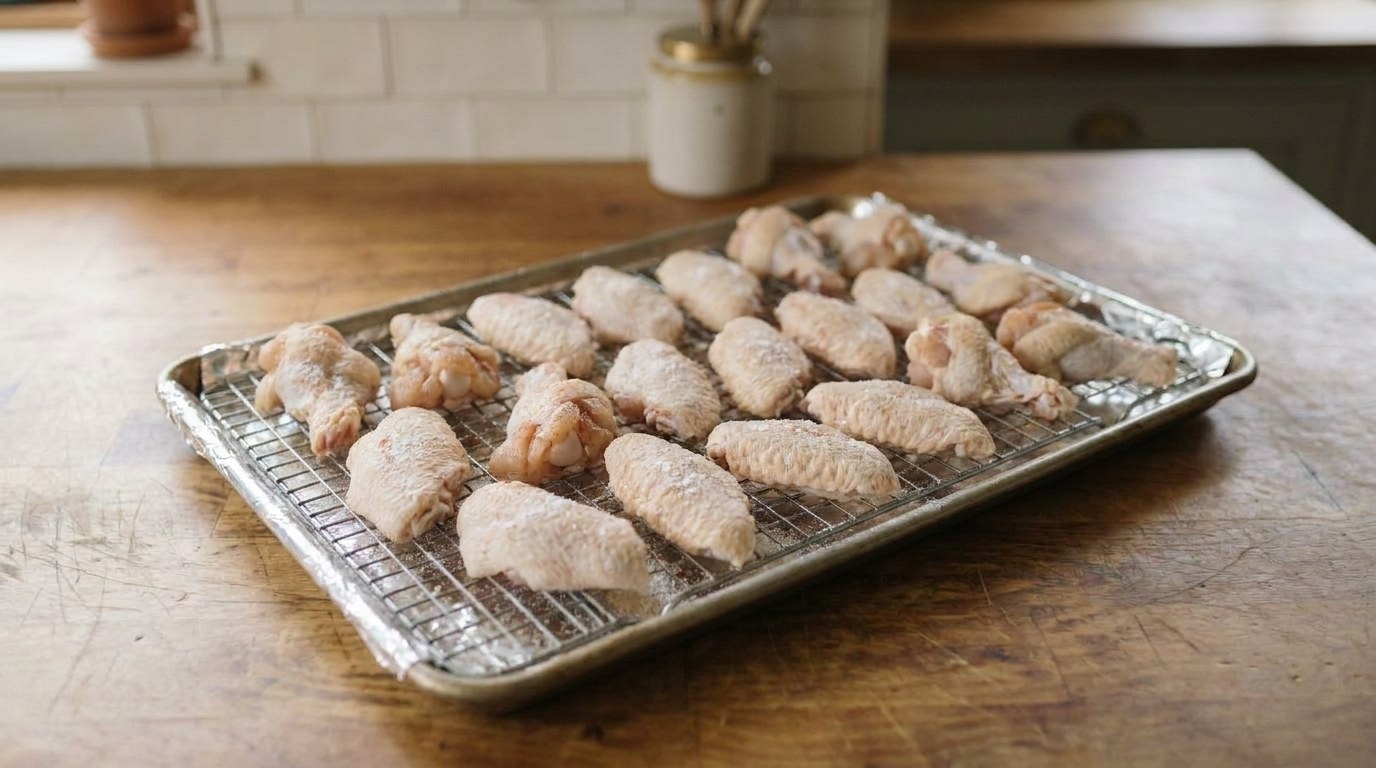
The overnight rest matters as much as the powder. Water cannot get hotter than 212°F (100°C), and browning starts at about 284°F (140°C), so damp skin sits in the oven steaming until every drop has boiled off. The cold, dry air of the fridge does that drying for you while you sleep, which means the skin starts browning soon after it goes into the oven instead of 20 minutes later. Leave the wings uncovered on the rack for 8 to 24 hours. If you only have an hour, it still helps; just expect the roast to take the longer end of the time.
One habit to drop: rinsing the wings first. The USDA Food Safety and Inspection Service advises against washing raw poultry, because the water does not remove bacteria and splashes them around the sink instead. It also puts back the water you are trying to get rid of. Pat the wings dry with paper towels straight from the pack and wash your hands and the board afterwards.
How Long to Bake Chicken Wings at 425°F
Bake split chicken wings at 425°F (220°C) on a rack for 40 to 45 minutes, turning them once halfway, until the skin is deep golden and crisp and the thickest drumette reads at least 175°F. The rack is what lets the oven reach all sides. Wing skin carries a thick layer of fat underneath, and as the skin heats that fat melts and drips through to the pan below, so the skin thins out, dries and finally browns. Without a rack the wings sit in their own rendered fat and the undersides stay soft.
The color you are waiting for is the Maillard reaction, which picks up speed above 300°F at the surface and gives roast chicken its savory, toasty flavor. A 425°F oven gets the dry skin well into that range while the meat inside cooks more gently. Give each wing a little space; a crowded pan traps steam between the pieces and slows the whole thing down. For a double batch, use two pans on the upper and lower racks and swap them halfway.
Food safety first: the USDA safe minimum for chicken is 165°F (74°C), and a wing is safe the moment it gets there. Most cooks take wings further on purpose, though. Wings are full of connective tissue around the joints, and that collagen needs time above about 154°F to melt into gelatin. ThermoWorks recommends 175°F for that reason, and plenty of wing cooks go to 185°F or higher for meat that pulls away from the bone. Wings are forgiving there in a way a chicken breast is not.

ThermoPro
ThermoPro TempSwift Instant-Read Digital Thermometer
- Reads in about 1 second, accurate to ±0.9°F, with a 4.3-inch food-grade stainless probe
- Hold and calibration functions, so you can lock a reading away from the heat
- NSF certified and IP65 waterproof, rinse it clean under the tap
Probe the fattest drumette from the side, into the thickest meat and away from the bone, since bone reads hotter than the meat around it. Wings are small, so an instant-read thermometer that answers in a second or two is the easiest way to check a few pieces without letting the oven cool. The oven thermometer guide is worth a look too, because many home ovens run 25°F off their dial, and that is the difference between crisp and leathery.
How to Make a Sticky Spicy Tamarind Glaze That Doesn't Burn
A sticky tamarind glaze is a sweet, sour and spicy reduction: tamarind paste, honey, brown sugar, ketchup and Worcestershire simmered with garlic, chilli flakes, toasted cumin and fennel seed and a splash of stock until it is thick enough to coat a spoon, about 8 to 10 minutes. Make it in a saucepan while the wings are in the oven. Toasting the whole seeds in the dry pan for a minute first wakes up their oils, the same step Ramsay's restaurant recipe starts with.
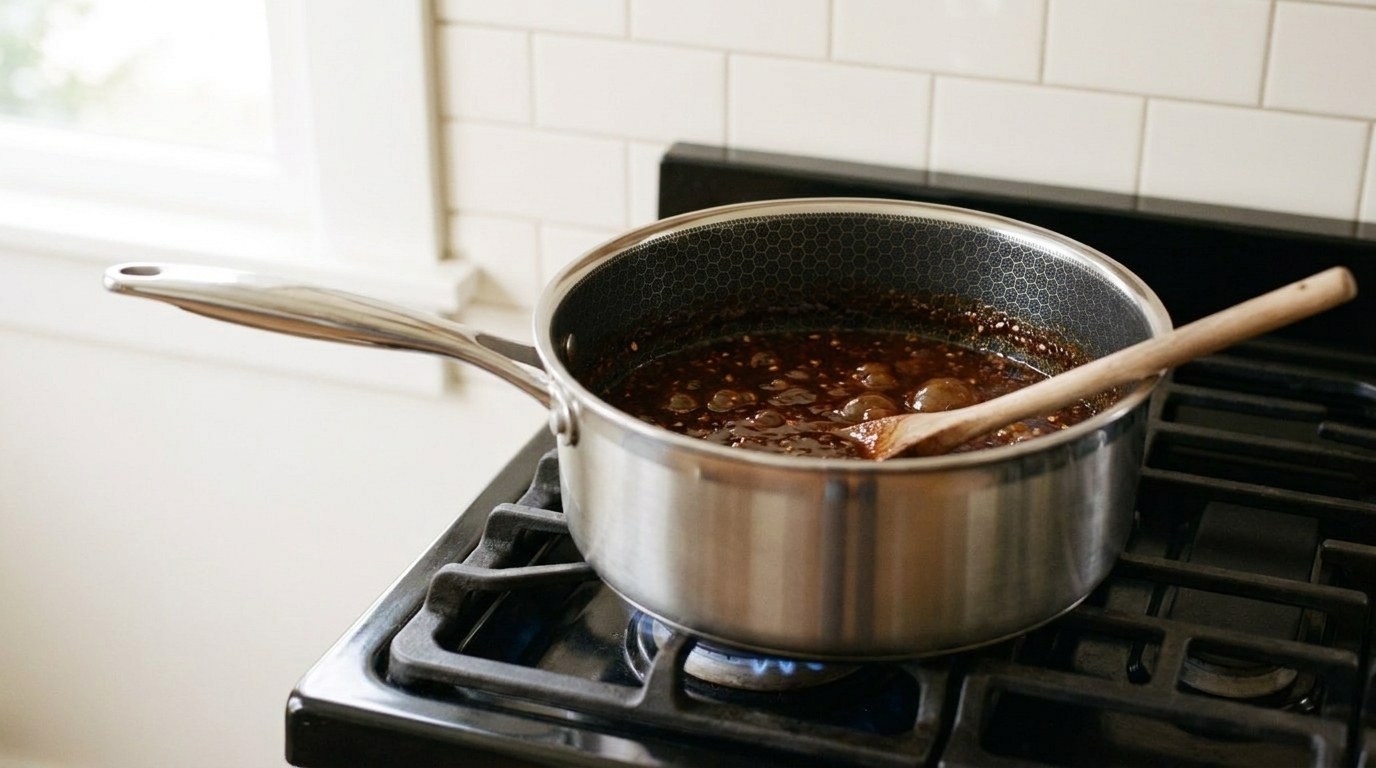
Tamarind is what keeps the glaze from tasting like candy. The pulp is naturally acid-sweet, high in tartaric acid and invert sugars, and Purdue University's NewCROP notes it is an ingredient in some Worcestershire and barbecue sauces, which is why the two taste so good together. As the glaze simmers, water evaporates and the sugars concentrate, so the bubbles get bigger and slower. Pull it off the heat when it coats the back of a spoon and a line drawn through it holds for a second. It thickens more as it cools, so stop a little before you think it is ready.
The reason the glaze waits for the end is sugar. Sugars caramelize from about 320 to 338°F (160 to 170°C), and honey browns fastest of all because it is rich in fructose. Past about 356°F (180°C) that caramel starts to burn and turns bitter, and a sugary coat sitting on wings for 45 minutes in a 425°F oven will get there long before the skin is crisp. The same goes for marinating wings in a sweet sauce: the sugar burns, and the flavor barely gets past the skin anyway, since only salt travels deep into meat. Crisp the wings first, then glaze.
Glazing Gordon Ramsay Chicken Wings So They Stay Crisp
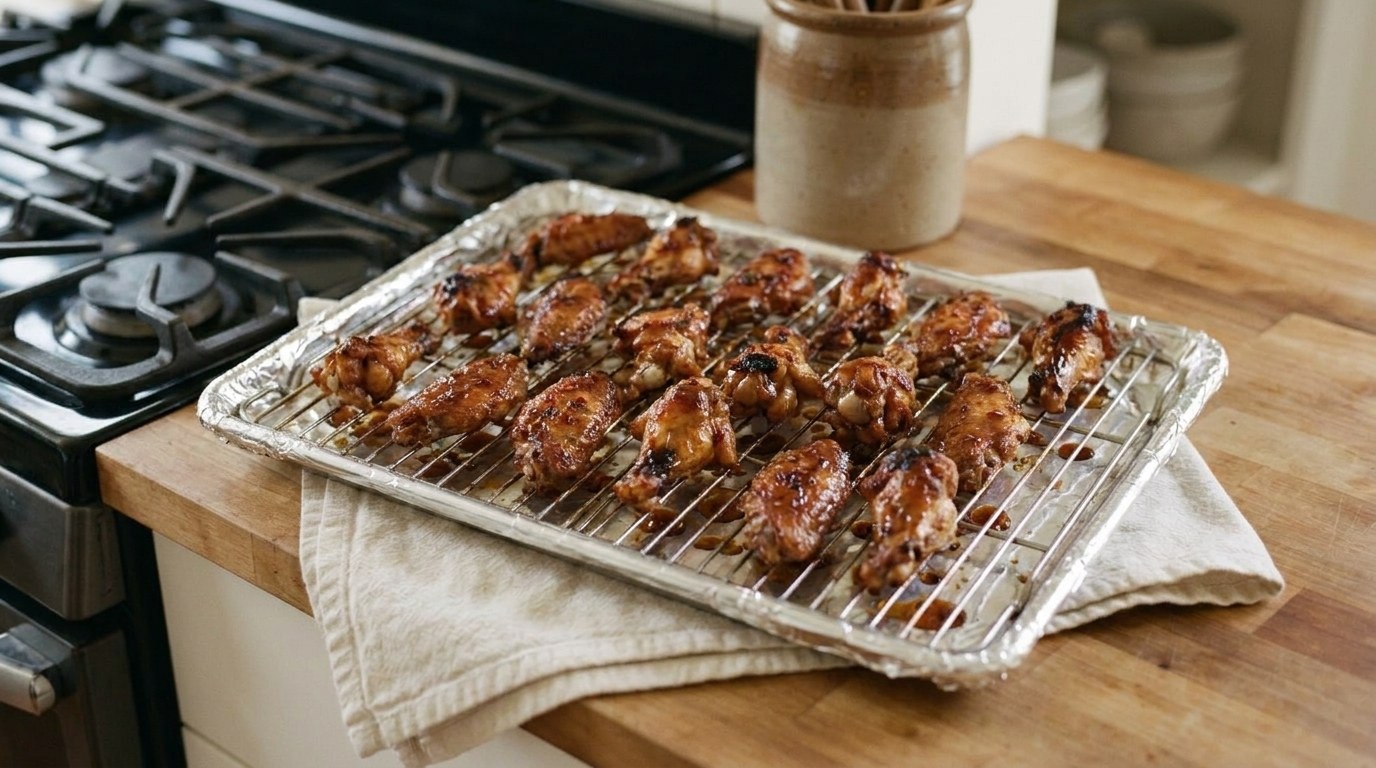
To glaze Gordon Ramsay chicken wings without losing the crunch, toss the hot, crisp wings in about two-thirds of the glaze in a big bowl, spread them back on the rack and return them to the 425°F oven for 4 to 5 minutes. That short blast sets the glaze into a tacky coat and lets the thinnest edges caramelize. Watch the last minute closely; a few dark spots on the tips are good, black patches are bitter. Toss with the rest of the glaze and let them sit for 3 to 5 minutes, as the coating firms up as it cools to the sticky stage.
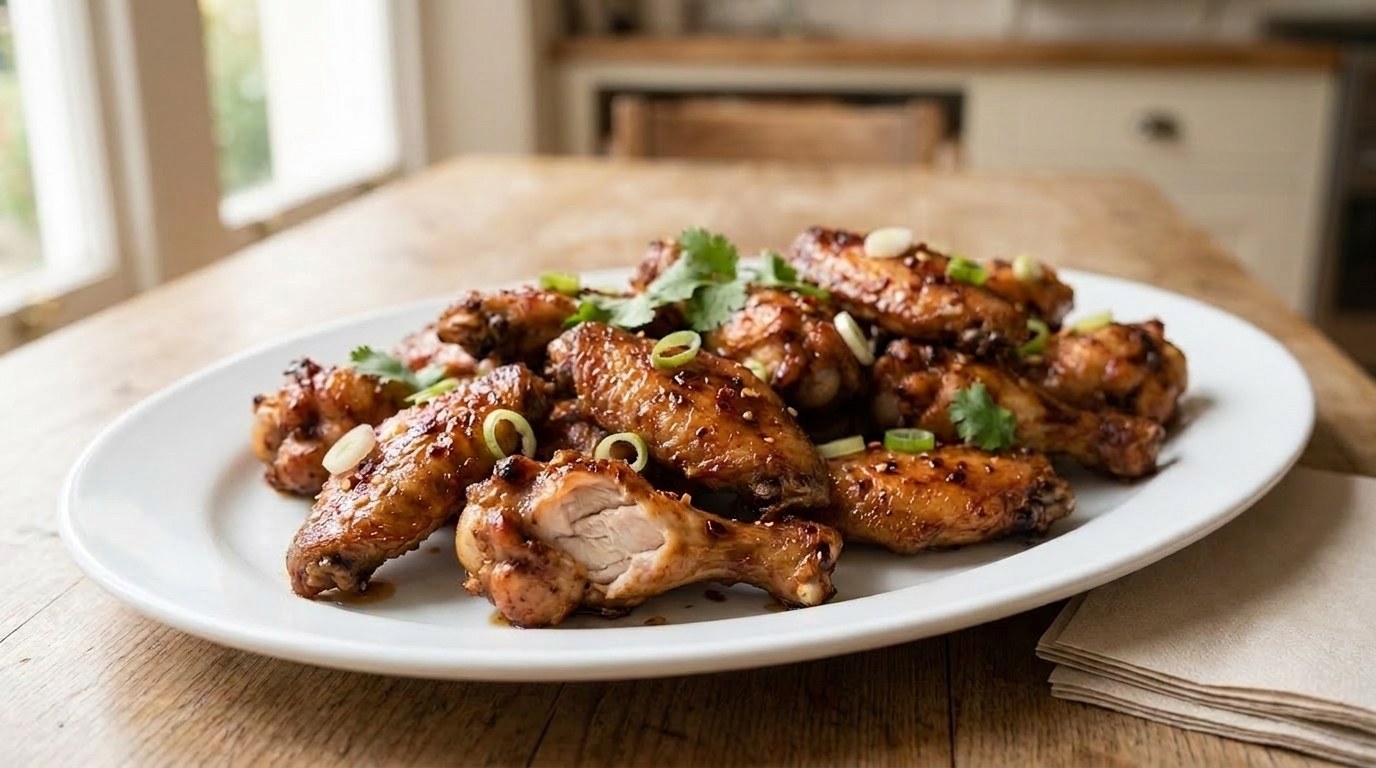
Finish with sliced scallions and a few cilantro leaves, the same fresh, sharp garnish his restaurant recipe uses, and serve them straight away. A glaze always softens crisp skin a little over time, and wings that were dried and rendered properly hold their texture for a good 20 minutes on the table. For extra heat, add a second teaspoon of chilli flakes or a spoonful of sriracha to the glaze; for a funkier, Southeast Asian edge, a teaspoon of fish sauce works well in place of some of the Worcestershire.
What to Serve With Sticky Spicy Wings
Sticky spicy wings want something cool and crunchy beside them. A sharp, creamy Gordon Ramsay coleslaw is the obvious partner, cucumber spears or celery sticks cut through the sweetness, and a bowl of creamy mac and cheese or homemade baked beans turns a plate of wings into dinner. Steamed jasmine rice soaks up any glaze left on the platter.
Leftovers keep up to 4 days in the fridge. Reheat them on a rack in a 375°F oven for 10 to 12 minutes, until hot through to 165°F; the microwave steams the skin soft. You can also roast the wings up to 2 hours ahead, leave them on the rack, and glaze them in the last 10 minutes before serving.
If Gordon Ramsay chicken wings are your oven-baked weeknight wing, his buttermilk fried chicken is the deep-fried weekend project, and the Hellfire chicken burger brings the heat to a bun. The rest of his poultry dishes are in the best Gordon Ramsay chicken recipes.
Gordon Ramsay Sticky Spicy Tamarind Chicken Wings
Ingredients
Wings
- 2 lb chicken wings (about 900 g), split into drumettes and flats, tips saved for stock
- 2 tsp aluminum-free baking powder (not baking soda)
- 1 tsp kosher salt
- 1 tsp smoked paprika
Sticky tamarind glaze
- 1/2 tsp cumin seeds
- 1/2 tsp fennel seeds
- 3 tbsp seedless tamarind paste or concentrate
- 3 tbsp honey
- 2 tbsp light brown sugar
- 2 tbsp ketchup
- 1 tbsp Worcestershire sauce
- 1 to 2 tsp red chilli flakes
- 2 garlic cloves, finely grated
- 1/2 cup chicken stock (120 ml)
To finish
- 2 scallions, thinly sliced
- a small handful of cilantro leaves
Instructions
- Pat the wings very dry with paper towels (do not rinse them). In a large bowl, mix the baking powder, salt and smoked paprika, add the wings and toss until every piece has a thin, even coat.
- Set a wire rack inside a foil-lined rimmed sheet pan and arrange the wings on it in a single layer, skin side up, with a little space between them. Refrigerate uncovered for 8 to 24 hours (at least 1 hour if you are short on time).
- Heat the oven to 425°F (220°C) with a rack in the upper-middle position. Roast the wings on their rack for 20 minutes, turn them over, and roast 20 to 25 minutes more, until deep golden and crisp and the thickest drumette reads at least 175°F.
- While the wings roast, toast the cumin and fennel seeds in a dry 3-quart saucepan over medium heat for about 1 minute, until fragrant, then tip them out and crush them coarsely.
- Put the crushed seeds back in the saucepan with the tamarind, honey, brown sugar, ketchup, Worcestershire, chilli flakes, garlic and stock. Bring to a simmer over medium heat and let it bubble gently, stirring now and then, for 8 to 10 minutes, until reduced by about half and thick enough to coat the back of a spoon. Take it off the heat.
- Tip the hot wings into a large bowl, pour over about two-thirds of the glaze and toss to coat. Spread them back on the rack and return to the oven for 4 to 5 minutes, until the glaze is set and tacky and just starting to caramelize at the edges. Watch closely so it does not burn.
- Toss the wings with the remaining glaze, let them sit for 3 to 5 minutes so the glaze firms up, then pile onto a platter and scatter with the scallions and cilantro. Serve hot.
Notes
Gordon Ramsay Chicken Wings FAQs
The questions that come up most: how Gordon Ramsay cooks chicken wings, whether he has a tamarind wing recipe, how long to bake sticky wings, whether baking powder makes wings crispy, how much baking powder to use, what internal temperature wings should reach, and how to reheat sticky wings.
How does Gordon Ramsay cook chicken wings?
His own baked wings are seasoned with garlic powder, smoked paprika and salt, browned in oil and butter in an oven-proof sauté pan, finished in a 375°F oven for about 15 minutes until they reach 165°F, then tossed with the pan juices, hot sauce and butter. His restaurant group also publishes deep-fried tamarind spiced wings, and his daughter Tilly has a roasted sticky wing with a sriracha and honey glaze.
Does Gordon Ramsay have a tamarind chicken wing recipe?
Yes. Gordon Ramsay Restaurants publishes tamarind spiced chicken wings: the wings are marinated in a spiced egg and Dijon mix, floured and deep-fried at 350°F, then tossed in a tamarind sauce with honey, brown sugar, Worcestershire, toasted seeds and stock that simmers for up to two hours. This recipe uses the same flavors in a 10-minute glaze on oven-baked wings.
How long do you bake sticky chicken wings?
Bake split wings on a rack at 425°F for 40 to 45 minutes, turning once, until crisp and at least 175°F inside. Then toss them in the glaze and return them to the oven for 4 to 5 minutes to set it. Glazing at the start burns the sugar before the skin crisps.
Does baking powder make chicken wings crispy?
Yes. Tossed with salt and left on a rack in the fridge, baking powder draws moisture out of the skin and raises its pH, which helps the skin brown and break down into a crisp, blistered surface in the oven. Use baking powder, not baking soda, which tastes soapy.
How much baking powder per pound of chicken wings?
About 1 teaspoon of aluminum-free baking powder per pound of wings, mixed with the salt and any dry spices so it coats evenly. More than that can leave a bitter, chemical taste.
What internal temperature should chicken wings be?
Chicken is safe at 165°F, the USDA minimum. Wings taste better taken higher, to about 175°F or even 185°F, because the extra time melts the connective tissue around the joints into gelatin. Probe the thickest drumette away from the bone.
Should you wash chicken wings before cooking?
No. The USDA advises against rinsing raw poultry because it spreads bacteria around the sink and does not make the chicken safer; cooking to 165°F does that. Pat the wings dry with paper towels instead, which also helps the skin crisp.
How do you reheat sticky chicken wings?
Spread them on a rack over a sheet pan and reheat in a 375°F oven for 10 to 12 minutes, until hot through to 165°F. The oven crisps the skin again and warms the glaze; a microwave steams the skin soft.

About the Author
John Siracusa is the founder of Hell’s Kitchen Recipes. He focuses on technique-first, reproducible home cooking and researches recipes & kitchen equipment from published food science and professional chef methods since 2016.