A good Alfredo sauce is three or four ingredients doing one job: staying silky. Gordon Ramsay's version melts freshly grated Parmesan into butter and cream for a glossy sauce that coats the pasta instead of splitting into a puddle of grease. The whole trick is heat control and the cheese you use.
This guide explains why the sauce sometimes turns grainy, the pasta-water step that makes it cling, and how the creamy American version differs from the original Roman one.
Why Alfredo Sauce Turns Grainy
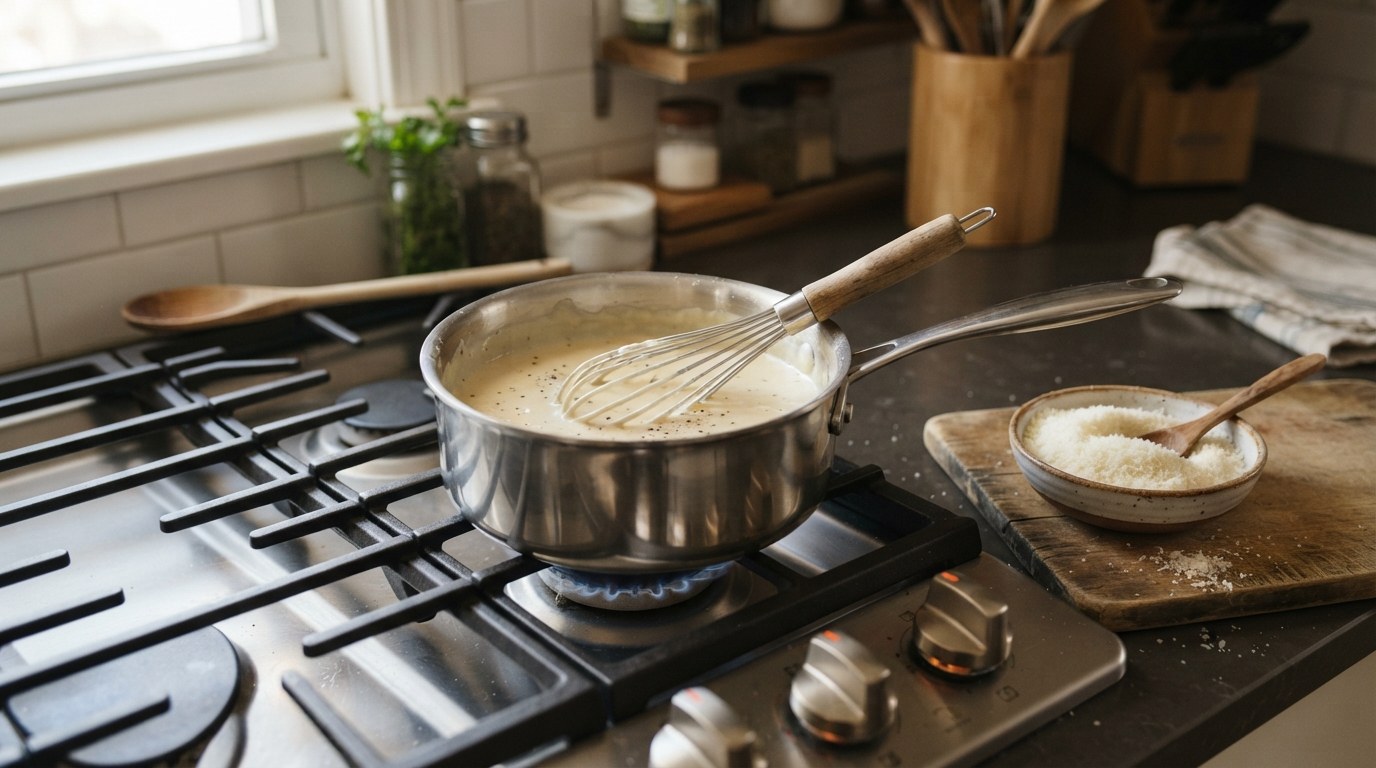
Alfredo is an emulsion: cheese and butter fat suspended in the watery cream, held together by the cheese's proteins. Push it too hot and those proteins clump and squeeze the fat out, which is the grainy, oily sauce everyone has made once. The fix is gentle heat: melt the Parmesan into the sauce off the boil, a little at a time, and never let it bubble hard.
The cheese matters as much as the heat. Grate a block of real Parmigiano-Reggiano yourself; the pre-grated tubs are dusted with anti-caking starch that stops the cheese melting cleanly and leaves the sauce gritty. Freshly grated melts smooth. One mercy of the cream version: heavy cream is about 36% fat, and dairy above roughly 25% fat is heat-stable, so the cream makes this sauce more forgiving than a cheese-only one.
The Pasta-Water Trick
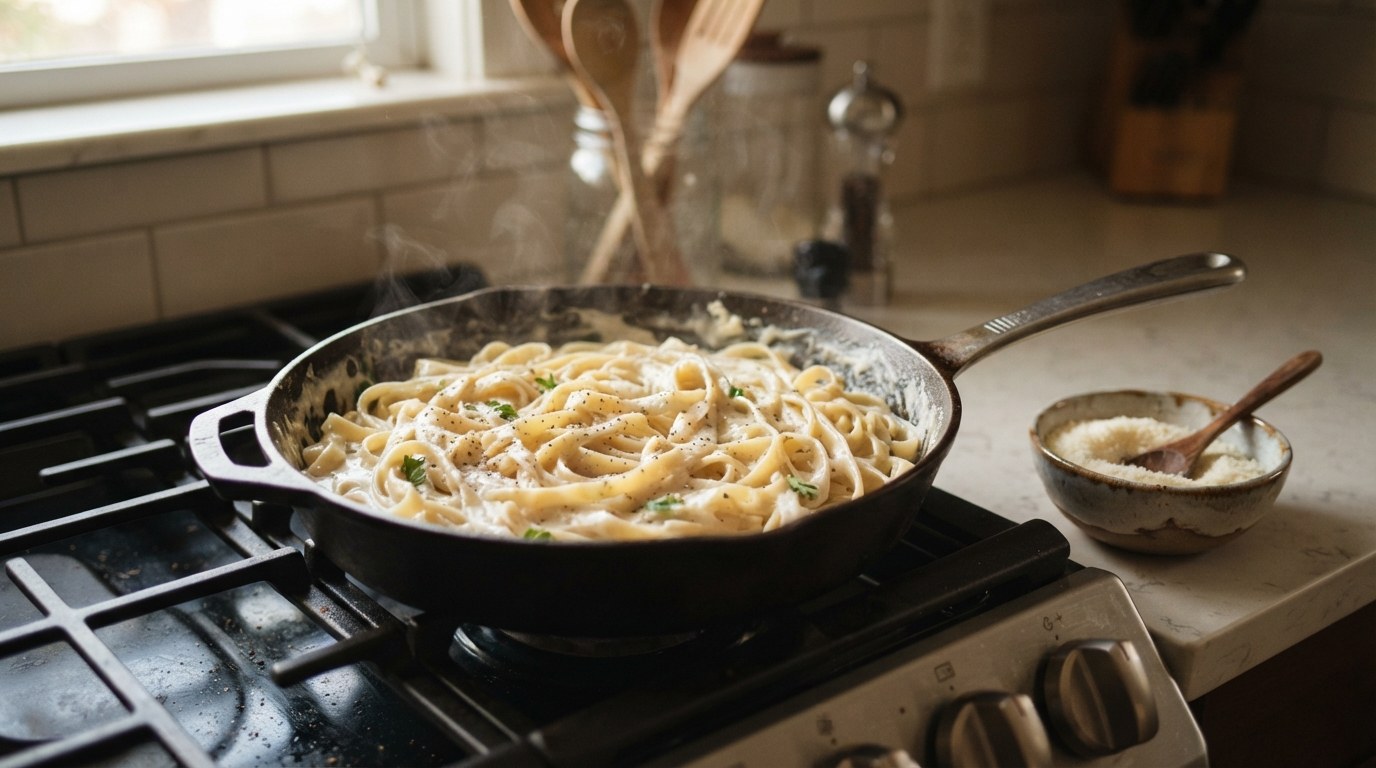
Finish the pasta in the sauce, not the other way around. Drain the fettuccine a minute early, reserve a mugful of the starchy cooking water, and toss the pasta in the pan with the sauce and a splash of that water. The dissolved starch thickens the sauce and stabilizes the emulsion, the same way it does in a cheese sauce, so it turns glossy and clings to every strand instead of sliding off. Add the water a little at a time until it coats a spoon.
Real Alfredo vs the Creamy Version
What most people call Alfredo is the American version: cream, butter, Parmesan, and usually garlic. The original has no cream at all. Fettuccine Alfredo was created in Rome in 1908 by Alfredo di Lelio as fettuccine al burro, just butter and Parmesan emulsified with a little pasta water into a rich, glossy coating. American cooks added cream in the mid-20th century for a richer, more stable sauce, which is the style in the card here and the one most home recipes follow.
Both are legitimate; they are just different dishes. If you want the authentic version, skip the cream and lean hard on the pasta water and freshly grated Parmesan, a technique good cooks swear by. For a crowd-pleasing, foolproof sauce, the creamy version wins.
| Feature | Authentic (Roman) Alfredo | American Alfredo |
|---|---|---|
| Origin | Rome, 1908 (Alfredo di Lelio) | Mid-20th-century United States |
| Base | Butter and Parmesan only | Heavy cream, butter, Parmesan |
| What thickens it | Starchy pasta water emulsified with the cheese | Reduced cream |
| Garlic | None | Usually yes |
| Texture | Glossy, light coating | Thick, rich, more stable |
| Best for | Purists, fresh pasta, right away | Crowd-pleasing, make-ahead |
They are really two different dishes that share a name. The Roman original is pure technique, where butter and Parmesan ride on the pasta water; the American version leans on cream as insurance so the sauce holds together with less finesse.
What to Serve It With
Alfredo is classic on fettuccine, but it carries linguine, penne, or a batch of homemade fresh pasta just as well. Add grilled chicken or sautéed shrimp to make it a meal, or fold in the sauce with seafood for a take on our lobster spaghetti. Browse the full recipes collection for more.
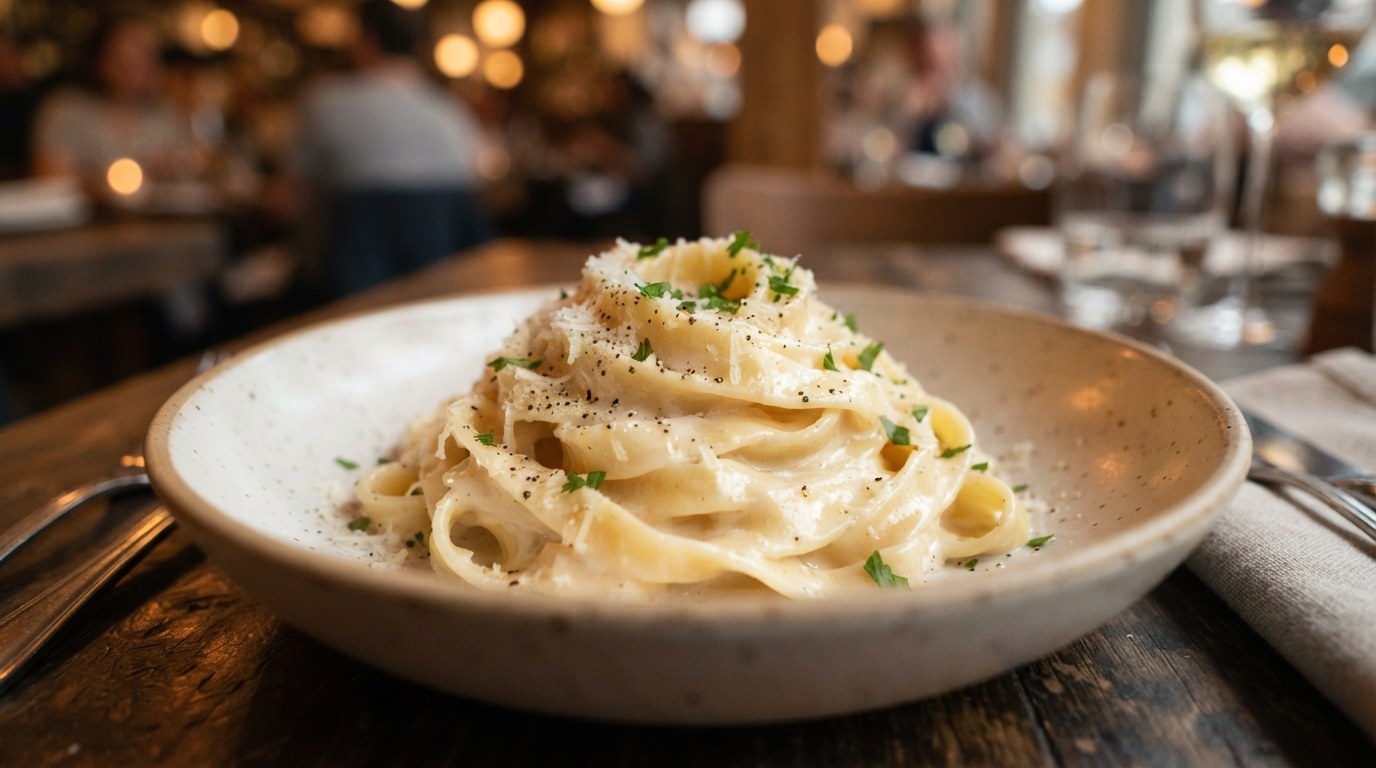
Gordon Ramsay's Alfredo Sauce
Ingredients
- 1 cup heavy cream
- 1/2 cup unsalted butter
- 1 cup freshly grated Parmesan cheese
- 2 cloves garlic, minced
- Salt and freshly ground black pepper, to taste
- Optional: a pinch of nutmeg
- Optional: 1 Tbsp chopped fresh parsley
Instructions
- Melt the butter in a saucepan over medium heat. Add the minced garlic and sauté about 1 minute, until fragrant but not browned.
- Pour in the heavy cream, bring to a gentle simmer, and stir frequently.
- Reduce the heat to low. Gradually add the grated Parmesan, whisking constantly, until melted and smooth.
- Season with salt, pepper, and a pinch of nutmeg if using. Simmer gently a few minutes to thicken; do not let it boil, or the cheese can separate.
- Stir in the parsley if using. Toss with cooked pasta and a splash of reserved pasta water, and serve hot with extra Parmesan.
Notes
Alfredo Sauce FAQs
The questions that come up most: why Alfredo sauce turns grainy, whether real Alfredo has cream, which cheese to use, and how to fix a sauce that is too thick or too thin.
Why did my Alfredo sauce turn grainy or oily?
It got too hot. The cheese proteins clumped and squeezed the fat out. Melt the Parmesan into the sauce over low heat, off the boil, a little at a time, and use freshly grated cheese rather than the pre-grated tubs.
Does real Alfredo sauce have cream?
The original Roman version (fettuccine al burro, 1908) has no cream at all, just butter and Parmesan emulsified with pasta water. The creamy sauce most people know is an American adaptation that adds heavy cream and often garlic.
What cheese is best for Alfredo?
Freshly grated Parmigiano-Reggiano. Grate it from a block; pre-grated cheese is coated in anti-caking starch that keeps it from melting smoothly and makes the sauce gritty.
How do I thicken Alfredo sauce?
Simmer it gently a little longer to reduce, or add more grated Parmesan off the heat. A splash of starchy pasta water also thickens it and helps it cling. Avoid flour, which dulls the flavor.
How do I thin Alfredo sauce or fix it if it is too thick?
Loosen it with a little reserved pasta water or a splash of warm cream or milk, stirring over low heat until it coats a spoon again.
Can you reheat Alfredo sauce?
Yes, gently. Warm it over low heat with a splash of milk or cream, stirring, so the emulsion comes back together. High heat will break it. It is best made fresh and served right away.

About the Author
John Siracusa is the founder of Hell’s Kitchen Recipes. He focuses on technique-first, reproducible home cooking and researches recipes & kitchen equipment from published food science and professional chef methods since 2016.