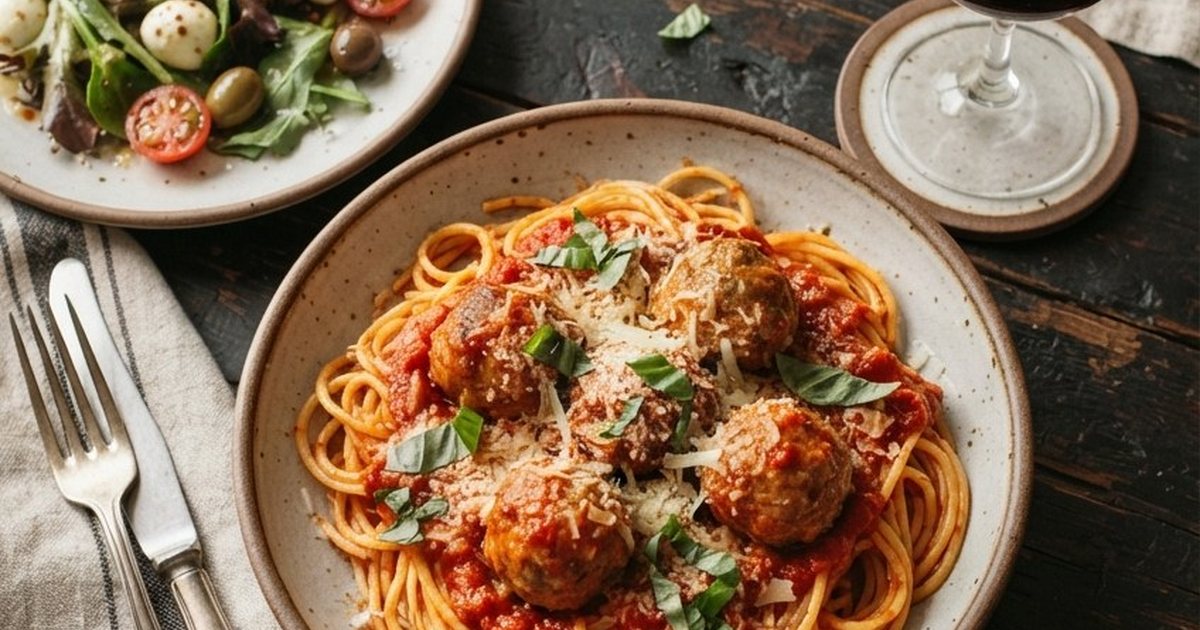
Gordon Ramsay’s meatballs get their tenderness from three moves: a blend of ground beef and pork for fat and flavor, a milk-and-breadcrumb panade that keeps the inside soft, and a hard sear that browns the surface before the meatballs finish in tomato sauce. This guide covers the technique behind each step, drawn from Ramsay’s own method and the food science that explains why it works, the same way we handle every recipe in our cooking techniques library.

What makes Gordon Ramsay’s meatballs different
Ramsay’s meatballs are built on restaurant fundamentals rather than shortcuts. He uses a 50/50 blend of beef and pork, seasons with fresh garlic, parsley, basil, and oregano, folds in Parmesan for a salty, nutty backbone, and insists on browning the meatballs before they ever touch sauce. It is an Italian-American classic run through professional technique, and the result is a meatball that holds together, stays juicy, and tastes of more than just ground meat.
Why the beef-and-pork blend matters
Beef brings the deep, savory flavor people expect from a meatball, but on its own it can cook up dense and dry. Pork adds fat and a softer texture, so the two together stay moist and tender through the long simmer in sauce. A 50/50 ratio is the balance most chefs land on; push too far toward lean beef and the meatballs tighten, too far toward pork and they lose their beefy character. If you can only get one, ground chuck at around 80/20 fat is the closest single-meat substitute.
The panade: why milk and breadcrumbs go in
The mix of breadcrumbs soaked in milk is called a panade, and it is the single most important thing separating a tender meatball from a rubbery one. As the meatball cooks, the starch and liquid hold onto moisture and physically get between the meat proteins so they cannot bind into a tight, springy mass. Eggs bind the mixture just enough to hold its shape without toughening it. One chef’s move worth stealing: chill the mixture before shaping, because cold fat and cold hands make a firmer, rounder meatball that browns better.
Browning first: Ramsay’s signature step

Ramsay browns his meatballs hard before adding any sauce, and that sear is not optional. Searing triggers the Maillard reaction, the chemistry between amino acids and sugars that builds the roasted, savory crust a raw-then-simmered meatball never develops. Get the pan and oil properly hot, brown the meatballs on all sides without crowding the pan, then transfer them to the tomato sauce to finish cooking through. The browning is for flavor; the gentle simmer is what actually cooks the center.
Bake or pan-sear? How the methods compare
There is no single right way to brown meatballs, only tradeoffs. Pan-searing gives the deepest crust and the most control, baking is hands-off and even, and finishing in sauce keeps them the most tender. Here is how the three common approaches line up:
| Method | Browning | Effort | Best for |
|---|---|---|---|
| Pan-sear, then braise (Ramsay’s way) | Deepest crust | Hands-on | Maximum flavor |
| Oven-bake, then add to sauce | Even, lighter | Hands-off | Big batches, weeknights |
| Poach straight in the sauce | None | Easiest | Softest texture, least flavor |
Whichever you choose, the finish line is the same. Because these are made with ground meat, cook them to a safe internal temperature of 160°F, the USDA minimum for ground beef and pork. A quick check with an instant-read thermometer beats cutting one open and letting the juices run out.
What to serve with Ramsay’s meatballs

The classic plate is spaghetti with marinara and a heavy shower of Parmesan, ideally the real Parmigiano-Reggiano for that nutty, crystalline bite. Ramsay also serves meatballs as a mozzarella-topped sandwich, or over creamy polenta or risotto for something more substantial. And one of his most talked-about versions swaps the tomato sauce entirely for a fragrant coconut-milk curry broth, a lighter, aromatic take worth trying once you have the base recipe down. If you want to make the spaghetti from scratch to go under them, our fresh pasta guide walks the dough; for a richer sauce, his Bolognese uses the same browning logic.
Make ahead, freezing, and storage
Meatballs are built for making ahead. Freeze them uncooked in a single layer on a tray, then bag them for up to three months and brown straight from frozen. Cooked meatballs freeze well in their sauce; cool them completely first and reheat gently, since aggressive reheating tightens the meat. In the fridge, cooked meatballs in sauce keep for up to four days, which makes a double batch the easiest weeknight dinner you will make all week.
Frequently Asked Questions
The questions home cooks ask most about Gordon Ramsay’s meatballs: the meat blend, the breadcrumbs, browning, and freezing.
How does Gordon Ramsay make his meatballs tender?
Three things: a 50/50 blend of ground beef and pork for fat and flavor, a panade of breadcrumbs soaked in milk that keeps the interior soft, and a hard sear before the meatballs finish cooking in tomato sauce. Chilling the mixture before shaping helps them hold together and brown better.
Why does Gordon Ramsay use both beef and pork?
Beef delivers the deep, savory flavor and pork adds fat and a softer texture, so together they stay moist through a long simmer. All-beef meatballs tend to cook up dense and dry; the blend is what keeps them tender. Ground chuck at 80/20 is the closest single-meat substitute.
Can I bake the meatballs instead of frying them?
Yes. Baking is hands-off and cooks them evenly, which is ideal for big batches, though pan-searing builds a deeper crust through the Maillard reaction. Either way, finish or hold them in the tomato sauce for the most tender result, and cook to 160°F internal.
Can I use panko breadcrumbs?
Panko works, but it is coarser and drier than the fine dried breadcrumbs a panade usually calls for, so soak it a little longer in the milk until it softens fully. The goal is a paste that disappears into the meat, not visible crumbs, so any plain breadcrumb that hydrates will do the job.
Can you freeze Gordon Ramsay’s meatballs?
Yes, both ways. Freeze them uncooked in a single layer, then bag for up to three months and brown from frozen. Or freeze cooked meatballs in their sauce once fully cooled, and reheat gently so the meat does not toughen.
What does Gordon Ramsay serve with his meatballs?
Classically spaghetti with marinara and Parmesan, but also as a mozzarella-topped meatball sandwich, over polenta or risotto, or in his aromatic coconut-milk curry version that swaps the tomato sauce for a lighter broth.
Sources
- USDA Food Safety and Inspection Service — 160°F safe minimum for ground beef and pork
- Encyclopaedia Britannica — the Maillard browning reaction
- Gordon Ramsay Restaurants — turkey and courgetti meatball variation
- Parmigiano-Reggiano Consortium — authentic Parmesan
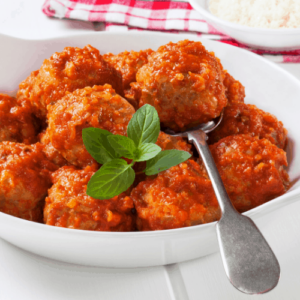
Gordon Ramsay Meatballs Recipe
Ingredients
For the Meatballs
- 1 pound ground beef
- 1/2 pound ground pork
- 1 cup breadcrumbs
- 2 large eggs
- 1/2 cup whole milk
- 1/2 cup freshly grated Parmesan cheese
- 4 cloves garlic minced
- 1/4 cup fresh parsley finely chopped
- 2 tablespoons fresh basil chopped
- 1 teaspoon dried oregano
- 1 teaspoon salt
- 1/2 teaspoon black pepper
- 3 tablespoons olive oil
- 2 cups marinara sauce
- Fresh basil leaves for garnish
For the Sauce
- 2 tablespoons olive oil
- 2 shallots, peeled and finely diced
- 2 cloves garlic, chopped
- 1 red pepper, finely sliced
- 1 ounce dry white wine
- 2 cans chopped tomatoes
- A small bunch of basil, chopped
- 1 tablespoon chopped oregano
- Salt and freshly ground black pepper to taste
To Serve
- Extra grated Italian Romano cheese
Instructions
Prepare the Meatballs:
- In a bowl, soak the breadcrumbs in milk.
- Combine the soaked breadcrumbs, ground beef, pork, halved garlic cloves, chopped parsley, and grated Romano cheese in a large mixing bowl. Season with salt and pepper.
- Mix the ingredients until well combined. Form the mixture into small meatballs.
- Lightly dust the meatballs with flour.
Cook the Meatballs:
- Heat 1 tablespoon of olive oil in a skillet over medium heat.
- Add the meatballs and cook until browned on all sides. Remove and set aside.
Make the Sauce:
- In the same skillet, heat 2 tablespoons of olive oil.
- Add the diced shallots, chopped garlic, and sliced red pepper. Cook until softened.
- Deglaze the pan with the dry white wine, scraping up any browned bits.
- Add the canned tomatoes, basil, and oregano. Bring to a simmer.
- Return the meatballs to the skillet, cover, and let them simmer in the sauce for about 20-30 minutes.
- Serve the meatballs hot with a sprinkle of extra-grated Romano cheese.
- Accompany with pasta, bread, or as desired.
Notes

About the Author
John Siracusa is the founder of Hell’s Kitchen Recipes. He focuses on technique-first, reproducible home cooking and researches recipes & kitchen equipment from published food science and professional chef methods since 2016.