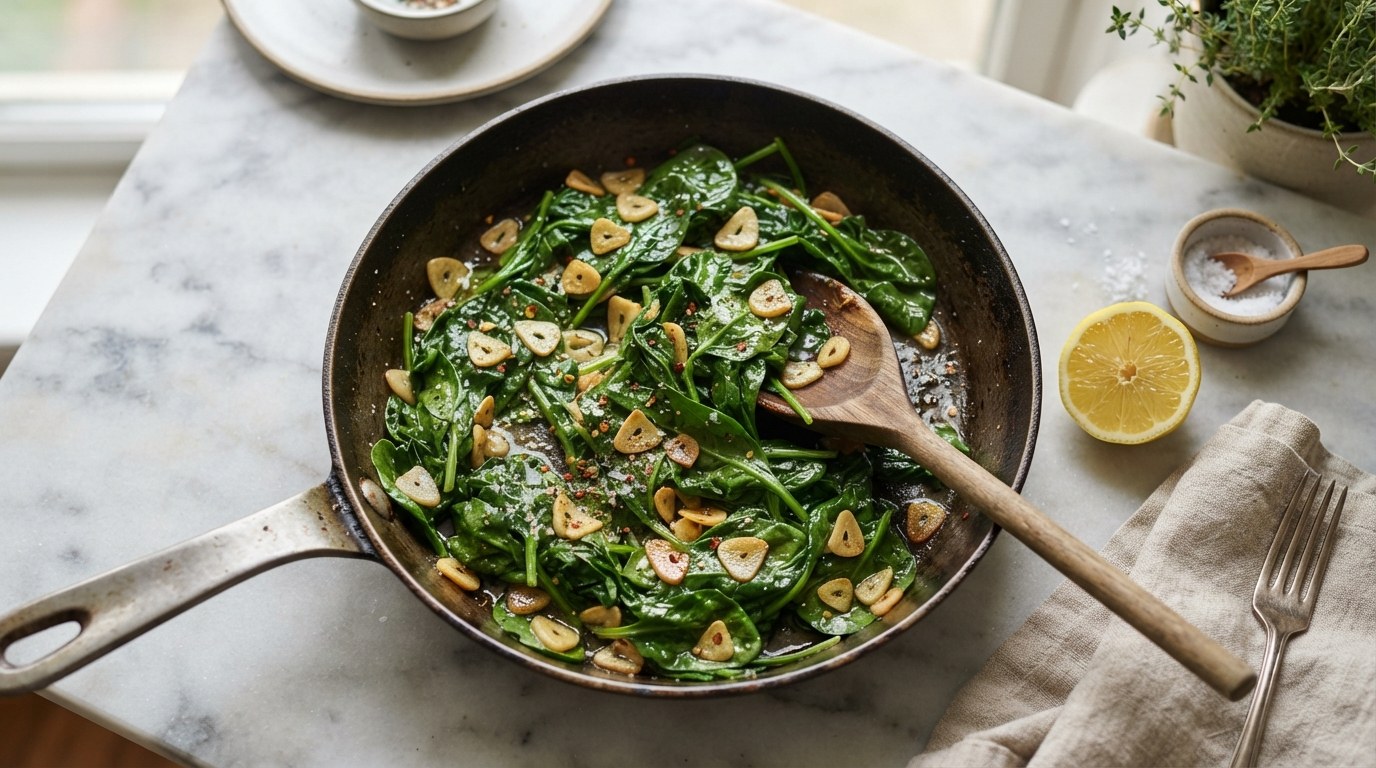
Sautéed spinach is fresh spinach wilted fast in hot oil with a little garlic, bright green and glossy, done in about ten minutes. It is one of Gordon Ramsay's standby sides for a reason: it costs almost nothing, it goes with everything, and it lives or dies on one thing, keeping it from turning into a grey, watery puddle.
The trick is a hot pan and dry leaves, and knowing when to stop. Here is the method, the food science that keeps it bright instead of soggy, and the answers to the two questions everyone asks: why it goes watery, and why it can taste bitter.
How to Sauté Spinach
Sautéing spinach is quick, so have everything ready before the pan goes on. Warm the oil, add sliced garlic and let it turn pale gold, then pile in the spinach in handfuls and turn it with tongs until it wilts. Season it at the very end, off the heat, with salt, pepper, and a squeeze of lemon. The whole thing takes two or three minutes of actual cooking, which is why Ramsay's rule of getting organized first matters here: once the spinach hits the pan, there is no time to go looking for the tongs.
Keep the heat up and keep the spinach moving. You want it just wilted and still bright green, not stewed down to khaki. The moment the last leaves collapse, it is done.
Why Spinach Collapses So Much
Fresh spinach is about 91 percent water, and the leaves are mostly air and thin cell walls, so as soon as heat ruptures those walls the whole pile deflates. A pound of raw spinach, which looks like an enormous mountain of leaves, cooks down to roughly one cup. Buy far more than you think you need; two big bagfuls barely feed four as a side.
That collapse is the point of the dish, but the water it releases is also the problem. Where that water goes decides whether you get a sauté or a soggy braise.

The Fix for Watery Spinach
Watery spinach is spinach that steamed instead of sautéing. If the pan is not hot enough, or the leaves went in wet, or you crowded them all in at once, the released water pools and simmers the spinach into a grey, limp mess, the same way any green goes wrong when the pan is too cool or too full. The dry, high heat that browns and sears is what evaporates the water fast, and it only works with room in the pan.
So dry the spinach well after washing, get the pan properly hot, and add the leaves in batches, letting each handful wilt and its water flash off before the next goes in. A hot pan and dry leaves are the whole secret, and they are the same discipline Ramsay drills on anything you sauté: do not crowd it.
Garlic: Golden, Not Brown
Garlic is the flavor here, and it is easy to ruin. Thin slices of garlic have little mass and a lot of sugar, so they scorch in seconds, and burnt garlic turns sharply bitter once it passes golden and starts to blacken, the acrid stage that browning science calls pyrolysis. Add the garlic to warm, not screaming, oil.
Cook it for about a minute, just until it is pale gold and smells sweet, then get the spinach in to stop it cooking further. If the garlic is already brown before the spinach goes in, start over; it will only get worse in the pan.

Sautéed vs Steamed vs Raw
Cooking spinach is a trade, not a loss. Heat drives off some vitamin C, but it also shrinks the volume so you eat far more, and it lowers the oxalates that bind up calcium and iron in raw spinach, so you actually absorb more of those minerals from cooked spinach than raw, a point covered by Michigan State University Extension and the USDA nutrient data. The method matters more than whether you cook it at all.
| How you cook it | Volume | Vitamin C | Minerals (iron, calcium) |
|---|---|---|---|
| Raw | Huge, bulky | Highest | Bound up by oxalates, poorly absorbed |
| Sautéed (fast, high heat) | Collapses to ~1/10 | Some loss | More absorbable; little leaches out |
| Steamed | Collapses | Well retained | More absorbable; nothing leaches away |
| Boiled | Collapses | Most is lost to the water | Best oxalate drop, but minerals leach out too |
Sautéing and steaming are the sweet spot: enough heat to cut the oxalates and the bulk, not so much water that the goodness pours down the drain. Finishing with a squeeze of lemon adds back vitamin C, which in turn helps your body absorb the non-heme iron, the plant form, as the NIH Office of Dietary Supplements explains.
When to Salt, and Why
Salt at the end, once the spinach is wilted. Salt pulls water out of the leaves by osmosis, so salting at the start makes the spinach weep more and steam in its own liquid, exactly what you are trying to avoid. Wait until the leaves have collapsed and the pan is off the heat, then season and taste.
A pinch of flaky salt, a few grinds of pepper, and the lemon are all it needs. If you want heat, the red pepper flakes go in early, with the garlic, so they bloom in the oil.
Why Is My Spinach Bitter?
Bitter sautéed spinach is almost always overcooked spinach. Held on the heat too long, the bright green chlorophyll degrades into a dull, olive-drab compound called pheophytin, and the flavor turns flat and bitter along with the color. Cook it fast and pull it the moment it wilts.
If the spinach itself tastes a little bitter even cooked right, that is the natural oxalic acid in the leaf. A squeeze of lemon or a small pinch of salt balances it, and a shower of Parmesan covers it entirely.
What to Serve It With
Garlicky sautéed spinach is a side that goes with almost any protein: steak, chicken, eggs, and especially rich mains where its brightness cuts the fat. It sits naturally next to Gordon Ramsay's beef Wellington, a crispy duck breast, or a pile of Yukon Gold mashed potatoes.
Cooked spinach keeps three to four days covered in the fridge; reheat it quickly in a hot pan so it warms through without stewing to mush. For more quick sides and mains, see the full recipe collection.

Gordon Ramsay Sautéed Spinach
Ingredients
- 1 lb fresh spinach, washed and dried well (about 16 cups)
- 2 Tbsp olive oil (or 1 Tbsp oil plus 1 Tbsp butter)
- 3 to 4 cloves garlic, thinly sliced
- Salt and freshly ground black pepper, to taste
- 1/4 tsp red pepper flakes (optional)
- A squeeze of lemon juice (optional)
To serve
- Grated Parmesan (optional)
Instructions
- Wash the spinach and dry it very well in a salad spinner or with towels. Wet spinach steams instead of sautéing.
- Heat the olive oil in a large skillet over medium heat. Add the sliced garlic (and red pepper flakes, if using) and cook about 1 minute, just until pale gold and fragrant. Do not let it brown.
- Raise the heat to medium-high and add the spinach in handfuls, turning with tongs and adding more as each batch wilts. Cook 2 to 3 minutes total, just until wilted and glossy.
- Take the pan off the heat. Season with salt and pepper, and a squeeze of lemon if you like.
- Serve right away, with grated Parmesan if using.
Notes
Sautéed Spinach FAQs
The questions that come up most: why sautéed spinach turns watery or bitter, how much it cooks down, when to salt it, and whether cooking wrecks the nutrients.
Why is my sautéed spinach watery?
It steamed instead of sautéing. The pan was not hot enough, the leaves went in wet, or the pan was too crowded, so the released water pooled and simmered the spinach. Dry the leaves well, get the pan hot, and add the spinach in batches so the water flashes off fast.
Why is my sautéed spinach bitter?
Usually it is overcooked. Held on the heat too long, the chlorophyll breaks down and the spinach turns olive-drab and bitter. Cook it fast over high heat and pull it the moment it wilts, then finish with lemon or a pinch of salt to balance it.
How much does spinach cook down?
A lot. About 1 pound of raw spinach, roughly 16 cups loosely packed, collapses to about 1 cup cooked, because spinach is around 91 percent water. Buy far more than you think you need.
Is sautéed spinach healthy, or does cooking destroy the nutrients?
Cooking lowers vitamin C, but it also shrinks the volume so you eat more, and it reduces the oxalates that block calcium and iron in raw spinach, so you absorb more of those minerals from cooked spinach. A squeeze of lemon adds vitamin C, which helps your body absorb the iron.
When should I salt sautéed spinach?
At the end. Salt draws water out of the leaves, so salting early makes the spinach weep and steam. Wait until it is wilted and off the heat, then season and taste.
Can I use frozen spinach, and how long does it keep?
Fresh is best for a sauté, but thawed and very well squeezed frozen spinach works in a pinch. Cooked spinach keeps three to four days covered in the fridge; reheat it quickly in a hot pan so it does not turn to mush.

About the Author
John Siracusa is the founder of Hell’s Kitchen Recipes. He focuses on technique-first, reproducible home cooking and researches recipes & kitchen equipment from published food science and professional chef methods since 2016.