This vegetarian carbonara trades the guanciale for a pan of mixed mushrooms browned hard in olive oil and dusted with smoked paprika, then tosses spaghetti off the heat with eggs, two extra yolks, a finely grated vegetarian hard cheese and plenty of black pepper. There is no cream. The silky sauce comes from egg and cheese loosened with starchy pasta water, the same way a Roman carbonara gets its texture, and the mushrooms bring the savory, slightly smoky bite the pork used to supply. It feeds four in about 30 minutes.
What decides whether it works is a short list: browning the mushrooms instead of steaming them, picking a cheese that is actually vegetarian (Parmesan and Pecorino Romano are not), taking the pan off the heat before the eggs go in, and using the pasta water as part of the sauce. Each one is explained below, with the swaps, the fixes and the egg-safety facts. For the pork version, see our Gordon Ramsay carbonara with pancetta and peas, and browse more pasta in Recipes.
How to Make Vegetarian Carbonara
Vegetarian carbonara is three jobs that overlap: brown the mushrooms, boil the pasta, then toss the two together off the heat with the egg and cheese mixture. Start the water first, about 4 quarts with a tablespoon of kosher salt, because it takes the longest. While it heats, beat 4 eggs and 2 yolks with 3 1/2 ounces (100 g) of finely grated cheese and 1 1/2 teaspoons of coarse black pepper into a thick, pale-yellow batter. Brown a pound of mushrooms in a 12-inch skillet over medium-high heat for 7 to 9 minutes, add butter and garlic for the last minute, and stir in the smoked paprika once the burner is off.
The spaghetti goes into the mushroom pan a minute short of al dente with a splash of its cooking water and gets tossed for 30 seconds. Then the pan comes off the burner for about a minute, the eggs go in, and you toss for 1 to 2 minutes, adding pasta water a little at a time until the sauce is glossy, coats every strand and runs slowly off the tongs. Taste, adjust the salt and pepper, and get it into warm bowls straight away. Carbonara waits for no one; the sauce keeps thickening as it cools.
What Replaces Guanciale in Vegetarian Carbonara?
Browned mushrooms with a pinch of smoked paprika are the best all-round replacement for guanciale in a vegetarian carbonara, because they cover the two things the pork brings: deep savory flavor and a hint of smoke. Guanciale, cured pork jowl, also supplies the fat the pasta is tossed in. Here olive oil and a little butter take over that job, and the browned mushroom juices season it. The table below runs through the other swaps people search for, so you can pick one by what you have and what you want the bowl to taste like.
| What replaces guanciale | What it brings | How to cook it | Best for |
|---|---|---|---|
| Guanciale (the classic, not vegetarian) | Salty, porky rendered fat that becomes the sauce base | Rendered slowly until crisp at the edges | The Roman original (see our pork carbonara) |
| Mixed mushrooms + smoked paprika (this recipe) | Meaty bite, browned savory flavor; the paprika adds smoke | Single layer, medium-high, 7 to 9 min; paprika stirred in off the heat | The closest everyday swap |
| Smoked tofu | Smoky flavor, firm chew and protein | Small cubes pan-fried until golden, 6 to 8 min | A heartier, higher-protein bowl |
| Smoked tempeh or plant-based bacon | Chewy, crisp, bacon-like bits | Crumbled or thinly sliced, fried until crisp | Closest to the texture of crisp pork |
| Zucchini | Mild sweetness and a soft texture | Half-moons seared hot until browned at the edges, 5 to 6 min | A lighter summer version |
| Sun-dried tomatoes | Chewy, concentrated savory-sweet flavor | Chopped and warmed in the oil for 1 minute | A pantry version with no fresh produce |
| Smoked cheese (vegetarian smoked Gouda or provolone) | Smoke without any extra pan work | Finely grated into the eggs in place of a quarter of the hard cheese | A no-cook shortcut |
Mushrooms win for flavor per minute of effort; smoked tofu or tempeh are the pick if you want the bowl to carry more protein; zucchini and sun-dried tomatoes change the dish more than they replace the pork. You can also combine two, such as mushrooms with a handful of smoked tofu.
How to Brown the Mushrooms So They Taste Meaty
Mushrooms brown when they get high heat, room in the pan and time to lose their water, and that browning is where a vegetarian carbonara gets its depth. Fresh mushrooms are mostly water: a study of shiitake fruit bodies measured about 90 to 94 percent in the caps and gills. While that water is on the surface, the mushroom cannot climb past 212°F (100°C), the boiling point, and browning (the Maillard reaction) only gets going from around 284°F (140°C). So the first few minutes in the pan are about driving the water off, and a crowded pan never gets there; the mushrooms stew in their own liquid and turn grey and rubbery.
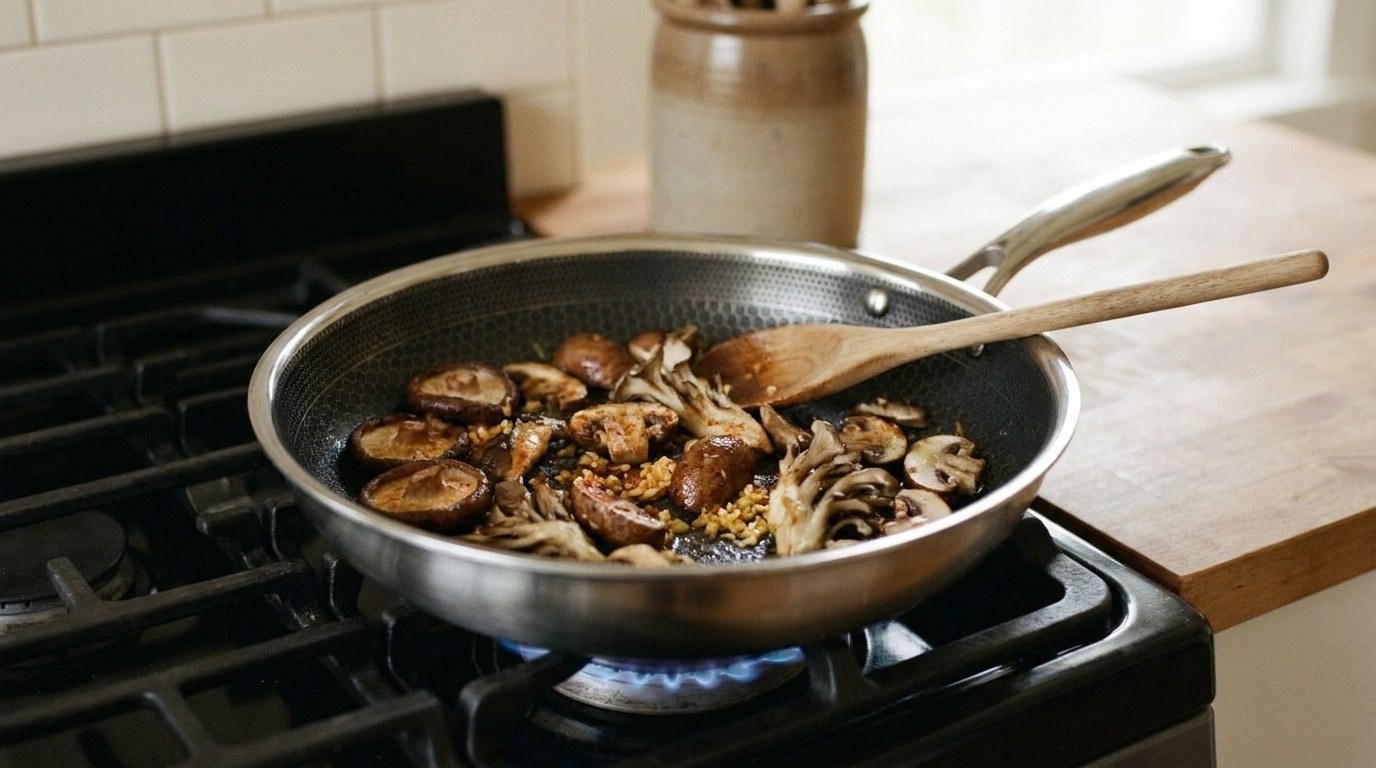
Gordon Ramsay's approach in his MasterClass mushrooms-on-toast lesson is the one to copy: get the pan very hot, keep the heat high, let the mushrooms sizzle (that noise is the water leaving), and only add a knob of butter once they have color, so it caramelizes them rather than soaking in. Heat the skillet first, then the oil, then the mushrooms in a single loose layer, and leave them alone for 3 to 4 minutes before the first stir. Shiitake caps can stay whole or halved, cremini get halved or thickly sliced, and maitake tears into bite-size clusters. Salt them once they have browned, since salt early pulls more water to the surface just when you are trying to get rid of it.
HexClad
HexClad 12-Inch Hybrid Nonstick Frying Pan
- Stainless steel and ceramic nonstick hybrid surface, built to sear hard and release easily
- Tri-ply with an aluminum core for quick, even heat; works on induction
- Oven safe to 900°F and metal-utensil safe (lid not included)
Garlic and smoked paprika come last, and the paprika goes in with the burner off. Both scorch fast: minced garlic turns bitter within a minute in oil hot enough to brown mushrooms, and ground paprika is so fine and sugary that it burns almost on contact, with burning (pyrolysis) starting around 356°F (180°C). Off the heat, the warm oil still blooms the paprika's color and smoky aroma without turning it acrid. A wide 12-inch pan matters here twice over: it gives a pound of mushrooms room to brown, and it has space to toss a pound of spaghetti later. A nonstick surface also helps in the last step, since setting egg grips bare metal.
Is Parmesan Vegetarian? Picking the Cheese for Vegetarian Carbonara
No, real Parmesan is not vegetarian, and neither is Pecorino Romano, so a truly vegetarian carbonara needs a vegetarian hard cheese. The official Parmigiano Reggiano product specification says the milk is coagulated "exclusively by the use of calf rennet", an enzyme taken from a calf's stomach, and the Pecorino Romano consortium describes its milk being set with lamb's rennet paste. The UK's Vegetarian Society notes that Parmesan legally means Parmigiano Reggiano, calf rennet included, and that vegetarian alternatives use microbial rennet (an enzyme from a fungus) or thistle rennet instead.
Look for a hard, aged Italian-style cheese labeled vegetarian or made with microbial or vegetable rennet. An ingredient list that just says "enzymes" doesn't tell you which kind, so the vegetarian label is the thing to look for. Grate it finely from a wedge right before you start. Fine shreds dissolve into the eggs at gentle heat; pre-grated cheese in a tub is usually coated with an anti-caking powder that keeps the shreds separate, and it tends to clump instead of melting into a sauce. Hard cheese also punishes too much heat: overheated, its proteins tighten into stringy lumps and the fat runs out, which is one more reason the pan is off the burner when the cheese arrives.
Why the Pan Comes Off the Heat Before the Eggs Go In
The pan comes off the heat because eggs set at temperatures far below what a hot skillet delivers. According to America's Test Kitchen, egg whites begin to set at 144°F (62°C) and yolks at 149°F (65°C). Spaghetti lifted from boiling water is close to 212°F (100°C), and a pan that has just browned mushrooms is hotter still, so eggs poured into it over a flame curdle into scrambled bits in seconds. A minute off the burner lets the pan and pasta drop to a heat that thickens the eggs slowly instead of setting them on contact.
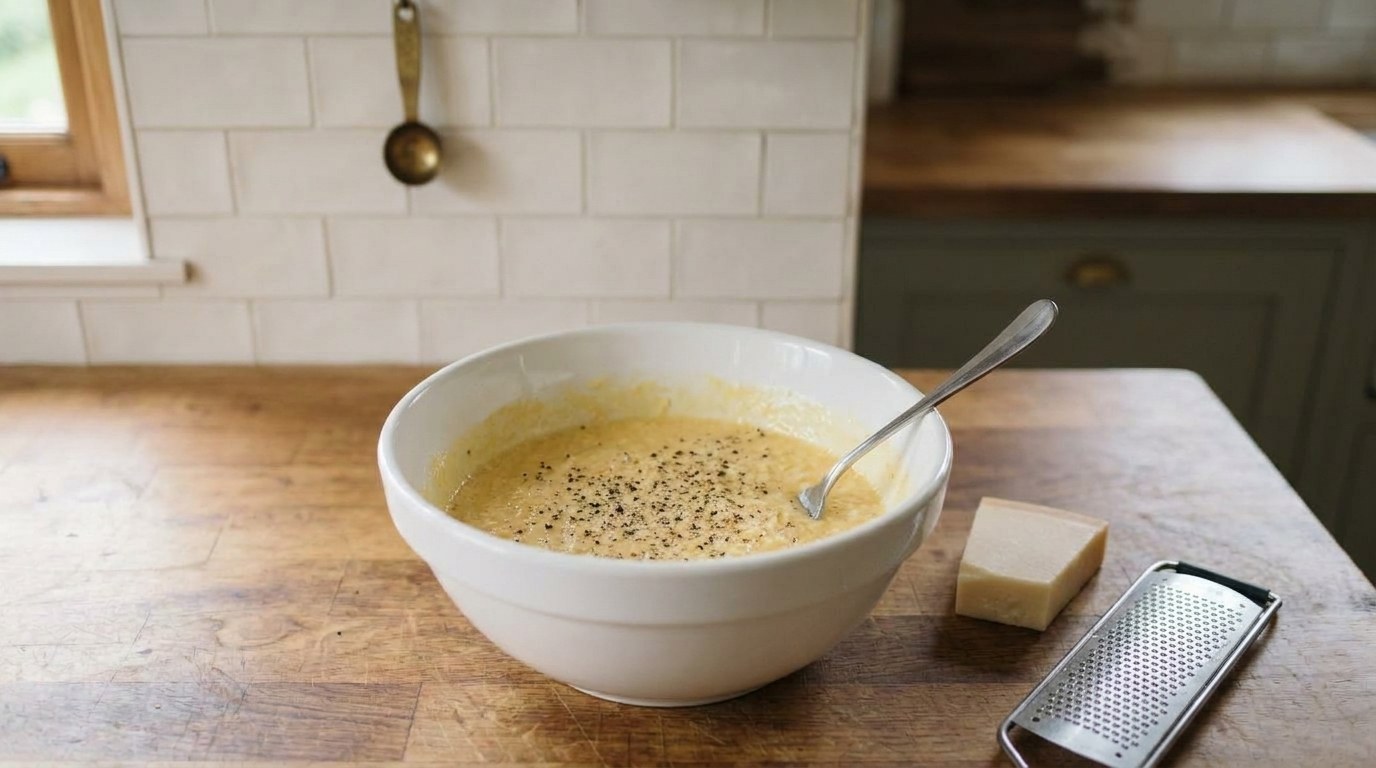
Everything else in the bowl buys you time. Cheese and pasta water dilute the egg proteins, so they need more heat to link up into a solid network and the sauce thickens gradually; you are aiming for a sauce at roughly 150 to 160°F (65 to 71°C) that coats a spoon and still flows. The two extra yolks matter too. Whites set first and turn stringy, while yolks bring fat and natural emulsifiers that make the sauce richer and more forgiving. Whisking 2 or 3 tablespoons of hot pasta water into the eggs before they hit the pasta warms them gently and loosens the batter so it spreads evenly.
Keep the pasta moving the whole time. Tossing spreads the heat evenly, so no spot of egg sits against hot metal long enough to set. If the sauce stays thin after a minute or two, set the pan back over the lowest heat for a few seconds at a time, tossing, then take it off again; it should never bubble. If it tightens too much, a splash of pasta water brings it right back.
Pasta Water Is What Makes Carbonara Creamy (No Cream Needed)
Starchy pasta water makes vegetarian carbonara creamy; cream isn't part of the dish and isn't needed. As spaghetti boils, its starch granules soak up water and swell, a process called gelatinization, and some of that starch washes out into the pot. That cloudy water thickens the sauce and helps hold the fat from the olive oil, butter, yolks and cheese in a smooth emulsion, so it coats the pasta instead of pooling as grease. Cooking the pasta in about 4 quarts of water, rather than the biggest pot you own, keeps the water starchier.
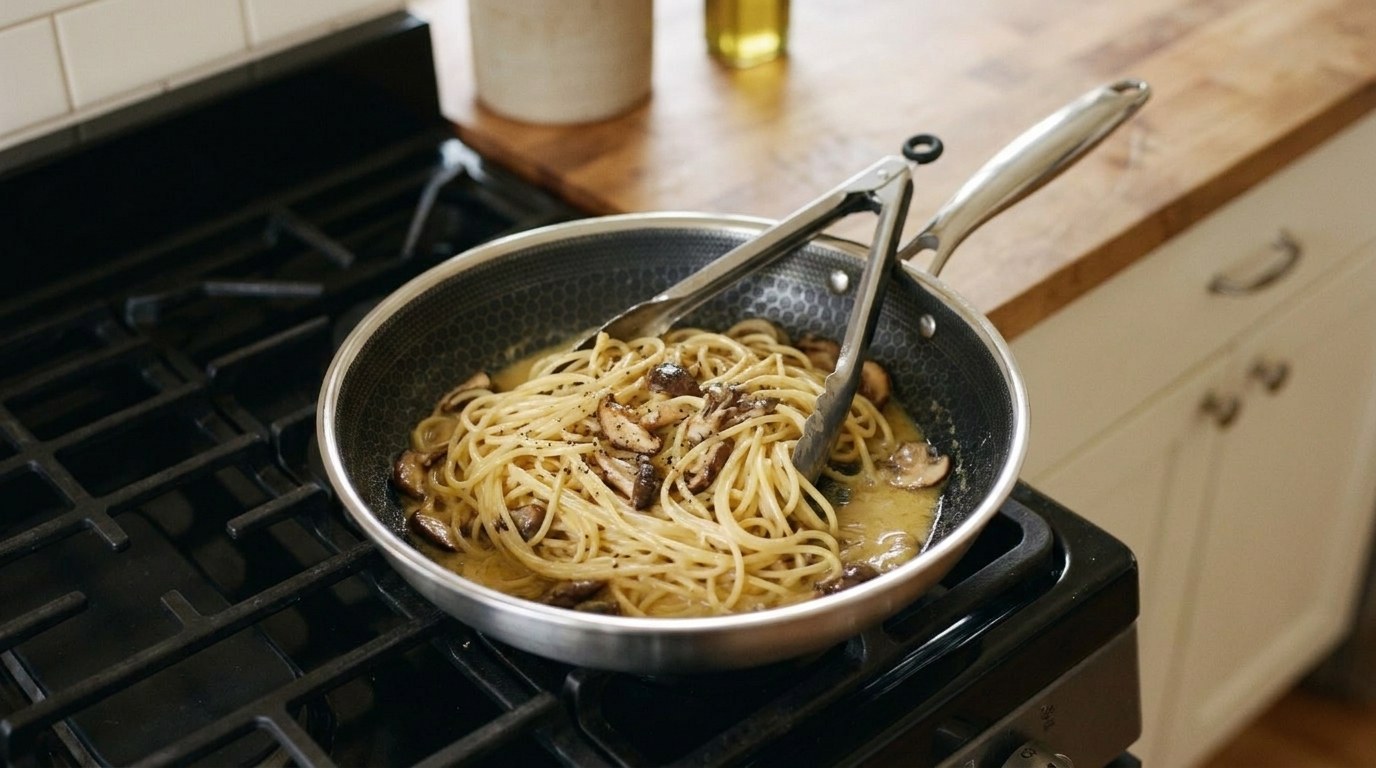
Scoop out 1 1/2 cups of the water just before draining, and pull the spaghetti a minute early, because it finishes cooking in the pan as it soaks up sauce. Adding cream gives you a heavier, milder sauce closer to our Alfredo, and it dulls the pepper and cheese that carbonara is built on. If you like a looser sauce, more pasta water does that job without changing the flavor.
Is the Egg in Vegetarian Carbonara Safe to Eat?
The eggs in carbonara are cooked gently by the pasta's heat, not to a full set, so for some people they are a risk worth avoiding. The FDA advises cooking dishes that contain eggs to 160°F (71°C), and a carbonara sauce usually finishes just under that. Children, older adults, pregnant women and anyone with a weakened immune system are at greater risk from Salmonella, and for them the FDA recommends shell eggs that have been treated to destroy Salmonella (pasteurized in the shell) for any dish served soft. Pasteurized eggs work the same way in this recipe.
For everyone, the basic habits apply: keep eggs refrigerated until you use them, skip any with cracked shells, and serve the carbonara as soon as it comes together. Leftovers go into the fridge promptly; reheat them gently in a pan with a splash of water, stirring, and expect a thicker, cheesier texture than the first night.
Vegetarian Carbonara Variations
Vegetarian carbonara takes extra vegetables well as long as each one is cooked before the eggs go in. Peas are the easiest: a cup of frozen peas stirred into the mushrooms for the last minute, the way Ramsay adds them to his pork carbonara. Asparagus tips, cut on the bias and sauteed with the mushrooms, are a good spring swap, and if the bunch has more to give, our asparagus risotto uses the rest. A handful of baby spinach wilts into the hot pasta in seconds. For a deeper savory note, stir a teaspoon of soy sauce or white miso into the mushrooms with the butter; both are rich in glutamates, the compounds behind the meaty taste called umami.
Any long pasta works: bucatini, linguine and fettuccine were all options in the original version of this recipe, and short shapes like rigatoni catch the mushrooms well. Gluten-free pasta releases less starch, so save extra cooking water and add it more slowly. A version with no eggs at all is vegan carbonara, which builds its sauce from blended silken tofu or soaked cashews; it's a different dish with its own method.
Why Vegetarian Carbonara Goes Wrong (and How to Fix It)
Almost every carbonara problem comes back to heat or water: too much heat scrambles the eggs and seizes the cheese, too little water leaves the sauce pasty, and wet, crowded mushrooms never brown. The fixes are quick:
- Scrambled, grainy sauce: the pan was still on the heat or too hot when the eggs went in. Take it off the burner for a minute first, temper the eggs with pasta water and keep tossing.
- Cheese in clumps or strings: pre-grated cheese, or cheese that hit a very hot pan. Grate it finely from a wedge and add it with the eggs, off the heat.
- Sauce thin and runny: not enough heat yet. Return the pan to the lowest setting for a few seconds at a time, tossing, until it coats the pasta.
- Sauce thick and pasty: it cooled or sat. Loosen it with hot pasta water a tablespoon at a time and serve immediately.
- Grey, rubbery mushrooms: the pan was crowded or not hot enough. Cook them in a single layer, in two batches if needed, and wait for the sizzle to quiet before stirring.
- Bitter edge: burnt garlic or paprika. Add the garlic for the last minute only and the paprika off the heat.
- Bland: unsalted pasta water or too little pepper. Salt the water, use the full amount of coarse pepper, and taste before serving.
What to Serve With Vegetarian Carbonara
Vegetarian carbonara is rich, so it wants something sharp and green beside it: a salad of bitter leaves with a lemony dressing, roasted broccoli with a squeeze of lemon, or simply sliced tomatoes with olive oil and salt. Serve it in warmed bowls with extra grated cheese and pepper at the table. For another quick meatless pasta, try Ramsay's aglio e olio; for more mushrooms, his mushroom risotto uses the same browning rule.
Make this vegetarian carbonara once and the method sticks: brown the mushrooms hard, pick a vegetarian hard cheese, take the pan off the heat, and let the pasta water do the rest. The pan you brown in is the pan you toss in, so it pays to have a good wide one; our Gordon Ramsay cookware guide covers the options.
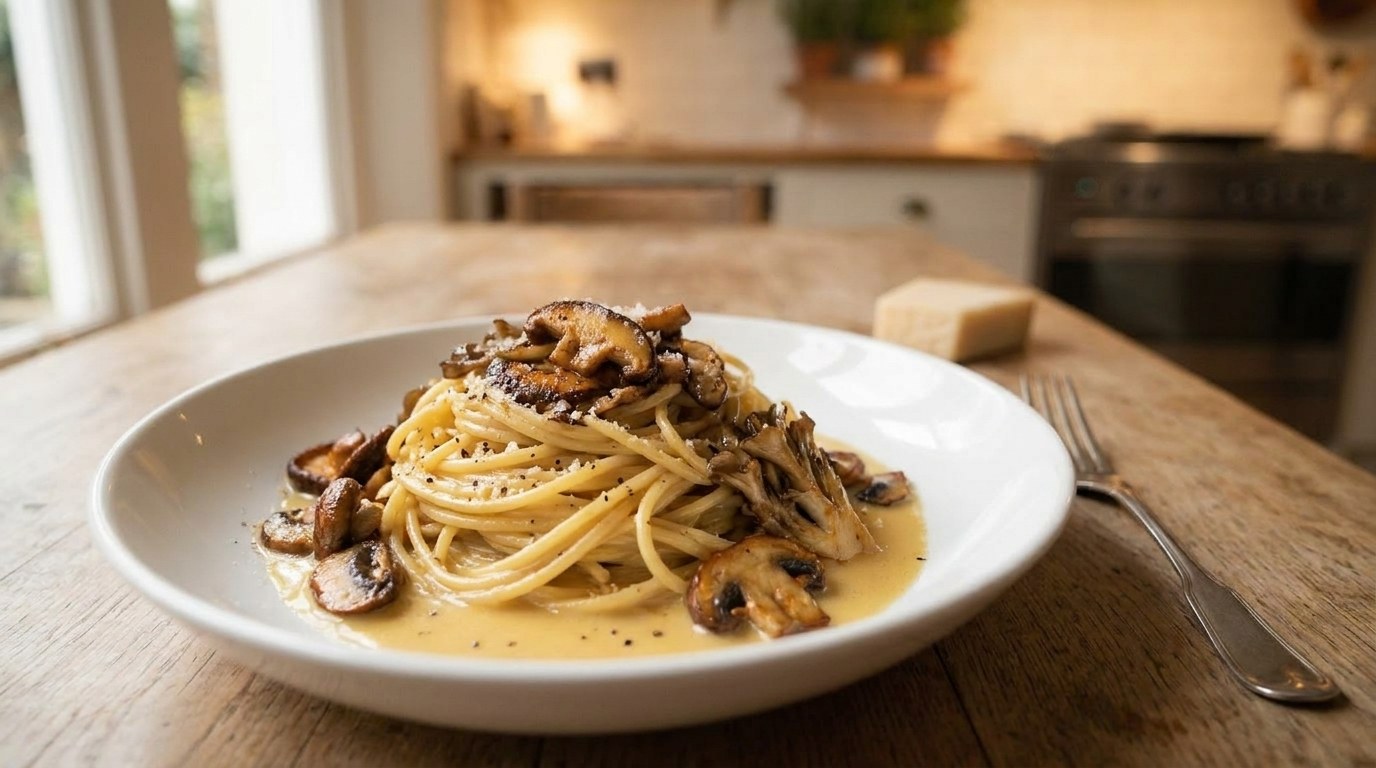
Vegetarian Carbonara with Smoky Mushrooms
Ingredients
Egg and cheese sauce
- 4 large eggs
- 2 large egg yolks
- 3 1/2 oz vegetarian hard cheese (100 g), finely grated (about 1 1/4 cups), plus more to serve
- 1 1/2 tsp coarsely ground black pepper, plus more to serve
Smoky mushrooms
- 3 tbsp extra-virgin olive oil
- 1 lb mixed mushrooms (450 g), such as shiitake caps, cremini and maitake, halved, sliced or torn into bite-size pieces
- 1 tbsp unsalted butter
- 3 garlic cloves, minced
- 1 tsp smoked paprika
- kosher salt
Pasta
- 1 lb dried spaghetti (450 g), or bucatini, linguine or fettuccine
- 1 tbsp kosher salt, for the pasta water
Instructions
- Bring about 4 quarts of water to a boil in a large pot and add 1 tablespoon of kosher salt.
- Meanwhile, beat the eggs, egg yolks, grated cheese and pepper in a large bowl with a fork until smooth and thick. Set aside.
- Heat a 12-inch skillet over medium-high heat until hot, add the olive oil, then the mushrooms in a single layer. Cook without stirring for 3 to 4 minutes, until browned underneath, then stir and cook 3 to 5 minutes more, until golden and shrunk. Season with a pinch of salt.
- Add the butter and garlic and cook, stirring, for about 1 minute, until the garlic is pale golden. Turn off the heat and stir in the smoked paprika.
- Cook the spaghetti until 1 minute short of al dente. Scoop out 1 1/2 cups of the pasta water, then drain the pasta (or lift it straight into the skillet with tongs).
- Add the spaghetti and 1/4 cup of the pasta water to the mushrooms and toss over low heat for 30 seconds to coat. Take the skillet off the heat and let it sit for about 1 minute.
- Whisk 2 to 3 tablespoons of the hot pasta water into the egg mixture. Pour it over the pasta and toss constantly with tongs for 1 to 2 minutes, adding more pasta water a splash at a time, until the sauce is glossy and creamy and coats every strand. If it stays thin, return the pan to the lowest heat for a few seconds at a time while tossing; never let it bubble.
- Taste and season with salt and more pepper. Serve at once in warm bowls with extra grated cheese and pepper.
Notes
Vegetarian Carbonara FAQs
The questions that come up most: whether carbonara is vegetarian, what to use instead of guanciale, whether Parmesan is vegetarian, whether vegetarian carbonara has cream, why carbonara scrambles, whether the egg is safe, what carbonara without meat is called, and whether you can make it without eggs.
Is carbonara vegetarian?
Traditional carbonara is not. It is made with guanciale (cured pork jowl) and Pecorino Romano, which is set with lamb's rennet. A vegetarian carbonara replaces the pork with browned mushrooms or another swap and uses a hard cheese made with microbial or vegetable rennet.
What can I use instead of guanciale in vegetarian carbonara?
Mixed mushrooms browned hard with a pinch of smoked paprika are the closest everyday swap, giving a meaty bite and a hint of smoke. Smoked tofu, smoked tempeh or plant-based bacon add protein and chew; zucchini, sun-dried tomatoes or a little smoked vegetarian cheese also work.
Is Parmesan vegetarian?
No. Parmigiano Reggiano's official specification requires calf rennet, so true Parmesan is not vegetarian, and Pecorino Romano uses lamb's rennet. Buy a hard Italian-style cheese labeled vegetarian or made with microbial rennet; a label that only says "enzymes" doesn't tell you which kind.
Does vegetarian carbonara have cream?
No. The creamy texture comes from eggs and finely grated cheese loosened with starchy pasta water. The starch thickens the sauce and holds the fat in a smooth emulsion. Cream makes a heavier, milder sauce closer to Alfredo.
Why did my carbonara scramble?
The eggs got too hot. Egg whites begin to set at 144°F and yolks at 149°F, while pasta from the pot is near 212°F. Take the pan off the heat for about a minute, temper the eggs with a little pasta water, and toss constantly as you add them.
Is the egg in carbonara raw, and is it safe?
The eggs are gently cooked by the hot pasta but usually finish just under the 160°F the FDA advises for egg dishes. For children, older adults, pregnant women or anyone with a weakened immune system, use pasteurized shell eggs, which work the same way in the recipe.
What is carbonara without meat called?
In English it is simply vegetarian carbonara, or mushroom carbonara when mushrooms replace the pork. In Italy a meatless pasta of eggs and cheese with no substitute at all is close to pasta cacio e uova, meaning cheese and eggs.
Can you make vegetarian carbonara without eggs?
Not in this recipe, because the eggs are the sauce. A carbonara with no eggs is vegan carbonara, which builds its sauce from blended silken tofu or soaked cashews; it is a different dish that needs its own method.

About the Author
John Siracusa is the founder of Hell’s Kitchen Recipes. He focuses on technique-first, reproducible home cooking and researches recipes & kitchen equipment from published food science and professional chef methods since 2016.