Lobster risotto is Arborio rice cooked slowly to a loose, creamy spoonful and folded, at the very end, with tender lobster meat that was cooked once and only warmed through. The trick that separates a restaurant version from a home one is the liquid: instead of chicken stock or water, the rice is cooked in a quick stock made from the roasted lobster shells, so every grain tastes of lobster rather than of rice with lobster sitting on top. Beyond that it is standard risotto discipline, the way Gordon Ramsay builds any of them: toast the rice, add hot stock a ladle at a time, stir, and finish off the heat with cold butter and Parmesan for the gloss.
This guide covers the parts that decide whether it works: buying and boiling the lobster to 140°F so it stays sweet, the 20-minute shell stock, toasting the rice and why it keeps the grains al dente, the ladle-at-a-time cooking and the stir that makes it creamy, the butter-and-cheese mantecatura finish, and folding the lobster in last so it never turns to rubber. For pulling the meat from a whole lobster, the how to cook and shell a lobster guide has the step-by-step, and the same technique carries into butternut squash lobster risotto and lobster spaghetti.
What Makes Gordon Ramsay's Lobster Risotto Different
Two things, and both are about restraint. First, the lobster is cooked once, briefly, then kept out of the pan until the last minute, because lobster meat is done at 140°F and every extra minute of heat tightens it into rubber. It goes in only to warm through as the risotto finishes. Second, the flavour comes from a stock built out of the shells, not from cream: the shells are roasted and simmered into a light lobster broth, and that broth is what the rice drinks up over eighteen minutes, so the dish tastes deeply of lobster without a drop of cream in it. The creaminess is the rice's own, not dairy.
That is Ramsay's risotto rule across the board, from his published recipes to the ones on Hell's Kitchen: toast, ladle, stir, and finish with butter and Parmesan off the heat. Nail the base and the lobster is almost a garnish, in the best way.
Buy and Boil the Lobster to 140°F, Then Stop It Cold
For four people, buy two live lobsters of about 1¼ pounds each; that gives roughly a pound of tail, claw and knuckle meat plus the shells you need for the stock. Ramsay's test at the counter is weight: a lobster should feel heavy and solid for its size with the tail still snapping, which means it is full; a light one has been in the tank too long. Most of what you will find is American lobster, and NOAA Fisheries notes each carries a heavy crusher claw and a finer ripper, which is why one claw always has more meat.
Boil the lobsters in well-salted water, about 10 minutes per pound, until the tail meat reads 135 to 140°F on a thermometer pushed into the thickest part; the Maine industry's own target is 135 to 145°F. Then straight into ice water for five minutes. The ice bath is not optional: lobster is closer to fish than beef, its proteins begin to set around 104°F and finish near 140°F, so the window between tender and tough is only a few degrees and a hot lobster keeps cooking on the counter. Pick the meat out of the shell, keep the tail whole to slice into medallions, cut the rest into chunks, and save every scrap of shell for the stock.
The 20-Minute Lobster Stock
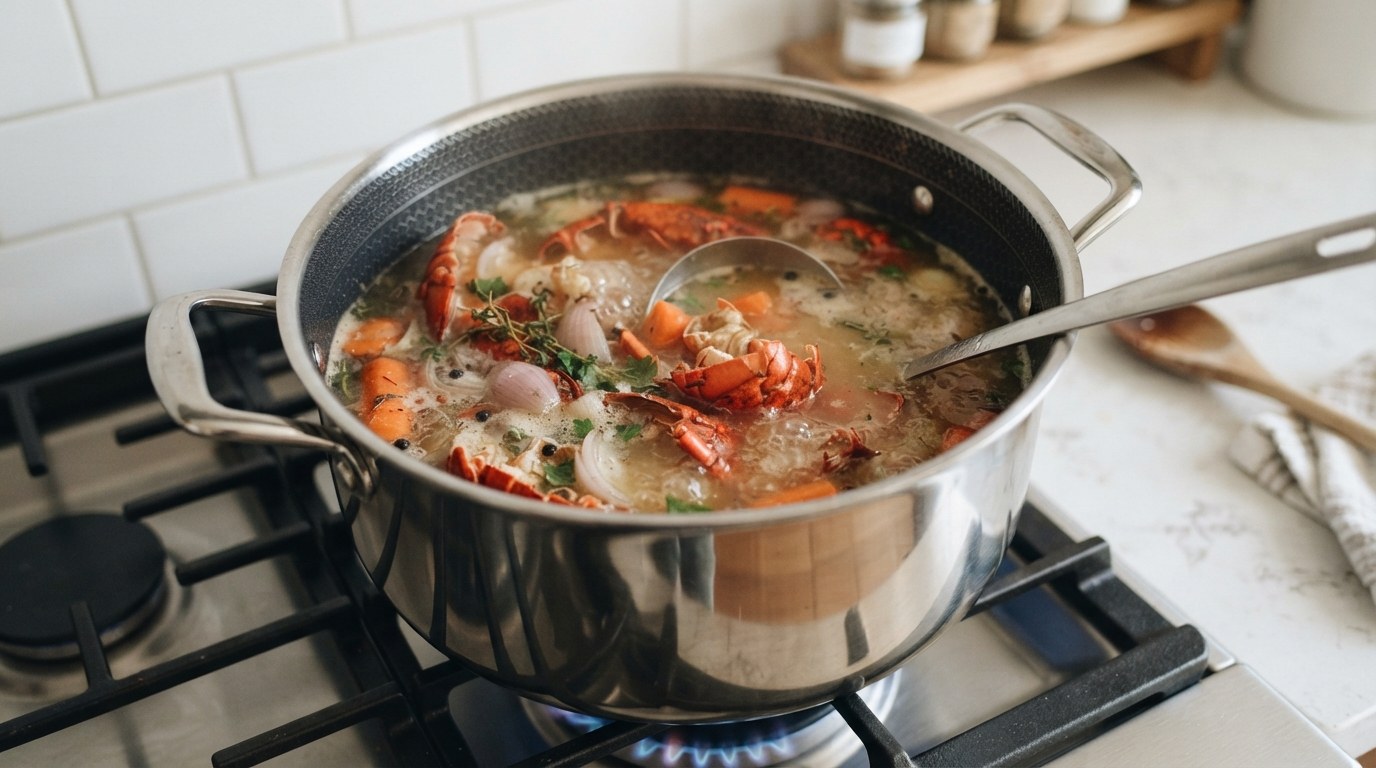
Break the shells and body into pieces and toast them in a dry pan over high heat for three or four minutes until they smell sweet and toasted, then cover with about six cups of water, add a sliced shallot, a chopped carrot and a little fennel if you have it, and simmer gently for twenty minutes. Strain, and keep the stock hot on the back of the stove; you will ladle it into the rice while it cooks. Roasting the shells first is what makes it taste of lobster instead of of boiled shell, because the dry heat browns the shell's proteins and sugars above about 284°F/140°C and drives off the raw, fishy notes that plain simmering leaves behind.
Keep the stock at a bare simmer the whole time the risotto cooks. Adding hot stock to hot rice keeps the pan at a steady temperature so the grains cook evenly; a splash of cold stock would stall the cook each time and give you gluey rice on the outside and chalk in the middle. If you are short of shells or time, a good seafood or chicken stock works, and a spoon of tomato paste toasted with the rice nudges it toward the bisque-like colour restaurants get.
Toast the Rice, Then Feed It a Ladle at a Time
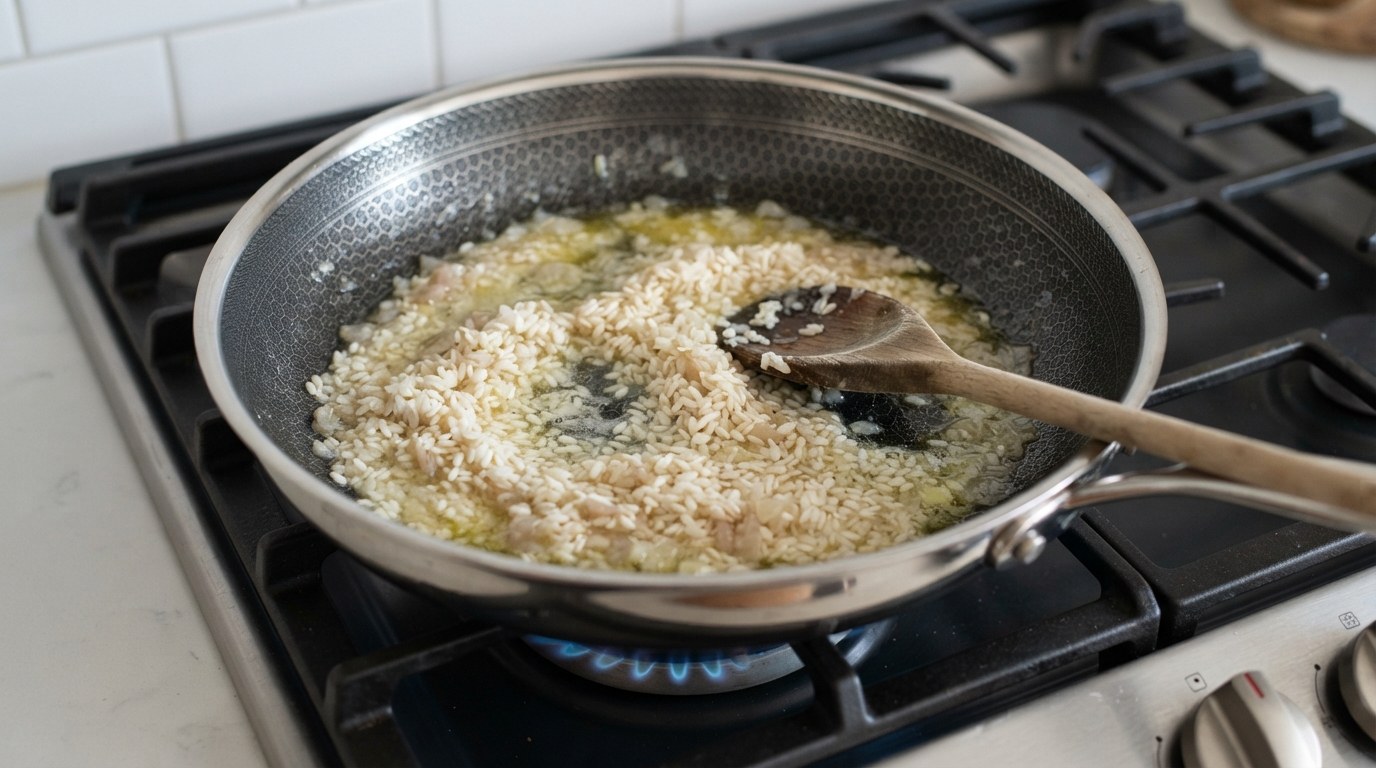
Soften a chopped shallot in butter and a little oil in a wide pan without colouring it, then add the Arborio and stir for a minute or two until the grains are glossy and translucent at the edges with a white dot at the centre. This toasting step matters: it sets the outside of each grain so it holds its shape and stays al dente through twenty minutes of stirring, instead of blowing out into porridge. Pour in a glass of dry white wine and let it cook away almost completely.
Now add the hot lobster stock one ladle at a time, stirring often and waiting until each addition is nearly absorbed before adding the next. It takes about eighteen minutes and most of the stock. The stirring is not busywork: it rubs the grains against each other and frees their surface starch, mostly amylopectin, into the liquid, and that released starch is what thickens the risotto into a creamy sauce with no cream in it. The rice itself softens as its starch granules absorb the hot liquid and swell past about 150°F/65°C. Stop when the rice is tender with the faintest bite left and the whole thing is loose enough to spread when you spoon it, not stiff.
Finish It: Mantecatura, Then Fold In the Lobster
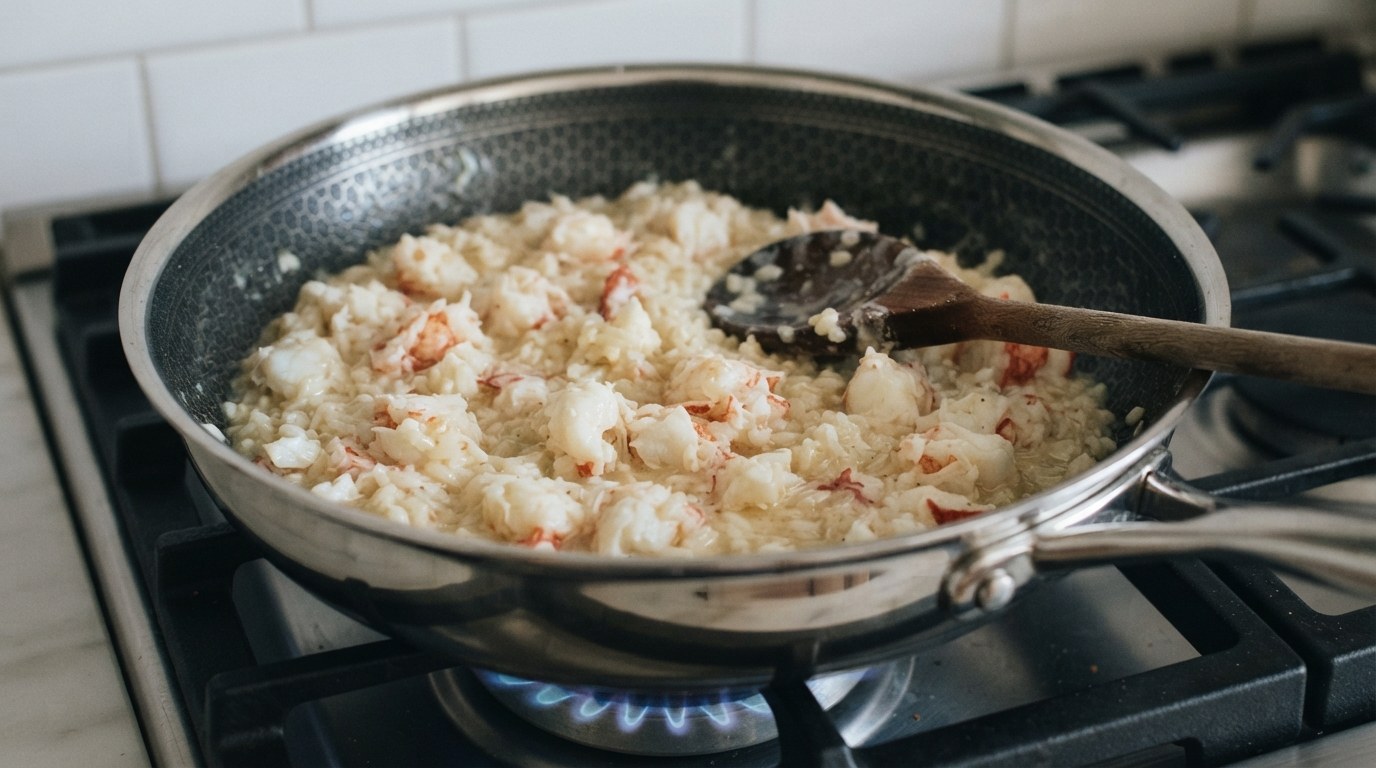
Take the pan off the heat, drop in a couple of tablespoons of cold butter and a handful of grated Parmesan, and beat them in hard for a few seconds until the risotto turns glossy and creamy. This is the mantecatura, and it is where the shine comes from: the cold butter's fat emulsifies into the starchy liquid the rice has released, the way an emulsion holds oil in water, giving a sauce that coats the back of a spoon. Off the heat is the point, because boiling it would split that emulsion into greasy pools.
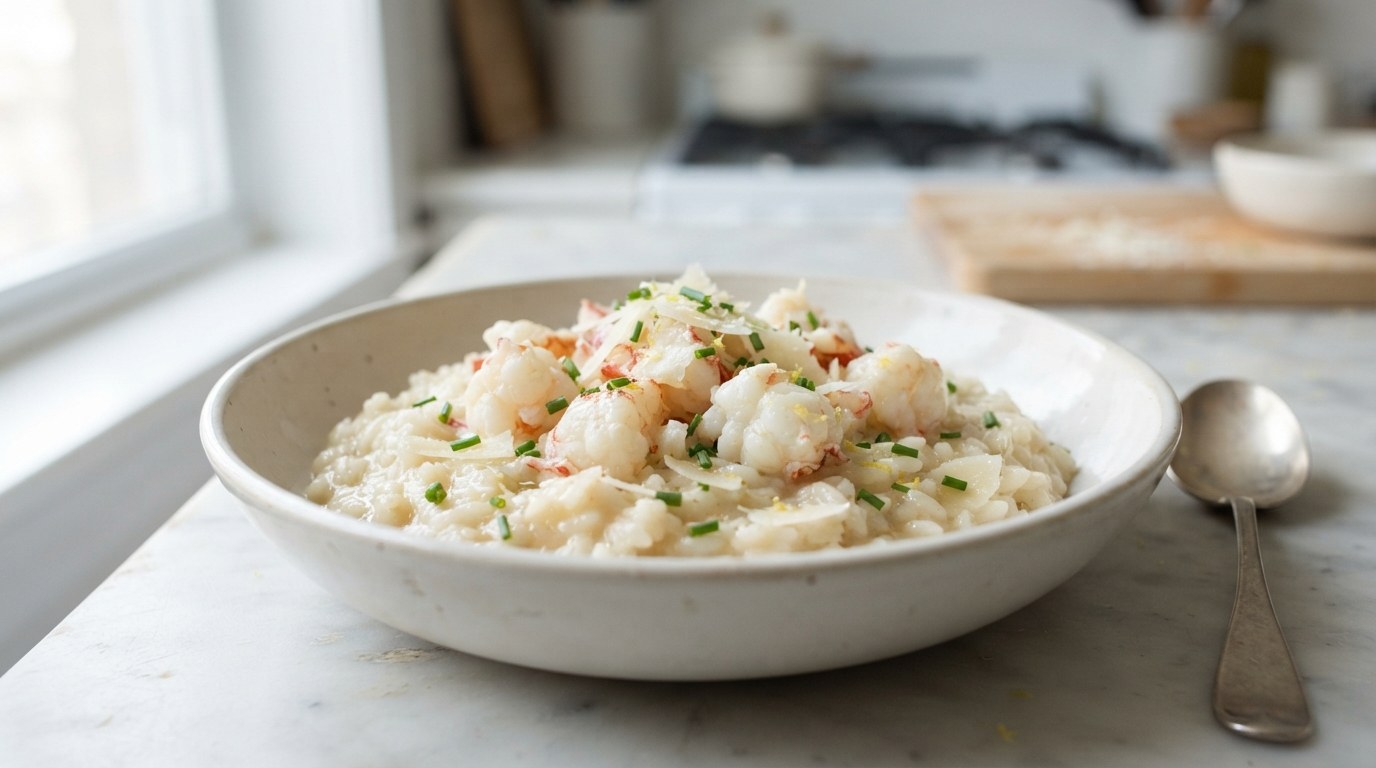
Only now does the lobster go in. Fold the chunks and the sliced tail through the hot risotto and let them warm for a minute, no more; the meat was cooked to 140°F once already, and putting it back over heat past that point only contracts it and squeezes out the moisture that makes it sweet. Loosen with a last splash of stock if it has tightened, finish with a squeeze of lemon, chopped chives or tarragon, and a little more Parmesan, and serve at once in warm shallow bowls, setting a whole claw on each. Risotto waits for no one; it keeps thickening off the heat, so plate it the moment it is ready.
Lobster and Risotto Doneness
| Stage | Number | What you see |
|---|---|---|
| Boiling two 1¼-lb lobsters | 9 to 11 minutes, ~10 min per lb | Shells fully red, antennae pull out easily |
| Tail meat, done | 135 to 140°F | Opaque, pearly, firm but springy |
| Ice bath | 5 minutes | Stops carryover; meat picks cleanly |
| Risotto cooking | About 18 minutes | Creamy, loose, rice tender with a faint bite |
| Mantecatura | Off the heat | Glossy; butter and cheese beaten in |
| Lobster folded in | 1 minute, warm through | Hot, still tender; longer and it tightens |
Cook the lobster to the thermometer and the risotto to your spoon; both are judged by feel more than by the clock. A hard-shell lobster carries more meat and takes the longer end of the boil, a soft summer shell less. And risotto is done when it spreads, not when the timer goes; if it stands up in a mound it needs another ladle of stock. Working from a pound of cooked lobster meat from the counter? Skip the boil and the ice bath and fold it in for the last minute only.
Variations, and What to Serve With Lobster Risotto
For a richer, bisque-style risotto, toast a spoon of tomato paste with the rice and add a splash of brandy with the wine. For colour and a different sweetness, the site's guide on Hell's Kitchen risotto and the butternut squash lobster risotto both build on this same base. Shrimp or scallops stand in well, or go alongside; the shrimp and scallop risotto is the same method with two shellfish, and if you have more lobster than the risotto needs, lobster spaghetti uses the identical stock. For adding saffron, beetroot or herbs for colour, see how Gordon Ramsay colours a risotto.
Serve it as a starter in small bowls or as a main with nothing more than a green salad and a crisp, dry white with acidity, a Vermentino, Gavi or lightly oaked Chardonnay, to cut the richness. A whole heavy-bottomed pan keeps the rice from catching and stirring for twenty minutes is easier with the right one; the cookware guide covers the pans that suit it. The rest of the seafood menu is in the recipe collection.
Lobster Risotto (Gordon Ramsay's Method)
Ingredients
- 2 live lobsters, about 1¼ lb each (or 1 lb cooked lobster meat)
- For the stock
- 6 cups water
- 1 shallot, sliced, plus 1 small carrot, chopped, and a little fennel (optional)
- For the risotto
- 2 Tbsp unsalted butter, plus 2 Tbsp cold butter to finish
- 1 Tbsp olive oil
- 1 shallot, finely chopped
- 1½ cups Arborio or Carnaroli rice
- ½ cup dry white wine
- ½ cup Parmesan, finely grated
- ½ lemon, plus chopped chives or tarragon
- Sea salt and freshly ground black pepper
Instructions
- Bring a large pot of well-salted water to a boil and set a bowl of ice water beside it. Boil the lobsters 9 to 11 minutes, until the tail meat reads 135 to 140°F, then lift into the ice water for 5 minutes.
- Pick the meat from the tails, claws and knuckles; slice the tails into medallions and cut the rest into chunks. Refrigerate the meat and keep all the shells.
- Make the stock: toast the broken shells and body in a dry pan over high heat 3 to 4 minutes, until fragrant. Add the water, shallot, carrot and fennel, simmer 20 minutes, strain, and keep hot at a bare simmer. (Use hot seafood stock if short on shells.)
- In a wide pan, soften the chopped shallot in the 2 Tbsp butter and the oil without colouring. Add the rice and stir 1 to 2 minutes, until glossy and translucent at the edges.
- Pour in the wine and let it cook away almost completely.
- Add the hot stock one ladle at a time, stirring often and letting each ladle be nearly absorbed before the next, about 18 minutes, until the rice is creamy and tender with a faint bite and loose enough to spread.
- Take the pan off the heat. Beat in the cold butter and the Parmesan hard for a few seconds until glossy. Season.
- Fold the lobster meat through and let it warm for 1 minute only. Loosen with a splash of stock if needed, finish with lemon and chives, and serve at once in warm bowls with a claw on each.
Notes
Lobster Risotto FAQs
The questions that come up most: how Gordon Ramsay makes lobster risotto, what it is made of, what rice and stock to use, whether it needs cream, how long the rice takes, and how to keep the lobster tender.
How does Gordon Ramsay make lobster risotto?
He boils a whole lobster to about 140°F and shocks it in ice, picks the meat, and makes a quick stock from the roasted shells. He toasts Arborio rice with shallot, adds white wine, then ladles in the hot lobster stock a little at a time, stirring for about eighteen minutes until creamy and al dente. Off the heat he beats in cold butter and Parmesan, then folds the lobster through for a minute to warm it, finishing with lemon and chives.
What is lobster risotto made of?
Arborio (or Carnaroli) rice, shallot, butter, dry white wine, Parmesan, and lobster meat, cooked in a stock made from the lobster shells. Ramsay's version uses no cream; the creaminess comes from the starch the rice releases as it is stirred. Lemon, chives or tarragon finish it.
What rice is best for lobster risotto?
A high-starch short-grain risotto rice: Arborio is the common one, Carnaroli holds its bite even better and is worth it if you can find it. Both release the amylopectin starch that makes risotto creamy. Do not use long-grain or regular rice, which will not thicken the dish.
Does lobster risotto need cream?
No. A properly made risotto is creamy from the rice itself: stirring frees the grains' surface starch into the stock, and that thickens the liquid into a sauce. Ramsay finishes with cold butter and Parmesan beaten in off the heat for gloss and richness, not cream. Adding cream makes it heavy and masks the lobster.
How long does risotto take to cook?
About eighteen minutes of ladling hot stock in and stirring, once the rice has been toasted and the wine cooked off. It is done when the rice is tender with the faintest bite and the risotto is loose enough to spread on the plate rather than standing in a mound.
How do I keep the lobster from getting rubbery?
Cook it once, to 135 to 140°F, shock it in ice water, and keep it out of the pan until the very end. Fold it into the finished risotto for only a minute, just to warm through. Lobster is done at 140°F, and any more heat tightens the proteins and squeezes out the moisture, which is the rubber everyone complains about.
Can I use frozen or pre-cooked lobster?
Yes. Frozen raw lobster tails, thawed and cooked to 135 to 140°F, work well, though you lose the claws and the shells for stock. Cooked lobster meat from the fish counter is the fastest route: skip the boil entirely and fold it in for the last minute. In either case a good seafood stock stands in for the shell stock.
What wine goes with lobster risotto?
A dry white with good acidity and little oak: Vermentino, Gavi, Pinot Grigio, or a lightly oaked Chardonnay. The same wine you cook the risotto with is a safe match. The acidity cuts the richness of the butter and cheese.

About the Author
John Siracusa is the founder of Hell’s Kitchen Recipes. He focuses on technique-first, reproducible home cooking and researches recipes & kitchen equipment from published food science and professional chef methods since 2016.