Gordon Ramsay's blondies are the brownie's pale cousin done his way: melted butter and brown sugar whisked into a butterscotch batter, studded with white chocolate and dried cranberries, and baked in a square pan until the top sets into a thin, shiny, crackled crust over a dense, chewy middle. He made them on the Ultimate Cookery Course as the easy bake that looks like effort, and they are: one saucepan, one bowl, no mixer, 40 minutes. The version below keeps his combination and fixes the two things that go wrong with blondies at home, a sunken middle and a dry, cakey crumb, both of which come down to the batter's chemistry rather than the oven.
This guide covers what a blondie is and why brown sugar is the whole point, the melted-butter method and where the shiny top comes from, the leavening mistake that sinks the middle, folding in the white chocolate and cranberries, the doneness cue, and storage. It sits in the site's baking and desserts section beside the Gordon Ramsay chocolate chip cookies, which use the same brown-sugar logic in cookie form, and the Gordon Ramsay banana bread, the other one-bowl bake on the same shelf.
What a Blondie Is, and Why Brown Sugar Is the Point
A blondie is a brownie with the chocolate taken out of the batter and the flavor carried by brown sugar and butter instead, which is why the good ones taste of butterscotch. The molasses in brown sugar does two jobs. It gives the caramel flavor and color, and it is hygroscopic: it holds on to water, so a blondie made with brown sugar stays moist and chewy for days where one made with white sugar dries and crumbles. That is why King Arthur Baking builds its blondie on two cups of packed brown sugar to a cup and a half of flour, and why this recipe uses brown sugar for all but a little of the sweetness. Ramsay's add-ins are white chocolate and dried cranberries, sweet against tart, and the cranberries matter more than they look: Ocean Spray sweetens its dried cranberries, so they read as chewy, sharp jewels rather than sour bursts, and they keep the bar from tasting one-note sweet.
| Ingredient | What it does | Do not substitute with |
|---|---|---|
| Unsalted butter, 1 cup, melted | Fat and flavor; melting keeps air out for a dense, fudgy bar | Margarine or oil (no browned-butter flavor, greasy) |
| Light brown sugar, 1¼ cups packed | Butterscotch flavor; its molasses holds moisture | All white sugar (dry, pale, cakey) |
| Granulated sugar, ¼ cup | A little clean sweetness and crust | Skipping it (softer top) |
| Eggs, 2 large, plus 1 yolk | Structure and chew; the yolk adds richness | Extra whole eggs (cakey) |
| All-purpose flour, 1¾ cups | Just enough starch to set the bar | Self-rising flour (too much leavening) |
| Baking powder, ½ tsp only | A touch of lift; more sinks the middle | Baking soda plus powder (collapse) |
| White chocolate, 1 cup chunks | Creamy pockets; cocoa butter, no cocoa solids | Palm-oil "white baking chips" (waxy) |
| Dried cranberries, ¾ cup | Tart, chewy contrast | Fresh cranberries (wet, sour, sink) |
The Melted-Butter Method and the Shiny Top
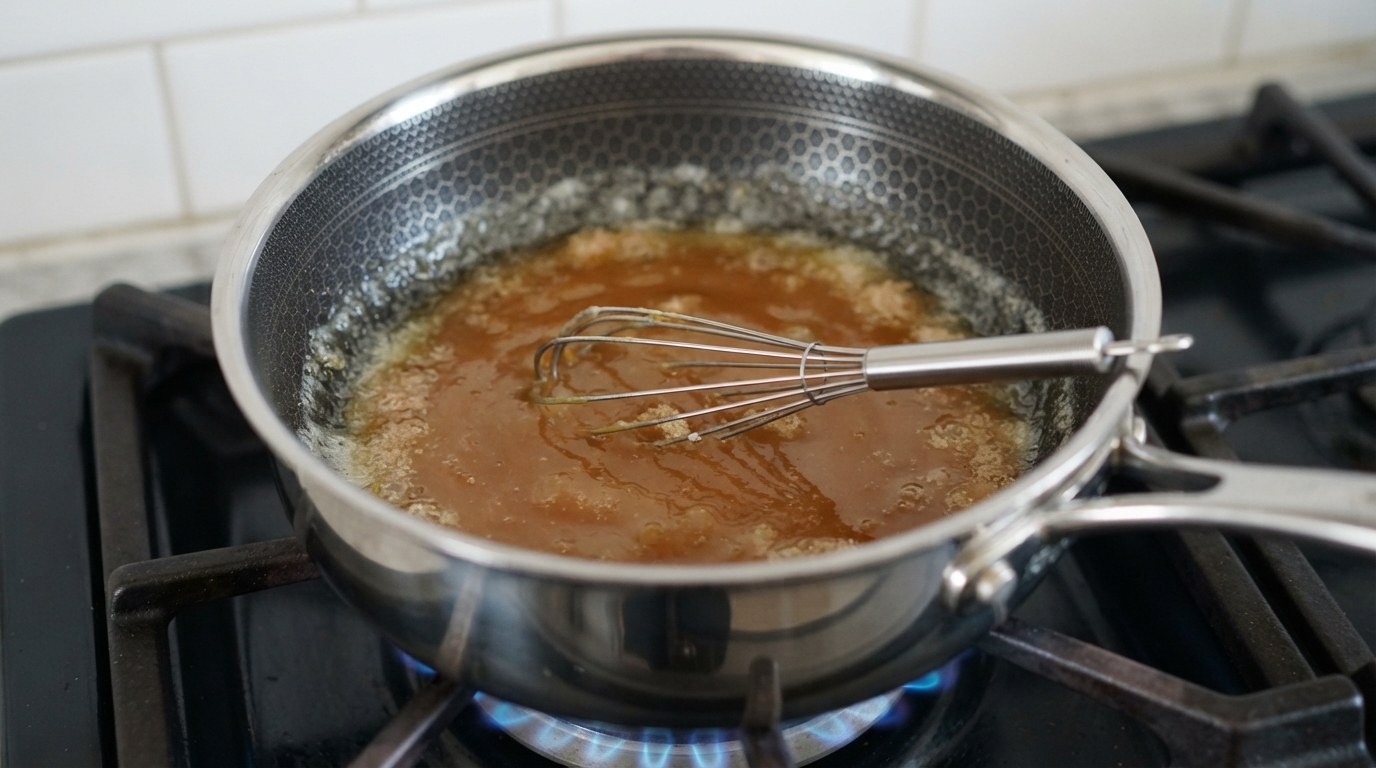
Ramsay melts the butter in a pan and whisks the sugar and salt straight into it, and that one choice decides the texture. Creaming softened butter with sugar in a mixer beats air into the fat, and air is what makes a cake rise light; melting the butter puts almost no air in, so the bar bakes dense and fudgy instead of cakey. King Arthur's brownie science explains the second effect: heating the butter separates its water from its fat, and that water starts dissolving the sugar, which the eggs then finish. Dissolved sugar is the source of the crust everyone wants. As the bars bake, that sugar migrates to the exposed top and recrystallizes in the oven's heat into the thin, satin-shiny, crackled layer, so a batter in which the sugar never dissolved bakes up with a dull, sandy top.
Whisk the brown sugar into the hot melted butter until it looks glossy and no longer grainy, about a minute, then take it off the heat and let it cool for 5 minutes before the eggs go in. Eggs added to a mixture above about 140°F start to set on contact and leave cooked threads through the batter. Beat the eggs and yolk in one at a time, then the vanilla; the mixture turns pale, thick and smooth. Sift the flour, baking powder and salt over it and fold with a spatula only until no dry streaks remain. Overmixing develops gluten, the elastic protein network that makes bread chewy and blondies tough.
Why Blondies Sink in the Middle
A blondie that rises in the oven and then collapses to a dense, sunken center with tall edges, which a reader of this page reported happening every time with the old version of this recipe, is a leavening problem, not an oven problem. Melted-butter bars need almost none. The old card called for a full teaspoon of baking powder plus half a teaspoon of baking soda for a cup and a quarter of flour, roughly three times what a fudgy bar can hold. All that gas inflates the batter early, before the egg proteins and flour starch have set into a structure that can hold the height, and the middle, which sets last, falls as the bubbles escape. King Arthur's rule for bars is a touch of baking powder or baking soda, no more, so the batter stays dense on purpose. This recipe uses half a teaspoon of baking powder for a cup and three-quarters of flour and no soda, which is enough to lift the bar a little and not enough to let it fall.
Two other things make a center sink. Underbaking, since a middle that has not reached the temperature at which its structure sets, around 176°F for the egg-and-starch scaffold, slumps as it cools; and opening the oven door in the first 20 minutes, which drops the oven temperature just as the batter is trying to set. Bake in the middle of a fully preheated 350°F oven, checked with an oven thermometer, and do not open the door until the edges are visibly set and pulling from the pan.
| Stage | Number | What you see |
|---|---|---|
| Melt and dissolve | Butter and sugars, 1 minute over medium; cool 5 minutes | Glossy, no grit |
| Eggs and vanilla | One at a time, below 140°F | Pale, thick, smooth |
| Flour and ½ tsp baking powder | Fold until just combined | No dry streaks, no beating |
| Fold in chocolate and cranberries | Batter cooled to warm, not hot | Chunks stay whole |
| Bake | 350°F, 30 to 35 minutes, 8-inch pan | Shiny crackled top, edges pulling away |
| Cool | 1 hour in the pan before cutting | Clean squares; center chewy |
Folding In the White Chocolate and Cranberries
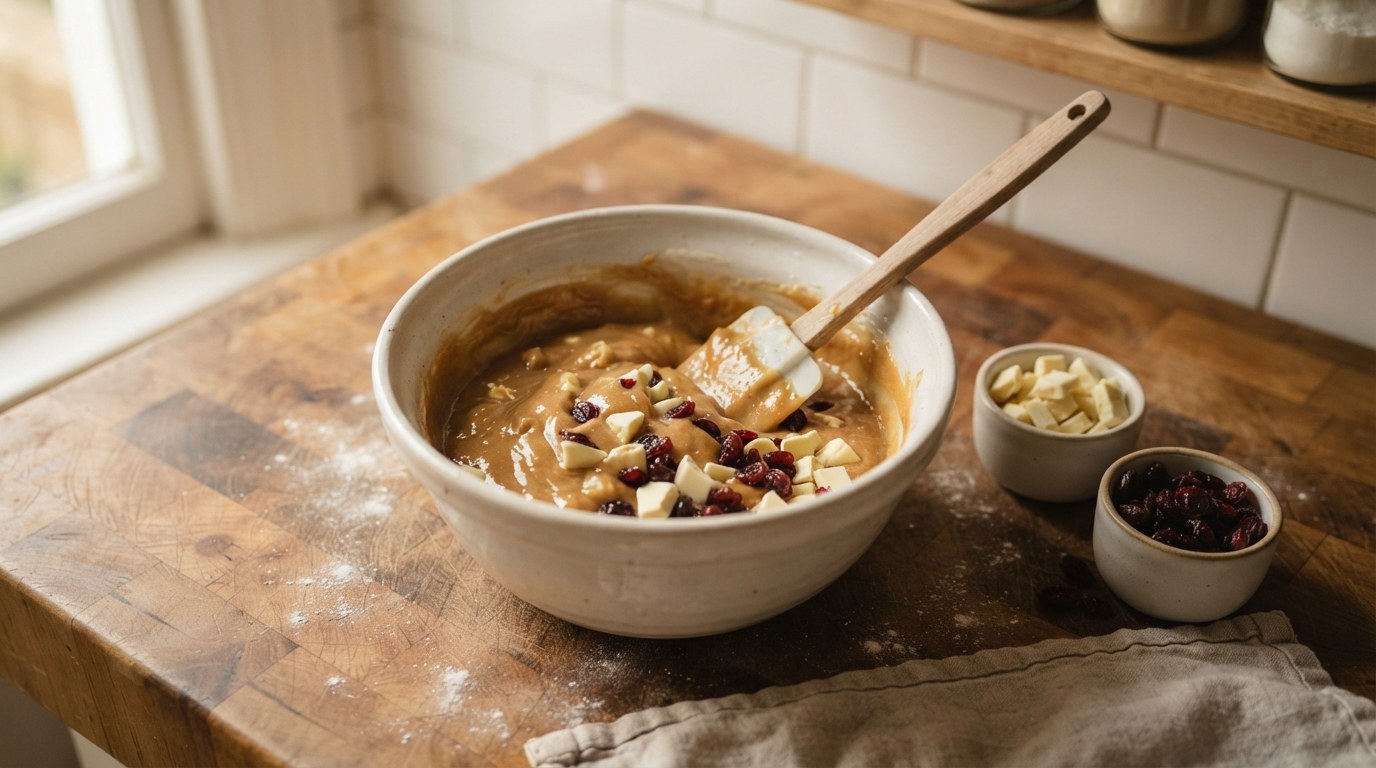
Let the batter cool to warm before the add-ins go in, for the sake of the white chocolate. Under the federal standard of identity white chocolate is at least 20 percent cocoa butter and 14 percent milk solids with no cocoa solids at all, and those milk solids scorch and clump at a lower temperature than dark chocolate tolerates; chunks folded into hot batter soften into streaks and lose their pockets. Use a bar of real white chocolate chopped into rough chunks, or chips that list cocoa butter first; the bags of white baking chips made with palm kernel oil stay waxy after baking. Fold the chunks and the cranberries through with a few strokes, scrape the batter into a parchment-lined 8-inch square pan, and smooth the top. The parchment sling is what lets the whole slab lift out for clean cutting.
The batter is thick and dense enough that the chunks stay suspended rather than sinking, but if you swap in something slicker and heavier, chocolate chips or nuts, toss them in a tablespoon of the flour first so the coating gives the batter something to grip. And keep spoons out of the bowl: the FDA is plain that raw flour and raw batter can carry Salmonella and E. coli and that baking is the only step that makes them safe.
Baking, the Doneness Cue, and Storage
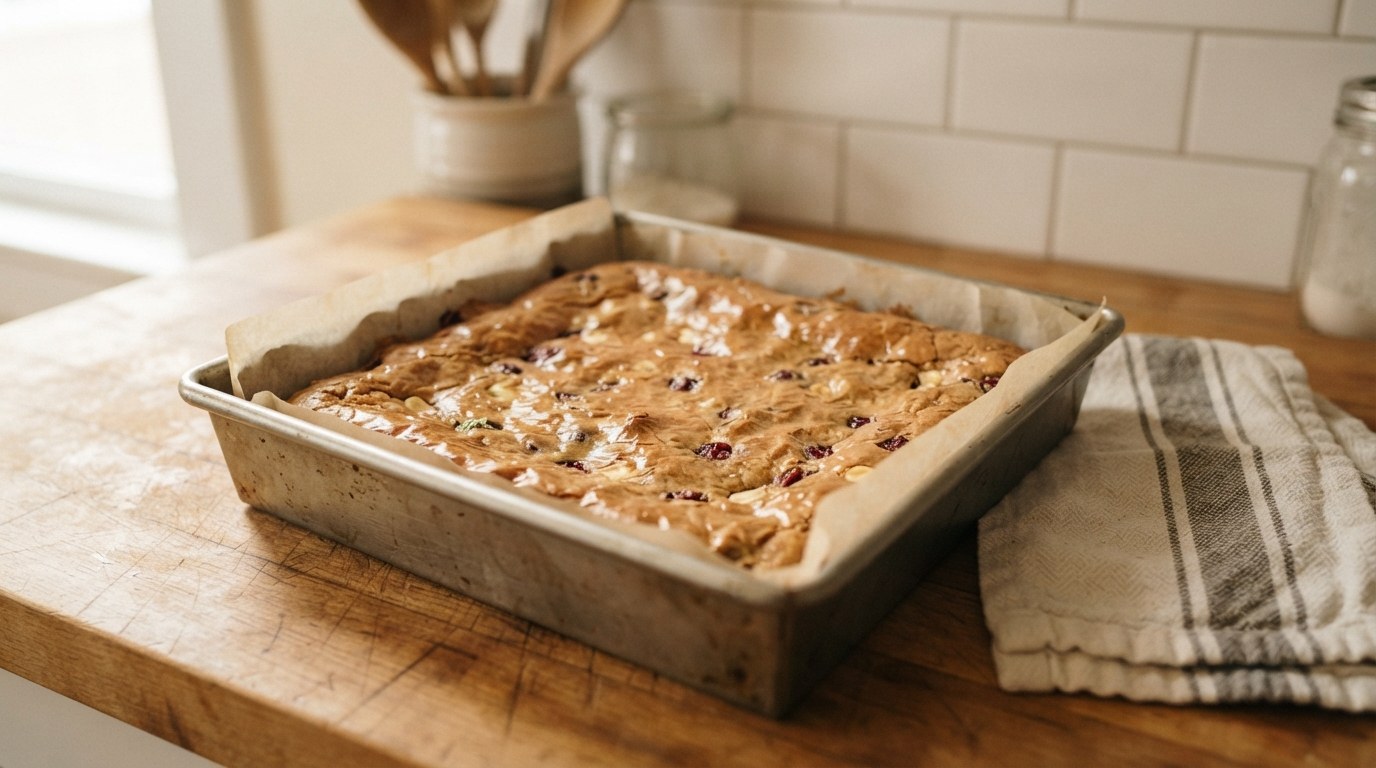
Bake at 350°F for 30 to 35 minutes. The cue is the one King Arthur gives for chewy bars: the top is shiny and set and the edges have pulled slightly from the pan, and a toothpick pushed into the center comes out with a few moist crumbs clinging to it but no wet batter. If the toothpick comes out completely clean the blondies are on their way to dry, because the center keeps cooking from the pan's residual heat for several minutes after it comes out. A fudgy blondie is pulled a shade early and finishes on the counter. Ramsay's note on the show, that the middle should still be soft when the edges are firm, is the same instruction.
Cool the blondies in the pan for an hour before cutting; warm bars tear and the chewy texture only arrives as the sugars set. Lift the slab out by the parchment and cut 16 squares with a long knife. They keep 4 days in an airtight container at room temperature and stay chewy the whole time, which is the brown sugar's doing, or freeze for 2 months wrapped individually. Do not refrigerate them: the cold speeds up starch retrogradation, the recrystallizing of the starch that makes baked goods go stale, and a refrigerated blondie is firm and dull by the next day. Variations that keep the chemistry: swap the cranberries for dried cherries, add a half cup of toasted pecans, or brown the butter first for a nuttier bar, cooling it back to warm before the sugar goes in.

Gordon Ramsay Blondies (White Chocolate and Cranberry)
Ingredients
- 1 cup unsalted butter (2 sticks)
- 1¼ cups light brown sugar, packed
- ¼ cup granulated sugar
- ¾ tsp fine sea salt
- 2 large eggs, plus 1 large egg yolk
- 2 tsp pure vanilla extract
- 1¾ cups all-purpose flour
- ½ tsp baking powder
- 1 cup white chocolate, chopped into chunks (about 6 oz)
- ¾ cup dried cranberries
Instructions
- Heat the oven to 350°F with a rack in the middle. Line an 8-inch square pan with parchment, leaving an overhang on two sides.
- Melt the butter in a saucepan over medium heat. Whisk in the brown sugar, granulated sugar and salt and keep whisking about 1 minute, until glossy and no longer grainy. Take the pan off the heat and let it cool 5 minutes.
- Beat in the eggs and yolk one at a time, then the vanilla, until the mixture is pale, thick and smooth. Sift the flour and baking powder over the top and fold with a spatula just until no dry streaks remain.
- Let the batter cool until just warm, then fold in the white chocolate chunks and cranberries with a few strokes. Scrape into the pan and smooth the top.
- Bake 30 to 35 minutes, until the top is shiny and set, the edges have pulled slightly from the pan, and a toothpick pushed into the center comes out with moist crumbs but no wet batter. Do not open the oven for the first 20 minutes.
- Cool in the pan on a rack for 1 hour. Lift out by the parchment and cut into 16 squares.
Notes
Gordon Ramsay Blondies FAQs
The questions that come up most: what Gordon Ramsay puts in his blondies, why blondies sink in the middle, whether they should be gooey, what makes them chewy rather than cakey, why they came out dry or greasy, how to get the shiny top, whether they can be frozen, and what to swap for the cranberries.
What is in Gordon Ramsay's blondies?
Melted butter, brown sugar, eggs, vanilla, flour and a little baking powder, with white chocolate and dried cranberries folded through, baked in a square pan. It is the blondie from his Ultimate Cookery Course, a butterscotch bar with sweet and tart pockets, and it needs no mixer.
Why do my blondies sink in the middle?
Too much leavening, almost always. A melted-butter bar needs only a touch of baking powder; a full teaspoon plus baking soda inflates the batter before the egg and starch structure has set, and the middle collapses as the gas escapes. Underbaking and opening the oven door early do the same. Use ½ teaspoon of baking powder for 1¾ cups of flour and bake until the edges pull from the pan.
Are blondies supposed to be gooey in the middle?
Soft and fudgy, not raw. Pull them when the top is shiny and set and a toothpick from the center shows moist crumbs but no wet batter; the middle finishes cooking from the pan's heat as they cool. A toothpick that comes out clean means they will be dry once cooled.
What makes blondies chewy instead of cakey?
Melted butter, brown sugar and restraint with the leavening. Melting the butter keeps air out of the batter, brown sugar's molasses holds moisture, an extra yolk adds richness, and a small amount of baking powder keeps the bar dense. Creaming the butter, using white sugar, or adding more leavening all push it toward cake.
Why are my blondies dry or greasy?
Dry blondies are overbaked or short on brown sugar; greasy ones usually come from butter that separated because the sugar never dissolved into it or the eggs went in while it was too hot. Whisk the sugar into the melted butter until glossy, cool it 5 minutes before the eggs, and pull the bars at moist crumbs, not a clean toothpick.
How do I get the shiny, crackly top on blondies?
Dissolve the sugar. Whisking brown sugar into hot melted butter and then beating in the eggs one at a time dissolves it in the batter's water; in the oven that dissolved sugar migrates to the surface and recrystallizes into the thin shiny crust. A batter with undissolved sugar bakes up with a dull, sandy top.
Can blondies be frozen?
Yes. Cool them completely, cut them, wrap the squares individually and freeze for up to 2 months; thaw at room temperature. At room temperature in an airtight container they keep 4 days. Do not refrigerate them, which stales them within a day.
What can I use instead of cranberries?
Dried cherries, chopped dried apricots, or a cup of toasted pecans or walnuts all work with the white chocolate. Fresh or frozen berries do not; they are too wet, sink, and turn the surrounding batter gummy. Keep the total add-ins at about 1¾ cups so the bar still sets.
About the Author
John Siracusa is the founder of Hell’s Kitchen Recipes. He focuses on technique-first, reproducible home cooking and researches recipes & kitchen equipment from published food science and professional chef methods since 2016.