The best mashed potatoes are silky, rich, and light, and the worst are a gluey paste, and the difference is almost entirely technique. Gordon Ramsay's Yukon Gold mash gets there with a ricer, a lot of butter, and warm cream, in that order. Get the order and the tool right and you can barely make a bad batch.
This guide explains why mash turns gluey, why Yukon Gold is the potato to reach for, and the one sequencing trick that keeps it light.
Why Mash Turns Gluey
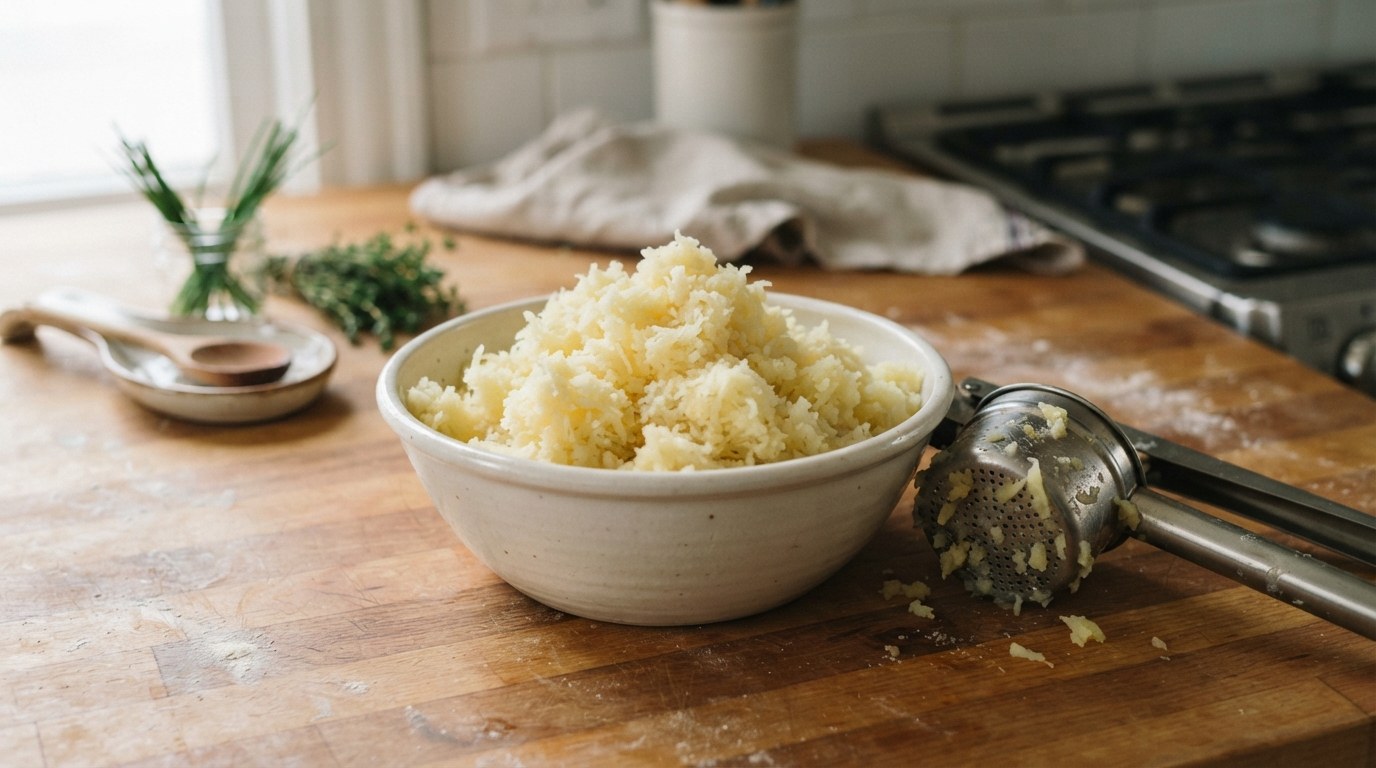
Gluey mash is over-worked mash. Potato cells are packed with starch granules, and when you break too many of them open, all that free starch links up into a sticky, elastic paste, the same starch behavior that thickens a sauce, working against you here. The fix is to handle the cooked potato as gently as possible: press it through a ricer or a food mill, or mash it by hand, and never, ever use a food processor or electric mixer, which shred the cells and turn a good potato into wallpaper paste in seconds.
A ricer is the single best tool for the job. It pushes the potato through fine holes without smearing it, so you get a light, lump-free mash with almost no effort. Rice the potatoes while they are hot, then fold everything else in gently with a spatula.
Why Yukon Gold
Potatoes fall on a scale from starchy to waxy. Starchy russets are dry and fluffy and drink up butter; waxy potatoes (reds, new potatoes) are firm and hold their shape but turn gummy when mashed. Yukon Gold sits right in the middle, a medium-starch, all-purpose potato, which is exactly why it makes such good mash: enough starch to go light and absorb butter, enough moisture to turn creamy and gold. Do not let anyone tell you it is a waxy potato; that middle ground is the whole point. Potatoes are also a genuinely nutritious staple, richer in potassium and vitamin C than they get credit for.
The Order That Keeps It Light
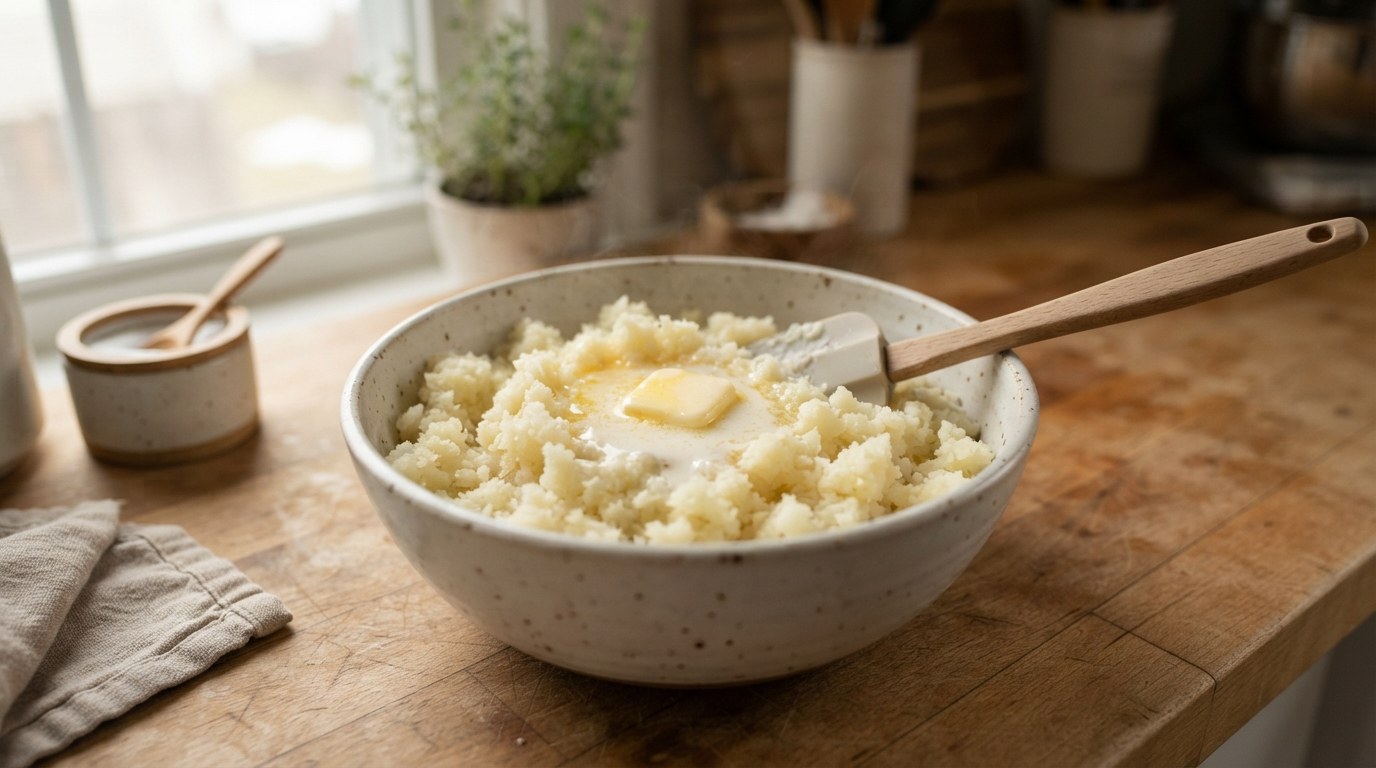
Two sequencing moves make the difference. First, after draining, dry the potatoes for a minute over low heat so the excess water steams off; a drier potato takes on more butter and less water, so the mash is richer and not watery. Second, add the fat before the liquid. Fold in the melted butter first: the fat coats the starch granules and, in effect, waterproofs them, so when the warm cream goes in afterward it makes the mash silky instead of gluey. Warm the butter and cream together (cold dairy seizes the starch and chills the mash), and a little goes a surprisingly long way.
One more note: because fat blocks the starch from firming back up, a rich mash reheats far better than a lean one. If you want a lighter, lower-carb take on the same idea, our cauliflower purée plays by the opposite rule (no starch, so you can blend it hard).
What to Serve It With
Mashed potatoes are the universal side for anything with gravy or a sauce: a filet mignon, a rack of lamb, roast chicken, or a holiday turkey. Pile it high, make a well for the gravy, and finish with chives and cracked pepper. Browse the full recipes collection for more.
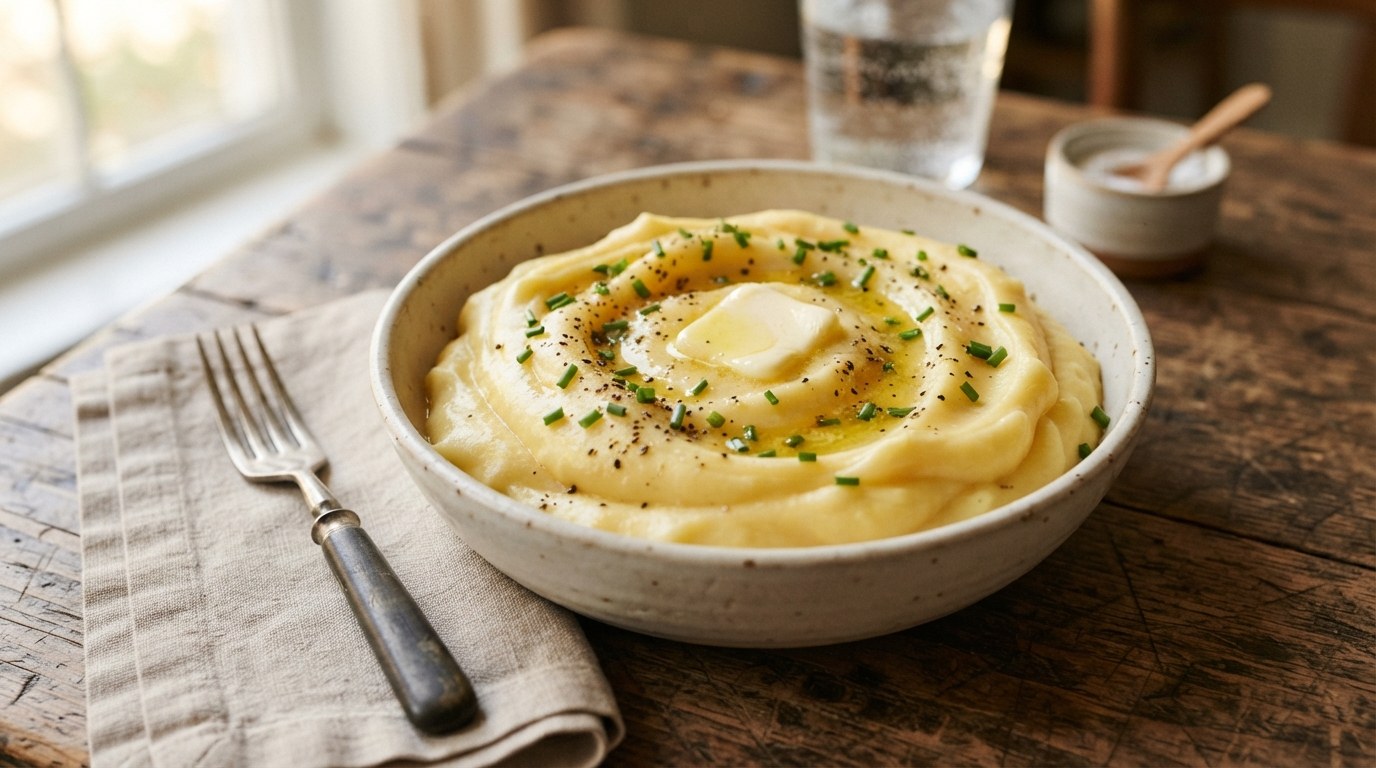
Yukon Gold Mashed Potatoes
Ingredients
- 2 lb Yukon Gold potatoes
- 1/2 cup unsalted butter (1 stick)
- 1/2 cup heavy cream or whole milk
- Salt, to taste
- Freshly ground black or white pepper, to taste
- Optional: 1-2 cloves garlic, minced
Instructions
- Peel the potatoes and cut into even 1 to 2-inch chunks so they cook evenly. Put them in a large pot, cover with cold water, and add a pinch of salt.
- Bring to a boil, then reduce to a simmer and cook until fork-tender, about 15 to 20 minutes.
- Meanwhile, gently warm the cream and butter in a small saucepan over low heat until the butter melts (add the garlic to infuse, if using).
- Drain the potatoes well, return them to the hot pot, and dry them for a minute over low heat to steam off excess water.
- Press the potatoes through a ricer (or mash by hand). Fold in the melted butter first, then the warm cream, gently, until silky. Season with salt and pepper and serve.
Notes
Yukon Gold Mashed Potatoes FAQs
The questions that come up most: why mash turns gluey, why Yukon Gold, whether to add butter or cream first, and how to make it ahead.
Why did my mashed potatoes turn out gluey?
They were over-worked. Breaking too many potato cells releases free starch that links into a sticky paste. Use a ricer, food mill, or hand masher, and never a food processor or electric mixer, which turn mash to glue.
Are Yukon Gold potatoes good for mashing?
Yes, they are ideal. Yukon Gold is a medium-starch, all-purpose potato, the middle ground between fluffy russets and waxy reds, so it goes light and creamy at once. It is not a waxy potato, despite what some recipes say.
Do you add butter or cream first to mashed potatoes?
Butter first. The fat coats the starch granules so the cream you add next makes the mash silky rather than gluey. Warm the butter and cream together before adding them.
Should you use a ricer for mashed potatoes?
A ricer gives the smoothest, lightest result with the least effort, because it presses the potato through fine holes without smearing the starch. A food mill or hand masher also works; avoid a food processor.
Can you make mashed potatoes ahead of time?
Yes, especially a rich one, since the butter keeps the starch from firming up. Reheat gently over low heat or in the oven with an extra splash of warm cream, stirring, to bring the texture back.
Why are my mashed potatoes watery?
Too much water was left in the potatoes. After draining, dry them for a minute over low heat to steam off the excess before adding the butter and cream.

About the Author
John Siracusa is the founder of Hell’s Kitchen Recipes. He focuses on technique-first, reproducible home cooking and researches recipes & kitchen equipment from published food science and professional chef methods since 2016.