This Sauvignon Blanc honey vinaigrette is a white wine vinaigrette with a soft, rounded sweetness: a splash of Sauvignon Blanc simmered with honey until it turns syrupy, then whisked with white wine vinegar, finely minced shallot, Dijon mustard and extra-virgin olive oil. Reducing the wine first takes away its raw, boozy edge and leaves the citrus and green-apple flavor behind, so the honey vinaigrette tastes bright without tasting like a glass of wine poured over lettuce. It makes about 3/4 cup, enough to dress salads for six, and takes 20 minutes, most of it hands-off.
Below is the ratio and why this one runs a little sharper than the classic, why the wine gets reduced and what that does (and doesn't do) to the alcohol, how the mustard and honey hold the dressing together, why it separates in the fridge and how to bring it back, and how long it safely keeps. For more salads and sides, browse Recipes.
What Is in a Sauvignon Blanc Honey Vinaigrette?
A Sauvignon Blanc honey vinaigrette is olive oil, white wine vinegar, a reduced Sauvignon Blanc and honey, emulsified with Dijon mustard and seasoned with shallot, salt and pepper. The wine and vinegar are the acid, the honey balances them, the mustard holds the oil in suspension and the shallot adds a mild onion bite. It sits between a plain white wine vinaigrette and a honey mustard dressing: sweeter and rounder than the first, lighter and sharper than the second.
Sauvignon Blanc suits it because it is a dry, unoaked white with high natural acidity and a citrusy, grassy flavor that survives a short simmer. Any crisp, dry white you would happily drink works the same way, such as Pinot Grigio, Albariño or an unoaked Chardonnay. Skip heavily oaked or sweet wines: oak turns bitter and woody when reduced, and a sweet wine plus honey makes a cloying dressing.
The Honey Vinaigrette Ratio (and Why This One Runs 2 to 1)
The classic vinaigrette ratio is 3 parts oil to 1 part acid, and this honey vinaigrette runs closer to 2 to 1: 1/2 cup of olive oil to about 1/4 cup of acid (2 tablespoons of white wine vinegar plus the reduced wine). It can take the extra acid because the 2 tablespoons of honey round it off, and honey's sweetness reads as body on the tongue. Taste it on a leaf before you serve it and adjust: more oil if it puckers, a few drops of vinegar if it tastes flat or sweet.
| Vinaigrette | Oil to acid | Acid | Emulsifier and sweetener | Best on |
|---|---|---|---|---|
| This Sauvignon Blanc honey vinaigrette | About 2 to 1 | Reduced Sauvignon Blanc + white wine vinegar | Dijon; honey reduced with the wine | Tender greens, strawberries, beets, grilled fish |
| Classic white wine vinaigrette | 3 to 1 | White wine vinegar | Dijon; no sweetener | Any green salad, potatoes, beans |
| Honey mustard vinaigrette | About 2 to 1 | Cider or white wine vinegar | A large spoon of Dijon or whole-grain mustard; honey | Chicken salads, slaws, sturdy leaves |
| Lemon honey vinaigrette | 2 to 1 or 3 to 1 | Fresh lemon juice | Dijon optional; honey | Arugula, grain salads, fish |
| Honey balsamic vinaigrette | About 2 to 1 | Balsamic vinegar | Dijon; honey (balsamic is already sweet) | Tomatoes, caprese, roasted vegetables |
The table shows the pattern: every honey vinaigrette is the same oil, acid and emulsifier frame, and the acid decides the character. Swap the reduced wine and white wine vinegar for lemon juice and you have a lemon honey vinaigrette; swap in balsamic and cut the honey back because the vinegar is already sweet. For a plain white wine vinaigrette, leave out the honey and use 3 parts oil.
Why You Reduce the Sauvignon Blanc First
Simmering the Sauvignon Blanc with the honey concentrates the wine's fruit and acidity and drives off much of its harsh, raw-alcohol smell, which would otherwise dominate a cold dressing. A splash of raw wine tastes thin and boozy against oil; reduced by about half with honey, it becomes a light golden syrup that blends into the vinaigrette and helps thicken it. Use a small saucepan over medium-low heat and keep it at a gentle simmer for 3 to 5 minutes, until the mixture measures about 1/4 cup.
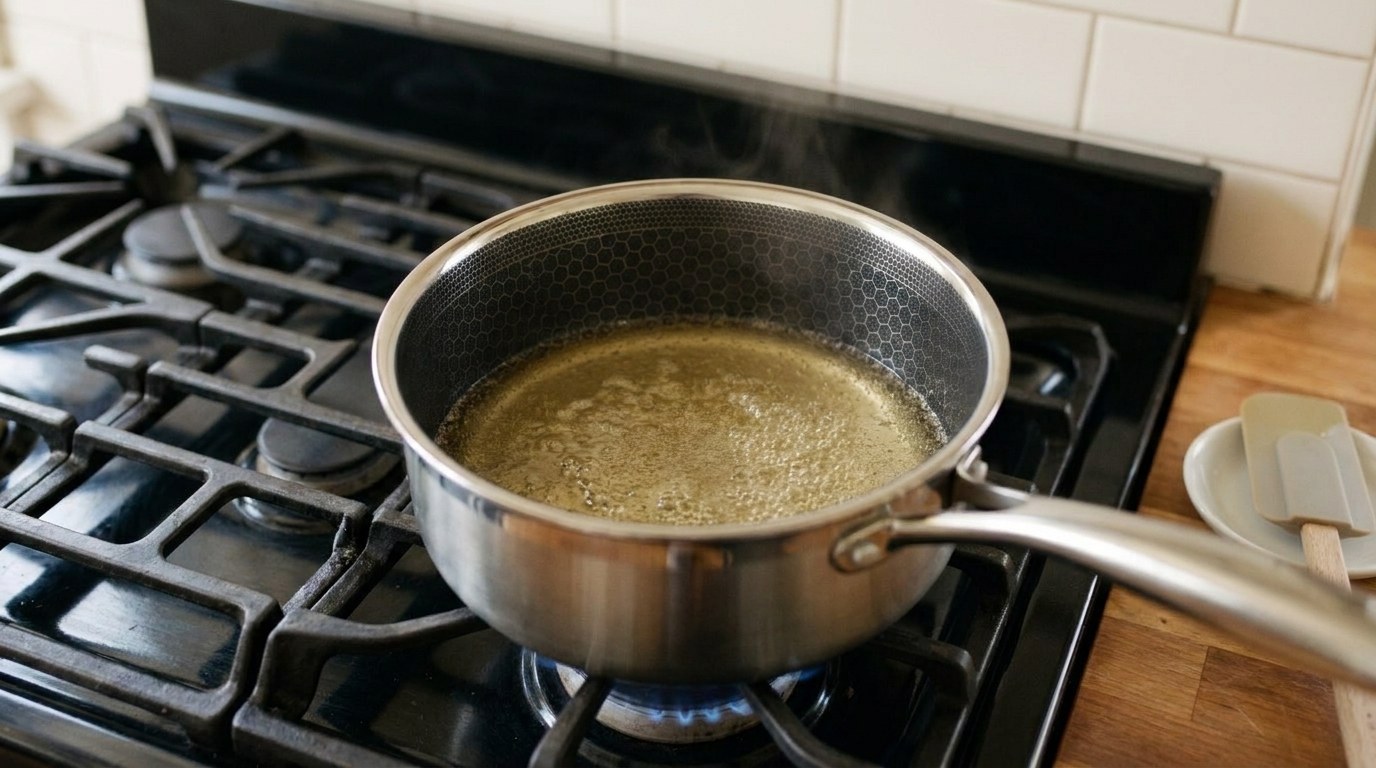
Watch the color, because the reduction tells you when to stop. While there is still water in the pan, the liquid can't climb past 212°F (100°C), the boiling point of water. Once most of it has gone, the syrup gets hotter, and honey is mostly fructose and glucose, sugars that brown quickly as the temperature rises. Pull the pan when the syrup is light gold and still pourable. If it turns amber and smells of caramel, it will set stiff when it cools and taste toasty instead of fresh.
Reducing does not make the dressing alcohol-free. Alcohol boils at about 173°F (78°C), below water, so it leaves the pan first, but it never leaves completely: in the USDA nutrient retention tables, wine stirred into a hot liquid and taken off the heat keeps about 85% of its alcohol, and even 15 minutes of simmering leaves about 40%. Idaho State University adds that small pans hold on to more of it than wide ones. Spread over six servings, the amount is small, but for anyone avoiding alcohol entirely, use the swap in the variations below.
Let the reduction cool to room temperature, about 10 minutes, before the oil goes in. Warm syrup thins the dressing and cooks the raw edge out of the olive oil's flavor, and cooling also lets the shallot soak in the vinegar in the meantime.
Soften the Shallot in the Vinegar
Soaking the minced shallot in the vinegar with the salt for 10 minutes takes away its raw sting, so you taste a mild, sweet onion note instead of a sharp bite. The salt draws juice out of the cut shallot by osmosis, and the vinegar's acid softens it, which is why chefs often let shallots sit in the acid before any oil goes in. Mince it as finely as you can, about 2 tablespoons from one small shallot; even, tiny pieces spread through the vinaigrette instead of clumping in the bottom of the jar. A thin, sharp blade makes that much easier, and our guide to the best knife for cutting vegetables explains why.
Season the vinegar, not the oil. Salt and honey dissolve in water-based liquids and barely at all in oil, so salt stirred in after the oil sits as gritty specks. That is the same "season early" habit Gordon Ramsay teaches for meat and fish, applied to a dressing: salt goes in at the start, where it can dissolve, and you taste again at the end.
How Mustard and Honey Hold a Honey Vinaigrette Together
A honey vinaigrette is an emulsion: whisking breaks the olive oil into tiny droplets spread through the vinegar, and the Dijon mustard coats those droplets so they don't merge back into a layer. Mustard seeds are wrapped in mucilage, a mix of proteins and polysaccharides that America's Test Kitchen calls highly effective at stabilizing emulsions. In their comparison, a Dijon vinaigrette held together for about 2 hours, one made with whole-grain mustard (which keeps more of the seed hull) stayed emulsified for a week in the fridge, yellow mustard began separating soon after whisking, and mustard powder never came together.
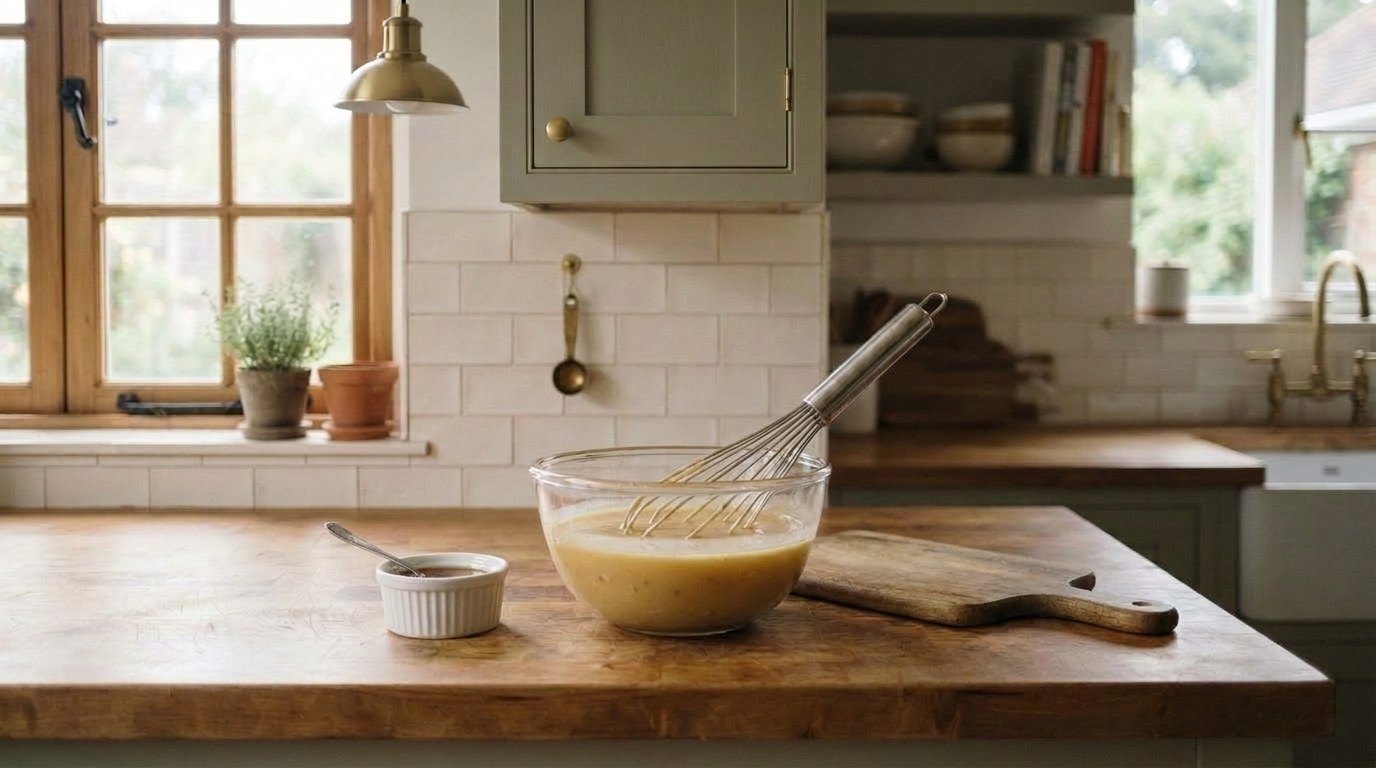
Honey helps in a different way. It is a thick sugar syrup, so it makes the vinegar side of the dressing more viscous, and droplets of oil drift and collide more slowly in a thicker liquid. That makes honey a stabilizer more than an emulsifier: it buys time, and the mustard does the holding. Together they give this dressing its creamy, clingy look.
The order matters as much as the ingredients. Whisk the cooled reduction, the shallot and its vinegar and the Dijon together first, then pour in the olive oil in a thin stream while you whisk, so each addition gets broken up and coated before the next arrives. The vinaigrette should turn opaque and slightly thick. A jar works too: put everything in, close it tightly and shake hard for 30 seconds.
Why Vinaigrette Separates (and How to Bring It Back)
Every vinaigrette separates eventually, and it is not a sign that anything went wrong. The oil droplets slowly find each other and merge, and because oil is lighter than vinegar, it rises into a layer on top. In the fridge the olive oil also turns cloudy and thick, sometimes almost solid, as some of its fats crystallize in the cold. Neither change hurts the dressing.
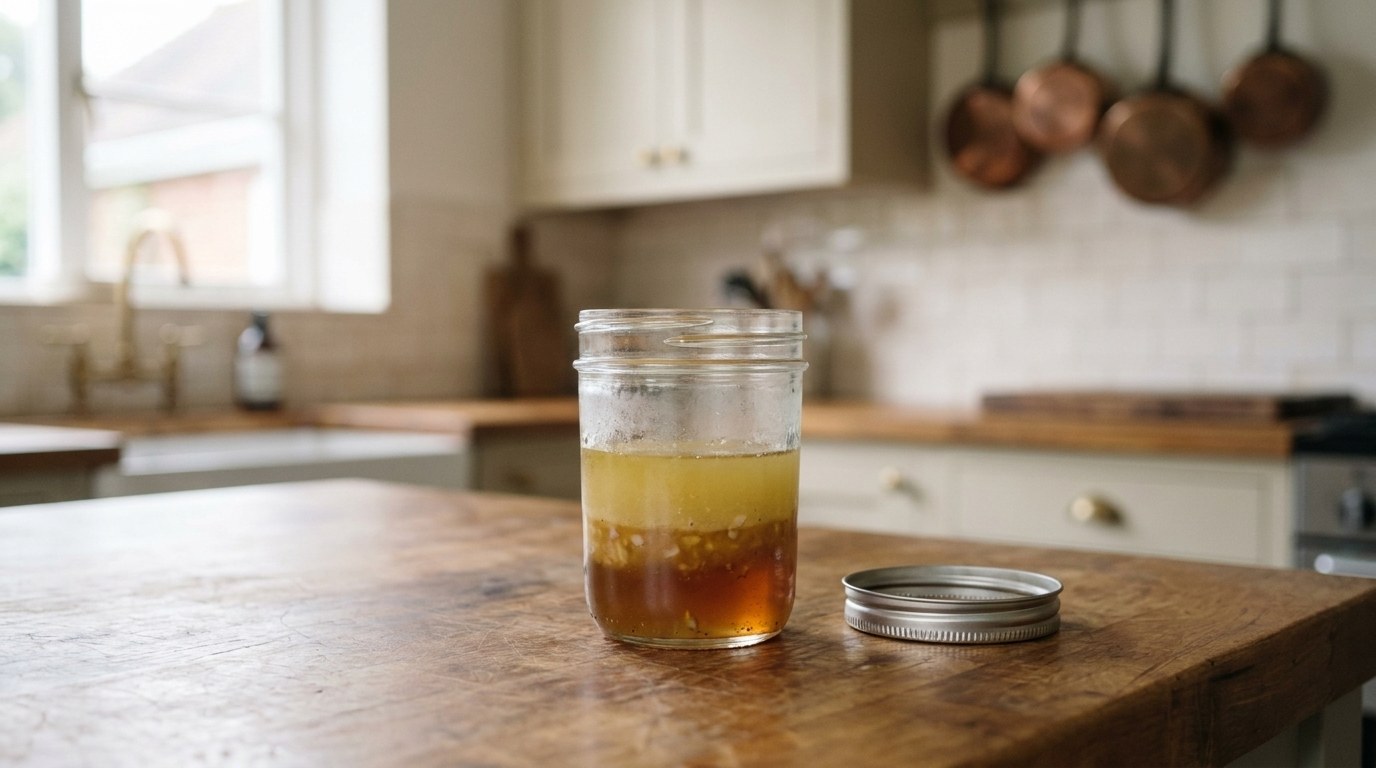
To bring it back, let the jar stand at room temperature for 15 to 20 minutes so the oil turns liquid again, then close the lid and shake hard for 20 to 30 seconds. If it still won't hold, whisk in another 1/2 teaspoon of Dijon. A leakproof dressing shaker makes this the work of a few seconds, and it measures the oil and acid for you as you build the next batch.
OXO
OXO Good Grips Little Salad Dressing Shaker
- 1-cup shaker with cup, ounce and milliliter markings, sized for one batch of this vinaigrette
- Airtight, leakproof seal, so you can shake a separated dressing back together without a spill
- One-handed flip lever to pour; BPA free, break resistant and dishwasher safe
There is one more trick if you want a dressing that holds longer at the table. America's Test Kitchen found that about 1/4 teaspoon of garlic paste (garlic mashed with salt or grated on a rasp) per 1/4 cup of vinaigrette stabilized it nearly as well as mayonnaise, because crushing the cells releases natural emulsifiers; simply minced garlic did little. Garlic changes the storage rules, though, as the next section explains.
How Long Does Honey Vinaigrette Last in the Fridge?
Keep this honey vinaigrette covered in the refrigerator, at 40°F (4°C) or below, and use it within 4 days. Because it contains fresh shallot, treat it like the fresh-garlic and fresh-herb dressings that Cooperative Extension specialists advise refrigerating and using within 4 days. A vinaigrette made only from oil, vinegar, wine, honey and mustard is a much lower risk; the fresh aromatics are what set the clock.
If you add garlic, refrigerate it without exception. Garlic and fresh herbs are low-acid foods that can carry Clostridium botulinum spores, and Oregon State University Extension explains that storing them in oil creates the oxygen-free conditions the bacteria need to grow. The National Center for Home Food Preservation warns that garlic in oil kept at room temperature is at risk for botulism; its guidance is to keep it at 40°F or below and use it within 4 days, or freeze it. Vinegar's acidity slows bacterial growth, but the splash in a dressing is not a tested way to make garlic in oil shelf-stable, so never leave a garlic dressing on the counter overnight. Toss any dressing that smells off, looks bubbly or has been left out for hours, and don't taste it to check.
Honey Vinaigrette Variations
The same method gives you a run of honey vinaigrettes with a single swap, because the oil, acid and mustard frame stays the same:
- Alcohol-free: replace the Sauvignon Blanc with 1/4 cup of unsweetened white grape juice and skip the reduction, then add an extra 2 teaspoons of white wine vinegar to make up for the wine's acidity. Verjus, the tart juice of unripe grapes, is the closer match if you can find it.
- Lemon honey vinaigrette: use fresh lemon juice in place of the vinegar and add a little grated zest. Lemon has more acid than wine, so start with 1 1/2 tablespoons.
- White wine vinaigrette without mustard: leave out the Dijon and the dressing still works; it just separates within minutes, so shake it right before you pour. A teaspoon of mayonnaise is a quick stand-in emulsifier.
- Herb vinaigrette: stir in a tablespoon of chopped tarragon, chives or a little mint just before serving. Gordon Ramsay treats soft herbs as a perfume added at the end, as he shows in the vegetables and herbs lesson of his MasterClass; added early, they darken and turn limp in the acid.
- Honey substitute: maple syrup or agave works one for one and makes the dressing vegan. Both are thinner than honey, so the dressing will separate a little faster.
- Champagne or sherry vinegar: Champagne vinegar is gentler than white wine vinegar; sherry vinegar adds a nutty depth that suits roasted vegetables.
What to Serve With Sauvignon Blanc Honey Vinaigrette
This vinaigrette is made for tender, mild leaves: butter lettuce, baby spinach, mixed baby greens and arugula, where the honey softens the pepperiness. Dress the leaves just before serving, about 1 1/2 tablespoons for every 2 cups of greens, and toss gently with your hands or salad servers so every leaf is coated without pooling. It is lovely spooned over a strawberry caprese salad with burrata, over roasted beets with goat cheese, or on a crisp, cabbage-based slaw in place of the creamy dressing in our Gordon Ramsay coleslaw.
It works with seafood too. Toss a handful of arugula in it to serve under crispy skin salmon, or drizzle a little over pan-fried red snapper, where its acidity does the same job as a squeeze of lemon. And if you are pouring a glass of the Sauvignon Blanc you cooked with, the dressing and the wine will taste like they belong together.
A good Sauvignon Blanc honey vinaigrette comes down to four habits: reduce the wine gently until it is light gold, let the shallot soften in the salted vinegar, whisk the oil in last so the mustard can hold it, and keep the jar cold and use it within a few days. Get those right and this honey vinaigrette will be the dressing you make on repeat.
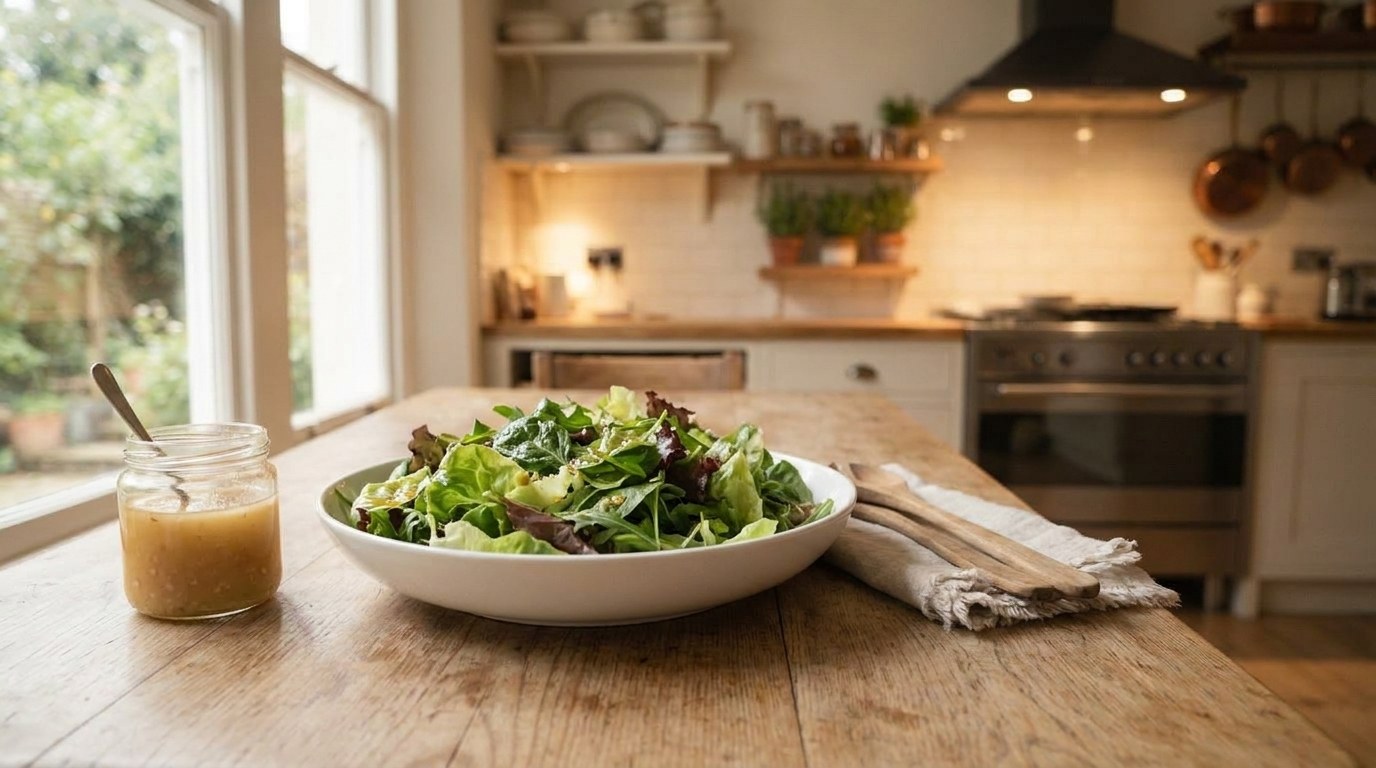
Sauvignon Blanc Honey Vinaigrette
Ingredients
- 1/4 cup Sauvignon Blanc (or another dry, unoaked white wine)
- 2 tbsp honey
- 1 small shallot, very finely minced (about 2 tbsp)
- 2 tbsp white wine vinegar
- 1/4 tsp kosher salt, plus more to taste
- 1 tbsp Dijon mustard
- 1/2 cup extra-virgin olive oil
- Freshly ground black pepper
To serve
- 5 oz mixed tender salad greens (about 8 cups), optional
Instructions
- Put the minced shallot in a small bowl with the white wine vinegar and the salt. Stir and set aside while you make the reduction.
- Combine the Sauvignon Blanc and honey in a small saucepan over medium-low heat. Stir until the honey dissolves, then simmer gently for 3 to 5 minutes, until the wine has reduced by about half and the mixture measures about 1/4 cup. Take it off the heat while it is still light gold.
- Pour the reduction into a mixing bowl or a 1-cup jar and let it cool to room temperature, about 10 minutes.
- Add the shallot with its vinegar and the Dijon mustard to the cooled reduction and whisk until smooth.
- Whisking constantly, pour in the olive oil in a slow, thin stream until the vinaigrette is thick, glossy and opaque. (Or close the jar tightly and shake hard for 30 seconds.)
- Taste it on a salad leaf. Season with pepper and more salt, and adjust with a few drops of vinegar or a little more honey to taste.
- Toss with the greens just before serving, about 1 1/2 tablespoons for every 2 cups of leaves. Refrigerate leftovers in a covered jar and use within 4 days; let it stand at room temperature for 15 minutes and shake before using.
Notes
Sauvignon Blanc Honey Vinaigrette FAQs
The questions that come up most: what honey vinaigrette is made of, the right honey vinaigrette ratio, whether you can cook with Sauvignon Blanc, whether reducing the wine removes the alcohol, how long honey vinaigrette lasts in the fridge, why vinaigrette separates, how to make it without mustard, and how many calories it has.
What is honey vinaigrette made of?
Honey vinaigrette is oil, an acid such as vinegar, wine or lemon juice, honey and an emulsifier, usually Dijon mustard, seasoned with salt and pepper. This version uses extra-virgin olive oil, white wine vinegar, Sauvignon Blanc reduced with the honey, Dijon and finely minced shallot.
What is the ratio for honey vinaigrette?
A classic vinaigrette is 3 parts oil to 1 part acid. A honey vinaigrette can run closer to 2 to 1 because the honey balances the extra acid. This recipe uses 1/2 cup of olive oil to about 1/4 cup of acid (white wine vinegar plus the reduced wine) and 2 tablespoons of honey.
Can you use Sauvignon Blanc for cooking?
Yes. Sauvignon Blanc is a good cooking wine because it is dry, unoaked and high in acidity, with a citrusy flavor that holds up when it is reduced. Use one you would drink. Pinot Grigio, Albarino or an unoaked Chardonnay can stand in; avoid oaky or sweet wines in a dressing.
Does reducing the wine remove the alcohol?
Not completely. Alcohol boils at about 173°F, so a short simmer drives off some of it and softens the raw taste, but USDA retention figures show about 85% remains in wine added to a hot liquid and about 40% after 15 minutes of simmering. For an alcohol-free dressing, use white grape juice or verjus with a little extra vinegar.
How long does homemade honey vinaigrette last in the fridge?
With fresh shallot or garlic in it, refrigerate the vinaigrette at 40°F or below and use it within 4 days, the time Extension food-safety specialists give for fresh aromatics in an oil dressing. Never store a garlic vinaigrette at room temperature.
Why does my vinaigrette separate, and how do I fix it?
The oil droplets merge and, being lighter, float to the top; in the fridge olive oil also turns cloudy and thick. Let the jar sit at room temperature for 15 to 20 minutes, then shake it hard for 20 to 30 seconds. Whisking in an extra 1/2 teaspoon of Dijon helps it hold longer.
Can you make white wine vinaigrette without mustard?
Yes. Leave the Dijon out and the dressing tastes cleaner but separates within minutes, so shake or whisk it right before serving. A teaspoon of mayonnaise or a little garlic paste can stand in as the emulsifier.
How many calories are in honey vinaigrette?
This recipe works out to about 95 calories per tablespoon, or about 190 calories in a 2-tablespoon serving, almost all of it from the olive oil and the honey. Using less dressing per salad is the easiest way to cut that back.

About the Author
John Siracusa is the founder of Hell’s Kitchen Recipes. He focuses on technique-first, reproducible home cooking and researches recipes & kitchen equipment from published food science and professional chef methods since 2016.