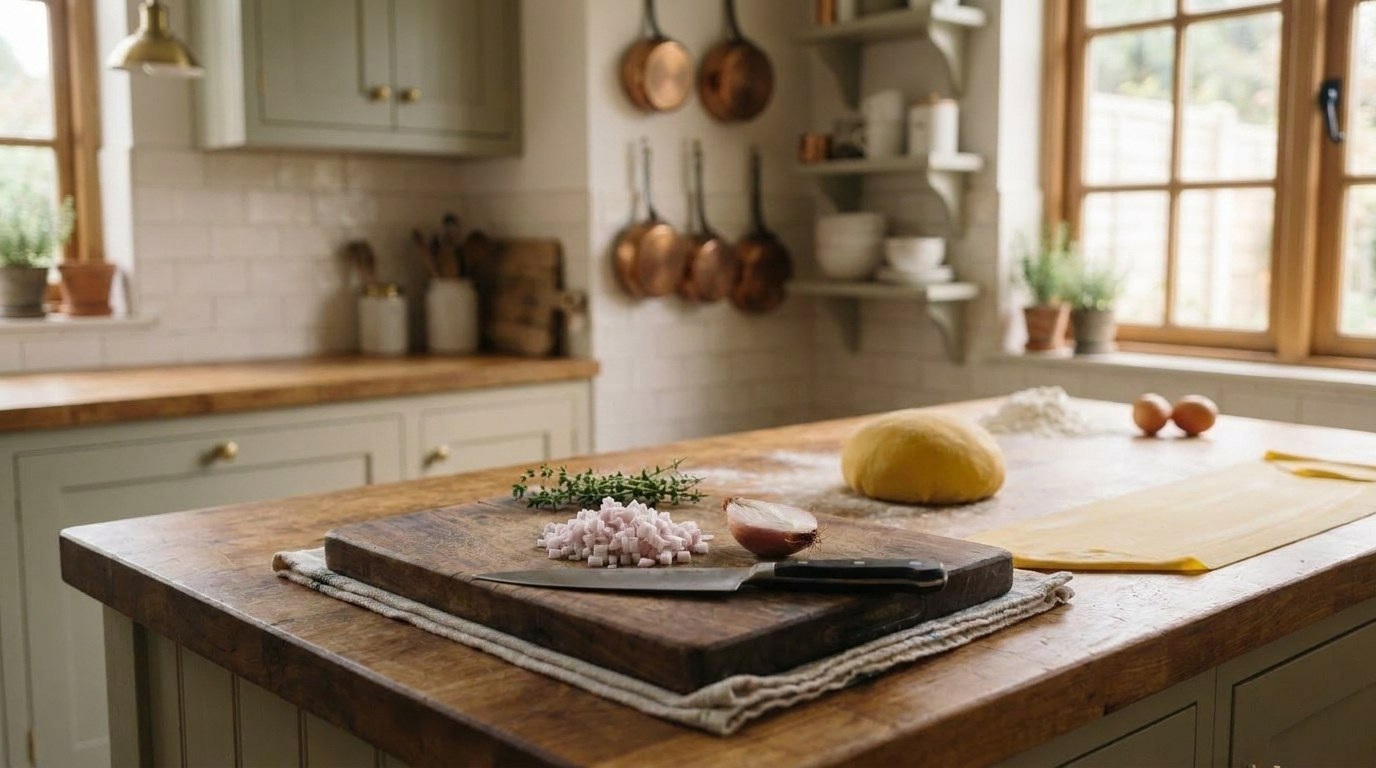
The Gordon Ramsay MasterClass is two video classes, not one. Gordon Ramsay Teaches Cooking I is the foundation course: 20 lessons, about 3 hours 54 minutes, running from kitchen layout and knife skills to breaking down a chicken and a whole fish, fresh pasta, lobster ravioli and Beef Wellington. Gordon Ramsay Teaches Cooking II: Restaurant Recipes at Home is the follow-up: 15 lessons, about 4 hours 14 minutes, each one a restaurant-style dish such as crispy duck, pomme purée, rack of lamb and raspberry soufflé. Neither class is sold on its own; both come with a MasterClass membership, and the Gordon Ramsay MasterClass cost page breaks down the plans.
This page lists every lesson in both classes, explains what the method lessons actually teach and why the techniques work, says who each class suits, and points to the recipes on this site built from those lessons, so you can cook the dishes before or after you watch. If you already know you want in, you can join Gordon Ramsay's MasterClass here. More technique guides live in cooking techniques.
Gordon Ramsay MasterClass: Cooking I vs Cooking II
Cooking I teaches the skills and Cooking II puts them on a restaurant plate. Start with Cooking I if you want to learn to cook the way Ramsay trains a young chef (prep, knife work, butchery, pasta, one showpiece), and go to Cooking II if you already cook confidently and want dinner-party dishes with their sides and sauces. The table compares the two as they are listed on masterclass.com.
| Detail | Teaches Cooking I | Teaches Cooking II: Restaurant Recipes at Home |
|---|---|---|
| Lessons | 20 | 15 |
| Running time | About 3 hr 54 min | About 4 hr 14 min |
| Shape of the class | Method lessons, ingredient-buying lessons and six dishes | One dish per lesson, grouped as appetizers, mains, sides and dessert |
| Headline dishes | Scrambled eggs, chicken suprême, salmon with shellfish minestrone, lobster ravioli, Beef Wellington | Crispy duck, pomme purée, rack of lamb, Szechuan roasted chicken, sesame-crusted tuna, raspberry soufflé |
| Skills you leave with | Knife skills, breaking down a chicken and a fish, pan technique, pasta dough | Prep timing, restaurant plating, Asian-inspired mains, a soufflé |
| Best for | Beginners and anyone who never learned the basics properly | Confident home cooks who want showpiece dinners |
The order matters more than it looks. Cooking II assumes the knife work and pan control that Cooking I drills, so a beginner who jumps straight to the duck lesson ends up learning both at once.
Gordon Ramsay Teaches Cooking I: All 20 Lessons
Gordon Ramsay Teaches Cooking I runs 20 lessons in a deliberate order: two lessons on his own training, three on buying ingredients, six "method" lessons on technique, six "make" lessons where he cooks a dish start to finish, and short opening and closing chapters. When Tasting Table reported the launch, the class was billed at 15-plus lessons covering knife skills, shopping for ingredients and dishes such as Beef Wellington; it now runs 20. The last column links to the recipe on this site that matches each lesson.
| # | Lesson | Length | Cook it here |
|---|---|---|---|
| 1 | Introduction | 3:53 | – |
| 2 | Gordon's Journey: Learning from Masters | 10:06 | – |
| 3 | Method: Kitchen Layout | 6:50 | The pans he cooks with |
| 4 | Mastering Ingredients: Vegetables & Herbs | 16:42 | Thyme or rosemary, and when |
| 5 | Make: Poached Egg & Mushrooms on Brioche | 8:32 | Poached eggs with Parma ham |
| 6 | Method: Knife Skills | 18:42 | Gordon Ramsay knives |
| 7 | Make: Elevated Scrambled Eggs | 6:28 | Gordon Ramsay scrambled eggs |
| 8 | Method: Breaking Down a Whole Chicken | 9:00 | Bone-in chicken breast |
| 9 | Make: Chicken Suprême with Root Vegetables | 17:33 | The same sear-and-baste pan method |
| 10 | Mastering Ingredients: Fish & Shellfish | 14:10 | Gordon Ramsay fish recipes |
| 11 | Gordon's Journey, part two | 12:58 | – |
| 12 | Method: Breaking Down a Whole Fish | 13:25 | – |
| 13 | Make: Salmon with Shellfish Minestrone | 16:15 | Crispy skin salmon |
| 14 | Method: Making Pasta Dough | 12:57 | Gordon Ramsay pasta dough |
| 15 | Method: Rolling Pasta Dough | 15:49 | Rolling it thin |
| 16 | Make: Lobster Ravioli | 15:59 | Cooking and shelling a whole lobster |
| 17 | Mastering Ingredients: Beef, Lamb & Pork | 5:51 | The most tender steak cuts |
| 18 | Make: Beef Wellington | 24:18 | Gordon Ramsay Beef Wellington |
| 19 | Advice for Life | 3:08 | – |
| 20 | Closing | 1:26 | – |
The Beef Wellington lesson is the longest in the class at over 24 minutes, and the knife-skills lesson is the second longest. That weighting says a lot: the class spends its time on the jobs that go wrong for home cooks, not on the easy dishes.
What the Method Lessons in the Gordon Ramsay MasterClass Teach
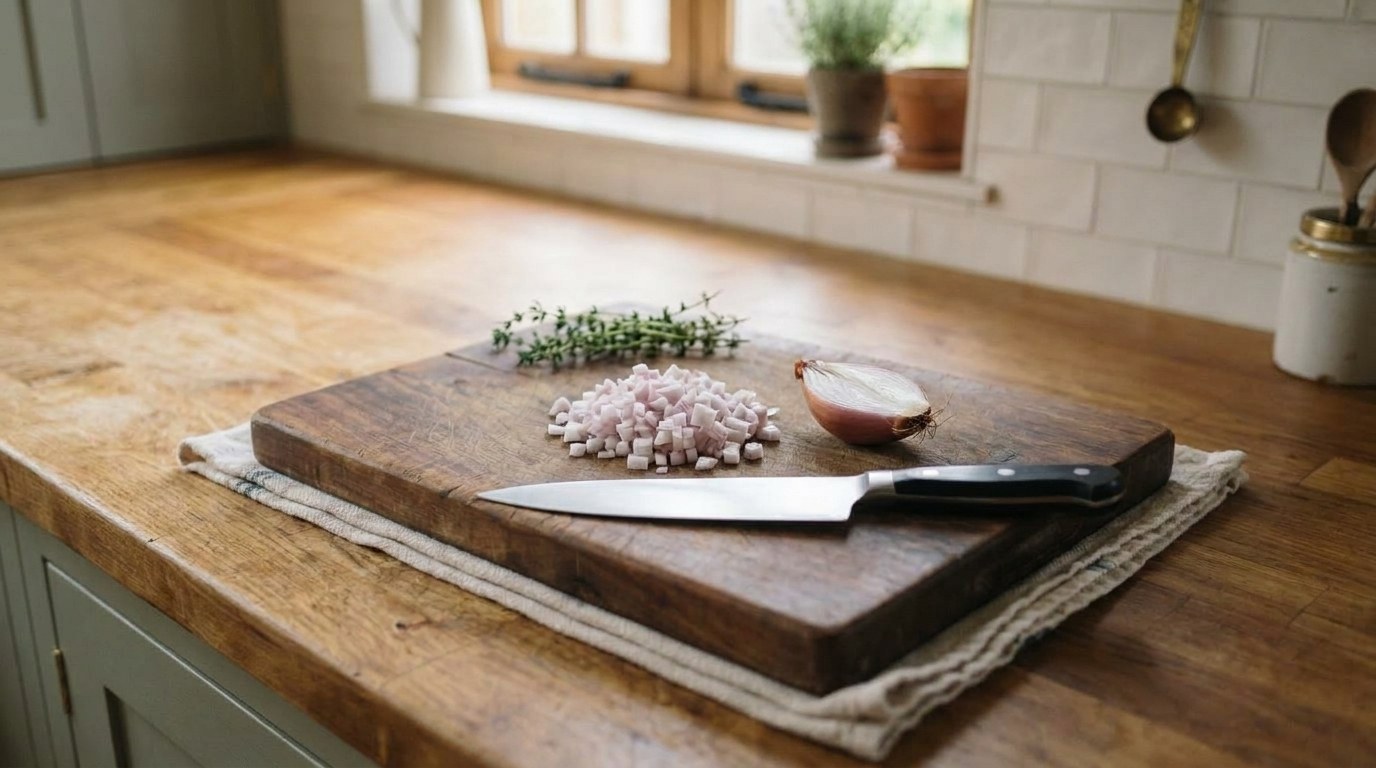
The method lessons teach habits more than recipes: an organized station, a secured board, a sharp knife, a hot pan, and nothing wasted. In the kitchen-layout lesson Ramsay sets up his space so everything he needs is in reach before the heat goes on, and spends money on a few good knives and one heavy pan rather than gadgets. In the knife skills lesson the board goes on a damp cloth so it can't slide, the guiding hand forms a claw with the knuckles against the blade, and the knife gets a few strokes on a steel before and after every use. He asks for accuracy first and says speed follows, and he uses the tip of the blade to open and pierce and the heel to chop.
That lesson is built around one tool, a well-balanced 8-inch chef's knife kept sharp, which is the knife to buy before anything else if you are following along. The Gordon Ramsay knives guide covers the brands he is associated with.

WÜSTHOF
WÜSTHOF Classic 8-Inch Chef's Knife
- An 8-inch all-purpose cook's knife for chopping, mincing, slicing and dicing
- Forged from a single block of high-carbon stainless steel, tempered to 58 HRC, with a full bolster and finger guard
- Full-tang, triple-riveted synthetic handle; made in Solingen, Germany
The butchery lessons are about yield. A whole chicken comes apart into drumsticks, thighs, wings and the two suprêmes, with the carcass kept for stock; a whole fish is filleted in long strokes so no flesh stays on the bone, then portioned and pin-boned. The pan lesson that follows is the one most home cooks need: pan hot first, then the oil (grapeseed for meat and chicken, olive oil for fish), and nothing goes in unless it sizzles. The reason is browning. The Maillard reaction that builds a crust starts around 284°F, and a wet surface can't climb past 212°F while water is still boiling off it, so a cold pan or damp skin steams instead of searing. The smashed garlic, thyme and butter come in afterward for basting, which adds flavor and color to the crust; it doesn't add moisture, because the meat is already full of water and being squeezed by the heat.
The Gordon Ramsay MasterClass Recipes in Cooking I
The six "make" lessons in Cooking I are a poached egg with mushrooms on brioche, elevated scrambled eggs, chicken suprême with root vegetables, salmon with shellfish minestrone, lobster ravioli and Beef Wellington, and each one practices a method lesson that came just before it. The eggs teach heat control. In the scrambled-egg lesson the pan goes on and off the heat while the eggs are folded with a spatula, because egg proteins start to set at around 140°F and a pan left on full heat sets them into hard, weeping curds; pulling it off every half minute or so keeps the curds small and soft. Our Gordon Ramsay scrambled eggs follow the same method.
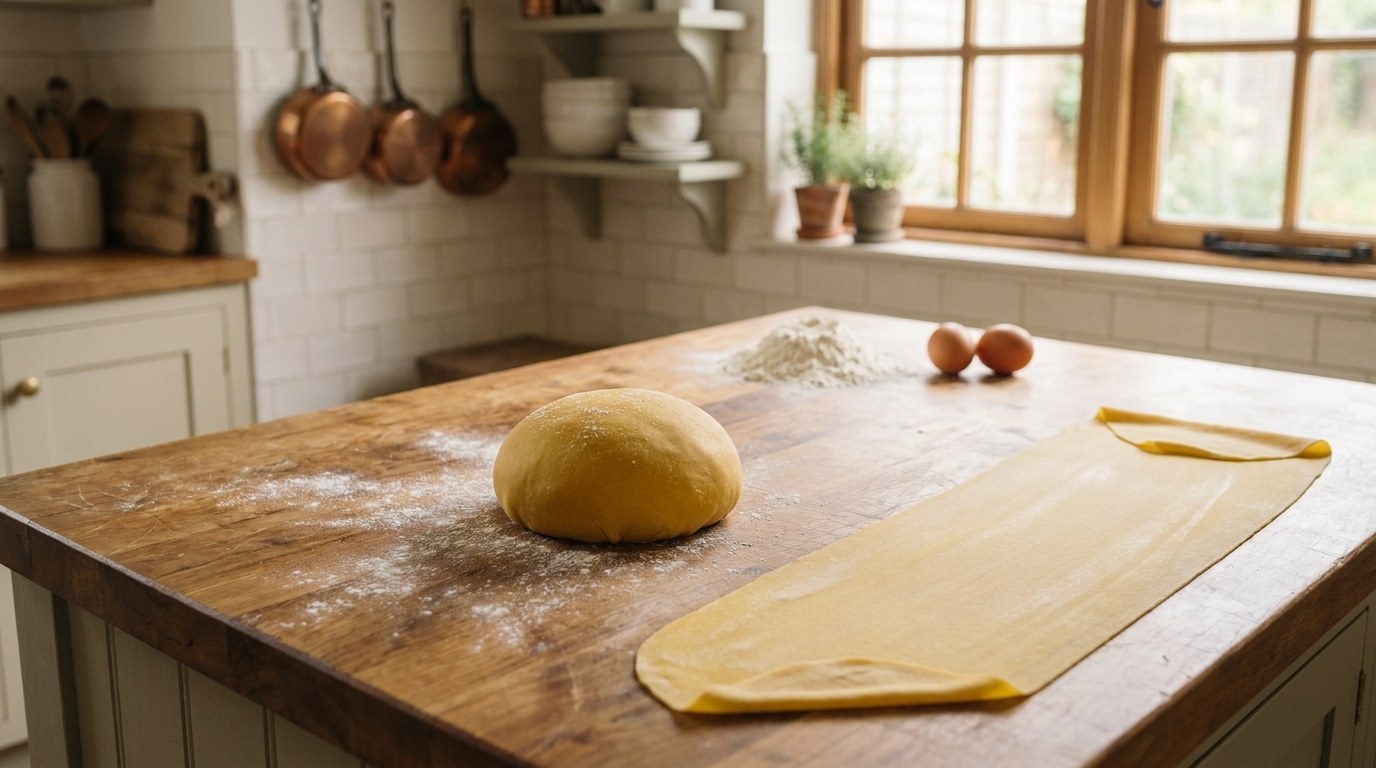
The pasta lessons build toward the lobster ravioli. The dough is "00" flour with whole eggs, extra yolks and a little olive oil, kneaded until smooth and then rested, wrapped, for about 20 minutes. Kneading develops gluten, the stretchy protein network that lets a sheet roll thin without tearing; the rest lets the flour finish hydrating and the gluten relax, so the dough stops springing back in the machine. Our Gordon Ramsay pasta dough uses the same egg-and-yolk ratio and rests the dough at least 30 minutes for the same reason.
The Beef Wellington lesson is the finale: a seared center-cut fillet brushed with mustard, wrapped in a crêpe, Parma ham and mushroom duxelles, rolled tight in cling film and chilled before the pastry goes on. Chilling is what makes it work at home: a cold, firm log holds its shape in the pastry, and a cold center means the pastry can bake golden before the beef goes past medium-rare. The written version on gordonramsay.com follows the same build, and the site's Beef Wellington cook time and temperature guide has the oven settings and pull temperatures.
Two food-safety numbers sit behind the chicken and fish lessons. The USDA safe minimum for poultry is 165°F, and for whole cuts of beef it is 145°F with a 3-minute rest, which is more done than the pink Wellington in the lesson, so cook to the USDA number for anyone pregnant, very young, older or immune-compromised. For seafood, the FDA gives 145°F for most fish, says to throw away clams, mussels and oysters with cracked or broken shells, and lists the same freshness signs Ramsay checks in the fish and shellfish lesson: clear, shiny eyes, red gills and flesh that springs back.
Gordon Ramsay Teaches Cooking II: All 15 Lessons
Gordon Ramsay Teaches Cooking II: Restaurant Recipes at Home is 13 dishes between a short introduction and closing, each a full restaurant plate taught in one sitting of 13 to 26 minutes. MasterClass groups them as appetizers, mains, sides and dessert, and the class description promises time-saving prep and restaurant presentation, so each lesson covers the garnish, sauce and plating as well as the main element. Several dishes lean on Asian flavors (Szechuan, hoisin, miso, Thai chili), which is the clearest difference from the classic French and British base of Cooking I.
| # | Lesson | Length | Cook it here |
|---|---|---|---|
| 1 | Introduction | 3:34 | – |
| 2 | Red Wine Poached Egg, Asparagus, and Mushrooms | 26:06 | Gordon Ramsay asparagus |
| 3 | Crispy Duck with Red Endive and Spinach | 24:31 | Five-spice duck with cherry glaze |
| 4 | Pomme Purée | 18:48 | Pomme purée, his method |
| 5 | Cauliflower Steak, Olives, and Mushrooms | 19:15 | – |
| 6 | Rack of Lamb with Thumbelina Carrots | 24:08 | Herb-crusted rack of lamb |
| 7 | Roasted Eggplant With Basil and Feta | 22:50 | – |
| 8 | Grilled Baby Leeks, Miso Broth, and Caviar Vinaigrette | 19:45 | – |
| 9 | Szechuan Roasted Whole Chicken | 13:00 | – |
| 10 | Hoisin Chicken and Pickled Daikon | 19:15 | – |
| 11 | Szechuan Chicken Breast and Udon Noodles | 15:25 | – |
| 12 | Sesame Crusted Tuna With Cucumber Salad | 17:04 | Pan-seared sesame-crusted tuna |
| 13 | Fried Branzino With Thai Chili Lettuce Cups | 14:36 | – |
| 14 | Raspberry Soufflé | 15:25 | Raspberry soufflé, his method |
| 15 | Closing | 1:16 | – |
The dish pages on this site take one lesson each and add what the video leaves you to work out: the crispy five-spice duck explains why the skin goes into a barely warm pan with the heat raised slowly, so the fat renders before the skin browns, the pomme purée covers which potatoes stay silky instead of gluey, and the raspberry soufflé walks through the rise. They work whether or not you have watched the class.
Is There a Gordon Ramsay MasterClass Cooking III?
No. As of October 2026 masterclass.com lists two Gordon Ramsay classes, Teaches Cooking I and Teaches Cooking II, and no third. The "Cooking III" people find on the site is Thomas Keller's third class, Cooking Techniques III: Seafood, Sous Vide, and Desserts, which sits next to Ramsay's in the cooking catalog. If you want more after Ramsay's two, the MasterClass cooking courses reviewed page compares the other chefs' classes, Keller's three included.
Who the Gordon Ramsay MasterClass Suits
The Gordon Ramsay MasterClass suits home cooks who want to understand technique, not just follow a recipe card. MasterClass says every class is designed for people with little to no experience as well as advanced students, and Cooking I bears that out: it starts with how to lay out a station and hold a knife. It is a good fit if you learn by watching a chef work at full speed, if you want to stop wasting food (the butchery lessons are about using every part), and if a dinner party is on your list, since Cooking II is built around plates you would serve to guests.
It suits you less if you want quick weeknight recipes, live feedback, or a hands-on class. The lessons are pre-recorded video, so nobody checks your dice or tastes your sauce. For in-person cooking, the Gordon Ramsay Academy runs hands-on classes at 22 Bishopsgate in London, in Woking and in Riyadh, plus some online sessions, which is a different product from the MasterClass. Ramsay's own credentials are not in question either way: his flagship Restaurant Gordon Ramsay on Royal Hospital Road holds three MICHELIN stars. For more cooking-class options to take with a partner, see the best online cooking classes for couples.
What a MasterClass Membership Includes
A MasterClass membership gives you both Gordon Ramsay classes and the rest of the catalog, which MasterClass puts at more than 200 classes. Its own list of what every membership includes: all classes and original series, audio-only versions of lessons, offline downloads on select plans, viewing on desktop, TV and mobile, new classes added every month, and a 30-day money-back guarantee. The classes are not sold one at a time, so there is no option to buy only Ramsay's. Plans, billing and gift memberships are covered on the Gordon Ramsay MasterClass cost page.
Is the Gordon Ramsay MasterClass Worth It for a Home Cook?
The Gordon Ramsay MasterClass is worth it if you will actually cook along: Cooking I is under four hours of video but far more practice once you pause and cook each lesson, and the skills (a secured board and a sharp knife, a hot pan before the oil, a rested dough, a chilled Wellington) carry over to everything else you make. If you mostly want recipes, the dish pages built from the lessons, from the scrambled eggs and fresh pasta to the Beef Wellington, give you the method in writing. Start with Cooking I, cook the six dishes, then decide whether Cooking II's dinner-party plates are worth the next step.
Gordon Ramsay MasterClass FAQs
The questions that come up most: whether Gordon Ramsay is on MasterClass, how many lessons the classes have, which recipes they teach, whether there is a Cooking III, whether it suits beginners, what it costs, whether he teaches in person, and whether it is on YouTube.
Does Gordon Ramsay have a MasterClass?
Yes, two: Gordon Ramsay Teaches Cooking I, a 20-lesson foundation class from knife skills to Beef Wellington, and Gordon Ramsay Teaches Cooking II: Restaurant Recipes at Home, 15 lessons of restaurant-style dishes such as crispy duck, rack of lamb and raspberry soufflé. Both are on masterclass.com and come with a membership.
How many lessons are in the Gordon Ramsay MasterClass?
Cooking I has 20 lessons running about 3 hours 54 minutes, and Cooking II has 15 lessons running about 4 hours 14 minutes, so 35 lessons and a little over 8 hours across both. The longest single lesson is the red wine poached egg in Cooking II at just over 26 minutes.
What recipes are in the Gordon Ramsay MasterClass?
Cooking I teaches a poached egg with mushrooms on brioche, scrambled eggs, chicken suprême with root vegetables, salmon with shellfish minestrone, lobster ravioli and Beef Wellington. Cooking II adds 13 dishes, including crispy duck, pomme purée, rack of lamb, cauliflower steak, Szechuan roasted chicken, sesame-crusted tuna, fried branzino and raspberry soufflé.
Is there a Gordon Ramsay MasterClass 3?
No. MasterClass lists two Gordon Ramsay classes, Cooking I and Cooking II. The Cooking III on the site is Thomas Keller's Cooking Techniques III: Seafood, Sous Vide, and Desserts, a separate chef's class.
Is the Gordon Ramsay MasterClass good for beginners?
Cooking I is. It opens with kitchen layout, buying ingredients and knife skills before any dish, and MasterClass says its classes are designed for people with little to no experience. Cooking II assumes those basics, so beginners should take Cooking I first.
How much does the Gordon Ramsay MasterClass cost?
The classes are not sold individually; they come with a MasterClass membership, which is billed annually across three plans and carries a 30-day money-back guarantee. Our Gordon Ramsay MasterClass cost page compares the plans.
Does Gordon Ramsay teach in-person cooking classes?
The MasterClass is pre-recorded video. For hands-on classes, the Gordon Ramsay Academy runs in-person cookery classes in London at 22 Bishopsgate, in Woking and in Riyadh, along with some online classes. It is a separate business from MasterClass.
Is the Gordon Ramsay MasterClass on YouTube?
Only the trailers and short samples. The full lessons play on masterclass.com and the MasterClass apps for members, on desktop, TV and mobile, with offline downloads on select plans.
About the Author
John Siracusa is the founder of Hell’s Kitchen Recipes. He focuses on technique-first, reproducible home cooking and researches recipes & kitchen equipment from published food science and professional chef methods since 2016.