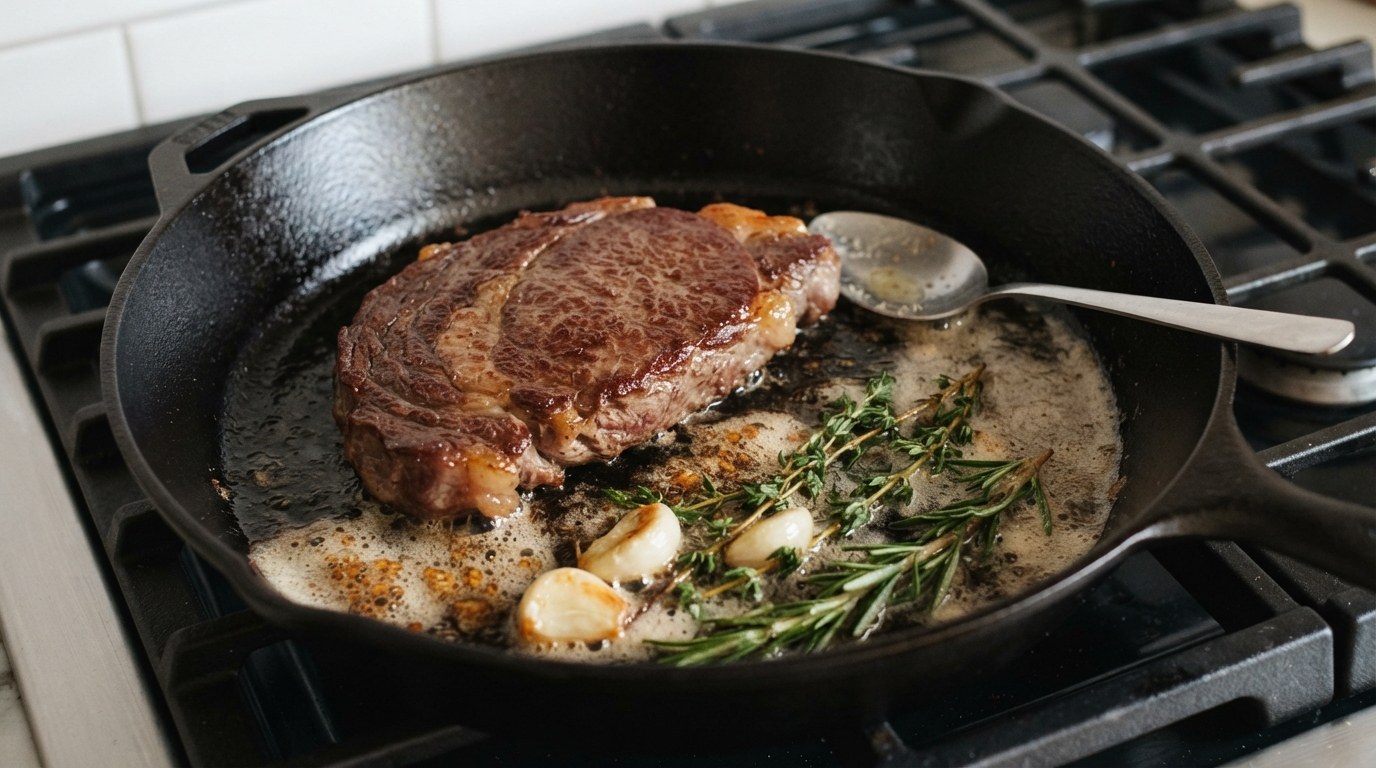
Rosemary or thyme for steak? Thyme is the classic choice, and it is what Gordon Ramsay reaches for in his pan method: smashed garlic cloves and a handful of thyme go into foaming butter in the last minute or two, and the butter gets spooned over the seared steak. Rosemary is the stronger herb, so use one sprig, not a bunch, and save it for the fattier cuts like ribeye and T-bone, or for lamb. Using both, several thyme sprigs plus one of rosemary, is how Ramsay's own butter-basted steak recipe for ribeye or strip does it.
The herb matters less than the timing. Both go in after the crust is built, at lower heat, with the butter; drop them into a smoking pan at the start and they char and turn bitter before the steak is anywhere near done. Below: how the two herbs taste and why, which of Ramsay's published recipes use which, how much to use per steak, when it goes in, why the garlic stays whole, and what to do with sage, bay or dried herbs. For the full cooking method from salt to slice, the cast iron ribeye and the Gordon Ramsay steak recipe walk through every step; this page is about the herbs. More technique guides live in cooking techniques.
What Herbs Does Gordon Ramsay Use on Steak?
Gordon Ramsay uses thyme on steak more than any other herb, almost always with smashed garlic in a butter baste, and adds rosemary on richer cuts. In the pan lesson of his MasterClass cooking course he fries whole smashed garlic cloves and thyme in the pan and bastes with the butter once it turns nut-brown, and his on-camera steaks follow the same order. His butter-basted steak with chimichurri, published by Food Network as a recipe courtesy of Gordon Ramsay, uses both: four ribeye or New York strip steaks, cold butter, smashed garlic, four rosemary sprigs and half a bunch of thyme, added after the sear with the heat turned down.
On The F Word he goes one step further for a thick filet, adding bay leaf to the rosemary and thyme and resting the meat on top of the herbs afterward, a combination Tasting Table broke down from the video. In his herb lesson he describes rosemary and thyme as his winter herbs, calls rosemary very strong, and treats every herb as a perfume that goes on late. That sums up his position: thyme by default, rosemary when the meat is rich enough to carry it.
Rosemary or Thyme for Steak: How They Taste Different
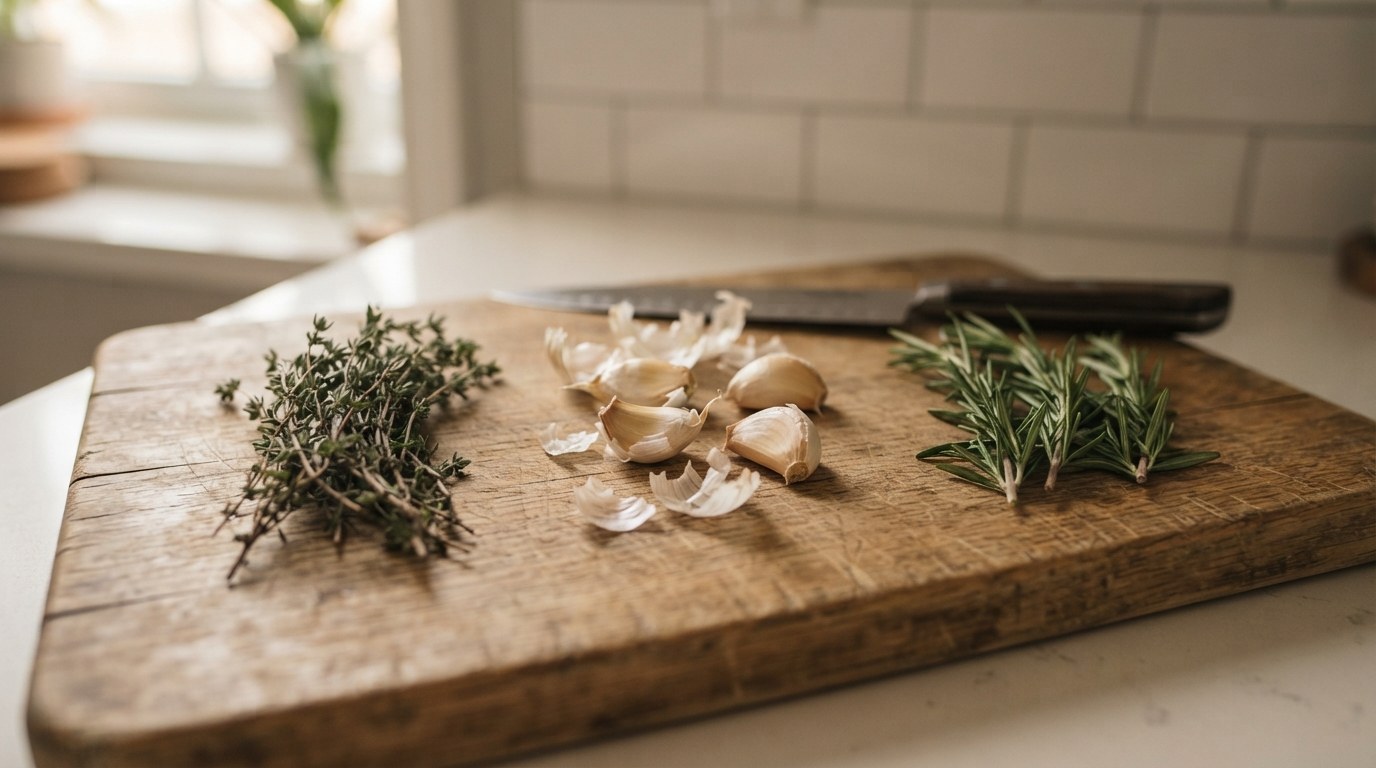
Thyme tastes warm, earthy and slightly peppery, and rosemary tastes piney, resinous and sharper, which is why rosemary takes over a steak faster. The difference is chemistry. The main aroma compound in thyme is thymol, which made up about 48 percent of the thyme oil in a study of thyme oil (Thymus vulgaris); rosemary's leaf oil is led by 1,8-cineole (the eucalyptus-like note) and camphor, about 42 and 17 percent in an analysis of rosemary volatiles. Camphor and cineole read as medicinal in large doses, so a few needles go a long way.
The leaves behave differently in the pan too. Thyme leaves are tiny and cling to the crust when you baste, and a sprig stays together in hot butter. Rosemary needles are stiff and oily; they perfume the butter well but don't stick to the meat, and a loose needle on a slice is unpleasant to chew. Both are woody herbs, which is the real reason they work here: soft herbs like parsley, basil and chives collapse and blacken in hot butter, so Ramsay puts those raw into a sauce at the end, like the parsley and oregano in his chimichurri.
How Much of Each Herb to Use Per Steak
For one 1½-inch steak basted in about 3 tablespoons of butter, use 3 to 5 sprigs of thyme, or 1 sprig of rosemary, or 3 thyme sprigs plus 1 rosemary sprig, with 2 smashed garlic cloves. Those amounts match Ramsay's Food Network ratio (one rosemary sprig and a few thyme sprigs per steak) and the site's cast iron ribeye, which uses three thyme sprigs and one of rosemary. The table covers the other herbs people reach for.
| Herb | Flavor | How much per steak | When it goes in | Best cuts |
|---|---|---|---|---|
| Thyme | Warm, earthy, lightly peppery | 3 to 5 sprigs | Last 1 to 2 minutes, with the butter, heat at medium | Every steak: strip, filet, ribeye, sirloin |
| Rosemary | Piney, resinous, strong | 1 sprig (2 for a big bone-in steak) | Last 1 to 2 minutes, with the butter | Ribeye, T-bone, porterhouse, lamb |
| Thyme + rosemary | Earthy with a pine edge | 3 thyme sprigs + 1 rosemary sprig | Together, with the butter | Ribeye and other well-marbled cuts |
| Sage | Musky, savory, slightly bitter | 3 to 4 leaves | Last minute; the leaves crisp fast in brown butter | Pork chops and veal more than beef |
| Bay leaf | Subtle, tea-like | 1 leaf | In a stock baste or the pan sauce, not a short butter baste | Filet with a stock baste; pan sauces |
The pattern: the stronger the herb, the less you use and the richer the cut should be. Bay needs liquid and time to give up its flavor, which a 90-second butter baste doesn't have, so it belongs in a stock baste or the pan sauce afterward, the way Ramsay pairs thyme and bay in his Wellington's red wine sauce.
Which Gordon Ramsay Recipes Use Thyme, Rosemary or Both
Across his own published recipes, Gordon Ramsay uses thyme in the butter baste and the sauces, rosemary on the richer steaks and in raw herb sauces, and sometimes no woody herb at all. The table lists what each recipe actually calls for, with the source for each.
| Ramsay recipe | Cut | Herbs | How they are used | Source |
|---|---|---|---|---|
| Pan-seared steak / chicken (MasterClass pan lesson) | Steak and chicken supreme | Thyme + smashed garlic | Fried in the pan after the sear, then basted with nut-brown butter | MasterClass course |
| Butter-Basted Steak with Chimichurri | Ribeye or New York strip | Rosemary + thyme + smashed garlic | 4 sprigs rosemary and half a bunch of thyme for 4 steaks, added with cold butter after the sear | Food Network |
| Filet mignon (The F Word) | Thick filet | Rosemary + thyme + bay + crushed garlic | Basted with stock or butter, then rested on the herbs | Tasting Table |
| Bavette Steak with Rosemary Chimichurri | Bavette (flank) | Rosemary, oregano, parsley | Chopped raw into the sauce; the steak itself is griddled with oil only | gordonramsay.com |
| Beef Wellington | Beef fillet | Thyme + bay | Thyme leaves in the mushroom duxelles; thyme and bay in the red wine sauce | gordonramsay.com |
| Texas Steak & Eggs | Bone-in ribeye | No woody herbs; cilantro | 5 smashed garlic cloves and about 4 tbsp butter in the pan; cilantro at the end | gordonramsay.com |
Read down the herbs column and thyme shows up on every classic pan steak and in the sauces, rosemary comes in on ribeye and strip, and the one constant across all of them is garlic, smashed rather than minced. So there's no single "Ramsay herb"; there's a method, and thyme is its default.
When to Add Garlic and Thyme to Steak
Add garlic and thyme after both sides of the steak are seared, when you turn the heat down to medium and add the butter, and baste for the last 1 to 2 minutes. Never put them in at the start. The sear is done in oil in a very hot pan because the surface has to be dry and well past 284°F for the Maillard reaction, the browning that builds the crust. A pan at searing heat is far hotter than that, and anything delicate in it passes 356°F, where browning tips into burning: thyme leaves blacken in seconds, garlic scorches and goes bitter, and the herbs' aromatic oils cook off into the kitchen instead of into the fat.
Butter sets the same deadline. Its milk solids brown into nutty beurre noisette and then burn, which is why every Ramsay steak recipe holds the butter back until after the crust; on the Food Network recipe he even adds it cold, which knocks the pan temperature down as it melts. The herbs ride in with the butter, fry for a minute and get spooned over the steak while they are still green. If the butter goes from nut-brown to dark brown, you are at the edge; finish the baste and take the steak out.
Why the Butter Carries the Herb Flavor
Butter carries the herb flavor because the aroma compounds in thyme and rosemary dissolve in fat far more readily than in water. Thymol, cineole and camphor are the herbs' aromatic oils, oily and volatile, so the frying butter pulls them out of the leaves and each spoonful lays them on the crust. That's also why a dry herb rub on a raw steak does so little: with no fat in contact and a searing pan underneath, the leaves scorch before they give anything up.
Basting is a flavor step, not a moisture step. The steak's muscle is already full of water and is being squeezed as it heats, so hot butter can't add juice; what it does is brown any pale patches, cook the top face gently while the bottom sears, and coat the meat in garlic and herb fat. Ramsay's habit of resting the steak on top of the used herbs, which Tasting Table describes from his F Word video, keeps that perfume going a few minutes longer.
Should You Crush Garlic for Steak?
Yes, crush it: smash whole cloves flat with the side of a knife, skin on or off, and never mince garlic for a steak baste. Crushing breaks the cells and starts the garlic's flavor, since the Linus Pauling Institute at Oregon State explains that crushing or chopping releases the enzyme alliinase, which forms allicin, the compound behind raw garlic's bite. A smashed clove has enough broken surface to flavor the butter and enough bulk to cook through slowly, turning soft and golden in the minute or two of basting.
Minced garlic has the opposite problem. Hundreds of tiny pieces with almost no mass sit in the hottest part of the pan, pass 356°F in seconds and turn bitter, and they stick to the crust as black flecks. Whole smashed cloves also come out easily, and Ramsay doesn't waste them: in his pan lesson the roasted garlic and the thyme go back into the pan for the sauce, pushed through a sieve at the end to thicken it.
Rosemary or Thyme for Ribeye, Strip, Filet and Lamb
Rosemary or thyme for steak comes down to the cut: thyme for lean or mild cuts, both for ribeye, rosemary on its own for lamb. A filet mignon has a mild, clean flavor that rosemary can bury, so the site's Gordon Ramsay filet mignon sticks to garlic and thyme. A New York strip has more beefiness and less fat, and the Hell's Kitchen New York strip uses garlic and thyme too. A ribeye has the marbling and rich spinalis cap to stand up to rosemary's pine, which is why Ramsay's butter-basted ribeye-or-strip recipe and our cast iron ribeye both use one rosemary sprig per steak with the thyme.
Lamb is where rosemary is the classic. In his herb lesson Ramsay chops rosemary over a leg of lamb minutes before it leaves the oven, and rosemary, garlic and lamb fat is a pairing that holds up to strong flavors. The site's herb-crusted rack of lamb uses thyme and parsley in its crust; swap a tablespoon of finely chopped rosemary for some of the thyme if you want it piney. The most tender steaks guide ranks the beef cuts if you're choosing the steak first.
Fresh or Dried Herbs for Steak
Use fresh thyme or rosemary sprigs for a butter baste; dried herbs burn in hot butter before they release much flavor. Dried leaves are already dry and finely broken, so they hit 356°F almost instantly and turn bitter, and you can't lift them out the way you lift out a sprig. If dried is all you have, stir it into softened butter with garlic off the heat and melt a spoonful over the rested steak, or add it to the pan sauce. University of Illinois Extension gives the usual conversion: three times as much fresh herb as dried, so about 1 teaspoon of dried thyme stands in for a tablespoon of fresh leaves.
Resting, Doneness and the Thermometer
Pull the steak at 125°F for medium-rare, then rest it 5 to 10 minutes, on the herbs if you like. The temperature keeps climbing as heat moves from the outside in; ThermoWorks notes that the bigger the cut, the more it carries over, so a 125°F pull finishes around 130 to 135°F. The rest also lets the juices thicken: a steak cut 2 minutes off the heat loses about 6 percent of its weight on the board, one rested 10 minutes about 2 percent. The USDA safe minimum for whole cuts of beef is 145°F with a 3-minute rest, which is medium to medium-well, so cook to that for anyone pregnant, very young, older or immune-compromised.
Thyme and rosemary can't tell you when the steak is done, and neither can the color of the butter. An instant-read thermometer through the side into the thickest part settles it in a couple of seconds.

ThermoPro
ThermoPro TempSwift Instant-Read Digital Thermometer
- Reads in about 1 second, accurate to ±0.9°F, with a 4.3-inch food-grade stainless probe
- Hold and calibration functions, so you can lock a reading away from the heat
- NSF certified and IP65 waterproof, rinse it clean under the tap
If You Only Buy One Herb
If you only buy one herb for steak, buy thyme. It works on every cut from filet to ribeye, its small leaves cling to the crust, it's mild enough that an extra sprig won't hurt, and it's the herb Ramsay's pan method is built on, from the steak to the pan sauce afterward. Rosemary is the second bunch to pick up when you're cooking a ribeye or lamb, and one sprig per steak is plenty. So the short answer to rosemary or thyme for steak: thyme every time, rosemary as the bold extra on a rich cut.
Rosemary or Thyme for Steak FAQs
The questions that come up most: what herbs Gordon Ramsay uses on steak, whether rosemary or thyme is better for ribeye, when to add garlic and thyme, whether to crush the garlic, how much of each herb to use, whether dried herbs work, and what to use with no rosemary or thyme.
What herbs does Gordon Ramsay use on steak?
Mostly thyme, with smashed garlic, in a butter baste added after the sear. On richer cuts he adds rosemary: his butter-basted steak with chimichurri on Food Network uses rosemary and thyme together on ribeye or New York strip, and on The F Word he adds bay leaf to rosemary and thyme for a thick filet.
Is rosemary or thyme better for ribeye?
Both work, and ribeye is the cut where using both makes the most sense. Its marbling and fat stand up to rosemary's strong pine flavor, so a common pairing is 3 thyme sprigs plus 1 rosemary sprig in the butter baste. On leaner cuts like filet or strip, thyme alone is the better choice.
When do you add garlic and thyme to steak?
After both sides are seared, when you turn the heat to medium and add the butter. Baste for the last 1 to 2 minutes. In a searing-hot pan the herbs and garlic pass 356°F and burn, and the butter's milk solids scorch, so they go in only for the final baste.
Should you crush garlic for steak?
Yes. Smash whole cloves with the flat of a knife instead of mincing. Crushing releases the enzyme that builds garlic flavor, and a whole smashed clove cooks to soft and golden in the butter, while minced garlic burns in seconds and leaves bitter black flecks on the crust.
How much rosemary and thyme do you use for one steak?
For one 1½-inch steak in about 3 tablespoons of butter: 3 to 5 thyme sprigs, or 1 rosemary sprig, or 3 thyme sprigs plus 1 rosemary sprig, with 2 smashed garlic cloves. Rosemary is the stronger herb, so keep it to one sprig unless the steak is a large bone-in cut.
Can I use rosemary instead of thyme for steak?
Yes, but use much less. One rosemary sprig replaces 3 to 5 thyme sprigs. Rosemary suits ribeye, T-bone and lamb better than filet, where its pine flavor can cover the beef. Lift the sprig out before serving so loose needles don't end up on the slices.
Can you use dried thyme or rosemary on steak?
Not in the butter baste: dried herbs burn almost instantly in hot butter. Stir dried thyme into softened butter with garlic and melt a spoonful over the rested steak, or add it to the pan sauce. Use about one third as much dried herb as fresh.
What can I use if I have no rosemary or thyme?
Baste with butter and smashed garlic alone; the brown butter and garlic carry most of the flavor, and Ramsay's Texas steak and eggs uses no woody herbs at all. Sage leaves fried in the butter also work, or finish the steak with a raw herb sauce such as chimichurri.

About the Author
John Siracusa is the founder of Hell’s Kitchen Recipes. He focuses on technique-first, reproducible home cooking and researches recipes & kitchen equipment from published food science and professional chef methods since 2016.