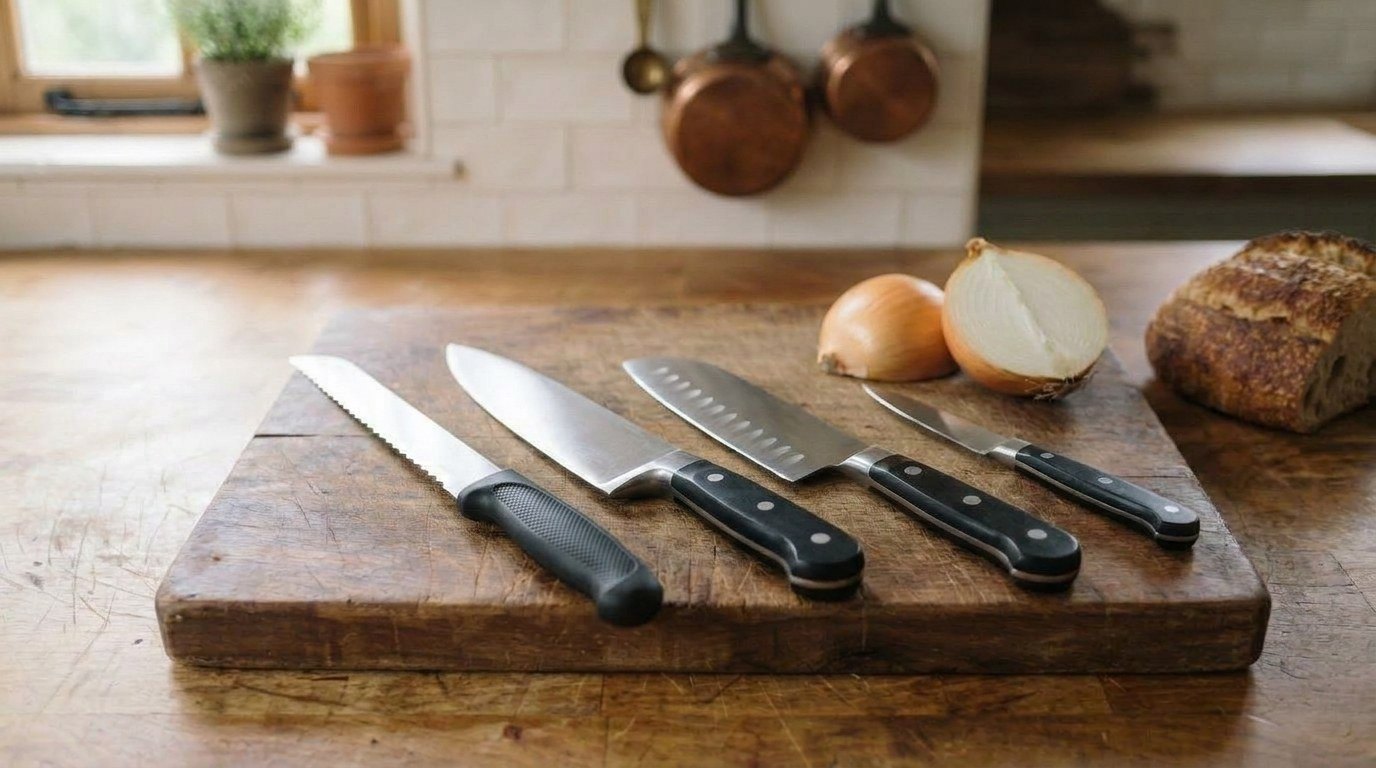
The best kitchen knives for most home cooks start with one good 8-inch chef's knife, and the Wüsthof Classic 8-inch is the one to beat: forged German steel at 58 HRC with a 14-degree edge. On a budget, the Victorinox Fibrox Pro 8-inch does the same jobs for far less. If you prefer harder Japanese steel, buy the Shun Classic 8-inch. Then add a paring knife and a serrated bread knife, and a santoku only if you like its shape. Those few blades cover nearly everything you cut at home.
This guide covers individual knives, one pick per job, compared on the numbers each maker publishes. If you would rather buy everything in one block, the best kitchen knife sets guide compares the sets, and the rest of the site's kitchen gear guides go deeper on single brands and styles.
Best Kitchen Knives Compared
Six knives cover the jobs a home kitchen has: three chef's knives at different steel and budget points, then a santoku, a paring knife and a bread knife. Hardness and edge angle come from each maker; where a maker publishes no figure, the table says so.
| Knife | Type | Steel and build | Hardness / edge angle | Best for |
|---|---|---|---|---|
| Wüsthof Classic 8-Inch | Chef's knife | Forged stainless, full tang (Germany) | 58 HRC / 14° per side | Best overall |
| Victorinox Fibrox Pro 8-Inch | Chef's knife | Stamped stainless, TPE handle (Switzerland) | Not published | Best budget |
| Shun Classic 8-Inch | Chef's knife | VG-MAX core, 68-layer Damascus (Japan) | 60-61 HRC / 16° per side | Japanese steel |
| Wüsthof Classic 7-Inch Santoku | Santoku | Forged stainless, hollow edge (Germany) | 58 HRC / 10° per side | Vegetable prep |
| Victorinox Swiss Classic Paring | Paring knife | Stainless, polypropylene handle (Switzerland) | Not published | In-hand work |
| Mercer Millennia 10-Inch Bread | Bread knife | Stamped high-carbon Japanese steel | 53-54 HRC / 15° | Crusts and tomatoes |
Read the hardness column as a trade-off. A higher Rockwell number holds a fine edge longer, a lower one is tougher and quicker to bring back on a steel. The bread knife sits lowest on purpose: its teeth do the cutting, and softer steel shrugs off a crust.
The Kitchen Knives a Home Cook Actually Needs
A home kitchen needs three kitchen knives: an 8-inch chef's knife for chopping, slicing and dicing, a 3- to 4-inch paring knife for anything you hold in your hand, and a 9- to 10-inch serrated bread knife for crusts and soft skins. A santoku is optional, a second everyday knife for cooks who prefer its shorter, flatter blade. Spend most of your money on the chef's knife, because it is the one you pick up for almost every job.
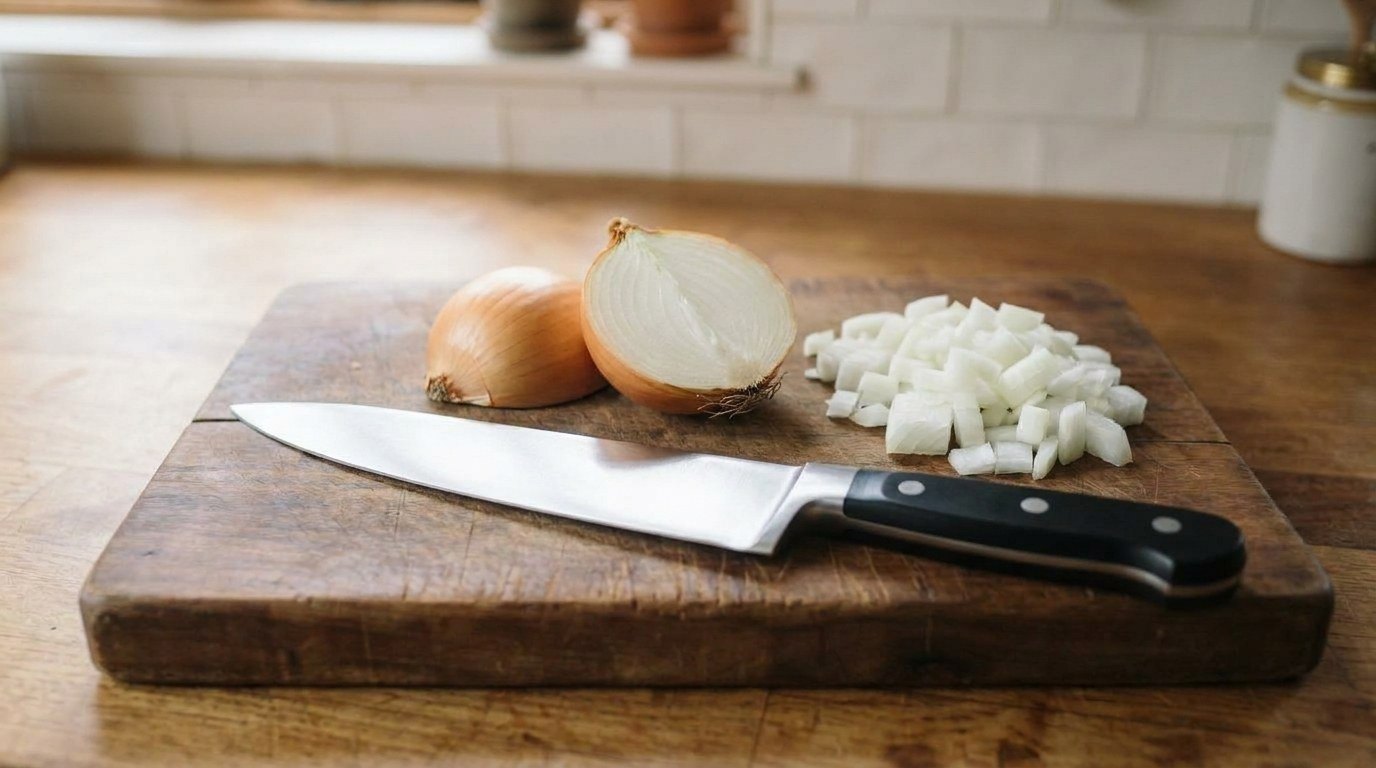
Gordon Ramsay's knife-skills lesson in his MasterClass lines up with that short list. He uses a long chopping knife for the volume work, a small knife for peeling and trimming, and a flexible boning knife to follow a joint or the curve of a squash so less ends up in the bin. He also explains why he likes German knives with the weight in the handle: the heft sits behind your grip and gives you more control over each cut. The Gordon Ramsay knives page covers the brands he has used, and BBQ knives covers the slicing and boning blades for big cuts of meat.
Wüsthof Classic 8-Inch Chef's Knife: Best Kitchen Knife Overall
Wüsthof
WÜSTHOF Classic 8-Inch Chef's Knife
- Forged from one piece of steel tempered to 58 HRC, with a full tang, full bolster and finger guard
- Edge ground to 14 degrees per side; triple-riveted black synthetic handle
- Made in Solingen, Germany; limited lifetime warranty; hand wash and dry
The Wüsthof Classic 8-inch is the best kitchen knife for most people because it gets the basics right and keeps them. Wüsthof's product page lists an 8-inch forged blade at 58 HRC with a full tang, a full bolster and a black synthetic handle held by three rivets, made in Solingen, Germany, and covered by a limited lifetime warranty. Wüsthof's FAQ gives 14 degrees per side for its standard blades, ground by its computer-guided PEtec process.
Those numbers explain how it cuts. Fourteen degrees is a fairly acute Western edge, so there is less steel behind the cutting line and it slides into an onion with less push, while 58 HRC is soft enough to take a beating from squash and chicken joints and come back with a few strokes on a steel. The full bolster puts the balance near your hand, which is the feel Ramsay describes. If you are deciding between this and a Zwilling, the Wüsthof vs Zwilling guide compares the two head to head.
Victorinox Fibrox Pro 8-Inch: Best Budget Chef's Knife
Victorinox
Victorinox Fibrox Pro 8-Inch Chef's Knife
- Light stamped stainless blade, about 6.4 oz, with a wide heel for knuckle clearance
- Textured TPE handle that keeps its grip when wet
- Swiss made, rated dishwasher safe, lifetime warranty
The Victorinox Fibrox Pro 8-inch is the best budget kitchen knife because it gives you a sharp, light chef's knife without the forged-knife price. Victorinox lists a 7.9-inch straight-edged blade, a textured thermoplastic elastomer (TPE) handle and a weight of 6.4 ounces, made in Switzerland, rated dishwasher safe and covered by a lifetime warranty. Victorinox does not publish a hardness figure or an edge angle for the Fibrox line, so the table leaves both blank.
The trade is weight and build. A stamped blade has no bolster and no heavy tang, so the knife feels light and nimble rather than planted, and the edge needs the steel a bit more often than a forged German blade. Plenty of cooks prefer that lightness. If this is for a first kitchen, the beginner chef knife sets guide shows how to build around it.
Shun Classic 8-Inch Chef's Knife: Best Japanese Kitchen Knife
Shun
Shun Classic 8-Inch Chef's Knife
- VG-MAX steel core hardened to 60-61 Rockwell, clad in 68 layers of stainless Damascus
- Thin blade sharpened to 16 degrees on each side
- D-shaped Pakkawood handle for either hand; handcrafted in Seki City, Japan
The Shun Classic 8-inch is the best Japanese kitchen knife here for a cook who slices more than rock-chops. Shun's Classic chef's page describes a VG-MAX cutting core clad in 34 layers of stainless Damascus on each side, 68 in all, a 16-degree edge on each side, a D-shaped ebony Pakkawood handle that suits either hand, a weight of 6.7 ounces, and handcrafting in Seki City, Japan. The Shun FAQ puts VG-MAX at 60 to 61 Rockwell, the hardest steel on this page, and Shun offers free sharpening at its Oregon facility.
Sixteen degrees is actually a slightly wider angle than Wüsthof's 14, so the keen feel comes from the harder steel holding a fine edge longer and from the thin blade, not from a sharper grind. The cost is chipping: twist it in a frozen block or knock it against bone and a hard edge cracks where a German one would bend. For more Japanese shapes, the best gyuto knife guide covers the Japanese chef's knife itself, Japanese knife brands compares the makers, and the Miyabi knives review puts Miyabi against Shun.
Wüsthof Classic 7-Inch Hollow Edge Santoku: Best Santoku
Wüsthof
WÜSTHOF Classic 7-Inch Hollow Edge Santoku
- Japanese-style blade for chopping, slicing and dicing, ground to 10 degrees per side
- Oval hollows along the edge so slices of potato or cucumber cling less
- Blade, bolster and tang forged from a single piece of 58 HRC stainless steel
The Wüsthof Classic 7-inch hollow edge santoku is the best santoku for a cook who wants a second everyday knife with a flatter edge for vegetables. Wüsthof's santoku page lists a 7-inch forged blade at 58 HRC with oval hollows along the edge to reduce sticking, and its FAQ gives Asian-style blades like the santoku 10 degrees per side, four degrees finer than its chef's knife.
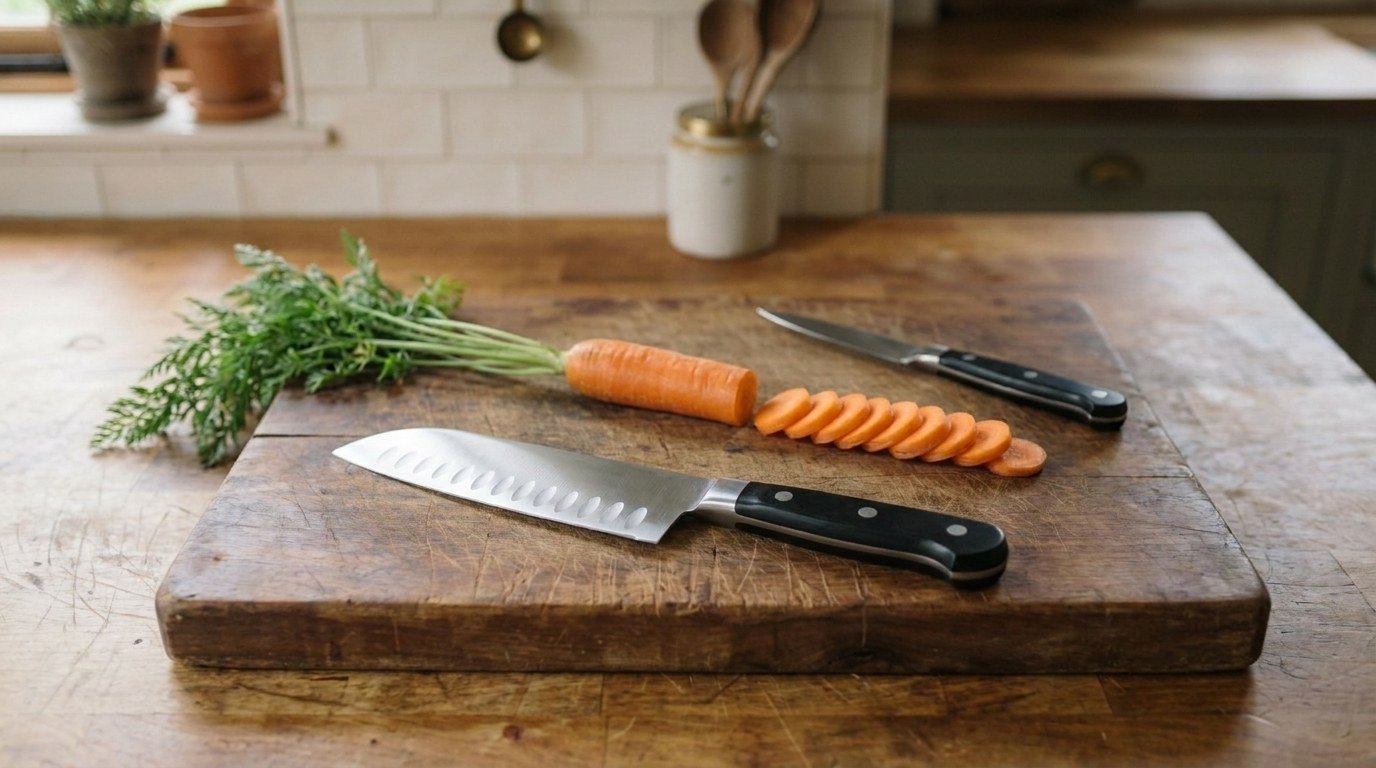
The flatter edge changes how you cut. A chef's knife's curved belly rocks, while a santoku works best with a straight push down and forward, which suits thin, even slices of carrot, cucumber or potato. The hollows let a little air in between blade and slice, so wet food is less likely to cling. If you are choosing between the two shapes, read santoku vs chef's knife; what a santoku knife is used for and the best knife for cutting vegetables cover the vegetable side in more detail.
Victorinox Swiss Classic Paring Knife: Best Paring Knife
Victorinox
Victorinox Swiss Classic 3.25-Inch Paring Knife
- Short straight-edged spear-point blade for peeling, trimming and hulling in the hand
- Textured non-slip handle that stays secure when wet
- Swiss made, NSF approved and dishwasher safe
The Victorinox Swiss Classic paring knife is the best paring knife for most kitchens because a paring knife does small, precise jobs and does not need forged steel to do them. Victorinox lists a 3.1-inch straight-edged blade with a pointed tip, a weight of under an ounce, Swiss manufacture, dishwasher safety and a lifetime warranty. Use it for hulling strawberries, peeling an apple, coring a tomato or deveining shrimp, the jobs where the food is in your hand and a big blade gets in the way.
Mercer Millennia 10-Inch Bread Knife: Best Bread Knife
Mercer Culinary
Mercer Culinary Millennia 10-Inch Wide Wavy Edge Bread Knife
- Wavy-edge teeth get through a hard crust or tomato skin without tearing the soft inside
- One-piece high-carbon Japanese steel blade, 15-degree edge
- Textured Santoprene and polypropylene handle with a finger guard; NSF certified
The Mercer Millennia 10-inch wide wavy-edge bread knife is the best bread knife here because a long, toothed blade is the right tool for a crust, and this one carries NSF certification for commercial kitchens. Mercer's spec sheet for the M23210 lists a stamped blade of high-carbon Japanese steel at 53 to 54 HRC with a 15-degree edge, and a Santoprene and polypropylene handle, and asks for hand washing.
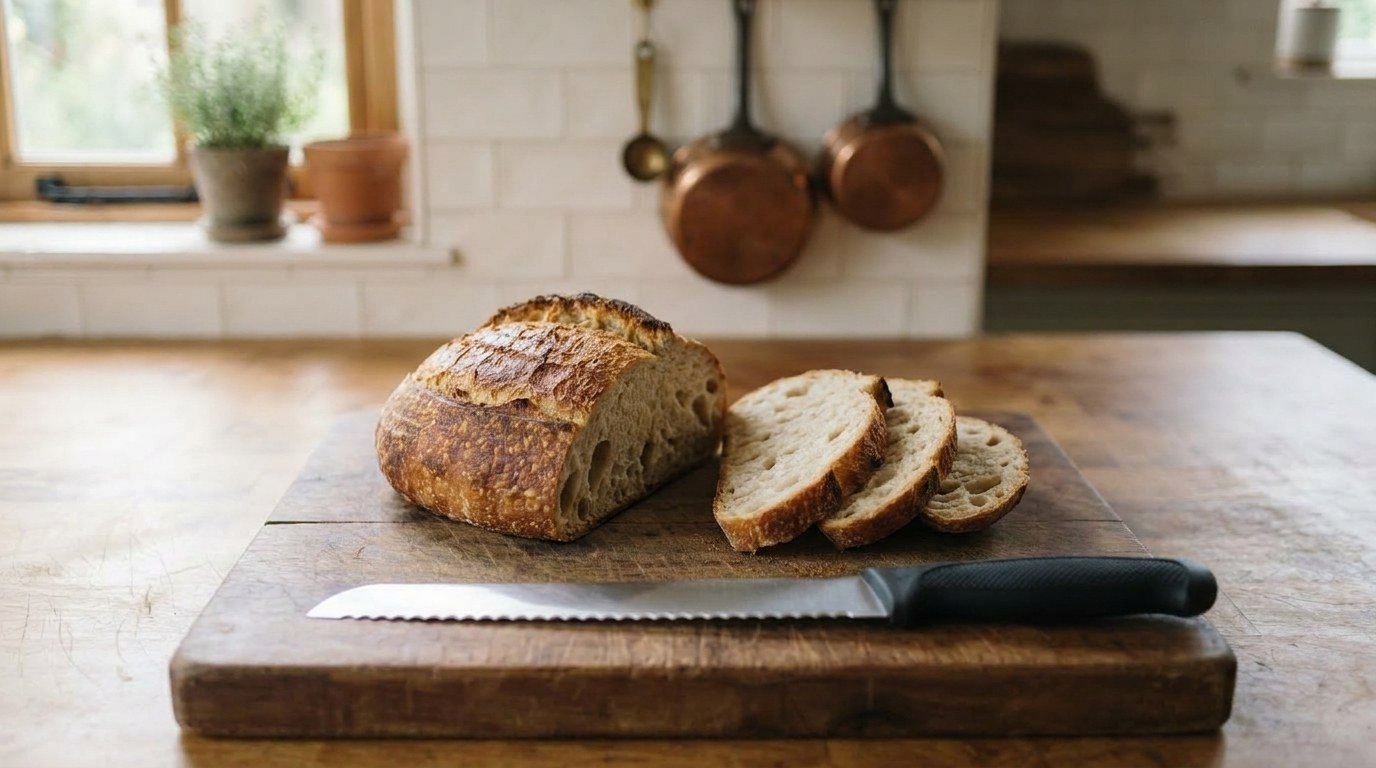
Serrations work differently from a straight edge. Each scallop touches the crust at a few points, so the pressure is concentrated and the teeth bite through without you pressing down, which is why a soft crumb or a ripe tomato is not squashed flat. Ten inches matters too: it spans a wide loaf so you can saw in long, light strokes. The softer steel is no drawback, because the edge sits recessed in the scallops and rarely touches the board.
German vs Japanese Kitchen Knives
German kitchen knives are softer, tougher and heavier; Japanese kitchen knives are harder, thinner and lighter. On this page the Wüsthof knives run 58 HRC with 14- and 10-degree edges, and the Shun runs 60 to 61 HRC at 16 degrees on a thinner blade. Pick German if you rock-chop and cut through squash and chicken joints; pick Japanese if you slice with a clean push and take care of the edge.
Hardness and toughness pull in opposite directions. The Rockwell C number comes from pressing a diamond cone into the steel and measuring how far it sinks, so a higher figure means the steel resists denting; Shun's FAQ puts each Rockwell point at roughly 10 percent more hardness. A harder edge can be ground thin and resists rolling over, so it stays keen longer. Toughness, the steel's ability to flex instead of crack, drops as hardness rises, which is why a 61 HRC edge chips on bone while a 58 HRC edge bends and can be honed straight. The German knife brands guide and best Zwilling knives cover the German side brand by brand, and Shun vs Zwilling compares the two styles one knife at a time.
| Factor | German (Wüsthof Classic) | Japanese (Shun Classic) |
|---|---|---|
| Hardness | 58 HRC | 60-61 HRC |
| Edge angle | 14° per side (10° on the santoku) | 16° per side, thinner blade |
| Cutting style | Rock-chop friendly | Push and pull cuts |
| Chip resistance | High, the edge bends instead | Lower on bone, frozen food or twisting |
| Upkeep | Hone often, sharpen less | Hone gently, sharpen on a stone or send to Shun |
| Weight (8-inch chef's) | Heavier, full bolster | 6.7 oz, nimble |
Individual Kitchen Knives vs a Knife Set
Buy individual kitchen knives if you already own a few or you want a different steel for different jobs; buy a set if you are starting a kitchen from nothing. Building one knife at a time lets you mix brands, a forged German chef's knife with a cheap, sharp Swiss paring knife and a commercial bread knife, and spend where it counts. A block set is cheaper per knife and gives you matching handles and somewhere to store them. The best kitchen knife sets guide compares six blocks, and Japanese knife sets covers the Japanese ones.
How to Keep Kitchen Knives Sharp
Keep kitchen knives sharp by honing the straight-edged ones on a steel every time you cook and sharpening them about once or twice a year. Victorinox's sharpening guide draws the line clearly: honing realigns the edge and removes little or no metal, while sharpening grinds away steel to make a new edge, and you only need it once honing stops helping.
Here is why honing works. In use, the thin apex of the edge bends over to one side, so the knife skates on a tomato skin even though almost no steel is gone; Shun's FAQ describes honing as straightening that rolled edge. Victorinox suggests holding the blade at about 20 degrees to the steel and making five strokes a side. Ramsay hones every time he picks up a knife so the edge never wears down to the point where it is hard to bring back, and he keeps the blade almost flat to the steel with a slight lift. Leave the bread knife alone: a steel cannot reach into the scallops, and Victorinox recommends professional sharpening for serrated blades.
A dull knife is also the more dangerous one. It needs more downward force to start a cut, so it is more likely to skid off a round onion or a tomato skin and keep going into the hand holding the food. It also crushes instead of slicing: a blunt edge breaks more onion cells, and the eye-stinging sulfur compound only forms when those cells break open, so a dull knife makes you cry more. Herbs bruised by a dull blade darken for the same reason.
How to Hold a Kitchen Knife Safely, and Which Board to Use
Hold a chef's knife with a pinch grip and guide the food with a clawed hand, and cut on wood or plastic. In the pinch grip your thumb and index finger hold the blade just in front of the bolster and the other three fingers wrap the handle, so the force goes into the blade and the knife cannot twist. Ramsay's other hand rule is to tuck the fingertips under and let the knuckle guide the blade, never a finger out flat, and to keep the grip relaxed rather than squeezed.
Two board habits matter as much as the knife. First, stop the board moving: Ramsay lays a lightly dampened paper towel under it so it cannot slide while you cut a squash. Second, cut a round vegetable in half first so it sits on a flat face before you slice it. For food safety, the USDA's Food Safety and Inspection Service says wood or nonporous plastic boards are both fine if you wash them in hot, soapy water after each use, sanitize with 1 tablespoon of unscented liquid chlorine bleach per gallon of water, keep one board for raw meat, poultry and seafood and another for produce and bread, and replace a board once it has deep grooves you cannot clean.
For the edge, the board's hardness is the issue. Shun's FAQ tells owners to avoid cutting on metal, tile, ceramic plates, marble and granite, because those surfaces are harder than the steel and every cut rolls or chips the apex against them. Wüsthof and Shun both ask for hand washing and drying straight away, and Shun warns that the dishwasher knocks knives around and its detergents spot the blade. The best wood for a cutting board and end grain vs edge grain guides cover which boards are gentlest, and how long Henckels knives last covers the care that keeps a forged knife going for decades.
The Best Kitchen Knives to Buy
The best kitchen knives for 2026, in short: the Wüsthof Classic 8-inch chef's knife if you want one forged German knife that does almost everything, the Victorinox Fibrox Pro 8-inch if the budget is tight, and the Shun Classic 8-inch if you want harder Japanese steel and slice more than you chop. Add the Victorinox Swiss Classic paring knife and the Mercer Millennia bread knife, and the Wüsthof santoku if you like a flatter blade for vegetables. Hone before you cook, cut on wood or plastic, and wash by hand.
Best Kitchen Knives FAQs
The questions that come up most: which kitchen knives chefs recommend, how many knives you need, the best kitchen knife brand, what Gordon Ramsay uses, how often to sharpen, which knives stay sharp longest, whether kitchen knives can go in the dishwasher, and how long good knives last.
What kitchen knives do chefs recommend?
Most chefs start a home cook with three: an 8-inch chef's knife, a 3- to 4-inch paring knife and a serrated bread knife, plus a honing steel. A forged German chef's knife like the Wüsthof Classic is the common all-rounder, a light Victorinox Fibrox Pro is the usual budget pick, and a harder Japanese knife like the Shun Classic suits cooks who slice more than they chop.
How many kitchen knives do I really need?
Three cover almost everything: a chef's knife, a paring knife and a bread knife. A santoku, a boning knife or a slicer are useful extras once you find yourself reaching for one. Big block sets mostly add steak knives and duplicates.
What is the best kitchen knife brand?
No single brand wins at every job. Wüsthof makes the best all-round forged German chef's knife here, Victorinox the best value, Shun the best Japanese option, and Mercer a solid commercial bread knife. Choose the steel and shape for how you cut, then the brand.
What kitchen knives does Gordon Ramsay use?
In his MasterClass knife lesson Ramsay works with German-made knives that carry their weight in the handle, and he has since partnered with HexClad on a Japanese Damascus line. The Gordon Ramsay knives page covers the HexClad, Wüsthof and Henckels knives linked to him.
How often should kitchen knives be sharpened?
Hone straight-edged knives on a steel every time you cook, and sharpen them about once or twice a year, sooner if honing no longer brings the edge back. Honing realigns a rolled edge; sharpening removes steel to make a new one. Serrated bread knives rarely need either, and Victorinox suggests a professional when they do.
Which kitchen knives stay sharp the longest?
Harder steel holds an edge longer. On this page the Shun Classic at 60 to 61 HRC keeps a fine edge longest, the Wüsthof Classic at 58 HRC comes next, and softer knives need the steel more often. The trade is toughness: harder edges chip more easily on bone or frozen food.
Can kitchen knives go in the dishwasher?
Some are rated for it, like the Victorinox Fibrox Pro and Swiss Classic, but hand washing keeps any knife sharper. Wüsthof, Shun and Mercer all ask you to wash by hand and dry right away, because detergent and knocking against other cutlery dull and spot the blade.
How long do good kitchen knives last?
A forged knife that is hand washed, honed and stored in a block or on a strip can last decades, and the blade usually outlives the handle. Wüsthof gives the Classic a limited lifetime warranty and Victorinox covers its knives for life. Replace a knife when the blade is bent or chipped beyond what sharpening can fix, or the handle comes loose.

About the Author
John Siracusa is the founder of Hell’s Kitchen Recipes. He focuses on technique-first, reproducible home cooking and researches recipes & kitchen equipment from published food science and professional chef methods since 2016.