This hanger steak recipe marinates the steak in Haitian epis, a bright green blend of parsley, scallions, garlic, thyme, peppers and lime, then sears it hard and slices it against the grain. It is the flavor that earned a perfect score on the Hell's Kitchen Season 25 premiere. Hanger steak is one of the beefiest cuts on the animal and one of the cheapest to cook well: 20 minutes of prep, a few hours in the marinade, and about 12 minutes in the pan.
On Hell's Kitchen Season 25
In the Season 25 premiere, which aired September 24, 2026, Jonathan "Jonny G" Gudino of Grand Rapids, Michigan, served a Haitian-spiced hanger steak in the signature dish challenge and scored a perfect 5 out of 5. It was one of six perfect scores in a round where every chef was 25 or younger. The show did not publish his recipe, so the one below is our own version of the dish, built around the same idea: a bold Haitian marinade on a cut that rewards a hard sear.
Follow the whole season in our Hell's Kitchen Season 25 guide.
What Is Hanger Steak?
Hanger steak is a thick, loose-grained cut from the plate section of the cow, also sold as butcher's steak, hanging tender or onglet, according to Certified Angus Beef. The muscle attaches the diaphragm to the last rib, and there is only one per carcass, the University of Minnesota Extension notes, which is why butchers used to keep it for themselves. The same source compares its flavor to ribeye, thanks to its higher fat content.
A whole hanger has a tough strip of connective tissue running down the middle. Cut along both sides of it and you get two long, even pieces (butchers call them pillars) that cook evenly and slice cleanly. Many butchers sell it already trimmed; if yours still has the center seam, remove it before you salt.
| Cut | Where it comes from | Grain and texture | Best cooked to | How to slice |
|---|---|---|---|---|
| Hanger steak | Plate; hangs from the diaphragm, one per animal | Coarse, loose grain; tender and very beefy | Medium-rare to medium | Remove the center seam, then thinly against the grain |
| Skirt steak | Plate; the diaphragm muscle itself | Long, very coarse grain; thin and chewy if overcooked | Medium-rare, hot and fast | Cut into short sections, then against the grain |
| Flank steak | Flank (the belly) | Lean, with long parallel fibers | Medium-rare | Thinly on an angle against the grain |
For the skirt steak version of this idea, see our chimichurri skirt steak; for a thicker, fattier cut, the cast iron ribeye.
What Is Haitian Epis?
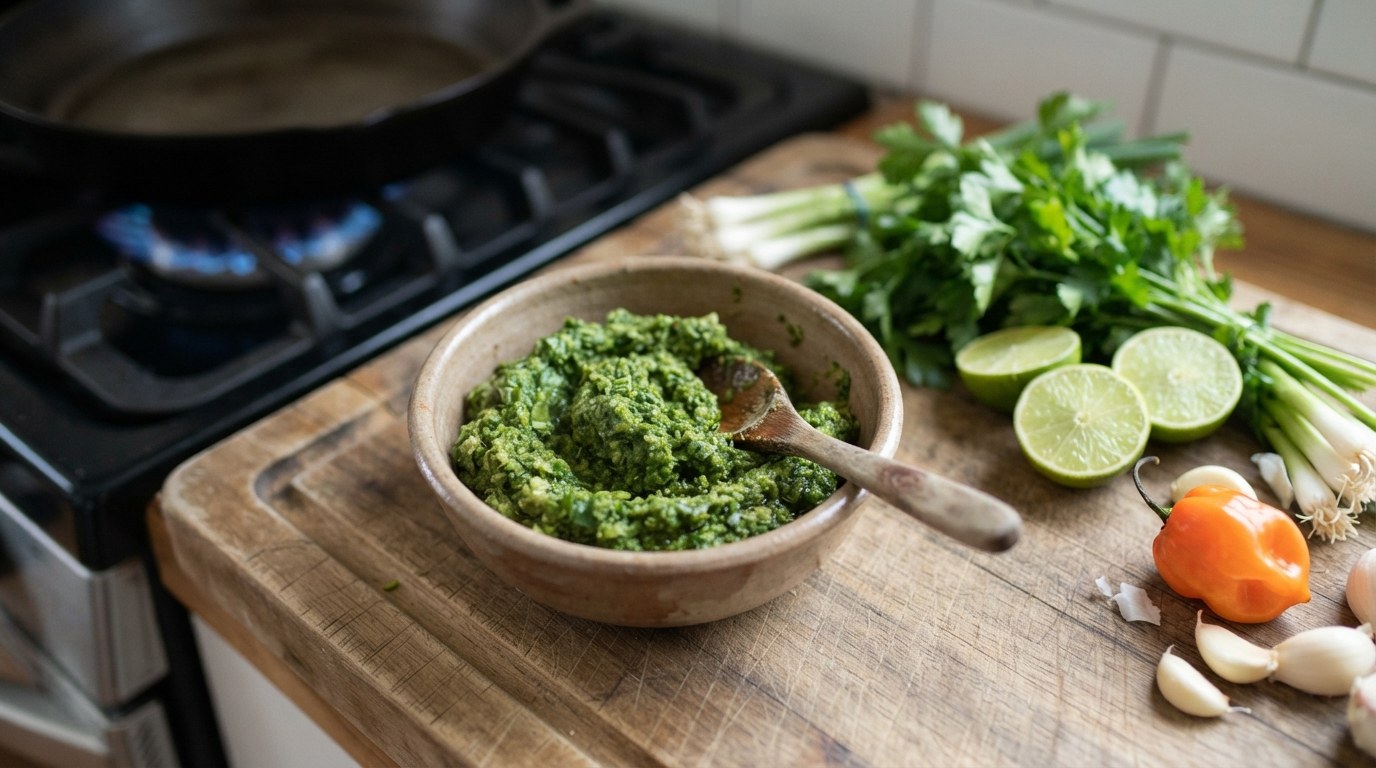
Epis is the Haitian seasoning base: fresh herbs, peppers, garlic and citrus blended into a coarse paste and used to season meat, fish, soups and stews, as Boston Medical Center's teaching kitchen describes it. Parsley, scallions and thyme give it its green color and grassy flavor; bell pepper, onion and garlic give it body; lime and a splash of vinegar make it bright; a Scotch bonnet brings fruity heat. Recipes vary from family to family, so treat the amounts below as a starting point.
Control the heat with the Scotch bonnet's ribs, not its seeds. The capsaicin that makes a chile hot is produced in the pale placenta that holds the seeds, which is why scraping out the ribs tames it (we cover the science in our chilli jam). Wear gloves when you cut it.
How Long to Marinate Hanger Steak
Marinate hanger steak for 2 to 12 hours in the fridge. The University of Minnesota Extension gives 2 to 24 hours as the general range for steak, but epis is acidic, and acid firms and denatures the proteins on the surface; past about 12 hours the outside of the steak starts to turn mealy. Salt the steak first. A marinade's flavor molecules only reach a few millimeters into meat, while salt dissolves and travels deeper, seasoning the steak through and helping it hold its juices. The hanger's loose, open grain is what makes it take a marinade so well.
Keep back a few spoonfuls of fresh epis before it touches raw meat. That is your sauce at the table; never reuse the marinade.
How to Sear Hanger Steak for a Real Crust
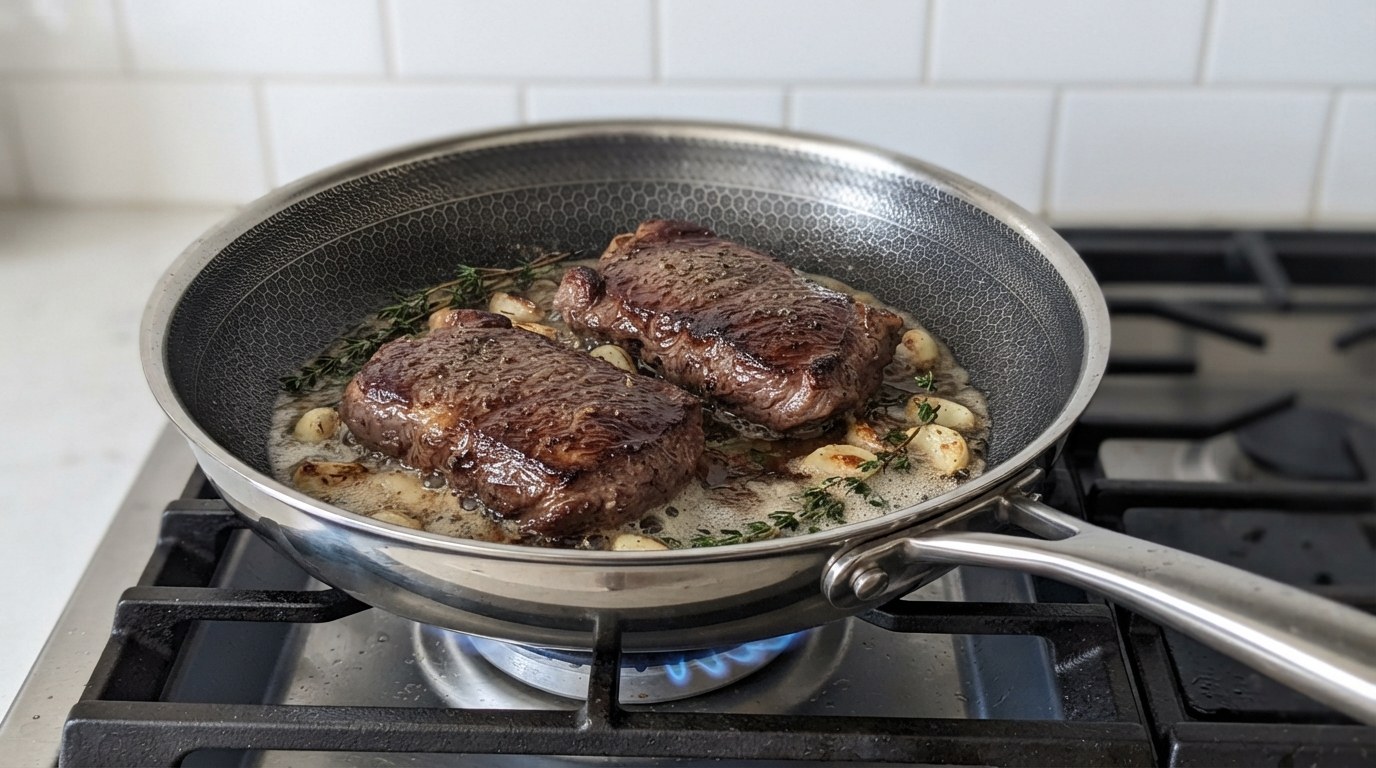
Scrape the marinade off and pat the steak dry before it goes in the pan. Browning, the Maillard reaction, only starts once the surface passes about 284°F (140°C), and a wet surface cannot get hotter than 212°F (100°C) until the water boils away, so a damp steak steams gray instead of crusting. The herbs in epis also scorch and turn bitter long before the steak is done if you leave them on.
Follow Ramsay's order: a hot pan first, then the oil, then the steak. Use a heavy skillet over high heat and a high-smoke-point oil such as grapeseed. Sear 4 to 5 minutes per side, turning once or twice, then drop the heat, add butter, smashed garlic and thyme, and spoon the foaming butter over the steak for the last minute. The butter adds flavor and helps the crust brown; it does not seal in juices, which searing never does.

HexClad
HexClad 12-Inch Hybrid Nonstick Frying Pan
- Stainless steel and ceramic nonstick hybrid surface, built to sear hard and release easily
- Tri-ply with an aluminum core for quick, even heat; works on induction
- Oven safe to 900°F and metal-utensil safe (lid not included)
Hanger Steak Temperature and Resting
Pull hanger steak at 125 to 130°F (52 to 54°C) for medium-rare. Its temperature keeps rising about 5°F as it rests (carryover cooking), and Certified Angus Beef recommends serving it medium-rare to medium; much past that, this lean-fibered cut turns tight and livery. For food safety, the USDA's safe minimum for whole beef steaks is 145°F (63°C) with a 3-minute rest, so cook it to that if you are serving anyone who should avoid undercooked meat.
Rest it for 10 minutes before slicing. Resting does not relax the muscle; it lets the juices thicken slightly as the meat cools, so less runs out when you cut. A steak cut after 2 minutes loses around three times as much juice as one rested for 10.
How to Slice Hanger Steak
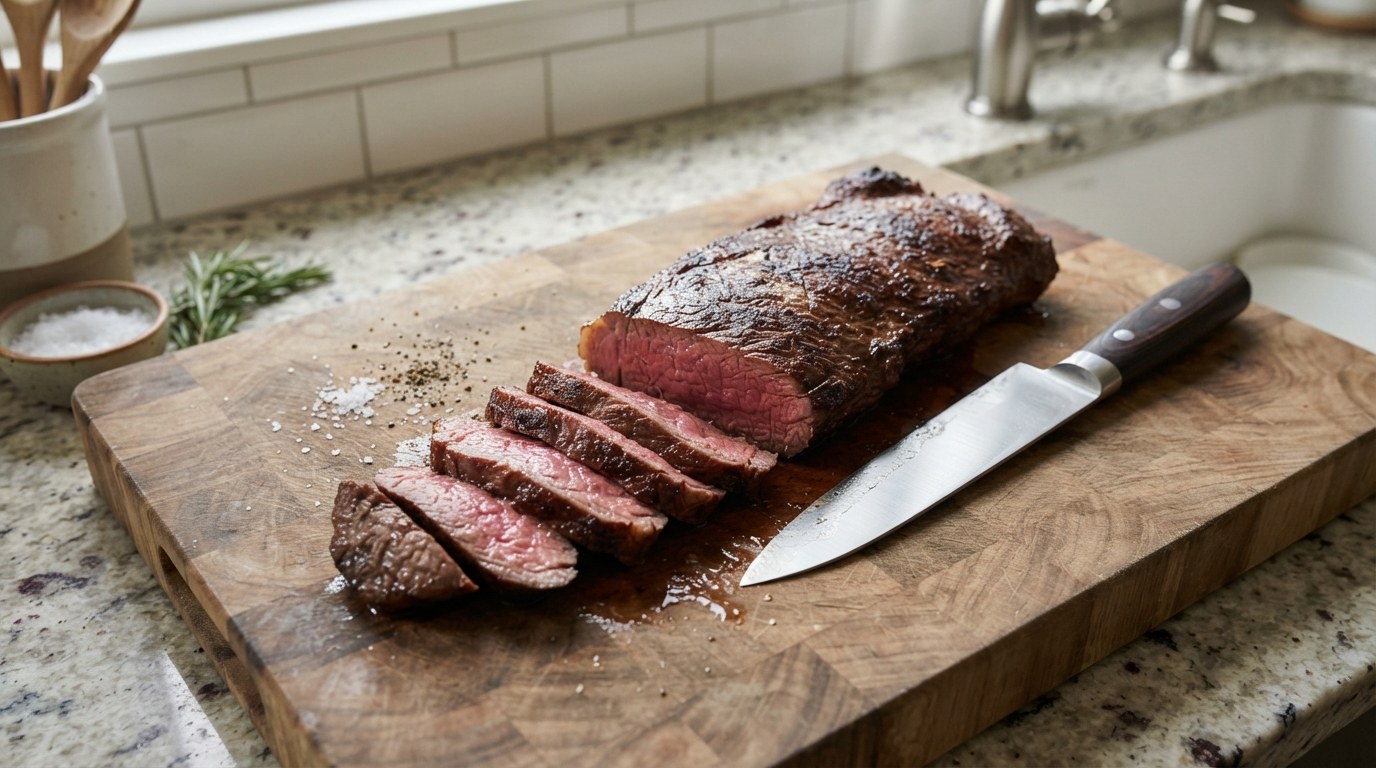
Slice hanger steak thinly against the grain, at right angles to the lines of muscle fiber you can see on the surface. Cutting across the fibers leaves them short, so each bite takes a fraction of the force a with-the-grain slice would; this is the difference between tender and chewy on a coarse cut like hanger. The grain can angle differently on each piece, so look before you cut each one.
What to Serve With Hanger Steak
The classic partner is pikliz, Haitian pickled slaw of cabbage, carrot, onion and hot peppers in vinegar, which cuts through the richness of the steak. Rice and beans or fried plantains make it a full Haitian-style plate, and a simple green salad keeps it light. Spoon the reserved epis over the slices at the table.
More steak nights: our filet mignon guide covers the grill, oven and cast iron, and the Gordon Ramsay cookware guide explains the pans that sear best.
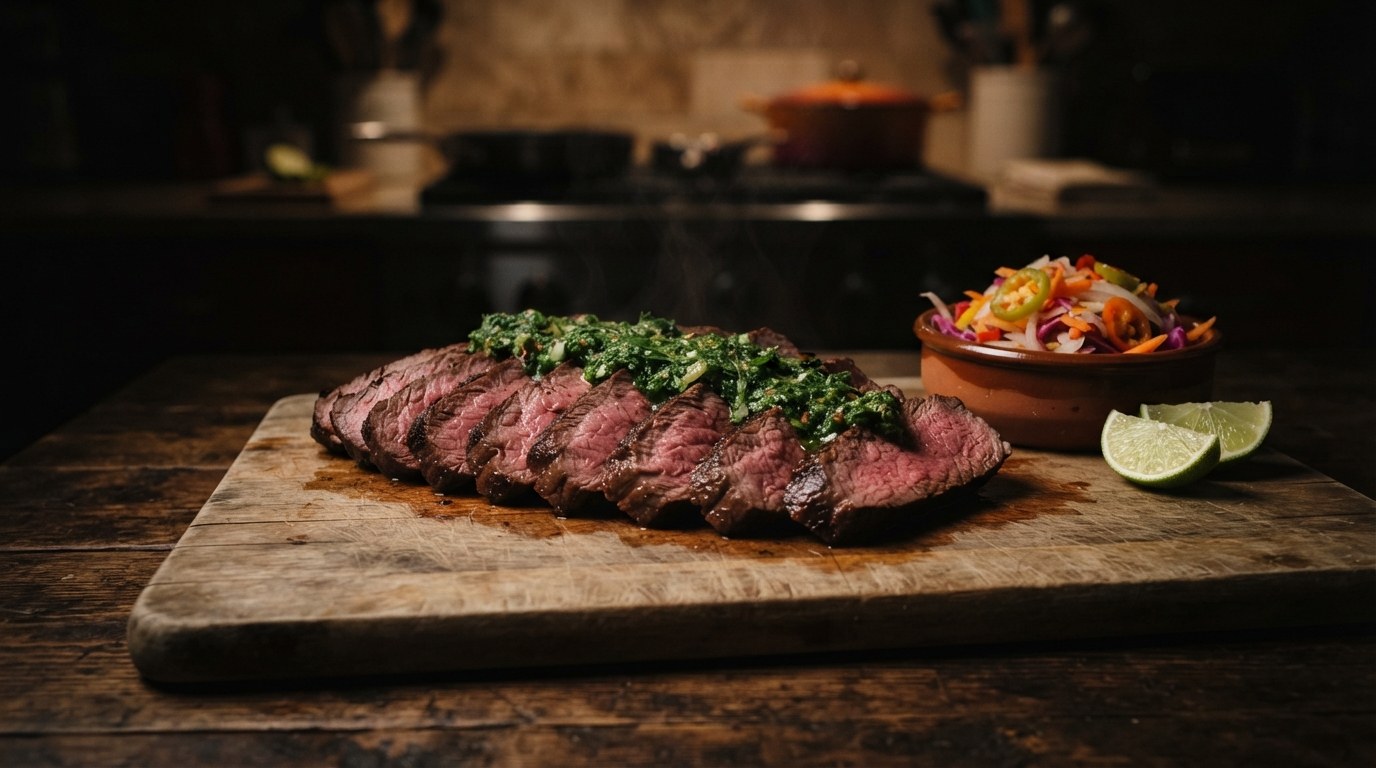
Haitian-Spiced Hanger Steak with Epis
Ingredients
Epis
- 1 cup packed flat-leaf parsley, leaves and tender stems
- 4 scallions, roughly chopped
- 1/2 green bell pepper, chopped
- 1/2 small onion, chopped
- 6 garlic cloves
- 1 tbsp fresh thyme leaves
- 1/2 Scotch bonnet pepper, ribs and seeds removed (more to taste)
- 2 tbsp lime juice (about 1 lime)
- 1 tbsp white vinegar
- 1/4 cup neutral oil, plus more as needed
- 1 tsp kosher salt
Steak
- 1 1/2 lb hanger steak (680 g), center membrane removed
- 1 1/2 tsp kosher salt
- 1 tbsp grapeseed or other high-smoke-point oil
- 2 tbsp unsalted butter
- 3 garlic cloves, smashed
- 4 thyme sprigs
To serve
- Pikliz or quick-pickled slaw and lime wedges, to serve
Instructions
- Make the epis: blend all the epis ingredients to a coarse, spoonable paste, adding a little more oil if it won't move. Set aside 1/4 cup for serving.
- If your hanger still has the tough strip of connective tissue down the center, cut along both sides of it to remove it, leaving two long pieces. Salt the steak all over.
- Rub the steak with 1/2 cup of the remaining epis, cover and refrigerate for 2 to 12 hours.
- Take the steak out 30 minutes before cooking. Scrape off the marinade and pat the steak very dry with paper towels.
- Heat a heavy skillet over high heat until very hot, add the oil, then the steak. Sear 4 to 5 minutes per side, turning once or twice, until deeply browned.
- Lower the heat to medium, add the butter, garlic and thyme, and spoon the foaming butter over the steak for about 1 minute. Pull the steak at 125 to 130°F for medium-rare (or 145°F for the USDA safe minimum).
- Rest the steak on a board for 10 minutes, then slice thinly against the grain. Serve with the reserved epis, pikliz and lime wedges.
Notes
Hanger Steak FAQs
The questions that come up most: what hanger steak is, how it compares to skirt steak, how long to marinate it, what temperature to cook it to, how to slice it, and what Haitian epis is.
What is hanger steak?
A thick, beefy cut from the plate section that hangs from the diaphragm. There is only one per animal. It is also sold as butcher's steak, hanging tender or onglet, and has a rich flavor often compared to ribeye.
Is hanger steak the same as skirt steak?
No. Both come from the plate, but skirt is the long, thin diaphragm muscle itself, while hanger is the thicker muscle that hangs from it. Hanger is more tender and beefier; skirt is thinner and chewier if overcooked.
How long should I marinate hanger steak?
2 to 12 hours in the fridge. An acidic marinade like epis starts to make the surface mealy after about 12 hours. Salt the steak before marinating, since salt is what seasons the inside.
What temperature should hanger steak be cooked to?
Pull it at 125 to 130°F for medium-rare; it rises about 5°F while resting. The USDA safe minimum for beef steaks is 145°F with a 3-minute rest.
How do you cut hanger steak?
First remove the tough strip of connective tissue down the center, leaving two pieces. After cooking and resting, slice each piece thinly against the grain.
Why is my hanger steak tough?
Usually it was overcooked past medium, cut with the grain, or the center membrane was left in. Cook it to medium-rare, rest it, and slice across the fibers.
What is Haitian epis?
A Haitian seasoning base of blended parsley, scallions, thyme, bell pepper, onion, garlic, hot pepper, lime and vinegar, used to marinate meat and fish and to flavor soups and stews.

About the Author
John Siracusa is the founder of Hell’s Kitchen Recipes. He focuses on technique-first, reproducible home cooking and researches recipes & kitchen equipment from published food science and professional chef methods since 2016.