Chilli jam sets when three things line up: enough pectin, enough sugar, and a hard boil that drives off water until the mixture reaches about 220°F at sea level. Get there and you have a glossy, spoonable jam with flecks of chilli suspended in it; stop short and it stays a runny syrup. This Gordon Ramsay-style version uses fresh red chillies, jarred roasted red peppers and a couple of whole Scotch bonnets, and takes about 40 minutes.
Get organized before you start, because the last stage moves fast: jars washed and kept warm, the chillies and peppers blitzed, a cold saucer in the freezer for the set test, and gloves on for the chillies.
How Chilli Jam Sets: Pectin, Sugar and Acid
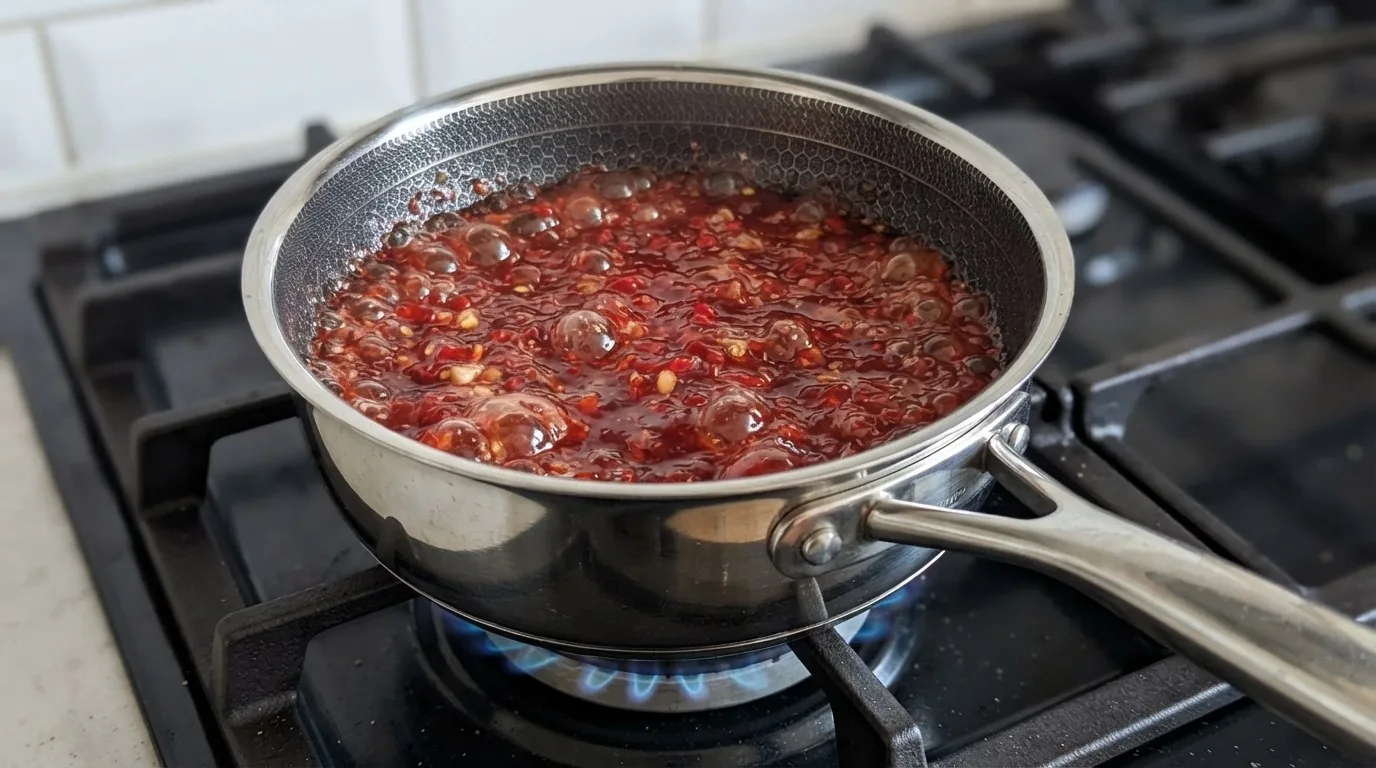
The set comes from pectin, the long molecules that glue plant cells together. In water they repel each other and stay dissolved; add plenty of sugar, which pulls water away from them, and acid, which neutralizes their charge, and they link up into a gel as the jam cools. Chillies and peppers carry little pectin of their own, which is why this recipe uses jam sugar, sugar with pectin already mixed in, and the cider vinegar supplies the acid.
The boil concentrates it all. As water evaporates, the sugar concentration climbs and the boiling point rises with it, so temperature tells you when you are there. The National Center for Home Food Preservation gives the jelly setting point as 220°F at sea level, dropping about 2°F for every 1,000 feet of altitude (216°F at 2,000 feet, for example). Use a wide pan filled no more than halfway: more surface means faster evaporation, and jam foams up hard at a rolling boil.
Dissolve the Sugar Before It Boils
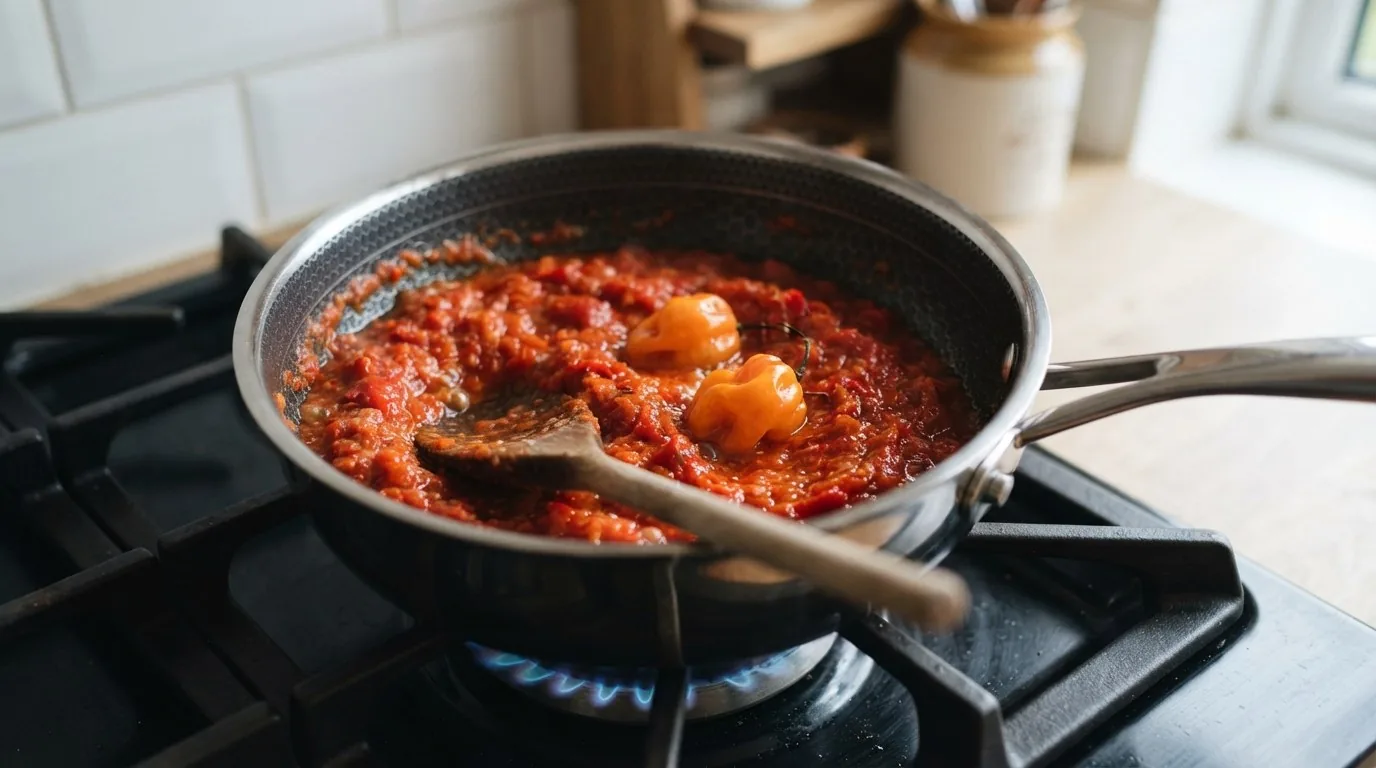
Stir the sugar into the vinegar and chilli puree over low heat until every crystal has dissolved, and only then turn the heat up. Undissolved crystals left on the pan or clinging to the sides act as seeds that the dissolved sugar can crystallize onto, which gives you a grainy jam. Once it is boiling hard, stir only occasionally to stop it catching on the bottom.
Testing for a Set, and Fixing It
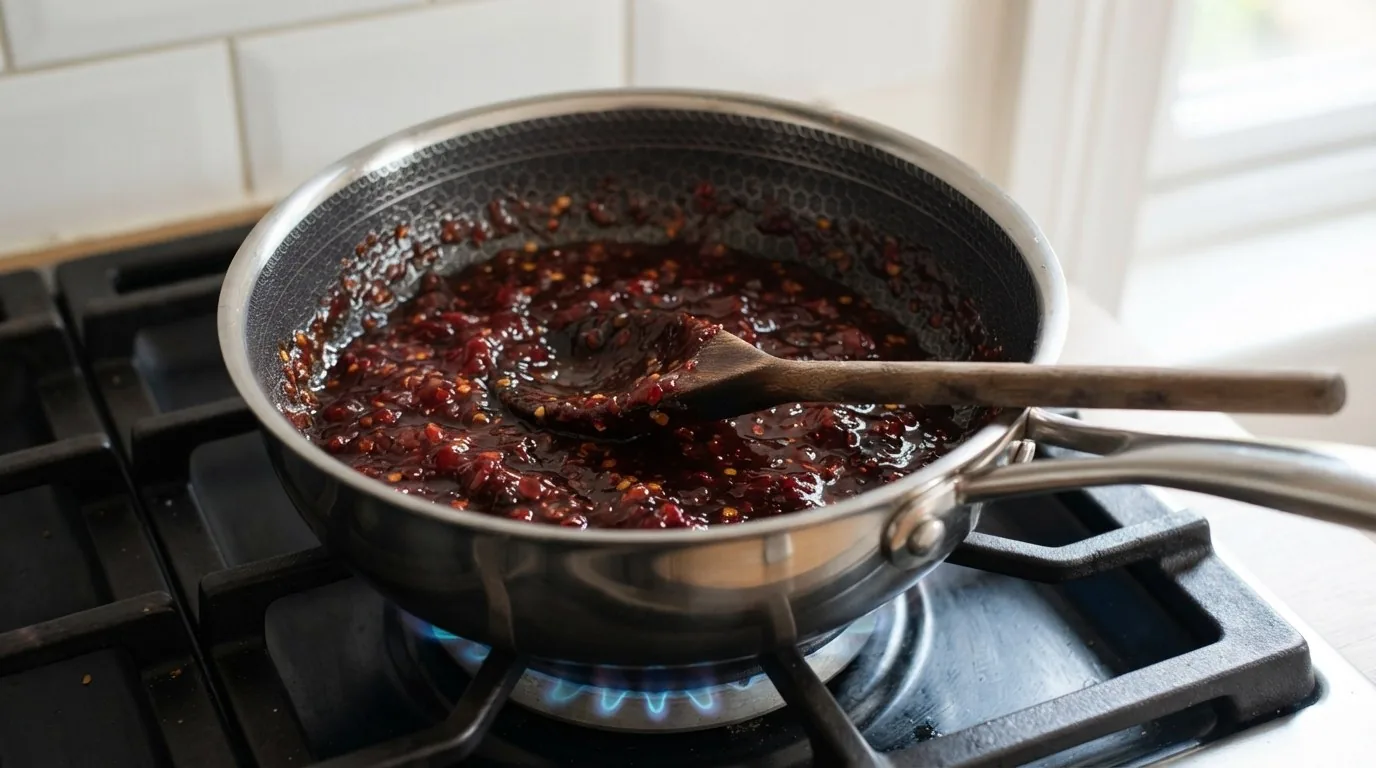
A thermometer reading of 220°F (adjusted for altitude) is the most reliable test. Without one, use the cold saucer: spoon a little jam onto the frozen saucer, wait 30 seconds, and push it with a fingertip. If the surface wrinkles, it is ready; if it runs, boil 2 or 3 minutes more and test again. Judge the set cold, never hot, because the pectin gel only forms as the jam cools, so good jam still looks loose in the pan. If it comes out too runny once cooled, return it to the pan and boil a few minutes more; if it is too stiff, warm it and loosen it with a splash of vinegar.
ThermoPro
ThermoPro TempSwift Instant-Read Digital Thermometer
- Reads in about 1 second, accurate to ±0.9°F, with a 4.3-inch food-grade stainless probe
- Hold and calibration functions, so you can lock a reading away from the heat
- NSF certified and IP65 waterproof, rinse it clean under the tap
Controlling the Heat
The heat in a chilli is not in the seeds. According to New Mexico State University's chile research, the capsaicinoids that make chillies hot are produced in glands on the placenta, the pale ribs that hold the seeds, and the seeds only pick up heat from touching it. For a milder jam, scrape out the white ribs of the red chillies. The whole Scotch bonnets, pierced a few times, infuse their fruity heat into the jam as it boils and are lifted out before jarring, which gives you heat you can control rather than fiery shards. Wear gloves, as the NCHFP advises for hot peppers, and keep your hands away from your face.
How Long Chilli Jam Keeps, and Why the Fridge
Many recipes say chilli jam keeps for months in the cupboard, but that is only safe for a tested recipe processed in a boiling-water canner. Peppers and garlic are low-acid foods, and the NCHFP cautions against altering the proportions of acid and ingredients in preserves because spoilage may result. A home recipe like this one has not been lab-tested for canning, so treat it as a refrigerator jam: jar it hot, let it cool, and keep it in the fridge, where it will last about a month. It freezes well too. If you want shelf-stable jars, follow a tested recipe such as the NCHFP's pepper jelly and its processing times exactly.
How to Use Chilli Jam
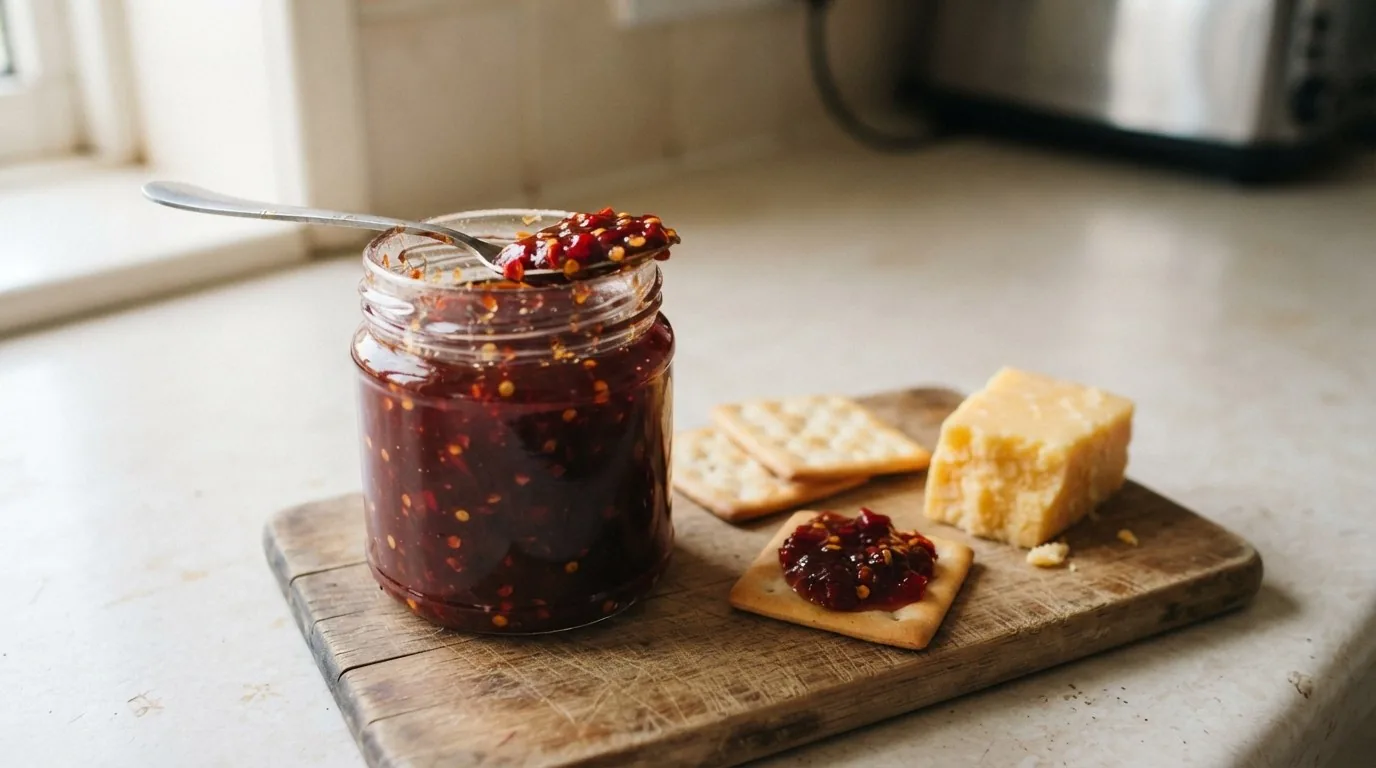
It is at its best with sharp cheese: aged cheddar and crackers, a cheese board, or melted into a grilled cheese. Spoon it onto burgers (try it on our Gordon Ramsay burger), use it as a glaze for pork chops, salmon or chicken wings in the last few minutes of cooking, or stir a spoonful into a pot of chilli con carne for a sweet-hot finish. Chopping a pile of chillies is much easier with a sharp knife; our best knife for cutting vegetables guide has the picks.
Gordon Ramsay-Style Chilli Jam
Ingredients
- 10 fresh red chillies, stems removed (remove the white ribs for less heat)
- 2 Scotch bonnet chillies, left whole
- 4 garlic cloves, peeled
- 2 jarred roasted red peppers (about 7 oz / 200 g), drained
- 1 3/4 lb jam sugar (sugar with added pectin), about 800 g
- 1 cup cider vinegar
- 1/2 tsp sea salt
Instructions
- Get organized: wash three 8-ounce jars and lids in hot soapy water and keep them warm, and put a small saucer in the freezer. Wear gloves to handle the chillies.
- Blitz the red chillies, garlic and roasted peppers in a food processor to a coarse puree.
- Scrape the puree into a wide, high-sided pan no more than half full. Add the jam sugar, vinegar and salt, and stir over low heat until the sugar has completely dissolved.
- Pierce the Scotch bonnets several times with a knife and add them. Turn up the heat and boil hard, stirring occasionally, for 15 to 20 minutes, until the jam reaches 220°F (at sea level) or wrinkles when pushed on the cold saucer.
- Lift out the Scotch bonnets. Let the jam sit off the heat for 10 minutes so the chilli flecks stay suspended, then stir and ladle into the warm jars. Seal.
- Let cool, then refrigerate. Use within about a month, or freeze.
Notes
Chilli Jam FAQs
The questions that come up most: why chilli jam will not set, the setting temperature, how long it keeps, and how to make it milder.
Why won't my chilli jam set?
It did not boil long enough to reach the setting point, about 220°F at sea level, or it lacks pectin. Chillies and peppers are low in pectin, so use jam sugar (sugar with pectin added). Return it to the pan and boil a few minutes more, then test on a cold saucer.
What temperature does chilli jam set at?
About 220°F at sea level, according to the National Center for Home Food Preservation, dropping roughly 2°F for every 1,000 feet of altitude. Judge the final set once the jam has cooled, because the pectin gel forms as it cools.
How long does homemade chilli jam last?
About a month in the fridge, and it freezes well. Only tested recipes processed in a boiling-water canner are safe to store in the cupboard, because peppers and garlic are low-acid foods.
How do I make chilli jam less spicy?
Remove the white ribs from the chillies, since that is where the capsaicin is made, not the seeds. You can also leave out the Scotch bonnets or lift them out earlier.
Can I use regular sugar instead of jam sugar?
Yes, but add pectin. Chillies and peppers do not contain enough on their own, so with plain sugar you will need a pouch of liquid pectin or a longer boil, and the set is less reliable.
What do you eat chilli jam with?
Aged cheddar and crackers, cheese boards, burgers, and grilled cheese, or as a glaze for pork, salmon or chicken wings. A spoonful also rounds out a pot of chilli.
Why is my chilli jam grainy?
The sugar started crystallizing, usually because it was not fully dissolved before the jam came to the boil. Stir over low heat until no crystals remain, then boil.

About the Author
John Siracusa is the founder of Hell’s Kitchen Recipes. He focuses on technique-first, reproducible home cooking and researches recipes & kitchen equipment from published food science and professional chef methods since 2016.