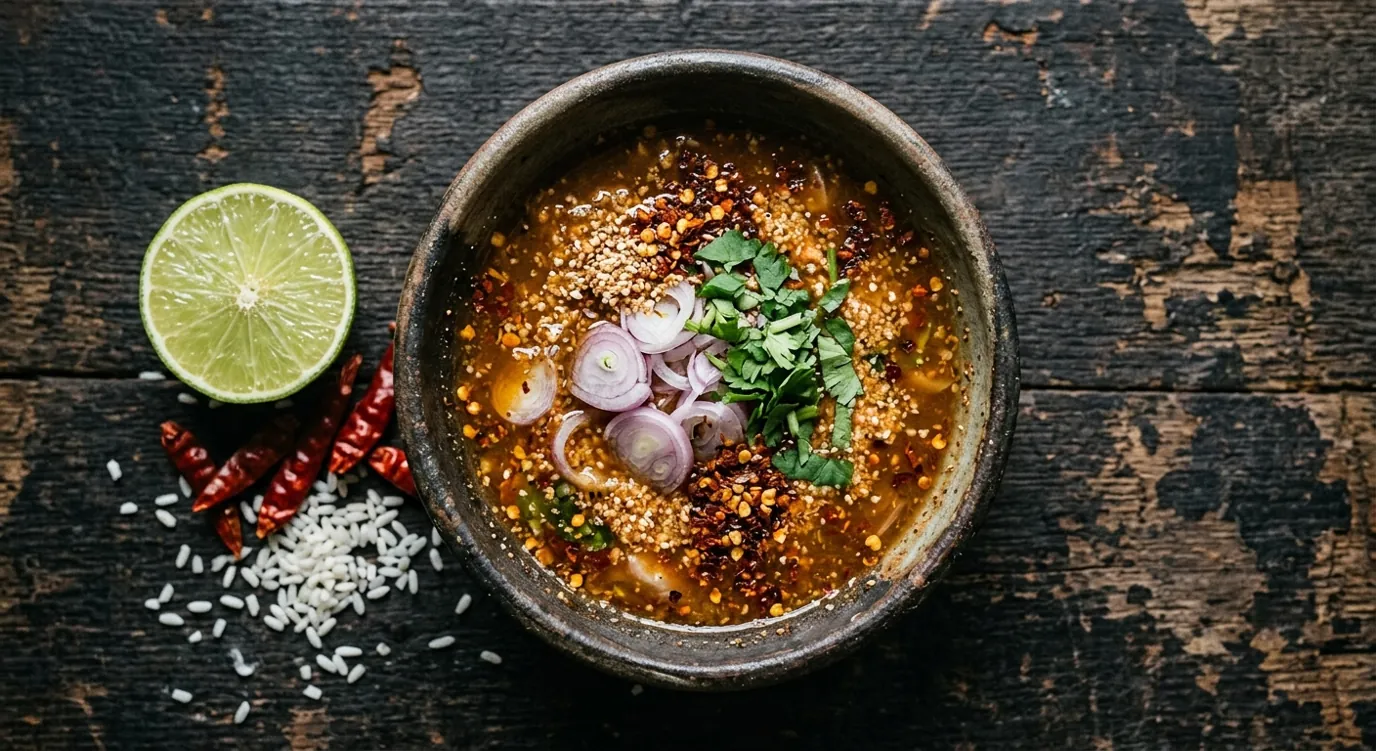
Crying tiger sauce is a Thai dipping sauce served alongside grilled beef in nearly every open-air restaurant from Bangkok to Chiang Mai. The Thai name is nam jim jaew. The sauce is raw — no cooking required. You pound toasted rice powder with dried chiles, stir in fish sauce, lime juice, and a pinch of sugar, and you have a condiment that hits sour, salty, spicy, and nutty in every spoonful. It takes about five minutes to make. It pairs with charcoal-grilled steak the way chimichurri pairs with Argentine beef — but the flavor profile is sharper, more acidic, and more complex.
The name comes from Thai street food lore. One version says the tiger weeps because the meat is so good. Another says the tears come from the Chile heat. Either way, the sauce is the real star. A properly made crying tiger sauce turns an ordinary piece of flank steak into something restaurant-quality. The technique matters, though. Skip the toasted rice powder, and you lose the texture. Use bottled lime juice, and the balance goes flat. This guide walks through what makes the sauce work, how to build it right, and what to serve it with.
What Is Crying Tiger Sauce (Nam Jim Jaew)?
Crying tiger sauce is a northeastern Thai condiment from the Isan region — the same area that gave the world larb and som tum (green papaya salad). It belongs to the family of nam jim sauces, which translates loosely to “dipping sauce.” According to food historian David Thompson’s Thai Food, nam jim jaew is the standard accompaniment to suea rong hai — literally “weeping tiger” — a dish of grilled marinated beef served sliced over a bed of cabbage and herbs.
The sauce differs from most Western steak sauces in one fundamental way: it contains no fat. No butter, no oil, no cream. The body comes from toasted rice powder (khao khua), which adds a sandy, gritty texture and a roasted grain flavor that rounds out the acidity. This is a sauce built on contrast — the richness comes from the beef, and the sauce cuts through it.
In Thai cooking, the condiment belongs to a broader balancing system. Serious Eats notes that Thai meals operate on a four-flavor grid: sour (lime), salty (fish sauce), sweet (palm sugar), and spicy (chile). Nam jim jaew hits all four in a single spoon, which is why it works as a standalone dipping sauce without needing a complicated recipe.
Crying Tiger Sauce Ingredients and What Each One Does
Every ingredient in Crying Tiger sauce serves a specific function. Leave one out, and the balance breaks. Here is the full lineup and the role each plays.
Advertisement
Fish sauce provides the salt base. Thai brands like Tiparos and Megachef are fermented from anchovies and salt for 12 to 18 months. The USDA nutrient database shows fish sauce runs about 1,400 mg of sodium per tablespoon — roughly 60% of the daily value. That concentration is the point. You use small amounts, and the umami depth replaces what soy sauce does in Chinese cooking.
Lime juice supplies the sour element. Fresh-squeezed only. Bottled lime juice is pasteurized, which kills the volatile citrus oils that give fresh limes their brightness. One medium lime yields about two tablespoons of juice.
Toasted rice powder (khao khua) is the ingredient most Western cooks skip — and it is the ingredient that makes the sauce Thai. Raw sticky rice gets dry-toasted in a skillet until golden brown, then ground to a coarse powder. According to Kenji López-Alt’s breakdown on Serious Eats, the toasting triggers the Maillard reaction in the rice starches, creating nutty, caramel-adjacent flavor compounds that are impossible to replicate with any substitute. The powder also thickens the sauce slightly and gives it a grainy texture that clings to meat.
Dried red chile flakes (prik pon) bring the heat. Thai dried chiles run between 50,000 and 100,000 Scoville units — hotter than a cayenne but milder than a habanero. You control the heat by adjusting the amount. Start with one teaspoon and work up.
Palm sugar or white sugar rounds out the acidity. You need less than you think. Half a teaspoon balances two tablespoons of lime juice without making the sauce sweet.
Shallots add a mild allium note. Thinly sliced, raw. They soften slightly in the lime juice acid, like a quick pickle.
Fresh herbs — cilantro, green onion, or sawtooth coriander — go in at the end for freshness. Optional but traditional.
| Ingredient | Amount | Role in the Sauce | Substitution |
|---|---|---|---|
| Fish sauce | 3 Tbsp | Salt + umami base | Soy sauce (loses depth) |
| Fresh lime juice | 3 Tbsp | Sour element — cuts fat | No good substitute |
| Toasted rice powder | 1 Tbsp | Texture + nutty depth | No substitute |
| Dried red chile flakes | 1–2 tsp | Heat | Gochugaru or red pepper flakes |
| Palm sugar or white sugar | ½ tsp | Rounds acidity | Brown sugar |
| Shallots, thinly sliced | 2 Tbsp | Mild allium bite | Red onion |
| Cilantro or green onion | 2 Tbsp | Freshness | Mint or Thai basil |

How to Make Crying Tiger Sauce (Step by Step)
Crying tiger sauce comes together in five minutes if your rice powder is already made. The rice powder keeps for months in an airtight jar, so make a batch and store it.
Step 1: Toast the Rice
Put two tablespoons of raw sticky rice (also called glutinous rice or sweet rice) in a dry skillet over medium heat. No oil. Shake the pan every 30 seconds. The grains will pop and jump. After three to four minutes, the rice turns golden brown and smells like popcorn. Pull it off the heat immediately — it goes from golden to burnt in about 15 seconds.
Step 2: Grind the Rice
Let the toasted rice cool for two minutes, then grind it. A mortar and pestle gives you the best texture — coarse, uneven, with some fine powder and some larger pieces. A spice grinder works but produces a finer, more uniform powder. You want some grit. That texture is what distinguishes nam jim jaew from a pourable vinaigrette.
Step 3: Mix the Sauce
In a bowl, combine three tablespoons of fish sauce, three tablespoons of fresh lime juice, one tablespoon of toasted rice powder, one to two teaspoons of dried red chile flakes, half a teaspoon of sugar, and two tablespoons of thinly sliced shallots. Stir. Taste. The sauce should hit you with sour first, then salt, then heat, with the toasted rice hanging in the background. Adjust: more lime if it is too salty, more fish sauce if it is too sour, more sugar if the acid bites too hard.
Step 4: Rest for Five Minutes
Let the sauce sit for five minutes before serving. The rice powder hydrates slightly in the liquid, and the shallots soften in the acid. The flavors merge. Add the fresh herbs — cilantro, green onion, or sawtooth coriander — right before you bring it to the table.
Crying Tiger Sauce and Grilled Steak: The Classic Pairing
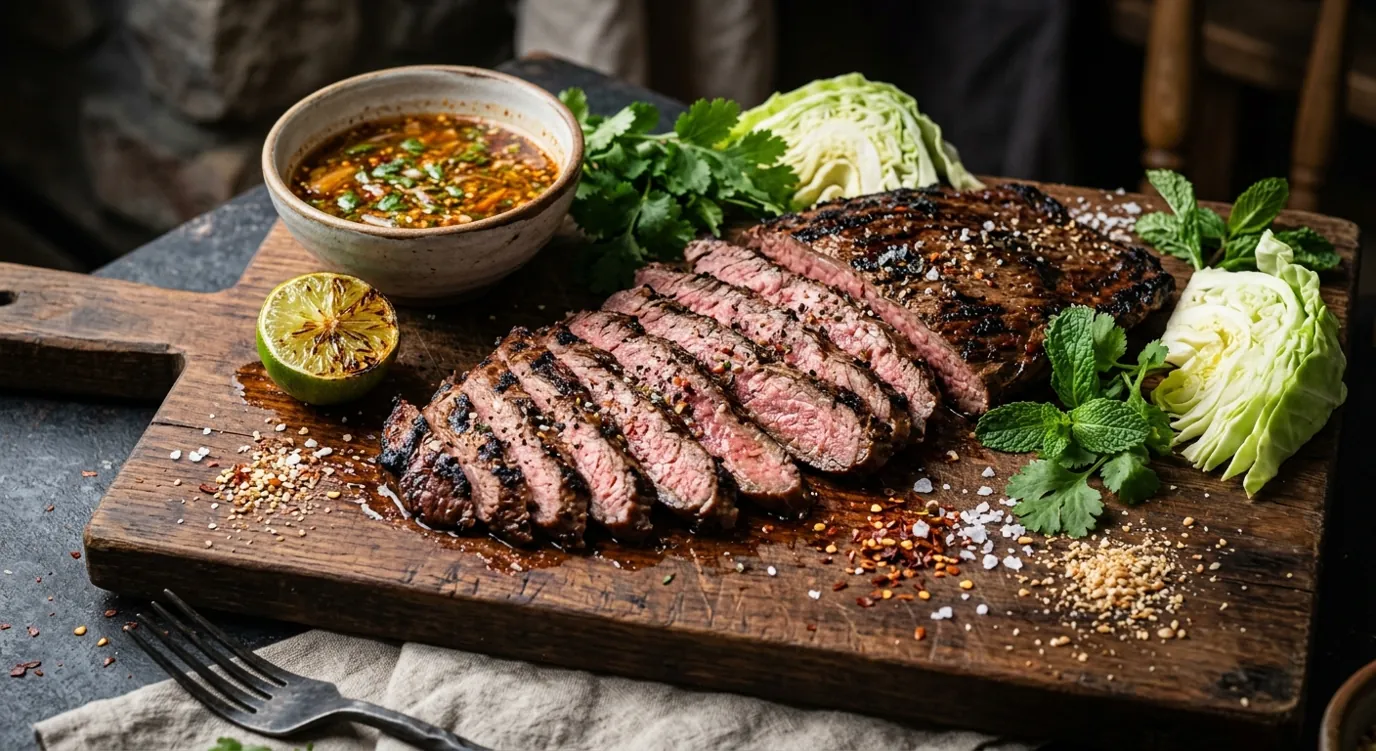
The traditional crying tiger dish — suea rong hai — uses a thin cut of beef grilled fast over very high heat. In Thailand, the cut is typically what Americans would recognize as flank steak or skirt steak: lean, fibrous, full of beefy flavor, and best served sliced thin against the grain.
Advertisement
The pairing works because of basic food science. Grilled beef develops a Maillard crust — browned proteins and caramelized sugars on the surface that create hundreds of new flavor compounds. That crust is rich, fatty, and deeply savory. The crying tiger sauce provides the counterpoint: acid from the lime cuts through the fat, salt from the fish sauce amplifies the beef flavor, heat from the chiles stimulates the palate, and the toasted rice powder adds a textural contrast to the tender meat.
This is the same principle that drives every great steak-sauce pairing worldwide. Chimichurri with Argentine asado, horseradish cream with British roast beef, and red wine reduction with French steak au poivre. The sauce provides what the meat lacks: acidity and brightness. Nam jim jaew just does it with a sharper, more complex flavor profile than most Western sauces.
For the steak itself, keep it simple. Season with salt only. Grill over direct high heat — charcoal is better than gas here because the smoke compounds add another layer that the sauce can play against. Pull the steak at 130°F internal for medium-rare. Rest for five minutes. Slice against the grain into quarter-inch strips. Serve on a plate with raw cabbage leaves, fresh mint, and a small bowl of crying tiger sauce on the side.
Five Ways to Use Crying Tiger Sauce Beyond Steak
Crying tiger sauce works as a dipping sauce for any grilled protein or vegetable that needs an acid-forward counterpoint. The sauce is not limited to beef.
Grilled chicken thighs. Bone-in, skin-on thighs grilled until the skin crisps and the fat renders. Dip each bite in the sauce. The lime and fish sauce cut through the chicken fat the same way they cut through beef.
Grilled pork neck (kor moo yang). This is the second most common pairing in Isan cooking. Pork neck has heavy marbling — more fat per ounce than a pork chop. The crying tiger sauce acid balances the richness. Slice the grilled pork thin and serve family-style with the sauce on the side.
Grilled shrimp. Shell-on jumbo shrimp, grilled two minutes per side over high heat. The char on the shell adds smoke. Peel, dip, eat. The sauce replaces cocktail sauce entirely.
Grilled vegetables. Thick-cut zucchini, eggplant halves, and whole scallions all pair well. The sauce gives grilled vegetables the protein-level flavor hit they usually lack. This is a strong option for plant-based meals.
Cold rice noodle bowls. Toss cooked rice vermicelli with shredded cabbage, cucumber, mint, and cilantro. Spoon the crying tiger sauce over the top as a dressing. Add sliced grilled beef or tofu. This is a Thai-Isan salad bowl that works as a full meal.
Crying Tiger Sauce vs. Other Thai Dipping Sauces
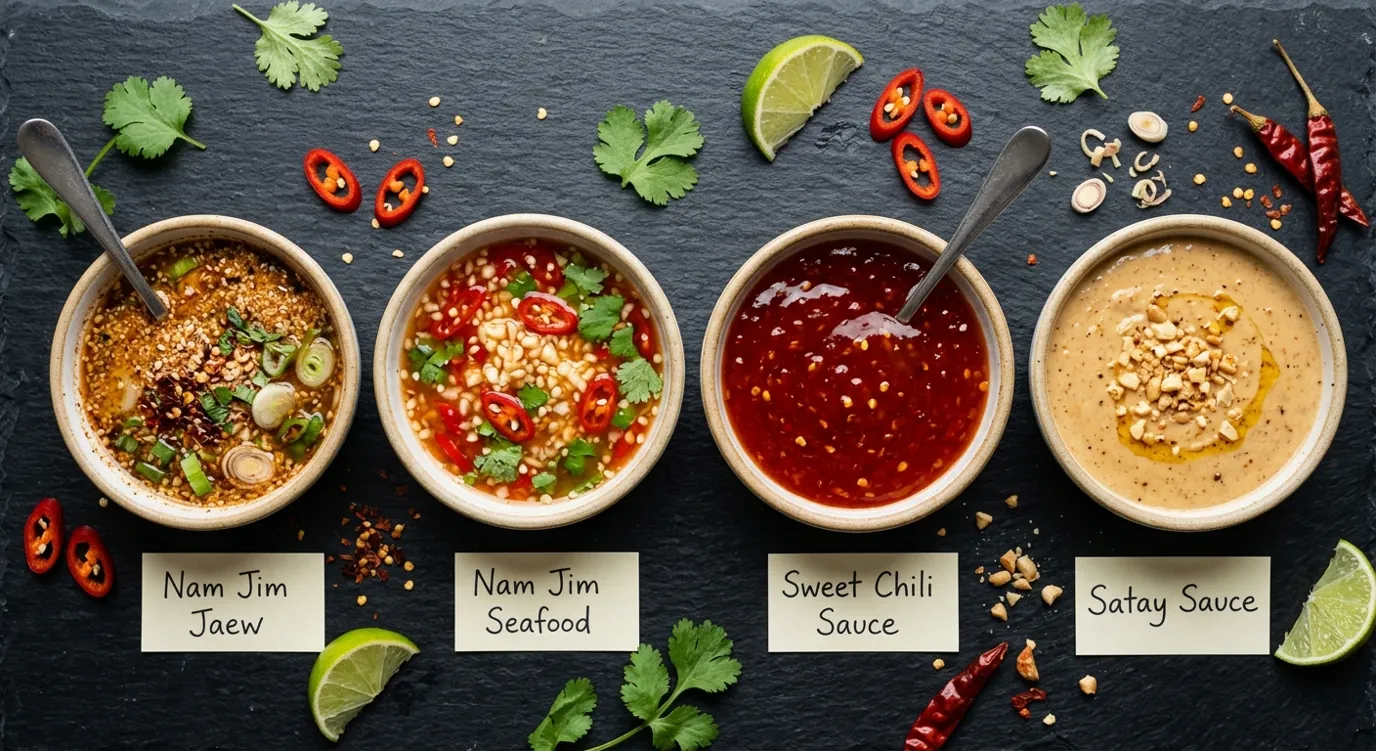
Thailand has dozens of nam jim sauces. Crying tiger sauce is one member of a larger family. Each sauce is designed for a specific dish, but they share the same sour-salty-sweet-spicy framework.
Advertisement
| Sauce | Thai Name | Key Ingredients | Best Pairing | Flavor Profile |
|---|---|---|---|---|
| Crying Tiger Sauce | Nam Jim Jaew | Toasted rice, lime, fish sauce, dried chile | Grilled beef, pork | Sour-forward, gritty, smoky |
| Seafood Dipping Sauce | Nam Jim Seafood | Garlic, fresh chiles, lime, fish sauce, sugar | Grilled fish, shrimp, squid | Bright, garlicky, fresh chile heat |
| Sweet Chile Sauce | Nam Jim Gai | Red chiles, garlic, vinegar, sugar | Fried chicken, spring rolls | Sweet, mild heat, thick |
| Peanut Sauce | Nam Jim Satay | Roasted peanuts, coconut milk, curry paste | Satay skewers, rice paper rolls | Rich, creamy, sweet-savory |
| Green Chutney | Nam Jim Sai Bua | Green chiles, garlic, cilantro, lime | Grilled meats, steamed fish | Herbaceous, sharp, very spicy |
The thing that separates crying tiger sauce from the others is the toasted rice powder. No other Thai dipping sauce uses it. That ingredient gives the sauce its distinctive grainy texture and its roasted-grain depth. Without the rice powder, you have a generic chile-lime dipping sauce. With it, you have nam jim jaew.
Why This Method Works
Crying tiger sauce relies on two principles from food science: flavor balancing through contrast and texture through starch modification.
The balancing principle is well documented. Harold McGee explains in On Food and Cooking that the human palate perceives richness (fat, umami) more intensely when contrasted with acidity. This is why lemon wedges come with fried fish, why vinaigrettes dress fatty salads, and why crying tiger sauce works on grilled beef. The lime juice and fish sauce create a sour-salty solution that stimulates saliva production, cleansing the palate between bites of rich, fatty meat. Each bite of steak tastes as good as the first because the sauce resets the tongue.
The toasted rice powder adds a second dimension. When raw rice starch is heated above 300°F in a dry pan, the Maillard reaction converts the amylose and amylopectin molecules into hundreds of new aromatic compounds — the same reaction that browns bread crust and sears steak. According to Serious Eats, these compounds include pyrazines (nutty, roasted notes) and furanones (caramel-like sweetness). The ground powder then acts as a thickener: the damaged starch granules absorb liquid and create a suspension that gives the sauce body without adding fat or flour.
The chili flakes contribute capsaicin, which binds to TRPV1 receptors on the tongue and creates the sensation of heat. According to the American Chemical Society, capsaicin also triggers endorphin release — the same chemical response that makes spicy food mildly addictive. In the context of crying tiger sauce, the heat works as a third contrast layer: fat (beef), acid (lime), heat (chile). Three contrasts in one bite.
Common Crying Tiger Sauce Mistakes
Most failures come from skipping ingredients or misunderstanding proportions.
Advertisement
Skipping the toasted rice powder. This is the number-one mistake in Western recipes. Without the rice powder, you have a thin, watery dipping sauce that slides off the meat. The rice powder gives the sauce its identity.
Using bottled lime juice. Bottled lime juice is heat-pasteurized. The process destroys limonene and other volatile terpenes that give fresh limes their aroma. The result is flat, one-dimensional sourness instead of bright, layered citrus. Fresh limes only.
Going too heavy on sugar. The sugar is a balancing agent, not a flavor. Half a teaspoon is enough for the recipe above. More than that, and the sauce drifts toward sweet chili sauce territory — a different condiment entirely.
Using the wrong rice. Regular long-grain rice does not toast the same way as sticky rice. Sticky rice (glutinous rice) has a higher amylopectin content, which produces a different flavor profile and texture when toasted and ground. Thai and Lao grocers sell it in bags labeled “sweet rice” or “glutinous rice.”
Making it too far ahead. Crying tiger sauce is best within two hours of mixing. The lime juice loses its brightness after prolonged exposure to the fish sauce and sugar. The rice powder absorbs too much liquid,d and the texture goes pasty. Make it fresh.
Crying Tiger Sauce Storage and Shelf Life
The mixed sauce keeps for one to two days in the refrigerator in a sealed container. The lime juice will mellow, and the rice powder will thicken as it absorbs liquid. Stir before serving and add a squeeze of fresh lime to brighten it back up.
The toasted rice powder on its own keeps for two to three months in an airtight jar at room temperature. Make a large batch and store it. This is the component worth batch-prepping.
Fish sauce, dried chiles, and sugar are all shelf-stable pantry items with long storage lives. The only perishable ingredients are the limes and shallots. Keep those on hand,d and you can make crying tiger sauce from pantry staples any weeknight.
The short version: Crying tiger sauce is toasted rice powder, fish sauce, lime juice, dried chile, sugar, and shallots. No cooking. Five minutes. Serve it with anything grilled.
Frequently Asked Questions About Crying Tiger Sauce
Crying tiger sauce raises questions about ingredients, storage, and substitutions. Here are the answers to the most common ones, sourced from Thai cooking authorities and food science references.
What does crying tiger sauce taste like?
The sauce hits four flavors at once: sour from fresh lime, salty from fish sauce, spicy from dried chile flakes, and a roasted-grain nuttiness from the toasted rice powder. The overall impression is bright, sharp, and slightly gritty — closer to a salsa verde in texture than a smooth steak sauce. The heat level depends on how much chili you add.
Can I make crying tiger sauce without fish sauce?
You can substitute soy sauce at a 1:1 ratio, but the result will be different. Fish sauce provides a specific fermented umami depth that soy sauce cannot replicate. The sauce will still be edible, but it will taste more like a generic Asian dipping sauce than authentic nam jim jaew. For a vegetarian option, some Thai cooks use mushroom soy sauce or a soy-seaweed blend.
Where do I buy toasted rice powder?
Asian grocery stores sell pre-toasted rice powder (labeled khao khua or “roasted rice powder”) in the spice aisle. You can also buy it online. Making it at home is simple: dry-toast raw sticky rice in a skillet for three to four minutes and grind it in a mortar or spice grinder. Homemade is fresher.
Is crying tiger sauce the same as nam jim jaew?
Yes. “Crying tiger sauce” is the English-language name for nam jim jaew, the Isan-Thai dipping sauce made with toasted rice powder. Some restaurants also call it “weeping tiger sauce” or “tiger tears dipping sauce.” These all refer to the same condiment.
How spicy is crying tiger sauce?
The heat level is adjustable. The recipe above uses one to two teaspoons of dried Thai chile flakes, which produces a moderate heat — noticeable but not overwhelming. Thai restaurants in Thailand tend to make it significantly hotter. Start with one teaspoon and add more after tasting.
This article is for informational and entertainment purposes only. It is not medical, nutritional, or food safety advice. Always follow USDA food safety guidelines and consult a qualified professional for dietary concerns.
Advertisement

About the Author
John Siracusa is the founder of Hell’s Kitchen Recipes. He focuses on technique-first, reproducible home cooking and researches recipes & kitchen equipment from published food science and professional chef methods since 2016.