This skirt steak recipe keeps it simple: salt the steak, sear it in a very hot pan for 2 to 4 minutes a side, rest it, slice it across the grain and spoon fresh chimichurri over the top. Skirt is thin, loose-grained and full of beefy flavor, so it cooks in less time than it takes to set the table. Below you'll find the chimichurri version and a sweet-salty soy-honey marinade, the flavor behind a perfect score on the Hell's Kitchen Season 25 premiere.
What Is Skirt Steak?
Skirt steak is a long, thin, flat cut from the plate section of the cow, just below the ribs. There are two kinds, the outside skirt and the inside skirt, according to the University of Minnesota Extension. The outside skirt is the diaphragm muscle, and Certified Angus Beef calls it very flavorful and tender and suggests grilling, stir-frying or sautéing it. The inside skirt is a little thicker and chewier. Either one works in this recipe.
Look for a thin, silvery membrane on one side. The UMN Extension recommends removing it (it's the peritoneum, and it turns tough and chewy in the pan). Slide a sharp knife under one end, grip it with a paper towel and pull; most supermarket skirt already has it removed.
| Cut | Where it comes from | Thickness and grain | How to cook it | How to slice it |
|---|---|---|---|---|
| Skirt steak | Plate (outside skirt is the diaphragm) | About 1/2 inch; very coarse grain running across the width | Very hot and fast, 2 to 4 min per side | Cut into sections, then thinly across the grain |
| Flank steak | Flank (the belly) | About 1 inch; lean, with long parallel fibers | Hot, 4 to 6 min per side | Thinly on an angle across the grain |
| Hanger steak | Plate; hangs from the diaphragm | Thick and loose-grained, with a center seam | Hot sear, 4 to 5 min per side | Remove the seam, then across the grain |
Skirt vs flank steak comes down to texture: skirt is thinner, fattier and more intensely beefy; flank is leaner, thicker and more even. They swap in most recipes as long as you adjust the time. For the thicker cousin of skirt, try our Haitian-spiced hanger steak, and our guide to the most tender cuts of steak explains where each one lands.
How to Make Chimichurri for Skirt Steak
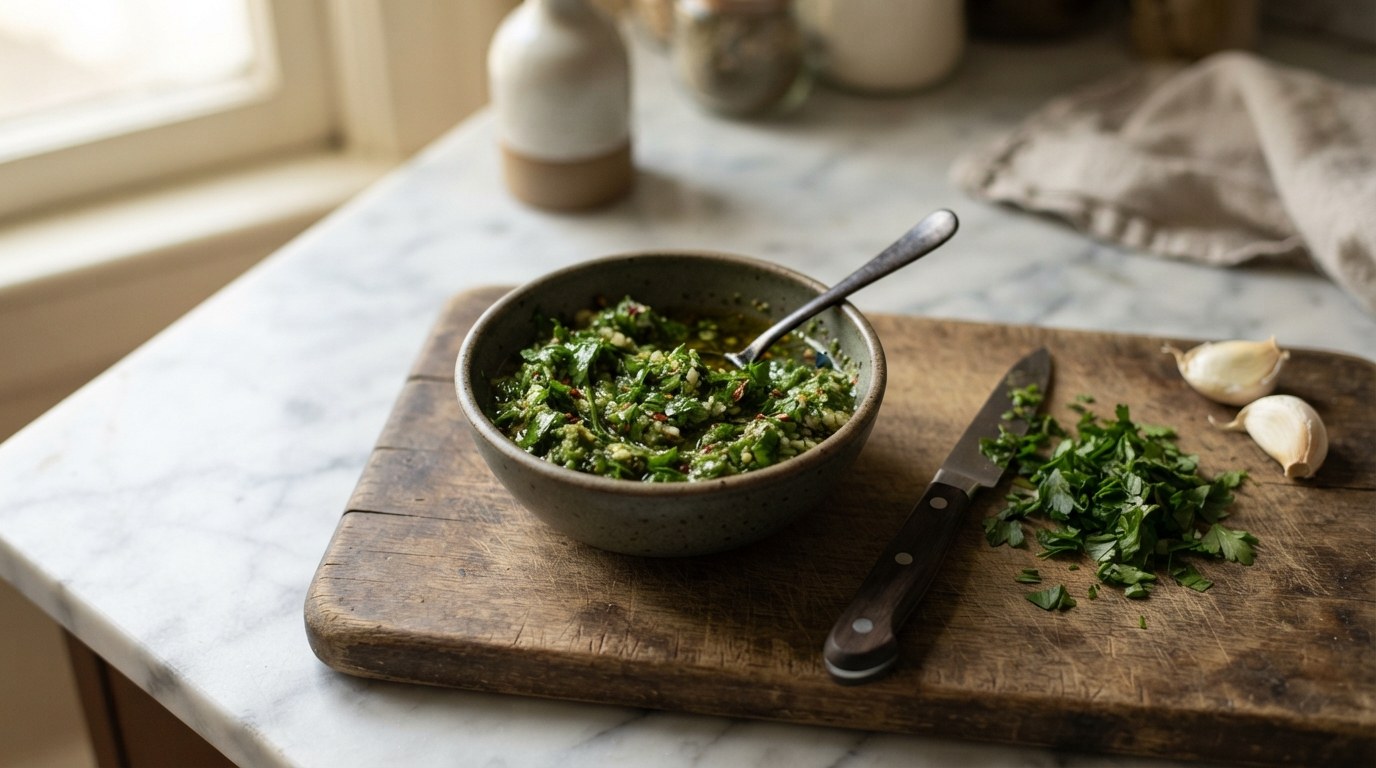
Chimichurri is a fresh herb sauce from Argentina and Uruguay, usually served with grilled meat, as Nebraska Extension describes it: parsley, garlic and oregano loosened with oil and red wine vinegar, with a pinch of red pepper flakes for warmth. Chop it by hand if you have five minutes. A blender turns the parsley into a smooth green purée and bruises it; a knife keeps the pieces distinct, so the sauce stays bright and spoonable.
Make it first and let it sit for 20 minutes while the steak comes up to temperature. The vinegar and salt pull flavor out of the garlic and soften its bite. A spoonful of chopped mint or dill is a nice twist if you have it (the older version of this page used both).
Skirt Steak Marinade: Soy-Honey From Hell's Kitchen Season 25
In the Season 25 premiere, which aired September 24, 2026, Diego Sanchez of Allen Park, Michigan, served a soy-honey skirt steak with biscuits in the signature dish round and scored a perfect 5 out of 5, one of six perfect scores that night. The show didn't publish his recipe, so here is our own soy-honey skirt steak marinade built on the same idea.
For 1 1/2 pounds of skirt steak, whisk 1/4 cup soy sauce, 2 tablespoons honey, 2 tablespoons lime juice, 1 tablespoon neutral oil, 3 grated garlic cloves and 1 teaspoon grated ginger. That lands inside the UMN Extension's guideline of 1/4 to 1/2 cup of marinade per pound. Marinate it in the fridge for 2 to 8 hours, then skip the extra salt in the recipe card, since the soy already brings plenty.
Honey changes the sear. Its fructose speeds up browning, so the crust colors fast, and sugar starts to burn and turn bitter at around 356°F (180°C). Wipe off the excess marinade, pat the steak dry, and cook it over medium-high rather than your hottest flame, 2 to 3 minutes a side. If the pan smokes hard, lower the heat. Serve it with warm biscuits the way Diego did, or with rice to catch the juices. Follow the rest of the season in our Hell's Kitchen Season 25 guide.
How Long to Marinate Skirt Steak
Marinate skirt steak for 2 to 8 hours. The UMN Extension gives 2 to 24 hours as the range for thin steaks, but both marinades here are acidic, and acid firms and denatures the proteins on the surface; leave skirt in lime or vinegar overnight and the outside turns mealy. Marinades only reach a few millimeters into meat, which is why a thin cut like skirt takes them so well. Salt is the one ingredient that travels deeper, seasoning the steak through and helping it hold its juices.
No time to marinate? Skip it. Salt the steak 40 minutes ahead (or right before it goes in the pan) and let the chimichurri carry the flavor at the table.
How to Cook Skirt Steak Hot and Fast
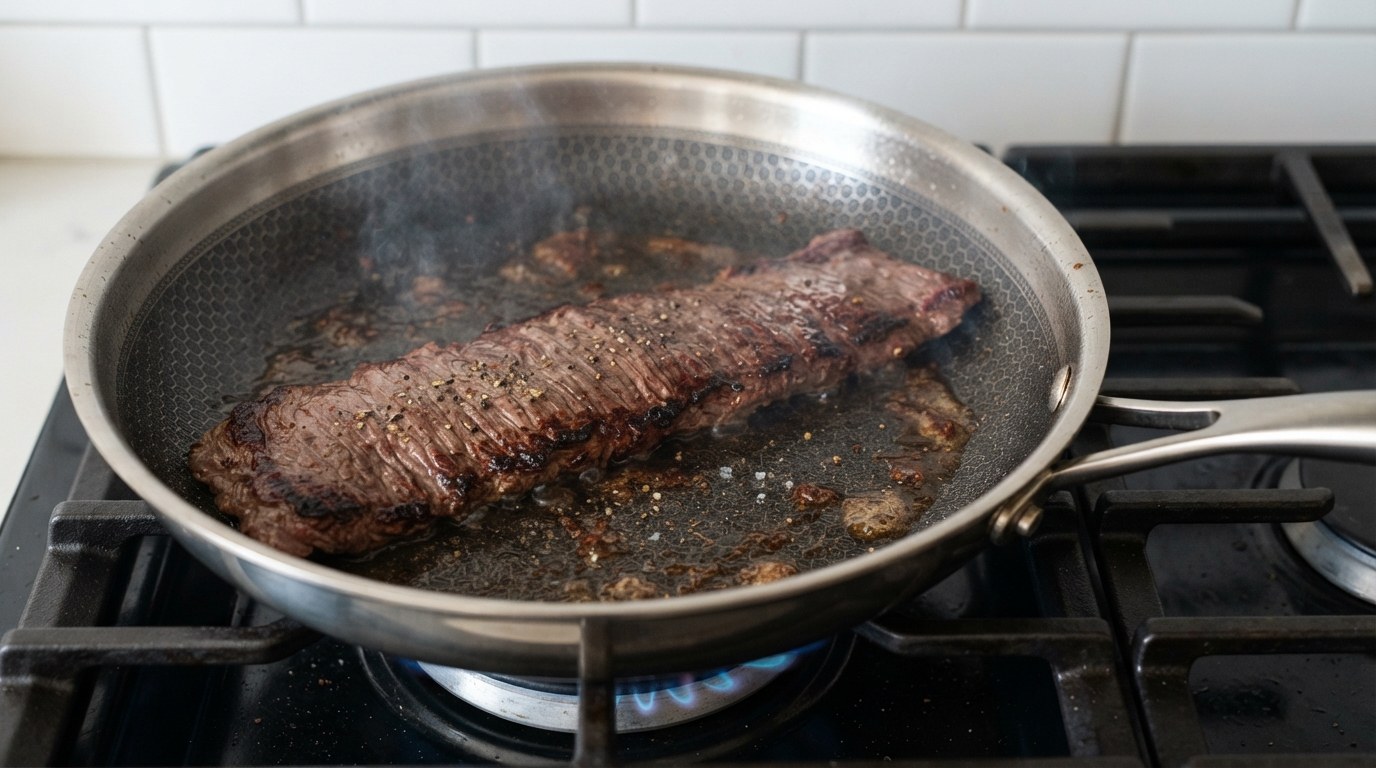
Cook skirt steak over the highest heat you have for 2 to 4 minutes per side. Because it's only about half an inch thick, the center reaches medium-rare at about the same moment the outside develops a crust. That's also why a reverse sear, which works for a thick ribeye, makes no sense for skirt; by the time you finish it in the pan, the middle is overcooked.
Pat the steak completely dry first. Browning, the Maillard reaction, only gets going once the surface passes about 284°F (140°C), and a wet surface can't get hotter than 212°F (100°C) until the water boils off, so a damp steak steams gray. Cut the skirt into two or three pieces so it lies flat in the pan. Heat a heavy skillet until it's very hot, add a thin film of high-smoke-point oil, lay the steak in and leave it alone until it releases easily. Searing builds flavor; it doesn't lock in juices, so the thermometer, not the crust, tells you when to pull it. On a grill, the same times apply over direct high heat.

HexClad
HexClad 12-Inch Hybrid Nonstick Frying Pan
- Stainless steel and ceramic nonstick hybrid surface, built to sear hard and release easily
- Tri-ply with an aluminum core for quick, even heat; works on induction
- Oven safe to 900°F and metal-utensil safe (lid not included)
Skirt Steak Temperature and Resting
Pull skirt steak at 125 to 130°F (52 to 54°C) for medium-rare; its temperature rises about 5°F as it rests. Past medium, skirt's coarse fibers tighten and turn chewy fast. For food safety, the USDA's safe minimum for whole beef steaks is 145°F (63°C) with a 3-minute rest, so cook to that for anyone who should avoid undercooked meat.
Rest it for 5 minutes before slicing. Resting doesn't relax the muscle; it lets the juices thicken a little as the meat cools, so less runs out onto the board. A steak cut after 2 minutes loses about three times as much juice as one rested for 10, and a thin skirt cools quickly, so 5 minutes is the sweet spot.
How to Cut Skirt Steak Against the Grain
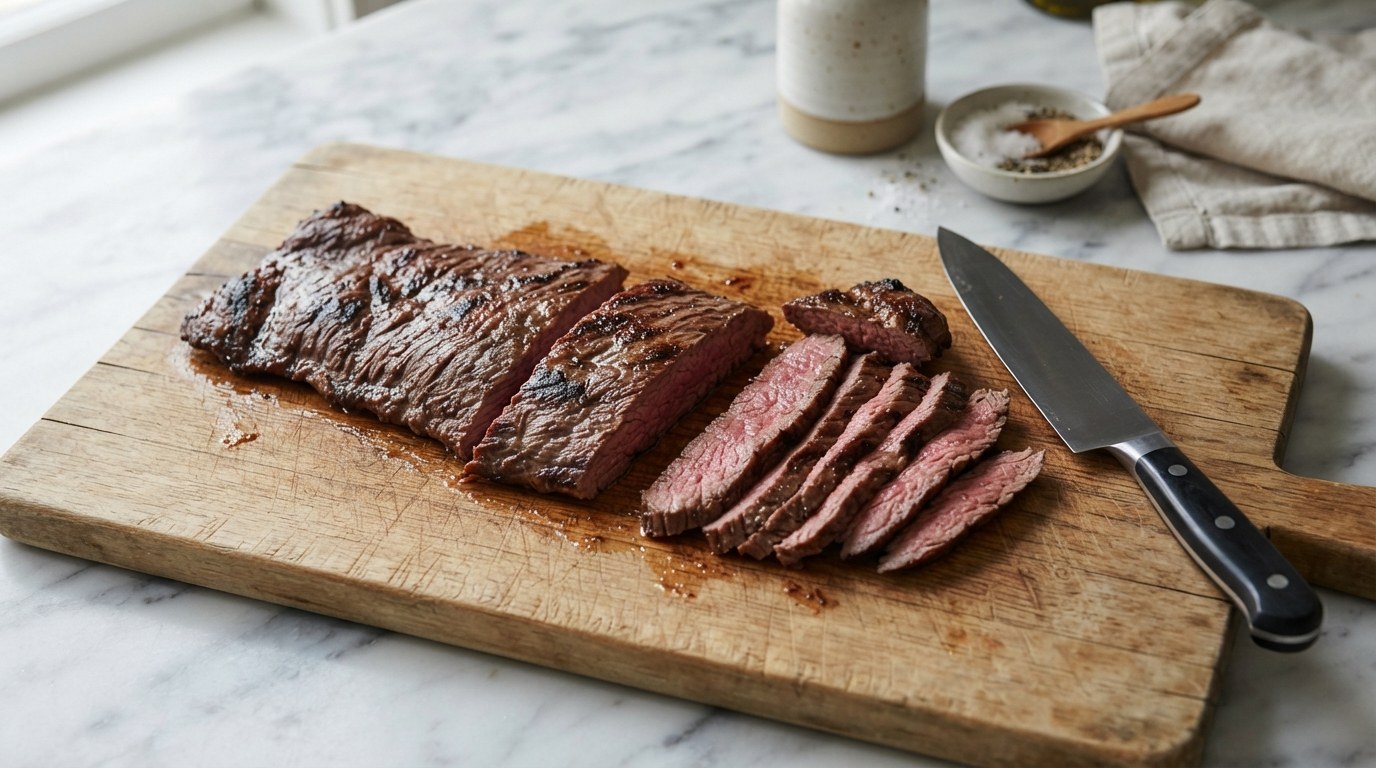
Cut skirt steak into 4- to 5-inch sections first, with the grain, then turn each section and slice it thinly across the grain. Skirt's fibers run across its width, not its length, so slicing the whole strip end to end would leave you with long, stringy fibers. The UMN Extension calls slicing against the grain especially important for thin, coarse cuts like skirt. Cutting across the fibers leaves them short, and each bite takes a fraction of the force.
What to Serve With Skirt Steak
Chimichurri skirt steak goes with anything that soaks up the sauce: roasted potatoes, grilled bread, rice, or white beans warmed with a little chorizo, the way the original version of this page served it. It also makes great tacos with warm tortillas, sliced onion and lime. For another steak night, try the cast iron ribeye or the Gordon Ramsay strip steak, and see our Gordon Ramsay cookware guide for the pans that sear best.
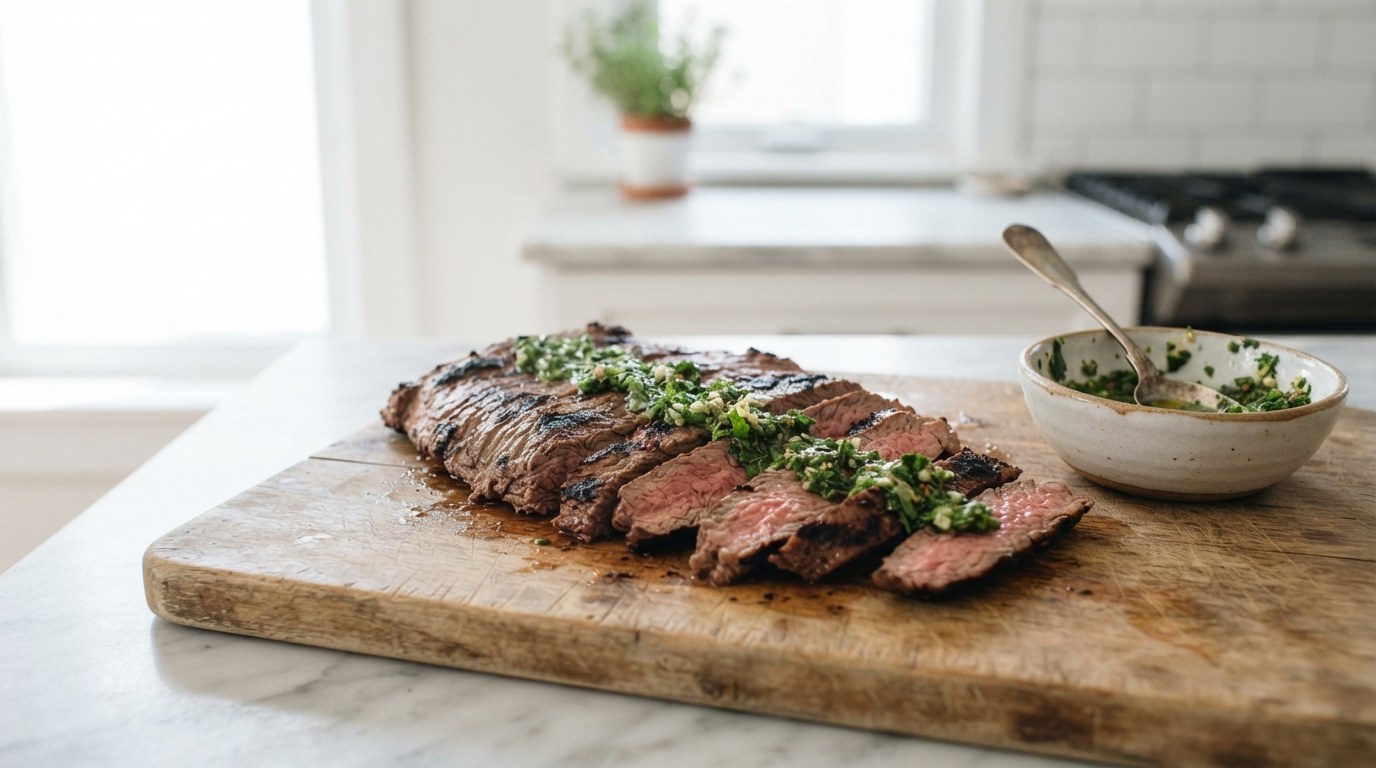
Skirt Steak with Chimichurri
Ingredients
Chimichurri
- 1 cup packed flat-leaf parsley, finely chopped
- 3 garlic cloves, minced
- 2 tbsp fresh oregano, finely chopped (or 2 tsp dried)
- 1/2 tsp red pepper flakes
- 1/4 cup red wine vinegar
- 1/2 cup extra-virgin olive oil
- 1/2 tsp kosher salt
Steak
- 1 1/2 lb skirt steak (680 g), silver membrane removed
- 1 1/2 tsp kosher salt
- 1/2 tsp freshly ground black pepper
- 1 tsp Espelette pepper or smoked paprika
- 1 tbsp grapeseed or other high-smoke-point oil
Instructions
- Make the chimichurri: stir the parsley, garlic, oregano, pepper flakes, vinegar, olive oil and salt together in a bowl. Let it sit for at least 20 minutes.
- Trim any silver membrane from the steak and cut it into 2 or 3 pieces that fit your pan. Season all over with the salt, pepper and Espelette. If you have time, salt it 40 minutes ahead and leave it uncovered in the fridge.
- Pat the steak very dry with paper towels just before cooking.
- Heat a heavy skillet over high heat until very hot, add the oil, then lay in the steak. Sear without moving it for 2 to 4 minutes, until deeply browned and it releases easily.
- Flip and cook 2 to 3 minutes more, until an instant-read thermometer reads 125 to 130°F for medium-rare (or 145°F for the USDA safe minimum).
- Rest the steak on a board for 5 minutes. Cut it into 4- to 5-inch sections, then slice each one thinly across the grain.
- Spoon chimichurri over the slices and serve the rest on the side.
Notes
Skirt Steak FAQs
The questions that come up most: how long to cook skirt steak, what temperature to pull it, how long to marinate it, how it compares to flank steak, and how to slice it.
How long do you cook skirt steak?
2 to 4 minutes per side in a very hot pan or on a hot grill. It is only about half an inch thick, so it reaches medium-rare in about 6 to 8 minutes total.
What temperature should skirt steak be cooked to?
Pull it at 125 to 130°F for medium-rare; it rises about 5°F while resting. The USDA safe minimum for beef steaks is 145°F with a 3-minute rest.
How long should you marinate skirt steak?
2 to 8 hours in the fridge for an acidic marinade like chimichurri or soy-honey-lime. Longer than that and the surface starts to turn mealy.
Is skirt steak the same as flank steak?
No. Skirt comes from the plate and is thinner, fattier and coarser-grained; flank comes from the belly and is thicker and leaner. They can swap in most recipes if you adjust the cooking time.
How do you cut skirt steak against the grain?
Cut the long strip into 4- to 5-inch sections first, then turn each section and slice it thinly across the visible lines of muscle fiber.
Why is my skirt steak tough?
It was most likely overcooked past medium, sliced with the grain, or the silver membrane was left on. Cook it hot and fast to medium-rare, rest it 5 minutes and slice across the grain.
What is chimichurri made of?
Fresh parsley, garlic and oregano with olive oil, red wine vinegar, salt and red pepper flakes. It comes from Argentina and Uruguay and is served with grilled meat.

About the Author
John Siracusa is the founder of Hell’s Kitchen Recipes. He focuses on technique-first, reproducible home cooking and researches recipes & kitchen equipment from published food science and professional chef methods since 2016.