Filet mignon is the most tender cut on the steer, and also the easiest to ruin. It comes from the tenderloin, a muscle that barely works, so it stays buttery and fine-grained but carries almost no fat to protect it from heat. That is the whole story of cooking it well: the meat is unforgiving, so you cook to a number, not to a clock.
You can grill it, broil it in the oven, sear it in a cast-iron skillet, or reverse-sear it, and each has its moment. The headline method is a pan-seared cast-iron filet with a butter baste for that steakhouse crust, and the guide covers the other three plus the internal temperatures that decide whether it lands medium-rare or grey.
What Is Filet Mignon?
Filet mignon is cut from the small end of the beef tenderloin, the long muscle (the psoas major) that runs along the inside of the spine and does very little work over the animal's life. Because it barely moves, it develops little connective tissue, which is why the tenderloin is the tenderest cut and commands the highest price. The trade-off is flavor and forgiveness: it is lean, so it has less of the marbling that keeps a ribeye juicy, and it slides past medium-rare into dry very quickly.
That leanness drives every decision here. A filet wants high heat for a fast crust and a thermometer to stop it on time, and it pairs well with fat you add yourself, a knob of butter, a pat of compound butter, or a pan sauce, to make up for the marbling it does not have.
What Temperature Should Filet Mignon Be?
Cook filet mignon to internal temperature, not to a timer, and pull it about 5°F before your target because the heat keeps climbing while it rests (carryover cooking). Medium-rare, a warm red center at 130 to 135°F, is the sweet spot for this cut, where it is still juicy and tender. The temperatures below follow the Certified Angus Beef doneness standard; note that the USDA safe minimum for whole beef is 145°F plus a three-minute rest.
| Doneness | Pull temperature | Center |
|---|---|---|
| Rare | 120–125°F (49–52°C) | Cool red |
| Medium-rare (best for filet) | 130–135°F (54–57°C) | Warm red |
| Medium | 140–145°F (60–63°C) | Warm pink |
| Medium-well | 150–155°F (66–68°C) | Slightly pink |
| Well-done | 160°F+ (71°C+) | No pink |
An instant-read thermometer in the thickest part is the only reliable gauge. The old "press it and compare to your thumb" trick is a rough guess at best and gets less accurate the thicker the steak, so it is worth the ten dollars for a probe.
How Long to Cook Filet Mignon on Each Side
Times are a starting point, not the finish line; thickness, starting temperature, and your equipment all shift them, so verify with the thermometer. The chart below gives total cook time by method and thickness, turning the steak about a minute before the halfway point.
| Doneness / Thickness | Gas Grill | Charcoal Grill | Skillet | Broil |
|---|---|---|---|---|
| Rare, 1" | 5–7 min | 5–7 min | 5–7 min | 7–10 min |
| Rare, 1½" | 8–10 min | 8–10 min | 8–10 min | 12–14 min |
| Med-Rare, 1" | 7–8 min | 7–8 min | 7–8 min | 9–12 min |
| Med-Rare, 1½" | 9–11 min | 9–11 min | 9–11 min | 14–16 min |
| Medium, 1" | 8–9 min | 8–9 min | 8–9 min | 10–13 min |
| Medium, 1½" | 10–12 min | 10–12 min | 10–12 min | 14–17 min |
| Med-Well, 1" | 9–10 min | 9–10 min | 9–10 min | 11–14 min |
| Med-Well, 1½" | 11–13 min | 11–13 min | 11–13 min | 15–18 min |
Pan-Seared Cast-Iron Filet Mignon
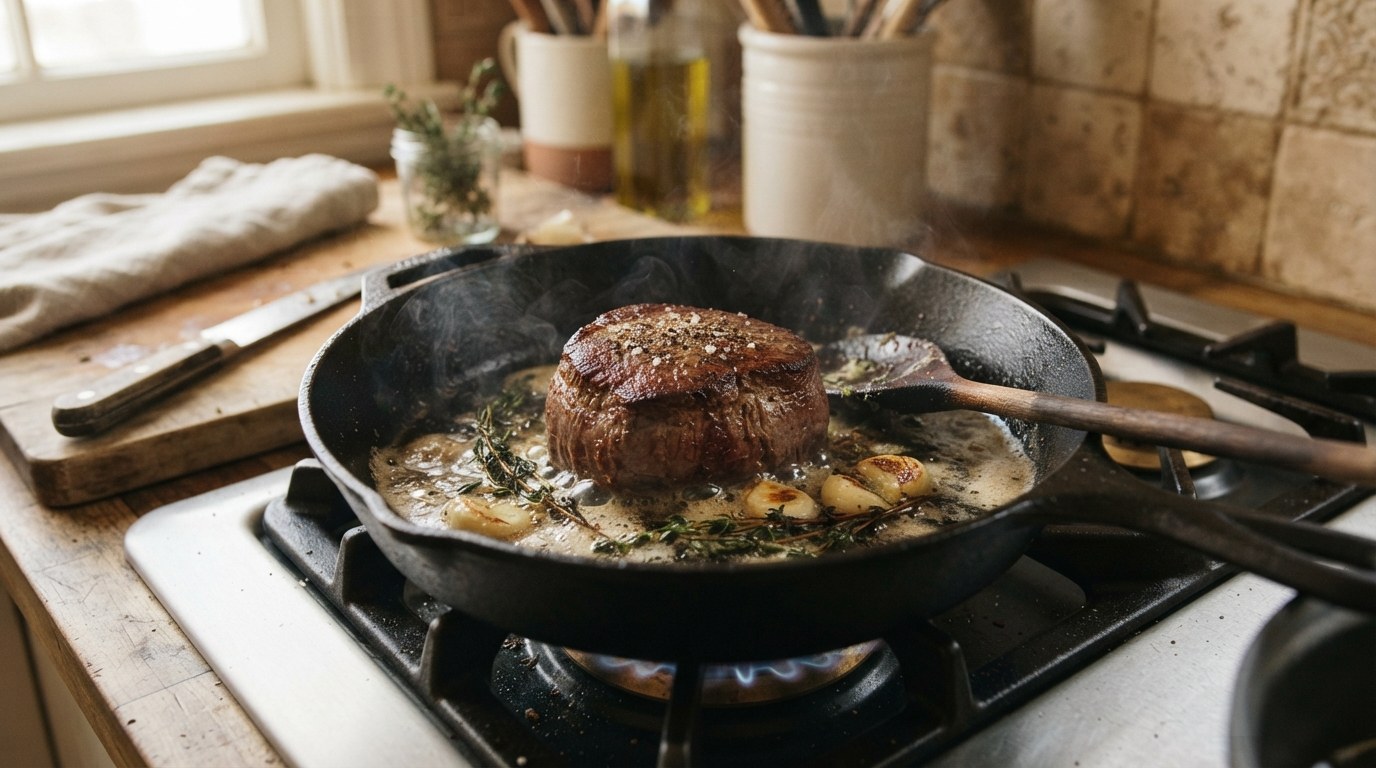
A cast-iron skillet is the home cook's best route to a steakhouse crust because it holds fierce heat and gives it straight back to the meat. The full recipe is in the card below; the technique that makes or breaks it is the sear. Get the crust right and the rest is just watching a number.
First, dry the surface. A brown crust is the Maillard reaction, which does not begin until the surface reaches about 284°F (140°C). A wet steak cannot get there, because water on the surface caps the temperature at 212°F (100°C) and simply steams the meat grey. Pat the filet bone-dry with paper towel, and salt it either right before it hits the pan or a good 40 minutes ahead so the surface dries out again.
Second, get the pan properly hot, then add the oil, not the other way around. A heavy cast-iron skillet should be smoking before a high-smoke-point oil (grapeseed or refined avocado) goes in. Lay the steak down and leave it alone; moving it interrupts the crust. Once both sides are deep brown, drop in butter, smashed garlic, and thyme, tilt the pan, and spoon the foaming butter over the top for the last minute. That baste browns and perfumes the surface. It does not, despite the popular claim, push moisture back in, and searing does not "seal in the juices" either, as any seared steak that keeps sizzling on the board will tell you.
For a thick filet (1½ inches or more), sear the outside to build the crust, then slide the skillet into a 400°F oven to bring the center up to temperature without scorching the surface.
How to Grill Filet Mignon

Grilling adds smoke and char that suit the filet's mild flavor. Take the steaks out of the fridge 30 to 40 minutes ahead so they cook evenly, and season them just before they go on.
- Bring the steaks to room temperature and pat them dry. Season with salt and pepper, or a steak seasoning you like.
- Heat the grill to high and clean the grates. Sear both sides directly over the hottest part for 1 to 2 minutes to set the crust.
- Move to medium heat (or ash-covered coals) and cook to the times in the chart above, turning about a minute before the halfway point.
- Pull the steaks at 125 to 130°F for medium-rare, using a thermometer at the thickest point.
- Rest 5 minutes, loosely tented with foil; carryover brings them up to about 130 to 135°F.
How to Cook Filet Mignon in the Oven
No grill or no time to babysit a skillet? The broiler is a ceiling burner that works like an upside-down grill, and it browns a filet fast.
- Position an oven rack so the steak surface sits 3 to 4 inches below the broiler element, and preheat the broiler for 10 minutes.
- Pat the steaks dry, season, and set them on a broiler pan or a wire rack over a sheet pan.
- Broil 9 to 12 minutes for a 1-inch steak, 14 to 16 for a 1½-inch, turning halfway, until a thermometer reads 125 to 130°F for medium-rare.
- Rest 5 minutes under loosely tented foil before slicing; the center finishes at about 130 to 135°F.
How to Reverse-Sear Filet Mignon
Reverse-searing flips the usual order: you warm the steak gently in a low oven first, then sear it hard at the end. It is the most reliable way to cook a thick filet edge-to-edge evenly, because the slow start keeps the inside from overcooking under the crust.
- Heat the oven to 275°F and set the steaks on a wire rack over a baking sheet.
- Cook until the internal temperature is about 10°F below your target, roughly 20 to 30 minutes for a 1½-inch filet.
- Heat a cast-iron skillet over high heat until very hot. Sear the steaks about a minute per side in a little oil or butter to build the crust.
- Because the steak warmed slowly, it needs little to no rest; serve it hot off the sear.
Why Resting Matters (and What It Really Does)
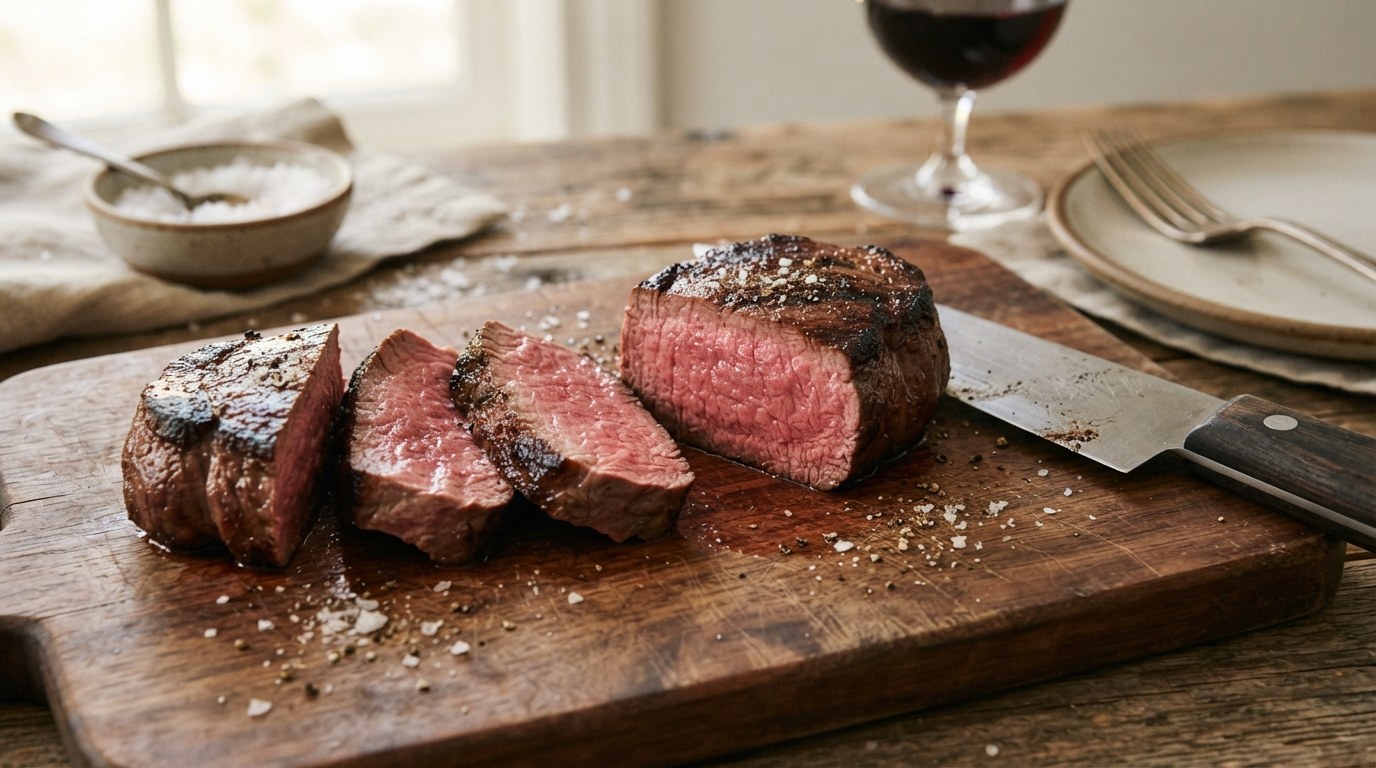
Rest a filet 5 minutes before you cut it and it holds far more of its juice on the plate. The reason is not that the muscle "relaxes" and reabsorbs liquid; heat has already set the proteins, and that is not reversible. What rest actually does is let the juices, thinned to almost water by cooking heat, cool and thicken slightly so they stay put when you slice instead of flooding the board. A steak cut two minutes after cooking loses noticeably more moisture than one cut at ten.
One more move at the board: slice across the grain. Cutting perpendicular to the muscle fibers shortens them, so each bite takes a fraction of the force to chew and eats more tender, which matters most on thicker filets. Then dress it, because a lean cut earns its richness from what you add, a compound butter, a red wine pan sauce, or a spoon of the garlic-thyme butter from the pan.
For more steak method, see our pan-seared cast-iron ribeye and Gordon Ramsay's New York strip steak, or browse the full cooking techniques collection.
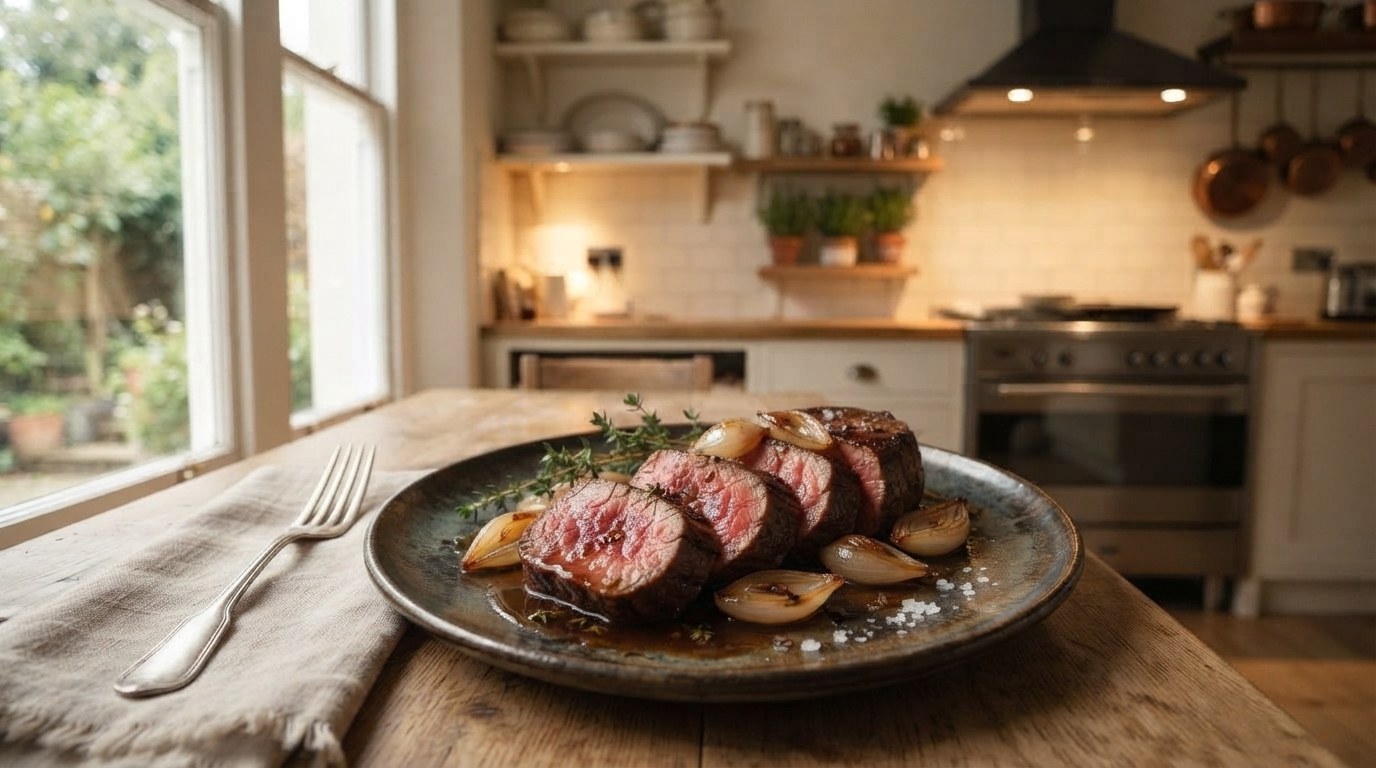
Pan-Seared Cast-Iron Filet Mignon
Ingredients
- 2 filet mignon steaks (about 1½ inches thick, 6–8 oz each)
- 1 Tbsp grapeseed or refined avocado oil
- 2 Tbsp unsalted butter
- 2 cloves garlic, smashed
- 2 sprigs fresh thyme
- Kosher salt and freshly ground black pepper
Instructions
- Take the steaks out of the fridge 30 to 40 minutes ahead. Pat them completely dry and season generously with salt and pepper on all sides.
- Heat a cast-iron skillet over high heat until it just starts to smoke, then add the oil and swirl to coat.
- Lay the steaks in the pan and do not move them. Sear 2 to 3 minutes until a deep brown crust forms, then flip and sear the other side.
- Reduce the heat to medium. Add the butter, smashed garlic, and thyme, tilt the pan, and spoon the foaming butter over the steaks for about a minute.
- Cook to an internal temperature of 125 to 130°F for medium-rare. For steaks thicker than 1½ inches, finish in a 400°F oven to reach temperature without over-browning.
- Rest the steaks 5 minutes, loosely tented with foil (they carry over to 130 to 135°F), then slice across the grain and serve.
Notes
Filet Mignon FAQs
The questions that come up most: how long to cook filet mignon, what temperature it should reach for medium-rare, the best method, and why this cut dries out so fast.
How long do you cook filet mignon on each side?
For a 1-inch steak, about 3 to 4 minutes per side in a hot skillet or on the grill for medium-rare, then rest. Go by temperature rather than the clock and pull it at 125 to 130°F, since thickness and heat change the timing.
What is the best temperature for medium-rare filet mignon?
A warm red center at 130 to 135°F after resting. Pull the steak at about 125 to 130°F and let carryover finish it. The USDA safe minimum for whole beef is 145°F.
What is the best way to cook filet mignon?
For most home cooks, a cast-iron sear with a butter baste gives the best crust with the least fuss. For a thick filet, reverse-searing (low oven, then a hard sear) cooks it most evenly edge to edge.
Why is my filet mignon tough or dry?
It is almost always overcooked. Filet is very lean, so past medium it loses the little moisture it has and turns dry. Use a thermometer, pull it at 125 to 130°F for medium-rare, and rest it before slicing.
Do you need to sear filet mignon before baking it?
For a normal filet, searing first builds the crust and the oven or broiler finishes the center. For a thick steak, reverse-searing (oven first, sear last) gives a more even interior. Either order works; the sear is what makes the crust.
Should you cook filet mignon in butter or oil?
Start in oil with a high smoke point, like grapeseed or refined avocado, so the pan can get hot enough to brown without the fat burning. Add butter near the end for flavor and basting, once the fierce searing heat has passed.

About the Author
John Siracusa is the founder of Hell’s Kitchen Recipes. He focuses on technique-first, reproducible home cooking and researches recipes & kitchen equipment from published food science and professional chef methods since 2016.