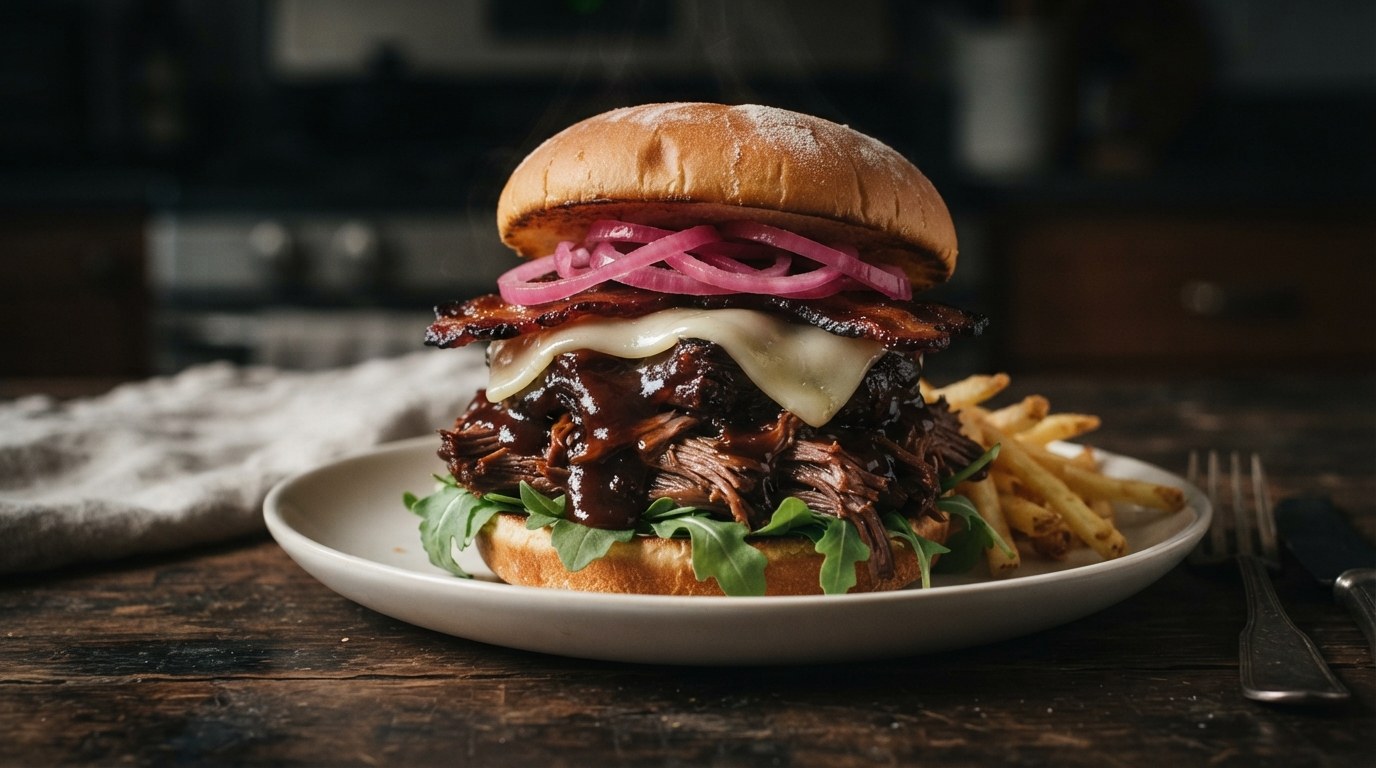
The Gordon Ramsay 24 Hour Burger skips the ground-beef patty and piles braised short rib on the bun instead, with red-eye BBQ sauce, white cheddar, brown sugar bacon, arugula in a cold brew vinaigrette and pickled shallots. This is that burger from the Gordon Ramsay Burger menu, made for a home kitchen on a two-day schedule: braise the short rib on day one, let it sit in the fridge overnight, then shred it, sauce it and build the burger on day two. Most of those hours are hands-off, and each one changes the meat in a way you can see.
What's on the Gordon Ramsay 24 Hour Burger?
The 24 Hour Burger is braised short rib with red eye BBQ sauce, white cheddar cheese, brown sugar bacon, arugula, cold brew vinaigrette and pickled shallots, listed that way under Specialties on the Gordon Ramsay Burger Las Vegas menu and served with fries. The menu names the braised short rib as the meat and lists no separate patty, so this home version builds the burger on shredded short rib. The restaurant doesn't say where the name comes from. At home it fits the method: the braise and the overnight chill fill most of a day before anything goes on a bun.
Every other layer has a job against all that rich beef. The coffee in the sauce adds a roasted bitterness, the pickled shallots and the vinaigrette bring acid, the arugula brings pepper, and the bacon brings crunch and a little sweetness. If you want the short rib as a plated dinner instead, with a red wine sauce and a potato cake, make our Gordon Ramsay braised short ribs; this page is about turning the same cut into a burger.
The 24 Hours of a Short Rib Burger, Step by Step
A short rib burger made this way runs on a simple clock: about four hours of cooking on day one, a night in the fridge, and under an hour of finishing on day two. The table lays out what happens at each stage and the temperature that matters there.
| When | What you do | Temperature that matters | What changes in the meat |
|---|---|---|---|
| Day 1, first 20 minutes | Salt the short ribs, pat dry, sear hard on every side | Pan surface above 284°F | Maillard browning builds the crust and the flavor of the whole braise |
| Day 1, next 2 1/2 to 3 1/2 hours | Braise, covered, in a 325°F oven | Liquid stays under 212°F; meat passes 154°F | Collagen turns into gelatin and the meat goes fork-tender |
| Day 1, within 2 hours of cooking | Move meat and liquid into a shallow dish, refrigerate | 40°F or below | The braise leaves the bacterial danger zone quickly |
| Overnight | Leave it alone | 40°F or below | Fat sets into a solid layer, the liquid sets into jelly, the meat firms up |
| Day 2, first 20 minutes | Lift off the fat, shred the meat, reduce the red-eye sauce | Sauce brought to a rolling boil | The jelly melts back into a glossy, clingy sauce |
| Day 2, last 25 minutes | Reheat the meat in the sauce, bake the bacon, build | Meat to 165°F; bacon in a 375°F oven | Sugar on the bacon caramelizes; the cheese melts over the hot meat |
Read down the last column and most of the flavor is set on day one, while day two is mostly about texture and safety. The sear and the sauce are the steps where a few minutes of attention matter most.
Braising Short Rib for the 24 Hour Burger
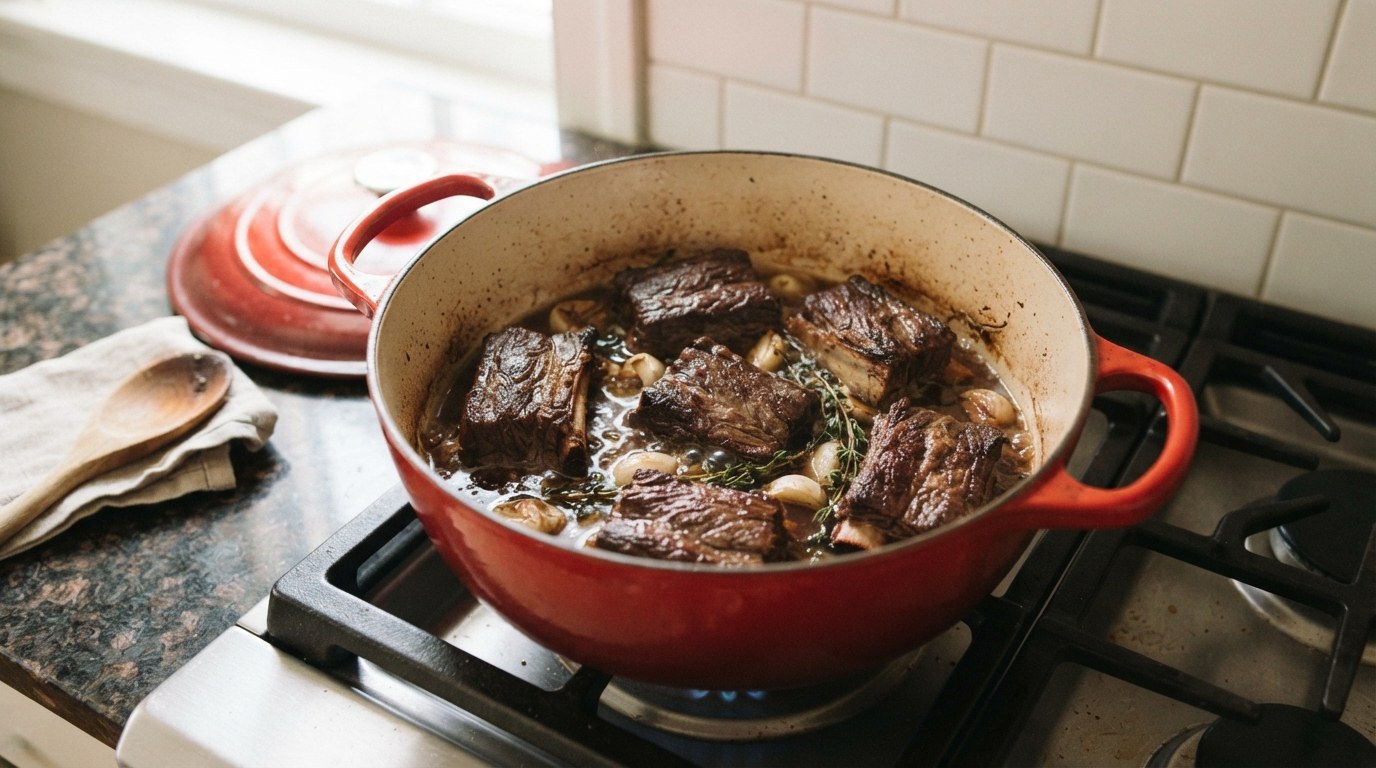
Braise the short rib covered in a 325°F oven for 2 1/2 to 3 1/2 hours, until a fork slides in and twists with almost no resistance. Short rib suits this better than almost any other cut. The beef industry's Beef. It's What's For Dinner guide describes chuck short ribs as known for their richness and meatiness, and moist and tender when slow-cooked. Both come from the same thing: plenty of marbling and plenty of connective tissue.
That connective tissue is collagen, and time in wet heat is the only thing that softens it. Iowa State University Extension explains that collagen cooked slowly with moist heat becomes gelatin, and counts anything at or below 325°F as low-temperature cooking for these cuts. The first hour is the discouraging part: around 136°F the collagen tightens and squeezes moisture out, so the meat actually gets firmer. Once the inside climbs past 154°F and stays there, the collagen starts converting to gelatin, and that conversion takes hours, which is why turning the oven up doesn't speed it along. The lid keeps the liquid from boiling hard, since water can't get hotter than 212°F, so the meat sits in a steady, gentle bath the whole time.
Get a deep crust on the ribs first. Salt them at least 40 minutes ahead if you can (salt is the one seasoning that travels into meat), pat them dry, heat the pot, then add grapeseed oil and sear in batches until every side is dark brown. The Maillard reaction starts around 284°F and needs a dry surface. The sear is there for flavor and doesn't seal anything in; the browned bits on the pot floor dissolve into the braising liquid and flavor the sauce you make on day two. A heavy enameled pot holds that low, steady heat for hours and goes straight from the stovetop to the oven.
Lodge
Lodge 6-Quart Enameled Cast Iron Dutch Oven, Island Spice Red
- Heavy enameled cast iron holds a steady, gentle simmer for long braises and chilli
- Enamel interior will not rust and needs no seasoning
- Stovetop and oven safe to 500°F
Don't pull the ribs early. The Beef Checkoff's braised short rib recipe simmers smaller pieces 2 to 2 1/2 hours until fork-tender, and larger pieces need longer. If a fork meets resistance, give it another 30 minutes and check again; underdone short rib shreds into chewy strings, not soft strands.
The Overnight Chill: What the Fridge Adds to the 24 Hour Burger
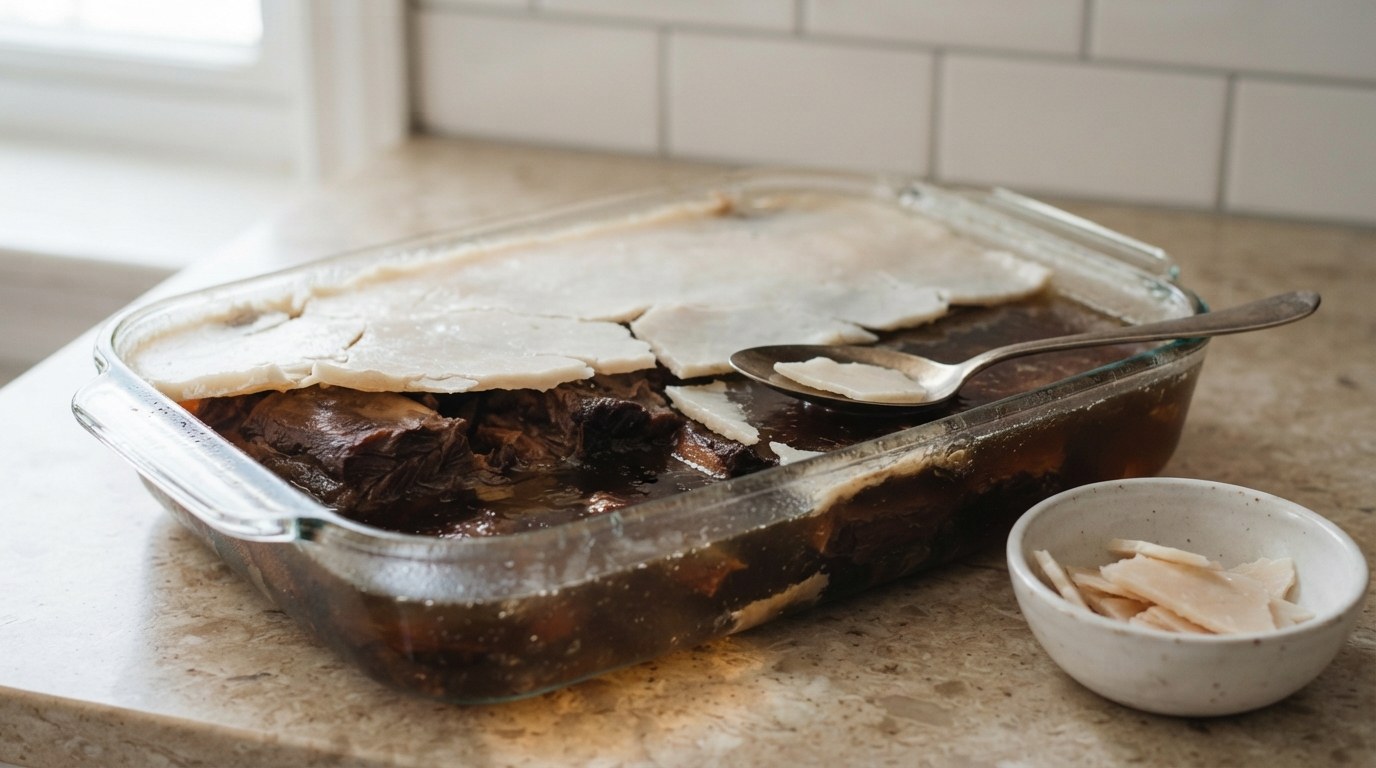
The overnight chill makes the 24 Hour Burger easier and cleaner to finish, and it lets you work in two short sessions instead of one long one. Three things happen in the fridge. The rendered fat rises and hardens into a pale layer you can lift off in a few pieces, which is far easier than skimming hot liquid. The braising liquid sets into a soft jelly, which is the gelatin you cooked out of the collagen, and a firm set tells you the braise went long enough. And the meat firms up, so it pulls into neat strands the next day instead of turning to mush.
Cool it safely, because a big pot of hot braise holds heat for hours. Nebraska Extension advises refrigerating cooked food within 2 hours and splitting large batches into shallow containers no more than 3 inches deep, loosely covered until cold. A glass baking dish is ideal. The USDA's leftovers guidance gives the same 2-hour limit and a fridge at 40°F or below. The braise keeps 3 to 4 days, so day two can just as easily be day three.
You'll often hear that braises taste better the next day. The part you can count on is practical: the fat comes off in one piece, the meat shreds cleanly, and the sauce starts out rich and full-bodied.
Red-Eye BBQ Sauce and the Day-Two Reheat
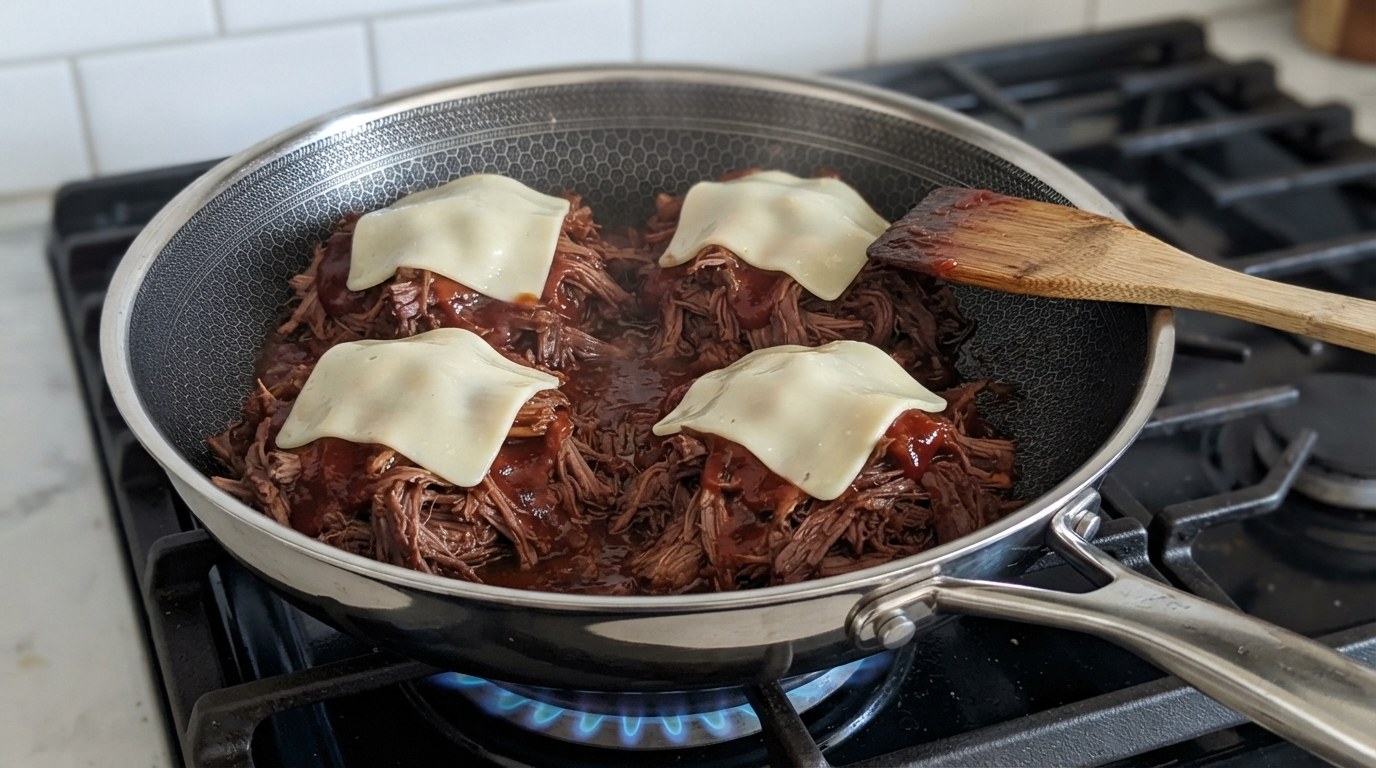
Red-eye BBQ sauce is barbecue sauce loosened with strong coffee; the name comes from Southern red-eye gravy, which is made with coffee and ham drippings. For this burger, make it with the jellied braising liquid rather than stock. Scrape a cup of the jelly from under the fat, simmer it with the barbecue sauce, strong coffee and a splash of cider vinegar, and let it reduce by about a third. The gelatin from yesterday's braise gives the sauce body and shine without any cornstarch, and nothing from the pot goes to waste.
Bring the sauce to a full boil, then lower it, add the shredded meat and let it simmer until the meat is steaming hot, 165°F in the thickest clump. Both steps come straight from the Nebraska Extension guidance: sauces to a rolling boil, reheated leftovers to 165°F. The short rib itself was safe long before that; whole cuts of beef only need 145°F and a 3-minute rest on the USDA safe temperature chart, and braising takes it far past that. The 165°F is for the reheat. Shred along the grain with two forks while the meat is still cold, and pull out any soft fat or gristle; elastin never breaks down, however long the braise.
Divide the meat into four loose mounds in the pan, lay a slice of white cheddar on each and cover for a minute so the steam melts it, then lift each mound onto a bun. Our guide on how to melt cheese on a burger covers the lid trick and the crispy on-the-pan version if you want lacy edges instead.
Brown Sugar Bacon, Cold Brew Vinaigrette and Pickled Shallots
The three toppings on the 24 Hour Burger take 10 minutes of hands-on time, and two of them are best made the night before. Start the pickled shallots and the cold brew on day one; bake the bacon on day two while the sauce reduces.
Brown sugar bacon bakes on a rack over a foil-lined sheet at 375°F for 18 to 22 minutes. The fat renders out first, then the sugar melts into a glaze and caramelizes from about 320°F. The oven air is hotter than the point where sugar starts to burn, around 356°F, so once the glaze stops bubbling it can go from lacquered to bitter in a couple of minutes. Check at 15 minutes and pull it when it's deep amber. Keep a tablespoon of the rendered fat to toast the buns.
Cold brew vinaigrette starts with cold brew concentrate. The National Coffee Association describes cold brew as coffee made with room-temperature or cooler water, with steeping times that can run 12 to 18 hours or more overnight, and says it gives a smoother, less bitter cup than hot brewing. That mellow coffee flavor works raw in a dressing, where hot-brewed coffee would taste sharp. Whisk it with balsamic vinegar, Dijon mustard, honey and olive oil; the mustard helps the oil and vinegar emulsify and stay together long enough to dress the arugula. For the hot-brew side of the sauce, our guide to coffee brewing temperature explains the 195°F to 205°F range for a strong hot brew.
Pickled shallots are thin rings covered with a hot vinegar, sugar and salt brine. They're ready in 30 minutes and better after a night in the fridge. The Gordon Ramsay truffle burger uses the same quick pickle, and that page explains how the brine softens the raw bite.
Short Rib Burger Variations and Swaps
The easiest swap is the cut. Boneless chuck roast cut into 3-inch chunks braises to the same soft, shreddable texture for less money; use the same time and temperature. Bone-in short ribs work too; buy about 4 pounds, since the bones are heavy, and slide them out after braising (the bones add extra gelatin to the liquid).
Some cooks like a short rib burger with a patty underneath, and it makes a bigger meal. Form 4-ounce patties about 1/2 inch thick, sear them hard, and cook them to 160°F in the center, the USDA minimum for ground beef, before piling the sauced short rib on top. Check with a thermometer; ground beef can turn brown inside before it's safe. For the patty itself, the Celebration burger page covers when to salt and why to dimple.
A slow cooker can handle the braise: sear the meat first, then cook it on LOW until fork-tender. Don't use it for the day-two reheat. Nebraska Extension advises against reheating in slow cookers because food spends too long warming through the danger zone; reheat in a skillet instead.
What to Serve With the 24 Hour Burger
Serve the 24 Hour Burger the way the restaurant does, with fries, or with something crisp and cold to cut the richness. Our Gordon Ramsay coleslaw is a good match, and you can spoon a little extra red-eye sauce on the side for dipping. For your next burger night, try the Luxe Royale burger with wagyu and foie gras, the classic Gordon Ramsay burger, or browse all of Gordon Ramsay's signature burgers. Braise the short rib on day one, chill it overnight, reheat it in its own jelly on day two, and the Gordon Ramsay 24 Hour Burger comes out of a home kitchen tasting like it took all day, because it did.
Gordon Ramsay 24 Hour Burger
Ingredients
Braised short rib (day 1)
- 2 1/2 lb boneless beef short ribs (1.1 kg), or about 4 lb bone-in
- 2 tsp kosher salt
- 1 tsp freshly ground black pepper
- 1 tbsp grapeseed oil
- 1 yellow onion, quartered
- 4 garlic cloves, smashed
- 1 tbsp tomato paste
- 2 cups low-sodium beef stock
- 1 cup water
- 3 thyme sprigs and 1 bay leaf
Pickled shallots (day 1)
- 2 shallots, sliced into thin rings
- 1/2 cup apple cider vinegar
- 1/2 cup water
- 1 tbsp sugar
- 1 tsp kosher salt
Red-eye BBQ sauce (day 2)
- 3/4 cup smoky barbecue sauce
- 1/2 cup strong brewed coffee, or 2 shots espresso
- 1 cup jellied braising liquid from the chilled braise, fat removed
- 1 tsp apple cider vinegar
Cold brew vinaigrette
- 2 tbsp cold brew coffee concentrate
- 1 tbsp balsamic vinegar
- 1 tsp Dijon mustard
- 1 tsp honey
- 1/4 cup extra-virgin olive oil
- Salt and black pepper
To finish (day 2)
- 8 slices thick-cut bacon
- 2 tbsp packed light brown sugar
- 4 slices aged white cheddar (about 4 oz / 115 g)
- 4 brioche burger buns, split
- 2 cups baby arugula
- Fries, to serve
Instructions
- Day 1: Season the short ribs all over with the salt and pepper, ideally 40 minutes ahead, then pat dry. Heat the oven to 325°F.
- Heat a large Dutch oven over medium-high until hot, then add the grapeseed oil. Sear the short ribs in batches, without crowding, until deep brown on every side, 8 to 10 minutes per batch. Move them to a plate.
- Lower the heat to medium, add the onion and garlic and cook 3 minutes. Stir in the tomato paste for 1 minute, then pour in the stock and water and scrape up the browned bits. Return the short ribs with the thyme and bay leaf; the liquid should come about two-thirds of the way up the meat.
- Bring to a simmer, cover and braise in the oven for 2 1/2 to 3 1/2 hours, until a fork slides into the thickest piece with almost no resistance.
- Meanwhile, make the pickled shallots: bring the vinegar, water, sugar and salt to a boil, pour over the shallot rings in a jar, cool, cover and refrigerate. If you are making your own cold brew, start it now.
- Discard the onion, herbs and any loose bones. Transfer the meat and all the liquid to a shallow dish no more than 3 inches deep, cool briefly, cover loosely and refrigerate within 2 hours of cooking. Chill overnight.
- Day 2: Lift off and discard the solid layer of fat. Take the meat out of the jelly and shred it along the grain with two forks, pulling out any soft fat or gristle.
- Heat the oven to 375°F. Lay the bacon on a rack set over a foil-lined baking sheet, sprinkle with the brown sugar and bake 18 to 22 minutes, checking from 15 minutes, until deep amber and crisp. Save 1 tablespoon of the rendered fat.
- In a large skillet, combine the barbecue sauce, coffee, 1 cup of the jellied braising liquid and the vinegar. Bring to a rolling boil, then simmer 8 to 10 minutes until reduced by about a third and glossy. Add the shredded meat and simmer, turning, until it reaches 165°F.
- Whisk the cold brew, balsamic, Dijon and honey, then whisk in the olive oil and season. Toss the arugula with just enough to coat.
- Divide the meat into four mounds in the skillet, top each with cheddar, cover for 1 minute to melt. Toast the buns cut side down in the saved bacon fat over medium heat until golden.
- Build: dressed arugula on the bottom bun, a mound of cheesy short rib, two pieces of bacon, a few pickled shallots and the top bun. Serve with fries and extra sauce.
Notes
24 Hour Burger FAQs
The questions that come up most: what is on the 24 Hour Burger, why it is called that, what red-eye BBQ sauce is, what a short rib burger is, how long the braised short rib keeps, whether it needs reheating to 165°F, and whether a slow cooker works.
What is on the Gordon Ramsay 24 Hour Burger?
Braised short rib, red eye BBQ sauce, white cheddar cheese, brown sugar bacon, arugula, cold brew vinaigrette and pickled shallots on a bun, served with fries. That is how it is listed under Specialties on the Gordon Ramsay Burger Las Vegas menu.
Why is it called the 24 Hour Burger?
The restaurant does not explain the name. At home it fits the method: the short rib braises for about 3 hours on day one, chills overnight so the fat sets and the liquid turns to jelly, and gets shredded and reheated in the red-eye sauce on day two.
What is red-eye BBQ sauce?
Barbecue sauce loosened with strong brewed coffee or espresso. The coffee adds a roasted bitterness that balances the sweet sauce and the rich beef. The name comes from Southern red-eye gravy, made with coffee and ham drippings.
What is a short rib burger?
It usually means one of two things: a patty ground from beef short rib, which is a rich, fatty grind, or braised short rib shredded and piled on a bun. The 24 Hour Burger is the braised kind.
How long does braised short rib keep in the fridge?
Three to 4 days. Refrigerate it within 2 hours of cooking in a shallow container no more than 3 inches deep, and keep the fridge at 40°F or below. The braise also freezes for 2 to 6 months.
Do you have to reheat braised short rib to 165°F?
Yes. Reheat leftovers to 165°F in the thickest part, and bring the sauce to a rolling boil first. Braising already took the beef well past the 145°F safe point for whole cuts; the 165°F is for the reheat after a night in the fridge.
Can you braise the short rib in a slow cooker?
Yes. Sear it first for flavor, then cook it on LOW until fork-tender. Reheat it the next day in a skillet with the sauce, not in the slow cooker, which warms food too slowly for a safe reheat.

About the Author
John Siracusa is the founder of Hell’s Kitchen Recipes. He focuses on technique-first, reproducible home cooking and researches recipes & kitchen equipment from published food science and professional chef methods since 2016.