How long to grill burgers comes down to thickness and heat: a 3/4-inch patty over direct high heat takes about 8 to 10 minutes in total, 4 to 5 minutes a side, to reach the 160°F the USDA sets for ground beef. The Gordon Ramsay Backyard Burger is the right burger to learn it on. It's the plain one on the Gordon Ramsay Burger menu, American cheese, lettuce, tomato, red onion and pickles, so there's nothing to hide a pale, flare-up-scorched or undercooked patty. This version takes the name at its word and cooks it outside on the grill, with a hot side for the crust and a cool side to finish.
What's on the Gordon Ramsay Backyard Burger?
The Backyard Burger is the classic cheeseburger on the Gordon Ramsay Burger menus: a beef patty with American cheese, butter lettuce, tomato, pickles and red onion. That's the exact list on the Las Vegas menu. The other locations change one or two small things. The Flamingo in Las Vegas uses pickled red onions, and the Chicago menu and Boston list bibb lettuce and bread-and-butter pickles. Vancouver adds a house "fancy sauce" it doesn't describe, so ketchup, mustard or mayo are the honest stand-ins at home.
Butter lettuce and bibb are the same soft, sweet head lettuce, and either pickle works, so buy what you like. American cheese is the right call here because it melts smooth over a hot patty without turning greasy; the Ultimate Cheeseburger page explains why. Everything else on this page is about the grill.
Set Up a Two-Zone Fire for Grilling Burgers
A two-zone fire gives you a hot side to sear the burgers and a cooler side to finish them or park them during a flare-up. On a charcoal grill, pile the lit coals on one half of the charcoal grate and leave the other half empty. On a gas grill, run one or two burners on high and leave the one next to them off. Weber files burgers under direct heat, the food straight over the fire, and the cool side is your safety net.
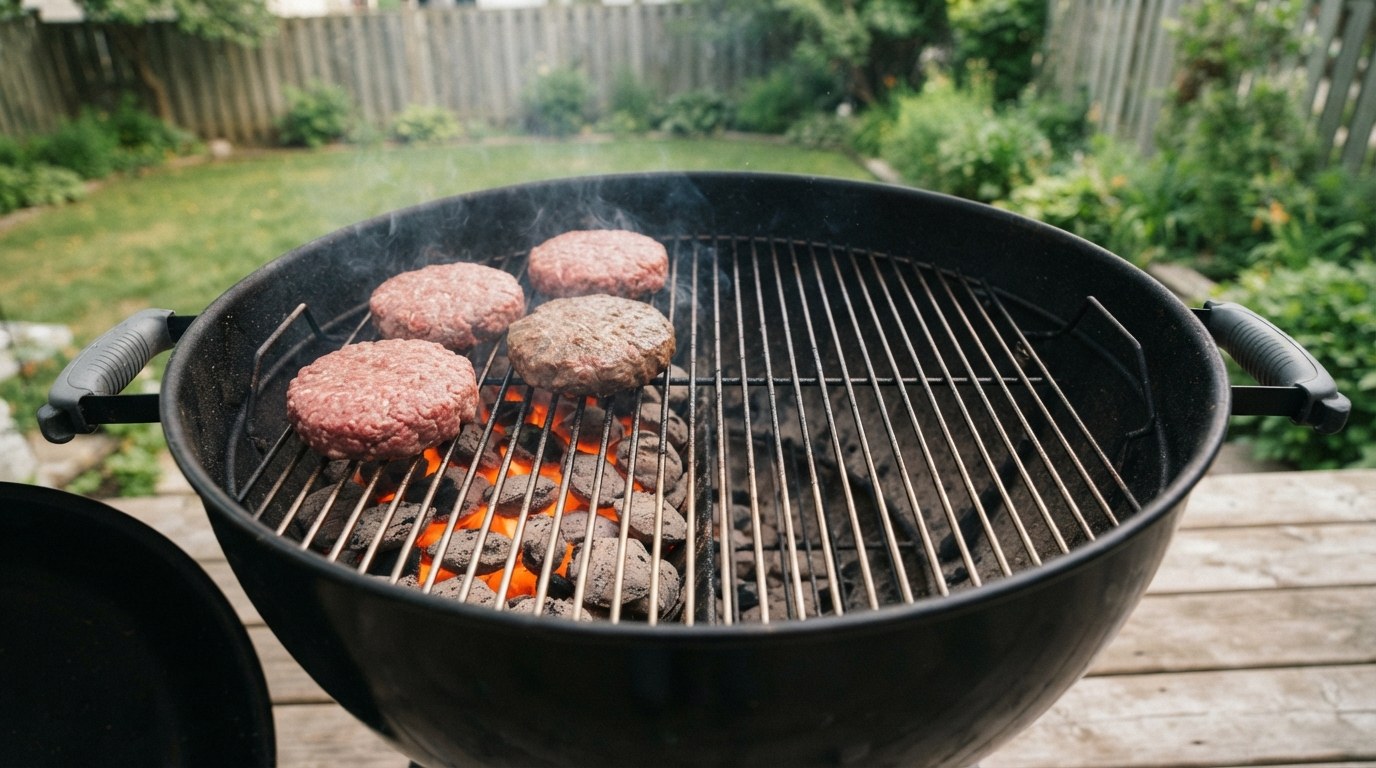
The hot side browns the patty because a bed of glowing coals throws intense radiant heat straight at the meat. Once the surface dries, it climbs past the roughly 284°F where Maillard browning starts, and those dark grill stripes are browning at its fastest, where the metal bars touch. A wet patty can't brown at all until that water is gone, because water holds the surface at 212°F, so pat the patties dry before they go on. Searing doesn't seal in juices, by the way. The crust is flavor, and the juiciness comes from fat and from not overcooking.
Aim for 450°F to 500°F on the lid thermometer for the hot side. You can check a charcoal fire the old way too: hold your palm a few inches above the grate, and if you have to pull it away within 2 or 3 seconds, it's hot enough to sear burgers. The cool side runs a couple of hundred degrees lower, which is where a thick patty finishes cooking through without the outside burning.
How Long to Grill Burgers on Each Side
Grill 3/4-inch burgers over direct high heat for about 4 to 5 minutes a side, 8 to 10 minutes in all, and take them off at 160°F. Thinner patties need less, thicker ones need a finish on the cool side, and a gas grill at 400°F runs a minute or two longer per side. Treat every time in the chart below as a starting point. The thermometer makes the call.
| Patty | Grill heat | Time over direct heat | Then | Take off at |
|---|---|---|---|---|
| 1/2 inch, about 4 oz | Direct high, 450°F to 500°F | About 3 minutes per side | Cheese on for the last minute | 160°F |
| 3/4 inch, about 6 oz (this recipe) | Direct high, 450°F to 500°F | 4 to 5 minutes per side | Cool side, lid down, 1 minute to melt the cheese | 160°F |
| 3/4 inch on a gas grill at 400°F | Direct medium-high, lid down | 5 to 6 minutes per side | Cheese on for the last minute | 160°F |
| 1 inch, about 8 oz | Direct high to sear, then cool side | 3 minutes per side for color | Cool side, lid down, 5 to 8 minutes more | 160°F |
| Frozen 1/3 lb patties | Direct medium-high | Longer than fresh; flip often | Cool side if the outside darkens first | 160°F |
Every row ends at the same number because the thermometer, not the clock, decides when a grilled burger is done. The times shift with the wind, the fuel, how cold the patties are and how often the lid opens, which is why two people with the same recipe get different burgers.
Preheat, Clean and Oil the Grates So Burgers Release
Burgers stick to a grate that is cold, dirty or dry, and the fix is to preheat it, scrub it while it's hot and wipe it with oil right before the patties go on. Weber recommends preheating for 15 minutes and brushing the grates after the preheat. Heat chars the last cook's residue so the brush knocks it off, and a properly hot grate starts browning the meat the second it lands. OSU Extension's burger grilling segment opens with the same first ingredient: a hot, clean grill.
Raw meat proteins bond to hot metal on contact, and that bond only lets go once the surface has dried and browned into a crust. That's why a patty that tears at 1 minute releases cleanly at 3 or 4. Fold a paper towel, dip it in a little high-smoke-point oil such as grapeseed or canola, and wipe it over the hot bars with tongs. Brush the patties with oil too. Then leave them alone until they lift without a fight. Gordon's pan rule carries straight over to the grill: hot surface first, then oil, then the meat.
Why Grilled Burgers Flare Up, and What to Do
Flare-ups happen when fat rendering out of the burger drips onto hot coals or a burner, vaporizes and catches fire. An 80/20 patty loses a fair amount of fat as it cooks, so some flame is normal. The problem is a flare-up that keeps burning under the meat. The National Cancer Institute's fact sheet on cooked meats explains that fat and juices dripping onto the fire cause flames and smoke, and that smoke deposits PAHs on the surface of the meat, along with soot and a bitter, burnt taste. Anything past about 356°F on the surface is burning, not browning.
When the flames jump, move the burgers to the cool side and wait a few seconds for the fat to burn off, then slide them back. Closing the lid cuts the oxygen and calms a flare-up on charcoal. Don't squirt water on it. Burning fat is a grease fire, and water hitting it flashes into steam at 212°F and throws burning fat around; the NFPA is blunt about it for kitchen grease fires: never throw water on the fire. Two habits prevent most flare-ups: don't press the patties with the spatula, which squeezes out fat and juice straight onto the coals, and scrape out the grease tray and catch pan before you light up.
Lid On or Lid Off When Grilling Burgers?
Grill burgers with the lid off for thin patties you're watching over the hot side, and with the lid on for thick patties and for melting cheese. With the lid up, all the heat comes from below and the top of the patty stays cool, so you're searing one face at a time. With the lid down, hot air circulates around the whole patty by convection and the grill works like an oven, cooking the top as well and saving a few minutes.
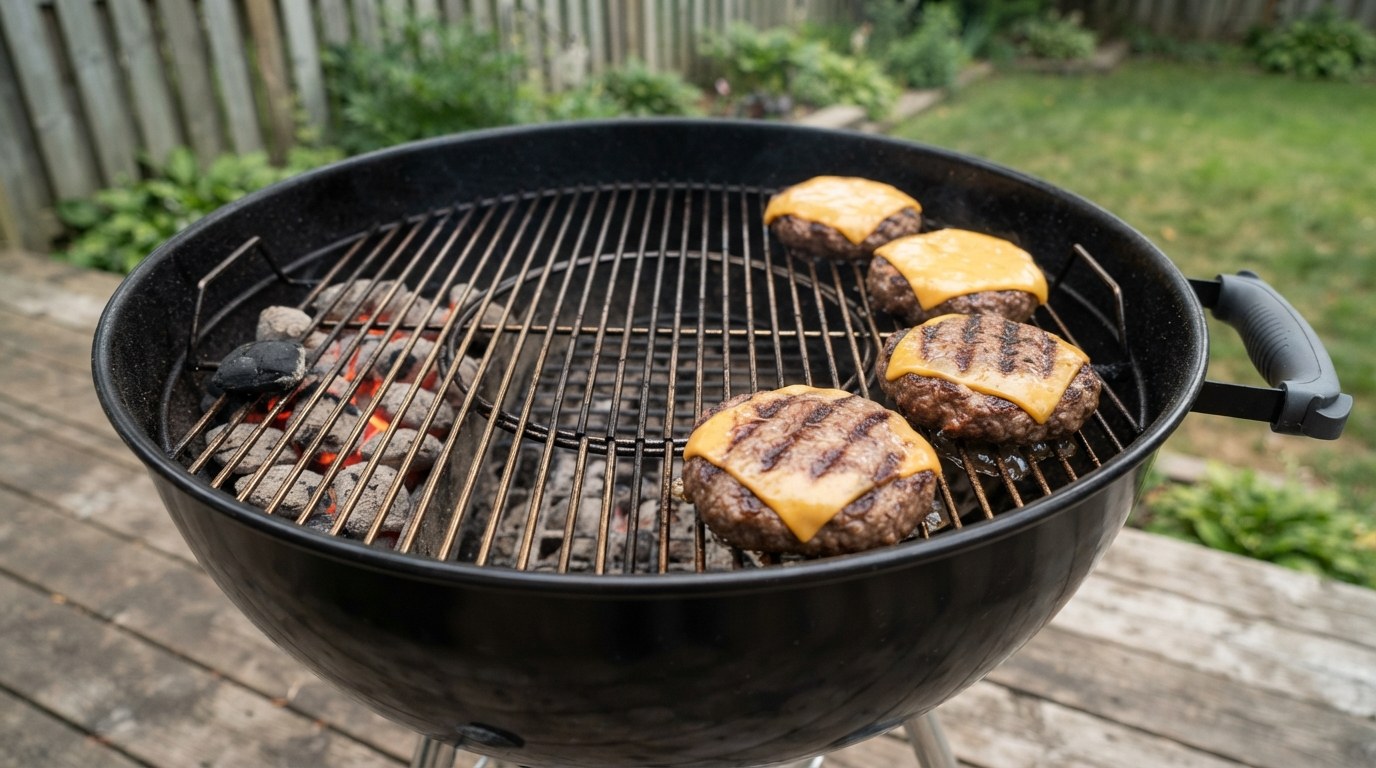
The lid also traps smoke, and smoke is flavor. Wood lignin starts breaking down into smoke flavor from about 338°F. Charcoal has already had most of that burned out of it, so briquettes alone give a fairly mild taste. For a smokier Backyard Burger, set a small chunk of hickory or apple wood on the coals, or a foil packet of wood chips over a gas burner, and cook with the lid down. Burgers are only on for 10 minutes, so it's a light smoke, not a smokehouse.
Grilling Burgers to 160°F: Probe, Flip and Rest
A grilled burger is done when an instant-read thermometer pushed in from the side reaches 160°F in the center, the USDA's safe minimum for ground beef on the FSIS temperature chart. Grinding mixes whatever was on the surface of the beef all through the patty, so the middle has to get as hot as the outside, and the color inside doesn't tell you reliably whether it has. Slide the probe in through the edge so the tip sits in the thickest part.
ThermoPro
ThermoPro TempSwift Instant-Read Digital Thermometer
- Reads in about 1 second, accurate to ±0.9°F, with a 4.3-inch food-grade stainless probe
- Hold and calibration functions, so you can lock a reading away from the heat
- NSF certified and IP65 waterproof, rinse it clean under the tap
Flip as often as you like. The National Cancer Institute notes that turning meat frequently over high heat substantially cuts the HCAs that form at grill temperatures above 300°F, and it cooks the patty more evenly too, since each face gets a short break. Take the burgers off onto a clean platter, never the one that carried them out raw, a point the USDA makes in its grilling safety advice. Rest them for a couple of minutes while you toast the buns on the grill; the Luxe Royale Burger page covers why a rest and a toasted bun keep the whole thing from going soggy.
The patty itself takes a light touch. Shape it just wider than the bun, press a shallow dimple in the middle so it doesn't dome over the fire, and salt only the outside right before it goes on; the Celebration Burger explains both. For a pan-seared crust instead of grill stripes, see the Truffle Burger.
Grill Safety Before You Light Up
Most grill fires start with a badly placed grill, built-up grease or a gas leak, and the NFPA grilling safety guidance covers all three. Set the grill well away from the house, deck railings, eaves and overhanging branches. Keep the grill and the trays below it clear of grease and fat. On a gas grill, check the tank and hose for leaks at the start of the season, and always open the lid before you light it.
For charcoal, use only charcoal starter fluid and never add it, or any other flammable liquid, to a fire that's already lit. Keep children and pets at least 3 feet from the grill, never leave it unattended, and let the coals cool completely before you tip them into a metal container.
How to Build and Serve the Backyard Burger
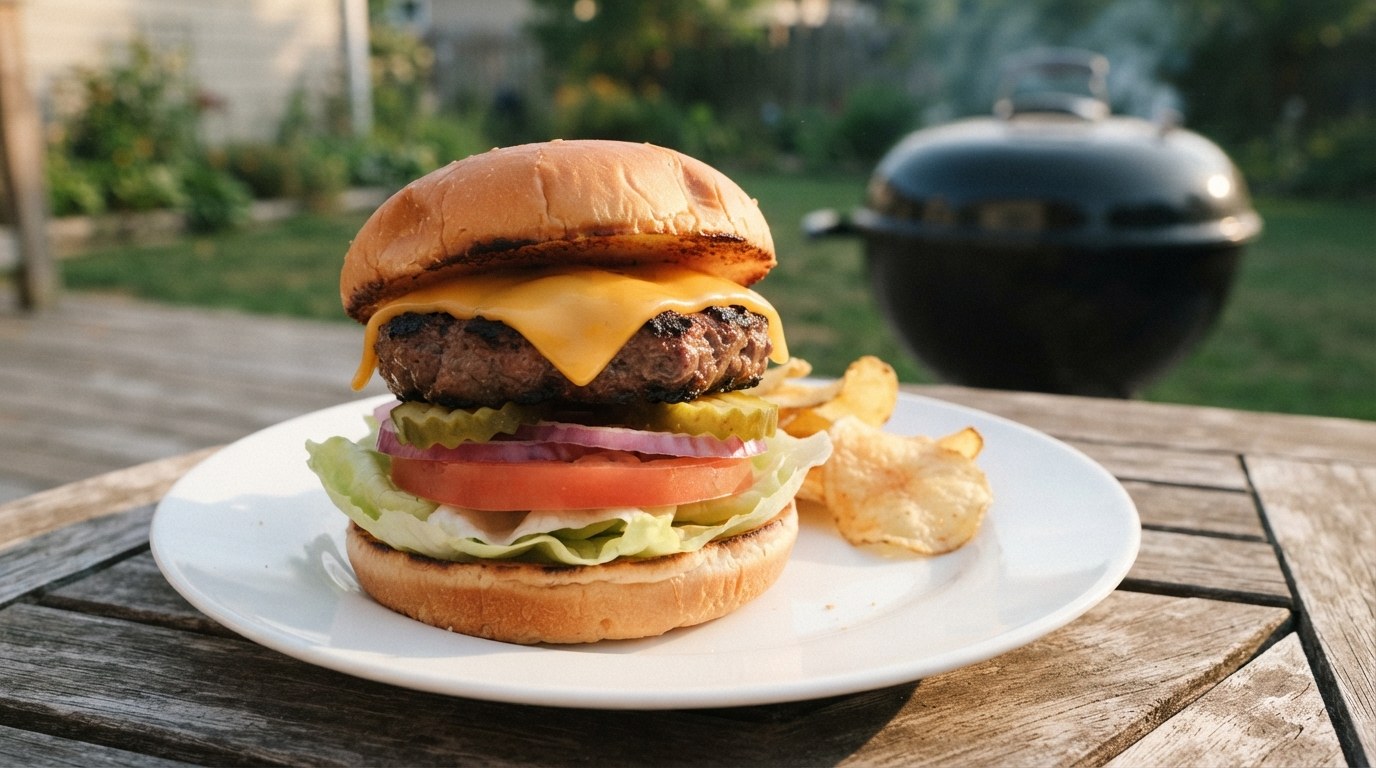
Build the Backyard Burger with the cold, crunchy things under the hot patty: toasted bottom bun, butter lettuce, a thick slice of tomato, thin red onion and pickle chips, then the cheese-topped patty and the top bun. The lettuce sits between the tomato and the bun to keep the bread dry. Salt the tomato slice lightly, because a ripe tomato with a pinch of salt tastes like more than a garnish.
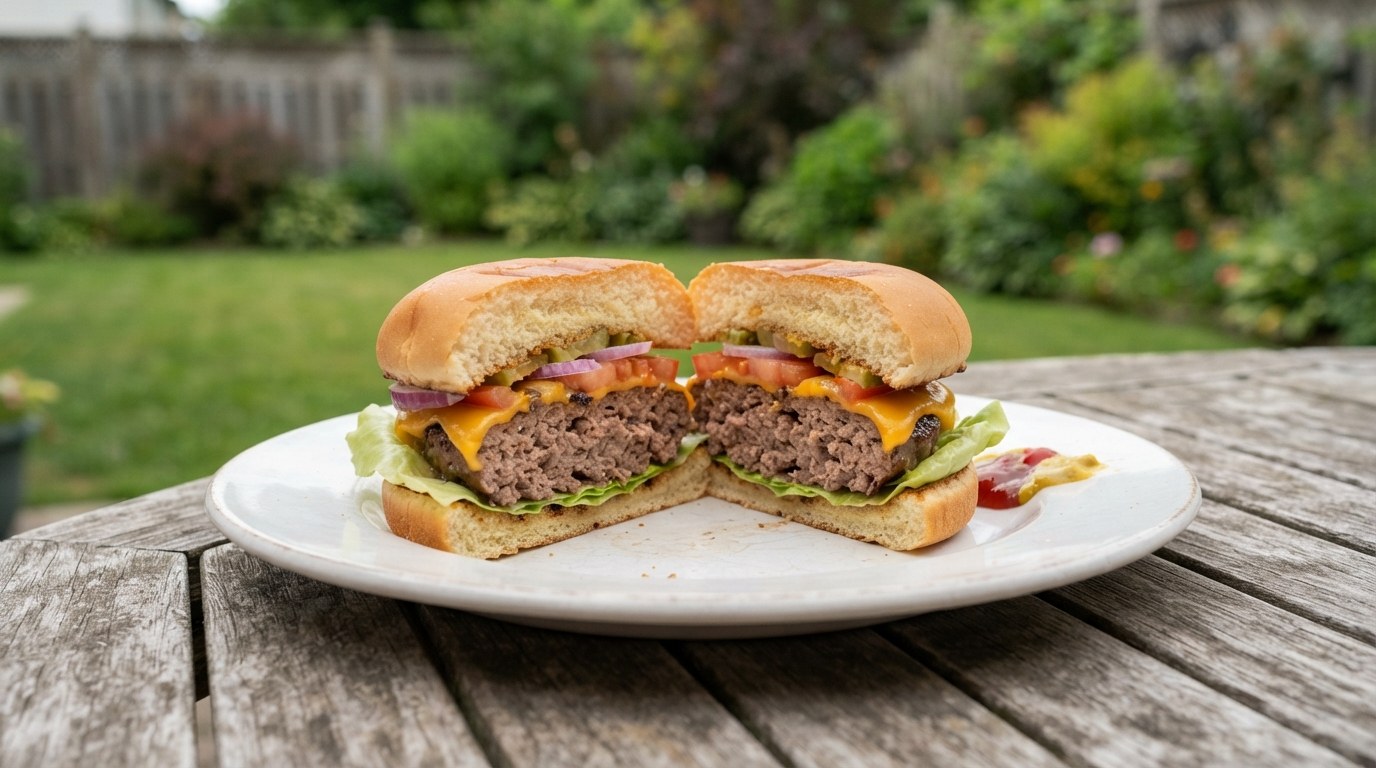
Serve it the backyard way, with chips, corn on the cob off the same grill or a sharp Gordon Ramsay coleslaw. The same two-zone setup handles bigger projects too; the how to grill ribs guide runs it low and slow. The rest of the lineup, from the Farmhouse to the Hellfire Chicken Burger, lives on the Gordon Ramsay signature burgers hub. Get the fire right and you'll know how long to grill burgers every time: hot side for the crust, cool side for control, and 160°F on the thermometer for the Gordon Ramsay Backyard Burger.
Gordon Ramsay's Backyard Burger
Ingredients
Patties
- 1 1/2 lb 80/20 ground chuck (680 g), kept cold
- 1 1/2 tsp kosher salt
- 1 tsp freshly cracked black pepper
- 1 tbsp grapeseed or canola oil, plus more for the grates
- 4 slices American cheese
Buns and Toppings
- 4 soft hamburger buns, split
- 1 tbsp softened butter, for the buns
- 4 butter or bibb lettuce leaves
- 1 large ripe tomato, cut into 4 thick slices
- 1/2 small red onion, thinly sliced
- 12 dill or bread-and-butter pickle chips
- Ketchup, mustard or mayonnaise, to serve (optional)
Instructions
- Divide the cold beef into 4 equal portions. Shape each loosely into a patty about 3/4 inch thick and 1/2 inch wider than the buns, press a shallow dimple into the center with your thumb, and chill on a tray while the grill heats.
- Set up a two-zone fire: bank lit charcoal on one half of the grill and leave the other half empty, or turn one or two gas burners to high and leave the one beside them off. Close the lid and preheat 15 minutes, until the hot side reads 450°F to 500°F.
- Brush the hot grates clean, then fold a paper towel, dip it in oil and wipe it over the grates with tongs.
- Pat the patties dry, brush them with the oil and season all over with the salt and pepper just before grilling.
- Grill the patties over the hot side, lid off, 4 to 5 minutes per side, flipping once they release from the grate and turning as often as you like after that. Do not press them. If fat flares up, move them to the cool side for a few seconds, then back.
- When the patties are close, move them to the cool side, lay a slice of American cheese on each, close the lid and cook about 1 minute more, until the cheese melts and an instant-read thermometer pushed into the center from the side reads 160°F.
- Move the burgers to a clean platter and rest 2 minutes. Meanwhile, butter the cut sides of the buns and toast them over the cool side for 30 to 60 seconds, until golden.
- Build each burger: bottom bun, lettuce, tomato, red onion and pickles, then the cheeseburger patty and the top bun, with ketchup, mustard or mayo if you like. Serve right away.
Notes
Gordon Ramsay Backyard Burger FAQs
The questions that come up most: what's on the Backyard Burger, how long to grill burgers on each side, how long at 400°F, lid open or closed, why burgers stick to the grill, how to stop flare-ups, and how often to flip.
What is on Gordon Ramsay's Backyard Burger?
On the Gordon Ramsay Burger Las Vegas menu it is a beef burger with American cheese, butter lettuce, tomato, pickles and red onions. Chicago and Boston list bibb lettuce and bread-and-butter pickles, the Flamingo uses pickled red onions, and Vancouver adds a house sauce.
How long do you grill burgers on each side?
For 3/4-inch patties over direct high heat (450°F to 500°F), about 4 to 5 minutes per side, 8 to 10 minutes in total. Half-inch patties take about 3 minutes a side. Take them off when the center reads 160°F on an instant-read thermometer.
How long do you grill burgers at 400°F?
At 400°F on a gas grill with the lid down, 3/4-inch patties take about 5 to 6 minutes per side. Check the center with a thermometer and take them off at 160°F.
Should you close the lid when grilling burgers?
Leave it open for thin patties over the hot side so you can watch for flare-ups. Close it for thick patties, to melt cheese, and to trap wood smoke, because the lid turns the grill into an oven that cooks the top of the patty too.
Why do my burgers stick to the grill?
The grate was not hot enough, not clean, or not oiled, or the patty was moved too soon. Preheat about 15 minutes, brush the hot grates, wipe them with oil, and wait until the crust forms; a browned patty releases on its own.
How do you stop flare-ups when grilling burgers?
Move the burgers to the cool side of a two-zone fire until the fat burns off, and close the lid to cut the oxygen. Do not spray water on burning grease. Prevent them by not pressing the patties and by cleaning the grease tray before you cook.
How often should you flip burgers on the grill?
As often as you like. Flipping more often cooks the patty more evenly, and the National Cancer Institute notes that frequent turning over high heat cuts the HCAs that form above 300°F. Just wait for the first side to release before the first flip.

About the Author
John Siracusa is the founder of Hell’s Kitchen Recipes. He focuses on technique-first, reproducible home cooking and researches recipes & kitchen equipment from published food science and professional chef methods since 2016.