Great deviled eggs come down to two things most recipes gloss over: eggs boiled so the yolks stay bright yellow, and a filling whipped smooth. Gordon Ramsay's take keeps the filling classic, mayonnaise, Dijon, and a little acid, and leans on technique to get there. Nail the boil and the peel, and the rest is easy.
This guide covers the science that trips people up: the grey ring around the yolk, why some eggs refuse to peel, and what makes the filling creamy.
How to Avoid the Grey-Green Ring

That dull grey-green ring around an overcooked yolk is a chemical reaction, not a defect in the egg. Cook an egg too long or too hot and the iron in the yolk meets hydrogen sulfide released from the white (sulfur breaks free from the white's proteins around 140°F), forming grey-green ferrous sulfide right at the boundary. It is harmless but chalky and unattractive. The boiled egg chemistry is well documented.
The fix is timing and a fast cool-down. Bring the eggs just to a boil, then cut the heat and let them sit covered, rather than boiling hard for fifteen minutes, and plunge them into ice water the moment they are done. Cooling fast stops the cooking and keeps the yolks yellow and creamy, exactly the texture you want for a smooth filling. A gentle cook is the same advice egg testers land on.
The Peeling Problem
Fresh eggs are the worst for deviled eggs, because the white's low pH grips the membrane tight to the shell and the peel tears the white. Eggs that are a week or two old peel far more cleanly as their pH rises. The ice-water plunge helps too: it contracts the egg away from the shell. Peel them under running water, starting at the wide (air-pocket) end, and they come away smooth.
What Makes the Filling Creamy

The filling is a small emulsion. Mayonnaise is already oil suspended in egg yolk, and the Dijon mustard is an emulsifier too, so mashing the cooked yolks with both gives you a filling that stays smooth and glossy rather than greasy. A splash of acid (apple cider vinegar) brightens it and cuts the richness. For the silkiest result, press the yolks through a sieve or whip them, then pipe the filling in for a clean finish. Season, taste, and adjust before you pipe.
From there, the flavor is yours. Beyond paprika and dill, the eggs take a spoon of pickle relish or capers, a dash of hot sauce, crumbled bacon, or a wasabi-and-sesame twist (swap the vinegar for rice vinegar and top with black sesame and scallion). Keep the base creamy and let the garnish do the talking.
A Note on History
Deviled eggs are far older than their fancy-party reputation. Stuffed, seasoned boiled eggs go back to ancient Rome, and the term "deviled," meaning spiced or zesty, is 18th-century British. So while the deviled egg did become a Victorian and mid-century-American party staple, it was a classic long before that.
Make-Ahead and Serving
Deviled eggs are a good make-ahead. Boil, peel, and fill up to a day in advance, and keep the whites and filling separate (pipe just before serving) so nothing weeps. Store them covered and follow the USDA egg guidance: refrigerate, and do not leave them out more than 2 hours. They pair beautifully on an appetizer spread with seared scallops. Browse more in the recipes collection.
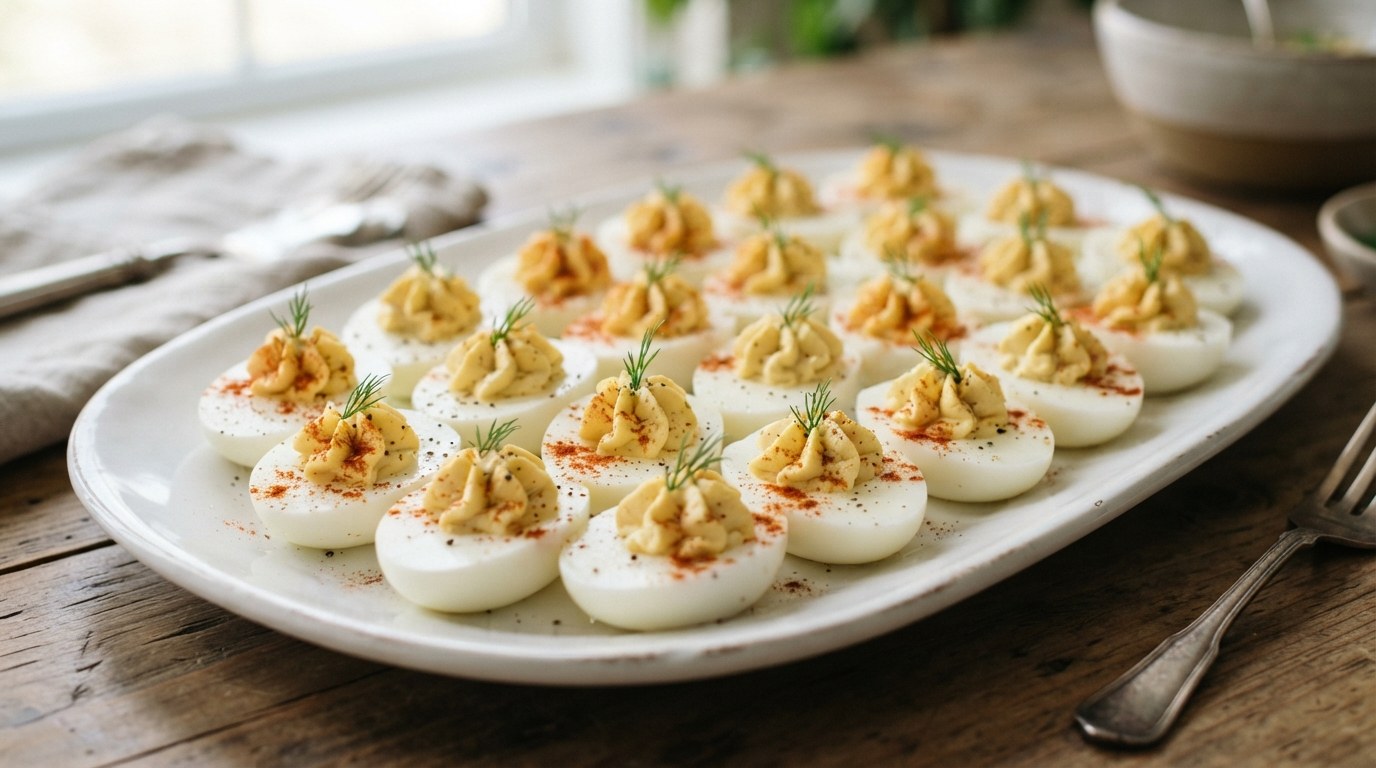
Gordon Ramsay's Deviled Eggs
Ingredients
- 12 large eggs
- 6 Tbsp mayonnaise
- 2 tsp Dijon mustard
- 2 tsp apple cider vinegar
- Salt and freshly ground black pepper, to taste
- Paprika, for garnish
- Fresh dill or chives, for garnish
Instructions
- Place the eggs in a saucepan, cover with water, and bring just to a boil. Cut the heat, cover, and let sit 10 to 12 minutes.
- Transfer the eggs immediately to a bowl of ice water and cool completely. This stops the cooking and keeps the yolks yellow.
- Peel the eggs under running water, starting at the wide end. Halve them lengthwise and scoop the yolks into a bowl.
- Mash the yolks with the mayonnaise, Dijon, and vinegar until smooth (press through a sieve for extra-silky filling). Season with salt and pepper and taste.
- Pipe or spoon the filling into the egg white halves. Dust with paprika, top with dill or chives, and chill until ready to serve.
Notes
Deviled Eggs FAQs
The questions that come up most: how to avoid the grey ring, how to boil and peel the eggs cleanly, what makes the filling creamy, and how far ahead you can make them.
Why do my deviled eggs have a grey-green ring?
The eggs were overcooked. Iron in the yolk reacts with sulfur from the white to form grey-green ferrous sulfide. Cook the eggs gently, do not boil them hard for a long time, and plunge them into ice water the moment they are done to keep the yolks yellow.
How do you boil eggs for deviled eggs?
Bring the eggs just to a boil, cut the heat, cover, and let them sit about 10 to 12 minutes, then move them straight to an ice-water bath. This cooks the yolk through without overcooking it and makes peeling easier.
Why won't my eggs peel cleanly?
They are probably too fresh. Very fresh eggs grip the shell membrane tightly; eggs a week or two old peel much more easily. An ice-water plunge and peeling under running water from the wide end also help.
What makes deviled egg filling creamy?
Mayonnaise and Dijon mustard are both emulsifiers, so mashing the yolks with them gives a smooth, glossy filling. Pressing the yolks through a sieve or whipping them makes it silkier, and a splash of vinegar keeps it bright.
Can you make deviled eggs ahead of time?
Yes. Boil, peel, and make the filling up to a day ahead, and keep the whites and filling separate. Pipe the filling in just before serving so the eggs look fresh and do not weep.
How long do deviled eggs last?
Refrigerated and covered, about 2 days. Do not leave them at room temperature more than 2 hours, per USDA guidance, since eggs are perishable.

About the Author
John Siracusa is the founder of Hell’s Kitchen Recipes. He focuses on technique-first, reproducible home cooking and researches recipes & kitchen equipment from published food science and professional chef methods since 2016.