Gordon Ramsay's lamb sauce is the glossy red wine jus he spoons over roast lamb, and yes, it is the same lamb sauce he spent years bellowing for on Hell's Kitchen. It is a pan sauce, built in the roasting tray from the browned drippings the lamb leaves behind: pour off the fat, deglaze with red wine, add stock and rosemary, reduce until it coats a spoon, strain, and finish with cold butter. Fifteen minutes, most of it while the lamb rests.
The card below has the amounts and the method for about a cup of sauce, enough for a roast that serves six. This guide covers the part the card cannot: why the browned bits in the pan are the whole flavor, how far to reduce and why you strain, the butter finish that makes it shine, and how to build it without wine or without drippings. It sits with the other Hell's Kitchen recipes and the sauce cluster, the red wine reduction sauce and Ramsay's Madeira sauce, which share this same deglaze-and-reduce backbone.
What Is Gordon Ramsay's Lamb Sauce?
Gordon Ramsay's lamb sauce is a red wine jus: a thin, intense pan gravy made from the fond (the browned residue a roast leaves stuck to the tray), loosened with red wine, deepened with stock and rosemary, reduced by half, and mounted with butter. It is not the thick, flour-bound gravy of a Sunday roast, and it is not the sharp green mint sauce Britain traditionally serves alongside lamb. It is the restaurant version: darker, cleaner, and built entirely on the meat's own roasting flavor.
That flavor lives in the fond. When the lamb roasts, its surface dries and browns through the Maillard reaction, the cascade of reactions between amino acids and sugars that begins around 284°F (140°C) and builds the roasted, savory notes. Nothing browns while it is wet, because water on a surface caps at 212°F (100°C), well below that threshold, which is why a properly roasted joint leaves a dark, sticky film and a boiled one leaves none. Those browned compounds are water-soluble, so a splash of wine dissolves them straight off the tray and into the sauce. Serious Eats makes the same point about every pan sauce: the fond is the flavor, and deglazing is how you collect it.
Where's the Lamb Sauce? The Hell's Kitchen Origin
“Where's the lamb sauce?!” is Ramsay's most-quoted line, shouted at flailing cooks on the US version of Hell's Kitchen when a lamb dish left the pass without its sauce. It caught fire as a meme years ago and never left, which is why most people searching “lamb sauce” want the clip, not the recipe. The joke works precisely because the sauce matters: on that plate the lamb is nothing without the jus, and a cook who forgot it forgot the point of the dish. So here is the actual answer to the question: the sauce he was yelling for is the red wine jus below.
How Gordon Ramsay Makes Lamb Sauce
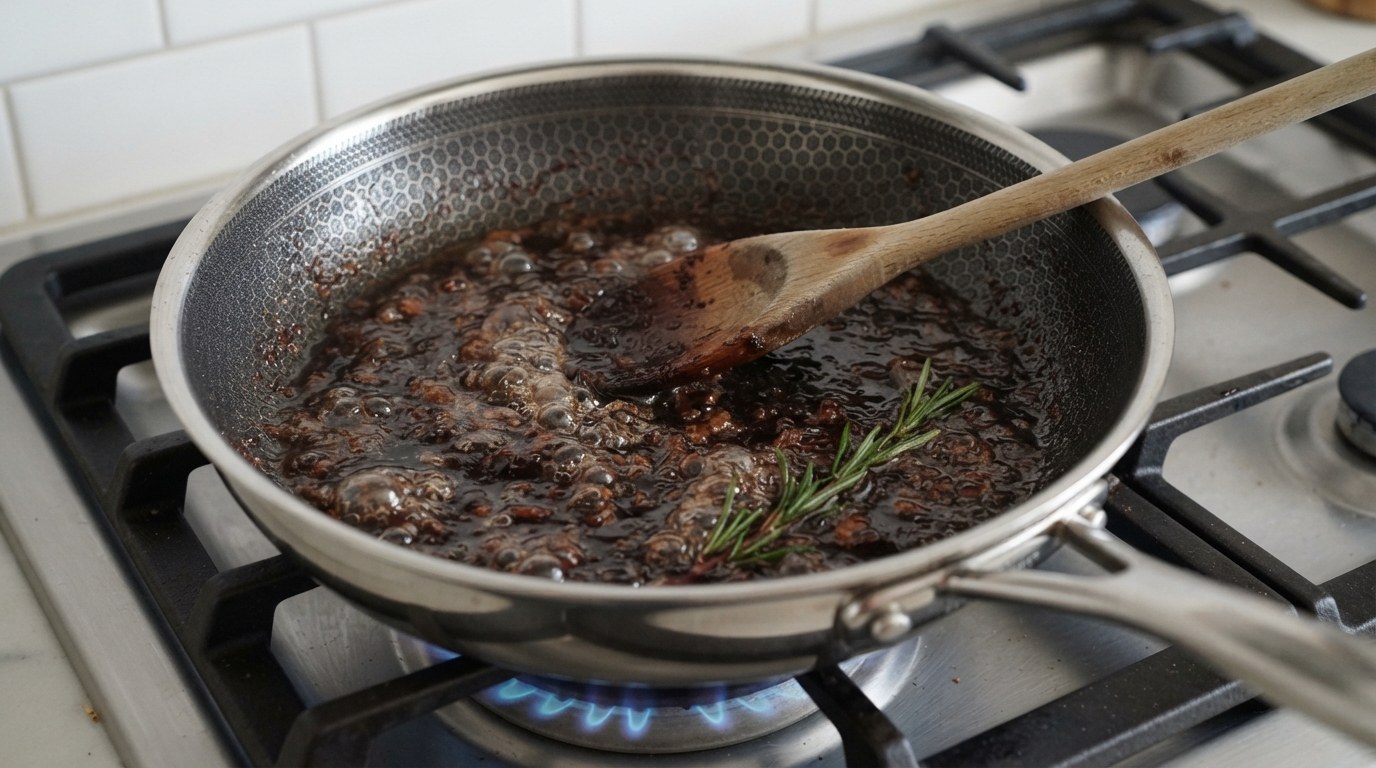
Start by pouring the fat off, not the fond. Tip the roasting tray and spoon away the clear fat pooling in one corner, leaving the dark sticky browned bits welded to the base. That is the flavor, and Ramsay's rule for any pan sauce is that you never wash it away. Set the tray across a burner over medium heat, add a couple of chopped shallots and a smashed garlic clove, and let them soften in the last of the fat for a minute.
Now deglaze. Pour in the red wine and scrape the base hard with a wooden spoon as it bubbles, lifting every scrap of fond into the liquid. Let the wine reduce by half before the stock goes in; this boils off the raw, sharp edge of the alcohol and concentrates the wine to a syrup. It does not remove the alcohol entirely. USDA retention data shows a simmered dish still holds roughly a quarter of its alcohol after an hour, but a hard reduction is what turns thin wine into depth.
Add the stock, the rosemary, and any juice the resting lamb has thrown off, and reduce again, this time to nappe: the point where the sauce coats the back of a spoon and a finger drawn through it leaves a clean line. Keep it at a steady simmer rather than a hard boil; a rolling boil clouds the sauce and drags bitterness out of the wine's tannins. Reduction is just evaporation concentrating everything left behind, and if the stock is a real one, its gelatin (the collagen that converted to gelatin around 154°F/68°C when the bones simmered) concentrates too, which is what gives a good jus its light cling without any flour.
Strain it. Pour the sauce through a fine-mesh sieve into a clean pan, pressing the shallots and garlic against the mesh to squeeze out their flavor, then discard the solids and the spent rosemary. This is the step that separates a rustic gravy from a restaurant jus: the sauce comes through glossy and smooth, with nothing to catch on the tongue.

Cuisinart
Cuisinart Mesh Strainers, Stainless Steel, 3-Count
- Set of three fine-mesh sieves (3⅛″, 5½″, 7⅞″) so you can strain a small jus or a big batch
- Fine stainless mesh catches the shallots, garlic, and herbs for a smooth, glossy sauce
- Stainless steel build, dishwasher safe for quick cleanup
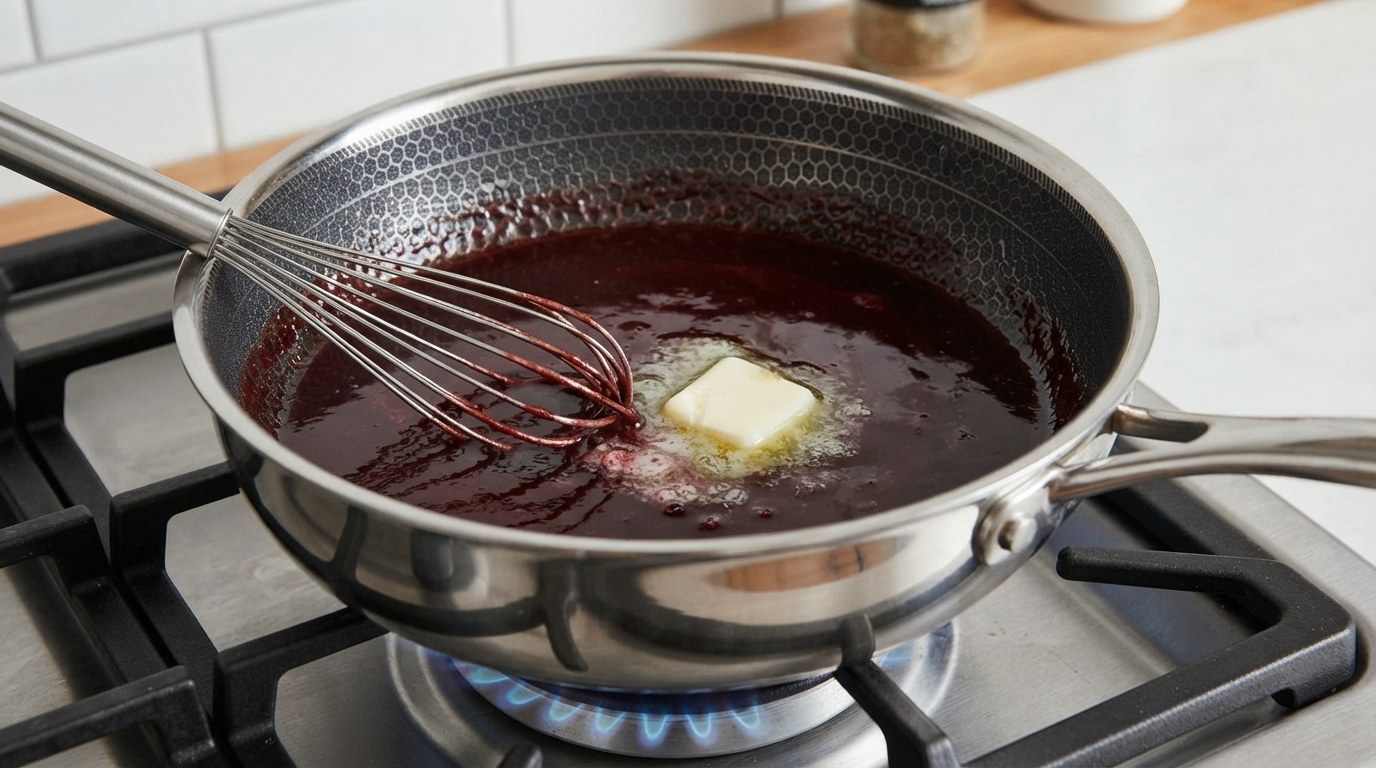
Finish off the heat with butter. Bring the strained sauce back to a bare simmer, take it off the burner, and whisk in a couple of tablespoons of cold butter a piece at a time. The butter melts into an emulsion (fat suspended through the sauce rather than pooling on top), and that is what gives a mounted jus its sheen and its round, glossy body. Ramsay finishes most of his pan sauces this way, and his MasterClass sauce lessons lean on the same beurre monte move. Only now do you season: taste, then add salt and pepper. Reduction concentrates whatever salt was already in the stock, so a sauce seasoned early turns brutal by the time it is done. Salt at the end, to taste.
Which Sauce Goes With Lamb? Jus vs Mint vs Gravy
The red wine jus is the modern restaurant choice, but it is not the only sauce that belongs with lamb, and which one you reach for depends on the cut and the meal. Britain's traditional partner for roast lamb is a sharp mint sauce; a Sunday roast wants a thicker onion gravy; and grilled chops or a rack often take a bright, herby salsa verde over anything reduced. Here is how they compare.
| Sauce | What it is | Best with | Character |
|---|---|---|---|
| Red wine jus (this recipe) | Deglazed pan drippings reduced with wine and stock, strained, buttered | Roast leg, rack, or loin of lamb | Dark, glossy, intense; the restaurant finish |
| Mint sauce | Chopped mint steeped in vinegar and a little sugar | Traditional British roast lamb | Sharp, fresh, cutting; a cold contrast to rich meat |
| Onion gravy | Slow onions with stock, thickened with flour | A homey Sunday roast with lots of mash | Thick, sweet, comforting; more gravy than jus |
| Salsa verde | Raw parsley, mint, capers, anchovy, oil | Grilled chops, cutlets, a rack | Bright, herby, punchy; no cooking required |
For a proper roast, the jus wins because it is made of the roast itself. Spoon it over a herb-crusted rack of lamb or a carved leg, and pour any extra into a boat at the table. If you are new to buying the joint, the guide to choosing lamb for roasts and chops covers which cuts throw off the best fond to build the sauce on.
Without Wine, Without Drippings: How to Adapt It
You can make this sauce without red wine and without a roast, and both come up constantly. To skip the wine, replace it with an equal amount of extra stock plus a tablespoon of balsamic vinegar or a spoon of redcurrant jelly; you lose the wine's tannin but keep the acidity and depth that stop the sauce tasting flat. Non-alcoholic red “cooking” wine or dark grape juice cut with a little vinegar works too.
To make it without drippings, a weeknight lamb sauce with no roast behind it, you build your own fond. Brown a chopped shallot and a tablespoon of tomato paste in a little oil until both go deep and sticky, which lays down the same Maillard-browned base a roast would leave, then deglaze and reduce exactly as above using a good beef or lamb stock. It will not have the full weight of a real roasting tray, but a reduced, buttered stock is still a real sauce. The best jus starts from a real stock, so reduce a quality one rather than boosting a thin one with flour.
Make-Ahead, Storing, and What to Serve It On
Lamb sauce keeps and reheats well, which makes it a good thing to build ahead of a big roast. Reduce it to just short of nappe, cool it, and refrigerate up to 4 days or freeze up to 3 months; when you reheat, warm it gently and whisk the finishing butter in fresh, off the heat, because boiling a buttered sauce splits the emulsion and leaves it greasy. If you froze it, the sauce may look broken as it thaws — a low, whisked reheat brings it back together.
Serve it the way it was built: spooned over rested roast lamb, with the resting juices whisked back in. It wants sides that soak it up, so a mound of Yukon Gold mashed potatoes under the meat is the natural partner, with the extra sauce in a warmed boat. The same jus, made from beef drippings, is what finishes a Beef Wellington: the classical French sauce training Ramsay picked up in Paris runs under both dishes.
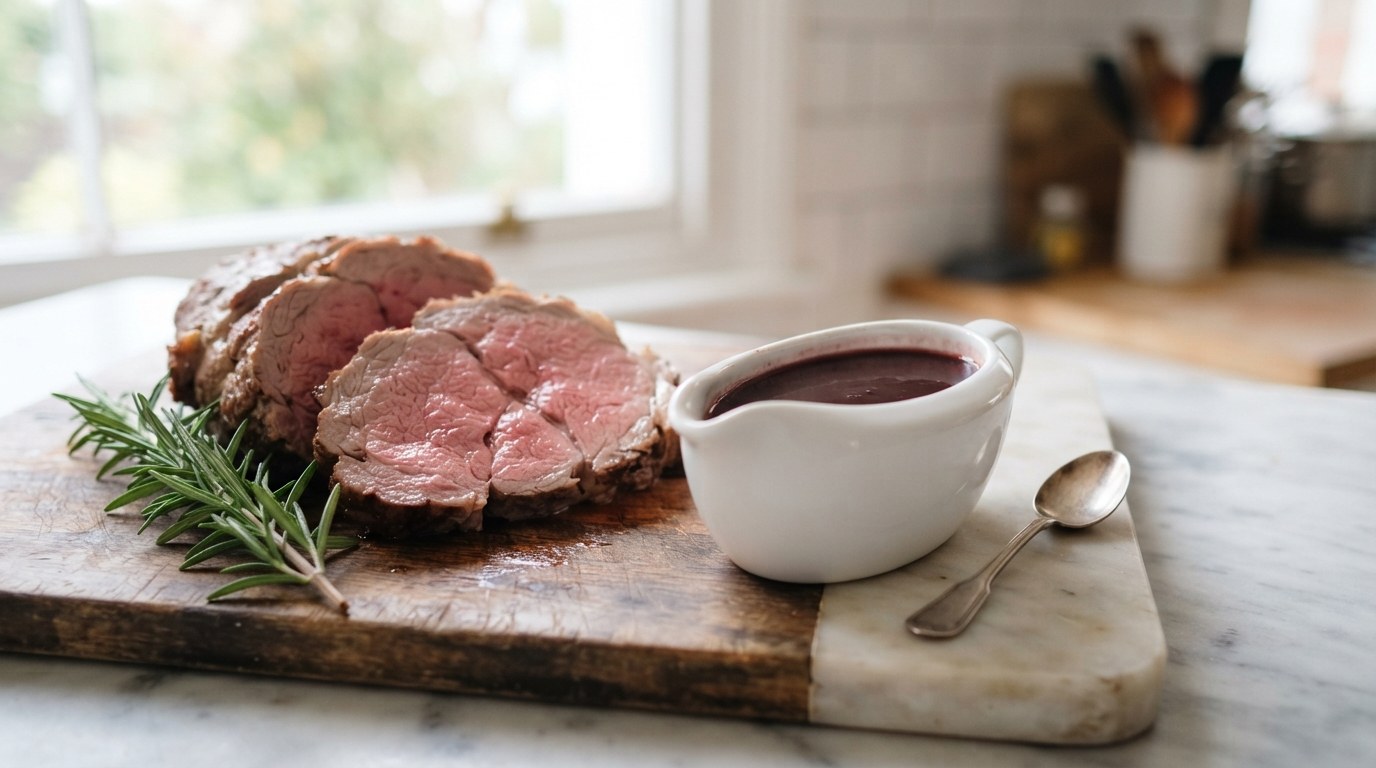
Gordon Ramsay Lamb Sauce (Red Wine Jus)
Ingredients
- 2 shallots, finely chopped
- 2 cloves garlic, smashed
- 2 sprigs fresh rosemary
- 1½ cups dry, full-bodied red wine (Cabernet, Syrah, or Cotes du Rhone)
- 2 cups lamb or beef stock (chicken stock works)
- 2 tbsp cold unsalted butter, cubed
- Salt and freshly ground black pepper, to taste (season at the end)
From the roast
- Browned drippings (fond) left in the roasting tray, fat poured off
Optional
- 1 tbsp balsamic vinegar or redcurrant jelly, for depth
Instructions
- Take the roasted lamb out of the tray and let it rest. Tip the tray and spoon off the clear fat, leaving the dark browned fond stuck to the base.
- Set the tray (or scrape the fond into a saucepan) over medium heat. Add the shallots and garlic and soften in the last of the fat for about a minute.
- Pour in the red wine and scrape the base hard with a wooden spoon to lift the fond. Simmer until the wine has reduced by half.
- Add the stock, rosemary, and any juices from the resting lamb. Simmer steadily (do not hard-boil) until reduced by about half again and the sauce coats the back of a spoon, 10 to 15 minutes.
- Strain through a fine-mesh sieve into a clean pan, pressing the shallots and garlic to extract their flavor; discard the solids and rosemary.
- Bring back to a bare simmer, take off the heat, and whisk in the cold butter a cube at a time until glossy. Taste, then season with salt and pepper. Whisk in the balsamic or redcurrant jelly now if using. Spoon over the rested lamb.
Notes
Gordon Ramsay Lamb Sauce FAQs
The questions that come up most: what the sauce is made of, where “Where’s the lamb sauce?” came from, making it without wine, lamb gravy with no drippings, the best wine to use, how to get it silky, what sauce traditionally goes with lamb, and making it ahead.
What is Gordon Ramsay's lamb sauce made of?
It is a red wine jus built from the roasting-pan drippings (the fond), red wine, stock, shallots, garlic, and rosemary, reduced by half and finished with cold butter. There is no flour: the body comes from reduction and, if you use a good stock, its natural gelatin. Salt and pepper go in at the end, after reducing, because reduction concentrates the salt already in the stock.
Where did “Where’s the lamb sauce?” come from?
It is Gordon Ramsay's catchphrase from the US version of Hell's Kitchen, shouted at cooks who sent a lamb dish to the pass without its sauce. It became an internet meme and is now the most-searched “lamb sauce” phrase, and the sauce he was asking for is exactly the red wine jus in this recipe.
Can I make lamb sauce without red wine?
Yes. Swap the wine for an equal amount of extra stock plus a tablespoon of balsamic vinegar or a spoonful of redcurrant jelly, which replaces the acidity and depth the wine gave. Dark grape juice with a splash of vinegar works too. Reduce it the same way; you just lose a little of the wine's tannic backbone.
How do I make lamb gravy without drippings?
Build your own fond. Brown a chopped shallot and a tablespoon of tomato paste in oil until deep and sticky, which creates the same Maillard-browned base a roast would leave in the tray, then deglaze with wine, add a good beef or lamb stock, and reduce and butter it as usual. It won't match a real roasting pan, but a reduced, buttered stock is still a proper sauce.
What is the best wine for lamb sauce?
A dry, full-bodied red you would drink: Cabernet Sauvignon, Syrah or Shiraz, Malbec, or a Cotes du Rhone. Avoid sweet wine and bottles labeled “cooking wine,” which are salted and thin. Because you reduce the wine hard, its character concentrates, so a clean, fruit-forward red pays off more than an expensive, delicate one.
How do I make lamb sauce thick and silky?
Reduce it to nappe (far enough that it coats the back of a spoon and a finger leaves a clean line), then strain it through a fine-mesh sieve and whisk in cold butter off the heat. The reduction and the butter emulsion give the gloss and body; a real stock's gelatin helps. If you are short on time, a teaspoon of cornstarch slurried in cold water will thicken it, but reduction tastes cleaner.
What sauce is traditionally served with roast lamb?
In Britain, mint sauce (chopped mint in vinegar with a little sugar) is the traditional partner, its sharpness cutting the richness of the meat. The red wine jus here is the restaurant version: instead of contrasting the lamb, it is made from it. Grilled chops also take well to a bright salsa verde.
Can I make lamb sauce ahead of time?
Yes. Reduce it to just short of finished, cool, and refrigerate up to 4 days or freeze up to 3 months. Reheat gently and whisk the finishing butter in fresh, off the heat, and boiling a buttered sauce splits it and turns it greasy. A sauce that looks broken after freezing usually comes back together with a low, whisked reheat.

About the Author
John Siracusa is the founder of Hell’s Kitchen Recipes. He focuses on technique-first, reproducible home cooking and researches recipes & kitchen equipment from published food science and professional chef methods since 2016.