Gordon Ramsay lemon posset is about as simple as a restaurant-style dessert gets: heavy cream and sugar boiled for 3 minutes, sharpened with fresh lemon juice, poured into small glasses and chilled until it sets into a silky, spoonable cream. There are no eggs, no gelatin and no oven. Ramsay published his version in Gordon Ramsay's Family Fare, the cookbook of home recipes from his TV show The F Word, and this recipe follows his method, scaled to 2 cups of cream for four to six glasses, with an easy butter shortbread for crunch on the side.
A lemon posset takes about 15 minutes of work and at least 3 hours in the fridge, so it is made ahead by design. Below is why three ingredients set without any help, why the 3-minute boil and the right cream matter, how to rescue one that stays runny or turns grainy, and the variations people ask about: a torched lemon posset brûlée, lime and orange possets, and possets served in lemon halves. For more make-ahead sweets, the rest of the collection lives in Baking & Desserts.
What Is Lemon Posset?
Lemon posset is a cold British dessert of cream, sugar and lemon juice that sets on its own in the fridge, with a texture between a thick custard and a panna cotta and a flavor like a creamy lemon curd. The name is old. A posset was originally a hot drink of milk curdled with wine or ale, often spiced and taken as a remedy; the drink died out, and in the 19th century the name was revived for the cream, sugar and citrus dessert served today. It belongs on any short list of desserts that look like more effort than they are, which is why it sits in our Gordon Ramsay desserts for a dinner party roundup.
What makes a posset different from its neighbors on a dessert menu is what holds it together. Here is how it compares with the creamy desserts it gets confused with:
| Dessert | What sets it | Eggs? | Cooking | Time to set |
|---|---|---|---|---|
| Lemon posset | Lemon acid sets the cream's milk proteins | No | Cream and sugar boiled 3 min | 3 hours to overnight |
| Crème brûlée | Egg yolks thicken the cream | Yes, yolks | Baked in a water bath | At least 4 hours chilled |
| Panna cotta | Gelatin | No | Cream warmed to dissolve gelatin | About 4 hours |
| Lemon curd | Egg yolks plus butter | Yes | Stirred over low heat until thick | Thickens as it cools |
| Syllabub | Nothing; whipped cream holds its shape | No | None; cream whipped with wine and lemon | Serve within hours |
The posset is the only one of the five that relies on acid alone, and that is why it is the quickest. It is also the most sensitive to the cream you buy, which the next sections explain.
How Gordon Ramsay Makes Lemon Posset
Gordon Ramsay makes lemon posset by bringing double cream and caster sugar slowly to the boil while stirring, letting it bubble for 3 more minutes, then taking it off the heat and stirring in the juice of one lemon. In his Family Fare recipe the mixture starts to thicken as soon as the juice goes in; he then tastes it and adds more lemon until it is sweet, sharp and creamy, lets it cool for a few minutes, pours it into glasses, covers them and chills them for at least 3 hours or overnight. His quantities are small: 300 ml of cream, 75 g of sugar and the juice of one to two lemons.
This recipe keeps those proportions and scales them up: 2 cups (480 ml) of heavy cream, 2/3 cup (130 g) of sugar and 1/3 cup (80 ml) of lemon juice, which works out to almost exactly Ramsay's ratio per cup of cream. Two small changes suit an American kitchen. Ramsay writes for British double cream, which is richer than American heavy cream, so this version insists on cream that is labeled heavy cream or heavy whipping cream. And the pan rests for a minute off the heat before the lemon goes in, for a reason covered below. The tasting step stays exactly as he wrote it: lemons vary, and tasting before you pour is the one moment you can still adjust a lemon posset.
Why Lemon Posset Sets Without Eggs or Gelatin
Lemon posset sets because the citric acid in lemon juice makes the cream's casein proteins unwind and link into a fine gel, and it stays silky because the cream's fat keeps those proteins from clumping into curds. Acid and heat do the same thing to protein by different routes; it is called denaturing, and it is what turns raw fish opaque in ceviche. Fresh lemon juice is strongly acidic, with a pH of about 2.0 to 2.6 according to the FDA pH figures compiled by Kansas State University, and that sudden drop in pH is enough to set a whole pan of cream with no starch, gelatin or egg.
The fat is what separates a posset from cottage cheese. In milk, acid makes casein clump into curds and the whey runs off. In heavy cream there is so much fat that the droplets sit between the proteins and keep the network fine and even, which America's Test Kitchen describes as the difference between a tender gel and a curdled mess. As a rule, dairy above about 25 percent fat holds together under heat and acid; below that it splits. That is why the cream you buy decides whether the recipe works.
Heavy Cream for Lemon Posset: Which Cream to Buy
Use heavy cream or heavy whipping cream with at least 36 percent fat for lemon posset. In the US that figure is the legal minimum for anything sold as heavy cream (21 CFR 131.150), so the label tells you what you are getting. Light whipping cream, often sold simply as whipping cream, can be as low as 30 percent fat and sets softer; light cream, half-and-half and milk are too lean, and they curdle or stay runny no matter how long they chill. Ultra-pasteurized heavy cream, the most common kind in American stores, works fine.
Can you make lemon posset with milk? Not as a posset. With milk's 3 to 4 percent fat the lemon juice curdles it into curds and whey, which is how fresh ricotta-style cheese is made. A dairy-free version needs full-fat coconut cream and usually a thickener, which makes it a different dessert.
Why You Boil the Cream for 3 Minutes
You boil the cream with the sugar for 3 minutes to dissolve the sugar completely, drive off some water, and change the proteins so the posset sets firmer. At a steady boil the cream sits around 212°F (100°C), the boiling point of water, and steam carries water out of the pan, which concentrates the fat and protein that make the set. The whey proteins in cream begin to unravel from about 158°F (70°C), the same change that puts a skin on hot milk, and once unravelled they help link the casein into a stronger gel, as America's Test Kitchen explains. Skip the boil or cut it to a few seconds and the posset is far more likely to stay loose.
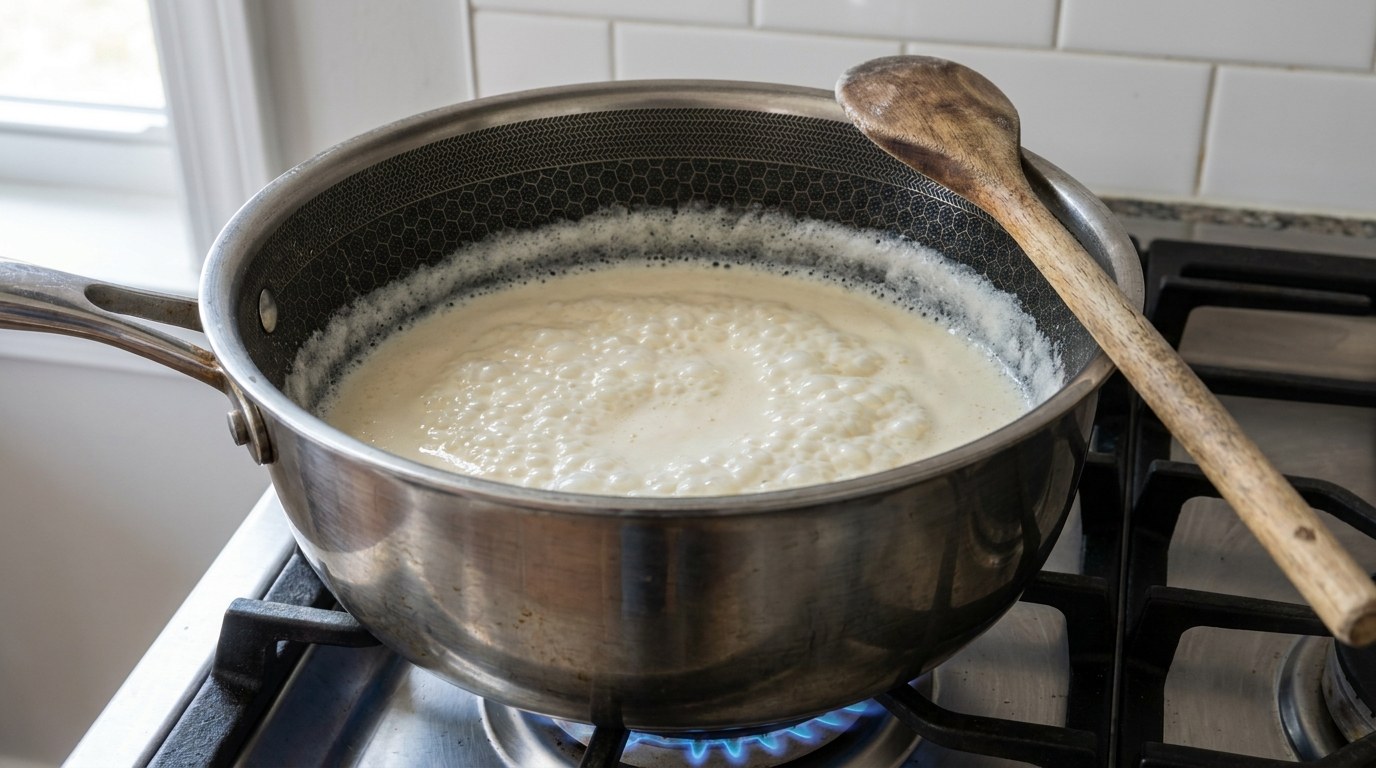
Use a bigger saucepan than looks necessary, at least 3 quarts for 2 cups of cream. Boiling cream foams and climbs the sides of the pan fast, and a small pan boils over. Stir the whole time, scraping the bottom, so the sugar dissolves and nothing catches. Undissolved sugar crystals are one of the causes of a grainy posset, so the cream should feel smooth on the spoon before the timer even starts. A heavy-bottomed pan helps here; our Gordon Ramsay cookware guide covers the pans worth owning.
When to Add the Lemon Juice and Zest
Add the lemon juice off the heat, once the boiling has calmed for about a minute, then stir it in steadily. The cream is still close to 200°F (93°C), plenty hot for the acid to set it, but no longer at a rolling boil. Pouring acid into cream that is still boiling hard makes the proteins set where the juice lands before you can stir it through, which is how small curds and a grainy texture start. It is the same reason a cook adds yogurt to a curry off the boil. Ramsay notes the mixture thickens almost at once; that is the acid at work, and it keeps going as it cools.
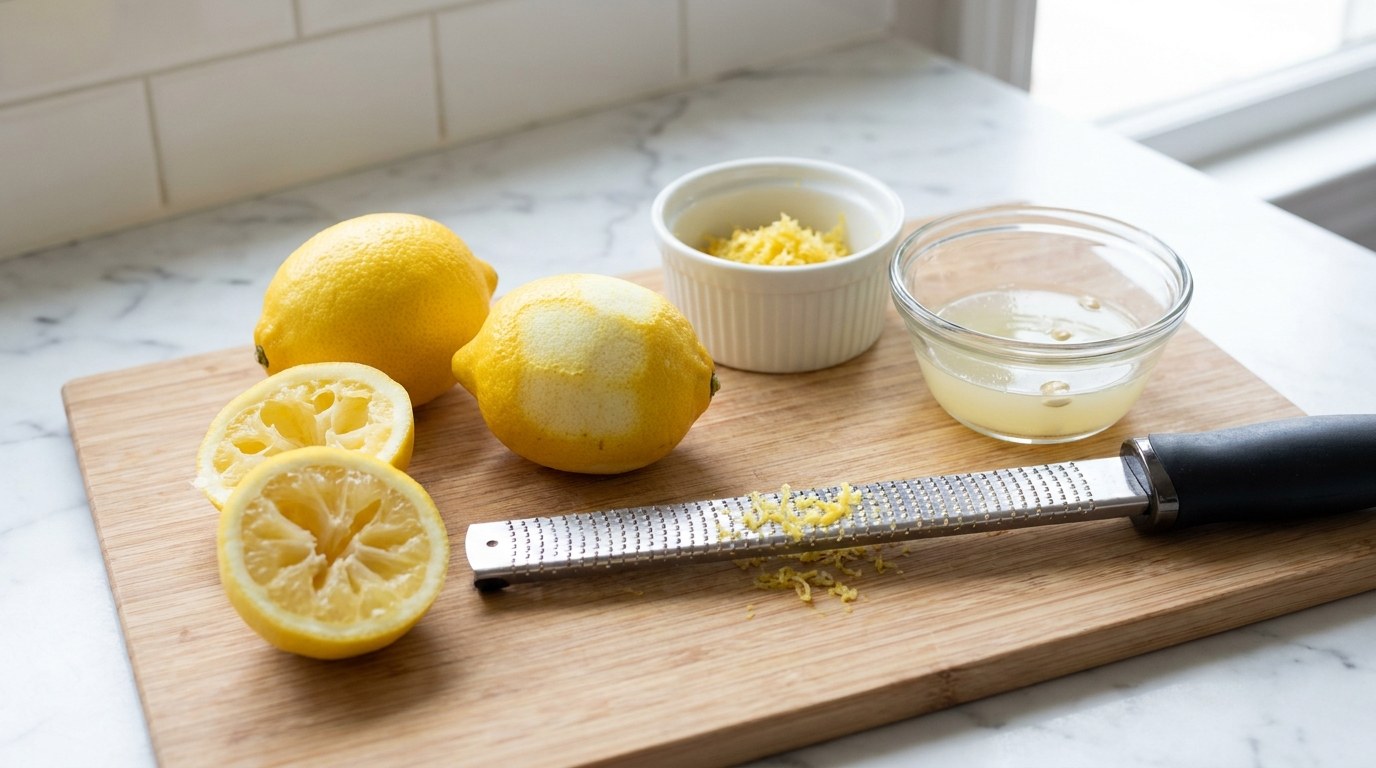
Use fresh lemons, about two to three for 1/3 cup of juice plus a little extra to adjust. Bottled juice is acidic enough to set the cream, but it tastes flat next to fresh. Zest the lemons before you cut and squeeze them, and take only the thin yellow layer: the white pith underneath is bitter, and that bitterness carries right through a dessert this simple. The zest holds the lemon oils, so stirring most of it into the hot cream and letting it sit for 10 minutes gives a rounder, more perfumed lemon flavor than juice alone. A fine rasp grater is the one tool that makes this easy, because it shaves the zest off in fluffy shreds that disappear into the cream.
Microplane
Microplane Classic Zester Grater
- Photo-etched stainless blade takes off only the thin yellow zest and leaves the bitter white pith behind
- Long, narrow rasp lays flat across a lemon, so the zest falls in fine, fluffy shreds that melt into the cream
- Also grates hard cheese, nutmeg and ginger; dishwasher safe
After the 10-minute rest, pour the posset into small glasses, ramekins or teacups, about 1/2 cup (120 ml) each. For a perfectly smooth posset, pour it through a fine sieve to catch the zest and any small curds; for a more rustic one, leave the zest in.
How Long Does Lemon Posset Take to Set?
Lemon posset needs at least 3 hours in the fridge to set, and overnight gives the firmest, silkiest result. The acid starts the gel in the pan, but the structure keeps tightening as the cream cools, and milk fat firms as it chills, the same reason butter is hard straight from the fridge. Let the glasses cool on the counter for 20 to 30 minutes, cover them, and refrigerate at 40°F (4°C) or below, the temperature the FDA recommends for your fridge.
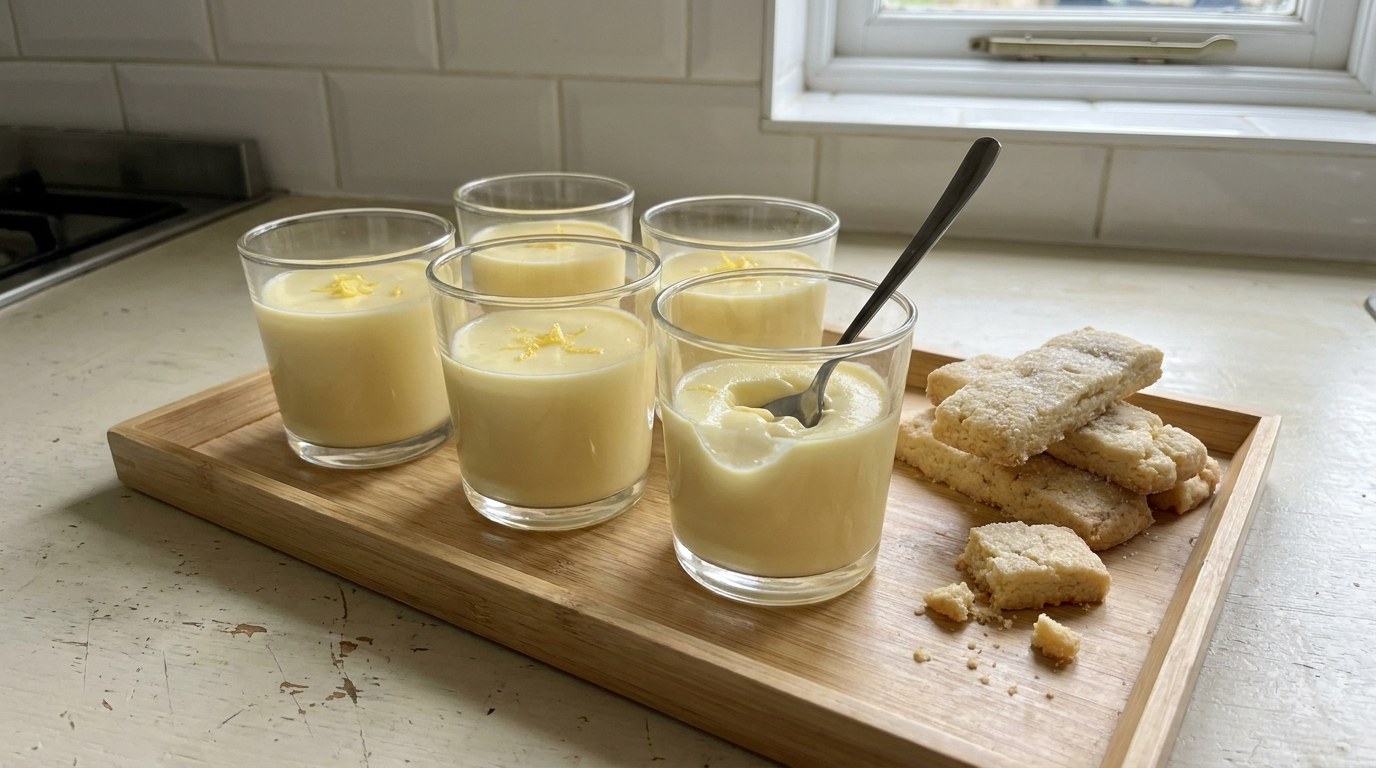
A properly set lemon posset holds a clean spoon mark and does not run, but it is soft and creamy rather than firm like a jelly. If you tilt a glass and the surface slides, give it more time. Is lemon posset supposed to be runny? No. If it is still pourable after a night in the fridge, something in the recipe went wrong, and the next section covers how to fix it.
Why Lemon Posset Won't Set, Turns Grainy or Splits
Most lemon posset failures come down to the cream, the boil or the lemon. A posset that will not set usually had cream under 36 percent fat, a boil shorter than 3 minutes, or too little lemon juice to drop the pH far enough. You can rescue it: pour it back into the saucepan, bring it to a boil for 2 minutes while stirring, take it off the heat, stir in another tablespoon of fresh lemon juice and chill it again.
A grainy posset has either undissolved sugar or small curds. Sugar grains come from starting the boil too soon, so stir until the cream feels smooth first. Curds come from adding the juice to cream at a hard boil or from cream that was too lean. If you see specks before it sets, whisk hard or blend it briefly and pour it through a fine sieve into clean glasses. A posset that splits, with a buttery or watery layer on top, has usually been boiled too hard for too long or made with lower-fat cream. Keep the boil steady rather than violent, and keep the timer at 3 minutes.
Easy Shortbread to Serve with Lemon Posset
Shortbread is the classic partner for lemon posset because a crisp, buttery biscuit sets off the soft, sharp cream, and it takes four ingredients: butter, sugar, flour and a pinch of salt. "Short" is the old baking word for crumbly, and it describes the mechanism. Butter coats the flour before any liquid can reach it, which blocks gluten, the stretchy protein network that makes bread chewy. Shortbread has no egg, no water and no leavening, so with so much butter and so little gluten it bakes tender and sandy instead of tough.
Bake it low and slow. At 325°F (165°C) the dough dries and cooks through before the outside darkens; Maillard browning, the reaction that turns baked goods golden, speeds up from about 284°F (140°C) at the surface, and you want only a pale gold at the edges. Press the dough into an 8-inch square pan, prick it all over with a fork so steam escapes and the slab bakes flat, and bake for 30 to 35 minutes. Cut it into fingers while it is still warm and soft, then let it cool in the pan; cold shortbread shatters when you cut it. It keeps in an airtight tin for about a week. Store-bought all-butter shortbread is a perfectly good shortcut.
Lemon Posset Variations: Brûlée, Lime, Orange and Lemon Halves
Lemon posset takes well to a few changes, as long as you respect the acid. A lemon posset brûlée gets a thin, even layer of granulated sugar on the chilled, set posset, torched until it melts and turns amber. Table sugar caramelizes at around 320 to 338°F (160 to 170°C), which a torch flame reaches in seconds while the cream underneath stays cold. Torch it just before serving: sugar is hygroscopic, meaning it pulls water from the air and the cream, so a brûlée top left in the fridge soon turns soft and weepy. The torch technique is the same one in our Gordon Ramsay crème brûlée.
Other citrus works if it is acidic enough. Here is how the common swaps compare, using the pH ranges from the FDA figures and the setting advice from America's Test Kitchen:
| Citrus | Juice pH | Sets on its own? | How to use it |
|---|---|---|---|
| Lemon | 2.0 to 2.6 | Yes | The standard: 1/3 cup juice per 2 cups cream |
| Lime | 2.0 to 2.35 | Yes | Swap 1:1 for lemon, or use half and half for a lime and lemon posset |
| Grapefruit | 3.0 to 3.75 | Not reliably | Use half lemon juice, or add a little citric acid |
| Orange | 3.3 to 4.2 | No | Use half lemon juice with orange zest, or add citric acid |
The numbers explain the results. Lime is as acidic as lemon, so a lime posset sets the same way and tastes sharper and more floral. Sweet orange and grapefruit juice are far less acidic, so on their own they leave the cream soft or runny; America's Test Kitchen raises them to lemon-level acidity with a small amount of dissolved citric acid, and the simpler home fix is to make half the juice lemon and use the orange or grapefruit zest for the flavor.
For possets served in lemon halves, cut five large lemons in half lengthwise, squeeze out the juice you need for the recipe, and scrape out the remaining flesh and membrane with a teaspoon. Trim a thin slice off the bottom of each shell so it sits flat, or stand them in a muffin tin, then fill them with the warm posset and chill as usual. The shells hold about 1/4 cup each, so a full batch fills about ten halves.
How Long Does Lemon Posset Last? Make-Ahead and Food Safety
Lemon posset keeps for up to 2 days in the fridge at its best, and no more than 3 to 4 days in total. The cream is pasteurized or ultra-pasteurized, as federal standards require for heavy cream, and it is boiled again in the recipe, but it is still a dairy dessert. Cover each glass, keep it at 40°F or below, and don't leave it out more than 2 hours, or 1 hour above 90°F, which is the FDA's limit for foods that need refrigeration. The USDA gives 3 to 4 days for refrigerated leftovers; past day 2 the top dries slightly and the zest loses its brightness, so plan to serve within that window.
Can you freeze lemon posset? It is not a good idea. Freezing turns the water in the cream into ice crystals that break the delicate protein network, and when it thaws the posset weeps and turns grainy. The shortbread, on the other hand, freezes well for up to 3 months.
How to Serve Lemon Posset
Serve lemon posset cold, straight from the fridge, with a little fresh zest on top and one or two shortbread fingers on the side or perched on the glass. Small portions are right: it is rich, and half a cup is a full dessert. Fresh raspberries or blueberries are a common pairing if you want color, and a glass of something sweet and cold suits it well.
Gordon Ramsay lemon posset is the light, sharp way to end a big meal, and the one dessert you can finish two days before anyone arrives. If you want something warm and rich instead, his sticky toffee pudding is the opposite end of the dessert menu, and the no-bake Gordon Ramsay banoffee pie is another make-ahead crowd-pleaser.
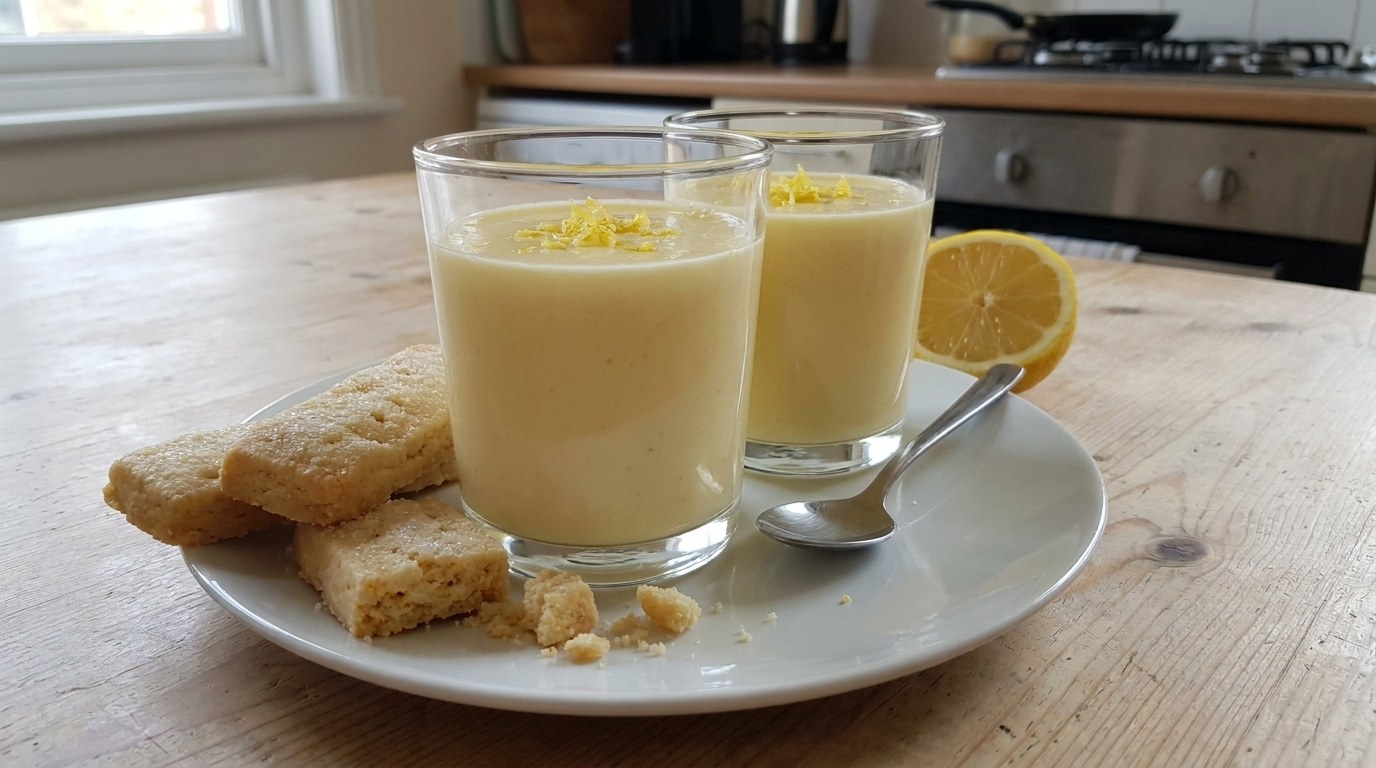
Gordon Ramsay Lemon Posset with Shortbread
Ingredients
Lemon posset
- 2 cups heavy cream or heavy whipping cream (480 ml), 36% fat or more; not half-and-half or light cream
- 2/3 cup granulated sugar (130 g)
- 1/3 cup fresh lemon juice (80 ml), from 2 to 3 lemons, plus 1 tbsp more to taste
- 1 lemon, zest finely grated (about 1 tbsp), plus a little extra to serve
Shortbread (or use store-bought)
- 1 cup unsalted butter (225 g), softened
- 1/2 cup granulated sugar (100 g), plus 1 tbsp for sprinkling
- 2 cups all-purpose flour (250 g), spooned and leveled
- 1/4 tsp fine salt
Instructions
- Make the shortbread (up to a week ahead): heat the oven to 325°F and line an 8-inch square pan with parchment. Beat the softened butter and 1/2 cup sugar until smooth and creamy, then mix in the flour and salt on low speed just until the dough comes together in soft crumbs.
- Press the dough evenly into the pan, prick it all over with a fork and sprinkle with 1 tbsp sugar. Bake 30 to 35 minutes, until pale gold at the edges and just firm in the middle. Cut into 16 fingers while still warm, then let cool completely in the pan.
- For the posset, finely grate the zest of 1 lemon, taking only the yellow layer, then squeeze the lemons and strain out the seeds to get 1/3 cup juice, plus a little extra for adjusting.
- Put the cream and sugar in a large saucepan (at least 3 quarts, as it foams up). Heat over medium, stirring, until the sugar has fully dissolved and the cream comes to a boil.
- Boil steadily for 3 minutes, stirring constantly and scraping the bottom, lowering the heat a little if it climbs toward the rim.
- Take the pan off the heat and let it stand for about 1 minute, until the bubbling stops. Stir in the lemon juice and most of the zest; it will thicken slightly right away. Taste and add up to 1 tbsp more lemon juice if you want it sharper.
- Let it rest 10 minutes. Pour into six small glasses or ramekins (about 1/2 cup each), through a fine sieve if you want it perfectly smooth. Cool on the counter for 20 to 30 minutes.
- Cover and refrigerate at least 3 hours, ideally overnight, until set. Serve cold with a little fresh zest on top and the shortbread fingers on the side.
Notes
Lemon Posset FAQs
The questions that come up most: what lemon posset is, why it sets without eggs or gelatin, why a lemon posset won't set, whether you can use milk or half-and-half, how long it takes to set, how long it lasts in the fridge, whether you can freeze it, and how to make a lemon posset brûlée.
What is lemon posset?
Lemon posset is a cold British dessert made from heavy cream, sugar and lemon juice. The cream and sugar are boiled for a few minutes, the lemon juice is stirred in, and the mixture sets in the fridge into a smooth, spoonable cream with no eggs or gelatin. It is usually served in small glasses with shortbread.
Why does lemon posset set without gelatin?
The citric acid in lemon juice makes the casein proteins in the cream unwind and link into a soft gel, the same thing heat does to protein. The high fat in heavy cream keeps those proteins from clumping into curds, so instead of curdling the cream sets smooth.
Why didn't my lemon posset set?
Usually the cream was under 36% fat, it was not boiled for the full 3 minutes, or there was not enough lemon juice. Pour it back into the pan, boil it for 2 minutes while stirring, add another tablespoon of fresh lemon juice off the heat and chill it again for at least 3 hours.
Can you make lemon posset with milk or half-and-half?
No. Milk and half-and-half do not have enough fat, so the lemon juice curdles them into curds and whey instead of setting them. Use heavy cream or heavy whipping cream with at least 36% fat, which is the US legal minimum for heavy cream.
How long does lemon posset take to set?
At least 3 hours in the fridge, and overnight is best. It starts to thicken as soon as the lemon juice goes in, but it keeps firming as it cools and the milk fat chills. A set posset holds a spoon mark and does not run when you tilt the glass.
How long does lemon posset last in the fridge?
It is at its best within 2 days, covered and kept at 40°F or below, and should be eaten within 3 to 4 days at most. Do not leave it out of the fridge for more than 2 hours.
Can you freeze lemon posset?
It is not recommended. Ice crystals break the delicate protein set, and the posset turns watery and grainy when it thaws. Make it up to 2 days ahead in the fridge instead. Shortbread does freeze well for up to 3 months.
How do you make lemon posset brûlée?
Make the posset and chill it until fully set. Just before serving, sprinkle a thin, even layer of granulated sugar over each one and melt it with a kitchen torch until it turns amber and hardens. Do it at the last minute, because the caramel softens and weeps in the fridge.

About the Author
John Siracusa is the founder of Hell’s Kitchen Recipes. He focuses on technique-first, reproducible home cooking and researches recipes & kitchen equipment from published food science and professional chef methods since 2016.