A cinnamon swirl loaf is the cinnamon toast of your childhood turned into a quick bread: a tender, vanilla-scented crumb made on sour cream, a dark ribbon of cinnamon and brown sugar swirled through the middle, and a top crusted with cinnamon sugar that bakes into a crackly shell like the coating on a cereal square. No yeast, no kneading, no rising; it mixes in 15 minutes and bakes for an hour, and the slices toast beautifully the next morning. The two things that go wrong with a swirl loaf, a cinnamon layer that melts into a gap and a center that stays gummy, both have a fix, and both are explained below.
The recipe card at the bottom has the amounts and numbered steps for one 9-by-5-inch loaf, 12 slices. This guide covers what makes a quick bread rise and why the batter is folded rather than beaten, why sour cream, the swirl and why it separates, the crunch topping, doneness by temperature, and storage. It sits in the site's baking and desserts section with the hot cocoa cookies and the rest of the holiday baking.
A Quick Bread: Chemical Lift, and a Light Hand
A quick bread rises on chemistry instead of yeast, and this one uses both chemical leaveners on purpose. King Arthur Baking lays out the difference: baking soda is a base that needs an acidic partner in the batter, and it names sour cream, buttermilk, yogurt and brown sugar among them, while baking powder is a complete mixture of soda and a powdered acid, and most is double-acting, giving one push when the batter is mixed and a second when it heats in the oven. This batter has sour cream and brown sugar, so a half teaspoon of soda reacts with them the moment they meet; the two teaspoons of baking powder then carry the rise into the oven, where the second reaction and the expanding steam lift the loaf until its starch and egg set around 180°F.
The lift is easy to lose by mixing. Flour holds the proteins that link into gluten when they are wet and worked, and gluten is what makes a yeast bread chewy and a quick bread tough; a tender crumb comes from touching the flour as little as possible. So the wet ingredients are whisked together completely first, then the dry ingredients are folded in with a spatula just until the last streak of flour disappears, lumps and all. The batter should look thick and slightly rough, not smooth and glossy. The same fold-don't-beat rule runs the pistachio brownies.
| Ingredient | What it does | Do not substitute with |
|---|---|---|
| Sour cream, full-fat, 1 cup | Acid for the soda, fat that coats the flour, a moist crumb | Low-fat sour cream (thin) or milk (no acid, no richness) |
| Baking powder and baking soda together | Soda reacts with the sour cream now; powder lifts in the oven | All soda (soapy) or all powder (flat, pale) |
| Melted butter and two eggs | Richness and structure | Oil alone (moist but flat-tasting) |
| Brown sugar in the swirl, plus a spoon of flour | The ribbon; the flour keeps it from liquefying into a gap | Swirl with no flour (melts and separates) |
| Saigon or another cassia cinnamon | Bold, sweet-hot cinnamon that reads through sugar and butter | Old, faded cinnamon (dusty; buy fresh) |
| Coarse or granulated sugar with cinnamon and butter on top | The crackly crunch shell | Powdered sugar (dissolves) |
Why Sour Cream
Sour cream does three jobs in this loaf, and its makeup explains all of them. Under the federal standard of identity, sour cream contains at least 18 percent milkfat and has a titratable acidity of at least 0.5 percent as lactic acid. The acid is what the baking soda reacts with, and it also tenderizes, because an acidic batter weakens gluten; the fat coats the flour proteins so they link less, which is the second tenderizer; and the fat plus the water it carries keep the crumb moist for days. Yogurt or buttermilk can stand in for the acid, but neither brings the fat, and the loaf comes out drier and lighter. Use full-fat sour cream at room temperature so it blends into the melted butter without seizing it into lumps.
Advertisement
The Swirl, and Why It Separates
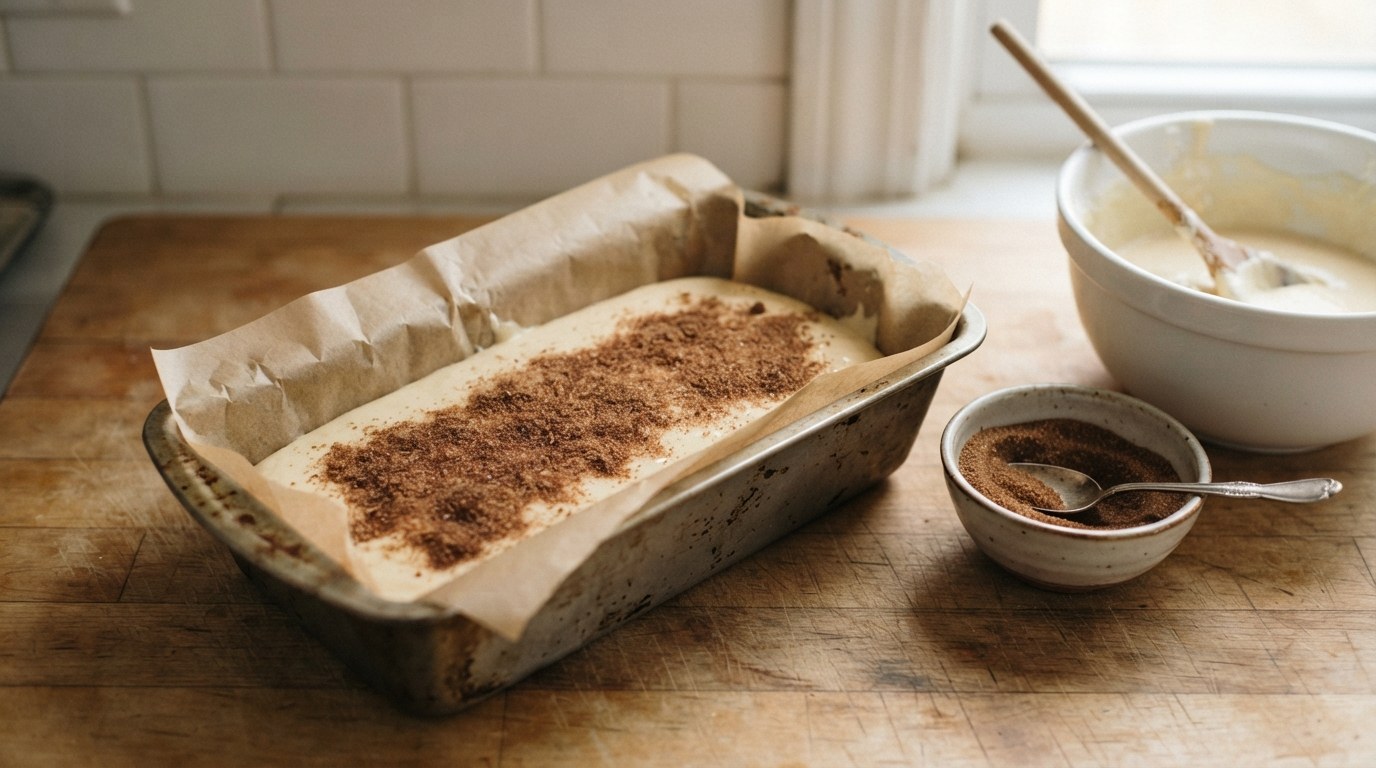
The classic failure of a swirl bread is the gap: a hollow tunnel where the cinnamon layer used to be, with the filling pooled at the bottom. King Arthur's test kitchen traced it to the sugar itself: sugar is hygroscopic, it attracts water, and as the loaf sits and bakes the cinnamon-sugar filling melts and liquefies, running out of its layer and leaving air behind. Its first fix is the one used here, a stabilizer in the filling, and it takes only two teaspoons of flour; the flour absorbs the syrup as the sugar melts and holds the ribbon in place. That is the reason the swirl mixture in this recipe is brown sugar, cinnamon and a tablespoon of flour rather than sugar and cinnamon alone.
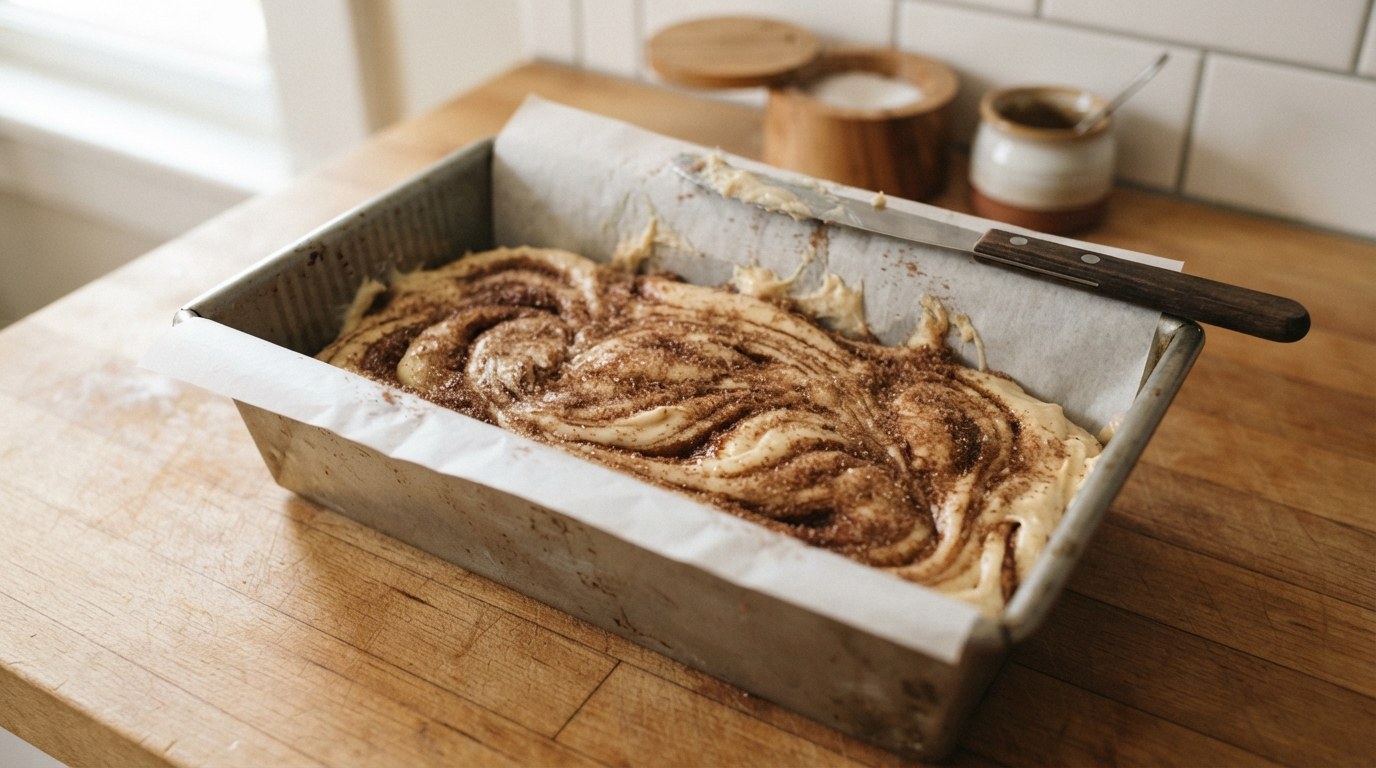
Build it in layers. Spread half the batter in a parchment-lined 9-by-5-inch pan, sprinkle on two-thirds of the swirl mixture in an even layer, add the rest of the batter, and scatter the remaining swirl on top. Then drag a butter knife through in a few loose figure-eights, from end to end, three or four passes and no more. A few passes give a ribbon; a dozen give a muddy, evenly brown loaf with no swirl at all. Keep the knife off the bottom of the pan, so the base of the loaf stays plain and does not stick.
The Crunch Top
The top is what makes this loaf taste like the cereal it is named after in most kitchens. Mix a quarter cup of granulated or coarse sugar with a teaspoon of cinnamon and a tablespoon of melted butter into damp sand and press it over the batter. In the oven, the butter melts and browns and the sugar at the very surface melts and begins to caramelize as the crust dries past 320°F, so it sets into a thin, crackly, cinnamon-glazed shell while the sugar just under it stays granular and crunchy. Granulated sugar gives a finer shell; coarse sanding sugar gives a rougher, crunchier one. Powdered sugar dissolves and disappears. The cinnamon matters here more than anywhere else in the loaf, because it is tasted straight: McCormick describes its Saigon cinnamon as prized for a high concentration of aromatic oils that gives it a warm, spicy-sweet intensity, and that is the kind to use on top; any fresh cassia cinnamon works, but a jar that has been open for two years will taste of dust.
Advertisement
Baking and Doneness: 200°F in the Center
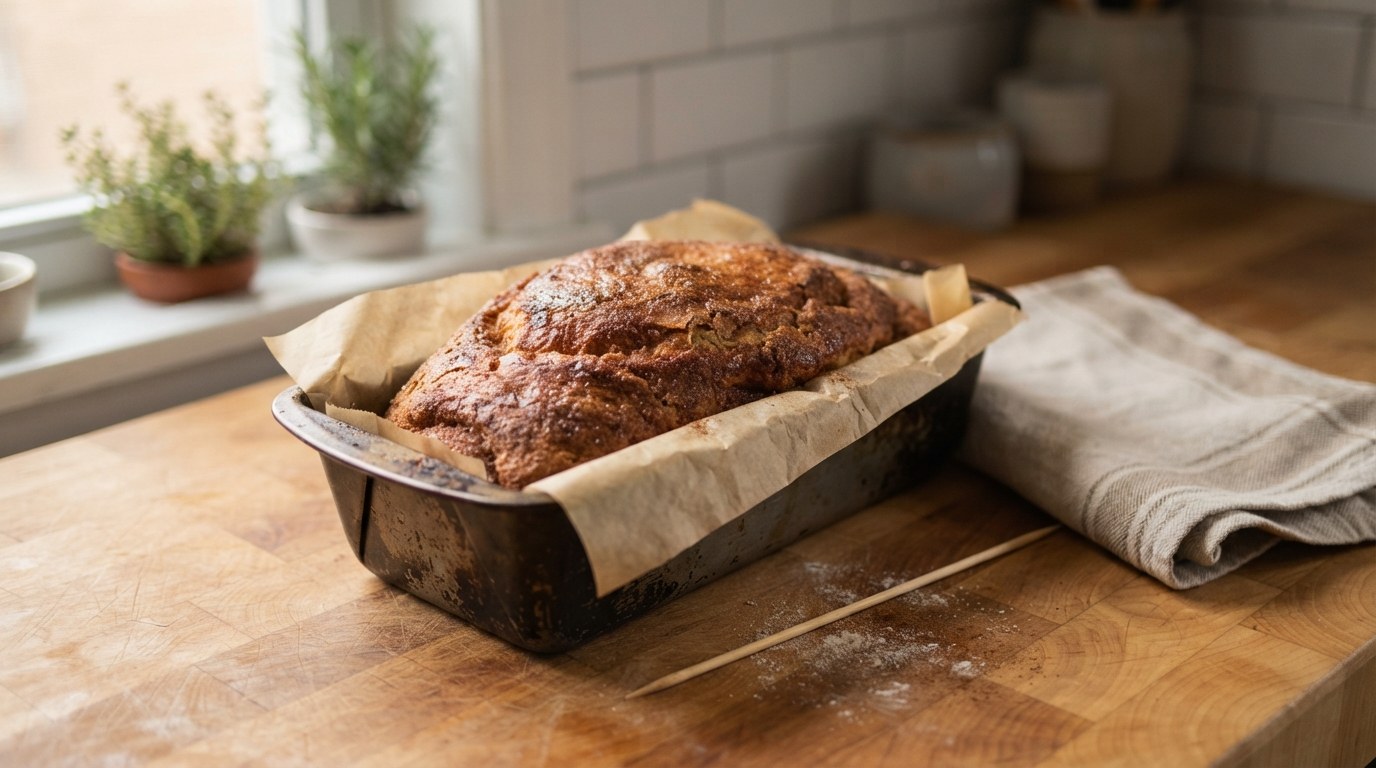
Bake at 350°F for 60 to 70 minutes, until the top is domed and deep golden, the crust has crackled, and a thin skewer pushed into the center of the plain crumb, avoiding the cinnamon ribbon, comes out clean or with a few dry crumbs. A tall, dense loaf like this is the one where the skewer lies, because a skewer that hits the melted sugar of the swirl looks wet whatever the crumb is doing, so an instant-read thermometer settles it: the center should read 200 to 205°F. A quick bread is done when its starch has fully gelatinized and its egg has set, which happens well above the 180°F that sets the structure, and pulling it at 190°F leaves a gummy band around the swirl. If the top is browning fast at 45 minutes, tent it loosely with foil and finish the time.
| Stage | Number | What you see |
|---|---|---|
| Mix | Fold just until no dry flour | Thick, slightly rough batter, a few lumps |
| Layer and swirl | 3 to 4 knife passes | A visible ribbon, not a muddy blend |
| Bake | 350°F, 60 to 70 minutes | Domed, deep golden, crackled crust |
| Doneness | 200 to 205°F in the center | Skewer clean in the plain crumb; no gummy band |
| Cool in the pan | 15 minutes, then on a rack | Slices clean once fully cool |
Cool the loaf in the pan for 15 minutes, then lift it out by the parchment onto a rack and let it cool fully before slicing; warm, the swirl is still syrup and the crumb tears. Cooling finishes the set, as the starch firms and the sugar in the swirl thickens back to a paste, which is why King Arthur's last anti-gap rule is simply to let the loaf cool completely.
Storage, Toasting and Variations
The loaf keeps 3 days wrapped at room temperature and a week refrigerated, and it freezes for 3 months sliced, with parchment between the slices. The crunch top softens overnight because sugar pulls moisture from the air and from the crumb beneath it; it is at its crackliest on the first day, and a few minutes in a toaster oven brings some of it back. Slices toast well and make a cinnamon French toast that needs no extra sugar. For variations, fold a cup of chopped toasted pecans or a diced apple into the batter, or replace a quarter cup of the sour cream with pumpkin purée and add a half teaspoon of nutmeg for the Thanksgiving week. The cookie brittle is the other crunchy-sugar bake on this site's holiday list.
Advertisement

Cinnamon Swirl Loaf (No-Yeast, Crunchy Cinnamon-Sugar Top)
Ingredients
- For the swirl
- ½ cup packed light brown sugar
- 1 Tbsp ground cinnamon
- 1 Tbsp all-purpose flour
- For the batter
- 2 cups all-purpose flour
- 2 tsp baking powder
- ½ tsp baking soda
- ½ tsp fine sea salt
- ¾ cup granulated sugar
- 2 large eggs, room temperature
- 1 cup full-fat sour cream, room temperature
- ½ cup unsalted butter, melted and slightly cooled
- 2 tsp vanilla extract
- For the crunch top
- ¼ cup granulated or coarse sanding sugar
- 1 tsp ground cinnamon
- 1 Tbsp unsalted butter, melted
Instructions
- Heat the oven to 350°F (175°C). Line a 9-by-5-inch loaf pan with parchment, leaving overhang on the long sides. Stir the swirl ingredients together in a small bowl. Stir the crunch-top ingredients together in another until they look like damp sand.
- Whisk the flour, baking powder, baking soda and salt in a bowl. In a large bowl, whisk the granulated sugar, eggs, sour cream, melted butter and vanilla until smooth. Add the dry ingredients and fold with a spatula just until no dry streaks remain; the batter will be thick and slightly lumpy.
- Spread half the batter in the pan. Sprinkle two-thirds of the swirl mixture evenly over it. Add the remaining batter, smooth the top, and scatter the rest of the swirl over it. Drag a butter knife through the batter in 3 or 4 loose figure-eights, keeping it off the bottom of the pan.
- Press the crunch-top mixture evenly over the surface.
- Bake 60 to 70 minutes, until domed and deep golden with a crackled crust, a skewer in the plain crumb comes out clean, and the center reads 200 to 205°F. Tent with foil at 45 minutes if the top is browning fast.
- Cool in the pan 15 minutes, then lift out by the parchment onto a rack and cool completely before slicing.
Notes
Advertisement
Cinnamon Swirl Loaf FAQs
The questions that come up most: why the cinnamon swirl separated from the bread, why the center was gummy, whether it can be made without sour cream, whether it needs yeast, how to keep the top crunchy, whether it can be made in a different pan, how to store and freeze it, and what cinnamon to use.
Why did my cinnamon swirl separate from the bread?
Sugar is hygroscopic: it pulls in water, and a cinnamon-sugar layer melts into a syrup as the loaf bakes, runs out of its ribbon and leaves a gap. A tablespoon of flour mixed into the swirl absorbs that syrup and holds the ribbon in place, and swirling the layers into the batter with a few knife passes anchors them. Cool the loaf fully before slicing so the swirl firms back up.
Why is the center of my loaf gummy?
It came out too early. A dense 9-by-5 quick bread needs 60 to 70 minutes at 350°F, and the center should read 200 to 205°F on a thermometer; below about 190°F the starch around the swirl has not fully set. A skewer that hits the melted sugar ribbon looks wet even when the crumb is done, so test in the plain crumb or trust the thermometer.
Can I make it without sour cream?
Yes, with a trade. Full-fat plain yogurt is the closest swap; buttermilk works but makes a lighter, drier loaf because it lacks sour cream's 18 percent milkfat. Whatever you use must be acidic, since the half teaspoon of baking soda depends on it; plain milk needs a tablespoon of lemon juice stirred in.
Does cinnamon swirl bread need yeast?
Not this one. It is a quick bread, leavened by baking powder and baking soda, mixed in 15 minutes and baked straight away. Yeasted cinnamon swirl bread is a sandwich-style loaf with a chewier crumb and a rolled swirl; this is closer to a coffee cake, tender and moist, with the swirl folded through.
How do I keep the cinnamon-sugar top crunchy?
It is crunchiest on day one. Sugar absorbs moisture from the air and the crumb, so the shell softens overnight; store the loaf loosely covered rather than in a sealed bag, and re-crisp slices in a toaster oven. Coarse sanding sugar in the topping holds its crunch longer than granulated.
Can I bake it in a different pan?
Two 8-by-4-inch pans take 45 to 50 minutes; a 12-cup muffin tin makes cinnamon swirl muffins in 22 to 25 minutes, layered the same way. A 9-inch square pan works as a coffee cake in 35 to 40 minutes. In every case, bake to 200°F in the center.
How do I store and freeze it?
Three days wrapped at room temperature, a week in the refrigerator, and 3 months frozen, sliced with parchment between the slices so you can toast one at a time. Thaw at room temperature or straight in the toaster.
What cinnamon is best for the swirl?
A fresh cassia cinnamon; Saigon (Vietnamese) cassia is the boldest, with a high concentration of the aromatic oils that carry its warm, spicy-sweet flavor, so it reads through the sugar and butter. Ceylon cinnamon is milder and floral and gets lost. Whichever you use, buy it fresh; an old jar tastes of dust.

About the Author
John Siracusa is the founder of Hell’s Kitchen Recipes. He focuses on technique-first, reproducible home cooking and researches recipes & kitchen equipment from published food science and professional chef methods since 2016.