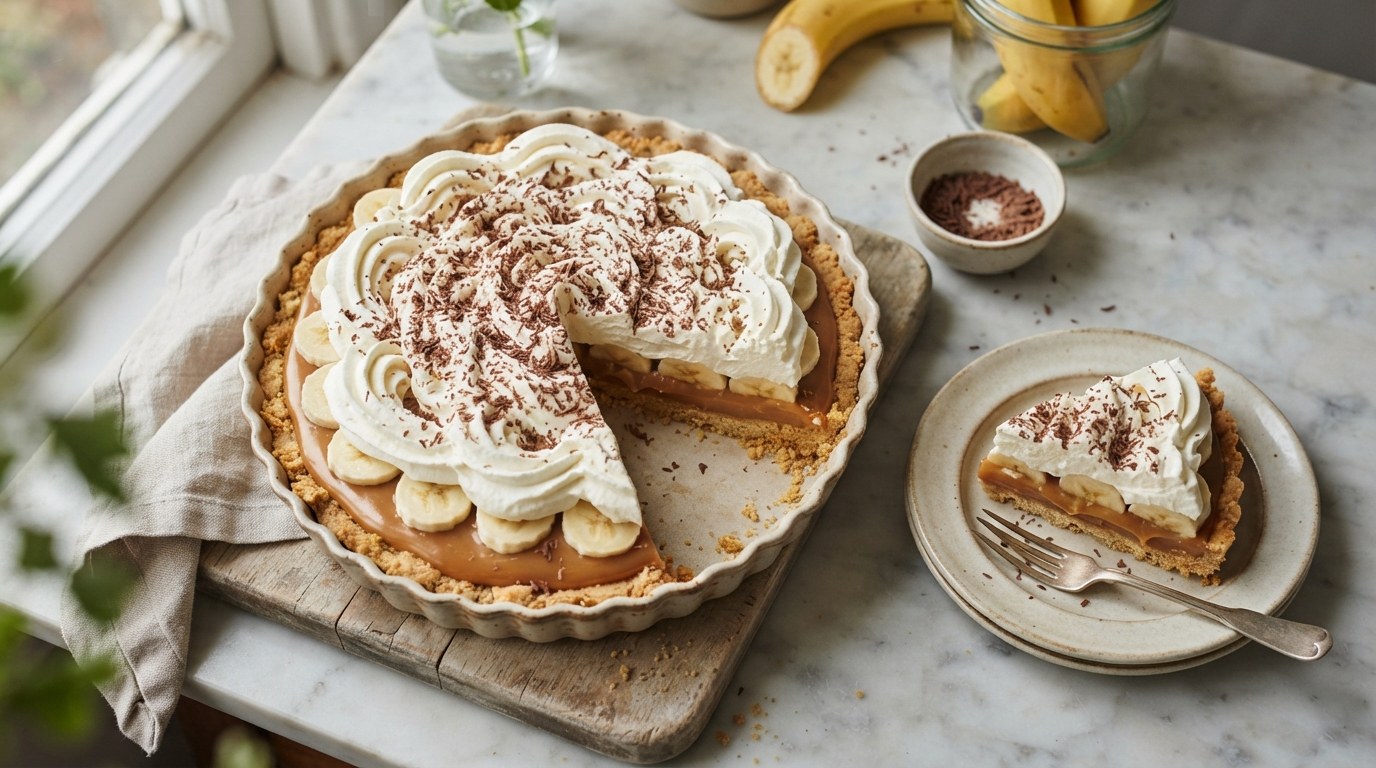
Banoffee pie is a no-bake British dessert of banana and toffee over a buttery biscuit base, finished with whipped cream and grated chocolate. Gordon Ramsay did not invent it, and it is not one of his MasterClass dishes, but it is the kind of humble classic he rates: cheap ingredients, one technique that decides everything, and no oven once the base is set.
That one technique is the toffee. Get its color and set right and the pie is faultless. The rest is assembly and a long chill. Below is the version we make, plus the food science behind why it works, so you can fix it when it does not.
What Is Banoffee Pie?
Banoffee pie is banana plus toffee ("ban-offee") on a crushed-biscuit base, topped with softly whipped cream. It was invented in 1971 at The Hungry Monk restaurant in Jevington, East Sussex, by owner Nigel Mackenzie and chef Ian Dowding, who adapted an American coffee-toffee pie and swapped in banana, per the documented restaurant history. It is British, it is barely fifty years old, and the name is simply banana welded to toffee.
It shares a family tree with our Ramsay-style chocolate chip cookies and the other sweet finishes in the Baking & Desserts collection: quick to build, ruthless about one detail.
The Toffee Is the Whole Dish
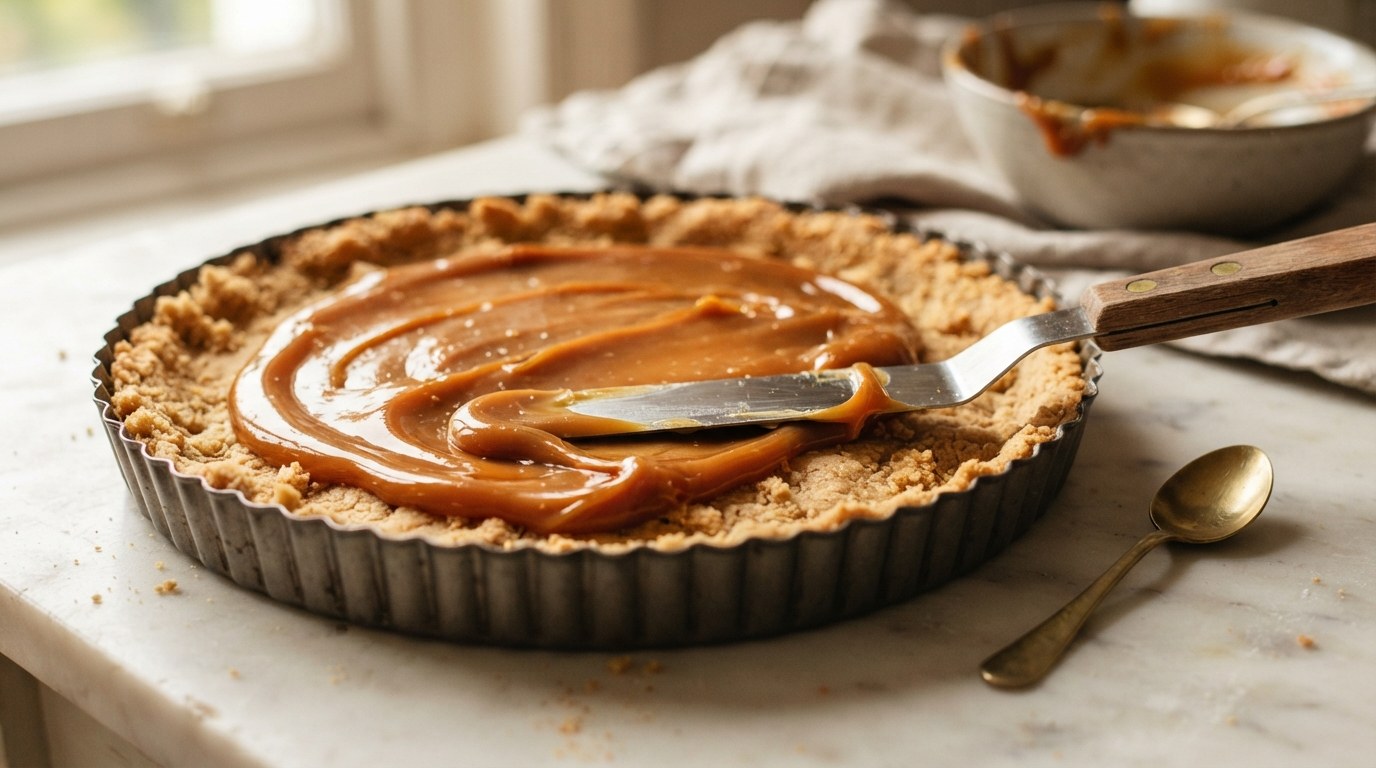
The toffee layer is dulce de leche, which is sweetened condensed milk cooked slowly until it turns deep gold. That browning is the Maillard reaction between the milk proteins and the sugars, the same reaction that colors seared meat and toast, described in the food-science literature on the Maillard reaction. It is a different process from plain caramelization, where sugar alone decomposes; the milk protein is what gives banoffee toffee its round, malty flavor instead of a thin, bitter caramel.
Maillard browning runs fastest above 284°F/140°C, but it still proceeds at the gentle heat of a simmer given enough time, which is exactly why the traditional method takes two to three hours. Long, low heat is doing the same job that high heat does quickly. Ramsay would tell you to cook with your eyes here: you want a spreadable, glossy, deep-caramel gold, not a stiff, dark paste.
Three Ways to Make the Toffee
You have three routes to the toffee, and they trade time for control. Store-bought dulce de leche is the honest default; the oven method gives you control; the boiled-can method is the original, and the one that needs a safety warning.
| Method | Time & effort | Safety | Result |
|---|---|---|---|
| Ready-made dulce de leche | About 5 minutes, spread from the tin | No risk | Consistent deep toffee; the reliable default |
| Oven, condensed milk in a water bath | About 90 minutes, hands-off | Safe, no pressure builds | Silky and easy to judge by color |
| Boiled unopened cans (the 1971 original) | Two to three hours, watched | Cans must stay fully submerged the whole time; never let the pan boil dry, or the can can burst | Classic, slightly firmer set |
If you boil cans, top the water up constantly and let them cool fully before opening, advice the makers of condensed milk such as Carnation repeat for a reason. For a weeknight, ready-made caramel gets you the same layer with none of the watching.
Why Your Bananas Go Brown
Browning bananas are not the toffee's fault; it is enzymatic browning, the reaction of the fruit's polyphenol oxidase with oxygen once the banana is cut, the same process explained by Michigan State University Extension. You slow it two ways. A light toss in lemon juice drops the pH and stalls the enzyme, and sealing the banana between the toffee below and the cream above keeps oxygen off it.
Use bananas that are ripe but still firm, with few or no spots. Cook, or in this case build, with your eyes: soft, freckled bananas taste sweeter but turn to mush under the cream and brown faster.
Whip the Cream Cold, and Not Too Far
Whipped cream is a foam, a network of fat droplets holding air. Cold cream whips higher and holds longer because the fat stays firm, so chill the bowl and the cream first. Stop at soft-to-medium peaks that just hold their shape. Push past that and the foam collapses toward butter, going grainy and weepy on top of the pie.
A tablespoon or two of icing sugar and a little vanilla is all it needs. Taste it before it goes on, the way you would season anything, and keep it loose; a banoffee should look billowy, not stiff.
Why Is My Banoffee Pie Runny?
A runny banoffee almost always comes from one of three things: toffee spread while it was too warm and thin, cream that was under-whipped, or a pie assembled and sliced before it had chilled. Warm caramel flows because heat drops its viscosity, so let ready-made toffee cool to just spreadable and let it settle on the base before the bananas go on.
Build in order, toffee then banana then cream, and chill the finished pie at least two hours before you cut it. That rest firms the toffee and sets the cream so the slices stand up cleanly instead of sliding apart.
How to Store Banoffee Pie
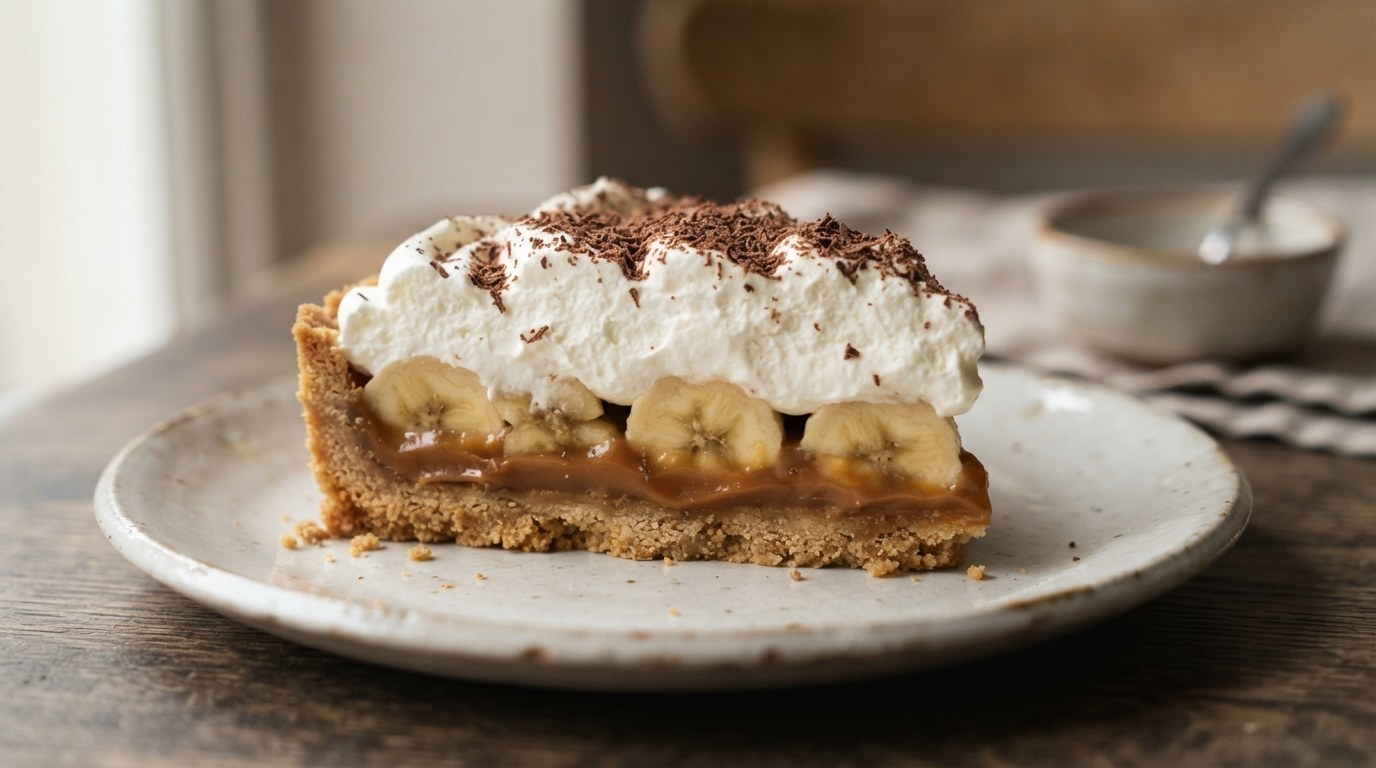
Keep banoffee pie in the fridge, loosely covered, and eat it within two to three days; it is best in the first day while the bananas are pale and the base is still crisp. Make the base and toffee a day ahead if you like, then add bananas and cream on serving day so nothing browns or softens.
It does not freeze well once assembled, because the cream weeps and the bananas darken on thawing. If you want a get-ahead dessert with a longer window, our pumpkin crème brûlée and toasted-milk tres leches both hold better than banoffee does.
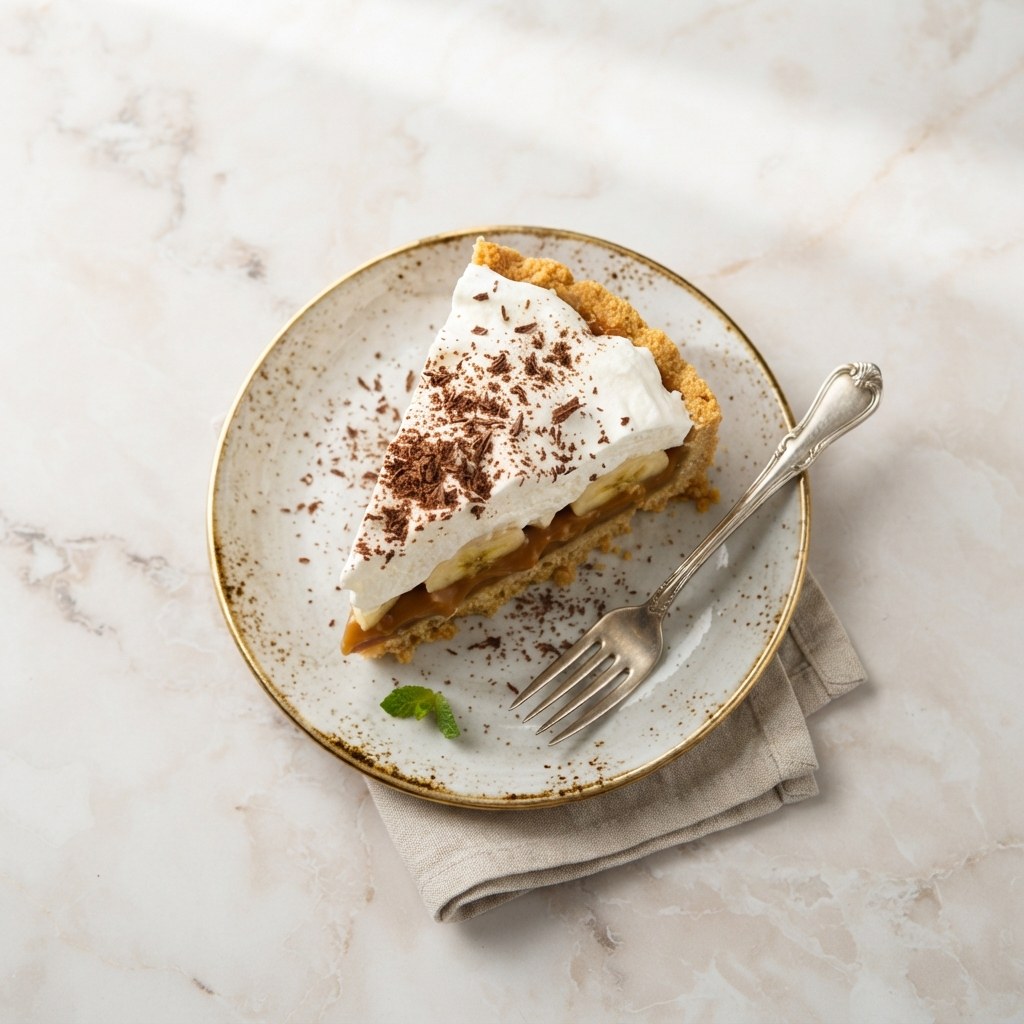
Gordon Ramsay Banoffee Pie
Ingredients
Biscuit base
- 250 g digestive biscuits or graham crackers, finely crushed (about 2 cups crumbs)
- 120 g unsalted butter, melted (about 1/2 cup)
Toffee layer
- 380 g dulce de leche or thick caramel (one 13.4 oz can), or 2 cans sweetened condensed milk cooked to toffee
To finish
- 3 ripe but firm bananas
- 1 tsp lemon juice
- 300 ml cold heavy (double) cream (about 1 1/4 cups)
- 2 Tbsp confectioners (icing) sugar
- 1/2 tsp vanilla extract
- Dark chocolate, for grating
- Pinch of flaky sea salt (optional)
Instructions
- Crush the biscuits to fine crumbs and stir in the melted butter until the mixture looks like wet sand. Press firmly into a 9-inch tart tin or pie dish, over the base and up the sides. Chill 20 to 30 minutes until firm.
- Spread the dulce de leche evenly over the chilled base. If it is stiff from the fridge, warm it briefly, to about 85°F/30°C, so it spreads without tearing the crumb, then let it settle for a few minutes.
- Slice the bananas, toss them lightly in the lemon juice, and layer them over the toffee.
- Whip the cold cream with the icing sugar and vanilla to soft, billowy peaks. Do not overwhip, or the cream turns grainy. Spoon or pipe it over the bananas.
- Chill the pie at least 2 hours. Just before serving, grate dark chocolate over the top and add a small pinch of flaky sea salt.
Notes
Banoffee Pie FAQs
The questions that come up most about banoffee pie: where it is from, the order of the layers, why it turns runny, and how far ahead you can make it.
Is banoffee pie British?
Yes. It was invented in 1971 at The Hungry Monk restaurant in Jevington, East Sussex, by owner Nigel Mackenzie and chef Ian Dowding. It is a modern British classic, not a centuries-old one.
Why is it called banoffee?
The name is a blend of "banana" and "toffee," the two flavors that define the pie. Some early versions leaned on coffee too, but banana and toffee are the constant.
Do the bananas or the caramel go first?
The toffee goes onto the biscuit base first, then the banana slices, then the whipped cream. Putting the toffee down first glues the base together and seals the bananas from the air so they brown more slowly.
Why is my banoffee pie runny?
Usually the toffee was spread while too warm, the cream was under-whipped, or the pie was cut before it chilled. Let ready-made toffee cool to just spreadable, whip the cream to soft peaks, and chill the finished pie for at least two hours before slicing.
How long does banoffee pie last?
Two to three days in the fridge, loosely covered, though it is best within the first 24 hours while the bananas are pale and the base is crisp.
Can I make banoffee pie ahead of time?
Make the biscuit base and the toffee layer up to a day ahead and keep them chilled. Add the bananas and whipped cream on the day you serve it so the fruit stays fresh and the cream stays firm.

About the Author
John Siracusa is the founder of Hell’s Kitchen Recipes. He focuses on technique-first, reproducible home cooking and researches recipes & kitchen equipment from published food science and professional chef methods since 2016.