Gordon Ramsay sticky toffee pudding is the dessert that closes out dinner at Gordon Ramsay Hell's Kitchen at Lake Tahoe, inside Caesars Republic Lake Tahoe, where the menu pairs it with speculoos ice cream, and the three-course prix fixe lists it with Biscoff ice cream and a pour of Pedro Ximénez sherry. This is that dessert made for a home kitchen: a dark, soft date sponge baked in an 8-inch square pan, a warm toffee sauce of butter, dark brown sugar, cream and a pinch of salt, and a no-churn Biscoff ice cream you make the day before without a machine.
It is a British classic and an easy one to bake. The sponge takes 15 minutes to mix and about 30 to bake, the sauce takes 10, and the ice cream needs only a hand mixer and a night in the freezer. Below is why each step works, from the baking soda in the date soak to the condensed milk that keeps the ice cream scoopable. If toffee desserts are your thing, the Gordon Ramsay banoffee pie is its cold, no-bake cousin, and the rest of the sweet side of the site lives in Baking & Desserts.
What Is Sticky Toffee Pudding?
Sticky toffee pudding is a moist sponge cake made with chopped dates, soaked in a buttery brown-sugar toffee sauce and served warm, usually with ice cream, cream or custard. "Pudding" is the British word for dessert, so there is nothing custardy about it; it is a cake that gets sauced. The version most people know took off in the 1970s at the Sharrow Bay hotel in England's Lake District, and it has been a pub and restaurant staple in the UK ever since. In Australia the same dessert is called sticky date pudding.
It is a different thing from bread pudding, which is stale bread baked in an egg custard; if that is what you are after, our French toast bread pudding is the custardy, make-ahead kind. Ramsay has published two versions of his own, and the Hell's Kitchen menu adds the Biscoff twist. Here is how they line up with this one:
| Version | Dates | Bake | Sauce | Served with |
|---|---|---|---|---|
| Hell's Kitchen Lake Tahoe menu | Date sponge | Restaurant kitchen | Toffee | Speculoos (Biscoff) ice cream; Pedro Ximénez sherry on the prix fixe |
| Ramsay's individual puddings (gordonramsay.com) | Soaked with baking soda, then pureed | Muffin tin, 350°F, 17 to 19 min | Butter, brown sugar, milk, cream, corn syrup, salt, bourbon | Whipped cream |
| Ramsay restaurants' tray bake | Cooked to a puree | Lined tray, 170°C fan, 50 min | Butter, light and dark brown sugar, double cream | Clotted cream or vanilla ice cream |
| This recipe | Soaked with baking soda, mashed | 8x8-inch pan, 350°F, 30 to 35 min | Butter, dark brown sugar, heavy cream, salt, vanilla | No-churn Biscoff ice cream |
The common thread is the method: soften the dates in boiling water, beat them into a brown-sugar batter, bake, and drown the warm cake in toffee. The square pan is the practical home choice, one bake that cuts into nine generous portions.
Why the Dates Soak in Boiling Water with Baking Soda
The dates soak in boiling water with baking soda so they soften fast, melt into the batter, and turn the sponge dark. Both of Ramsay's published versions start this way, and each part of the soak has a job. Boiling water rehydrates the dried fruit so it holds moisture in the finished cake instead of pulling it out. Baking soda makes the water alkaline, and alkaline conditions break down pectin, the glue that holds plant cells together, so the tough date skins slump and the flesh mashes to a near-puree with a fork. The same trick softens chickpeas for hummus.
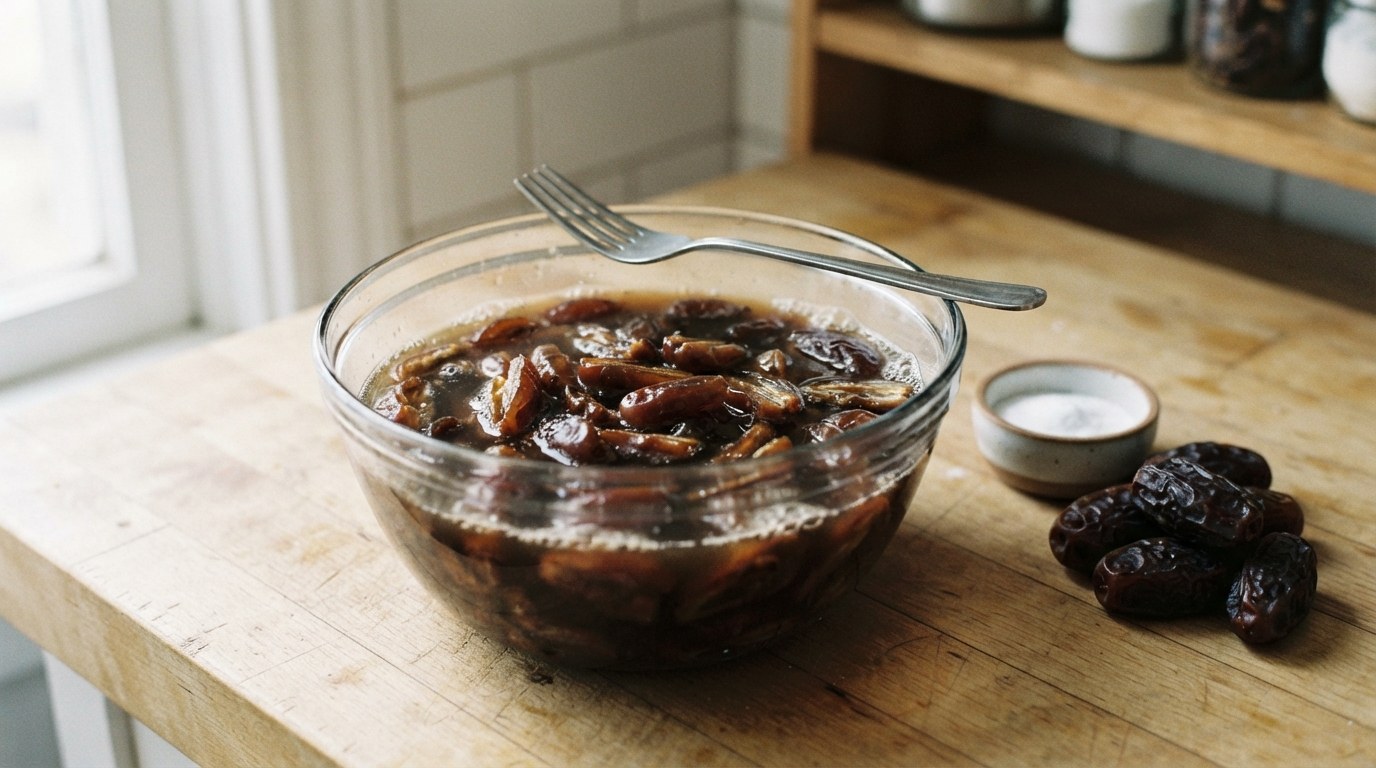
That alkalinity carries into the batter and changes the color. Maillard browning, the reaction between sugars and proteins that gives baked goods their toasty color and flavor, starts around 284°F (140°C) at the surface and runs faster in alkaline conditions, which is why a sticky toffee pudding bakes up a deep mahogany instead of a pale tan. Baking soda also leavens. Dark brown sugar carries molasses, which is mildly acidic, and when the soda meets it in the wet batter it releases carbon dioxide that lifts the sponge alongside the baking powder. Medjool dates are the best choice; they are soft and caramel-sweet, so they break down fully. Mash them right in their liquid and add all of it to the batter, since the soaking water carries the soda and a lot of date flavor.
How to Make the Sponge Light but Moist
The sponge stays light because you cream the butter and sugar first, and it stays moist because sugar and dates hold on to water. Beat soft butter with dark brown sugar for 2 to 3 minutes until it turns lighter and fluffy. The sugar crystals cut thousands of tiny air pockets into the fat, and in the oven the gas from the baking powder and soda expands those pockets instead of forming new ones, which gives an even, tender crumb. Undercreamed butter is the most common reason a date sponge turns out dense and heavy.
Once the eggs and date mash are in, add the flour on low speed and stop as soon as you no longer see dry streaks. Flour and water form gluten as you mix, and a heavily mixed batter bakes up tough and rubbery. Moisture is the easy part. Brown sugar and the natural sugars in dates are hygroscopic, meaning they pull in and hold water, which is why this cake stays soft for days and is even better on the second day. A hand mixer is the one tool worth having here: it creams the butter and sugar properly, and it whips the cream for the ice cream base too.
KitchenAid
KitchenAid 5-Speed Ultra Power Hand Mixer (KHM512)
- Five speeds: a low start for folding in flour without spraying it, a high end for creaming butter and sugar until pale
- Stainless steel turbo beaters whip a pint of cold cream to stiff peaks for the no-churn ice cream base
- One-button beater release and a lockable swivel cord; the beaters go in the dishwasher
How to Tell When Sticky Toffee Pudding Is Done
Sticky toffee pudding is done when a skewer pushed into the center comes out clean or with a few moist crumbs, the top springs back when pressed, and the edges have just pulled away from the pan. In an 8x8 metal pan at 350°F (175°C) that takes 30 to 35 minutes. If you use a thermometer, King Arthur Baking puts most cakes at 200 to 210°F in the center when fully baked, and this one is ready at about 200 to 205°F. The structure sets earlier, once the egg proteins coagulate at around 176°F (80°C) and the starch has swollen with water, but the extra degrees drive off enough steam that the center does not sink.
Do not chase a bone-dry skewer, though. The sauce is coming, so a sponge pulled with a few damp crumbs on the tester ends up soft and saucy, while one baked until the skewer is spotless can turn dry at the edges. Glass and ceramic dishes heat more slowly than metal, so add 5 minutes and start checking at 35.
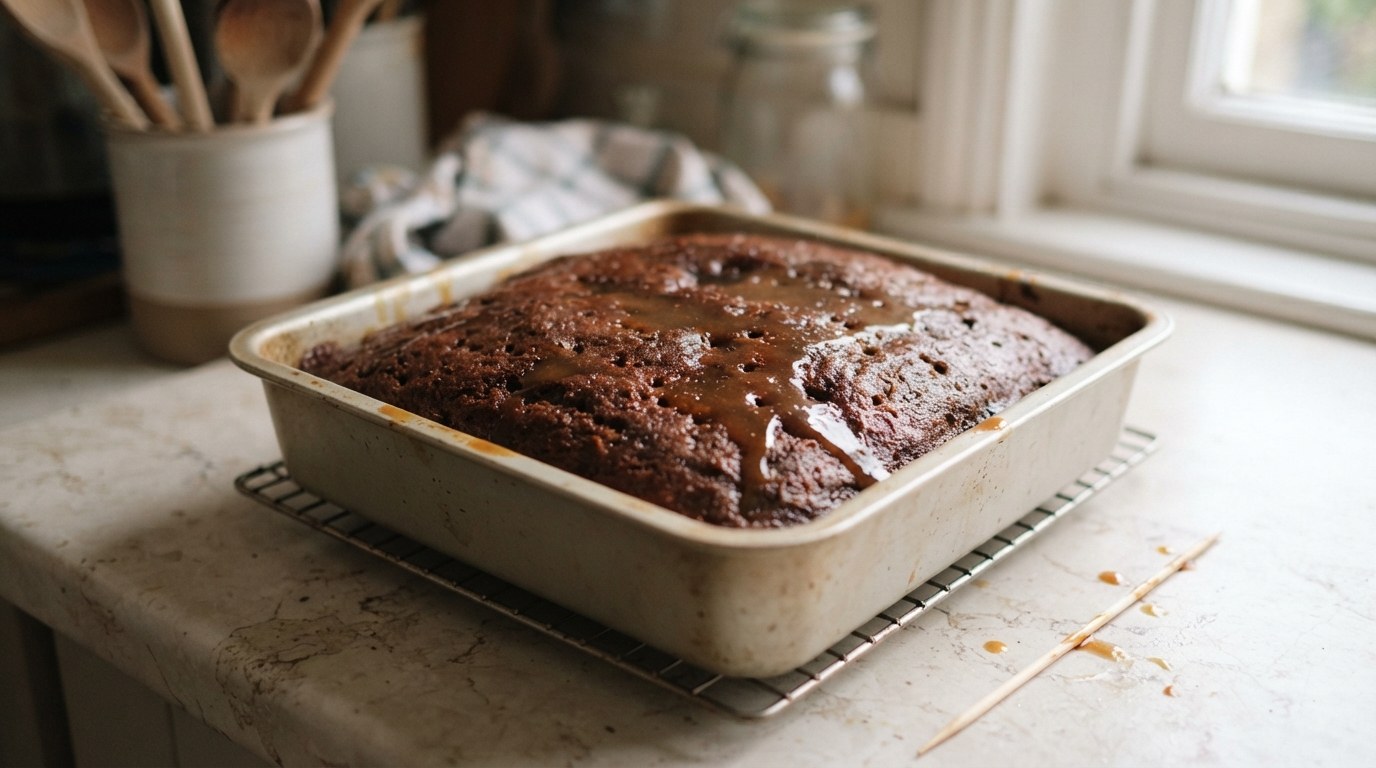
While the cake is still hot, poke it all over with a skewer and spread about a third of the warm toffee sauce over the top. Let it sit for 10 minutes. The holes let the sauce run down into the crumb, so every square is sticky right through and not just glazed on top.
Toffee Sauce: Why It Stays Pourable
This toffee sauce stays smooth and pourable because you dissolve the brown sugar in butter and loosen it with cream, instead of cooking sugar to candy. True caramelization, where sugar itself breaks down into bitter-sweet brown compounds, needs about 320 to 338°F (160 to 170°C), and it is how toffee candy and a dry caramel are made. Here you never get close: dark brown sugar already carries molasses, so it brings the deep caramel flavor with it, and the butter and cream keep the pan at a gentle bubble a little above 212°F (100°C), the point where water boils. Melt the butter and sugar over medium heat, stirring, until the sugar has dissolved and the mixture bubbles, about 2 minutes. Then whisk in the cream.
Heavy cream is the right dairy because of its fat. Cream above about 25 percent fat is heat-stable, so it can simmer with the sugar without splitting; milk or half-and-half is more likely to curdle or turn the sauce thin and grainy. Simmer the sauce gently for 3 to 4 minutes, until it coats a spoon. Do not let it boil hard for long: every minute at a rolling boil drives off more water, and the extra sugar concentration sets the sauce thick and chewy as it cools, which is how you make toffee candy. If that happens, whisk in a splash more cream over low heat.
Finish with salt and vanilla off the heat, then taste. Salt does not just add saltiness; it blunts bitterness and lets the caramel notes come forward, so a sauce that tasted flat and cloying suddenly tastes like toffee. Add it a pinch at a time until it does. Ramsay's home version goes further with a spoonful of corn syrup and a splash of bourbon; both work here if you like them, the syrup for extra gloss and the bourbon stirred in after the pan comes off the heat.
No-Churn Biscoff Ice Cream: How It Works Without a Machine
No-churn Biscoff ice cream works without a machine because whipped cream supplies the air and sweetened condensed milk supplies the sugar that keeps it soft. Biscoff is the brand name for Lotus's speculoos, a crisp Belgian spiced cookie; the Lotus ingredient list is wheat flour, sugar, vegetable oil, candy sugar syrup, a raising agent, soy flour, salt and cinnamon. Cookie butter, the spread made from ground speculoos, gives the base its caramel-spice flavor, and crushed cookies give it crunch. That is the same pairing as the Hell's Kitchen plate, where the menu calls it speculoos ice cream.
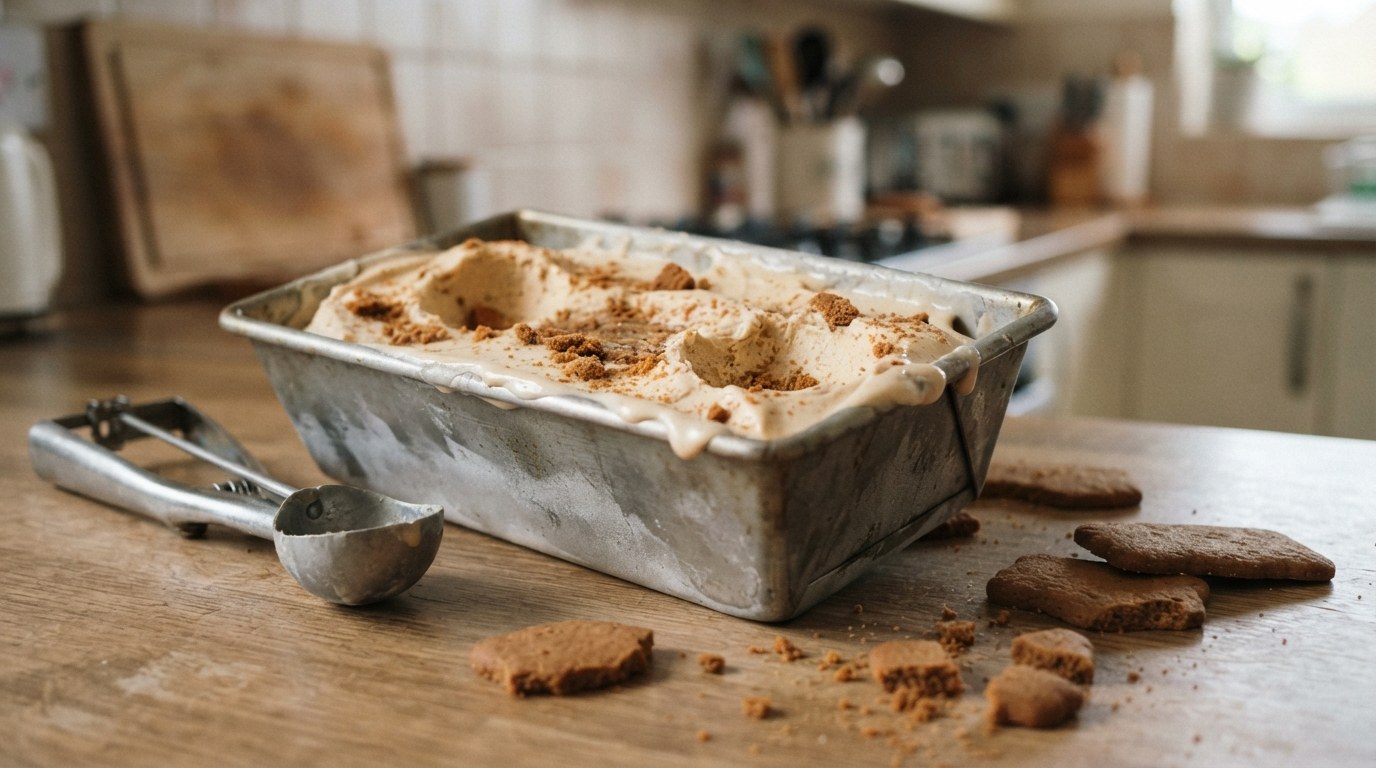
A machine churns air into a custard as it freezes. Here, whipping cold heavy cream to stiff peaks does that job before anything goes in the freezer: the beaters force air in, and the partly clumped fat droplets in the cream form a scaffold around the bubbles, the same structure that holds churned ice cream together, as pastry chef Michael Laiskonis explains for the Institute of Culinary Education. Fold the condensed milk mixture in gently, in two or three additions, so you keep that air; stir hard and the ice cream freezes dense and icy.
Sweetened condensed milk is milk with most of its water cooked off and a lot of sugar added. Under the federal standard it carries at least 8 percent milkfat and 28 percent milk solids, enough sugar to keep it from spoiling, and it is pasteurized. All that dissolved sugar lowers the freezing point of the water in the mix, so part of it stays unfrozen at freezer temperature and the ice cream scoops straight from the freezer instead of setting like an ice block. With so little free water, the ice crystals that do form stay small, which reads as creamy. Because this base has no eggs, there is no raw-egg concern; the condensed milk and the cream are both pasteurized dairy.
Make Sticky Toffee Pudding Ahead, Store It and Reheat It
Sticky toffee pudding is one of the best make-ahead desserts there is. Make the ice cream the day before, since it needs at least 6 hours to freeze firm. The sponge can be baked a day ahead too, covered at room temperature once cool; the hygroscopic sugars keep pulling moisture into the crumb, so it is softer the next day. The sauce keeps in a jar in the fridge and loosens again over low heat or in short microwave bursts.
Once it is sauced, treat it like any dish with dairy in it. The USDA advises refrigerating leftovers within 2 hours and eating them within 3 to 4 days. Reheat single squares in the microwave for 30 to 45 seconds, or warm the whole pan, covered with foil, in a 325°F (165°C) oven for about 15 minutes, and serve with freshly warmed sauce. The unsauced sponge freezes well, wrapped tightly, for up to 3 months; thaw it at room temperature and add the sauce after reheating. Keep the ice cream covered with plastic wrap pressed on the surface, and eat it within a couple of weeks, before ice crystals grow and the texture turns coarse.
Sticky Toffee Pudding Troubleshooting
Most sticky toffee pudding problems come down to the oven, the mixing, or the sauce boiling too hard. A dry sponge means it baked too long or the flour was packed into the cup; spoon flour into the measure and level it, and pull the cake when the tester still shows a few moist crumbs. A sunken middle means it came out underbaked or the oven ran cool, so check your oven with a thermometer and give it the full 30 minutes before opening the door. A dense, heavy crumb means the butter and sugar were not creamed long enough, or the batter was beaten hard after the flour went in.
Grainy sauce means undissolved sugar crystals seeded others; stir until the sugar has fully dissolved before adding the cream, and rescue a grainy batch by warming it gently with a splash of cream. A sauce that sets stiff in the jar just boiled too hard; warm it with more cream. Icy ice cream usually means the cream was underwhipped or the base was stirred instead of folded, which knocked out the air.
How to Serve Sticky Toffee Pudding the Hell's Kitchen Way
Serve sticky toffee pudding warm, with more warm sauce spooned over and a scoop of cold Biscoff ice cream on top, finished with a few cookie crumbs. The contrast is the point: hot, dark, sticky sponge against cold, creamy spice. Cut the squares just before serving, warm the sauce until it pours, and add the ice cream at the table so it starts to melt into the toffee instead of on the way there. To follow the Lake Tahoe prix fixe, pour a small glass of Pedro Ximénez sherry alongside; its raisin sweetness matches the dates. Without the Biscoff, plain vanilla ice cream or clotted cream, as Ramsay's restaurant recipe suggests, is the classic finish.
Gordon Ramsay sticky toffee pudding is a dessert that looks like a restaurant plate and bakes like a weeknight cake. If you are planning a bigger dinner, the Gordon Ramsay crème brûlée shows the other side of his dessert menu, and our Gordon Ramsay desserts to impress your guests gathers more ideas for the end of the meal.
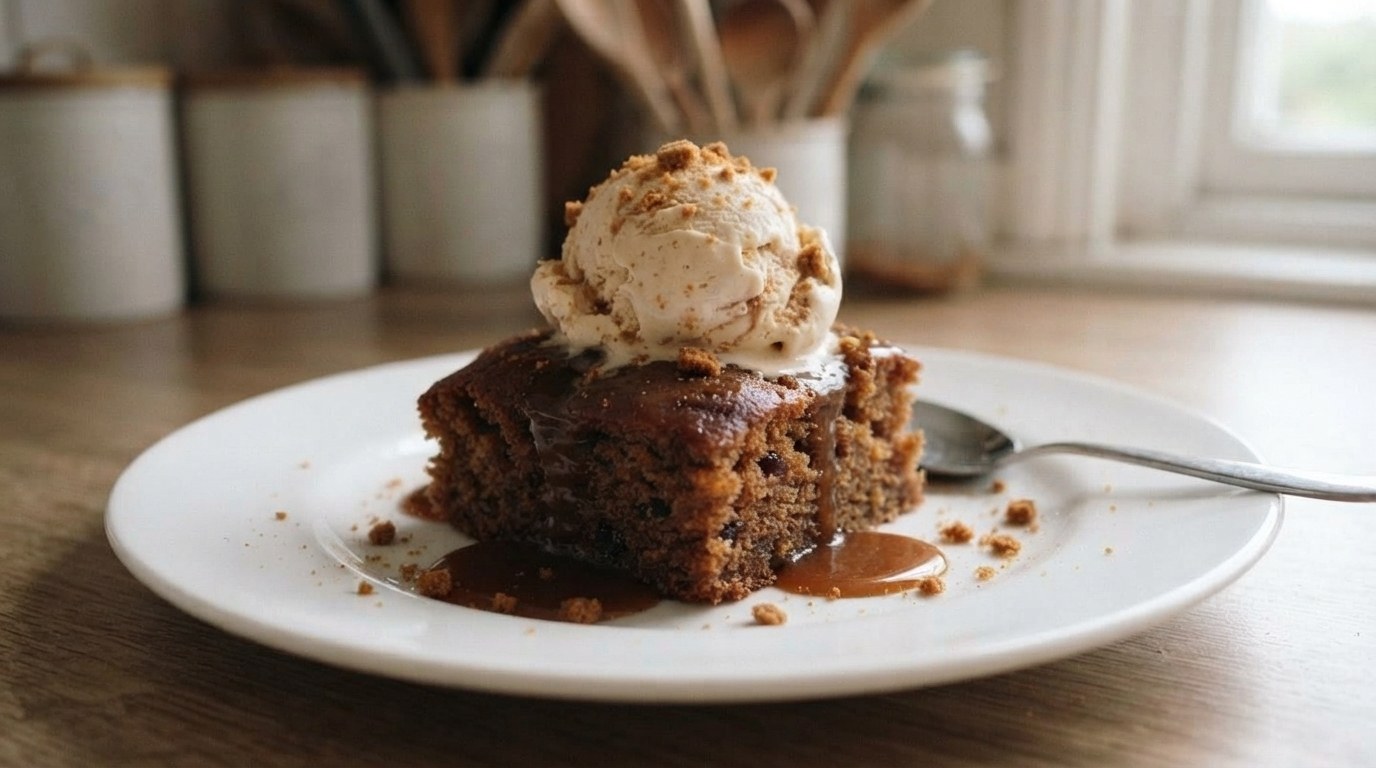
Gordon Ramsay Sticky Toffee Pudding with Biscoff Ice Cream
Ingredients
No-churn Biscoff ice cream (make the day before)
- 2 cups cold heavy cream
- 1 can (14 oz) sweetened condensed milk
- 1/2 cup Biscoff cookie butter (speculoos spread), plus 2 tbsp for swirling
- 1 tsp vanilla extract
- pinch of fine salt
- 15 Biscoff or other speculoos cookies, roughly crushed (about 1 cup), plus a few for serving
Date sponge
- 8 oz pitted Medjool dates (about 12), chopped
- 1 cup boiling water
- 1 tsp baking soda
- 1 1/2 cups all-purpose flour (190 g), spooned and leveled
- 1 tsp baking powder
- 1/2 tsp fine salt
- 6 tbsp unsalted butter, softened, plus more for the pan
- 3/4 cup packed dark brown sugar
- 2 large eggs, at room temperature
- 1 tsp vanilla extract
Toffee sauce
- 1/2 cup unsalted butter (1 stick)
- 1 cup packed dark brown sugar
- 1 cup heavy cream
- 1/2 tsp kosher salt, to taste
- 1 tsp vanilla extract
Instructions
- Make the ice cream (the day before): whip the cold heavy cream with a hand mixer to stiff peaks. In a second bowl, whisk the condensed milk, 1/2 cup cookie butter, vanilla and salt until smooth. Fold in a third of the whipped cream to loosen it, then gently fold in the rest in two additions, keeping as much air as possible. Fold in the crushed cookies.
- Spread half the base in a 9x5-inch loaf pan, dot with 1 tbsp warmed cookie butter and swirl with a knife, then repeat with the rest. Press plastic wrap onto the surface and freeze at least 6 hours, ideally overnight.
- Soak the dates: put the chopped dates in a heatproof bowl, pour the boiling water over, and stir in the baking soda (it will foam). Leave for 10 minutes, then mash with a fork into a rough puree in its liquid.
- Heat the oven to 350°F with a rack in the middle. Butter an 8x8-inch metal baking pan and line the base with parchment. Whisk the flour, baking powder and salt in a bowl.
- Cream the softened butter and dark brown sugar on medium-high for 2 to 3 minutes, until lighter and fluffy. Beat in the eggs one at a time, then the vanilla. On low speed, mix in half the flour, then the date mash with all its liquid, then the rest of the flour, stopping as soon as no dry streaks remain.
- Scrape the batter into the pan and bake for 30 to 35 minutes, until a skewer in the center comes out clean or with a few moist crumbs (about 200 to 205°F) and the top springs back.
- Meanwhile, make the toffee sauce: melt the butter and dark brown sugar in a saucepan over medium heat, stirring, until the sugar dissolves and the mixture bubbles, about 2 minutes. Whisk in the cream and simmer gently for 3 to 4 minutes, until it coats a spoon. Take it off the heat and stir in the vanilla and salt, a pinch at a time, tasting as you go.
- Poke the hot sponge all over with a skewer and spread about a third of the sauce over it. Rest 10 minutes. Cut into 9 squares and serve warm with more warm sauce, a scoop of the ice cream (soften it 5 to 10 minutes first) and a few crushed cookies.
Notes
Sticky Toffee Pudding FAQs
The questions that come up most: why it is called sticky toffee pudding, why baking soda goes in with the dates, how it differs from sticky date pudding, why it turns out dry, whether you can make it ahead, how to reheat it, and how to make Biscoff ice cream without a machine.
Why is it called sticky toffee pudding?
In Britain "pudding" means dessert, so the name just describes a sticky dessert covered in toffee sauce. It is a date sponge cake, not a custard pudding. The sauce is made from butter, brown sugar and cream, which gives it the toffee flavor, and the cake soaks it up until it is sticky right through.
Why do you put baking soda in with the dates?
Baking soda makes the soaking water alkaline, which breaks down the pectin in the date skins so they soften and mash into the batter instead of staying chewy. The alkalinity also speeds up browning, giving the sponge its dark color, and the soda reacts with the acidic molasses in brown sugar to help the cake rise.
What is the difference between sticky toffee pudding and sticky date pudding?
They are the same dessert under two names. Sticky toffee pudding is the British name, and sticky date pudding is the name used in Australia and New Zealand. Both are a moist date sponge served warm with a butterscotch-style toffee sauce.
Why is my sticky toffee pudding dry?
It was most likely overbaked, or the flour was packed into the measuring cup. Pull it when a skewer still comes out with a few moist crumbs, at about 200 to 205°F in the center, and spoon the flour into the cup instead of scooping. Poking holes and soaking the warm cake with some of the sauce also keeps it moist.
Can you make sticky toffee pudding ahead of time?
Yes. Bake the sponge a day ahead and keep it covered at room temperature, make the sauce and refrigerate it, and make the ice cream the day before since it needs at least 6 hours to freeze. Reheat the cake and the sauce just before serving. The unsauced sponge also freezes for up to 3 months.
How do you reheat sticky toffee pudding?
Microwave a single square for 30 to 45 seconds, or cover the pan with foil and warm it in a 325°F oven for about 15 minutes. Warm the sauce separately over low heat, adding a splash of cream if it has thickened, and spoon it over. Sauced leftovers keep 3 to 4 days in the fridge.
How do you make Biscoff ice cream without an ice cream maker?
Whip 2 cups of cold heavy cream to stiff peaks, whisk a 14-ounce can of sweetened condensed milk with cookie butter, vanilla and a pinch of salt, then gently fold the two together with crushed Biscoff cookies. Freeze it in a loaf pan for at least 6 hours. The whipped cream provides the air and the condensed milk keeps it scoopable.
Does Biscoff ice cream have eggs?
This no-churn version has none. It is made from heavy cream, sweetened condensed milk, cookie butter and crushed cookies, all of it pasteurized or baked, so there is no raw egg to worry about. Churned custard-style ice creams usually do contain egg yolks, cooked into the base.

About the Author
John Siracusa is the founder of Hell’s Kitchen Recipes. He focuses on technique-first, reproducible home cooking and researches recipes & kitchen equipment from published food science and professional chef methods since 2016.