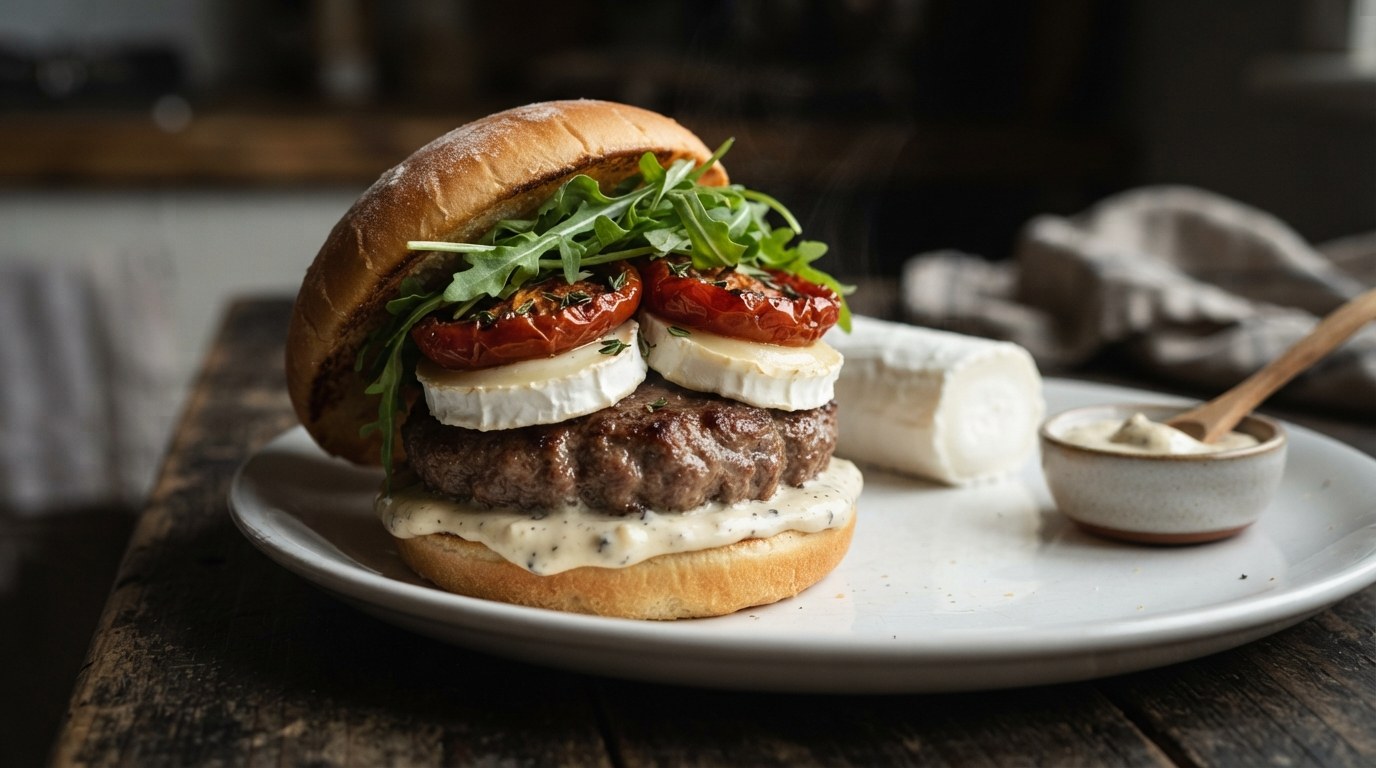
The Gordon Ramsay Euro Burger is a goat cheese burger: a seared beef patty under thick coins of fresh goat cheese, with slow-roasted tomatoes, peppery arugula and truffle aioli on a toasted bun. It's the lightest-tasting burger in the Gordon Ramsay lineup, tangy where the others go smoky or rich. Everything on it is simple to make. The one thing that trips people up is the cheese, because fresh goat cheese behaves like no other cheese on a burger. It warms, softens and turns creamy, and it never melts. Once you know why, you'll put it on at the right moment and it stays exactly where you want it.
What's on Gordon Ramsay's Euro Burger?
Gordon Ramsay's Euro Burger carries four toppings over a beef patty: truffle aïoli, goat cheese, arugula and oven-roasted tomato. That's how it ran on the original Gordon Ramsay BurGR menu at Planet Hollywood in Las Vegas. It has since come off the menu, and none of the current Gordon Ramsay Burger location menus list it, so your own kitchen is where you'll find one now.
This home version keeps all four and makes four burgers. The tomatoes roast low and slow while you do everything else, the truffle aioli is a stir-together of mayonnaise, garlic, lemon and black truffle paste, and the goat cheese comes from a plain log at the supermarket. For why truffle belongs in cold fat and what's actually in a bottle of truffle oil, the Truffle Burger page covers it; here, the goat cheese gets the attention.
Does Goat Cheese Melt on a Burger?
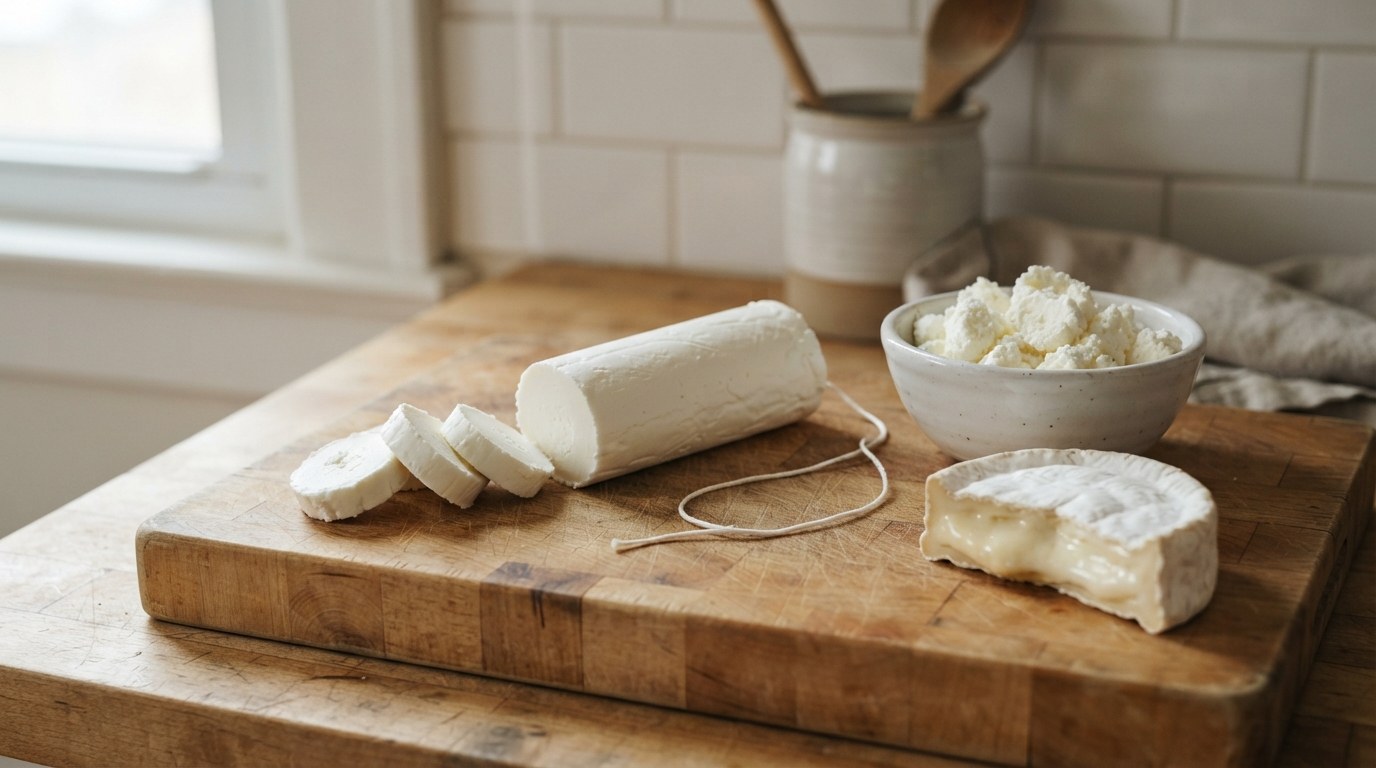
Fresh goat cheese does not melt on a burger. It warms through, softens at the edges and turns creamy and spreadable, but it keeps its shape and never stretches or runs the way American cheese or mozzarella does. The reason is how it's made. Fresh chèvre is an acid-set cheese: the curd forms as cultures turn the milk's lactose into lactic acid, until the milk reaches a pH of about 4.8, according to the chèvre guide from New England Cheesemaking Supply. Little or no rennet is involved.
Advertisement
That acid is what stops the melt. It pulls out the calcium that lets the milk proteins, called casein, shift and flow when warm, so the proteins sit clumped in a tight curd instead. Heat doesn't loosen that curd; the proteins bind tighter, and if you push it, the cheese can weep a little whey and turn grainy. The University of Wisconsin Center for Dairy Research's melt wheel shows the same thing with other acid cheeses: feta doesn't melt because of its low pH, around 4.7, and cottage cheese has "too much acid." What goat cheese does have is milk fat, and that fat softens from about 90°F, which is why a warm coin of chèvre goes silky on a hot patty even though the curd itself never flows.
Blue cheese starts at nearly the same acidity and still melts, because months of mold ripening break the proteins down; the blue cheese burger page explains that side of it. A fresh goat cheese is only days old, so nothing has loosened its curd. For a burger, that's good news. The cheese stays in thick, tangy coins that sit up on the patty instead of sliding off into the pan.
The Best Goat Cheese for a Goat Cheese Burger
A plain log of fresh goat cheese is the best choice for a goat cheese burger. It slices into neat coins, softens evenly on the patty and brings the clean, lemony tang that makes the Euro Burger what it is. The other goat cheeses at the counter each behave differently on the heat, and a couple of them are worth knowing about if you want a creamier or meltier burger.
| Goat cheese | How it is made | On a hot patty | Best for |
|---|---|---|---|
| Fresh goat cheese log (chèvre) | Acid-set curd, only days old | Warms and turns creamy at the edges, holds its shape, no stretch | The Euro Burger, sliced into thick coins |
| Fresh goat cheese crumbles | The same fresh curd, broken up and a little drier | Warms but stays crumbly and rolls off the patty | Salads and grain bowls more than burgers |
| Whipped or spreadable goat cheese | Fresh chèvre beaten smooth and light | Softens on contact; spread it on the warm top bun | A smoother, easier-to-eat goat cheese burger |
| Bloomy-rind aged goat cheese | Ripened under a soft white rind for a few weeks | The creamy layer under the rind slumps and runs; the chalky center stays firm | A richer, funkier burger |
| Aged goat Gouda or goat cheddar | Rennet-set, pressed and aged | Melts and flows like its cow's-milk cousins | A true melted-cheese goat cheese burger |
If you like the goat flavor but want a cheese that melts, aged goat Gouda is the swap, since rennet-set cheese behaves like cheddar on the heat. For a truffled version, the Truffle Burger uses Truffle Tremor, a soft-ripened goat cheese. For the Euro Burger itself, buy a 4- to 6-ounce log and keep it in the fridge until the moment you slice it.
How to Put Goat Cheese on a Burger So It Stays Put
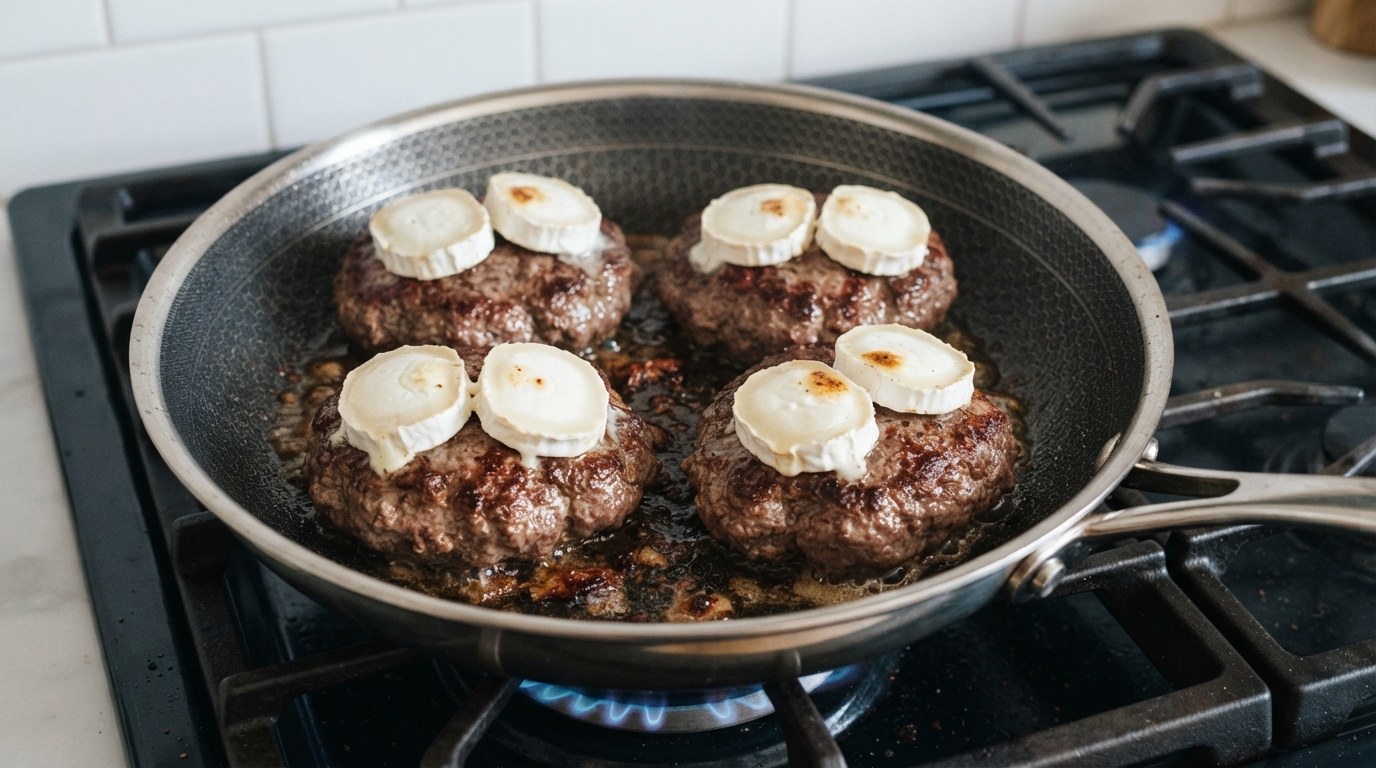
Slice the goat cheese cold into half-inch coins, lay two on each patty right after you flip it, and cover the pan for the last 2 minutes of cooking. Straight from the fridge, a log slices cleanly; at room temperature it smears and crumbles. Loop a length of unflavored dental floss or plain thread under the log, cross the ends over the top and pull, and you get clean coins with none left on a knife. A thin knife dipped in hot water and wiped between cuts works too.
Advertisement
Put the coins on after the flip so they get the whole second side to warm through. The lid traps heat around the cheese, and 2 minutes softens the edges while the center stays thick. Leave them on much longer and you're back to that tightening curd, weeping whey into the pan. If you want color on top, move the finished patties to a foil-lined sheet pan and slide them under a hot broiler for about a minute. The dry surface of the cheese browns in spots, the same Maillard browning that starts around 284°F and gives a toasted, nutty edge to the tang. Watch it closely; a broiler goes from golden to scorched fast.
Cooking the Euro Burger Patty to 160°F
Cook the Euro Burger patty until an instant-read thermometer in the center reads 160°F, the USDA safe minimum for ground beef. Grinding moves bacteria from the outside of the meat into the middle, so a burger needs a fully cooked center, and the color inside won't tell you when it gets there. Slide the probe in from the side, below the goat cheese, so you're reading beef and not cheese.
ThermoPro
ThermoPro TempSwift Instant-Read Digital Thermometer
- Reads in about 1 second, accurate to ±0.9°F, with a 4.3-inch food-grade stainless probe
- Hold and calibration functions, so you can lock a reading away from the heat
- NSF certified and IP65 waterproof, rinse it clean under the tap
Get a heavy skillet properly hot, then oil the patties rather than the pan, the way Gordon does. Season the outside with salt and pepper just before they go in, about 4 minutes on the first side and 3 to 4 on the second over medium-high, without pressing. Rendered fat is what keeps an 80/20 patty juicy at 160°F, and pressing squeezes it into the pan. A dry surface browns and a wet one stalls at 212°F; the Truffle Burger covers the crust and the Celebration Burger covers when to salt and why the thumb dimple matters.
Slow-Roasted Tomatoes and Peppery Arugula
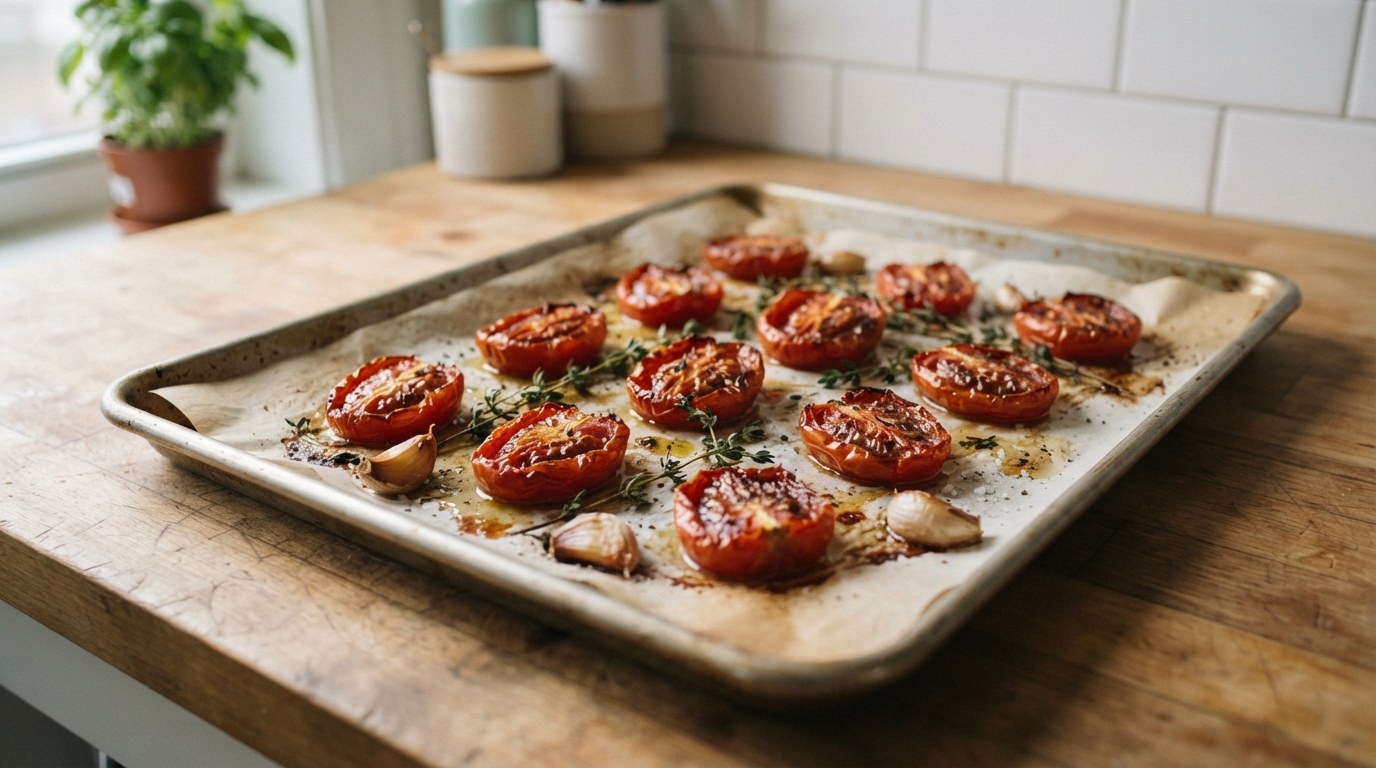
Slow-roast the tomatoes at 300°F for 75 to 90 minutes, cut side up, until they shrink by about half and wrinkle at the edges. The long, gentle heat drives water out of the cut faces by evaporation, which concentrates the tomato's sugar and acid into something closer to jam than salad. That drier tomato matters on this burger: a juicy raw slice slides off soft goat cheese and soaks the bun, while a roasted half sits still. The fast version, 400°F for about 25 minutes, is on the Viva Vegan Burger page. Roast a full tray while you're at it; the extras go on toast, pasta or tomorrow's eggs.
Advertisement
The arugula goes on last, on top of the tomatoes, not under the hot patty. Arugula belongs to the cabbage family, and its peppery bite forms as you chew: damaged leaf cells release an enzyme, myrosinase, that turns sulfur compounds called glucosinolates into sharp, pungent isothiocyanates, as the Linus Pauling Institute at Oregon State University explains. The same source notes that cooking inactivates that enzyme, which is why wilted arugula tastes flat. Toss it with a few drops of olive oil and a pinch of salt right before you build, the way Gordon dresses greens at the last second, and it stays crisp and peppery against the creamy cheese.
Is Goat Cheese Safe If You're Pregnant?
Goat cheese made from pasteurized milk is the one to buy, and most supermarket logs are, but check the label if you're cooking for someone who is pregnant, 65 or older, or living with a weakened immune system. The CDC's Listeria prevention advice tells those groups to choose pasteurized dairy and to heat cheeses made from unpasteurized milk to 165°F or until steaming hot. Two minutes on a burger warms goat cheese but won't get it there, so for those guests, a pasteurized log is the simple answer.
Goat Cheese Burger Variations and What to Serve
The Euro Burger takes well to a few swaps. For a sweeter goat cheese burger, add a spoonful of fig jam or a drizzle of honey over the cheese; for a funkier one, use a bloomy-rind goat cheese; for a smooth bite, spread whipped goat cheese on the warm top bun instead of using coins. Ground lamb works in place of beef and loves goat cheese, and our Gordon Ramsay lamb burger has the method. If you'd rather skip the truffle, a lemon and garlic aioli keeps the same bright feel.
Advertisement
Serve it with thin fries or a sharp green salad; a heavy loaded side fights with the tang. For the rest of the lineup, the Gordon Ramsay burger breakdown covers how his restaurant burgers come together, and the Gordon Ramsay signature burgers hub has every one. The Gordon Ramsay Euro Burger comes down to one idea: the goat cheese goes on cold, warms for 2 minutes and never melts, and that's exactly what makes it the best goat cheese burger to make at home.
Gordon Ramsay's Euro Burger
Ingredients
Slow-Roasted Tomatoes
- 4 plum tomatoes, halved lengthwise
- 1 tbsp olive oil
- 4 sprigs fresh thyme
- 2 garlic cloves, unpeeled and lightly crushed
- Salt and freshly ground black pepper
Truffle Aioli
- 1/2 cup mayonnaise
- 1 to 2 tsp black truffle paste (or 1/2 tsp truffle oil)
- 1 small garlic clove, finely grated
- 1 tsp lemon juice
Patties
- 1 1/2 lb 80/20 ground chuck (680 g), kept cold
- 1 1/2 tsp kosher salt
- 1 tsp freshly cracked black pepper
- 1 tbsp grapeseed or other neutral oil
Toppings
- 6 oz fresh goat cheese log (pasteurized), kept cold
- 2 cups baby arugula
- 1 tsp extra-virgin olive oil, for the arugula
Buns
- 4 brioche burger buns, split
- 2 tbsp softened butter
Instructions
- Heat the oven to 300°F. Set the tomato halves cut side up on a parchment-lined baking sheet with the thyme and garlic, drizzle with the olive oil and season with salt and pepper. Roast for 75 to 90 minutes, until shrunken by about half and wrinkled at the edges.
- Stir the mayonnaise, truffle paste, grated garlic, lemon juice and a pinch of salt together. Taste, add more truffle paste if you like, and refrigerate until needed.
- Divide the cold beef into 4 equal portions. Without kneading, shape each into a loose patty about 3/4 inch thick and 1/2 inch wider than the buns. Press a shallow dimple into the center of each and chill for 15 minutes.
- Slice the cold goat cheese log into 8 coins about 1/2 inch thick, using unflavored dental floss, plain thread or a thin knife dipped in hot water. Keep the coins in the fridge.
- Heat a heavy skillet over medium-high until very hot. Season the patties all over with the salt and pepper, brush them with the oil and cook for 4 minutes without pressing, until well browned.
- Flip the patties, lay 2 goat cheese coins on each, cover the pan and cook 3 to 4 minutes more, until the cheese has softened at the edges and an instant-read thermometer in the side of the beef reads 160°F. For browned cheese, move the patties to a foil-lined sheet pan and broil for about 1 minute.
- Move the burgers to a plate. Butter the cut sides of the buns and toast them in the skillet for about 1 minute, until golden.
- Toss the arugula with the extra-virgin olive oil and a pinch of salt.
- Spread truffle aioli on the bottom buns and add the patties. Top each with 2 slow-roasted tomato halves and a handful of arugula, then the top buns. Serve right away.
Notes
Advertisement
Gordon Ramsay Euro Burger FAQs
The questions that come up most: what's on the Euro Burger, whether it's still on the menu, whether goat cheese melts, which goat cheese to buy, how to slice a goat cheese log, what goes on a goat cheese burger, and whether goat cheese is safe during pregnancy.
What is on Gordon Ramsay's Euro Burger?
A beef patty topped with goat cheese, oven-roasted tomato, arugula and truffle aioli on a toasted bun. There is no bacon, onion or lettuce on it.
Is the Euro Burger still on the Gordon Ramsay Burger menu?
No. It ran on the original Gordon Ramsay BurGR menu at Planet Hollywood in Las Vegas, but none of the current Gordon Ramsay Burger location menus list it. All four toppings are easy to make at home.
Does goat cheese melt?
Fresh goat cheese softens and turns creamy when warm, but it does not melt or stretch. It is an acid-set cheese, and the acid keeps its milk proteins in a tight curd that tightens further with heat. Aged, rennet-set goat cheeses such as goat Gouda do melt.
What is the best goat cheese for a burger?
A plain log of fresh goat cheese, sliced cold into half-inch coins. Crumbles roll off the patty, whipped goat cheese is better spread on the bun, and aged goat Gouda is the pick if you want a true melt.
How do you slice a goat cheese log without it crumbling?
Slice it straight from the fridge with unflavored dental floss or plain thread: loop it under the log, cross the ends over the top and pull. A thin knife dipped in hot water and wiped between cuts also works.
What goes on a goat cheese burger?
Something sweet or bright and something peppery: roasted tomato, fig jam, honey or caramelized onion with arugula, plus a garlicky or truffle aioli. The Euro Burger uses slow-roasted tomato, arugula and truffle aioli.
Is goat cheese safe to eat when pregnant?
Goat cheese made from pasteurized milk is the safe choice, and most supermarket logs are pasteurized. The CDC advises pregnant people to avoid cheese made from unpasteurized milk unless it is heated to 165°F or until steaming hot, which a burger topping does not reach.

About the Author
John Siracusa is the founder of Hell’s Kitchen Recipes. He focuses on technique-first, reproducible home cooking and researches recipes & kitchen equipment from published food science and professional chef methods since 2016.