London broil is a lesson in getting a lot from a cheap, tough cut. It is not even a cut of meat, it is a method, usually applied to top round or flank: marinate a lean slab of beef, sear it fast under high heat, and slice it thin. Gordon Ramsay's version is straightforward, and the difference between chewy and tender comes down to two moves most recipes get wrong.
This guide explains what the marinade really does (less than you think), why you must stop at medium-rare, and the single most important step: how you slice it.
What the Marinade Actually Does
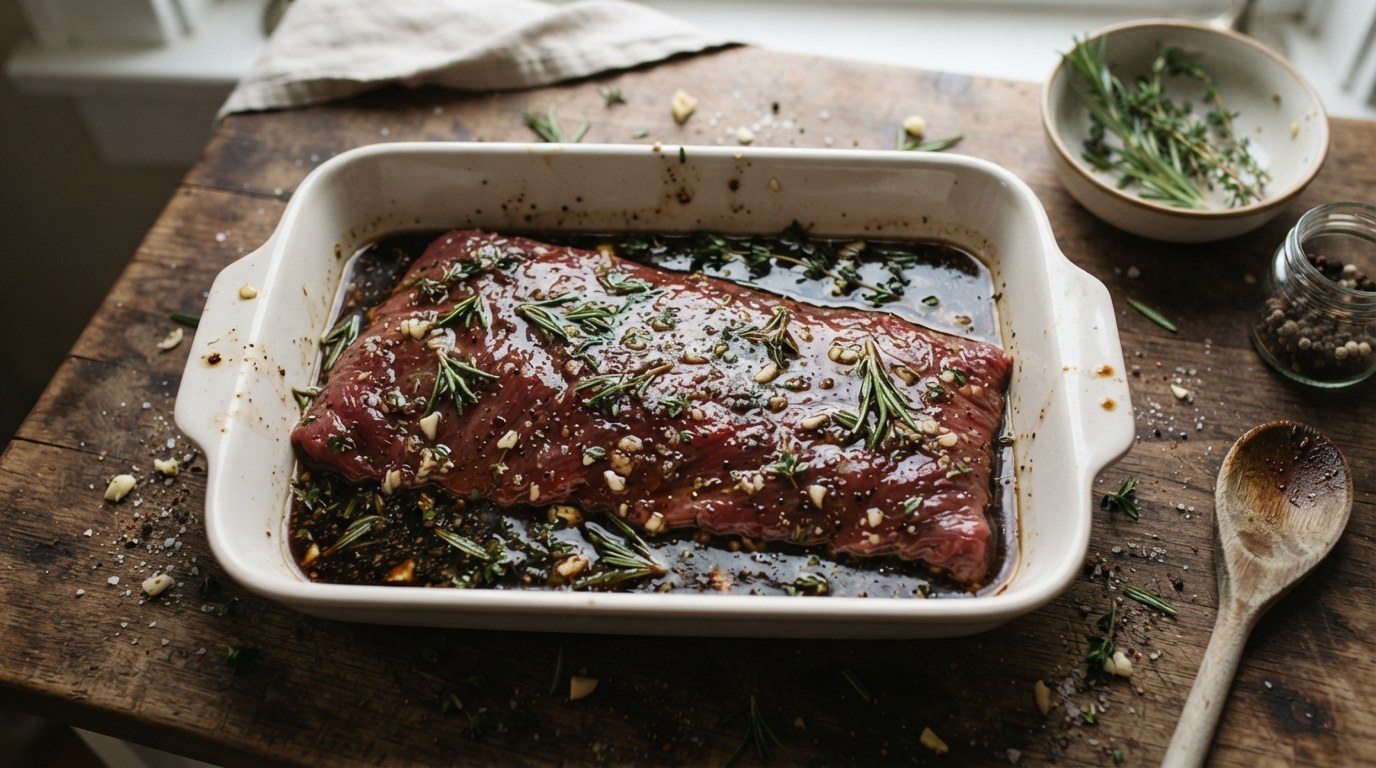
Here is the myth worth clearing up: a marinade does not soak deep into the meat and "break down the fibers." Flavor and oil molecules are too big to travel more than a few millimeters past the surface, so a marinade seasons and lightly tenderizes the outside only. Salt is the one ingredient that actually migrates inward. The acid (here, lemon juice) works on the surface too, and left on too long it turns that surface mushy rather than tender, so 4 to 24 hours is plenty; longer is not better.
So use the marinade for what it is good at: surface flavor and a little salt. The soy, Worcestershire, garlic, and herbs build a savory, well-seasoned crust when the meat hits high heat. Just do not count on it to fix a tough interior; that is the job of the next two steps.
Cook It Medium-Rare, No Further
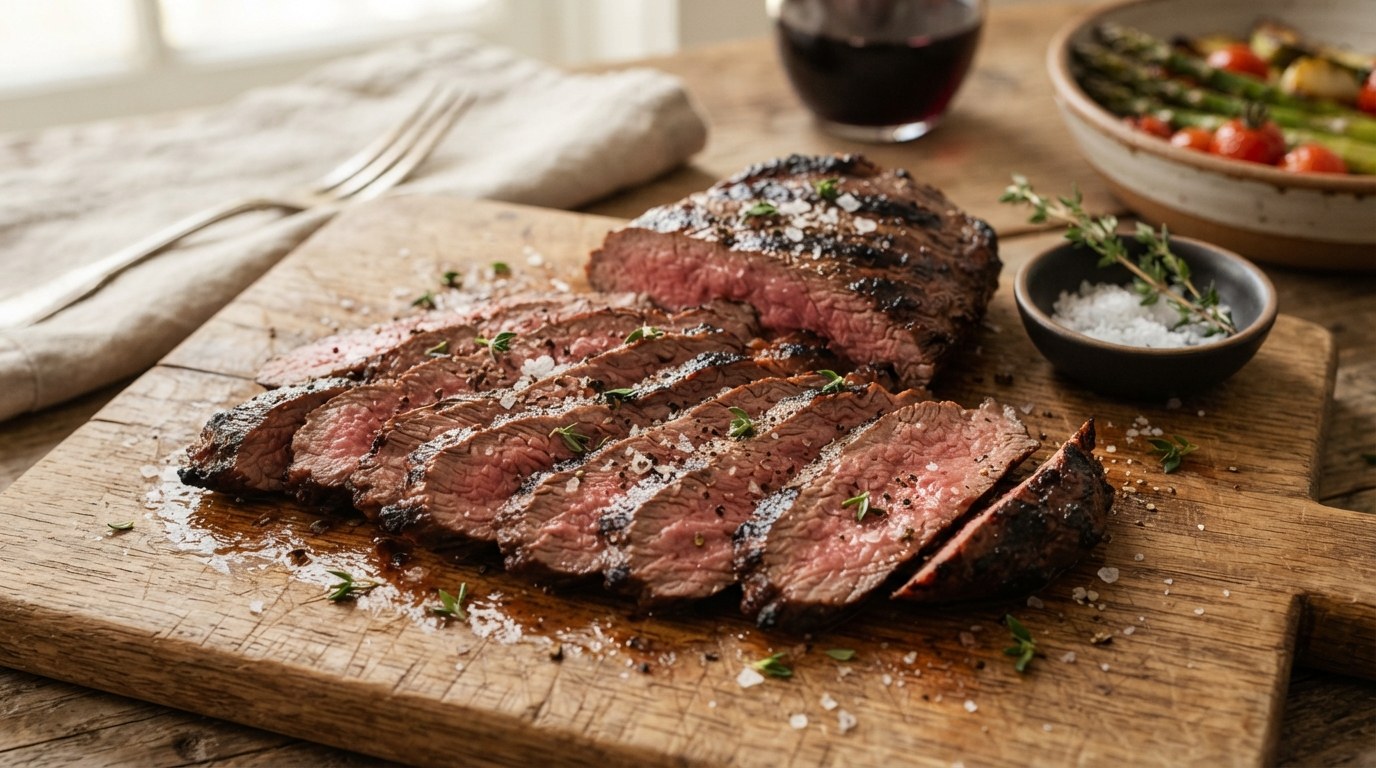
Top round is lean, hard-working muscle with little fat to keep it moist, which means it dries out and toughens fast past medium-rare. Sear or broil it hot for a good crust through the Maillard reaction, and pull it at 130 to 135°F for a rosy medium-rare center; it carries over to about 135°F as it rests. The Certified Angus Beef doneness chart puts medium-rare there, and the USDA safe minimum for whole beef is 145°F. Rest it 10 minutes so the juices settle instead of running out on the board.
The Move That Makes It Tender: Slice Across the Grain
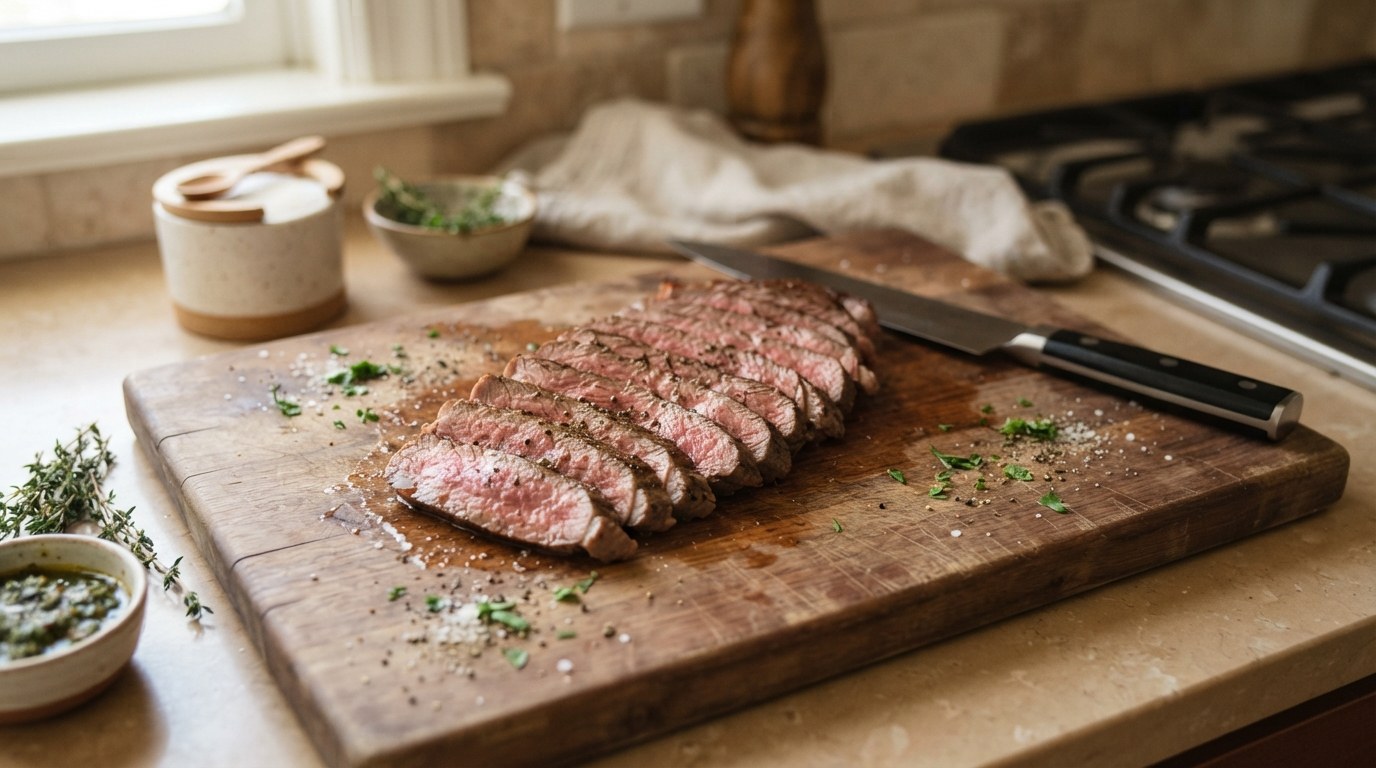
This is the step that matters most, and it happens at the cutting board. London broil has long, coarse muscle fibers, and if you slice with them, every bite is a mouthful of tough strands. Slice thin and perpendicular to the grain instead and you shorten those fibers to little segments, so each bite takes a fraction of the force to chew. Cutting across the grain takes roughly one-tenth the biting force of cutting with it, which is why a properly sliced round steak eats tender and a poorly sliced one eats like a shoe.
Look at the meat and find the direction the fibers run, then cut straight across them, thin, holding the knife at a slight angle for wider slices. Do this and even a budget cut eats like a much more expensive steak.
What to Serve With It
Sliced London broil is a weeknight steak dinner: pile it over mash or a salad, tuck it into sandwiches, or serve it steakhouse-style with roasted vegetables. It also makes excellent leftovers, thin-sliced cold in a wrap. For more beef, see how to cook a filet mignon or go all out with a beef Wellington, or browse the full recipes collection.
Gordon Ramsay's London Broil
Ingredients
- 2 lb London broil (top round or flank steak), about 1.5 in thick
- 1/3 cup soy sauce
- 1/3 cup lemon juice
- 1/2 cup olive oil
- 1/4 cup Worcestershire sauce
- 3 cloves garlic, minced
- 1 tsp black pepper
- 1 tsp dried rosemary
- 1 tsp dried thyme
Instructions
- Combine the soy sauce, lemon juice, olive oil, Worcestershire, garlic, pepper, rosemary, and thyme in a zip-top bag. Add the steak, coat well, and refrigerate 4 to 24 hours, turning occasionally.
- Take the meat out 30 minutes before cooking. Heat the broiler (or a grill or cast-iron skillet) to high and set the rack about 4 inches from the heat.
- Broil 8 to 10 minutes per side, until the internal temperature reaches 130 to 135°F for medium-rare. Do not cook past medium-rare.
- Rest the meat 10 minutes so the juices settle.
- Slice thin, holding the knife at a slight angle, and cut across (perpendicular to) the grain. Serve right away.
Notes
London Broil FAQs
The questions that come up most: what cut London broil is, whether the marinade tenderizes it, what temperature to cook it to, and how to slice it so it is tender.
What cut is London broil?
It is a method more than a cut. It is usually made with top round or flank steak, a lean, tough cut that is marinated, broiled or grilled hot, and sliced thin. The name refers to the technique, not a specific piece of beef.
Does marinating actually tenderize London broil?
Only at the surface. Marinades do not soak deep into meat; flavor and oil molecules barely penetrate, and only salt travels inward. The marinade seasons the outside; the real tenderizers are cooking to medium-rare and slicing thin across the grain.
What temperature should London broil be cooked to?
Pull it at 130 to 135°F for medium-rare and rest it. Because top round is lean, it dries out and toughens past medium-rare, so do not cook it further. The USDA safe minimum for whole beef is 145°F.
How do you slice London broil so it is tender?
Slice it thin and across (perpendicular to) the grain. The muscle fibers are long and coarse; cutting across them shortens the fibers so each bite is far easier to chew. Slicing with the grain leaves it tough no matter how well you cooked it.
How long should you marinate London broil?
Between 4 and 24 hours. Longer is not better: the acid in the marinade works on the surface, and too long can turn it mushy rather than tender.
Why is my London broil tough?
Usually one of two things: it was cooked past medium-rare (lean cuts toughen and dry out), or it was sliced with the grain instead of across it. Fix both and a budget cut eats tender.

About the Author
John Siracusa is the founder of Hell’s Kitchen Recipes. He focuses on technique-first, reproducible home cooking and researches recipes & kitchen equipment from published food science and professional chef methods since 2016.