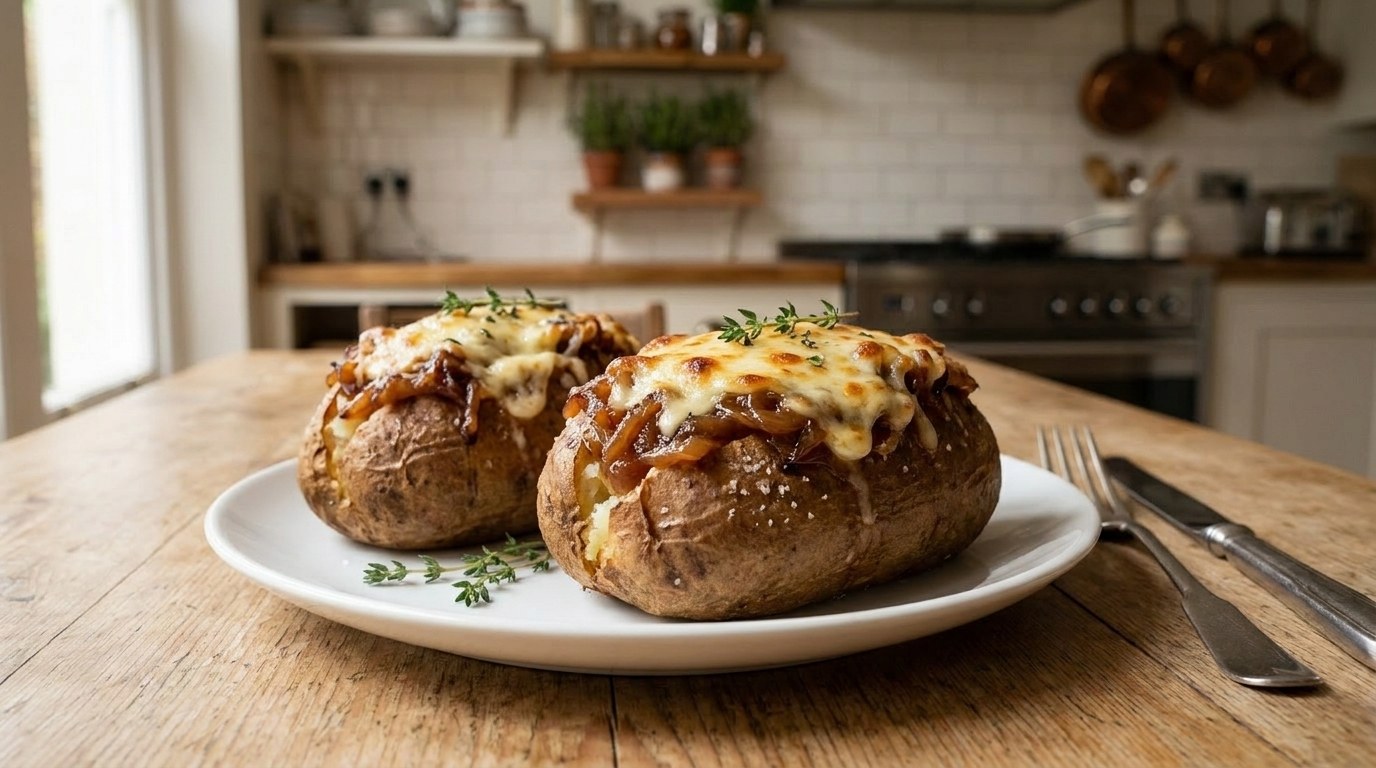
French onion baked potatoes put the best part of French onion soup on a baked potato: a crisp-skinned russet split open and fluffed with butter, piled with onions slowly caramelized in butter and thyme, then covered in Gruyère or Comté and broiled until it bubbles and browns. It takes about an hour, most of it hands-off while the potatoes bake and the onions cook down. Below the recipe method you will also find four more French baked potato toppings, from mushroom duxelles to a croque monsieur potato, all built on the same well-baked spud.
How to Bake a Potato for French Onion Baked Potatoes
For a baked potato that holds a heavy topping, bake russets at 450°F for 45 to 55 minutes, until the center reads 205°F, the guidance Potatoes USA gives for the perfect baked potato. Scrub and dry the potatoes, prick each one 6 to 8 times so steam can escape, and roll them in a mix of about 2 tablespoons of kosher salt dissolved in half a cup of warm water. Put them straight on the oven rack. Brush them with oil only for the last 2 or 3 minutes; Potatoes USA notes that oil added at the start can leave the skin tough rather than crisp.
Russets are the right potato because they are high in starch and low in water. As the inside heats, the starch granules start to absorb the potato's own water and swell from around 150°F, the point where starch gelatinizes; by 205°F they have swollen and pulled apart, which is what reads as light and fluffy. A waxy red or gold potato has less starch and more water, so it bakes up creamy and dense instead, better for Yukon Gold mashed potatoes than for a split-and-fluff topping.
Skip the foil. It is the most common baked potato myth that foil makes a better potato; it traps steam, and a wet surface cannot get hotter than 212°F, the boiling point of water. Browning, the Maillard reaction, only gets going above about 285°F, as the science of the Maillard reaction explains, so a foil-wrapped potato comes out with soft, pale, steamed skin. Bare on the rack in dry 450°F air, the salted skin dries, crisps and browns. If your oven runs a convection fan, turn it off or drop the temperature by 25°F so the outside does not set before the center cooks.
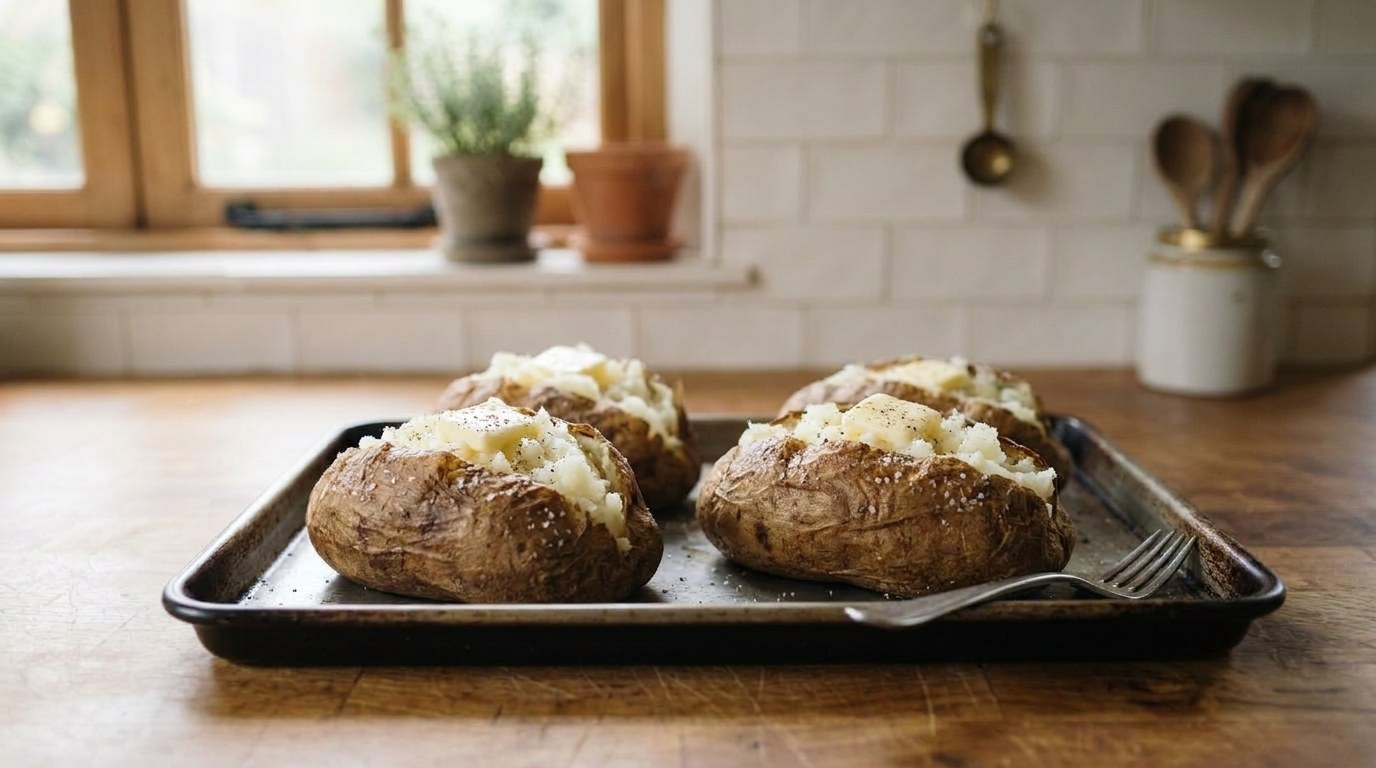
Rest the potatoes for about 3 minutes, then split them right away. Cut a line down the top, push the ends toward the middle so it opens wide, and fluff the inside with a fork. Opening it early lets the steam escape; leave a baked potato whole and that steam condenses back into the flesh and turns it gummy. Season the inside now with salt, pepper and a little butter, the way Gordon Ramsay seasons every layer as he goes rather than only the top.
Caramelized Onions for Baked Potatoes
Caramelized onions for baked potatoes take about 45 minutes in a 12-inch skillet: thinly sliced yellow onions wilted under a lid, then cooked uncovered in butter over medium-low heat, stirred often, until they are soft, jammy and deep amber-brown. Food Network's kitchen tested the method side by side and found butter gave the richest flavor, that a tablespoon of broth or water stirred in whenever brown bits form on the pan keeps them from scorching, and that sugar or baking soda shortcuts made them too sweet or metallic. Start them right after the potatoes go in the oven and both finish at about the same time.
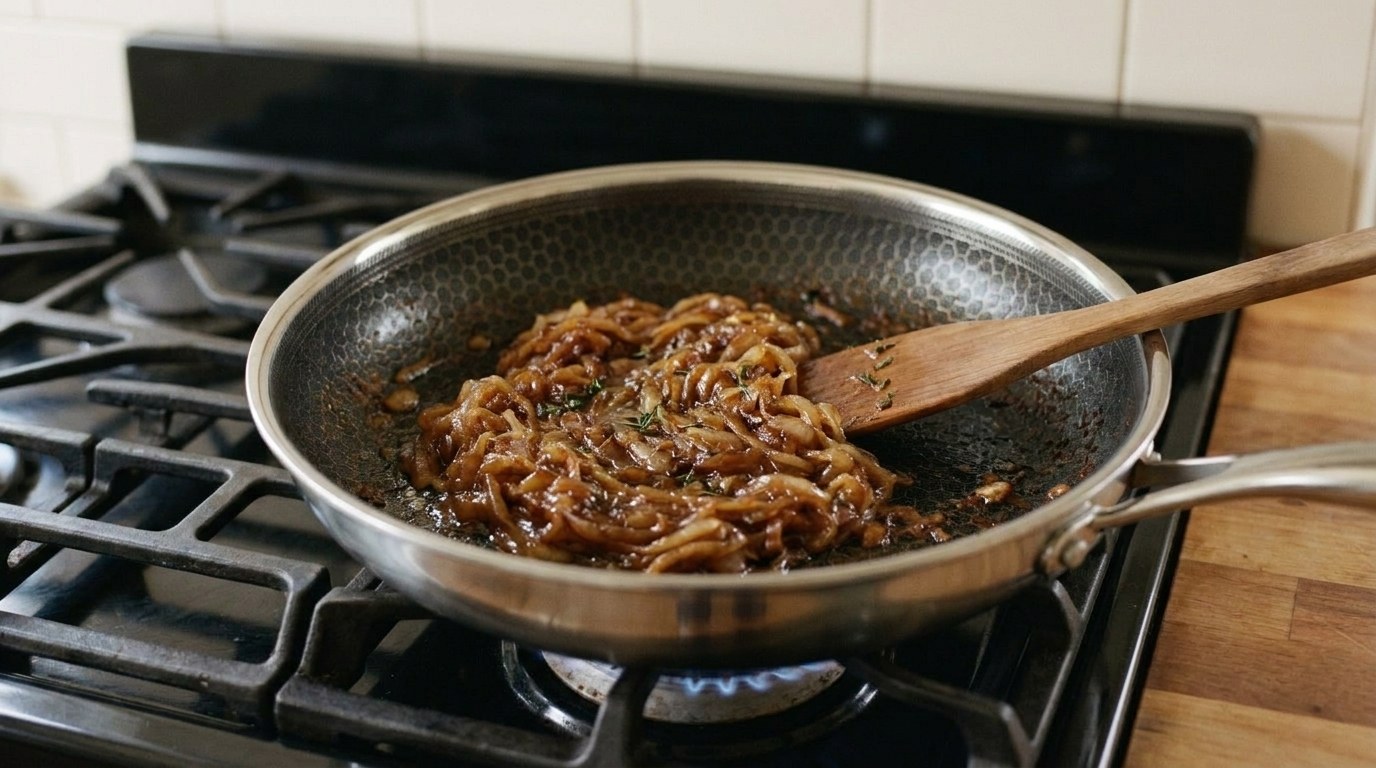
Two things are happening in that pan, and both need heat without burning. Onions are mostly water, so the covered start steams them soft and gets that water out of the way. Once the pan is dry, the onion sugars caramelize from around 320°F and react with the onion's amino acids in Maillard browning, building the deep, savory sweetness of French onion soup. Push the heat too high and the edges pass 356°F, where browning turns to burning and the flavor goes bitter. The brown film on the pan floor, the fond, is concentrated flavor; a splash of beef broth dissolves it back into the onions. Our Gordon Ramsay French onion soup uses the same patience on a bigger batch, and the caramelized onion dip puts any extra to work.
A wide pan matters more than a fancy one. Two large onions fill a 12-inch skillet at first and shrink to about a cup; in a small pan they pile up and steam for far longer before they brown. A non-stick or hybrid pan lets you catch the fond without it sticking and blackening.
HexClad
HexClad 12-Inch Hybrid Nonstick Frying Pan
- Stainless steel and ceramic nonstick hybrid surface, built to sear hard and release easily
- Tri-ply with an aluminum core for quick, even heat; works on induction
- Oven safe to 900°F and metal-utensil safe (lid not included)
The Best Cheese for French Onion Baked Potatoes: Gruyère or Comté
The best cheese for French onion baked potatoes is Gruyère or Comté, the two Alpine cheeses that sit on top of a bowl of French onion soup. Gruyère comes from western Switzerland and Comté from the Jura mountains in eastern France; Comté was the first French cheese to earn AOP status, the protected label that ties it to its region. Both are nutty, a little sweet, and melt into a smooth, stretchy layer rather than going rubbery. Emmental is a milder, cheaper swap; a sharp white cheddar works in a pinch but tastes less like the soup.
Grate the cheese yourself and give it a short, hot finish: 2 to 3 minutes under the broiler, about 6 inches from the element, until it bubbles with brown spots. Pre-shredded cheese is coated with anti-caking starch and melts grainier. Leave it under the broiler too long and the cheese's fat starts to bead out and the top turns greasy and tough, so stay by the oven. For the full soup effect, spoon a tablespoon of warm beef broth into each fluffed potato before the onions go on; it seasons the inside the way the broth soaks the bread in the soup.
4 More French Baked Potato Toppings
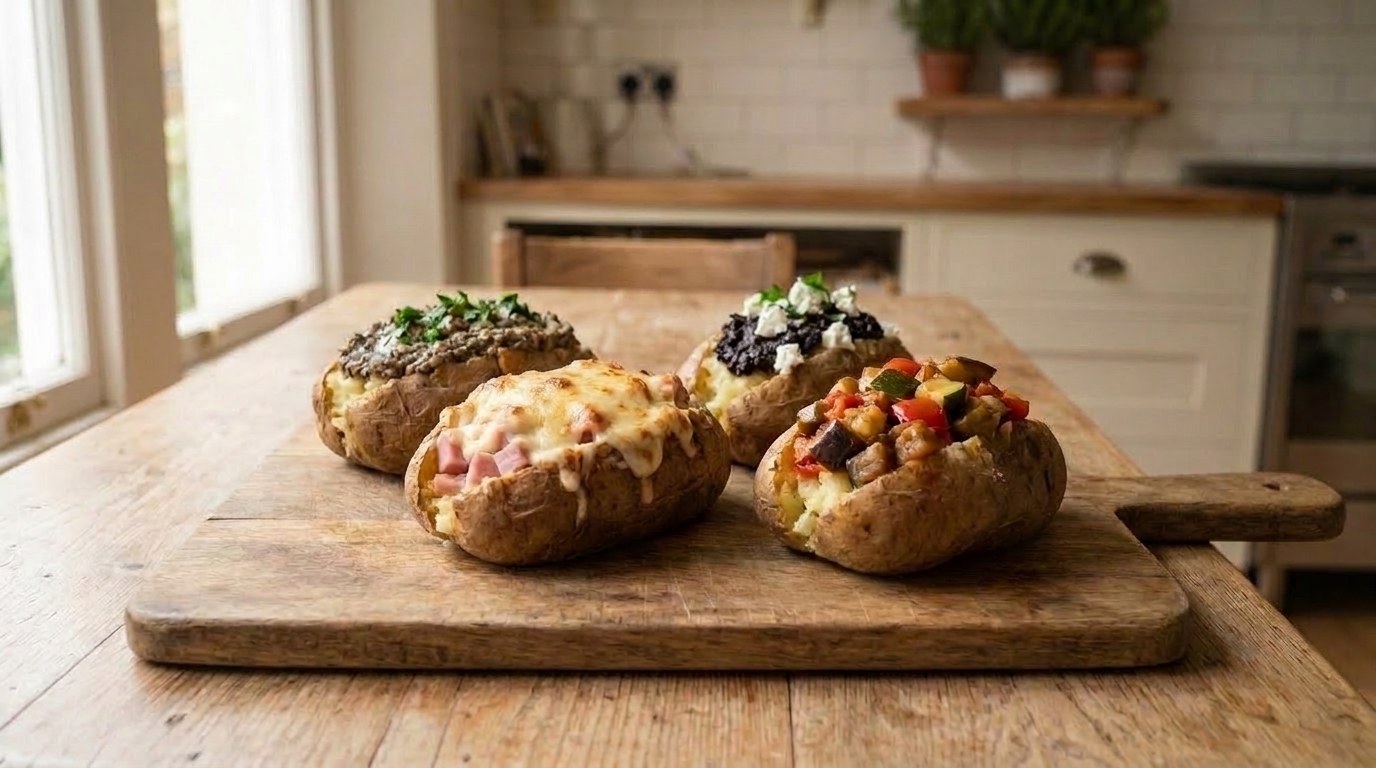
The same split, fluffed russet takes four more French baked potato toppings, each borrowed from a classic dish: mushroom duxelles, a croque monsieur of ham, béchamel and cheese, olive tapenade with goat cheese, and ratatouille. Two of them need a little stovetop time and two are close to no-cook, so you can set out a French baked potato bar with several at once.
| Topping | What goes on the potato | Cooking | Cheese | Make ahead | Best for |
|---|---|---|---|---|---|
| French onion | Butter-caramelized onions, thyme, a spoon of beef broth | 45 min stovetop + 2-3 min broil | Gruyère or Comté | Onions 3-4 days | The classic; cold-weather dinner |
| Mushroom duxelles | Minced mushrooms, shallot, garlic, thyme cooked dry in butter | 15-20 min stovetop | Optional Comté or a spoon of crème fraîche | Duxelles 3-4 days | A meatless main |
| Croque monsieur | Diced cooked ham, warm béchamel, a swipe of Dijon | 10 min béchamel + 2-3 min broil | Emmental, Gruyère or Comté | Béchamel 2-3 days | Kids; add a fried egg for a croque madame |
| Tapenade and goat cheese | A spoonful of olive tapenade, soft goat cheese, parsley | No cooking | Fresh goat cheese | Tapenade 1 week | Fast lunch; a sharp, salty contrast |
| Ratatouille | Eggplant, zucchini, peppers, tomato, onion, garlic, basil and thyme | 40 min, or leftovers | None, or a little melted Comté | Ratatouille 3-4 days | A vegetable-heavy, dairy-free dinner |
French onion and the croque monsieur are the richest and most filling; tapenade is the quickest; ratatouille is the only one that makes a dairy-free plate.
Mushroom Duxelles Baked Potato
Duxelles is finely minced mushrooms cooked with shallot, garlic, butter and thyme until every drop of their liquid is gone and they turn into a dark, concentrated spread. It is the same layer Ramsay wraps around the fillet in his Gordon Ramsay beef Wellington, and on a potato it eats like a meatless steak topping. Mushrooms release a surprising amount of water as they cook; keep going until the pan is dry and the mixture starts to sizzle again, because only then does it brown and taste deep instead of steamed. Finish with a spoon of crème fraîche, parsley or a little grated Comté.
Croque Monsieur Baked Potato
A croque monsieur potato gets diced cooked ham, a light layer of warm béchamel, a little Dijon and shredded Emmental or Gruyère, then goes under the broiler until the cheese browns. Béchamel thickens because the flour's starch swells and gelatinizes in the hot milk, the same reason the potato itself goes fluffy; our Gordon Ramsay béchamel sauce shows the roux and the ratio. Packaged cooked ham from a USDA-inspected plant only needs reheating to 140°F, while leftover or repackaged ham should reach 165°F, according to the USDA's ham and food safety guidance. Slide a fried egg on top and it becomes a croque madame.
Olive Tapenade and Goat Cheese Baked Potato
Tapenade is a Provençal spread of chopped black olives, capers, garlic, olive oil and lemon, often with an anchovy or two, and it is strong, so a tablespoon per potato is plenty. Spoon it over the hot fluffed potato, add soft goat cheese and chopped parsley, and the heat warms the cheese just enough to go creamy. Roasted peppers, cherry tomatoes or sun-dried tomatoes add color. Taste before you salt the potato; olives, capers and anchovies already bring a lot of it.
Ratatouille Baked Potato
Ratatouille, the Provençal stew of eggplant, zucchini, bell peppers, tomatoes, onion, garlic and herbs, turns a baked potato into a full vegetable dinner with no meat or cheese at all. It is one of the best uses for leftover ratatouille, which often tastes better the next day once the flavors have settled. Warm it through, spoon it over the potato with some of its olive oil, and finish with basil; a spoon of crème fraîche or a little melted Comté is optional.
Make-Ahead, Storage and Reheating
The toppings are the part to make ahead: caramelized onions, duxelles and ratatouille all keep 3 to 4 days in a covered container in the fridge and rewarm in a skillet in minutes, so French onion baked potatoes can be a 10-minute finish on a weeknight. Bake the potatoes fresh if you can. A cold baked potato firms up in the fridge as its starch recrystallizes, a process called retrogradation, and it never fluffs quite the same again; reheat leftovers in a 400°F oven for about 20 minutes, until they reach 165°F in the center, rather than the microwave, which leaves the skin soft.
One food safety point is specific to potatoes. The CDC advises that potatoes baked in foil be kept at 140°F or hotter until served, or refrigerated at 40°F or colder with the foil loosened, because a foil-wrapped potato left at room temperature can let the bacteria behind botulism grow. Baking them bare, as here, and refrigerating leftovers within 2 hours avoids the problem.
Why Your French Onion Baked Potatoes Went Wrong
Most baked potato problems trace back to water or temperature. A gummy, dense inside means a waxy potato, an underbaked one (check for 205°F) or one left whole too long after baking. Tough, leathery skin usually means foil or oil from the start. Onions that are pale and floppy after 45 minutes were cooked too low or crowded in a small pan; onions that are dark at the edges and bitter were cooked too high. A greasy cheese top was broiled too long. And a potato that tastes flat under all that topping was not seasoned inside; salt the fluffed flesh before anything goes on.
A medium potato is also more nutritious than its reputation: Potatoes USA lists a 5.3-ounce potato with skin at 110 calories with 620 mg of potassium and 30 percent of the daily value for vitamin C, so the topping is where the richness comes from. Bake the russets right, give the onions their 45 minutes, and these French onion baked potatoes taste like the soup they came from.
French Onion Baked Potatoes
Ingredients
Potatoes
- 4 russet potatoes, about 8 oz each
- 2 tbsp kosher salt, dissolved in 1/2 cup warm water
- 1 tbsp olive oil
- 2 tbsp unsalted butter, for the potatoes
Onions
- 3 tbsp unsalted butter, for the onions
- 2 large yellow onions (about 1 1/2 lb), halved and thinly sliced
- 1 tsp fresh thyme leaves (or 1/2 tsp dried), plus sprigs to serve
- 1/2 tsp kosher salt, plus more to taste
- 1/4 tsp freshly ground black pepper
- 6 tbsp beef broth (or water), divided
To finish
- 4 oz Gruyère or Comté, grated (about 1 1/2 cups)
Instructions
- Heat the oven to 450°F with a rack in the center. Scrub and dry the potatoes, prick each one 6 to 8 times with a fork, and roll them in the salt water so the skins are coated. Set them directly on the oven rack and bake for 45 to 55 minutes, until the center reads 205°F.
- While the potatoes bake, melt the 3 tablespoons butter in a 12-inch skillet over medium-high heat. Add the onions, cover, and cook for 7 to 8 minutes, stirring once or twice, until wilted.
- Uncover, add the thyme and 1/2 teaspoon salt, and lower the heat to medium-low. Cook for 35 to 40 minutes more, stirring often, adding 1 tablespoon broth whenever brown bits form on the pan and scraping them up, until the onions are soft, jammy and deep amber-brown. Season with the pepper and more salt to taste; keep warm.
- When the potatoes are done, brush them with the olive oil and return them to the oven for 2 to 3 minutes. Rest for 3 minutes, then switch the oven to broil (high) and move a rack about 6 inches from the element.
- Split each potato lengthwise, push the ends together to open it wide, and fluff the inside with a fork. Season the flesh with salt and pepper, add 1/2 tablespoon butter to each, and spoon in about 1/2 tablespoon of the remaining broth.
- Set the potatoes on a sheet pan, pile the caramelized onions into them and cover with the grated cheese. Broil for 2 to 3 minutes, watching closely, until the cheese is melted, bubbling and browned in spots. Top with thyme sprigs and serve hot.
Notes
French Onion Baked Potatoes FAQs
The questions that come up most: what French onion baked potatoes are, which cheese to use, what French toppings go on a baked potato, how long to bake a potato at 450°F, whether to use foil, how to make a baked potato a meal, and whether the onions can be made ahead.
What are French onion baked potatoes?
Baked russet potatoes split open, fluffed with butter and topped with slow-caramelized onions and Gruyère or Comté, then broiled until the cheese bubbles and browns. They borrow the flavors of French onion soup, and a spoon of beef broth inside the potato adds to the effect.
What cheese goes on French onion baked potatoes?
Gruyère or Comté, the Alpine cheeses used on French onion soup. Both are nutty and melt smoothly. Emmental is a milder substitute. Grate it from a block, since pre-shredded cheese is coated in starch and melts grainier.
What French toppings go on a baked potato?
Caramelized onions with Gruyère, mushroom duxelles, a croque monsieur topping of ham, béchamel and Emmental, olive tapenade with goat cheese, and ratatouille. Each borrows the key flavors of a classic French dish.
How long do you bake a potato at 450°F?
About 45 to 55 minutes for a 5 to 8 ounce russet, until the center reaches 205°F on an instant-read thermometer, per Potatoes USA. Larger potatoes take longer. With a convection fan on, lower the oven by 25°F.
Should you wrap baked potatoes in foil?
Not for oven baking. Foil traps steam, so the skin stays soft and pale instead of crisping. If you do use foil, the CDC advises keeping the potatoes at 140°F or hotter or refrigerating them at 40°F or colder with the foil loosened.
What can you put on a baked potato to make it a meal?
A protein or a hearty vegetable topping: ham with béchamel and cheese (add a fried egg for a croque madame), mushroom duxelles, ratatouille, or caramelized onions and Gruyère with a green salad on the side.
Can you make caramelized onions ahead of time?
Yes. Caramelized onions keep 3 to 4 days in a covered container in the fridge and rewarm in a skillet in a few minutes. Making them ahead turns French onion baked potatoes into a quick weeknight finish.

About the Author
John Siracusa is the founder of Hell’s Kitchen Recipes. He focuses on technique-first, reproducible home cooking and researches recipes & kitchen equipment from published food science and professional chef methods since 2016.