Caramelized onion dip is three yellow onions cooked low and slow in butter for about 45 minutes until they collapse into a sweet, mahogany-brown jam, cooled, and folded into a whipped base of cream cheese, sour cream and mayonnaise with chives, a splash of Worcestershire and a squeeze of lemon. It is the from-scratch answer to the tub of French onion dip made from a soup packet, and to the store-bought caramelized onion dips people search for by name: the same idea, with the onion flavor coming from actual onions cooked until their sugars brown. It takes an hour of mostly unattended stirring and it is better the next day.
The recipe card at the bottom has the amounts and numbered steps for about 3 cups, enough for eight as a party dip. This guide covers what makes a caramelized onion dip different from the packet kind, why the onions take 45 minutes and how to tell when they are done, the two mistakes that make an onion dip watery, the base and how to whip it, make-ahead and storage, and what to serve it with. It is part of the site's recipes collection, alongside the Ramsay-style dinner party appetizers.
What Makes a Caramelized Onion Dip Different
Packet French onion dip gets its flavor from dehydrated onion, salt and monosodium glutamate stirred into sour cream; a caramelized onion dip gets it from the reaction that happens when onions cook long enough for their water to leave and their sugars to brown. Yellow onions are about 89 percent water, and most of their dry weight is sugar, which is why a raw onion that makes you cry turns sweet as candy after 45 minutes over low heat. That sweetness, plus the savory, roasted flavor the browning creates, is the whole difference, and it is why this dip needs no packet, no bouillon and no sugar.
The other difference is texture. Three onions, sliced thin and cooked all the way down, shrink to about a cup of soft strands that fold through the base rather than sitting in it as crunchy bits. The base is deliberately half cream cheese, whipped first so it is smooth, because sour cream and mayonnaise alone make a dip that runs; the cream cheese gives it body that holds on a chip. Gordon Ramsay's rule for getting organized before you cook applies here more than most places: the onions want 45 minutes of low heat and an occasional stir, so slice everything, set the timer and let the pan do the work while you make the base.
| Ingredient | What it does | Do not substitute with |
|---|---|---|
| Yellow onions, 3 large (about 2 lb) | Highest sugar for browning; the standard caramelizing onion | Red onions (they go gray) or a single sweet onion (too little bulk, watery) |
| Unsalted butter and olive oil | Butter for flavor, oil to raise the point where the butter solids burn | Butter alone over medium-high heat (it browns before the onions do) |
| Kosher salt, added at the start | Pulls water out of the onion cells so it can cook off | Salting at the end only (the onions steam in their own water for longer) |
| Water, a splash at a time | Loosens the browned fond so it coats the onions instead of burning | Wine or stock during the cook (the sugars scorch) |
| Cream cheese, 6 oz, softened | Body; whipped smooth it keeps the dip thick on a chip | Cold cream cheese (lumps that never whip out) |
| Sour cream and mayonnaise | Tang and richness; mayonnaise's egg-yolk emulsion keeps the base glossy | Greek yogurt for all of it (thinner and sour; use it for half at most) |
| Worcestershire, lemon, chives, thyme, pepper | Savory depth, acid to cut the richness, fresh onion flavor on top | Onion powder (it makes the dip taste like the packet) |
Why the Onions Take 45 Minutes
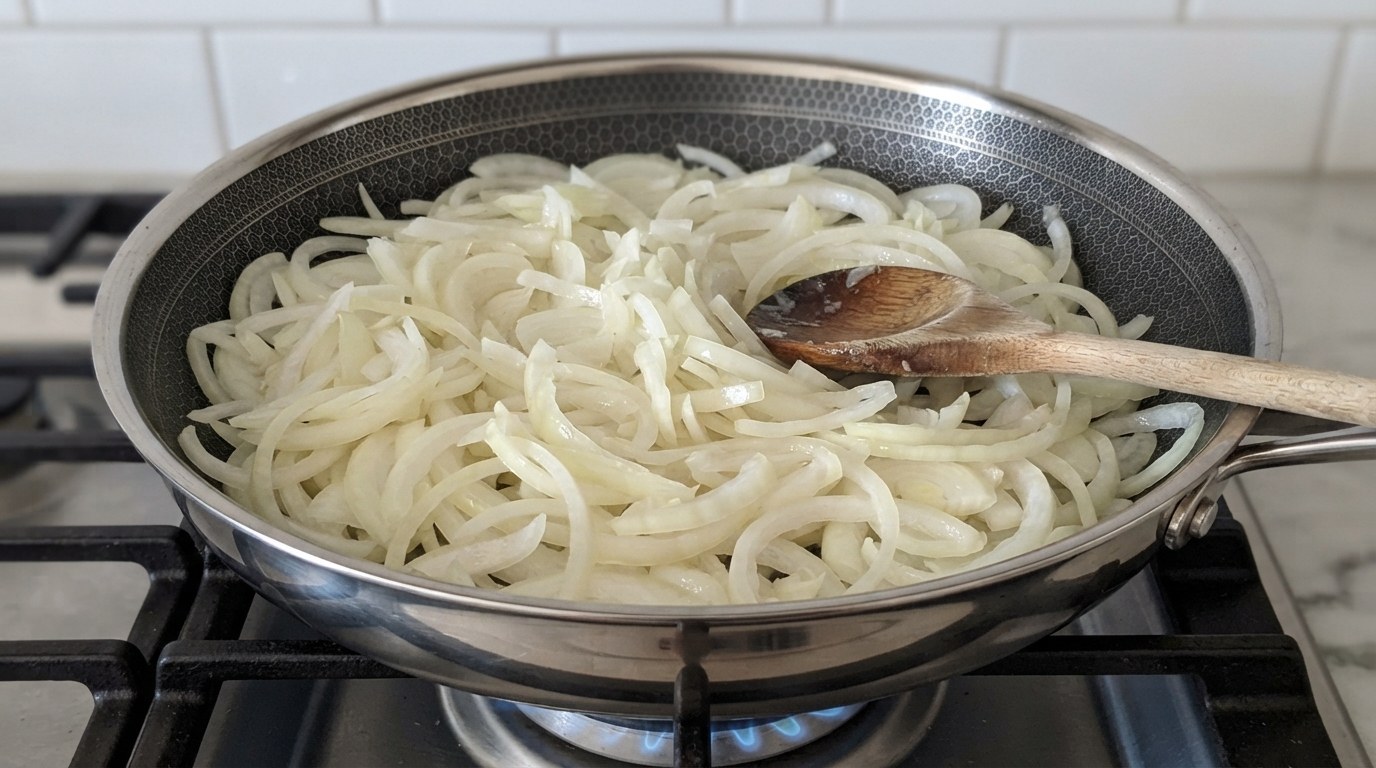
The onions take 45 minutes because they have to lose most of their water before they can brown, and water leaves slowly at low heat. A pan full of sliced onion sits at or near 212°F, the boiling point of water, for as long as the onions are wet; browning cannot start until the surface climbs past that, into the range where the Maillard reaction between the onion's amino acids and sugars begins, around 284°F, and where its sugars caramelize on their own, from about 320°F. So the first 20 minutes are steaming, not browning: the pile wilts, turns translucent and shrinks by half while the water cooks off. Only then does color start, and from there it deepens a shade every few minutes. The National Onion Association puts truly caramelized onions, dark brown and as sweet as candy, at around 45 minutes and sometimes longer, and both Mississippi State and University of Illinois Extension land at 30 to 40 minutes over low to medium-low heat with a stir every few minutes.
Salt at the start is what Ramsay does with vegetables, and the reason is osmosis: salt on the cut cells draws their water out, so it can evaporate instead of staying trapped inside. He describes it plainly in his lessons, the salt extracts the water and moisture and the vegetables start to caramelize, and it is the same move here. Keep the heat low enough that the onions never sizzle hard; medium-low on most stoves. High heat browns the edges while the centers are still raw and wet, which gives you burnt bits in a pile of slippery onion instead of an even jam. When the bottom of the pan builds a brown film, splash in a tablespoon of water and scrape; the fond dissolves and coats the onions, and the pan is clean again for the next layer.
How to Tell When Caramelized Onions Are Done
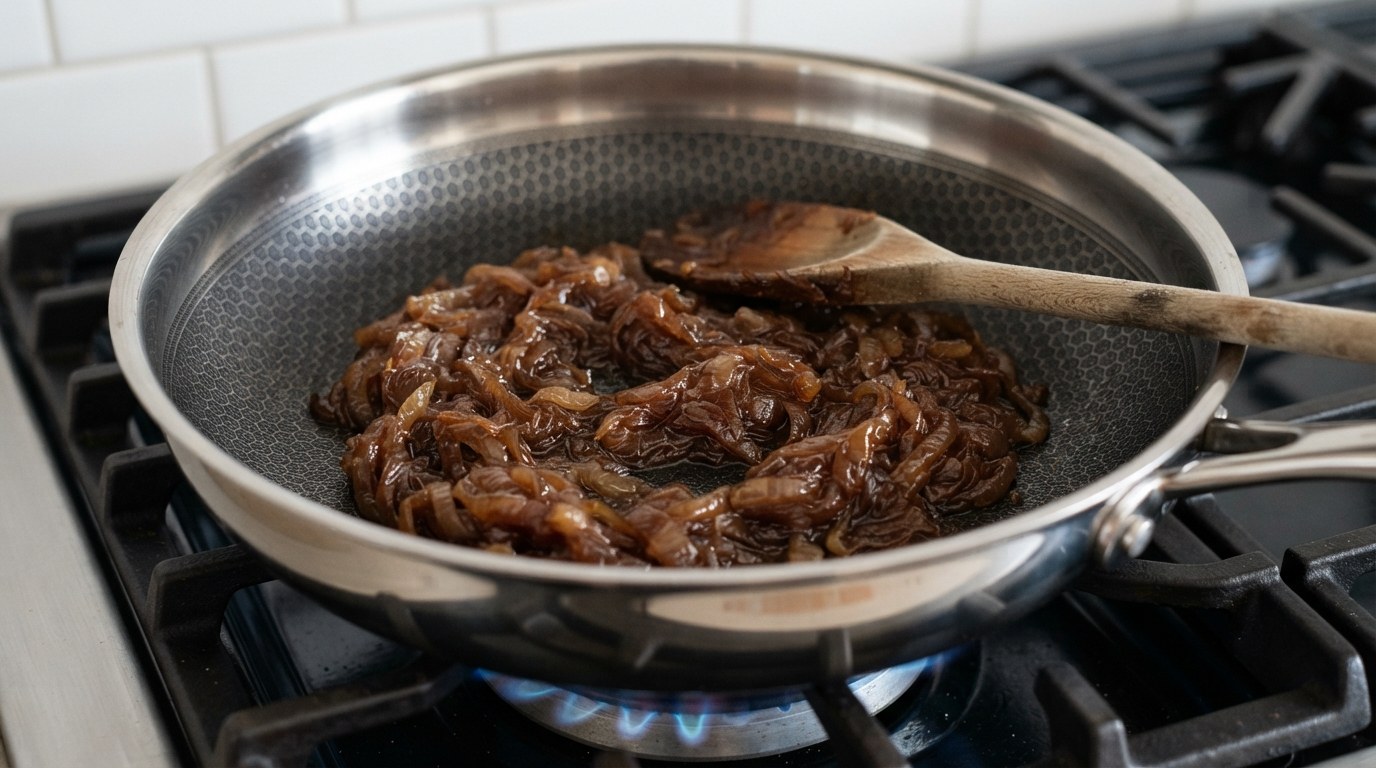
They are done when the pile has shrunk to a quarter of what you started with, the color is an even mahogany rather than gold, the strands are soft enough to cut with the spoon, and there is no liquid in the pan, only a little glossy fat. Golden onions at 20 minutes are sweet but still taste of onion; the deep, almost meaty flavor a dip needs arrives in the last 15 minutes, when the browning compounds stack up, and stopping early is the most common reason a homemade version tastes thin next to the store-bought one. Stop before black: past about 356°F the sugars stop caramelizing and start burning, and one scorched patch turns the whole batch bitter.
A pinch of baking soda is the known shortcut, and the National Onion Association lists it as the trick for caramelizing faster: raising the pH speeds the Maillard browning, and the onions color in about half the time. The trade is texture. Alkaline onions break down into a soft, slightly slick purée rather than distinct strands, which is fine inside a dip if you are pressed for time; use no more than a quarter teaspoon for three onions, and skip the sugar some recipes add, which only browns the sugar rather than the onion. Then take the onions off the heat, stir in the Worcestershire and thyme while they are hot so the flavors bloom, and spread them on a plate to cool.
The Two Mistakes That Make Onion Dip Watery
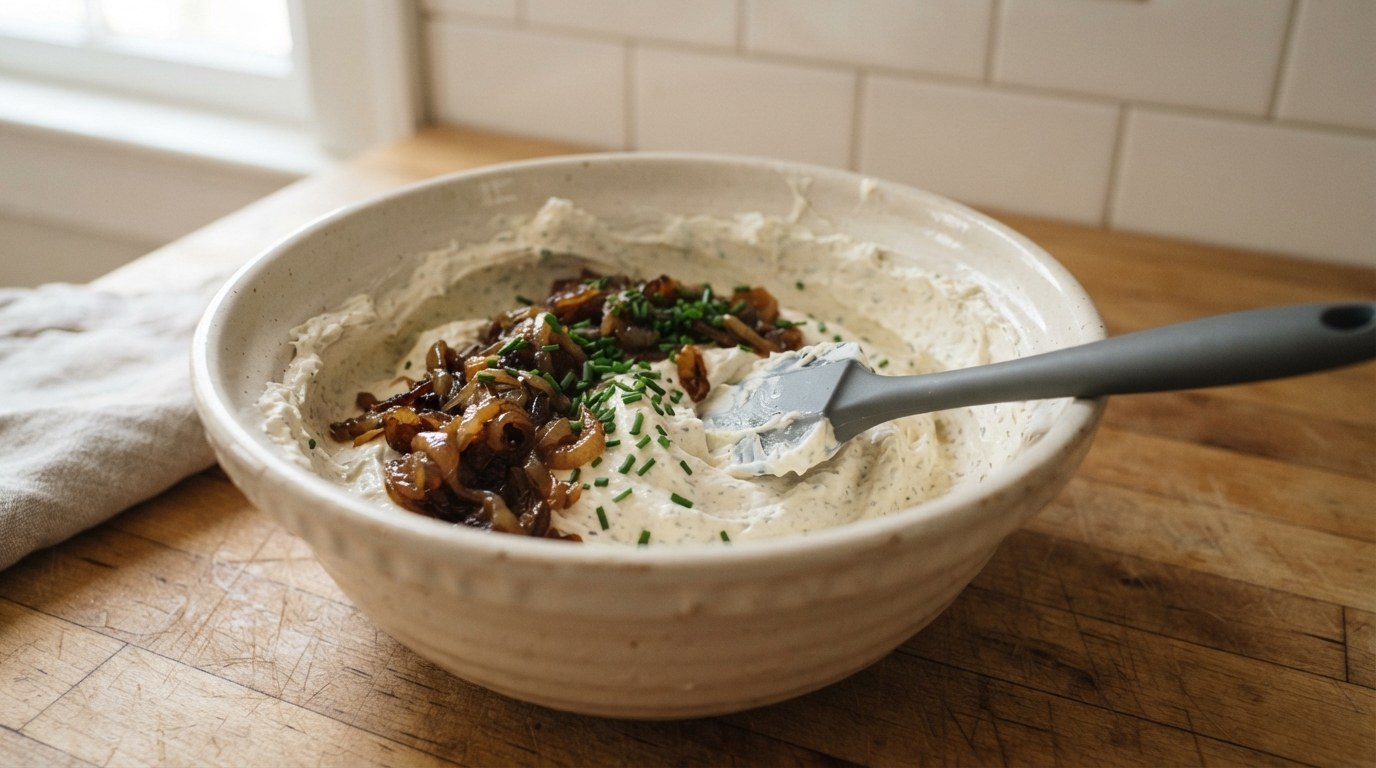
An onion dip goes watery for one of two reasons, and both happen at the folding stage. The first is onions that were not cooked dry. Any water still in the onions leaches into the base over the next few hours, and the salt in the dip pulls more out of them by osmosis, so a batch that looked fine at the party is a puddle by morning. Cook the onions until the pan is dry, and if they still look wet, let them sit on paper towel for a few minutes. The second is folding the onions in hot. Cream cheese is an emulsion of fat and water held by milk proteins, and sour cream at about 20 percent fat is a fragile one; hot onions melt the fat, loosen that structure, and the base thins and can turn oily. Ten minutes on a plate brings the onions to warm, and warm is fine.
Build the base in the right order. Beat the softened cream cheese alone first until it is completely smooth, because lumps that go in never come out, then beat in the sour cream and mayonnaise until glossy. Mayonnaise is doing quiet work here: its egg-yolk lecithin holds oil and water together, and a base with mayonnaise in it stays creamy in the refrigerator where sour cream alone weeps. Fold the cooled onions and most of the chives in with a spatula, season with lemon juice, black pepper and salt to taste, remembering the onions are already salted, and refrigerate for at least an hour. The chill firms the butterfat and lets the onion's sulfur compounds spread through the base; the dip you taste at hour one is noticeably flatter than the one at hour four.
Make-Ahead, Storage and Serving Hot or Cold
| Stage | Number | What you see |
|---|---|---|
| Onions, softening | First 15 to 20 minutes, medium-low | Pile wilts, turns translucent, shrinks by half; no color yet |
| Onions, browning | Minutes 20 to 45 | Gold, then amber, then mahogany; fond forms and gets deglazed |
| Onions, done | About 45 minutes, about 1 cup | Even deep brown, soft, no liquid in the pan |
| Cooling | 10 minutes on a plate | Warm to the touch, not hot |
| Chilling the dip | 1 hour minimum, best overnight | Firms and the flavor deepens |
| Out on the table | 2 hours maximum at room temperature | The FDA limit for a dairy dip; 1 hour above 90°F |
Caramelize the onions up to three days ahead and keep them in a covered container in the refrigerator; they are also the base of the site's French onion soup, so a double batch is never wasted. The finished dip keeps four days refrigerated in a sealed container and gets better through day two. The FDA puts the limit for perishable food at room temperature at two hours, one if the room is above 90°F, and the refrigerator at 40°F or below; for a long party, put out half the dip and keep the rest cold. It does not freeze well, because sour cream and cream cheese separate when they thaw.
Serve it cold with ridged potato chips, which hold a thick dip without snapping, or with celery, endive and cucumber. For a hot version, spread the finished dip in a small baking dish, top with a half cup of grated Gruyère, and bake at 375°F for 15 to 20 minutes until bubbling; the cream cheese base holds under heat where a sour-cream-only dip would split. A spoonful is also the right topping for the site's ultimate cheeseburger, and the same slow-cooked onions turn up in deviled eggs and on the Hell's Kitchen scallop starter plate if you want a full appetizer table.

Caramelized Onion Dip (Slow-Cooked, From Scratch)
Ingredients
- 3 large yellow onions (about 2 lb), halved and sliced ¼ inch thick
- 2 Tbsp unsalted butter
- 1 Tbsp olive oil
- ¾ tsp kosher salt, plus more to taste
- 2 Tbsp water, or as needed for deglazing
- 1 tsp Worcestershire sauce
- ½ tsp fresh thyme leaves, chopped
- 6 oz cream cheese, softened
- ⅔ cup sour cream
- ⅓ cup mayonnaise
- 2 tsp fresh lemon juice
- 3 Tbsp chives, thinly sliced, divided
- Freshly ground black pepper
- Ridged potato chips, celery and cucumber, for serving
Instructions
- Melt the butter with the olive oil in a large heavy skillet over medium heat. Add the onions and salt and stir to coat; the pan will be crowded. Cook, stirring every few minutes, until the onions have wilted, turned translucent and shrunk by about half, 15 to 20 minutes. No color yet.
- Reduce the heat to medium-low and keep cooking, stirring every 3 to 5 minutes and scraping the bottom. When a brown film builds on the pan, add a tablespoon of water and scrape it up into the onions. Continue until the onions are soft, jammy and an even deep mahogany brown with no liquid left, 25 to 30 minutes more, about 45 minutes total. Lower the heat if anything starts to blacken.
- Off the heat, stir in the Worcestershire and thyme. Spread the onions on a plate and let them cool for 10 minutes, until warm rather than hot.
- Meanwhile, in a medium bowl, beat the softened cream cheese with a hand mixer or a stiff spatula until completely smooth. Beat in the sour cream and mayonnaise until glossy.
- Fold in the cooled onions, the lemon juice and 2 tablespoons of the chives. Season with black pepper and, tasting first, a little more salt.
- Cover and refrigerate at least 1 hour and preferably overnight. Stir, top with the remaining chives, and serve cold with ridged chips and vegetables. Keeps 4 days refrigerated; keep it out no more than 2 hours.
Notes
Caramelized Onion Dip FAQs
The questions that come up most: how long caramelized onion dip lasts, whether it is served hot or cold, whether the onions can be done the day before, why onion dip gets watery, what onions to use, whether Greek yogurt works, what the difference is from French onion dip, and what to serve with it.
How long does caramelized onion dip last in the fridge?
Four days in a sealed container at 40°F or below, and it tastes best on day two once the onion flavor has spread through the base. Keep it out for no more than two hours at a party, per the FDA's limit for perishable food, and do not freeze it; the sour cream and cream cheese separate when thawed.
Is caramelized onion dip served hot or cold?
Cold is the classic, chilled at least an hour so it firms and the flavor deepens. It also bakes well: spread it in a small dish, top with grated Gruyère and bake at 375°F for 15 to 20 minutes until bubbling. The cream cheese in the base is what lets it take heat without splitting.
Can I caramelize the onions the day before?
Yes, and up to three days ahead. Cook them fully, cool, and refrigerate in a covered container, then fold them into the base cold. Make-ahead onions are the easiest way to get the dip done on a party day, and a double batch covers this dip and a French onion soup.
Why does my onion dip get watery?
Either the onions were not cooked dry, so their remaining water leached into the base and the salt in the dip drew out more, or the onions went in hot and melted the fat in the cream cheese and sour cream, which loosens the emulsion. Cook the onions until the pan is dry, cool them 10 minutes on a plate, and use cream cheese for body.
What onions are best for caramelizing?
Yellow onions. They have the sugar to brown deeply and the bulk to cook down without turning to mush; University of Illinois Extension notes any onion will do but yellow onions caramelize particularly well. Sweet onions work but hold more water and take longer; red onions go a dull gray-purple.
Can I use Greek yogurt instead of sour cream?
For half of it. Greek yogurt is tangier and thinner than sour cream, and swapping all of it gives a sharper, looser dip. Replace the sour cream with an equal amount of full-fat Greek yogurt and keep the cream cheese and mayonnaise, which carry the body and the gloss.
What is the difference between caramelized onion dip and French onion dip?
The onion. French onion dip in the American sense is sour cream stirred with a dehydrated onion soup packet; caramelized onion dip is built on fresh onions cooked 45 minutes until their sugars brown, folded into a cream cheese, sour cream and mayonnaise base. The caramelized version is sweeter, deeper and has real onion texture.
What do you serve caramelized onion dip with?
Ridged potato chips first, because they hold a thick dip, then celery, endive, cucumber and bell pepper strips, or toasted baguette. It also works as a topping: a spoonful on a burger, inside a baked potato, or spread under the cheese on a grilled sandwich.

About the Author
John Siracusa is the founder of Hell’s Kitchen Recipes. He focuses on technique-first, reproducible home cooking and researches recipes & kitchen equipment from published food science and professional chef methods since 2016.