French onion soup is proof that one humble ingredient, cooked with patience, can taste like far more than the sum of its parts. The whole dish rests on one step: caramelizing the onions until they are deep, jammy, and sweet. Get that right and a pot of onions, stock, and bread becomes something restaurant-worthy.
Gordon Ramsay's version is the classic done properly: yellow onions cooked down slowly, deglazed with white wine, simmered in good beef stock with thyme, then finished under the broiler with baguette and molten Gruyère. The card below has the full recipe; the guide explains why the onions behave the way they do, and how to keep them from turning bitter.
How to Caramelize the Onions
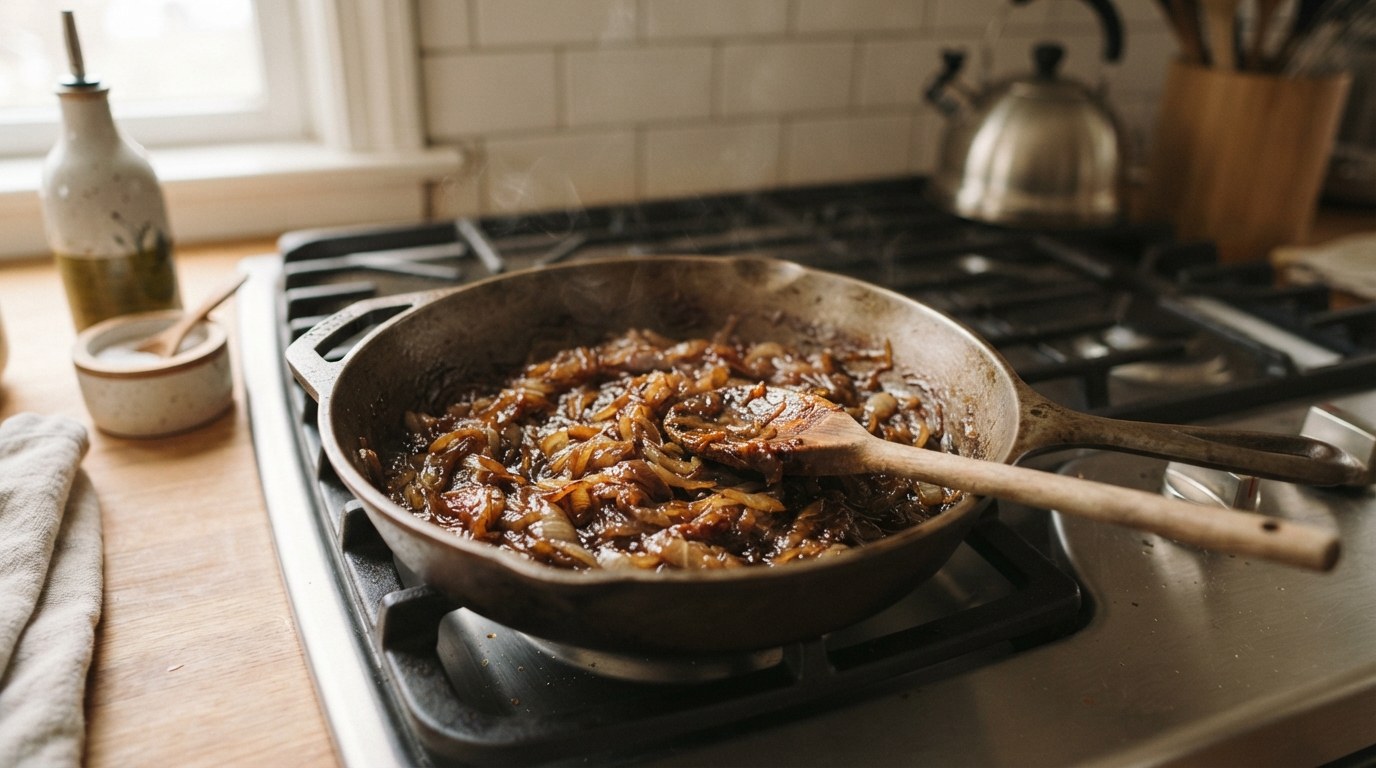
The sweetness in French onion soup is caramelization, the browning of the onions' own sugars as they decompose under heat, with a little savory Maillard browning alongside. Raw onions are about three-quarters water, so nothing browns until that water cooks off; only then do the sugars start to color and turn sweet, somewhere above 300°F at the pan surface.
That is why this step cannot be rushed. Cook the onions low and slow, 40 to 60 minutes over medium to medium-low heat, stirring so they color evenly. Push the heat too high to hurry them and the sugars scorch before they sweeten, which is exactly what makes a bitter, acrid soup. A pinch of sugar and a little salt early on help: the salt pulls water out of the onions so they brown sooner. As Serious Eats and The Kitchn both stress, real caramelized onions take the better part of an hour, not the ten minutes some recipes promise.
The onions move through clear stages, and knowing them is how you avoid pulling them too early or scorching them. Here is roughly what to expect on a low, steady heat.
| Stage | Approx. time | Color | What’s happening |
|---|---|---|---|
| Softened | 10–15 min | Translucent, limp | Water cooks out and the cell walls break down |
| Golden | 20–30 min | Pale gold | Sugars start to brown; Maillard begins near 284°F |
| Amber | 40–50 min | Rich amber | Caramelization deepens (320–338°F) and the flavor sweetens |
| Deep brown (done) | 60–75 min | Mahogany, jammy | Fully caramelized, no raw onion bite left |
| Too far | — | Black flecks | Burnt sugars turn acrid and bitter; start over |
Low and slow is the whole game. Push the heat to rush it and the sugars scorch on the outside before the rest has had time to brown, which is the difference between sweet, jammy onions and a bitter batch.
Deglaze, Simmer, and Season
As the onions caramelize, a brown film called fond builds on the bottom of the pot. That fond is pure concentrated flavor, so once the onions are done, pour in the white wine and scrape it up; the wine dissolves the fond back into the soup. Then add the beef stock, bay, and thyme and simmer gently, around 185 to 195°F, for about 30 minutes so the flavors marry.
Season at the end, not the start, since the stock reduces and concentrates as it simmers. Taste before you salt, because a good beef stock may already carry plenty.
The Gratinéed Cheese Top
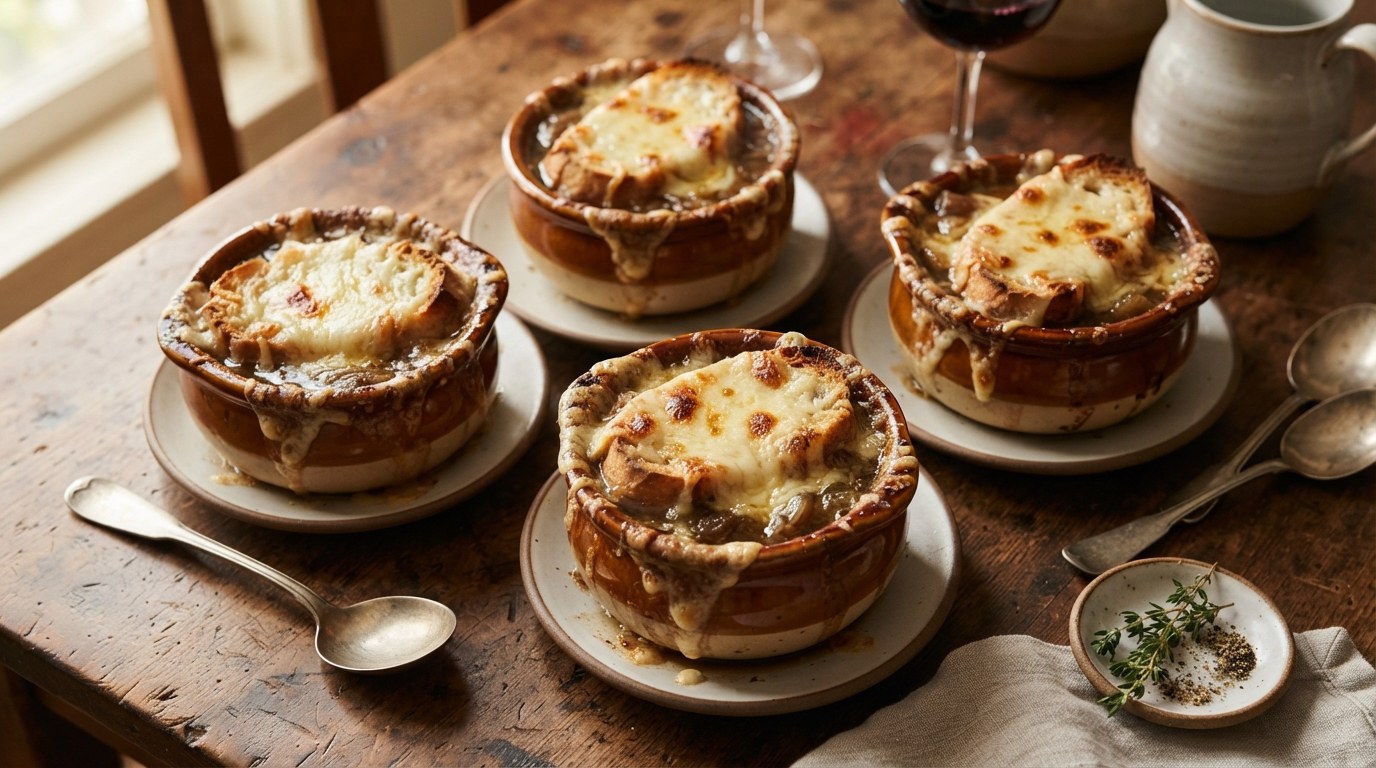
The bubbling brown crust is the signature, and it is the Maillard reaction again, this time browning the cheese and bread under the broiler. Ladle the soup into oven-safe bowls, float a slice of day-old baguette on top, pile on grated Gruyère, and broil until the cheese is golden and blistered. Stale bread matters here: it soaks up broth without instantly collapsing.
A Short History
Onion soups are ancient, but the French onion soup we know, caramelized onions in beef broth under a gratinéed cheese crust, took its modern form in 18th-century France and became a Paris bistro staple. It began as a thrifty way to turn cheap onions and stale bread into a warming meal, and that peasant thrift is still the whole idea.
Make-Ahead and Storage
The soup base is better the next day, once the flavors settle, so it is a good make-ahead. Cool it fully, then refrigerate up to 4 days, or freeze for a few months. Add the bread and cheese and broil only when you serve, so the topping stays crisp and does not go soggy in storage.
For more French classics, try our béarnaise sauce or a beef Wellington, or browse the full recipes collection.
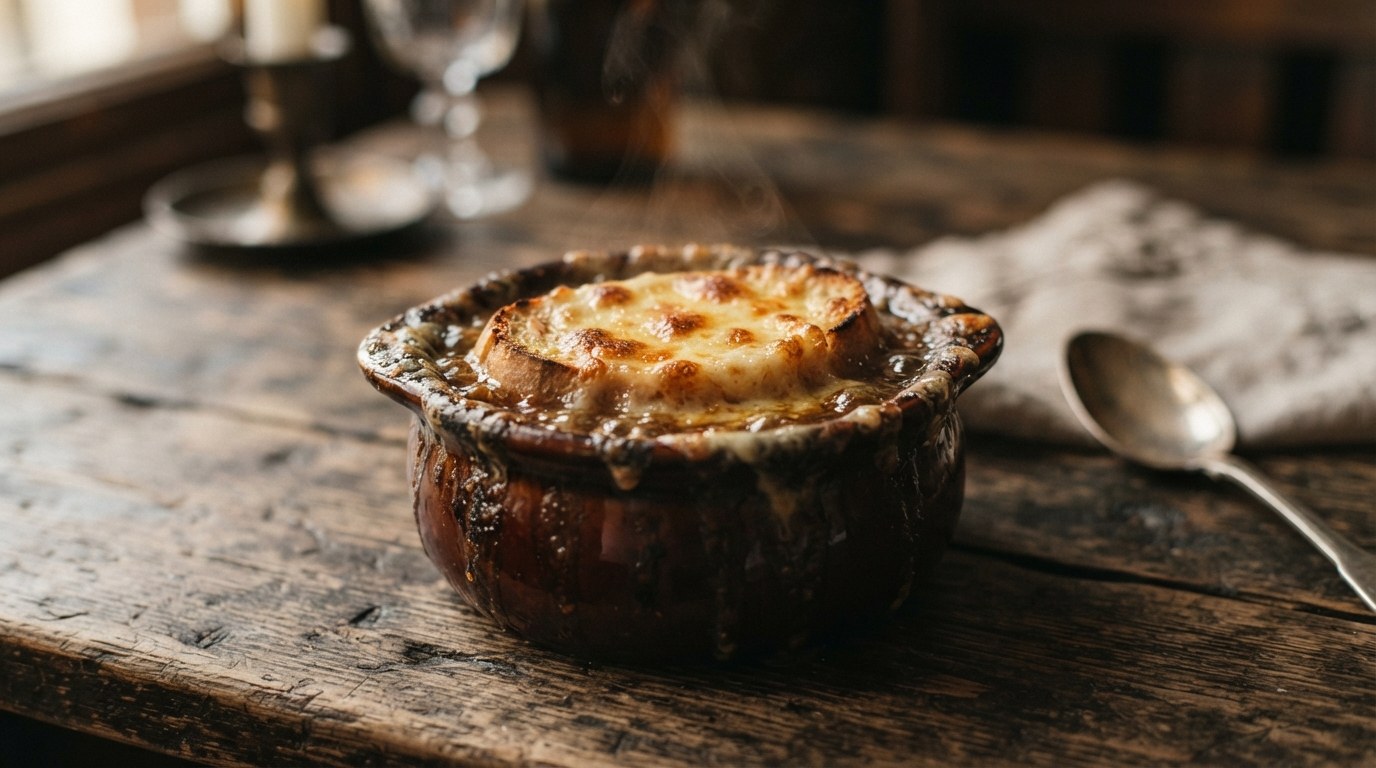
Gordon Ramsay's French Onion Soup
Ingredients
- 6 large yellow onions, thinly sliced
- 4 Tbsp butter
- 2 Tbsp olive oil
- 1 tsp sugar
- 2 cloves garlic, minced
- 8 cups beef stock
- 1/2 cup dry white wine
- 2 bay leaves
- 4 sprigs fresh thyme
- Salt and black pepper, to taste
- 6 slices day-old baguette
- 2 cups grated Gruyère cheese
Instructions
- Melt the butter with the olive oil in a large pot over medium heat. Add the sliced onions and sugar and cook, stirring occasionally, until deeply caramelized and jammy, about 45 minutes. Do not rush the heat or they will turn bitter.
- Add the garlic and cook 1 minute, then pour in the white wine and scrape up the browned fond from the bottom of the pot.
- Add the beef stock, bay leaves, and thyme. Bring to a simmer, then lower the heat and cook gently for 30 minutes. Season with salt and pepper to taste.
- Ladle the soup into oven-safe bowls. Top each with a slice of day-old baguette and a generous mound of grated Gruyère.
- Broil until the cheese is golden, bubbling, and blistered, then serve hot.
Notes
French Onion Soup FAQs
The questions that come up most: how long to caramelize the onions, which onions and cheese to use, why the soup turns bitter, and whether you can make it ahead.
How long does it take to caramelize onions for French onion soup?
About 40 to 60 minutes over medium to medium-low heat. The onions are mostly water, so they have to lose that water before the sugars can brown and sweeten. Anything promising caramelized onions in ten minutes gives you softened onions, not caramelized ones.
What onions are best for French onion soup?
Yellow onions. They have the right balance of sugar and sharpness to caramelize into a deep, sweet base. Sweet onions can work but can turn cloying; red onions are less suited.
Why is my French onion soup bitter?
The onions were cooked too hot and scorched before they caramelized. Keep the heat moderate and be patient; browned is good, but blackened, burnt bits taste acrid and will make the whole pot bitter.
What cheese is best for French onion soup?
Gruyère is traditional: it melts smoothly and browns well under the broiler with a nutty flavor. A mix of Swiss and a little Parmesan is a good substitute.
Can I make French onion soup without beef stock?
Yes. A rich chicken stock makes a lighter version, and a good vegetable stock plus a splash of soy or a little miso makes a vegetarian one with the savory depth beef stock usually provides.
Can you make French onion soup ahead of time?
Yes, and it is often better the next day. Refrigerate the soup base up to 4 days or freeze it for months. Add the bread and cheese and broil only just before serving so the topping stays crisp.

About the Author
John Siracusa is the founder of Hell’s Kitchen Recipes. He focuses on technique-first, reproducible home cooking and researches recipes & kitchen equipment from published food science and professional chef methods since 2016.