Crab rangoon cups are the takeout classic turned inside out: instead of folding cream cheese and crab into a wonton and deep-frying it, you press the wonton wrapper into a muffin tin, bake it into a crisp cup, and spoon the filling in. They come out of the oven with the same crackle and the same creamy, scallion-flecked center as the fried version, with no oil to heat and no folding, and a muffin tin makes two dozen in one go. The two things that decide whether the cups are crisp or leathery are the same two that decide whether the filling is creamy or oily, and both come down to timing.
The recipe card at the bottom has the amounts and numbered steps for 24 cups, enough for eight as a starter. This guide covers where crab rangoon comes from and what is actually in it, why the wonton cups bake empty first, how to build a filling that stays creamy, doneness, the real-crab-versus-imitation question, the sauce, and make-ahead. It sits in the site's recipes collection with Gordon Ramsay's crab cakes and the Boursin stuffed mushrooms from the same holiday table.
What Crab Rangoon Is and Where It Comes From
Crab rangoon is American. It was created for Trader Vic's, the Polynesian-themed restaurant chain founded by Victor Bergeron, and Mental Floss's account of its origins puts it on the menu by the 1950s, named after Rangoon, the former name of Yangon in Myanmar, for the exotic sound rather than any connection to the place. The tell is the cream cheese: it was a staple of American kitchens in the 1940s and almost unknown in Chinese cooking, which is nearly dairy-free. Chinese-American restaurants adopted the dish, and it became the appetizer that comes with the sweet-and-sour sauce and, in most places, imitation crab.
So the dish is three parts: a thin wheat-and-egg wonton wrapper, a cream cheese filling seasoned with scallion, garlic and something savory, and crab. A fried rangoon gets its crackle from hot oil driving the water out of the wrapper in seconds; a baked cup gets there more slowly, in a 375°F oven, and the recipe is arranged so the wrapper has a head start on the filling. The filling itself is nearly the same as the site's crab cake binder with the breadcrumbs swapped for cream cheese, and the same rule applies: fold the crab in last and gently, so the lumps stay whole.
| Ingredient | What it does | Do not substitute with |
|---|---|---|
| Square wonton wrappers, 24 | Bake into crisp, ruffled cups | Egg roll wrappers (too thick; bake tough) or phyllo (a different, flakier cup) |
| Full-fat block cream cheese, 8 oz, softened | The creamy, heat-stable base | Whipped or low-fat cream cheese (thin, and it weeps) |
| Pasteurized lump crab meat, 8 oz, drained | Real crab flavor and whole lumps | Nothing, unless cost forces imitation crab; see the FAQ |
| Scallions, garlic, Worcestershire, soy sauce | The savory backbone of a takeout rangoon | Onion powder alone (flat) |
| A teaspoon of sugar and a squeeze of lemon | The sweet-tangy note that marks a rangoon filling | Skipping both (tastes like plain cream cheese) |
| Neutral oil for brushing | Helps the wrapper brown and crisp | Cooking spray only (works, but browns less) |
Why the Wonton Cups Bake Empty First
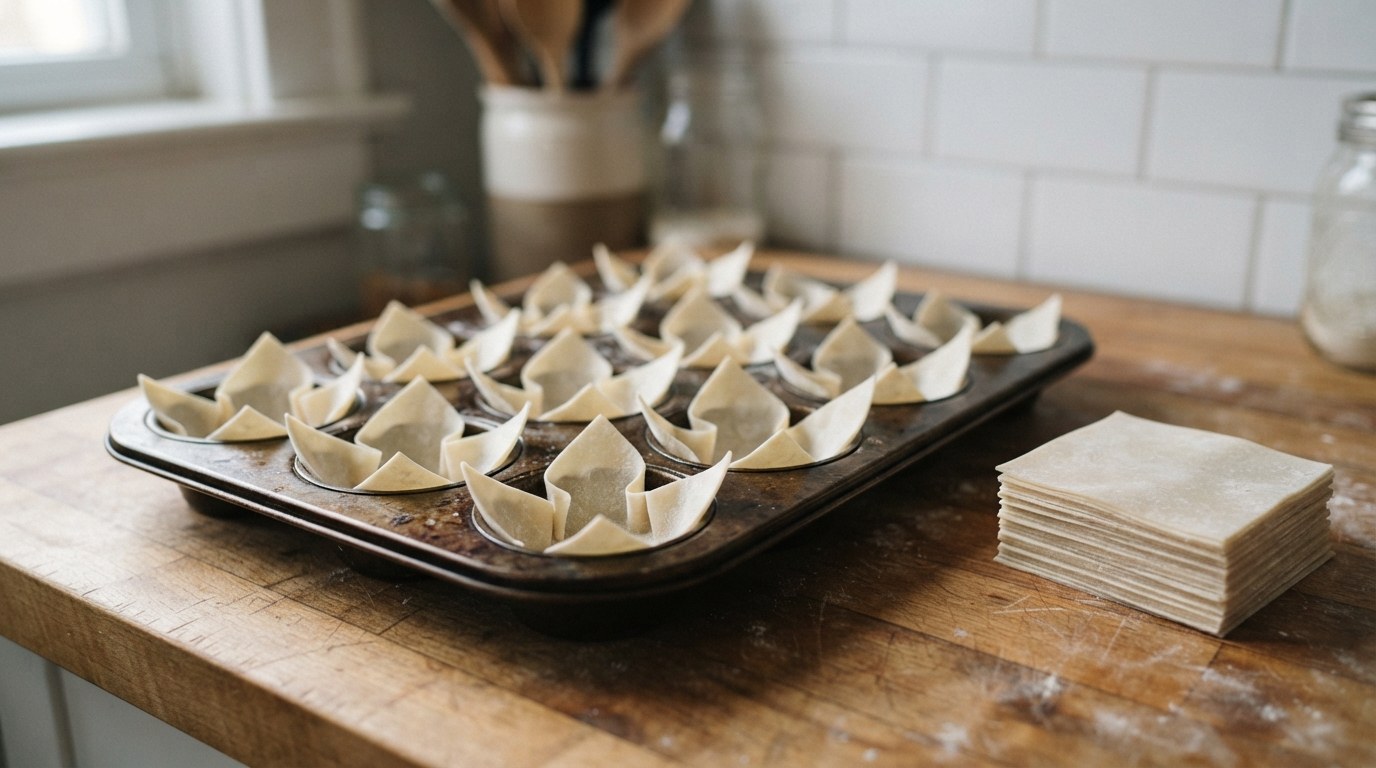
A wonton wrapper is a sheet of wheat dough, and a sheet of dough crisps by losing its water. Brush each wrapper lightly with oil on both sides, press it into a muffin well so the four corners point up, and bake the empty cups at 375°F for 6 minutes, until the edges just begin to color and the base has gone from translucent and floppy to opaque and firm. This is the step most recipes skip and the reason their cups turn leathery: a wet filling spooned into a raw wrapper sits on it and steams it from above, and a surface with water on it cannot climb past 212°F, so the base never dries enough to crisp. Pre-baked, the cup is already dry and set when the filling arrives, and the second bake only has to brown it.
The oil does two things. It conducts oven heat into the thin dough evenly, and it lets the surface climb into browning territory once the water is gone; Maillard browning, the reaction between the dough's proteins and sugars that gives a rangoon its color and toasted flavor, only starts around 284°F, well above the boiling point the water was holding it at. The corners, which are thinnest and most exposed, brown first and hardest, so watch them. Standard muffin tins make 24 cups from two pans; a mini-muffin tin makes smaller, shallower cups with less filling, and the pre-bake drops to 4 minutes.
The Filling: Cream Cheese, Real Crab, and a Light Hand
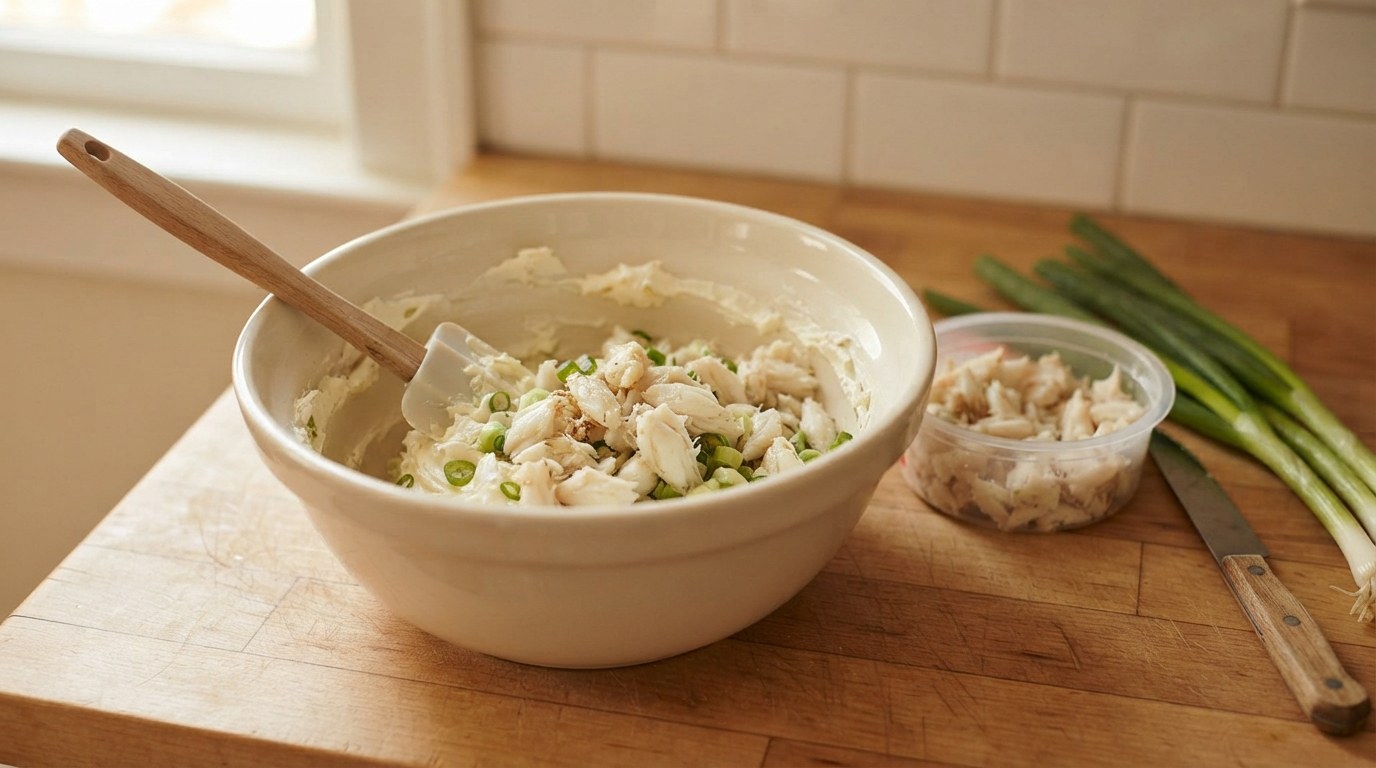
Cream cheese is the reason a rangoon filling stays creamy in a hot oven. Under the federal standard of identity it must contain at least 33 percent milkfat and no more than 55 percent moisture, and a dairy product that rich in fat is a heat-stable emulsion; anything above about 25 percent fat holds together under heat, where a leaner dairy would curdle or split. That is also why whipped or low-fat cream cheese fails here: the whipped kind has air and added water, the low-fat kind has less of the fat doing the work, and both go thin and weep. Use a full-fat block, softened at room temperature so it beats smooth with no lumps, and season it before the crab goes in: sliced scallions, a grated clove of garlic, a teaspoon each of Worcestershire and soy sauce for the savory depth, a teaspoon of sugar and a squeeze of lemon for the sweet-tangy edge that marks the takeout version, and white pepper.
Then the crab. Pasteurized lump crab comes cooked and ready in a refrigerated tub; the University of Florida's seafood guide explains that lump is the whole muscle from the swimming legs, the grade with the biggest pieces, and that pasteurized crab keeps for months unopened at 40°F or below but should be eaten within three days once opened. Drain it, pick through it for shell, pat it dry, and fold it into the seasoned cream cheese in a few strokes with a spatula so the lumps survive. Because the crab is already cooked, the oven has only to warm it; crab muscle, like any lean seafood, begins to tighten and dry above about 122°F, so the filling wants the shortest bake that gets it hot.
Baking, Doneness and the Sauce
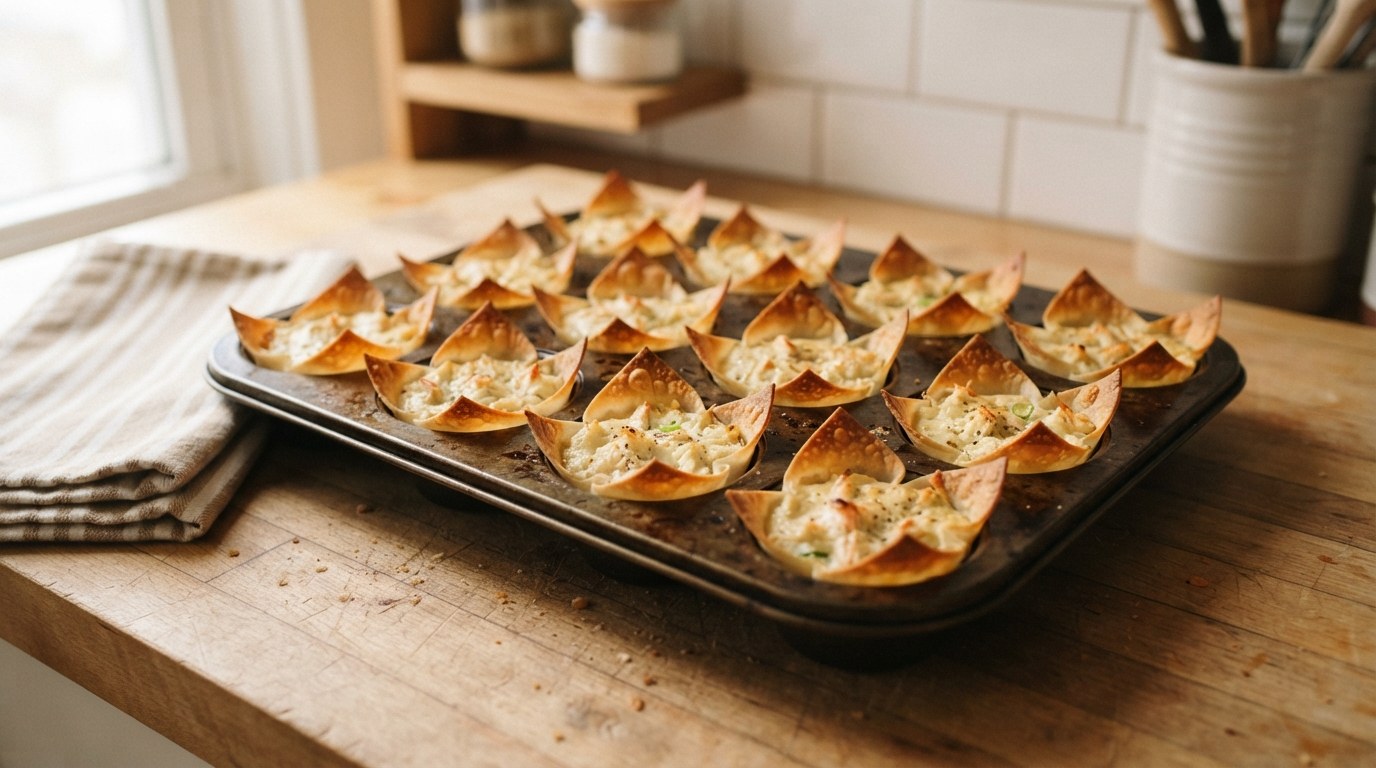
Spoon a heaping tablespoon of filling into each pre-baked cup and return the tin to the 375°F oven for 8 to 10 minutes, until the filling is hot through, puffed slightly, and golden in spots on top, and the cup edges are deep golden brown. That is done. Longer and two things go wrong at once: the cream cheese, pushed past hot to bubbling, begins to release its fat and the tops go greasy, and the crab dries. The cups come out of the oven looser than they will be in five minutes; the cream cheese firms as it cools from bubbling toward eating temperature, so rest the tin 5 minutes before lifting them out with a small offset spatula.
| Stage | Number | What you see |
|---|---|---|
| Pre-bake the empty cups | 375°F, 6 minutes | Edges just coloring, base opaque and firm |
| Fill | Heaping 1 Tbsp per cup | Level with the rim, not mounded over the corners |
| Second bake | 375°F, 8 to 10 minutes | Filling hot and lightly golden, edges deep golden |
| Rest | 5 minutes in the tin | Filling firms; cups lift out clean |
| Serve | Warm, within 30 minutes | Crisp cups; sweet chili sauce on the side |
Serve with sweet chili sauce, the glossy Thai-style bottled sauce that is now the standard rangoon dip, or with the duck-sauce-style sweet and sour that came with the original. Sliced scallion greens over the top, and a lemon wedge for anyone who wants the crab brighter. The cups are best warm within 30 minutes, while the wrapper is still crisp; the filling's moisture migrates into the cup as it sits, and a cold rangoon cup is a soft one. Alongside, the baked caprese bites and the king crab capellini cover the rest of a seafood-leaning table.
Real Crab, Imitation Crab, and Make-Ahead
Most restaurant rangoon is made with imitation crab, and it is worth knowing what that is. Imitation crab is surimi: Alaska pollock that has been minced, washed down to its protein, blended with starch, salt, egg white and often a little real crab, then formed, cooked and cut, as the Alaska pollock producers' association describes it. It is real, fully cooked fish, not a synthetic, and federal labeling rules require a product that substitutes for another food but is nutritionally inferior to carry the word "imitation" in type as prominent as the food's name, which is why the package says so. It works in this recipe, chopped fine, at a fraction of the cost; it is sweeter and softer than crab and has none of the lump texture. Real lump crab is the upgrade, and an 8-ounce tub is enough for 24 cups because the cream cheese carries it.
Make-ahead: the filling keeps, covered, for 2 days in the refrigerator, and the empty cups can be pre-baked up to a day ahead and stored in an airtight container at room temperature. Fill and bake just before serving, adding a minute or two for a cold filling. Baked cups reheat at 375°F for 5 minutes on a sheet pan, never in a microwave, which softens the wrapper. An air fryer does the second bake in 5 to 6 minutes at 350°F in a single layer.

Crab Rangoon Cups (Baked Wonton Cups)
Ingredients
- 24 square wonton wrappers
- 2 Tbsp neutral oil, for brushing
- 8 oz full-fat block cream cheese, softened
- 3 scallions, thinly sliced, plus more to serve
- 1 garlic clove, finely grated
- 1 tsp Worcestershire sauce
- 1 tsp soy sauce
- 1 tsp sugar
- 1 tsp fresh lemon juice, plus wedges to serve
- ¼ tsp white pepper
- 8 oz pasteurized lump crab meat, drained, picked over and patted dry
- ½ cup sweet chili sauce, for dipping
Instructions
- Heat the oven to 375°F (190°C). Brush both sides of each wonton wrapper lightly with oil and press one into each well of two 12-cup muffin tins so the corners point up. Bake 6 minutes, until the edges just begin to color and the base is opaque and firm.
- Beat the softened cream cheese until smooth. Stir in the scallions, garlic, Worcestershire, soy sauce, sugar, lemon juice and white pepper. Fold in the crab gently with a spatula, keeping the lumps whole.
- Spoon a heaping tablespoon of filling into each cup, level with the rim. Bake 8 to 10 minutes, until the filling is hot and golden in spots on top and the cup edges are deep golden brown.
- Rest 5 minutes in the tin, then lift the cups out with a small offset spatula. Scatter with scallion greens and serve warm with sweet chili sauce and lemon wedges.
Notes
Crab Rangoon Cups FAQs
The questions that come up most: whether to use real or imitation crab, how long to bake them, why the cups went soft, whether they can be made ahead, what sauce to serve, whether wonton wrappers can be swapped for phyllo, whether they can be air-fried, and how long leftovers keep.
Is crab rangoon made with real crab?
At most restaurants, no; it is imitation crab, which is surimi made from minced Alaska pollock blended with starch, egg white and salt, then cooked and formed, and labeled "imitation" under federal rules. This recipe uses pasteurized lump crab, which has real crab flavor and whole lumps; imitation crab works as a budget swap, chopped fine, with a sweeter, softer result.
How long do you bake crab rangoon cups?
Twice, at 375°F: 6 minutes for the empty oiled wonton cups, until the edges begin to color and the base is firm, then 8 to 10 minutes once filled, until the filling is hot and lightly golden on top and the edges are deep golden brown. Rest 5 minutes in the tin before lifting them out.
Why did my wonton cups turn out soft?
The filling went into raw wrappers. A wet filling steams the dough beneath it and keeps the surface at 212°F, so it never dries enough to crisp. Pre-bake the oiled cups empty first, fill them level with the rim rather than mounded, and serve within 30 minutes; the filling's moisture softens the cup as it sits.
Can crab rangoon cups be made ahead?
In parts. Make the filling up to 2 days ahead and refrigerate it covered; pre-bake the empty cups up to a day ahead and keep them airtight at room temperature. Fill and do the second bake just before serving, adding a minute or two for a cold filling. Fully assembled cups do not hold; the wrapper softens.
What sauce goes with crab rangoon?
Sweet chili sauce is the standard now, and the sweet-and-sour "duck sauce" is the original. Either balances the rich cream cheese with sugar and acid. A squeeze of lemon over the cups does the same job with less sweetness.
Can I use phyllo cups instead of wonton wrappers?
Yes. Store-bought frozen phyllo shells take the same filling and need only the second bake, about 10 minutes at 375°F, because they are already crisp. They are flakier and more delicate than a wonton cup and hold about two teaspoons each, so plan on more shells and less filling per cup.
Can you make crab rangoon cups in an air fryer?
Yes. Pre-bake the oiled empty cups in a single layer at 350°F for 3 to 4 minutes, fill them, and air-fry 5 to 6 minutes more until the filling is hot and the edges are golden. Work in batches; crowding steams the cups instead of crisping them.
How long do leftover crab rangoon cups keep?
Two days, covered, in the refrigerator, and reheated on a sheet pan at 375°F for 5 minutes to re-crisp; a microwave makes them soft. Opened pasteurized crab should be used within three days, so use up the filling on that schedule too.

About the Author
John Siracusa is the founder of Hell’s Kitchen Recipes. He focuses on technique-first, reproducible home cooking and researches recipes & kitchen equipment from published food science and professional chef methods since 2016.