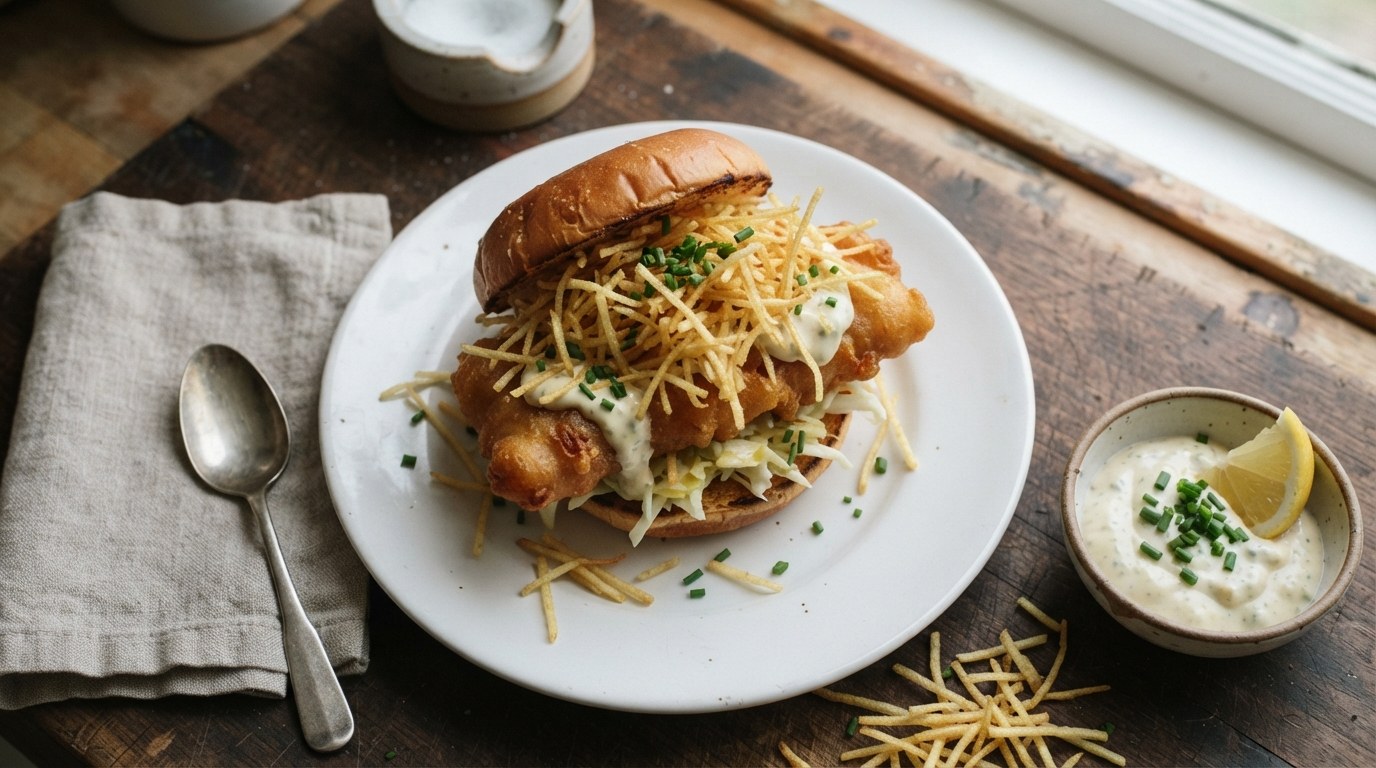
This beer-battered fish sandwich is the Fish & Crisps off the menu at Gordon Ramsay Burger, built for a home kitchen: a crisp beer-battered branzino fillet on a toasted brioche bun, with a bright citrus tartar sauce, a little lemon cabbage slaw, and a pile of salt & vinegar straw potato crisps on top. It is fish and chips reworked into one great sandwich, and it eats like the best thing on the menu.
Everything here is easy on its own: a quick tartar, a lemony slaw, a batter you whisk in a minute, and two fries in hot oil. The trick is getting each part right so they stack into something that stays crisp all the way to the last bite. Here is how, and why each step matters.
What Makes a Great Beer-Battered Fish Sandwich
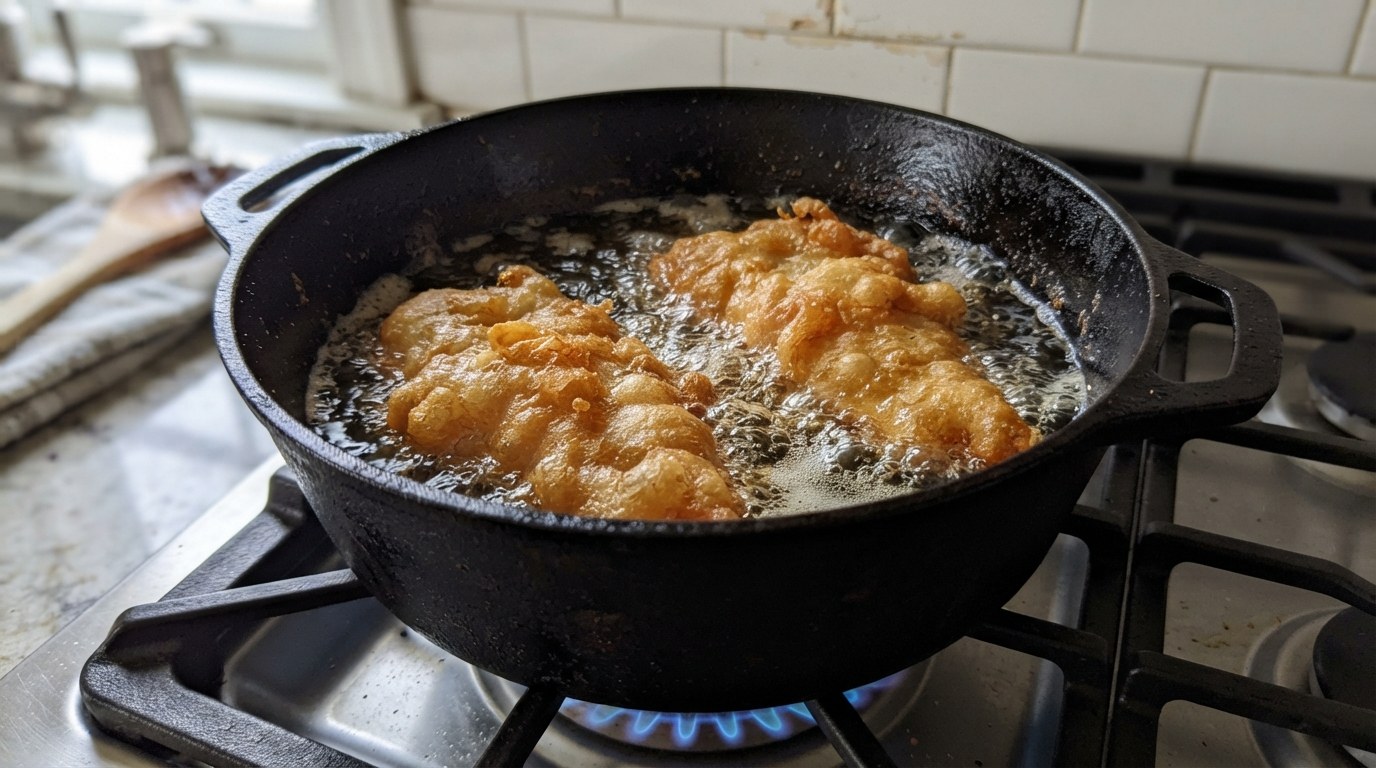
A crispy fish sandwich lives or dies on the fry, and the fry lives or dies on oil temperature. You want the oil at 350–375°F (175–190°C). That is hot enough that the water in the batter instantly flashes to steam and blows the coating up into a light, crisp shell, and hot enough for the Maillard reaction, which browns and flavors the crust, to kick in (it starts around 284°F/140°C). Too cool and the batter drinks oil before it sets, and you get a greasy, pale sandwich instead of a shattering one.
The fish itself needs almost no time. Branzino is lean and delicate, and fish proteins start to firm up (denature) as low as 104–122°F (40–50°C), far below meat, so a thin fillet is cooked through to a safe 145°F (63°C) in the four or five minutes it takes the batter to turn deep gold. That narrow window is the whole reason to fry hot and fast: the crust and the fish finish at the same moment.
So the one tool that actually changes the outcome here is a thermometer that clips to the pot and shows you the oil temperature the whole time you fry. Guessing at the oil is how good fish goes soggy; a clip-on fry thermometer takes it off the table.

Escali
Escali Deep Fry & Candy Thermometer
- Clips to the side of the pot so the probe stays in the oil, giving you a constant, hands-free read on the frying temperature
- Large dial reads from 100°F to 500°F, with a movable marker you set to your target, around 350 to 375°F for battered fish
- Stainless steel and NSF certified, oven- and dishwasher-safe, with a 5.5-inch probe
The Beer Batter, and Why Beer
Beer does two things water cannot. Its carbonation folds bubbles of gas into the batter that expand in the hot oil, so the coating puffs and turns lacy instead of dense. And the alcohol thins the batter while holding back gluten development (gluten is the protein network that makes a flour paste chewy and tough) while also boiling off fast (alcohol turns to vapor at about 173°F/78°C), which helps the crust dry and crisp. A cup of cold lager or pale ale is all you need.
Two habits keep it light. Keep the batter cold, straight up until it hits the oil, so it hits the heat as a shock and sets fast. And cut some of the flour with cornstarch, which has no gluten at all, for a crust that stays crisp longer once it is out of the oil. Whisk it just until smooth and use it right away.
Branzino vs Cod: Which Fish to Use
Branzino is what the restaurant uses, and it is a lovely choice: a firm, mild, slightly sweet white fish that fries up flaky. But this method works with any firm white fish, so buy what looks freshest at the counter. Look for fillets that are bright and firm and smell clean, following the FDA's advice on picking fresh seafood. Here is how the common options behave.
| Fish | Texture | Flavor | Best for this sandwich |
|---|---|---|---|
| Branzino (European sea bass) | Delicate, flaky, tender | Mild, slightly sweet | The menu original; fry it hot and fast |
| Cod | Large, soft flakes | Clean, mild | The pub standard; forgiving and easy to find |
| Haddock | Firmer, tighter flake | Mild, faintly sweet | Classic chip-shop fish; holds the batter well |
| Pollock or flounder | Softer, thinner | Very mild | Budget-friendly; handle gently, fry thin fillets |
Whatever you choose, pat the fillets bone-dry before they go anywhere near the batter. A wet fillet steams under its coating and the batter slides off; a dry one grips it and fries tight to the fish.
Citrus Tartar and Lemon Cabbage Slaw
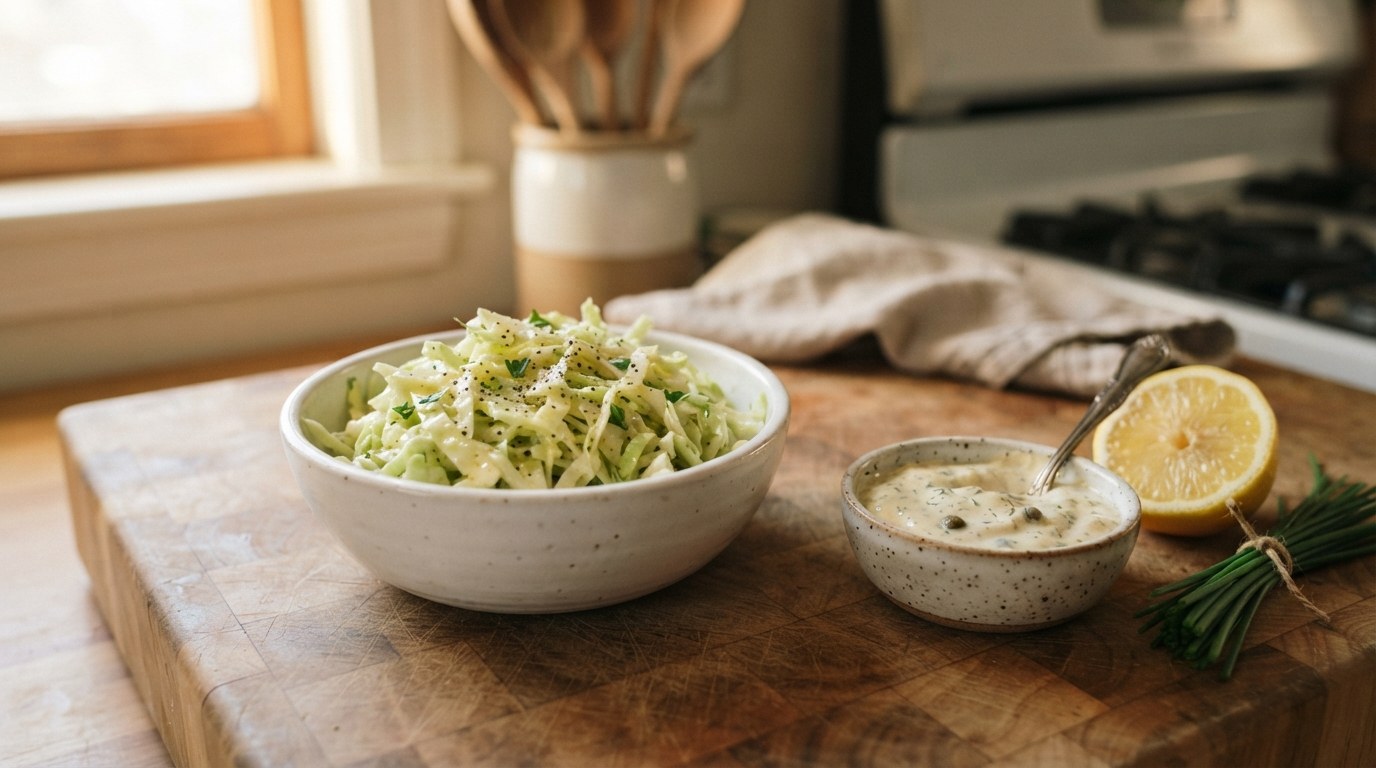
The two cool, bright layers are what keep this sandwich from being just fried fish on bread. The citrus tartar is a quick emulsion: mayonnaise, already oil suspended in egg, loosened with lemon and studded with capers and cornichons. The acid and the sharp little bites cut straight through the richness of the fry.
The slaw is even simpler, and salting it is the point. A little salt and lemon on shredded cabbage pulls water out of the cells by osmosis, so the cabbage softens to crisp-tender and seasons itself while the acid keeps it bright green. Dress it lightly, because this is a slaw that goes inside a sandwich, so you want it clinging, not dripping.
The Salt & Vinegar Crisps on Top
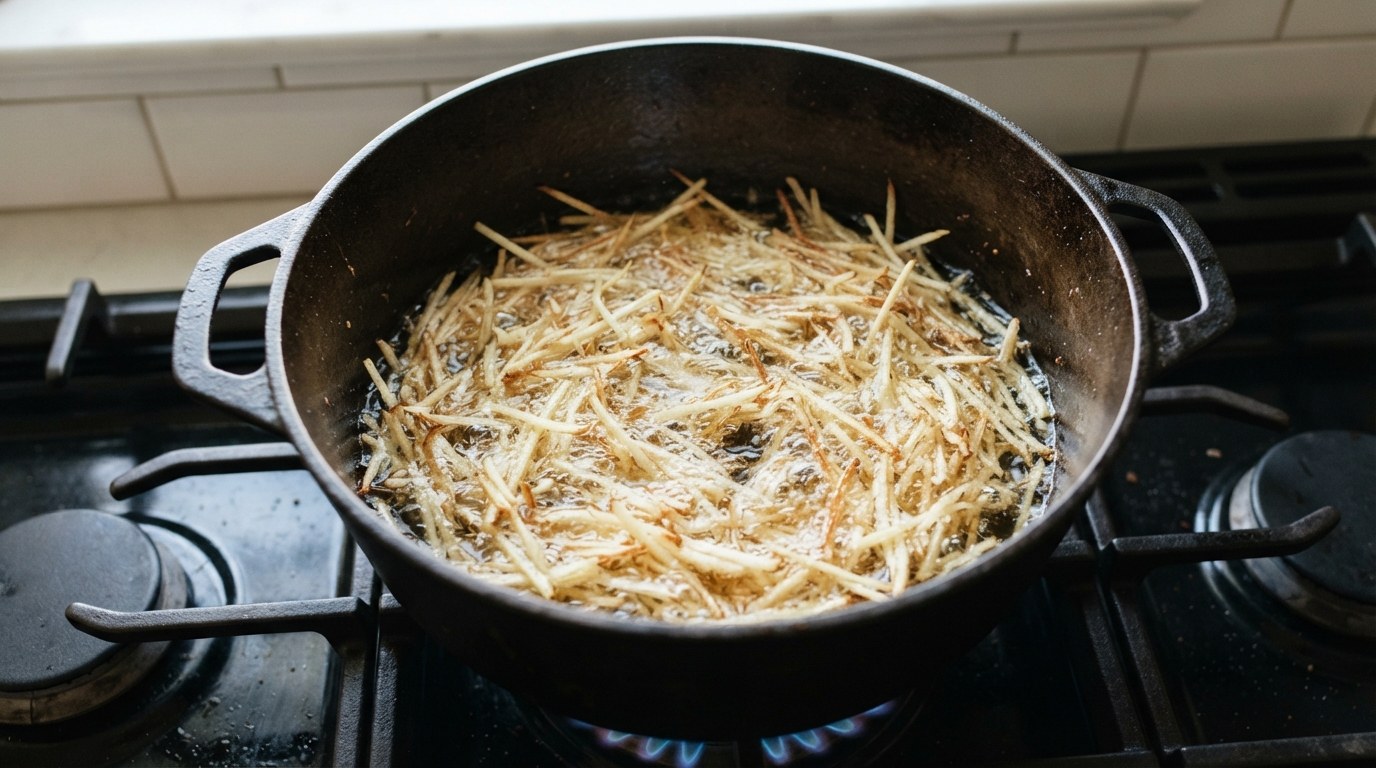
The tangle of golden straws on top is the detail that makes people ask what this sandwich is, and it is the "crisps" in Fish & Crisps. They are just a potato cut into fine matchsticks and fried until crisp, then tossed with vinegar and flaky salt while still hot so the salt sticks and the vinegar hits like a good bag of crisps. Rinse the cut potato first to wash off surface starch, and dry it well, or the straws clump and steam instead of crisping.
They do the job the chips do on the side of a fish-and-chips plate, except stacked right on the sandwich where every bite gets crunch. If you are short on time, a handful of good salt & vinegar potato crisps from a bag, crushed lightly and piled on, is a genuinely great shortcut.
Building It So It Stays Crisp
Order matters when you put it together. The slaw goes on the bottom bun as a barrier so the bread does not go soggy, the hot fish sits on the slaw, the tartar goes over the fish, and the crisps go on last so they stay crunchy and do not sit in the sauce. Toast and butter the brioche so it holds up, and serve it the minute it is built — this is a sandwich that rewards eating it hot, not one that waits.
Gordon Ramsay Fish & Crisps Sandwich
Ingredients
- 1 cup all-purpose flour
- 2 Tbsp cornstarch
- 1 tsp baking powder
- 1 tsp salt
- 1 cup cold lager or pale ale
- 2 branzino fillets (or cod/haddock), about 6 oz each, skinned
- 6 cups neutral oil, for deep frying
- Flour, for dredging
- 1/2 cup mayonnaise
- 1 Tbsp cornichons or dill pickle, finely chopped
- 1 Tbsp capers, chopped
- 1 tsp lemon zest
- 1 Tbsp lemon juice
- 1 Tbsp chopped chives or dill
- 2 cups green cabbage, finely shredded
- 1 Tbsp lemon juice
- 1 Tbsp olive oil
- Salt, to taste
- 1 large russet potato, cut into fine matchsticks
- 1 Tbsp malt or white vinegar
- Flaky salt
- 2 brioche buns, split and toasted
- Butter, for the buns
- Chopped chives, to finish
Beer batter
- undefined
Fish
- undefined
Citrus tartar sauce
- undefined
Lemon cabbage slaw
- undefined
Salt & vinegar crisps
- undefined
To assemble
- undefined
Instructions
- Make the slaw: Toss the shredded cabbage with the lemon juice, olive oil, and a pinch of salt. Set aside to soften while you cook.
- Make the tartar: Stir together the mayonnaise, cornichons, capers, lemon zest, lemon juice, and chives. Chill until needed.
- Fry the straw potatoes: Rinse the matchstick potato under cold water to wash off the starch, then pat very dry. Fry in the oil at about 325°F (160°C) until pale gold and crisp, 3 to 4 minutes. Drain, then toss while hot with the vinegar and a little flaky salt.
- Make the batter: Whisk the flour, cornstarch, baking powder, and salt together, then whisk in the cold beer until just smooth. Keep it cold until you fry.
- Fry the fish: Bring the oil to 360 to 375°F (182 to 190°C). Pat the fillets dry, dredge lightly in flour, dip in the batter, and lower into the oil. Fry 4 to 5 minutes, turning once, until deep golden and crisp and the fish reaches 145°F (63°C). Drain on a rack.
- Toast the buns: Butter the cut sides of the brioche buns and toast them until golden.
- Assemble: Spread the base of each bun, add a layer of slaw, then the hot fish, a drizzle of citrus tartar, and a generous pile of salt & vinegar straw potatoes. Scatter with chives, add the top bun, and serve right away.
Notes
Fish & Crisps Sandwich FAQs
The questions that come up most: what fish to use, why beer goes in the batter, how to keep the batter crisp, and what those crisps on top actually are.
What fish does Gordon Ramsay use for the Fish & Crisps sandwich?
The Gordon Ramsay Burger version is built on beer-battered branzino, a firm, mild, slightly sweet white fish also sold as European sea bass. At home you can use any firm white fish; cod and haddock are the easiest to find and both fry beautifully, so buy whatever looks freshest.
Why do you put beer in fish batter?
Beer makes the crust lighter and crisper than water can. Its carbonation folds in bubbles that puff the coating in the hot oil, and its alcohol thins the batter, holds back gluten so it does not turn chewy, and boils off fast to help the crust dry and crisp. A cold lager or pale ale is ideal.
How do you keep beer batter crispy?
Keep the batter cold and the oil hot, at 350 to 375°F, so it sets on contact instead of soaking up oil. Cut some flour with cornstarch, do not crowd the pot (crowding drops the oil temperature), drain on a rack rather than paper, and build and eat the sandwich right away.
What are the crisps on top of the sandwich?
They are thin straw potatoes: a potato cut into fine matchsticks, fried until crisp, and tossed with vinegar and flaky salt so they taste like salt & vinegar crisps. They are the "crisps" in Fish & Crisps. In a hurry, a handful of good salt & vinegar potato crisps from a bag works just as well.
What temperature should I fry the fish at?
Fry in oil held at 350 to 375°F (175 to 190°C). At that heat a thin branzino or cod fillet cooks through to a safe 145°F (63°C) in about four to five minutes, right as the batter turns deep golden. A clip-on fry thermometer is the easy way to hold the oil steady.
Can I make it without a deep fryer?
Yes. Shallow-fry in about an inch of oil in a heavy pan, turning the fillet once, and keep the same oil temperature. You can also air-fry a battered or breaded fillet for a lighter version, though you lose some of the shattering deep-fried crust that defines the sandwich.

About the Author
John Siracusa is the founder of Hell’s Kitchen Recipes. He focuses on technique-first, reproducible home cooking and researches recipes & kitchen equipment from published food science and professional chef methods since 2016.