Garlic butter shrimp is a fast one-pan dinner: shrimp seared in foaming butter with garlic and finished with a squeeze of lemon. The whole thing takes about ten minutes, and the only real skill is knowing the second to pull the shrimp off the heat.
Shrimp cook faster than almost anything else on the stove, so the gap between plump and rubbery is a matter of seconds. This guide covers how to sear them so they stay tender, the 30-second garlic rule, why the lemon goes in off the heat, and how the same pan becomes a full linguine dinner.
How to Make Garlic Butter Shrimp
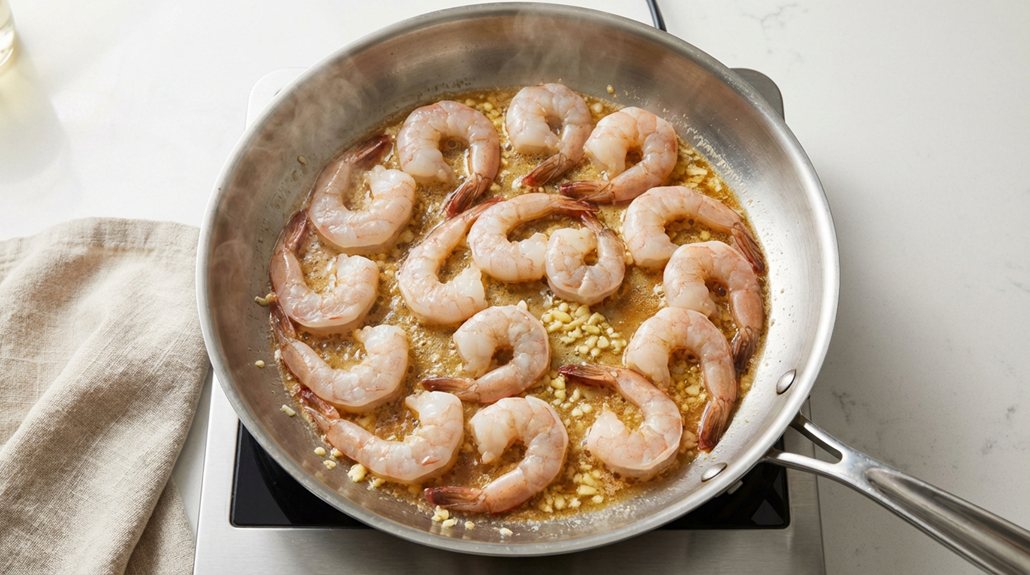
Melt butter in a hot skillet, cook minced garlic for 30 seconds, add the shrimp in a single layer, and sear about two minutes a side until they turn pink and curl into a loose C. Take the pan off the heat, add lemon juice and parsley, and toss. That is the whole method, and the rest of this guide is why each step matters. For more one-pan seafood, see the full recipes collection or our shrimp and scallop risotto.
Why Shrimp Turn Rubbery, and How to Stop It
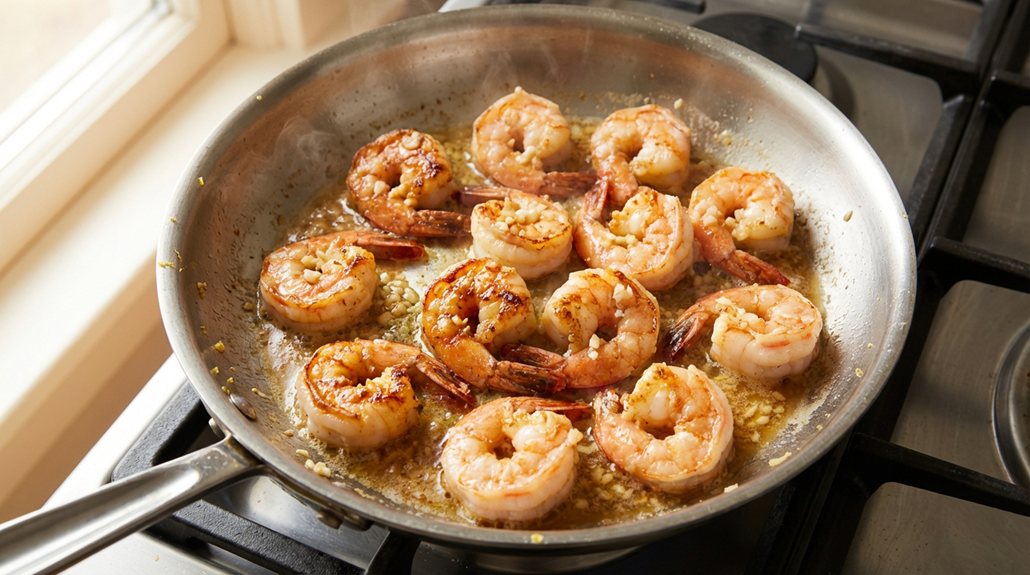
Rubbery shrimp are overcooked shrimp. Shrimp muscle sets at a low temperature and holds very little fat, so once it passes done it contracts and squeezes out its water, and the texture tightens. Two minutes a side over medium-high heat is usually enough for 16 to 20 count shrimp.
Cook by look, not by the clock. Pull the shrimp the moment they turn opaque through the thickest part and curl into a loose C; a tight O means they have gone too far. The USDA safe minimum for shrimp is 145°F, which they reach well before they toughen. Pat the shrimp dry before they hit the pan: a wet surface steams instead of browning, because water caps the surface temperature below the point where the Maillard reaction gives them their golden, savory sear.
The 30-Second Garlic Rule
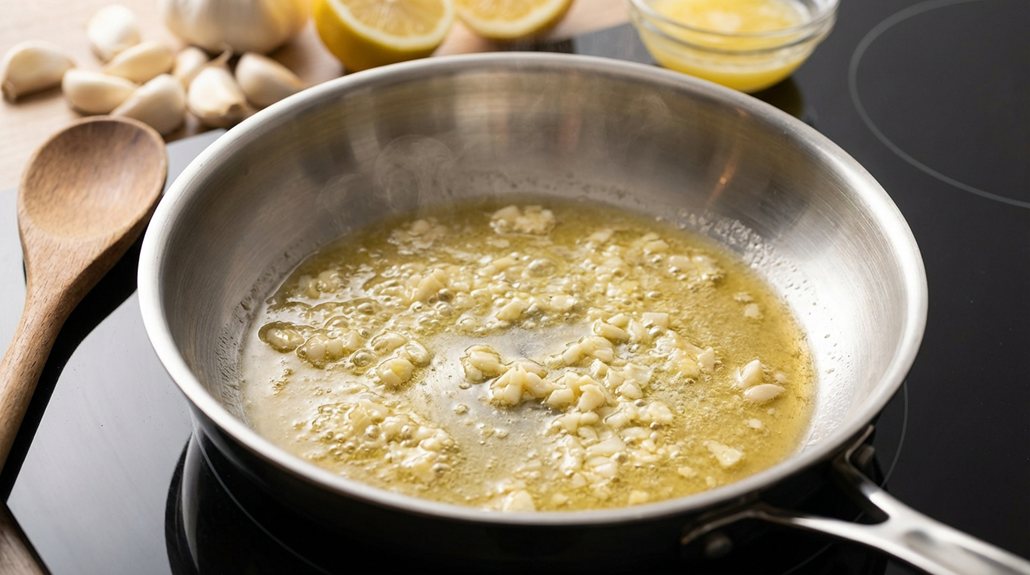
Add the garlic once the butter has melted and foamed, and give it about 30 seconds until it smells sweet and turns pale gold, before it browns. Burnt garlic is bitter and there is no saving it, so if it races ahead lift the pan off the heat for a few seconds. Butter carries the same risk: its milk solids brown fast and then scorch, which is why medium heat beats high here.
Finish With Lemon Off the Heat
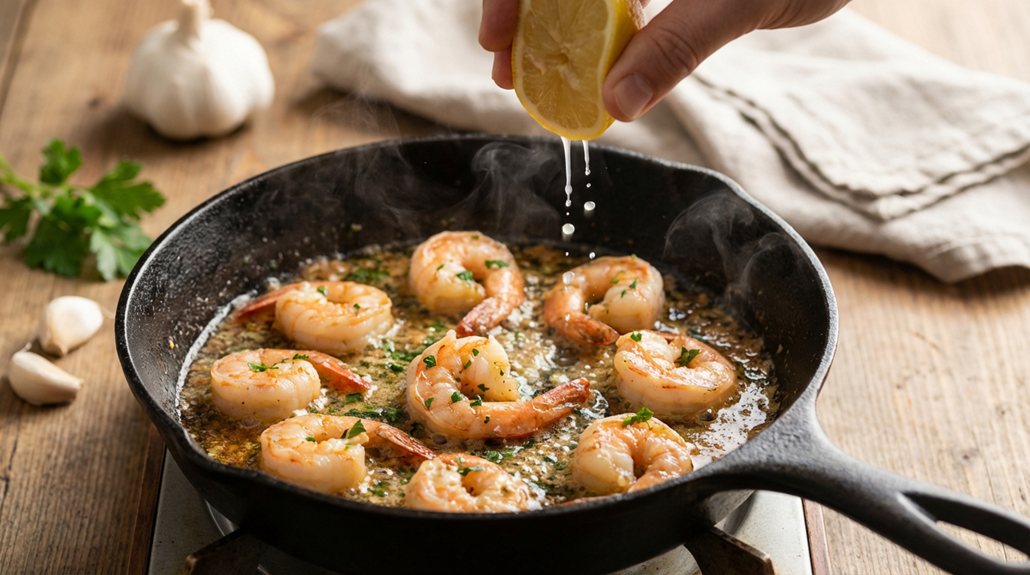
Add the lemon juice after the pan comes off the burner. Lemon is bright and sharp raw, and cooking it down flattens that lift into a duller, cooked-citrus note. Off the heat, the residual warmth is enough to fold it into the butter without losing the freshness that cuts the richness. Use juice you squeeze yourself; bottled lemon tastes flat by comparison. This is the same trick that keeps a squeeze of lemon lively on a lobster tail.
Garlic Butter Shrimp vs. Shrimp Scampi
Garlic butter shrimp is the American, wine-optional cousin of shrimp scampi. "Scampi" originally named a small lobster, the langoustine, cooked in Italy with garlic, oil, and white wine. Italian immigrants in the United States swapped in shrimp and kept the garlic-and-butter treatment, and the redundant name "shrimp scampi" stuck. It is not a French dish, despite the classic French pairing of butter and garlic. To push this recipe toward a proper scampi, add a splash of dry white wine after the garlic and let it reduce for a minute before the shrimp go in.
What Shrimp to Buy
Shrimp are sold by count per pound, and the number matters more than the label. Bigger shrimp give you a wider window before they overcook, so 16 to 20 count (often sold as jumbo) is the easiest size for a quick sear. Buy them peeled and deveined to save time, and thaw frozen shrimp fully before cooking, overnight in the fridge or under cold running water, per FDA seafood guidance. Most shrimp sold in the United States is either farmed or wild-caught from the Gulf, which NOAA Fisheries tracks for sourcing.
| Count per pound | Common name | Best for |
|---|---|---|
| Under 15 (U15) | Colossal | Grilling, a showpiece plate |
| 16–20 | Jumbo | This recipe — the most forgiving to sear |
| 21–25 | Extra large | Quick sautés and skewers |
| 31–40 | Medium | Pasta and rice, where smaller pieces are fine |
What to Serve With Garlic Butter Shrimp
The classic move is to toss the shrimp and pan sauce with linguine cooked al dente, loosened with a splash of the starchy pasta water so the butter clings. Rice or crusty bread both work for catching the sauce. For a creamy garlic butter shrimp, stir a splash of cream and a little grated Parmesan into the pan off the heat. Round out the plate with a silky side like cauliflower purée, or lean into pasta night with Alfredo sauce.

Garlic Butter Shrimp
Ingredients
- 1 lb large shrimp (16–20 count), peeled and deveined
- 4 Tbsp unsalted butter
- 6 cloves garlic, minced
- 2 Tbsp fresh lemon juice
- Salt and freshly ground black pepper
- 1/4 tsp red pepper flakes (optional)
- 2 Tbsp chopped fresh parsley
To serve (optional)
- 8 oz linguine, cooked al dente
Instructions
- Pat the shrimp completely dry and season with salt and pepper. Melt the butter in a large skillet over medium-high heat until it foams.
- Add the minced garlic (and red pepper flakes, if using) and cook about 30 seconds, until fragrant and pale gold, not browned.
- Add the shrimp in a single layer without crowding. Sear undisturbed about 2 minutes, until golden on the underside.
- Flip each shrimp and cook 1 to 2 minutes more, just until opaque throughout and curled into a loose C.
- Take the pan off the heat. Add the lemon juice and parsley and toss to coat. Serve right away, over linguine if you like.
Notes
Garlic Butter Shrimp FAQs
The questions that come up most: how long to cook shrimp, why they turn rubbery, whether frozen shrimp work, how it differs from scampi, and what to serve alongside.
How long do you cook garlic butter shrimp?
About two minutes per side over medium-high heat for 16 to 20 count shrimp. Go by look rather than the clock: pull them the moment they turn opaque and curl into a loose C shape.
Why are my garlic butter shrimp rubbery?
They are overcooked. Shrimp muscle sets fast and then contracts and squeezes out its moisture, tightening into a tough, rubbery texture. Cook them just until opaque and curled into a loose C, not a tight O.
Can you use frozen shrimp?
Yes. Thaw them fully first, overnight in the fridge or under cold running water, then pat them completely dry so they sear instead of steam. Cooking from frozen makes them watery and rubbery.
Is garlic butter shrimp the same as shrimp scampi?
They are close relatives. Shrimp scampi is the Italian-American original, usually made with garlic, oil or butter, and white wine. Garlic butter shrimp is the simpler, wine-optional version. Add a splash of dry white wine to turn one into the other.
What do you serve with garlic butter shrimp?
Linguine tossed in the pan sauce is the classic; rice or crusty bread also soak up the garlic butter well. A squeeze of lemon and chopped parsley finish the plate.
Can you make garlic butter shrimp without lemon?
Yes, though the lemon balances the rich butter. Swap in a splash of dry white wine or a few drops of white wine vinegar off the heat, or lean on fresh parsley for brightness instead.

About the Author
John Siracusa is the founder of Hell’s Kitchen Recipes. He focuses on technique-first, reproducible home cooking and researches recipes & kitchen equipment from published food science and professional chef methods since 2016.