This king crab capellini is a fast crab pasta: angel hair boiled for two or three minutes, then tossed in a skillet of olive oil, sliced garlic, red chili, green onion and a splash of white wine, finished with butter, lime and thick pieces of sweet Alaskan king crab leg meat. It is on the table in about 25 minutes, and the sauce is nothing more than those flavors pulled together with a few spoonfuls of the starchy pasta water. Serve it as a starter for four or a generous dinner for two.
Two things decide how good your crab capellini turns out. The first is the crab: king crab legs are sold already cooked, so they need warming, never a second cooking. The second is speed: capellini is so thin that a minute too long turns it soft and sticky. Both are explained below, along with which crab to buy, how the sauce comes together without cream, and what to do when it goes wrong. For more seafood ideas, our Gordon Ramsay fish recipes roundup has plenty, and every dish on the site lives in Recipes.
How to Make King Crab Capellini
King crab capellini comes together in three overlapping steps: build the sauce in a wide skillet, boil the capellini, then toss the two with pasta water. Start the pot first, about 3 quarts of water with a tablespoon of kosher salt for 8 ounces of pasta. While it heats, soften the garlic, chili and green-onion whites in olive oil over medium-low heat for 1 to 2 minutes, reduce a quarter cup of white wine for about a minute, then add the butter and lime zest and turn the heat to low.
The capellini goes into the boiling water only when the sauce is ready, because it cooks in 2 to 3 minutes. While it boils, swirl a little pasta water into the skillet and slide in the crab to warm through. Lift the pasta straight into the pan with tongs, toss for 30 to 60 seconds with more pasta water until every strand looks glossy, then take it off the heat for the lime juice, parsley and green-onion tops. Taste, season and serve right away.
Gordon Ramsay's Crab Capellini: Where This Dish Comes From
This crab capellini is built on the angel hair pasta with crab, chilli and lime that Gordon Ramsay cooked as a starter on Gordon Ramsay: Cookalong Live, the Channel 4 show that aired the episode with Amanda Holden on November 7, 2008. His version was a quick, light plate: angel hair, crab meat, garlic, red chili, spring onions, a splash of dry white wine, lime and flat-leaf parsley. This recipe keeps that short list and uses Alaskan king crab, whose thick, sweet leg meat turns a weeknight starter into something special.
The butter is the one addition, and it comes from Ramsay's own capellini method. In his Ramsay in 10 shrimp scampi with capellini, he reduces the white wine until it has almost gone, then melts cubed butter into the pan before the pasta is tossed through. A couple of tablespoons here give the sauce body and help it cling to such fine strands. The rest of his priorities carry straight over: everything sliced and ready before the pan goes on, seasoning as you go, and a taste before it leaves the stove.
Which Crab to Use for Crab Capellini
Alaskan king crab legs make the best crab capellini because the meat comes out in big, sweet, firm pieces that stay whole when tossed with pasta. NOAA Fisheries describes red king crab as rich and sweet with a delicate texture, white meat with red-pink accents, harvested mostly from October to January. Other crab works too; the main difference is how much it breaks up in the toss and how much you pay. The table compares the options people most often reach for.
| Crab | Texture in the pasta | How to prep it | Best for |
|---|---|---|---|
| Alaskan king crab legs (this recipe) | Thick, firm, sweet pieces that stay whole | Thaw, cut the shell open with shears, pull the meat out in large chunks | A special-occasion bowl with crab in every bite |
| Snow crab legs | Thinner, more fibrous strands; slightly briny | Thaw, snap at the joints and slide the meat out | A cheaper leg-meat version |
| Dungeness crab | Tender, sweet, flakier meat | Pick from cooked clusters; check for shell bits | West Coast cooks with fresh cooked crab |
| Jumbo lump blue crab | Large, soft lumps that break easily | Fold in at the very end; toss gently | The softest stand-in for the white crab meat in Ramsay's starter |
| Pasteurized or canned crab meat | Fine shreds, softer, milder | Drain well, pick over for shell | A pantry crab pasta on short notice |
| Imitation crab (surimi) | Springy, uniform sticks, sweet | Pull into shreds; warm only briefly | Budget bowls; it is fish, not crab |
King crab gives the most impressive bowl; jumbo lump is the pick if you want the softer style of the white crab meat in Ramsay's starter; canned crab is the shortcut. Imitation crab is made from surimi, a seasoned fish paste: NOAA Fisheries notes that about a quarter of Alaska pollock products become surimi. It makes a decent budget version of crab angel hair pasta, though the flavor and texture are its own.
King Crab Is Already Cooked: How to Thaw and Warm It
King crab legs are almost always sold fully cooked and frozen, so for crab capellini you only need to thaw the meat and warm it, not cook it again. The Alaska Seafood Marketing Institute fact sheet for red king crab lists it as pre-cooked and ready for reheating, with a very sweet, firm-but-tender meat. That bright red-orange shell is a sign of the cooking it already had; color tells you nothing about whether shellfish is hot or safe, so don't wait for a change that is never coming.
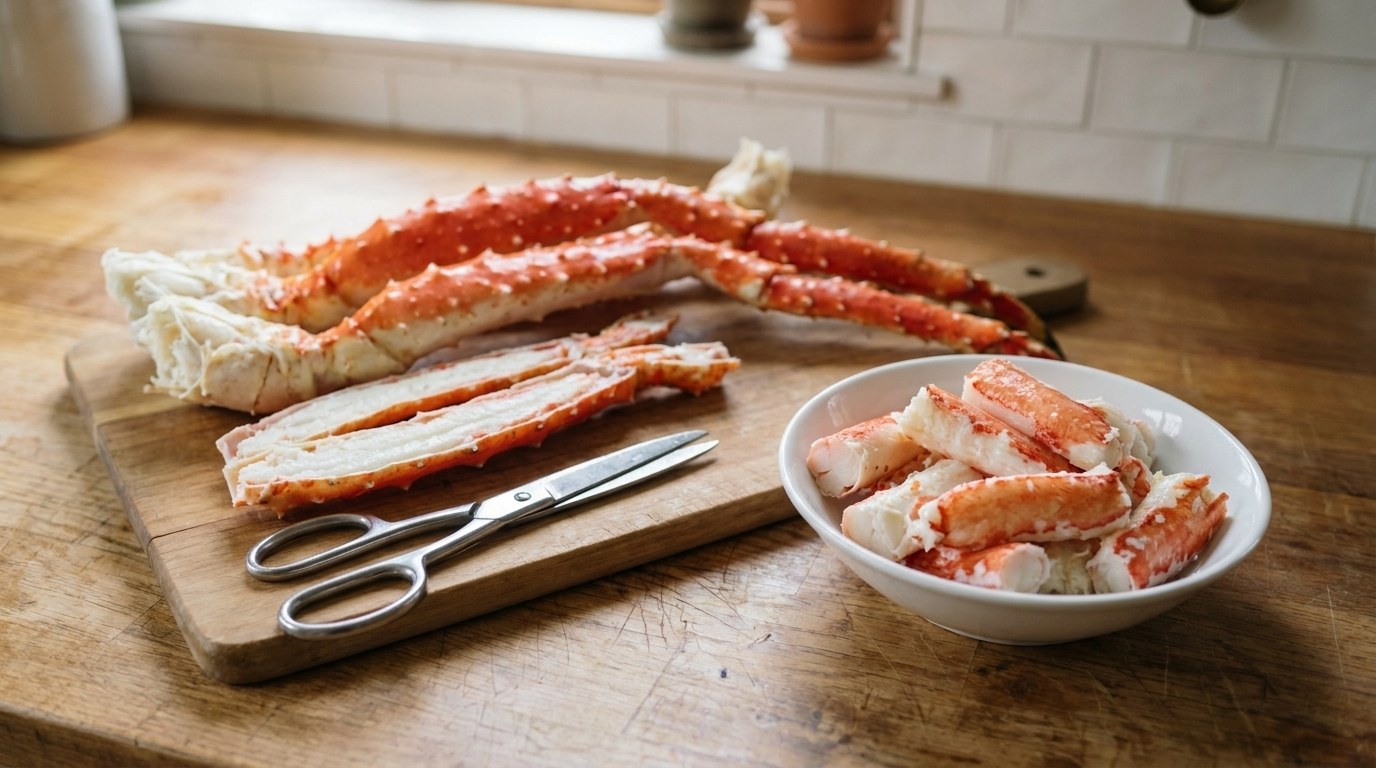
Gentle heat matters because crab is shellfish, and fish and shellfish proteins start to set and tighten at only 104 to 122°F (40 to 50°C), far lower than meat. The crab passed that point when it was cooked. Heat it hard again and those proteins keep contracting, squeezing out moisture until the meat goes dry, stringy and salty. A minute or two in the warm butter sauce over low heat brings it up to eating temperature while it stays plump. As Ramsay puts it in his MasterClass shellfish lesson, shellfish give you no margin for error, so the crab goes in last and comes out as soon as it is hot.
Thaw the legs the safe way. The FDA advises thawing frozen seafood gradually in the refrigerator overnight, or sealing it in a plastic bag and submerging it in cold water when you are short on time; never on the counter. Keep the picked meat cold until it goes into the pan, and once the pasta is served, don't leave leftovers out for more than 2 hours (1 hour above 90°F). To get the meat out, cut down the paler, softer underside of each leg section with kitchen shears, peel the shell back and lift the meat out in long pieces, then cut it into 1- to 1 1/2-inch chunks. Ramsay's habit of wasting nothing applies here too: the empty shells simmered in water for 20 minutes make a light crab stock for a risotto or soup.
Why Capellini Cooks in 2 to 3 Minutes (and How to Keep It From Clumping)
Capellini cooks in 2 to 3 minutes because the strands are so fine that boiling water reaches the center almost at once. The name comes from capelli, Italian for hair, and Italian pasta maker DeLallo notes that in the US capellini and angel hair are sold as the same thing, that the short cooking time makes it easy to overcook, and that light sauces such as olive oil, garlic and seafood suit it best. That is exactly why it pairs so well with crab, which a heavy sauce would bury.
As the pasta hits the 212°F (100°C) water, starch granules on the surface absorb water and swell, a process called starch gelatinization, and for the first minute or two that outer layer is soft and sticky. That is when strands glue themselves into clumps, so stir the moment the pasta goes in and keep stirring for that first minute. Oil in the water doesn't help; it floats on top and never reaches the pasta. Pull the capellini a minute before the package time, because it keeps absorbing liquid in the skillet, and a strand that is perfect in the pot is soft by the time it reaches the bowl.
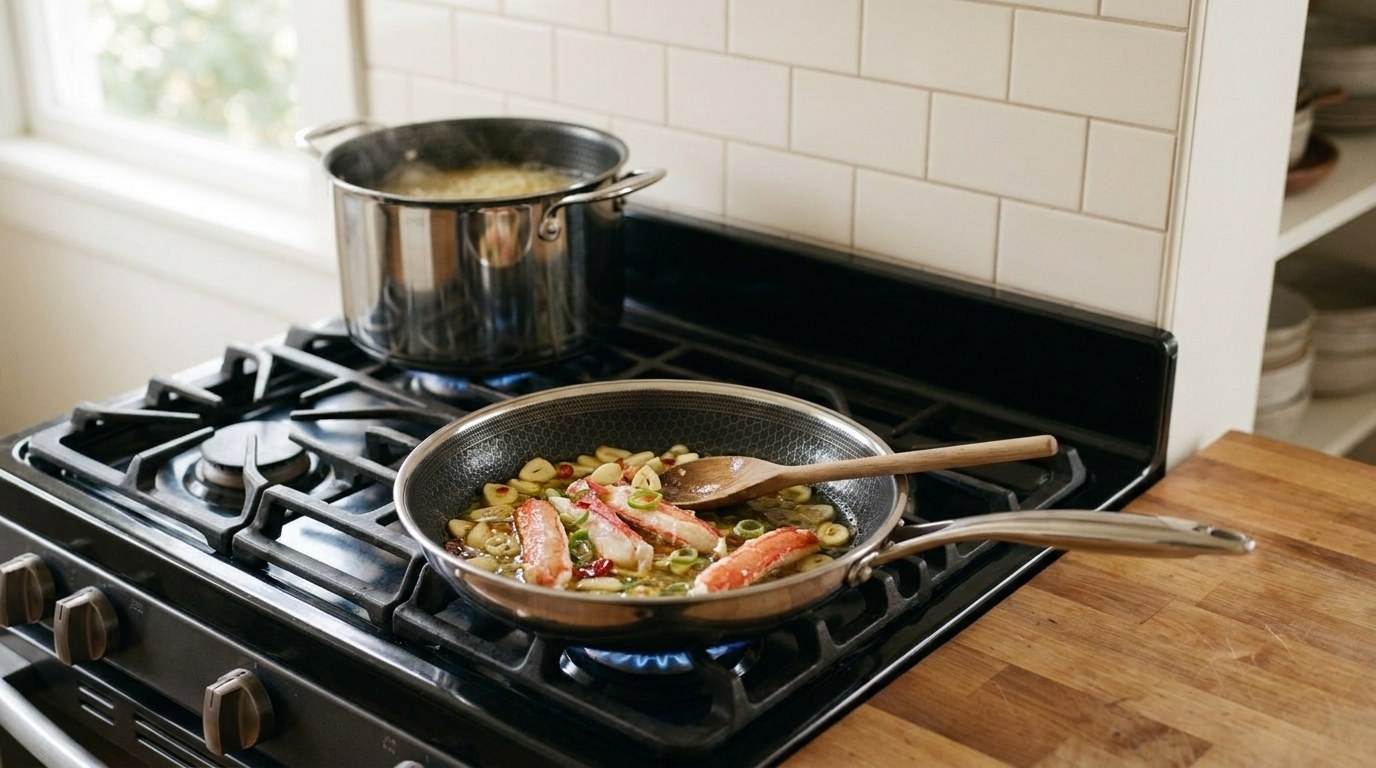
How Pasta Water Turns Butter and Olive Oil Into a Sauce
Starchy pasta water is what turns the oil, butter and wine in the skillet into a glossy sauce that coats crab capellini instead of pooling at the bottom of the bowl. Oil and water don't mix on their own, but the starch that washes off the pasta changes that. Writing in Physics Today, physicists studying aglio e olio explain that starch-enriched pasta water stabilizes the oil-and-water mix by coating the oil droplets and thickening the liquid around them, which keeps the droplets from merging back into a slick. The result is an emulsion: a cloudy, creamy-looking sauce with no cream in it at all.
A few habits make it work. Use about 3 quarts of water rather than the biggest pot you own, so the water ends up starchier. Add the pasta water to the skillet in splashes and swirl over low heat, since a hard boil drives off the water and leaves the fat to separate. Butter helps, too: it is roughly 80% fat with some water and milk solids, and it melts into a richer, more stable sauce than olive oil alone. The same method sits behind our Gordon Ramsay aglio e olio, if you want to practice the toss before buying crab.
HexClad
HexClad 12-Inch Hybrid Nonstick Frying Pan
- Stainless steel and ceramic nonstick hybrid surface, built to sear hard and release easily
- Tri-ply with an aluminum core for quick, even heat; works on induction
- Oven safe to 900°F and metal-utensil safe (lid not included)
A wide 12-inch skillet makes the toss easier: the capellini has room to move, the sauce spreads in a thin layer that heats evenly, and the nonstick surface keeps fine strands from catching. If you want to compare pans first, our Gordon Ramsay cookware guide covers what he uses and the alternatives.
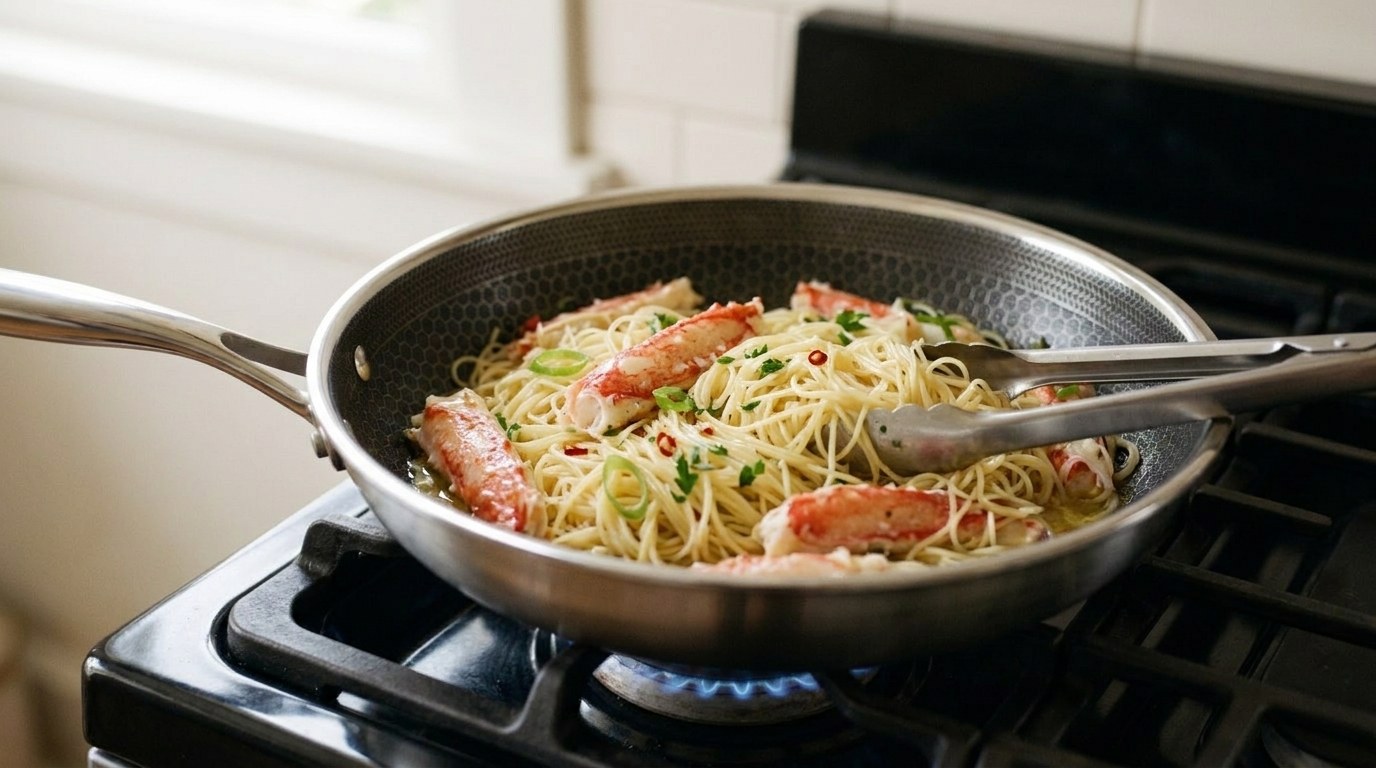
Garlic, Chili and Lime: Timing the Flavors in Crab Pasta
In crab pasta, the garlic and chili go in first over gentle heat, and the lime juice goes in last, off the heat. Sliced garlic should turn pale gold and soft in 1 to 2 minutes over medium-low heat. Push it further and it scorches; burning (pyrolysis) begins around 356°F (180°C), and a hot skillet of shallow oil gets there quickly, turning the garlic bitter enough to flatten the crab's sweetness. If the slices brown before the chili softens, lower the heat.
Seed the chili and cut away its pale inner ribs if you want less heat. The heat (capsaicin) sits mostly in that white membrane, not in the seeds, which only carry it by touching it. A Fresno or red jalapeño gives a gentle warmth; a red bird's eye chili makes it fiery. The white wine adds acidity and a savory note, and a minute's simmer takes off the raw edge, though not all the alcohol: even long cooking leaves some behind. Swap in a few tablespoons of pasta water if you'd rather skip it.
Lime is Ramsay's choice for this dish, and it is worth splitting in two. The zest goes in with the butter, because its fragrant oils dissolve into fat and spread through the whole sauce. The juice goes in off the heat at the end, where it stays bright and fresh; boiled, it turns flat. Lemon works the same way and gives you a classic lemon crab pasta, a little softer and less floral than lime.
Crab Capellini Variations
Crab capellini takes small changes well as long as the sauce stays light. For lemon crab pasta, use the zest and juice of a lemon in place of the lime. For crab and shrimp capellini, sear 8 ounces of peeled shrimp in the skillet for about a minute a side before the garlic, set them aside, and return them with the crab; our garlic butter shrimp walks through that sear. A handful of halved cherry tomatoes, softened with the garlic, adds sweetness and color. A spoonful of crème fraîche stirred in with the pasta water makes a creamier version without turning it into a heavy cream sauce.
Linguine or spaghetti work in place of capellini if that is what you have; they take 9 to 11 minutes and hold the sauce a little less tightly. For another luxury seafood pasta, try our lobster spaghetti in tomato sauce, and for more of the crab itself, Ramsay-style crab cakes use lump crab the same gentle way.
Why Crab Capellini Goes Wrong (and How to Fix It)
Most crab capellini problems come down to timing: pasta cooked too long or left to sit, crab heated too hard, or a sauce that never got its pasta water. The fixes are quick:
- Clumped, sticky pasta: it wasn't stirred in the first minute or it sat after draining. Stir as soon as it goes in, and move it straight from the pot to the skillet with tongs.
- Mushy pasta: it cooked to the full package time and then kept going in the pan. Pull it a minute early.
- Dry, stringy crab: it was heated too long or too hot. Add it last, over low heat, just until warm.
- Oily or greasy sauce: not enough pasta water, or the sauce boiled hard and split. Add a splash of pasta water off the heat and toss until it turns cloudy and glossy.
- Dry, sticky bowl: the pasta soaked up the sauce. Loosen it with a little more pasta water and serve at once.
- Bitter edge: the garlic browned. Keep the heat at medium-low and pull the garlic at pale gold.
- Bland: unsalted pasta water or too little lime. Salt the water, then taste and add salt and lime at the end.
What to Serve With King Crab Capellini
King crab capellini is light and rich at the same time, so it goes best with simple, fresh sides: a green salad with a sharp lemon dressing, sautéed spinach or asparagus, or warm crusty bread for the sauce left in the bowl. A chilled glass of the dry white wine you cooked with is a natural match. If you have lobster on the menu another night, our guide to cooking and shelling a whole lobster uses the same rule: shellfish needs less heat than you think.
Make king crab capellini once and the method is yours: thaw the crab in the fridge, have the sauce ready before the pasta goes in, stir the capellini through its first minute, and let a few spoonfuls of pasta water bring it all together. Crab capellini rewards a cook who keeps it simple.
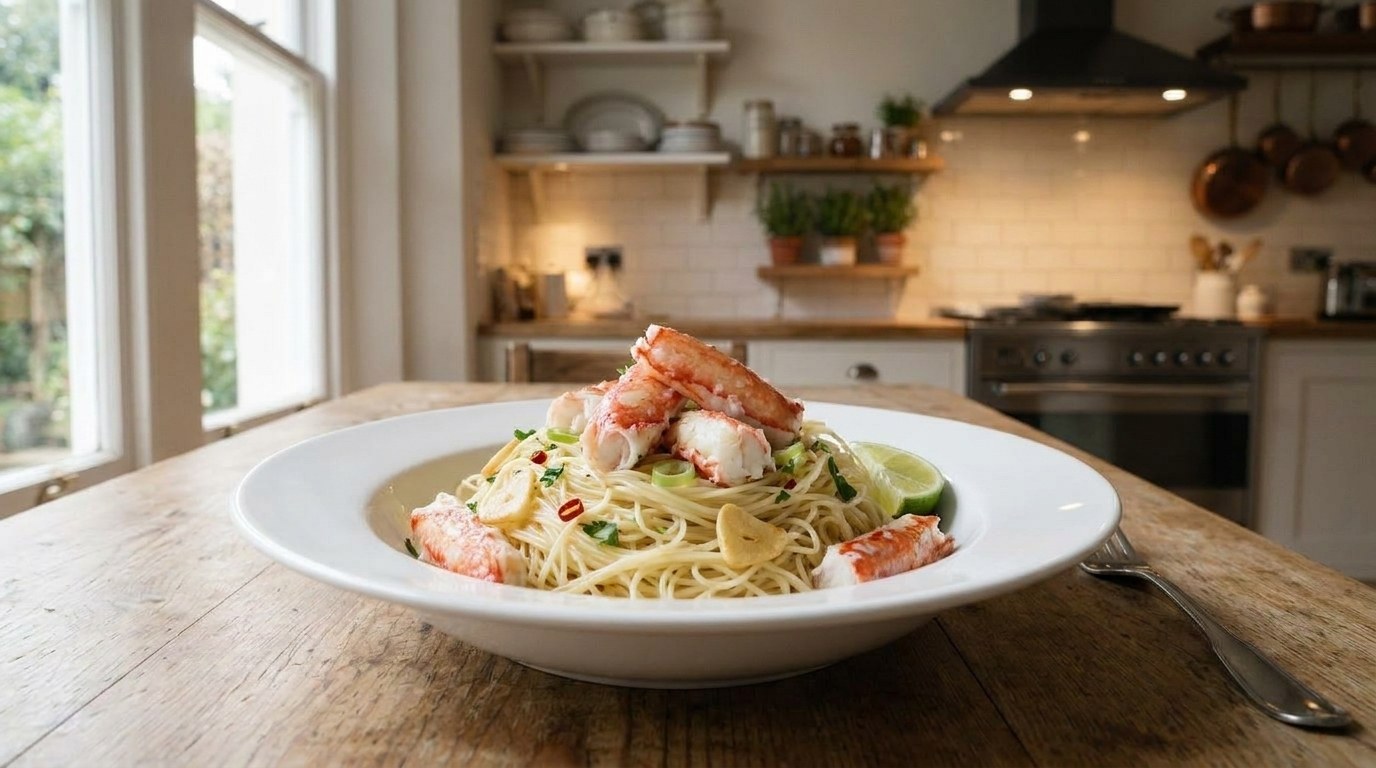
King Crab Capellini with Chili and Lime
Ingredients
Crab and sauce
- 8 oz cooked king crab meat (225 g), picked from thawed king crab legs and cut into 1- to 1 1/2-inch pieces
- 3 tbsp extra-virgin olive oil, plus more to finish
- 3 garlic cloves, thinly sliced
- 1 red chili (such as Fresno), seeded and finely chopped
- 3 green onions, thinly sliced, white and green parts kept separate
- 1/4 cup dry white wine
- 2 tbsp unsalted butter
- 1 lime, zested and juiced, plus wedges to serve
- 2 tbsp flat-leaf parsley, chopped
- kosher salt and freshly ground black pepper
Pasta
- 8 oz dried capellini (225 g), or angel hair
- 1 tbsp kosher salt, for the pasta water
Instructions
- Thaw the king crab legs in the refrigerator overnight. Cut down the paler underside of each section with kitchen shears, peel the shell open and lift out the meat. Cut it into 1- to 1 1/2-inch pieces and keep it cold.
- Bring about 3 quarts of water to a boil in a large pot and add 1 tablespoon of kosher salt.
- Meanwhile, heat a 12-inch skillet over medium-low heat, add the olive oil, then the garlic, chili and green-onion whites. Cook, stirring, for 1 to 2 minutes, until the garlic is soft and pale gold. Season with a pinch of salt and pepper.
- Pour in the wine, raise the heat to medium and simmer for about 1 minute, until mostly evaporated. Add the butter and lime zest and turn the heat to low.
- Add the capellini to the boiling water and stir right away, then keep stirring for the first minute. Cook for 1 minute less than the package time, usually 2 to 3 minutes in all.
- While the pasta cooks, add 1/4 cup of the pasta water to the skillet and swirl until the butter melts into a cloudy, glossy sauce. Add the crab and warm it over low heat for 1 to 2 minutes, spooning the sauce over, just until heated through.
- Scoop out 1 cup of the pasta water, then lift the capellini straight into the skillet with tongs. Toss over low heat for 30 to 60 seconds, adding pasta water a splash at a time, until the sauce clings to every strand.
- Take the pan off the heat. Add the lime juice, parsley and green-onion greens and toss gently. Taste and adjust the salt, pepper and lime. Serve at once with a drizzle of extra-virgin olive oil and lime wedges.
Notes
King Crab Capellini FAQs
The questions that come up most: whether king crab legs are already cooked, how long capellini takes, whether capellini is the same as angel hair, how to thaw king crab, whether you can use imitation or canned crab, lemon or lime, how to stop angel hair clumping, and whether this is Gordon Ramsay's recipe.
Is king crab already cooked?
Yes, almost always. King crab legs are sold cooked and frozen, and the Alaska Seafood Marketing Institute lists red king crab as pre-cooked and ready for reheating. For crab capellini you only warm the meat in the sauce for a minute or two; cooking it again makes it dry and stringy.
How long does capellini take to cook?
Capellini usually needs 2 to 3 minutes in boiling salted water, though some brands list 3 to 4. Start tasting a minute before the package time and pull it slightly firm, because it keeps softening as you toss it in the skillet.
Is capellini the same as angel hair pasta?
In the US the two names are used for the same very thin pasta. In Italy angel hair is often slightly thinner and sold in small nests. Either works in this recipe with the same timing.
How do you thaw frozen king crab legs?
Thaw them in the refrigerator overnight, as the FDA advises for frozen seafood. If you are short on time, seal the legs in a plastic bag and submerge them in cold water. Never thaw them on the counter, and keep the picked meat cold until it goes into the pan.
Can I use imitation crab or canned crab in crab capellini?
Yes. Drained canned or pasteurized lump crab works well; fold it in at the end so it stays in pieces. Imitation crab is surimi, a seasoned fish paste usually made from pollock, so it gives a cheaper crab angel hair pasta with a springier texture and a sweeter, milder flavor.
Can I use lemon instead of lime?
Yes. Lemon zest and juice give you a classic lemon crab pasta, slightly softer and less floral than lime. Add the zest with the butter and the juice off the heat at the end in either case.
How do I keep angel hair pasta from clumping?
Stir it as soon as it goes into the boiling water and keep stirring for the first minute, while the surface starch is sticky. Skip the oil in the water, pull the pasta a minute early, and move it straight into the sauce with tongs instead of letting it sit in a colander.
Is this Gordon Ramsay's crab capellini recipe?
It is based on the angel hair pasta with crab, chilli and lime that Gordon Ramsay cooked on Gordon Ramsay: Cookalong Live in 2008. His starter used crab meat; this version uses Alaskan king crab and adds a little butter, as in his Ramsay in 10 capellini with shrimp.

About the Author
John Siracusa is the founder of Hell’s Kitchen Recipes. He focuses on technique-first, reproducible home cooking and researches recipes & kitchen equipment from published food science and professional chef methods since 2016.