Pumpkin crème brûlée is a classic vanilla custard enriched with pumpkin purée and warm spice, baked gently in a water bath until just set, then finished with a thin, glassy layer of torched caramelized sugar. It is the fall version of the French classic, and it is more forgiving than it looks once you understand the two things that matter: a gentle, even heat and knowing exactly when to pull it. This guide covers the technique, the same way we break down every dish in our cooking techniques library.
What makes pumpkin crème brûlée work
A crème brûlée is a baked custard: egg yolks and cream set into a silky, spoonable cream by gentle heat. Adding pumpkin purée brings autumn flavor and color, but the purée also carries water and fiber, so the trick is using enough for flavor without loosening the custard so much that it will not set. A modest amount of pure pumpkin purée, folded into a rich yolk-and-cream base, gives you real pumpkin flavor and a custard that still sets to a clean, wobbling spoonful.
The custard base: cream and egg yolks
Crème brûlée is built on heavy cream and egg yolks, not whole eggs. Yolks alone give the custard its signature dense, velvety texture; whites would make it firmer and more like a flan. Heat the cream with the spices until it is steaming but not boiling, then temper it slowly into the yolk-and-sugar mixture, whisking constantly so the hot cream warms the yolks gradually instead of scrambling them, the technique Serious Eats calls the heart of a smooth custard. Straining the finished base through a fine sieve catches any bits of cooked egg and the fibrous pumpkin solids, which is the difference between a glassy-smooth custard and a grainy one.
The water bath is not optional
Bake the ramekins in a water bath, a bain-marie, by setting them in a roasting pan and pouring hot water halfway up their sides before the pan goes in the oven. The water buffers the custard from the oven’s direct, dry heat, holding it at a steady, gentle temperature so the eggs set slowly and evenly. Skip it and the edges overcook into a curdled, grainy ring while the center is still loose. A moderate oven of 325°F with the water bath is the setup that produces an even, silky custard from edge to center.
How to tell when it is set
This is where most crème brûlée goes wrong, in either direction. The custard is done when the edges are set but the center still jiggles like gelatin when you nudge the pan; it should not look liquid, and it should not be firm all the way through. On a thermometer, that is an internal temperature of about 170 to 175°F, comfortably past the USDA’s 160°F safe minimum for egg dishes. It keeps cooking from residual heat after it comes out, so pull it while the center still wobbles. Then it needs a full chill, at least four hours and ideally overnight, so it firms up and the flavors settle before you brûlée the top.
The glassy caramel top
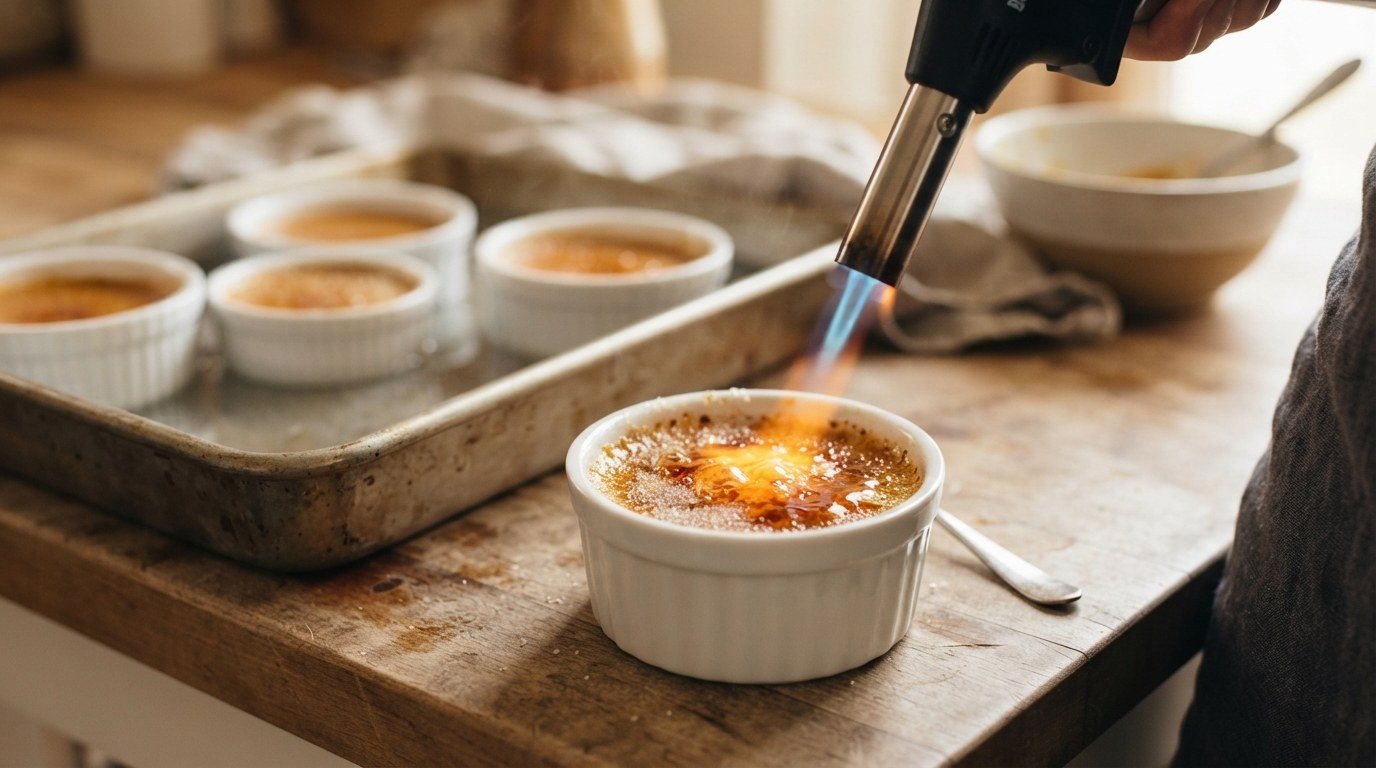
The shattering top is just granulated sugar melted and caramelized. Blot the chilled custards dry, add a thin, even layer of sugar, and melt it with a kitchen torch, keeping the flame moving so the sugar turns deep amber without burning. A superfine sugar melts fastest and most evenly. No torch? Run the ramekins under a very hot broiler for a minute or two, watching constantly, though a torch gives you far more control. Brûlée the tops within an hour of serving so the caramel stays crisp; do it too early and the sugar slowly dissolves into the custard.
Common problems, and how to avoid them
Most crème brûlée trouble comes back to heat or timing. Here is the quick diagnosis:
| Problem | Cause | Fix |
|---|---|---|
| Grainy or curdled custard | Baked too hot or too long; cream too hot when tempering | Use the water bath at 325°F, temper slowly, strain the base |
| Custard will not set | Too much pumpkin purée or underbaked | Keep purée modest; bake until the center just jiggles (170–175°F) |
| Weepy or watery top | Torched too far ahead of serving | Caramelize within an hour of serving |
| Sugar top burns before melting | Torch flame held too close or still | Keep the flame moving; use superfine sugar |
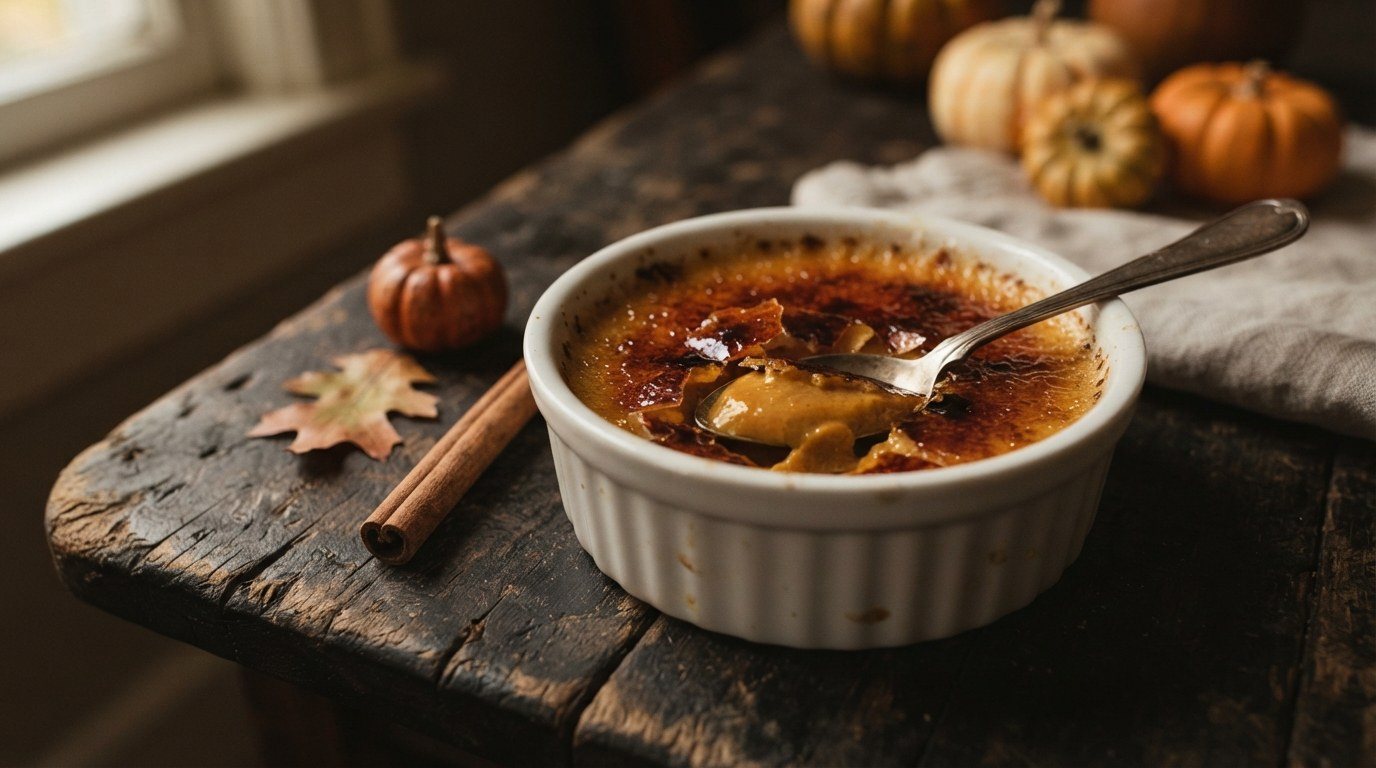
Pumpkin Crème Brûlée
Ingredients
- 2 cups heavy cream
- 1/2 cup pure pumpkin purée (not pie filling)
- 5 large egg yolks
- 1/2 cup granulated sugar, plus more for the tops
- 1 1/2 tsp pumpkin pie spice
- 1 tsp vanilla extract
- 1/4 tsp kosher salt
Instructions
- Heat the oven to 325°F and set five 4- to 6-ounce ramekins in a roasting pan. Put a kettle of water on to boil for the water bath.
- In a bowl, whisk the egg yolks, sugar, pumpkin purée, pumpkin pie spice, vanilla, and salt until smooth.
- Heat the cream in a saucepan until steaming but not boiling. Whisking constantly, pour the hot cream into the yolk mixture in a slow, steady stream to temper it.
- Strain the custard through a fine-mesh sieve into a measuring cup, then divide it among the ramekins.
- Pour hot water into the roasting pan to reach halfway up the sides of the ramekins. Bake 40 to 45 minutes, until the edges are set but the centers still jiggle (about 170–175°F).
- Lift the ramekins out of the water bath and cool, then refrigerate at least 4 hours or overnight.
- Just before serving, blot the tops dry, sprinkle each with a thin even layer of sugar, and caramelize with a kitchen torch until deep amber and glassy. Let the caramel set for a minute, then serve.
Notes
Pumpkin Crème Brûlée FAQs
The questions that come up most: which pumpkin to use, making it without a torch, how far ahead you can make it, and why a custard turns grainy.
Do I use pumpkin purée or pumpkin pie filling?
Pure pumpkin purée, not pumpkin pie filling. Pie filling is pre-sweetened and pre-spiced, which throws off the custard’s sugar and seasoning. Buy plain 100% pumpkin (or purée your own roasted pumpkin) and add the spice and sugar yourself so you control the balance.
Can I make pumpkin crème brûlée without a torch?
Yes. Set the chilled custards under a very hot broiler for one to two minutes, watching constantly and rotating them so the sugar caramelizes evenly. A kitchen torch gives far more control and will not warm the custard underneath, but the broiler works in a pinch.
How far ahead can I make it?
Make the custards up to three days ahead and keep them chilled and covered. Only caramelize the sugar tops within an hour of serving, though, because the crisp caramel slowly dissolves into the custard once it is torched.
Why did my custard turn out grainy?
Grainy custard means the eggs overcooked, usually from too much heat or skipping the water bath, or from not straining the base. Bake in a water bath at 325°F, pull the custards while the centers still jiggle, and always strain the mixture through a fine sieve before baking.
What size ramekins should I use and how does it change the time?
Shallow 4- to 6-ounce ramekins are ideal because the custard sets evenly and there is more surface area for the caramel top. Deeper dishes take longer to set and are harder to brûlée evenly, so if you use them, add time and go by the jiggle test rather than the clock.

About the Author
John Siracusa is the founder of Hell’s Kitchen Recipes. He focuses on technique-first, reproducible home cooking and researches recipes & kitchen equipment from published food science and professional chef methods since 2016.