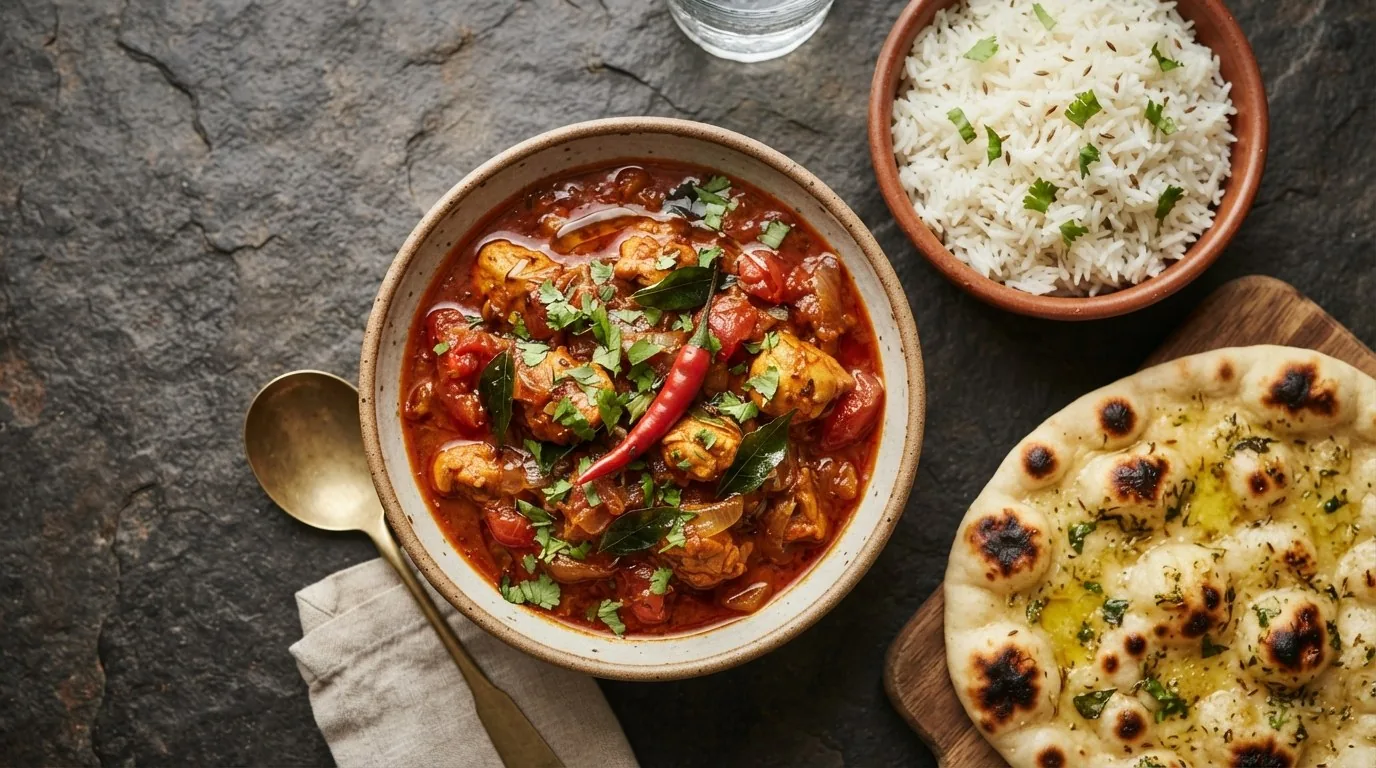
Chicken madras is the hot one on the curry-house menu: a deep-red, tomato-and-chili curry with a real kick and a base of well-fried spices. It is not creamy or sweet like a korma or a tikka masala, and it is not quite as fierce as a vindaloo. Get the spice frying right and you get a curry with depth behind the heat, not just heat.
One thing up front, because the old story gets muddled: madras is named after the city of Madras, now Chennai, but the dish as most people know it is a British curry-house standard, not a traditional South Indian home recipe. Here is how to make a proper one, and the food science that makes the spices sing.
What Is Chicken Madras (and Where Is It From)?
Chicken madras is a medium-bodied, tomato-based curry defined by its heat and its deep red color, built on madras curry powder plus extra chili. It sits firmly in the "hot" tier of a British Indian restaurant menu. The name points to the city of Madras (Chennai) in South India, but the dish itself was standardized in British curry houses, not cooked this way in Madras homes, as the history of madras curry makes clear.
So it is Indian in inspiration and British in the form you order at a takeaway. That is not a knock; it just means the "authentic Madras" you are after is a curry-house recipe, and the techniques below are what those kitchens actually do.
How Hot Is a Madras? (Madras vs Vindaloo vs Korma)
A madras is hot but not the hottest. On the standard curry-house heat ladder it sits above the mild and medium curries and below the fire-breathers, so it is a good choice if you want real chili warmth without wrecking your palate.
| Curry | Heat | What defines it |
|---|---|---|
| Korma | Mild | Creamy, gentle, yogurt or nut base |
| Tikka masala | Mild to medium | Creamy tomato, lightly spiced |
| Bhuna | Medium | Thick, drier, deeply fried spices |
| Madras | Hot | Tomato and chili, deep red, punchy |
| Vindaloo | Very hot | Fiery and tangy, sharpened with vinegar |
| Phaal | Extreme | The hottest curry on the menu |
The heat itself is capsaicin, the compound in chilies, and it matters that capsaicin is fat-soluble, not water-soluble. That is why a glass of water does nothing against a hot madras and a spoon of yogurt, a lassi, or the fat in the sauce actually cools it. If your madras is too hot, add dairy or fat, not water.
Fry the Spices Until the Oil Splits
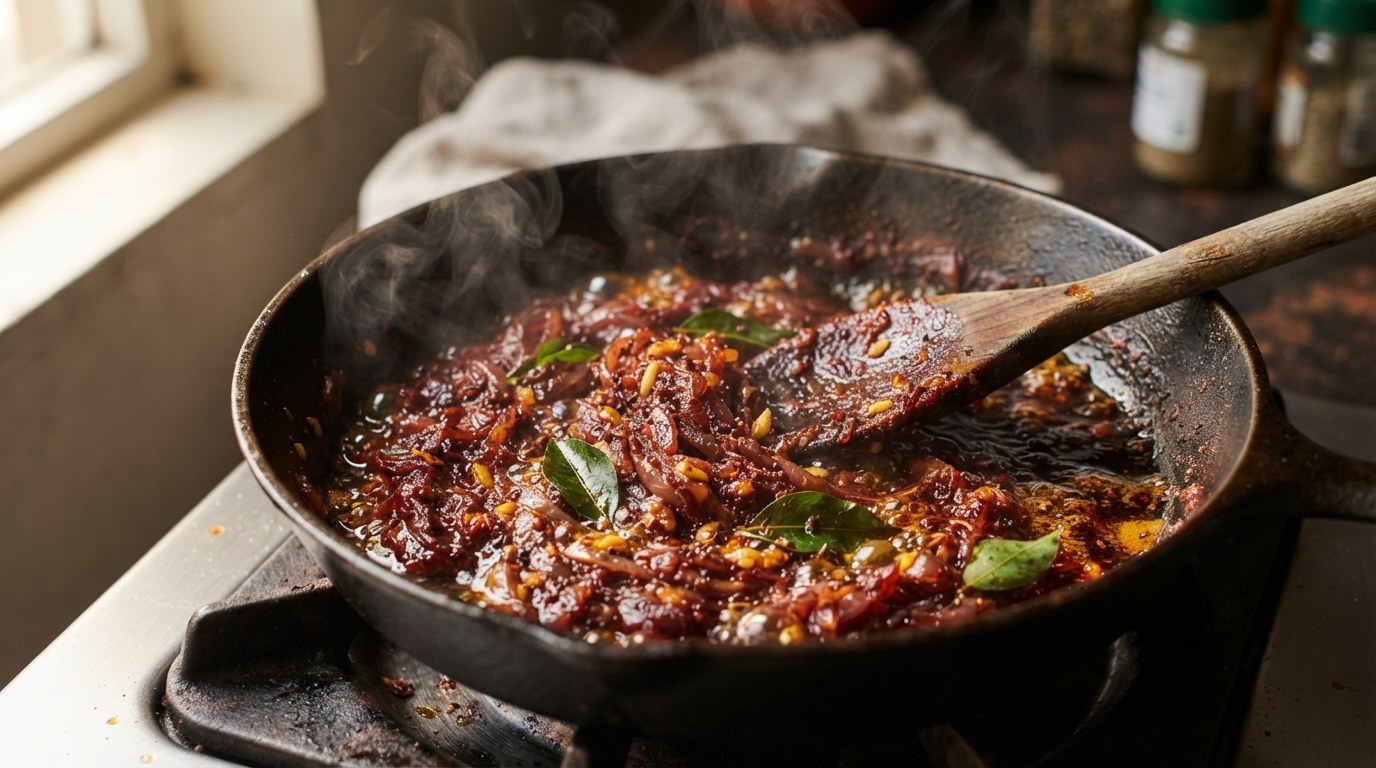
The single technique that makes or breaks a madras is frying the spice-and-tomato base until the oil separates out, the stage Indian cooks call bhuna. Raw ground spices taste dusty and harsh; cooking them in hot oil transforms them, because most of their flavor compounds are fat-soluble and only come alive in fat, and the heat browns them the way it browns anything else, a Maillard-style shift described in the science of browning.
So cook the masala down, stirring, until you see the oil pooling and separating at the edges of the pan. That splitting oil is the visual signal the base is properly cooked, and it is the difference between a deep, rounded curry and a thin, raw-tasting one. Only then does the chicken go in.
Brown the Onions Deep, Toast the Spices Fresh
The body of the sauce comes from onions cooked far past soft, to a deep golden brown. That browning is Maillard and caramelization, and it builds a savory sweetness that balances the chili heat, which is why a rushed, pale onion base makes a curry taste sharp and one-dimensional. Give the onions ten to twelve minutes and do not stir them constantly.
For the spices, fresh beats pre-ground every time. Toasting whole cumin, coriander, and peppercorns in a dry pan until fragrant, then grinding them, releases the volatile aromatic oils that a jar of old powder has long since lost. It is the small step that gives a homemade madras its lift, and it is exactly the kind of quality-first move Ramsay pushes on any dish.
Use Thighs, and a Yogurt Marinade Helps
Use boneless, skinless chicken thighs, not breast. Thighs have the fat and connective tissue to stay juicy through the simmer, while breast overcooks and dries out in the time the sauce needs. It is the same reason curry houses almost always use thigh meat.
A short yogurt marinade is worth the half hour if you have it. The yogurt's acid loosens the proteins on the surface of the meat and seasons it, and while a marinade mostly works on the surface rather than soaking deep, as Michigan State University Extension notes, cutting the chicken into pieces gives it plenty of surface to tenderize.
Does Chicken Madras Have Coconut Milk?
Traditionally, no. A British-style chicken madras is a tomato-and-chili curry, deep red and not creamy, so a classic version has no coconut milk at all. What you are tasting is chili, browned onion, and well-fried spice, not coconut.
That said, a splash of coconut milk at the end is a common and genuinely good variation, a nod to the South Indian side of the family, and it softens the heat because its fat mops up some of the capsaicin. Add it if you want a mellower, rounder madras, but know it is a choice, not the authentic base.
Make Ahead, Store, and Serve
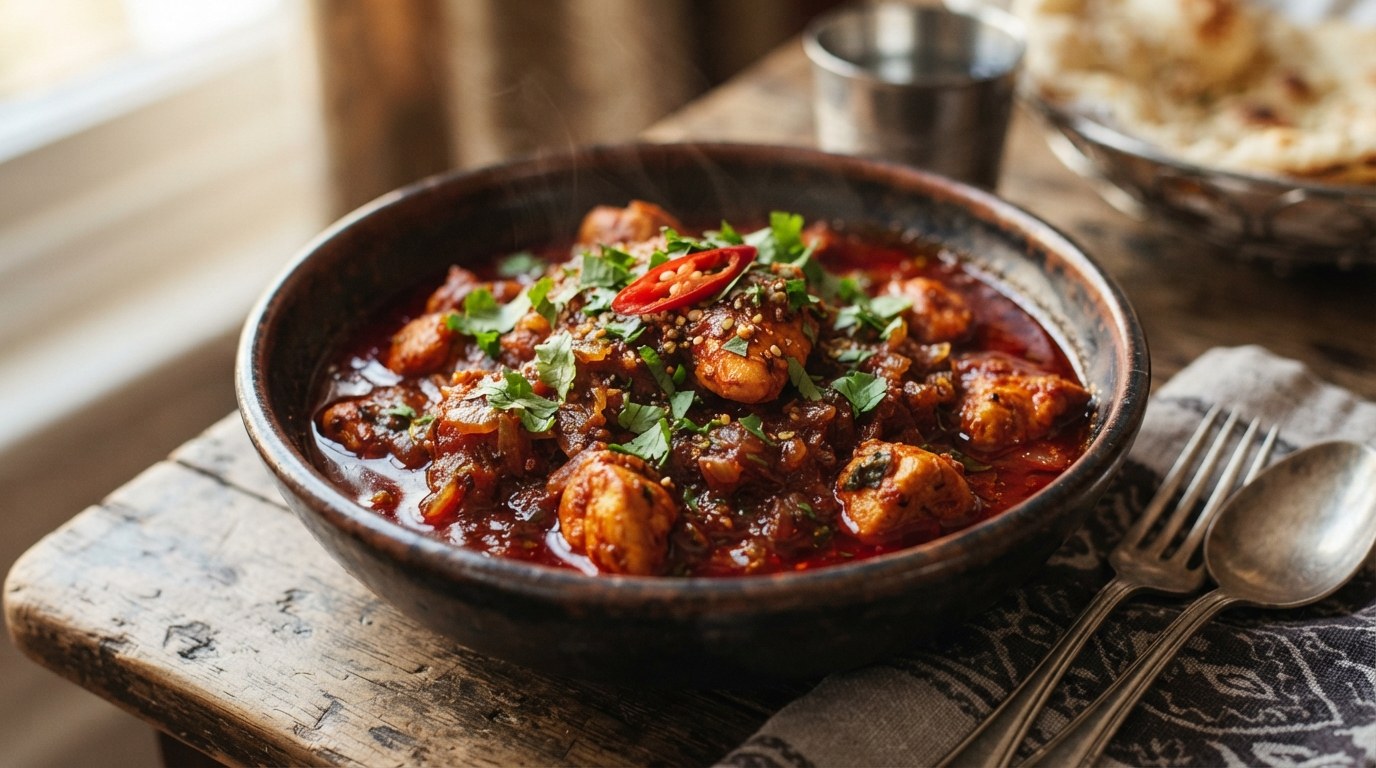
Madras is one of those curries that is better the next day, once the spices settle and marry, so it is an ideal make-ahead. It keeps three days covered in the fridge and freezes well for up to three months; reheat it gently with a splash of water so it does not catch.
Serve it with basmati rice and naan to carry the sauce and take the edge off the heat. For a milder, creamier curry from the same family, our butter chicken is the gentle end of the scale, and there is more poultry method in the bone-in chicken breast guide and the full recipe collection.
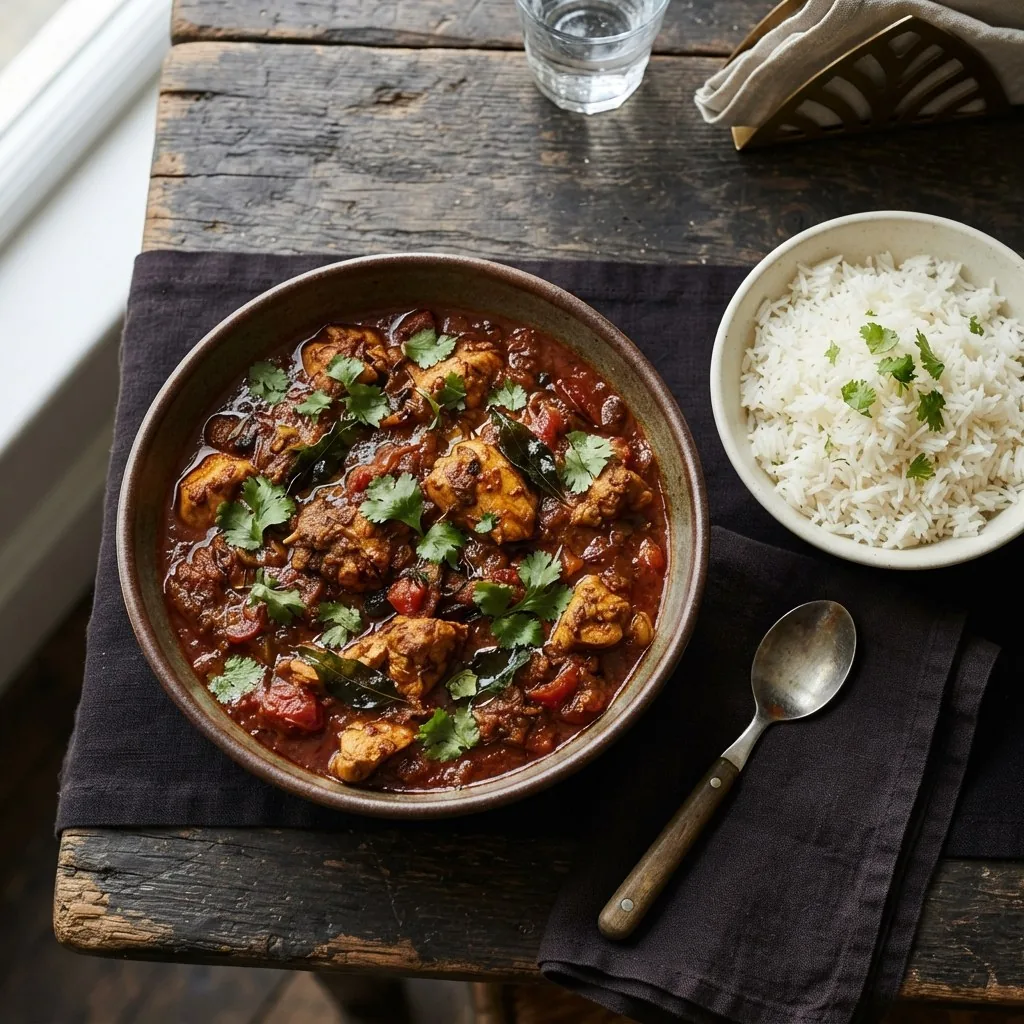
Gordon Ramsay Chicken Madras
Ingredients
- 2 lb boneless, skinless chicken thighs, cut into large pieces
- 1/2 cup plain yogurt, plus 1/2 tsp turmeric (optional 30-minute marinade)
- 3 Tbsp oil or ghee
- 2 onions, finely chopped
- 1 Tbsp grated fresh ginger
- 4 cloves garlic, minced
- 2 green chilies, finely chopped (to taste)
- 2 Tbsp Madras curry powder (hot)
- 1 tsp Kashmiri chili powder (for color), plus more to taste
- 1 tsp ground cumin
- 1 tsp ground coriander
- 1 tsp turmeric
- 2 Tbsp tomato paste
- 2 cups tomato puree or chopped tomatoes
- Salt, to taste
- A squeeze of lemon juice
To serve
- Fresh curry leaves and cilantro, basmati rice, and naan
Instructions
- Optional: toss the chicken in the yogurt and turmeric and let it sit 30 minutes while you prep everything else.
- Heat the oil or ghee in a heavy pan over medium heat. Cook the onions, stirring now and then, until deep golden brown, 10 to 12 minutes.
- Add the ginger, garlic, and green chilies and cook 1 minute. Stir in the madras curry powder, chili powder, cumin, coriander, and turmeric and fry 30 to 60 seconds, until fragrant.
- Add the tomato paste and tomato puree and cook down 10 to 15 minutes, stirring, until the sauce is thick and the oil separates out at the edges (bhuna). Add a splash of water if it catches.
- Add the chicken and simmer 15 to 20 minutes, until cooked through and tender. Loosen with warm water if too thick, or a splash of coconut milk for a milder curry. Season with salt and a squeeze of lemon.
- Finish with curry leaves and cilantro, and serve with basmati rice and naan.
Notes
Chicken Madras FAQs
The questions that come up most: how hot chicken madras is, how it compares to vindaloo and korma, where it comes from, and whether it has coconut milk.
Is chicken madras spicy, and how hot is it?
Yes. Madras is one of the hotter curry-house curries, hotter than a korma or tikka masala but milder than a vindaloo or phaal. The heat is chili, so you can dial it up or down to taste.
What is the difference between madras and vindaloo?
Both are hot, tomato-based curries, but vindaloo is hotter and has a sharp, tangy edge from vinegar. A madras is punchy and deep but not quite as fierce.
Where is chicken madras from, and is it Indian or British?
The name comes from the city of Madras, now Chennai, but the dish as most people know it is a British Indian restaurant creation: a standardized hot curry on UK curry-house menus, not a traditional home dish from Madras itself.
Does chicken madras have coconut milk?
Traditionally no. A classic British-style madras is a deep-red tomato-and-chili curry with no coconut. A splash of coconut milk is a common variation that softens the heat, but it is optional, not the authentic base.
What chicken should I use, and how do I keep it tender?
Boneless, skinless thighs. They stay tender through the simmer, while breast dries out. A short yogurt marinade helps too.
Can I freeze chicken madras?
Yes. It keeps three days in the fridge, tastes better the next day, and freezes for up to three months. Reheat it gently with a splash of water.

About the Author
John Siracusa is the founder of Hell’s Kitchen Recipes. He focuses on technique-first, reproducible home cooking and researches recipes & kitchen equipment from published food science and professional chef methods since 2016.