Cauliflower purée is the restaurant side that quietly outclasses mashed potato: lighter, lower in carbs, and just as silky when you make it right. Gordon Ramsay's version simmers the cauliflower soft in stock, then blends it with butter until glossy. The whole game is texture, and cauliflower has one big advantage that makes a foolproof, silky purée easy.
This guide explains why it turns silky, the one reason it can go grainy or watery, and why you can blend it far harder than you would ever dare with potatoes.
Why It Turns Silky

Smoothness starts with cooking the cauliflower all the way soft. Plant cells are glued together by pectin, and heat dissolves that glue, so fully-cooked cauliflower falls apart into a smooth purée while undercooked cauliflower blends into a grainy one. Simmer it until a fork slides through with no resistance, about 20 minutes; do not rush it.
Cook it in stock rather than plain water for flavor, and lift the florets out with a slotted spoon so you control the liquid that goes back in. Cauliflower is roughly 92% water and holds less than potato, so add the cooking liquid back a spoonful at a time until the purée is loose and glossy but not soupy. Butter (or cream, or good olive oil) blended in emulsifies for richness and a smoother mouthfeel.
Why It Never Turns Gluey (Unlike Potato)

Here is the trick worth knowing. Mashed potato turns into glue if you overwork it, because a blender ruptures the potato's starch-packed cells and releases sticky starch. Cauliflower has almost no starch, so that never happens: you can run it in a blender or food processor as long and hard as you like and it just gets silkier. For the smoothest possible result, blend it well and, if you want true restaurant polish, push it through a fine sieve. It is the opposite rule from the one that governs a starchy sauce.
Make It Dairy-Free or Ahead
The butter is easy to swap. For a dairy-free purée, blend in a good extra-virgin olive oil (same amount as the butter) or a couple of tablespoons of coconut cream; both keep it silky. It reheats well, so it is a strong make-ahead: cool it, refrigerate up to 3 days per USDA leftover guidance, and warm it gently over low heat with a splash of stock or cream to bring the texture back.
What to Serve It With
Cauliflower purée is a natural bed for anything with a sauce or a sear: a filet mignon, seared scallops or fish, or roast chicken. It is a lighter, lower-carb stand-in for mash, so it works with rich mains like butter chicken, and it pairs happily with a green like sautéed spinach. See more in the full recipes collection. Nutritionally it is a genuinely good-for-you side.
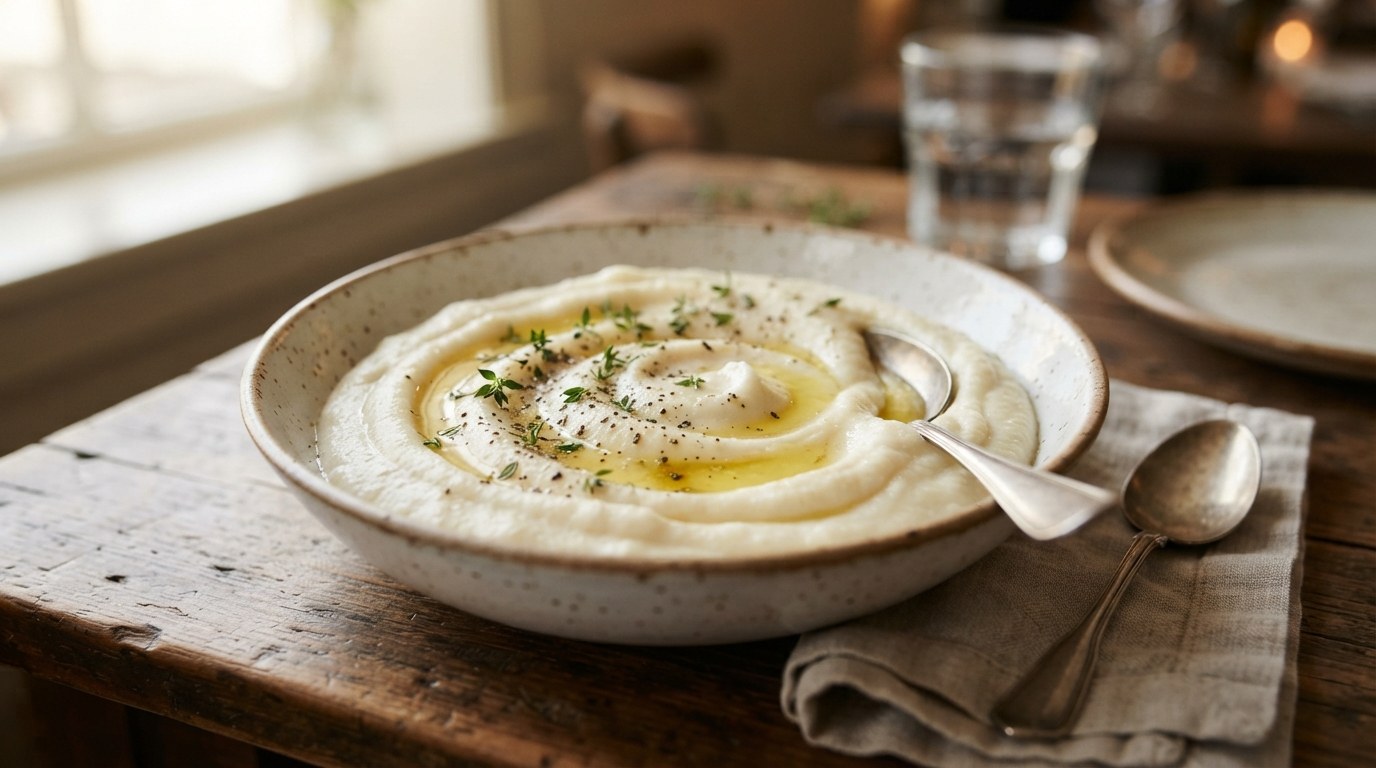
Gordon Ramsay's Cauliflower Purée
Ingredients
- 1 head cauliflower (about 2 lb), cut into 1/2-inch pieces
- 1 cup chicken broth
- 3 Tbsp unsalted butter
- 1 tsp fresh thyme, chopped
- 1 tsp salt
- Freshly ground black pepper, to taste
Instructions
- Bring the chicken broth to a boil in a large pot and add the salt. Add the cauliflower, return to a boil, then reduce the heat to low and cover.
- Simmer about 20 minutes, until the cauliflower is completely tender and breaks apart easily with a fork.
- Lift the cauliflower into a food processor or blender with a slotted spoon. Add the butter and about 3 tablespoons of the cooking liquid, and blend until completely smooth.
- Season with salt, pepper, and thyme, and blend briefly to combine. Add more cooking liquid a spoonful at a time if it is too thick.
- For an ultra-smooth finish, push the purée through a fine sieve. Serve hot.
Notes
Cauliflower Purée FAQs
The questions that come up most: how to get it silky, why it might turn grainy or watery, how it compares to mashed potato, and whether you can make it ahead.
How do you make cauliflower purée silky and not grainy?
Cook the cauliflower until completely soft so the pectin holding the cells together has dissolved, then blend it well. Undercooked cauliflower is the usual reason a purée turns out grainy.
Why is my cauliflower purée watery?
Too much cooking liquid went back in, or wet cauliflower was not drained. Lift the florets out with a slotted spoon and add the liquid back a spoonful at a time until it is glossy but holds its shape.
Can you over-blend cauliflower purée like mashed potatoes?
No, and that is its advantage. Mashed potato turns gluey when overworked because blending releases its starch; cauliflower has almost none, so you can blend it as long as you like for a silkier result.
Is cauliflower purée healthier than mashed potatoes?
It is lighter and lower in carbohydrates, and cauliflower is nutrient-dense. It makes a good lower-carb stand-in for mash while giving a similar creamy texture.
How do you make cauliflower purée dairy-free?
Swap the butter for a good extra-virgin olive oil (same amount) or a couple of tablespoons of coconut cream. Both blend in smoothly and keep the purée silky.
Can you make cauliflower purée ahead of time?
Yes. Refrigerate it up to 3 days and reheat gently over low heat with a splash of stock or cream, stirring, to bring back the silky texture.

About the Author
John Siracusa is the founder of Hell’s Kitchen Recipes. He focuses on technique-first, reproducible home cooking and researches recipes & kitchen equipment from published food science and professional chef methods since 2016.