Aglio e olio is the ultimate proof that four ingredients can beat forty. Spaghetti, garlic, olive oil, and chili, turned into a silky, garlicky plate of pasta in the time it takes the water to boil. There is no cream and no cheese sauce doing the work here, so the whole dish hangs on one piece of technique: making a sauce out of oil and water.
This guide explains how that sauce actually forms, how to cook the garlic so it never turns bitter, and one popular pasta "tip" you should ignore.
The Sauce Is an Emulsion
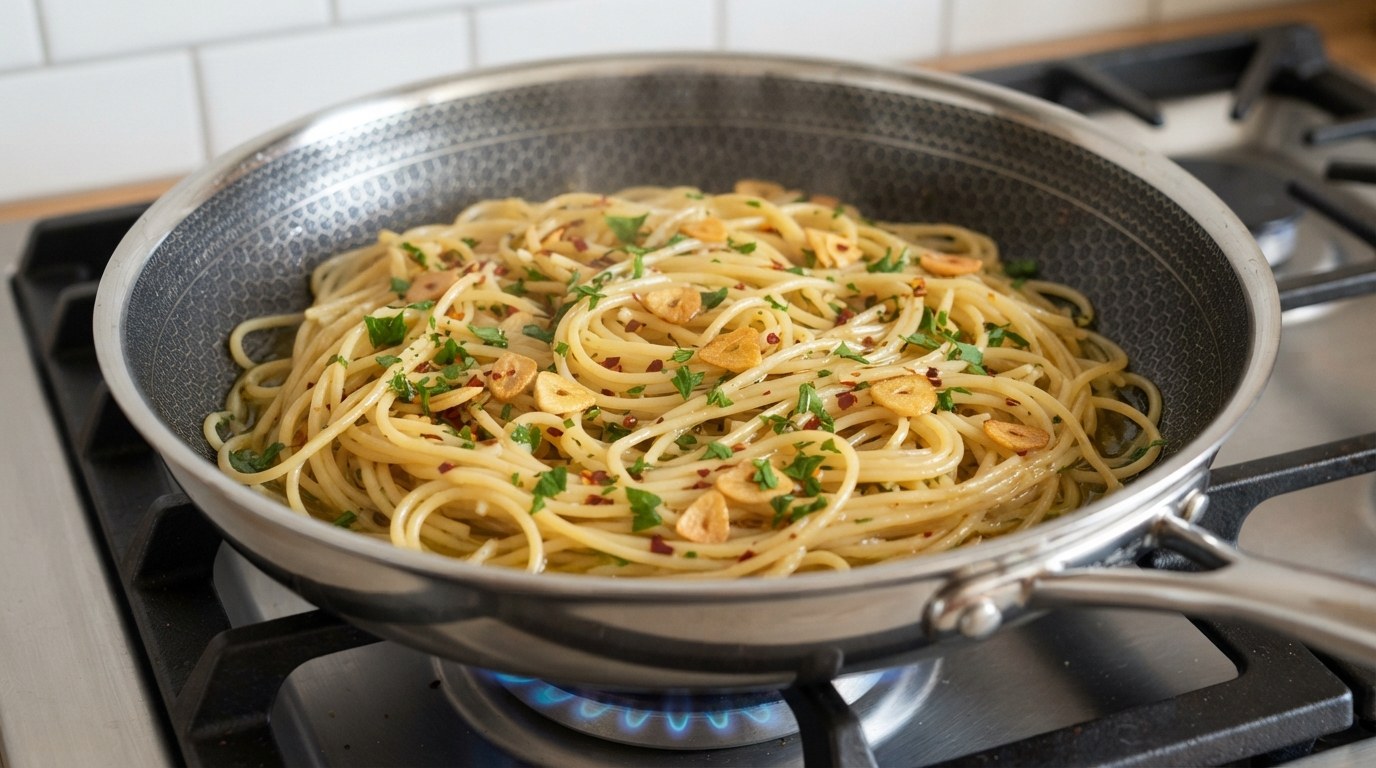
Oil and water do not mix, yet a good aglio e olio is glossy and creamy from nothing but oil and pasta water. The trick is starch. The water the pasta cooked in is full of dissolved starch, and when you toss the drained pasta hard in the pan with the oil and a splash of that cloudy water, the starch acts as an emulsifier and binds the oil and water into a light, clinging sauce, an emulsion. Italians call this finishing step mantecatura.
So reserve more pasta water than you think you need, drain the spaghetti a minute shy of al dente, and finish it in the pan: toss vigorously, adding pasta water a splash at a time, until the sauce turns silky and coats every strand. Keep it moving; the tossing is what emulsifies it.
Don't Burn the Garlic
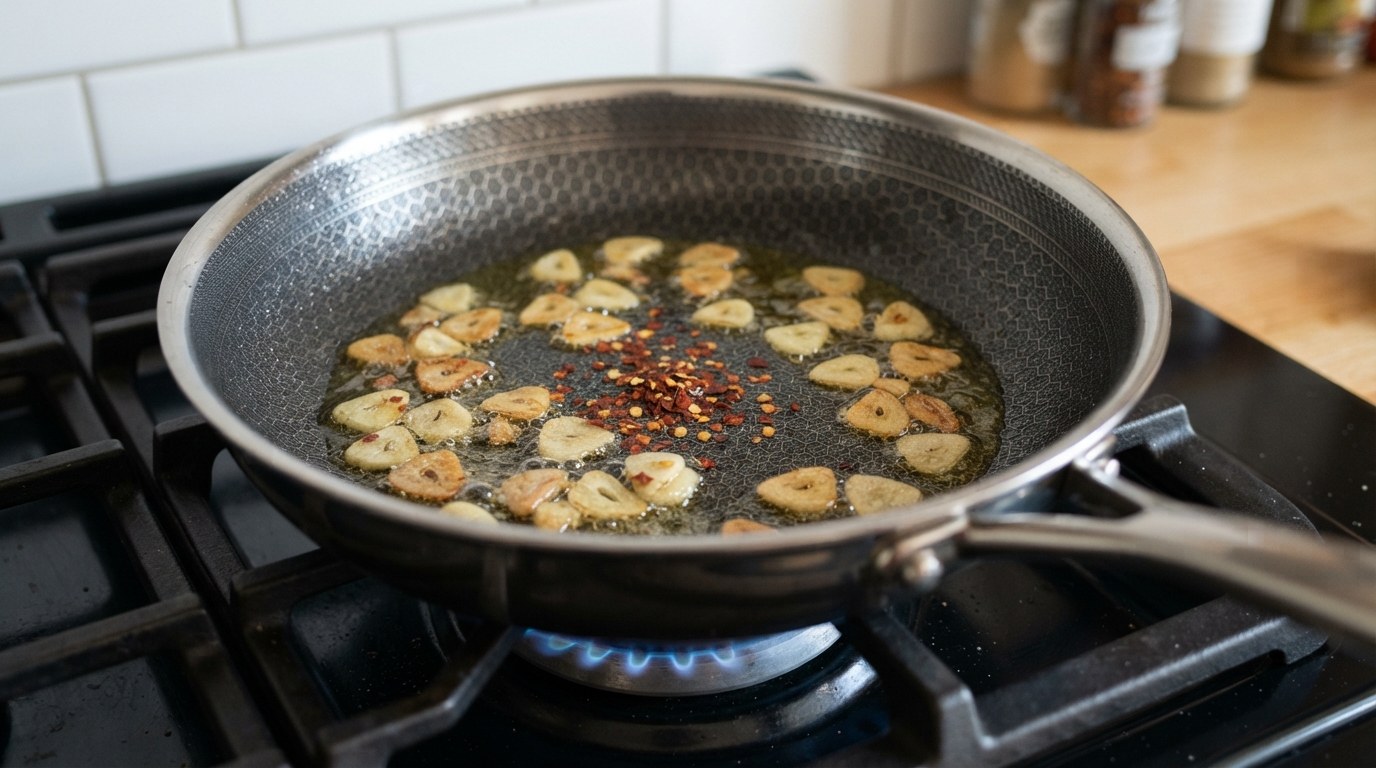
Garlic is the whole flavor, and it is easy to ruin. Slice it thin and cook it gently in the olive oil over medium-low heat until it is just pale gold; the moment it goes brown it turns acrid and bitter, and there is no saving it. The safest route is to start the garlic in cold oil and bring them up together, so it infuses the oil slowly and evenly instead of scorching in a hot pan. Add the red pepper flakes for the last 30 seconds so they bloom without burning. Use a good extra-virgin olive oil, because with so few ingredients its flavor is front and center.
Ignore the Oil-in-the-Water "Tip"
You will hear that adding oil to the pasta water stops the noodles sticking. It does not. Oil is lighter than water, so it floats on top while the pasta cooks submerged below, and the only thing it does is coat the pasta as you drain it, which then makes the sauce slide off instead of clinging. The real fix for sticking is simpler: use plenty of water, and stir the pasta in the first minute or two, when the surface starch is gelatinizing and strands want to glue together. Salt the water well; keep the oil for the pan.
To Cheese or Not to Cheese
Purists will tell you a true aglio e olio has no cheese, and traditionally it does not; the dish is meant to be about garlic and oil. That said, a light grating of Parmesan at the table is common outside Italy and tastes good, so treat it as optional. Finish with plenty of chopped parsley either way. Serve it as a fast supper or a starter; for more pasta, make your own fresh pasta, try a rich Alfredo, or a lobster spaghetti, and browse the recipes collection.
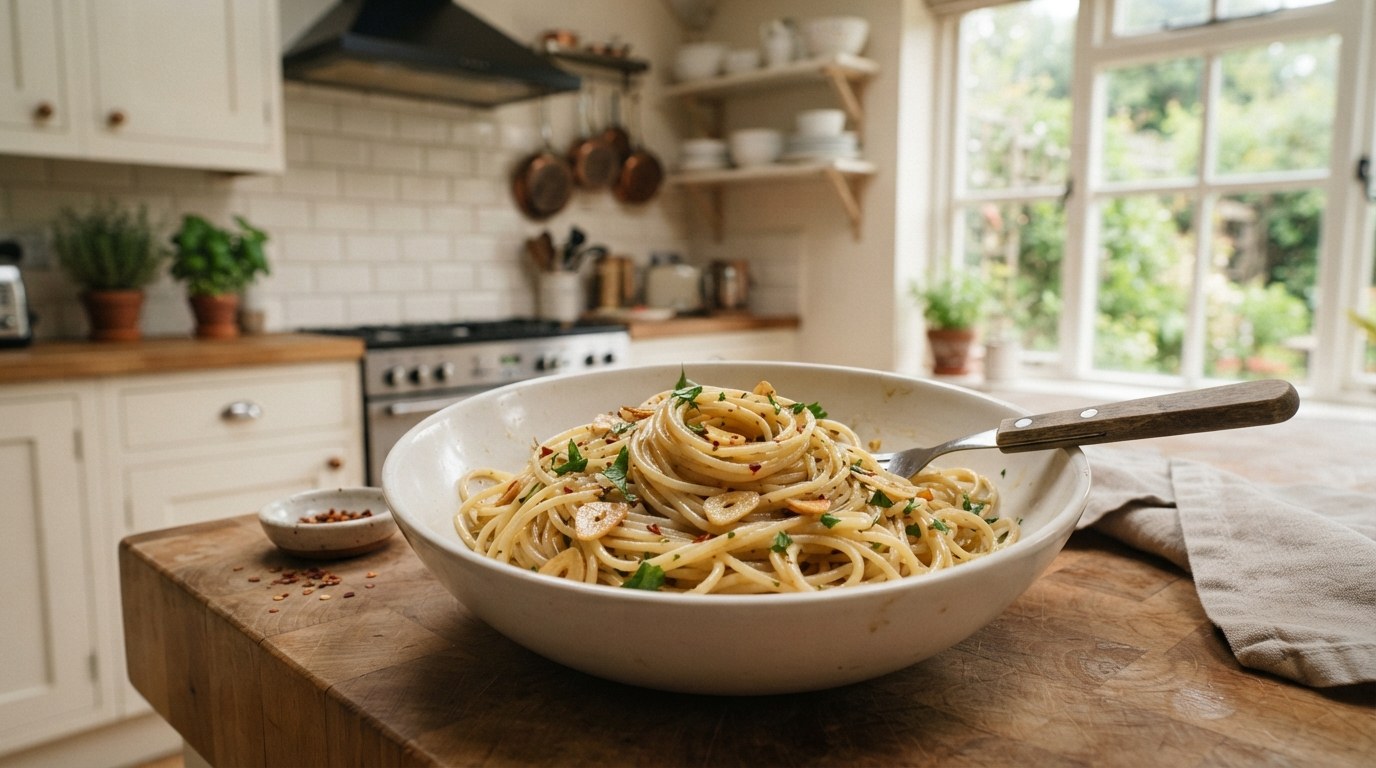
Gordon Ramsay's Aglio e Olio
Ingredients
- 1 lb dried spaghetti
- 1/2 cup extra-virgin olive oil
- 6-8 cloves garlic, thinly sliced
- 1/2 tsp crushed red pepper flakes
- Salt, for the pasta water
- Fresh parsley, chopped
- Freshly grated Parmesan (optional)
Instructions
- Bring a large pot of well-salted water to a boil and cook the spaghetti until a minute shy of al dente. Reserve a large mug of the starchy pasta water before draining.
- Meanwhile, add the olive oil and sliced garlic to a large sauté pan and cook gently over medium-low heat until the garlic is just pale gold. Do not let it brown.
- Add the red pepper flakes and cook 30 seconds.
- Using tongs, transfer the pasta directly into the pan with a splash of pasta water. Toss vigorously, adding more pasta water a little at a time, until the sauce turns silky and coats the strands.
- Finish with chopped parsley (and a little Parmesan if you like), and serve immediately.
Notes
Aglio e Olio FAQs
The questions that come up most: how to make the sauce silky, how to keep the garlic from burning, whether oil in the pasta water helps, and if aglio e olio has cheese.
How do you make aglio e olio silky and not oily?
Emulsify it. Toss the drained pasta hard in the pan with the garlic oil and a splash of starchy pasta water; the dissolved starch binds the oil and water into a glossy, clinging sauce. Reserve plenty of pasta water and keep tossing.
How do you keep the garlic from burning?
Slice it thin and cook it gently over medium-low heat until just pale gold, or start it in cold oil and bring them up together. Browned garlic turns bitter and cannot be fixed, so pull it off the heat before it colors deeply.
Does putting oil in the pasta water stop it sticking?
No. Oil floats on top while the pasta cooks below, so it does nothing while cooking and only coats the pasta as you drain it, which makes sauce slide off. Stir the pasta in the first minute or two and use plenty of water instead.
Why is pasta water important in aglio e olio?
Its dissolved starch is what lets the oil and water emulsify into a sauce. Without it you get oily, unbound pasta; with it you get a silky sauce that coats every strand. Always reserve some before draining.
Does aglio e olio have cheese?
Traditionally no; it is meant to showcase garlic and olive oil. A light grating of Parmesan at the table is common outside Italy and tastes fine, so it is optional rather than authentic.
What kind of olive oil should I use?
A good extra-virgin olive oil, since with so few ingredients its flavor is front and center. Use one you would happily taste on its own.

About the Author
John Siracusa is the founder of Hell’s Kitchen Recipes. He focuses on technique-first, reproducible home cooking and researches recipes & kitchen equipment from published food science and professional chef methods since 2016.