Lemon butter caper sauce is the ten-minute pan sauce you make in the skillet your fish or chicken just came out of. A minced shallot softens in the browned bits, a splash of white wine and stock boils down to a few spoonfuls, the capers go in, and then cold butter is swirled in a cube at a time off the heat until the sauce turns pale, glossy and creamy. Lemon juice and parsley go in last. You get about three-quarters of a cup, enough for four fillets: rich from the butter, sharp from the lemon, with little salty bursts from the capers.
Below is how the sauce comes together in the fish pan, why cold butter is what makes it creamy, why it sometimes splits into a yellow slick (and the two-minute rescue), when to add the lemon, how salty capers really are, and the brown-butter version. If you want a lemon butter sauce made separately in a small pot, the pan-seared halibut page has a classic lemon beurre blanc; this one is built on the pan juices. Every dish on the site lives in Recipes.
What Is Lemon Butter Caper Sauce Called?
Lemon butter caper sauce usually goes by piccata when it is made in the pan after thin chicken or veal cutlets, and the brown-butter version spooned over sole or trout is the French meunière, called grenobloise once capers and lemon join it. They are all the same family: butter, lemon and capers, finished in the pan the protein cooked in. The difference is how the butter is treated. In this sauce it is swirled in cold so it turns creamy; in meunière it is cooked until it browns; in a beurre blanc it is whisked into a reduced wine-and-vinegar base in a separate pot.
The table sorts the lemon butter sauces you will see on menus and recipe sites by how they are built, so you can pick the one that suits the dish you are cooking.
| Sauce | How the butter goes in | Liquid base | Texture | Best with |
|---|---|---|---|---|
| Lemon butter caper sauce (this page) | Cold cubes swirled in off the heat | Fish or chicken pan juices, white wine, stock | Creamy, glossy, pale gold | White fish, salmon, chicken, scallops |
| Piccata sauce | Cold butter swirled in at the end | Pan juices from floured cutlets, wine, stock, lemon | Slightly thicker (the flour on the cutlets helps) | Chicken or veal cutlets, pasta |
| Meunière / grenobloise | Cooked until nut-brown | Just the butter, then lemon (capers for grenobloise) | Thin, nutty, toasty | Sole, trout, any thin floured fillet |
| Beurre blanc | Cold cubes whisked into a reduction | Shallot, white wine and vinegar reduced in a small pot | Smooth and light, no capers | Halibut, cod, asparagus |
| Melted lemon butter | Simply melted | Lemon juice | Thin and oily, separates on the plate | Dipping crab or lobster |
If you are cooking a thick, flaky fillet, the creamy pan sauce here clings best. For a thin, floured fillet that cooks in three minutes, the brown-butter version further down is quicker and just as good.
How to Make Lemon Butter Caper Sauce in the Fish Pan
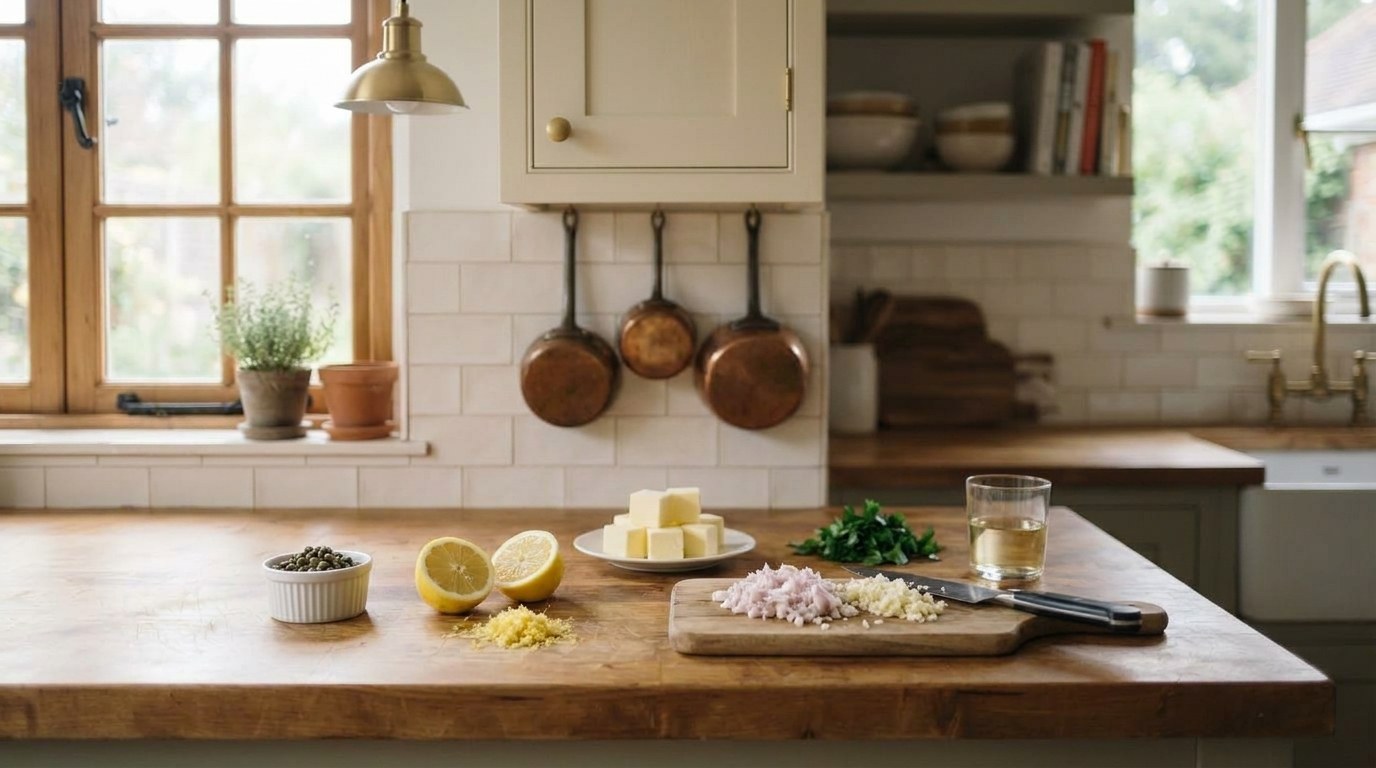
Make lemon butter caper sauce in four quick moves once the fish is out of the pan: soften the shallot, boil down the wine and stock, swirl in cold butter off the heat, then finish with lemon. Have everything measured before the fish goes in, because the sauce takes about eight minutes and the fish is resting the whole time. Cut the butter into cubes and put it back in the fridge until you need it.
Advertisement
Cook the fish the way Gordon Ramsay teaches in his MasterClass: get the pan hot first, then add a little olive oil, lay the seasoned fillets in and leave them alone until the crust releases. He takes fish out a touch early and lets it rest, because it keeps cooking off the heat. That suits this sauce well. Fish proteins start to set at about 104 to 122°F, far below meat, so a fillet left in a hot pan while you make a sauce overcooks fast; move it to a warm plate and make the sauce in the empty pan. Pour off all but about a teaspoon of fat and keep every browned speck, which is Maillard flavor from the sear and the base of the sauce.
The pan you sear in matters, because the sauce is built on what sticks to it. Browned bits only form where the fish's proteins grip the hot metal and brown above about 284°F, so a stainless or hybrid stainless skillet leaves a good layer and a slick non-stick pan leaves very little. A 10- or 12-inch pan holds four fillets without crowding; crowd them and the pan drops below browning heat and they steam instead. A hybrid pan like the one below gives you that fond with easier cleanup, and the Gordon Ramsay cookware guide covers the line he uses.
HexClad
HexClad 12-Inch Hybrid Nonstick Frying Pan
- Stainless steel and ceramic nonstick hybrid surface, built to sear hard and release easily
- Tri-ply with an aluminum core for quick, even heat; works on induction
- Oven safe to 900°F and metal-utensil safe (lid not included)
Soften the shallot and garlic over medium-low heat for about a minute, then pour in the wine and scrape the pan as it bubbles. Boil it down until it is nearly gone and syrupy, about 2 minutes, add the stock and reduce again to about 3 tablespoons. That small, concentrated amount of liquid is what the butter will emulsify into. One thing the boiling does not do is cook off the alcohol: the USDA nutrient retention table found that wine stirred into a hot liquid keeps about 85 percent of its alcohol, a flamed spirit about 75 percent, and even 15 minutes of simmering leaves 40 percent. If you are cooking for someone avoiding alcohol, use all stock and an extra squeeze of lemon.
Why Cold Butter Makes Lemon Butter Caper Sauce Creamy
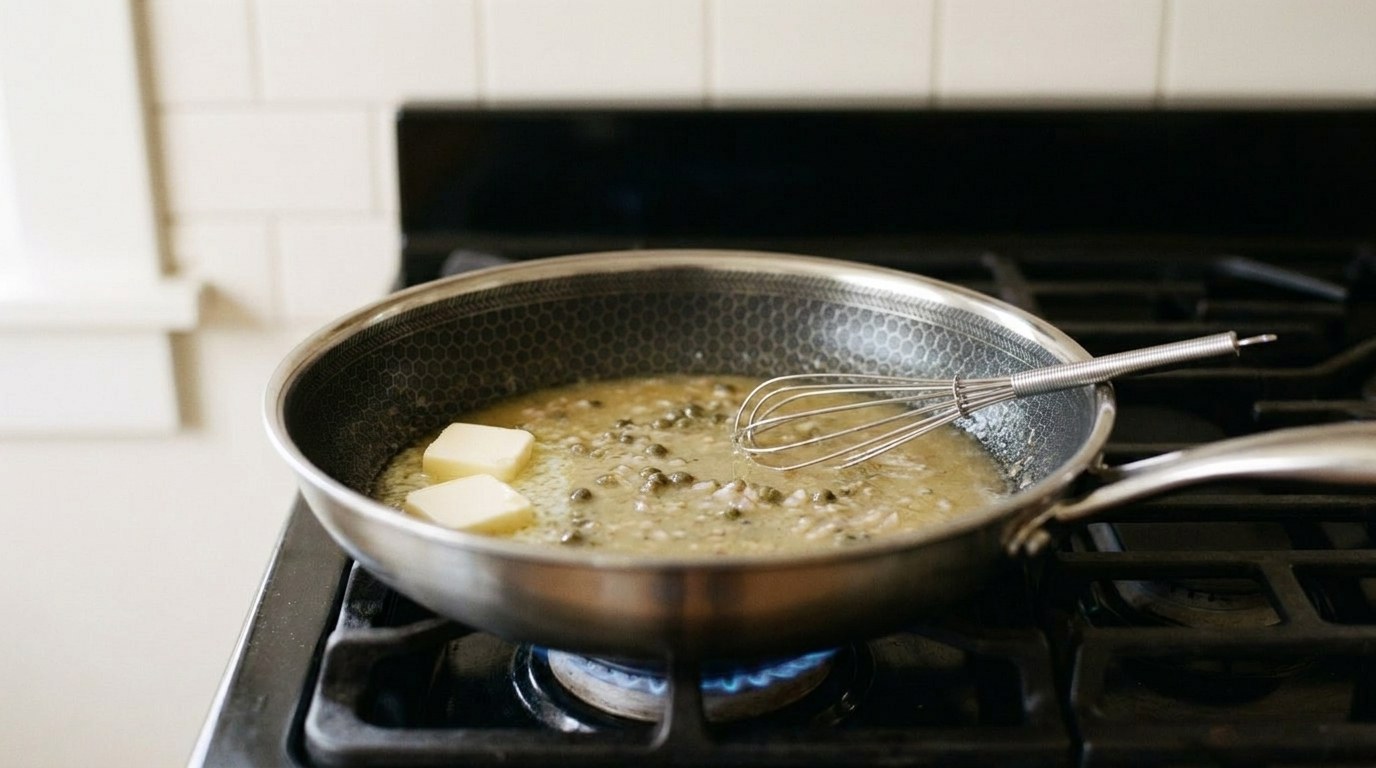
Cold butter makes the sauce creamy because it melts slowly into tiny droplets that stay suspended in the reduced liquid, an emulsion. Butter is itself an emulsion of about 16 to 18 percent water held in 80 percent fat. Whisked into a few spoonfuls of hot liquid, it flips into fat droplets dispersed in water, held apart by the milk proteins and phospholipids that came with the butter. That is why the sauce tastes rich without tasting greasy, and why it looks opaque and pale instead of clear and yellow.
How fast the butter melts decides how small those droplets are. America's Test Kitchen made the same butter sauce several ways, with butter softened or straight from the fridge, added a tablespoon at a time or in a few big pieces. Only the version made with cold butter added a tablespoon at a time thickened properly; the others stayed thin and broke. Cold butter softens gradually, so it sheds fat in small droplets the liquid can coat. Warm butter or a big lump floods the pan with fat faster than the liquid can hold it.
So take the pan off the heat, add two cubes and swirl or whisk until they are almost gone, then add the next two. If the butter stops melting, set the pan back on the lowest heat for a few seconds. The sauce is ready when it is pale, glossy and coats the back of a spoon. Hold it warm, around 140°F, on the lowest heat or beside the burner. It should steam gently and never bubble.
Why Lemon Butter Sauce Separates (and How to Fix It)
Lemon butter sauce separates when it gets too hot or too cold, and heat is by far the usual cause. When the sauce boils, its water turns to steam at 212°F and the bubbling slams the fat droplets together until they merge into a layer of melted butter, the proteins coating them tighten as they heat, and the sauce turns thin with a yellow, oily slick. Francis Lam's beurre blanc method on The Splendid Table makes the same point: keep the pan on the lowest heat while the butter goes in, and do not hold it over a flame afterward. Let it cool all the way to room temperature and it breaks the other way, because the fat sets solid.
Advertisement
A hot, split sauce can usually be saved in two minutes. Lam's fix is to pour the oily butter off into a cup, whisk a spoonful of cold water and a fresh cube of cold butter into what is left in the pan, then add the poured-off butter back a little at a time while you whisk. Stop adding if it stops taking it. A sauce that went solid as it cooled just needs gentle warming over the lowest heat, whisking, with a teaspoon of water.
| What you see | Why it happened | Fix |
|---|---|---|
| Yellow oil pooling on top | The sauce got too hot or boiled | Pour off the oil, whisk in 1 tsp cold water and a cold cube, add the oil back slowly |
| Thin and watery, no gloss | Too little butter, or the liquid was not reduced | Reduce to 3 tbsp before the butter goes in; whisk in 1 to 2 more cold cubes |
| Thick, dull and setting | It cooled too far | Rewarm on the lowest heat, whisking, with a teaspoon of water |
| Sharp, puckering sourness | Too much lemon for the butter | Whisk in another cold cube of butter |
| Too salty | Capers and stock were both salty | More lemon and butter; rinse the capers next time |
When to Add the Lemon, and How to Thicken the Sauce
Add the lemon juice and zest off the heat, right at the end. Much of what makes lemon smell like lemon is a set of volatile aroma oils, and a minute at a boil drives them off, leaving a flatter, more bitter sourness. Ramsay finishes his fish sauces the same way, with a squeeze of fresh lemon at the very end, and in his MasterClass he warns that boiling a finished sauce kills the fresh flavor of its herbs. Start with 2 tablespoons of juice, taste, and add the last tablespoon only if the sauce still tastes heavy.
To thicken lemon butter caper sauce, use more cold butter or less liquid, not flour. Reducing the wine and stock to about 3 tablespoons before the butter goes in gives you a sauce that coats a spoon; a full cup of stock gives you a thin, buttery broth. If you want a sauce that is harder to break, whisk 2 tablespoons of heavy cream into the reduction before the butter. Cream is about 36 percent fat, and dairy above about 25 percent fat holds together under heat and acid, so it acts as a safety net under the butter. Skip cornstarch: the butter emulsion is the thickener, and a starchy slurry turns the sauce gluey.
Capers in Lemon Butter Sauce: Brined or Salt-Packed, and How Salty They Are
Capers are the pickled, unopened flower buds of the caper bush, Capparis spinosa, and they bring both the briny tang and most of the salt to this sauce. The University of Wisconsin Extension explains that the buds are brined, packed in salt, or pickled in salt and vinegar, and that their sharp flavor comes from a mustard oil compound, glucocapparin, released as they cure. The tiny white spots you sometimes see on them are crystals of rutin, a harmless plant compound. The smallest buds, sold as nonpareils, are the most prized and the best size for a sauce.
Advertisement
They are salty. USDA FoodData Central lists canned capers at 2,348 mg of sodium per 100 grams, which works out to about 200 mg in a drained tablespoon, so the 2 tablespoons in this sauce carry around 400 mg before you add any salt at all. Drain brined capers and pat them dry; rinse salt-packed ones well under cold water first. Then taste the finished sauce before you salt it. Ramsay does the same with shellfish in his MasterClass, holding back the salt until the end because the shellfish already carry their own.
Brown Butter Lemon Caper Sauce (the Meunière Version)
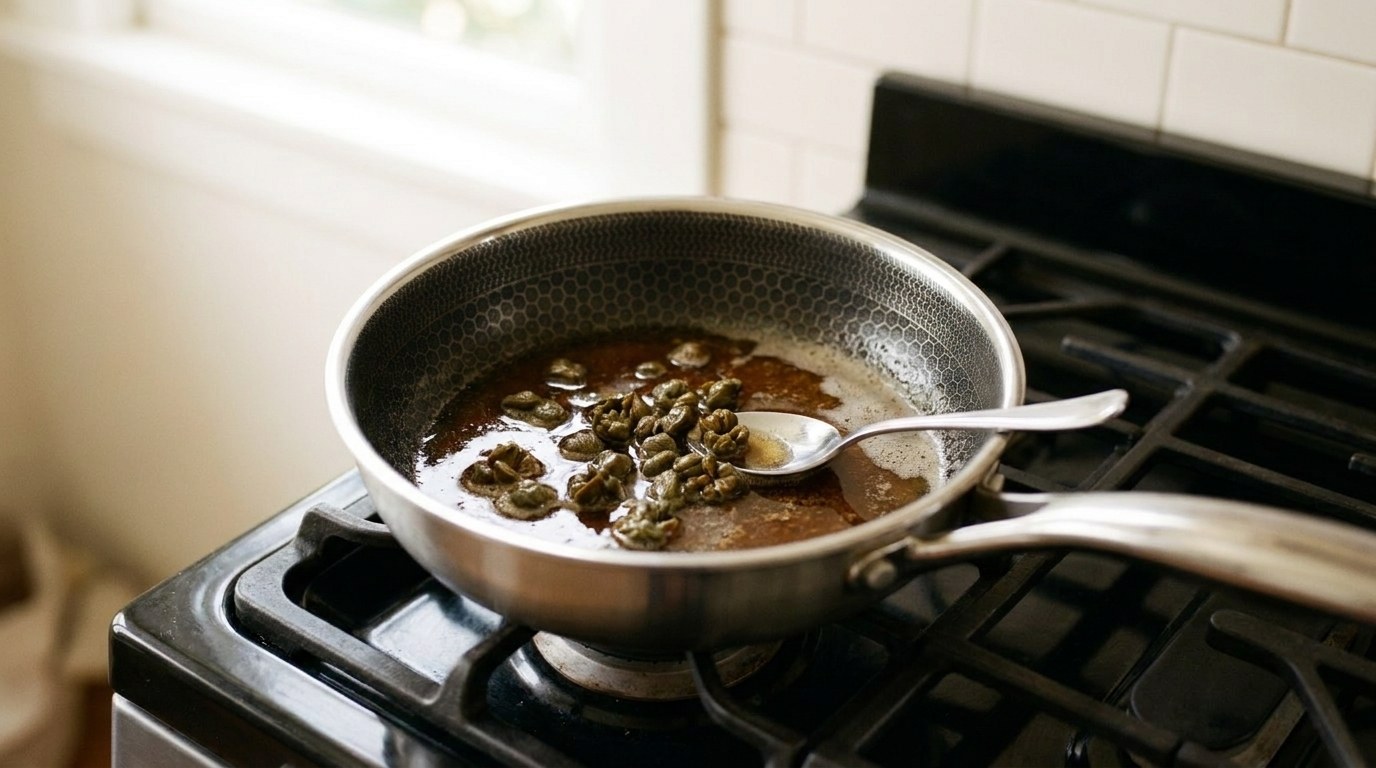
For a brown butter lemon caper sauce, cook the butter until it smells nutty and turns hazelnut brown, fry the capers in it until they burst open, then add the lemon off the heat. It is faster than the creamy version and suits thin fillets of sole, trout or flounder, which are cooked through before a reduction would be ready. Use the same 6 tablespoons of butter, but skip the wine and stock.
The browning is the Maillard reaction in the butter's milk solids. America's Test Kitchen describes the sequence: the butter melts and foams while its water boils away, and once the pan goes quiet the milk solids, which contain sugars and amino acids, toast and turn the butter dark golden and nutty. Nothing browns while water is still bubbling off, because water caps the temperature at 212°F and browning needs about 284°F. Past roughly 356°F the solids burn, turning black and bitter, and the pan's leftover heat keeps darkening them even off the burner, so tip the capers in or pour the butter out the moment it smells like toasted hazelnuts. A light-colored pan makes the color easier to judge.
Pat the capers completely dry before they go in. Their surface water flashes to steam in the hot butter and spatters, and once it has evaporated the buds open up into crisp little flowers in about a minute. Add the lemon juice off the heat, standing back, because it will hiss and foam, then the parsley. This version stays a separated butter sauce by design; spoon it over the fish straight away.
What to Serve With Lemon Butter Caper Sauce
Lemon butter caper sauce goes best with mild white fish, then salmon, chicken, shellfish and spring vegetables. Thick fillets of cod, halibut or sea bass hold a creamy sauce well; try it on the pan-seared halibut or on crispy-skin salmon, spooned around the fish so the skin stays crisp. It is also good on seared scallops, on garlic butter shrimp in place of the garlic butter, and on a pan-roasted bone-in chicken breast. For vegetables, pour it over the sauteed asparagus, or toss it through angel hair with a little pasta water.
Advertisement
Cook the protein to a safe temperature before it gets sauced. The FDA advises cooking fish to 145°F, or until the flesh is opaque and separates easily with a fork, and the USDA safe temperature chart lists 165°F for chicken. Because fish keeps climbing a few degrees while it rests, pull a thick fillet just short and let it finish on the warm plate while the sauce comes together.
The sauce is best made right before you eat. Leftovers go in the fridge within 2 hours and keep for a couple of days; they set solid, so rewarm them in a small pan over the lowest heat with a teaspoon of water, whisking, and they come back. Freezing tends to split the emulsion for good. Make lemon butter caper sauce once in the pan your fish came out of and it becomes the ten-minute habit for any weeknight fillet: reduce, swirl in cold butter off the heat, lemon last.
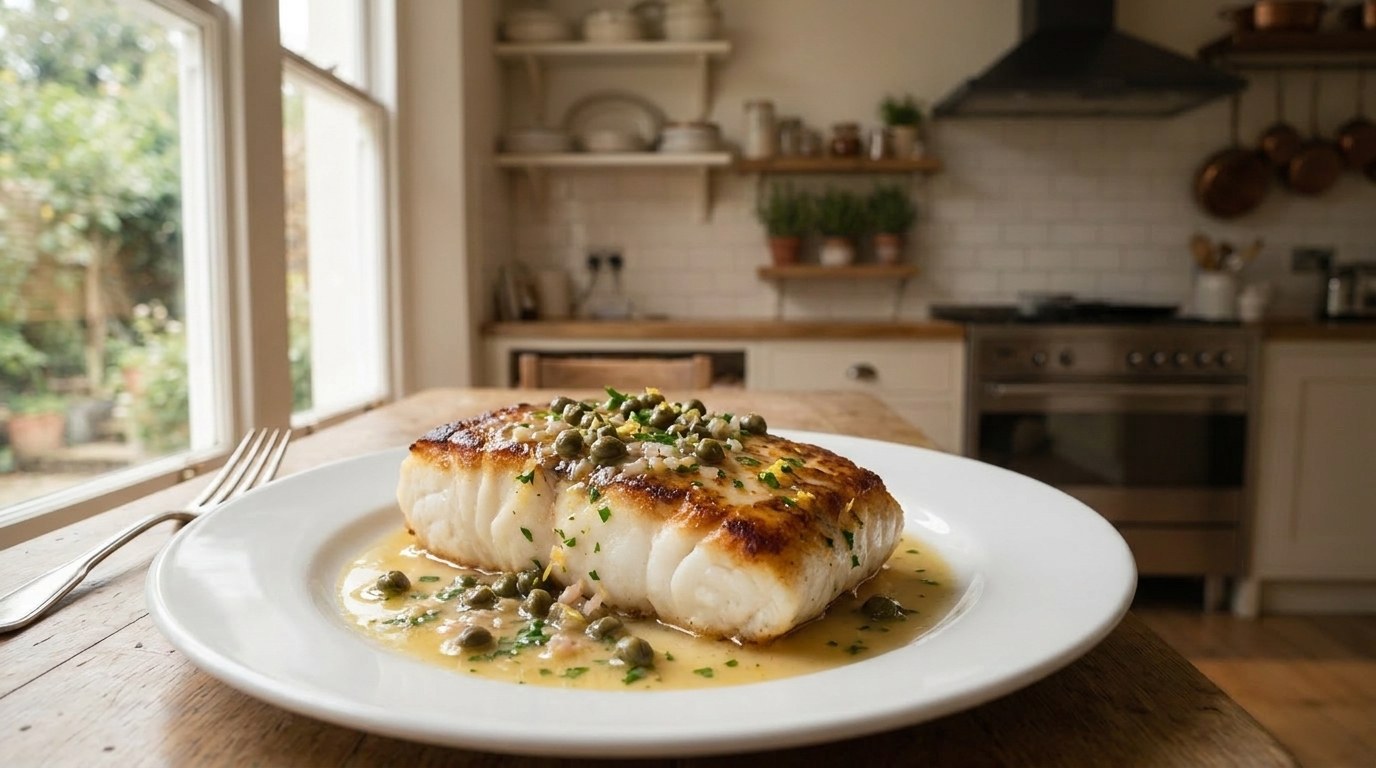
Lemon Butter Caper Sauce
Ingredients
- pan juices from 4 pan-seared fish fillets or chicken cutlets (fat poured off, browned bits kept)
- 1 small shallot, finely minced (about 2 tbsp)
- 1 clove garlic, minced
- ⅓ cup dry white wine (or more stock)
- ⅓ cup low-sodium chicken or fish stock
- 2 tbsp small capers, drained and patted dry (rinsed if salt-packed)
- 6 tbsp cold unsalted butter (85 g), cut into 1/2-inch cubes and kept in the fridge
- 2 to 3 tbsp fresh lemon juice (1 lemon), plus 1/2 tsp finely grated zest
- 1 tbsp flat-leaf parsley, finely chopped
- kosher salt and black pepper, to taste
Instructions
- Move the cooked fish or chicken to a warm plate. Pour off all but about 1 teaspoon of fat from the skillet, keeping the browned bits, and set the pan over medium-low heat.
- Add the shallot and garlic and cook, stirring, until soft and fragrant but not browned, about 1 minute.
- Pour in the wine and scrape up the browned bits as it bubbles. Boil until it is almost gone and syrupy, about 2 minutes.
- Add the stock and the capers and boil until the liquid has reduced to about 3 tablespoons, 2 to 3 minutes.
- Take the pan off the heat. Add 2 cubes of cold butter and swirl or whisk until almost melted, then repeat with the rest, 2 cubes at a time. If the butter stops melting, return the pan to the lowest heat for a few seconds. The sauce is ready when it is pale, glossy and coats a spoon. Do not let it boil.
- Off the heat, stir in 2 tablespoons of the lemon juice, the zest and the parsley. Taste, then add the rest of the lemon, salt and pepper only as needed (the capers are salty). Pour any juices from the resting plate into the sauce and spoon it over the fish or chicken right away.
Notes
Advertisement
Lemon Butter Caper Sauce FAQs
The questions that come up most: what lemon butter caper sauce is called, how to make it for fish, why it separates, how to thicken it, whether you can skip the wine, whether to rinse capers, how it differs from piccata sauce, and whether it can be made ahead or frozen.
What is lemon butter caper sauce called?
Made in the pan after chicken or veal cutlets, it is piccata sauce. The brown-butter version over sole or trout is the French meunière, and grenobloise when capers and lemon are added. A beurre blanc is a close cousin made in a separate pot from a wine-and-vinegar reduction, usually without capers.
How do you make lemon butter caper sauce for fish?
Sear the fish, move it to a warm plate and pour off most of the fat. Soften a minced shallot in the pan, boil down a splash of white wine and stock to about 3 tablespoons, add 2 tablespoons of capers, then take the pan off the heat and swirl in 6 tablespoons of cold butter two cubes at a time. Finish with lemon juice, zest and parsley, taste, and salt only if it needs it.
Why did my lemon butter sauce separate?
It got too hot. Boiling drives off water and makes the fat droplets merge into an oily layer. Pour off the oil, whisk a teaspoon of cold water and a cube of cold butter into what is left, then add the oil back slowly while whisking. Keep the finished sauce warm, around 140°F, and never let it bubble.
How do you thicken lemon butter caper sauce?
Reduce the wine and stock further before the butter goes in, to about 3 tablespoons, and whisk in another cube or two of cold butter. For extra insurance, whisk 2 tablespoons of heavy cream into the reduction first; cream above 25 percent fat holds together under heat. Avoid flour or cornstarch, which make the sauce gluey.
Can you make lemon caper sauce without wine?
Yes. Use all stock, about two-thirds of a cup, reduced to 3 tablespoons, and add a little extra lemon at the end for the acidity the wine would have given. Boiling does not remove the alcohol from wine anyway: USDA data shows wine stirred into a hot liquid keeps about 85 percent of it, so leaving it out is the only way to an alcohol-free sauce.
Should you rinse capers before cooking?
Rinse salt-packed capers well under cold water. Brined capers only need draining and patting dry, though a quick rinse tames them if your stock is salty. Canned capers carry about 200 mg of sodium per drained tablespoon, so taste the finished sauce before adding any salt.
What is the difference between lemon caper sauce and piccata sauce?
Very little. Piccata sauce is a lemon butter caper sauce made in the pan after thin floured cutlets, usually chicken or veal, and the flour left in the pan thickens it slightly. Made after fish, with no flour, the same sauce relies on the butter emulsion alone for its body.
Can you make lemon butter caper sauce ahead or freeze it?
It is best fresh, since it takes about 8 minutes. Leftovers keep a couple of days in the fridge, where they set solid; rewarm them in a small pan over the lowest heat with a teaspoon of water, whisking. Freezing usually breaks the emulsion for good, so it is not recommended.

About the Author
John Siracusa is the founder of Hell’s Kitchen Recipes. He focuses on technique-first, reproducible home cooking and researches recipes & kitchen equipment from published food science and professional chef methods since 2016.