Gordon Ramsay's fish and chips is a thick fillet of cod or haddock dropped into a cold, barely-mixed beer batter and fried until the coating shatters, served with twice-fried chips, mushy peas and a sharp tartare. The batter is the whole game: self-raising flour cut with cornflour, brought together with cold sparkling beer at the last second so it stays lumpy and light, and the chips are fried twice, once low to cook them through and once hot to crisp them. Everything else, the fish, the peas, the sauce, is simple; the technique is what turns a soggy home attempt into the light, crackling version he serves in his own Fish & Chips shops.
This guide is about getting the technique right at home: why the batter has to be cold and carbonated and mixed at the last minute, which fish to buy and why, how to fry chips twice so they are fluffy inside and crisp outside, the oil temperatures that decide crisp versus greasy, and a quick mushy peas and tartare to go with. His own 10-minute version is the fast route; this is the full one.
What Makes Gordon Ramsay's Fish and Chips Different
Three moves separate his from a soggy home version. The batter is made with cold sparkling beer and a good slug of cornflour, and it is whisked only until just combined and used immediately, so it fries into a light, lacy, crackling shell instead of a thick bready one. The chips are fried twice, at two different temperatures, so the inside turns fluffy before the outside is asked to crisp. And the oil is kept hot and steady, at 350 to 375°F, which sets the batter in seconds before it can soak up grease. Get those three right and the rest is shopping.
It is worth saying what he does not do: he does not batter cold, wet fish, does not crowd the pan, and does not fry once and hope. Each of those is why home fish and chips goes limp, and each has a reason behind it that is worth knowing before you heat the oil.
The Batter: Cold, Carbonated, and Barely Mixed
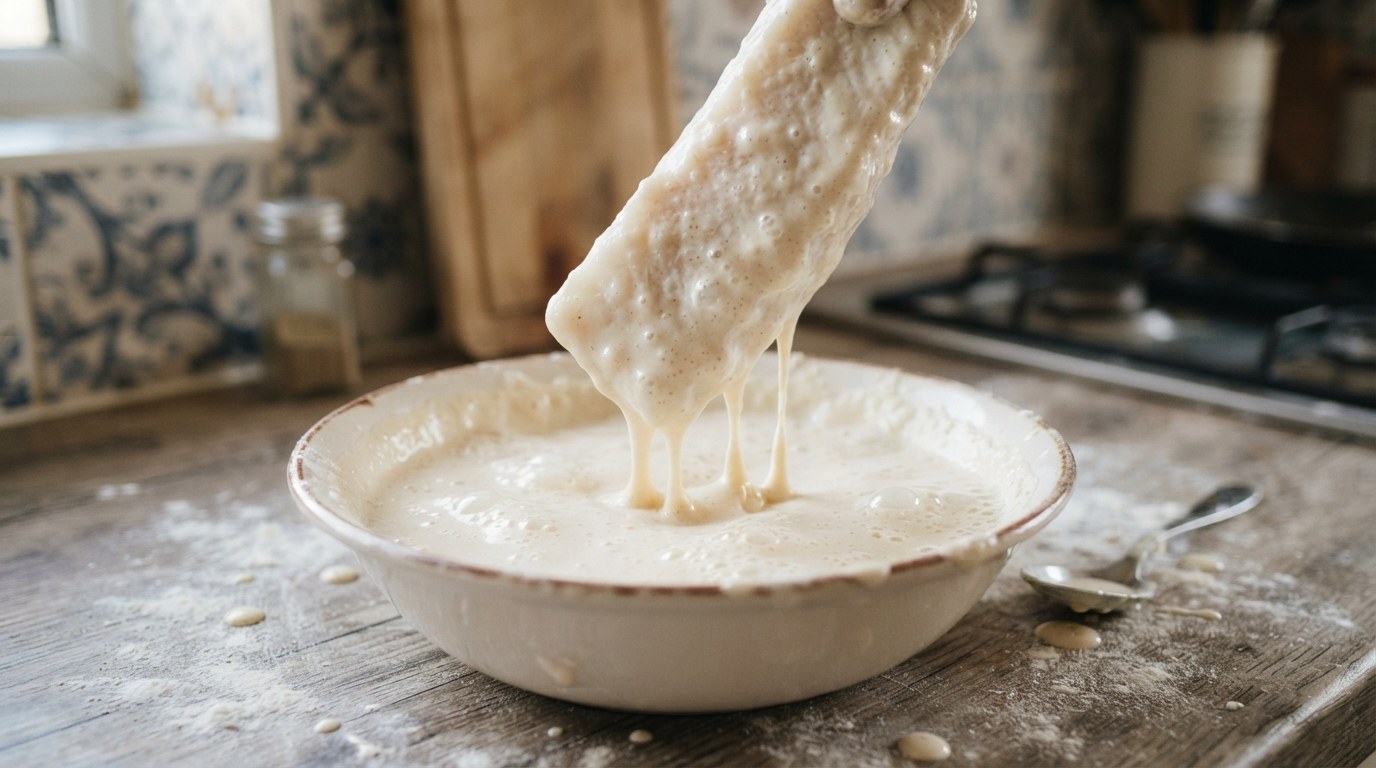
Whisk self-raising flour with a couple of spoonfuls of cornflour, a pinch of salt and, if you like the colour, a pinch of turmeric or paprika, then pour in cold sparkling beer, a lager or pale ale, and stir just until it comes together into a batter the thickness of pouring cream. Leave the lumps. Use it straight away, while it is still fizzing, and keep it cold until the fish goes in. A cold bowl sitting in a larger bowl of ice is the restaurant trick.
Everything about that is aimed at a light crust. Flour makes gluten when it is worked with water, and gluten is what turns a coating chewy and heavy; the cornflour has almost none, and mixing cold and barely, then using it at once, keeps the gluten from developing, which is why the batter must not be smooth or rested. The bubbles matter too: the carbonation in the beer, plus the raising agent in the flour, lace the batter with gas so it fries up open and crisp rather than dense. And the moment the batter hits 350°F oil, the water in it flashes to steam, which puffs the coating and blasts moisture out of it, and that steam escaping is what leaves the shell dry and shatteringly crisp. Sparkling water works in place of beer if you would rather skip the alcohol.
Choosing the Fish: Cod or Haddock, Thick and Dry
Cod and haddock are the classics for good reason: both are white, flaky and mild, cod a touch meatier and haddock a touch sweeter, and either works. Buy thick fillets of even size, skinned and pin-boned, and go for sustainably caught fish; the Marine Stewardship Council blue label is the quick way to check. Pat the fish bone-dry and dust it in a little seasoned flour before it goes into the batter, because the batter cannot grip wet fish and a dry, floured surface is what makes it cling in one even coat.
The fish is done when it turns opaque and flakes easily, which lines up with the FDA safe temperature of 145°F/63°C at the thickest point. Because the fillet is in hot oil for only four to six minutes, thickness matters: a thick piece will still be raw when the batter is brown, and a thin one overcooks before the crust colours, so aim for pieces about an inch at the thickest and let carryover finish them on the rack.
The Chips: Why You Fry Them Twice
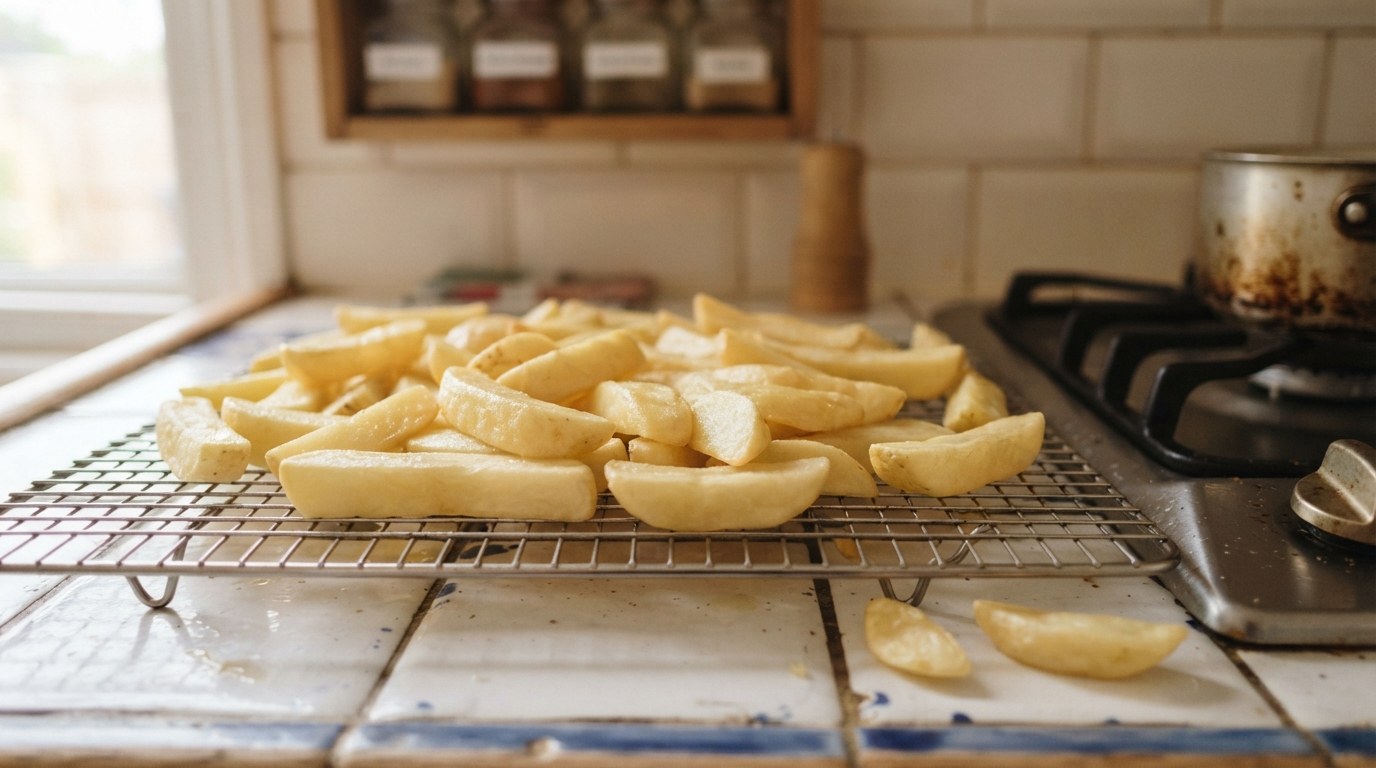
Use a floury potato, Maris Piper if you can get it or russet if not, cut into thick chips, rinsed well and dried. Fry them twice. First at a low 265 to 285°F for five or six minutes until they are soft and cooked through but still pale, then lift them out and let them cool and steam-dry on a rack. Then, just before serving, fry them again at a hot 350 to 375°F for a few minutes until deep golden and crisp. Rinsing the cut potatoes first washes off surface starch so they do not stick together and glue up the oil.
The two fries do two different jobs, and that is the whole point. The first, gentle fry cooks the potato through: its starch granules absorb water and swell into a soft, fluffy interior once they pass about 150°F/65°C, and the surface loses its moisture. The second, hot fry works on that dried surface only, browning it through the Maillard reaction, which needs a dry surface and kicks in above 284°F/140°C, into a hard, crisp shell. Try to do both in one hot fry and you get chips that are brown outside and still hard in the middle. Cooling between the two fries is not a delay to skip; it lets the surface dry so it can crisp.
Mushy Peas, Tartare, and the Frying Temperatures
Mushy peas take five minutes: simmer frozen peas until tender, then crush them roughly with a knob of butter, a little chopped mint, salt and pepper and a squeeze of lemon, leaving them coarse rather than smooth. Tartare is just as quick: stir chopped capers, gherkins and parsley and a squeeze of lemon through good mayonnaise. Both can be made while the chips cool between fries. Keep the fried fish and chips on a wire rack in a low oven, never on paper towel, which traps steam and softens the crust you just worked for.
| Step | Oil / heat | Time | What you are after |
|---|---|---|---|
| Chips, first fry | 265–285°F (130–140°C) | 5–6 min | Cooked through and fluffy inside, still pale |
| Rest the chips | On a rack, cooling | 10 min+ | Surface steam-dries so it can crisp |
| Fish | 350–375°F (175–190°C) | 4–6 min | Batter golden and crisp; fish 145°F/63°C, flaking |
| Chips, second fry | 350–375°F (175–190°C) | 2–4 min | Deep golden, hard and crisp |
| Hold to serve | Low oven, on a rack | A few min | Stays crisp; paper towel would steam it soft |
A thermometer clipped to the pot is the single most useful tool here. Below about 325°F the batter and chips soak up oil before they set and turn greasy; above about 375°F the outside browns and burns before the inside is done, since fats start to break down and scorch past 356°F/180°C. The narrow band in between is where fried food goes crisp and dry, so fry in small batches and let the oil come back up to temperature between them, because a big cold load drops the oil and undoes everything.
Doneness, Make-Ahead and What to Serve With It
The batter tells you the fish is close: when it is evenly deep golden and crisp and floats, the fish inside is almost always done, opaque and flaking at 145°F/63°C. If you are frying big fillets, pull one and check the thickest part with a knife or thermometer before you commit the batch. You can fry the chips' first stage and make the peas and tartare ahead, then do the fish and the second chip fry to order; nothing here holds well once it is fully fried, so serve it straight from the rack.
Serve it the traditional way, with malt vinegar and a lemon wedge, the peas and tartare on the side, and bread and butter if you are being proper about it. For more of the same, the site's beer-battered fish sandwich uses the same batter, crab cakes and pan-roasted halibut round out the seafood menu, and the full collection of Gordon Ramsay fish recipes has the rest. A good heavy pot and a thermometer make all of it easier; see the pans in the cookware guide.
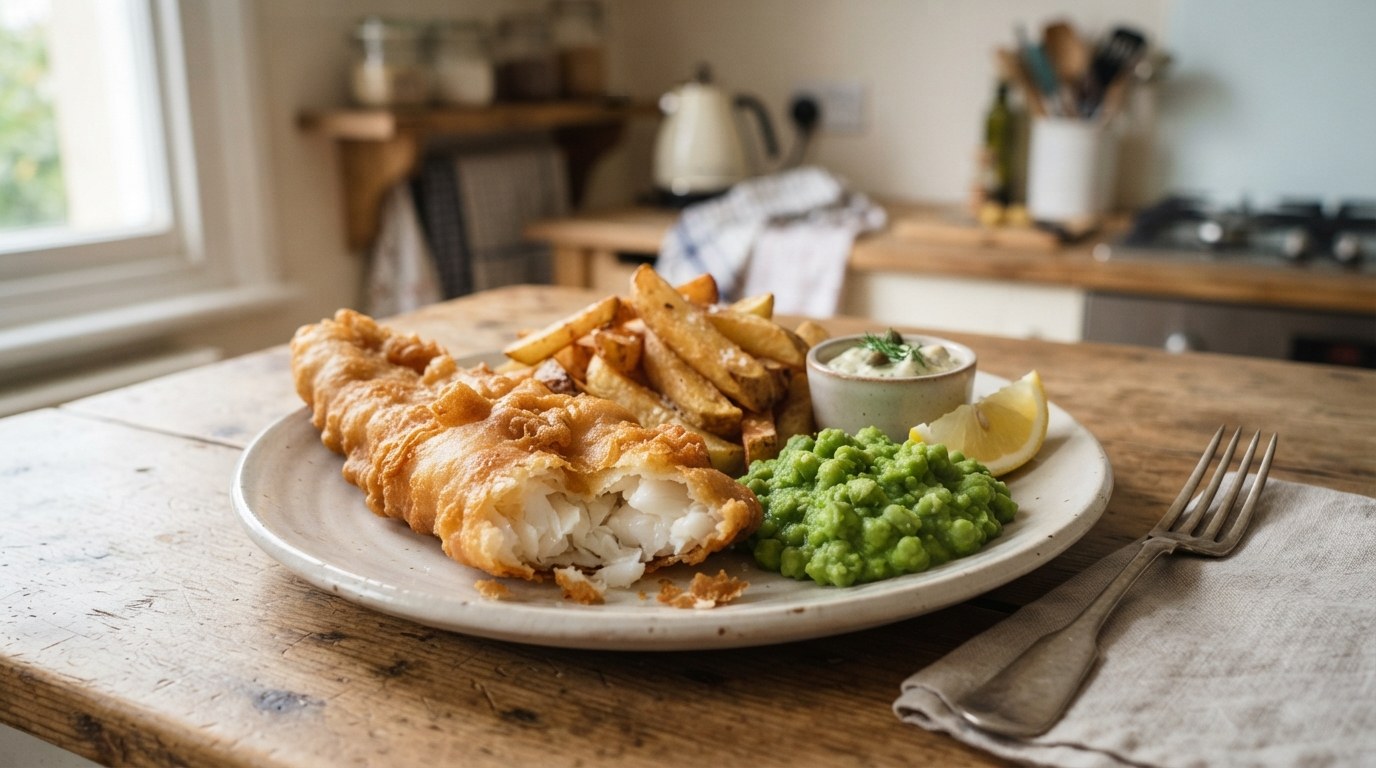
Gordon Ramsay Fish and Chips (Crispy Beer Batter)
Ingredients
- For the fish
- 4 skinless cod or haddock fillets, about 6 oz each, thick and even
- 1 cup self-raising flour, plus extra for dusting
- 2 Tbsp cornflour (cornstarch)
- 1 cup cold sparkling beer (lager or pale ale), or cold sparkling water
- 1 pinch turmeric or paprika, optional, for colour
- For the chips
- 2 lb floury potatoes (Maris Piper or russet), cut into thick chips
- Neutral oil for deep frying (sunflower, vegetable or canola)
- For the mushy peas and tartare
- 2 cups frozen peas
- 1 Tbsp butter, plus a little chopped mint
- ½ cup mayonnaise, with 1 Tbsp each chopped capers, gherkins and parsley
- Sea salt, black pepper, lemon wedges and malt vinegar to serve
Instructions
- Rinse the cut chips under cold water until it runs clear, then dry them well. Heat the frying oil to 265–285°F (130–140°C).
- Fry the chips in batches for 5–6 minutes, until soft and cooked through but still pale. Lift out and spread on a wire rack to cool and steam-dry. Raise the oil to 350–375°F (175–190°C).
- Make the sides: simmer the peas until tender, drain, and crush roughly with the butter, mint, salt, pepper and a squeeze of lemon. Stir the capers, gherkins and parsley and a squeeze of lemon into the mayonnaise for the tartare.
- Make the batter last: whisk the self-raising flour, cornflour, a pinch of salt and the optional turmeric, then stir in the cold sparkling beer just until combined and still lumpy. Keep it cold and use at once.
- Pat the fish dry, dust each fillet in a little seasoned flour, then dip into the batter and let the excess drip off.
- Lower the fish into the 350–375°F oil, one or two pieces at a time, and fry 4–6 minutes, turning once, until deep golden and crisp and the fish flakes at 145°F/63°C. Drain on a wire rack.
- Fry the cooled chips a second time at 350–375°F for 2–4 minutes, until deep golden and crisp. Drain on the rack and season with salt.
- Serve straight away with the mushy peas, tartare, lemon wedges and malt vinegar.
Notes
Gordon Ramsay Fish and Chips FAQs
The questions that come up most: how Gordon Ramsay makes his fish and chips, what beer to use in the batter, why the chips are fried twice, whether cod or haddock is better, what oil temperature to fry at, and how to keep them crisp.
How does Gordon Ramsay make fish and chips?
He coats cod or haddock in a cold batter of self-raising flour and cornflour mixed with sparkling beer, then fries it at 350 to 375°F until the coating is golden and crisp and the fish flakes. The chips are floury potatoes fried twice, once low to cook them through and once hot to crisp them, and it is served with mushy peas, tartare sauce, lemon and malt vinegar.
What beer does Gordon Ramsay use in fish batter?
A cold, fizzy light beer such as a lager or pale ale. The carbonation lightens the batter and the cold slows gluten from developing, so the crust fries up crisp rather than heavy. Cold sparkling water works just as well if you would rather not use alcohol; the fizz is what matters.
Why do you fry the chips twice?
The two fries do different jobs. A first, gentle fry at 265 to 285°F cooks the potato through and makes the inside fluffy, and cooling afterward dries the surface. A second, hot fry at 350 to 375°F browns and crisps that dried surface. Frying once at high heat browns the outside before the middle is cooked.
Is cod or haddock better for fish and chips?
Both are traditional and either works. Cod is a little meatier with larger flakes; haddock is a little sweeter and softer. Buy thick, even fillets, skinned and pin-boned, and choose sustainably caught fish. Pat it dry and dust it in flour so the batter grips.
What oil temperature for fish and chips?
Fry the fish and the second stage of the chips at 350 to 375°F (175 to 190°C). Below about 325°F the food absorbs oil and turns greasy before the batter sets; above about 375°F it browns and burns before the inside cooks. A clip-on thermometer and small batches keep the oil in the right band.
Why is my batter not crispy?
Usually the batter was over-mixed, warm, or made ahead, all of which build gluten and let the fizz escape, or the oil was too cool. Mix the cold, carbonated batter only until just combined, use it straight away, and keep the oil at 350 to 375°F. Drain the fried food on a wire rack, never on paper towel, which steams the crust soft.
Can I make fish and chips ahead?
Partly. You can give the chips their first fry, and make the mushy peas and tartare, hours ahead. But the fish and the final crisping of the chips have to be done just before serving, because fried batter softens as it sits. Hold finished pieces on a rack in a low oven for a few minutes at most.
What do you serve with fish and chips?
The traditional sides are mushy peas, tartare sauce, a lemon wedge and malt vinegar, with bread and butter on the side. Frozen peas crushed with butter, mint and lemon make quick mushy peas, and tartare is just mayonnaise with capers, gherkins, parsley and lemon.

About the Author
John Siracusa is the founder of Hell’s Kitchen Recipes. He focuses on technique-first, reproducible home cooking and researches recipes & kitchen equipment from published food science and professional chef methods since 2016.