Coconut lemongrass sauce is a silky, ivory sauce made by blooming bruised lemongrass, ginger, garlic and shallot in a little oil, simmering them in a can of coconut milk until it thickens slightly, then straining it smooth and finishing it with fish sauce and lime. It takes about 15 minutes, makes a little over a cup, and tastes bright, gently sweet and savory rather than heavy. Here it goes under seared sea scallops, but it is just as good as a coconut cream sauce for fish: cod, halibut, salmon or shrimp.
Below is how the sauce comes together, why lemongrass gives more flavor once it is bruised and cooked in fat, why coconut milk splits when it boils hard (and why Thai cooks sometimes split it on purpose), and how to sear scallops so they brown instead of steaming. For butter-based sauces for fish, see the lemon butter caper sauce; every dish on the site lives in Recipes.
What Is Coconut Lemongrass Sauce?
Coconut lemongrass sauce is coconut milk infused with lemongrass and the usual Southeast Asian aromatics (ginger, garlic, shallot), seasoned with fish sauce, a pinch of sugar and lime. It belongs to the same family as tom kha soup and Thai coconut curries, minus the curry paste and the broth, so the result is a pourable cream sauce rather than a soup or a curry. Strained, it is smooth enough to spoon onto a plate under scallops or a fish fillet, the way a French kitchen would use a beurre blanc.
Coconut lemongrass sauce is not one of Gordon Ramsay's published recipes, but coconut milk with lemongrass and ginger does turn up in his cooking: The Takeout describes a video in which he finishes meatballs in a coconut broth, adding the coconut milk near the end with lemongrass, ginger and warm spices. The HKR Gordon Ramsay meatballs page covers his beef-and-pork base. The table sorts the coconut sauces you will meet on recipe sites and menus by how they are built.
| Coconut sauce | Base | Main aromatics | How the coconut is cooked | Best with |
|---|---|---|---|---|
| Coconut lemongrass sauce (this page) | Full-fat coconut milk | Lemongrass, ginger, garlic, shallot, lime | Gentle simmer, strained, never boiled hard | Seared scallops, white fish, shrimp, salmon |
| Thai curry sauce (red or green) | Coconut cream, then coconut milk and stock | Curry paste (which already holds lemongrass and chiles) | Cream simmered until the oil separates, paste fried in it | Chicken, shrimp, vegetables, with rice |
| Tom kha | Coconut milk and stock | Galangal, lemongrass, makrut lime leaves | Simmered as a soup, aromatics left in | Chicken or mushrooms, eaten as a soup |
| Fish in coconut sauce (pescado en coco style) | Coconut milk | Onion, sweet pepper, tomato, garlic, cilantro | Fish braised in the sauce | Snapper or other firm white fish, rice |
| Quick coconut lime sauce | Coconut milk | Lime, garlic, sometimes chile | Warmed and reduced briefly | Grilled fish, fish tacos |
If you want a sauce that sits under a seared protein and lets its crust stay crisp, the strained coconut lemongrass sauce is the one. If you want the fish to cook in the sauce, braise it the pescado en coco way; if you want heat and rice, make a curry.
How to Make Coconut Lemongrass Sauce
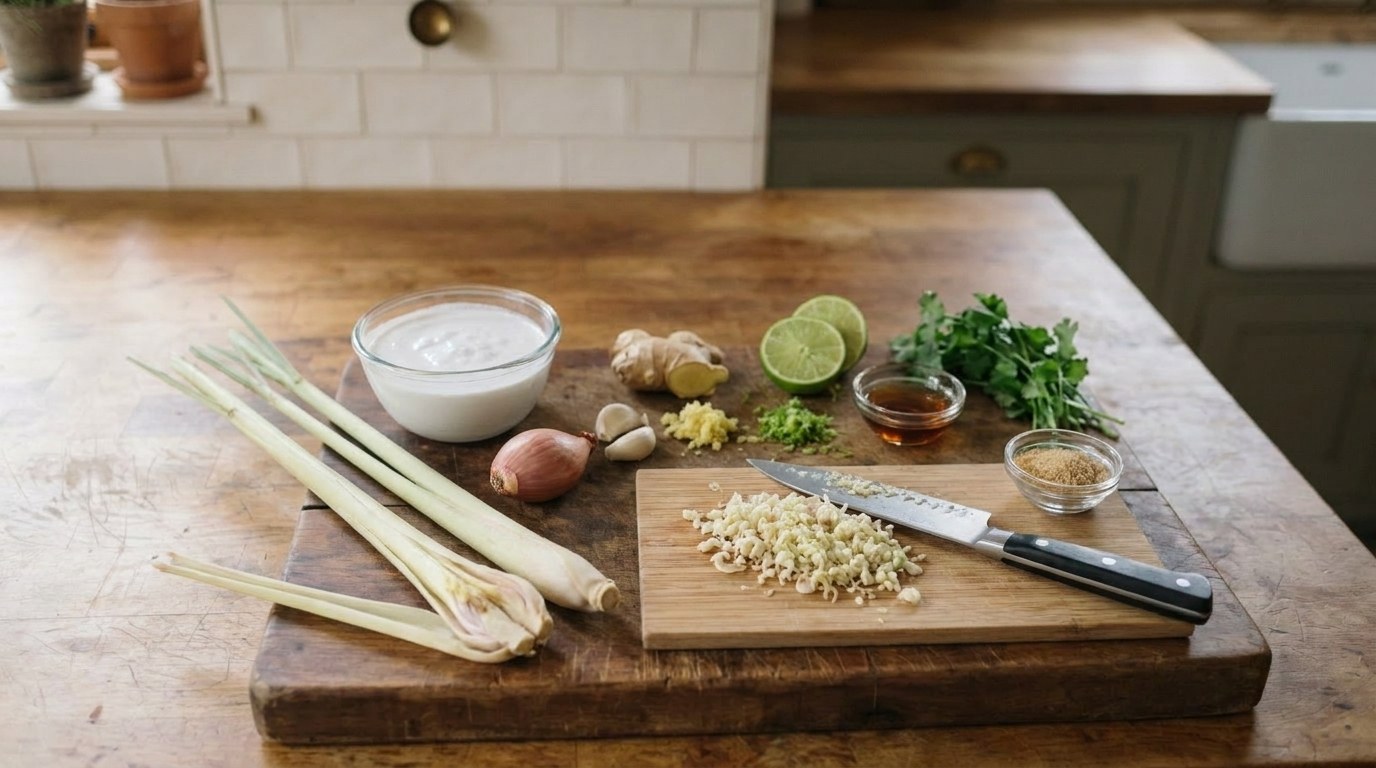
Make coconut lemongrass sauce in four moves: soften the aromatics in oil, simmer them in coconut milk, strain, then season off the heat. Have everything cut before the pan goes on, because the scallops at the end take four minutes and need your full attention. Start with the lemongrass: cut off the root end and the dry grassy top, keep the lower five or six inches, and peel away the tough outer layers until you reach the pale, tender core.
Soften the minced lemongrass, shallot, garlic and ginger in a tablespoon of oil over medium-low heat for 2 to 3 minutes, until the kitchen smells of lemon and ginger and the shallot is soft but not browned. Then pour in the coconut milk with a teaspoon of sugar and bring it to the barest simmer, a few lazy bubbles at the edge. Let it tick over for 10 to 12 minutes, stirring now and then. Water evaporates from the surface the whole time, so a 13.5-ounce can reduces from about 1 2/3 cups to about 1 1/4 cups and thickens just enough to coat a spoon.
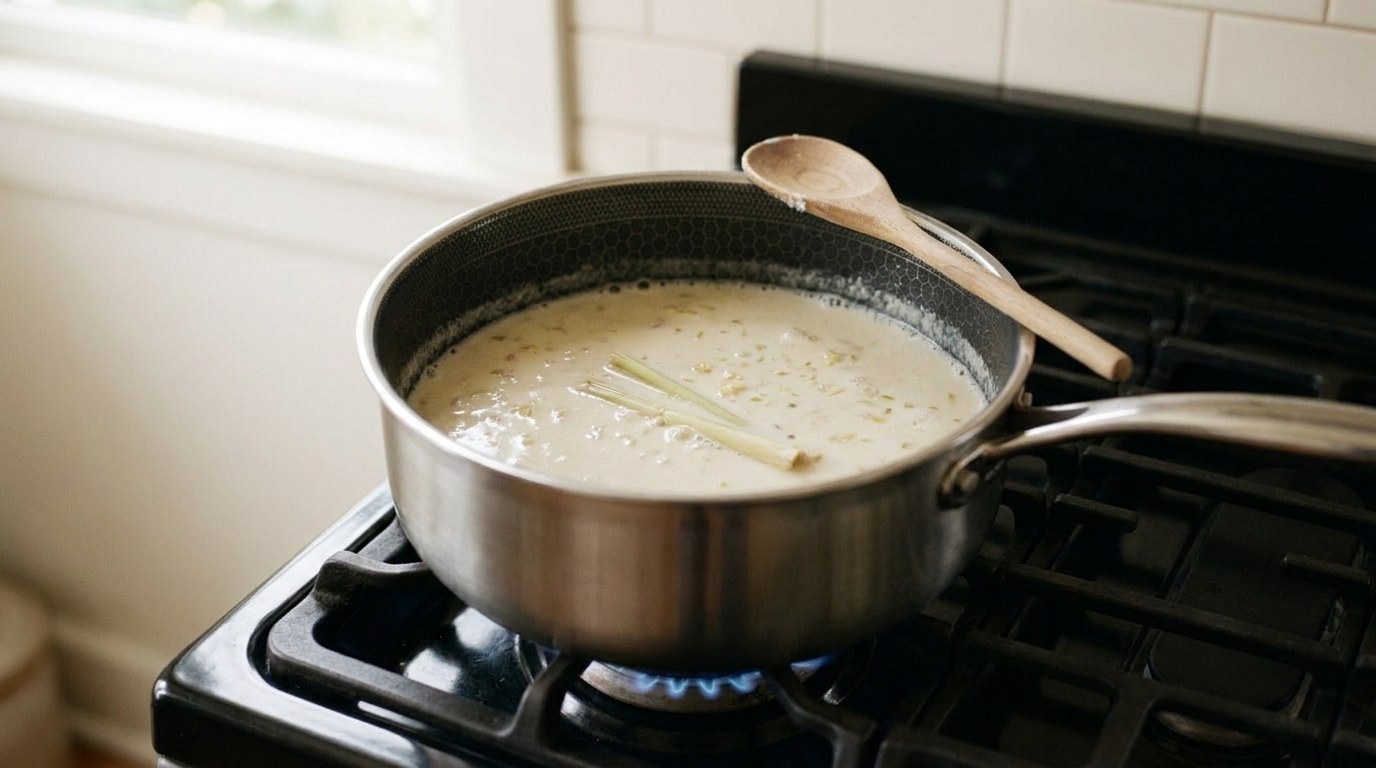
Strain the sauce through a fine-mesh sieve and press hard on the solids with the back of a spoon. This is where the texture comes from: lemongrass stays woody however long it cooks, and the fibers would make the sauce stringy. Pressing is the same trick Gordon Ramsay uses for his pan sauces in his MasterClass, where he pushes the softened shallots and garlic through a sieve so their pulp thickens the sauce instead of being thrown away. A small sieve set over a measuring jug does it in a minute.
Cuisinart
Cuisinart Mesh Strainers, Stainless Steel, 3-Count
- Set of three fine-mesh sieves (3⅛″, 5½″, 7⅞″) for small or large batches
- Fine stainless mesh presses purees silky and catches every fiber
- Stainless steel build, dishwasher safe for quick cleanup
Stir in the fish sauce and the lime zest, then keep the sauce on the lowest heat while you sear the scallops. Add the lime juice only at the very end, off the heat. Much of a lime's smell comes from volatile oils in the zest and juice that a few minutes of simmering drive off, and the acid is also what can tip a hot coconut sauce into curdling, as the next sections explain.
Why Bruise Lemongrass for Coconut Lemongrass Sauce?
Bruising lemongrass breaks open the oil cells in the stalk so its lemon aroma can get out, and cooking it in fat first carries more of that aroma into the sauce. The University of Wisconsin Extension names citral as the main aroma compound in lemongrass, the source of its clean lemony smell, and notes that West Indian lemongrass (Cymbopogon citratus) is the one usually sold for cooking. UF/IFAS gives the kitchen prep: cut off the bulb, strip the tough outer leaves, then cut or bruise the inner stalk.
Fat matters because citral barely dissolves in water. PubChem lists it as very slightly soluble in water, around 0.06 grams per 100 milliliters, but soluble in fixed oils. That is why the lemongrass goes into the oil before the coconut milk, and why a coconut-milk sauce, with roughly a fifth of its weight as fat, carries lemongrass so well. To bruise it, lay the trimmed stalk on the board and press or tap along its length with the back of a heavy knife until it splits and smells sharp, then slice it thinly across and mince.
If you would rather not strain, the other classic route is the one the Wisconsin extension describes: smash whole two-inch lengths, simmer them in the liquid, and fish them out before serving. You get a slightly lighter lemongrass flavor, because less of the cut surface touches the fat. Two makrut lime leaves, torn and simmered with them, add the floral lime note of tom kha.
Why Coconut Milk Splits, and When You Want It To
Coconut milk splits when it boils hard: the fat droplets that make it creamy run together and float out as oil, leaving a thin, curdled-looking liquid underneath. Coconut milk is an emulsion of fat droplets in water, held apart by coconut proteins. USDA FoodData Central lists canned coconut milk at 21.3 grams of fat and 72.9 grams of water per 100 grams. That fat level sits just under the roughly 25 percent that keeps dairy cream stable under heat and acid, so a rolling boil, which drives off water and slams the droplets together, or a squeeze of lime into a bubbling pot, can push it over the edge.
Thai cooks sometimes split coconut cream on purpose. America's Test Kitchen describes "cracking" it: skim the thick cream from the top of the can and simmer it, stirring, for 7 to 12 minutes, until the oil separates and the cream sizzles at the edges, then fry curry paste in that oil for a richer curry. The same source notes that some brands add emulsifiers and stabilizers that discourage the cream from separating, which is also why one can of coconut milk holds together better than another. For this sauce you want the opposite of cracking, so shake or stir the can until it is smooth and keep the heat low.
A split sauce is still safe to eat and tastes fine; it just looks oily. The table covers the usual problems.
| What you see | Why it happened | Fix |
|---|---|---|
| Oil pooling on top, grainy underneath | It boiled hard, or lime went into a bubbling pot | Off the heat, whisk hard or blitz with a stick blender; next time keep it at a bare simmer and add lime last |
| Thin and watery | Not reduced, or a light coconut milk | Simmer gently a few minutes longer; use full-fat coconut milk |
| Stringy, fibrous texture | Lemongrass not strained | Pour it through a fine-mesh sieve, pressing on the solids |
| Flat, no lemongrass flavor | Stalks not bruised, or dry outer layers used | Use the pale inner core, bruise it, and soften it in the oil first |
| Too salty | Too much fish sauce | Add lime and a splash of coconut milk; season to taste at the end |
| Too sweet or heavy | Not enough acid | Another squeeze of lime off the heat |
Fish sauce is the salt here, and it is strong. USDA FoodData Central lists 7,850 mg of sodium per 100 grams, which works out to roughly 470 mg in a teaspoon. Two teaspoons season the whole batch, and fish sauce and coconut milk are a standard pairing in Thai cooking: the salty, savory depth stops the coconut tasting sweet and flat. Add it after straining and taste before adding any salt. Soy sauce works in its place; coconut aminos are much milder and sweeter, so you will need more of them and a pinch of salt.
How to Sear Scallops for Coconut Lemongrass Sauce
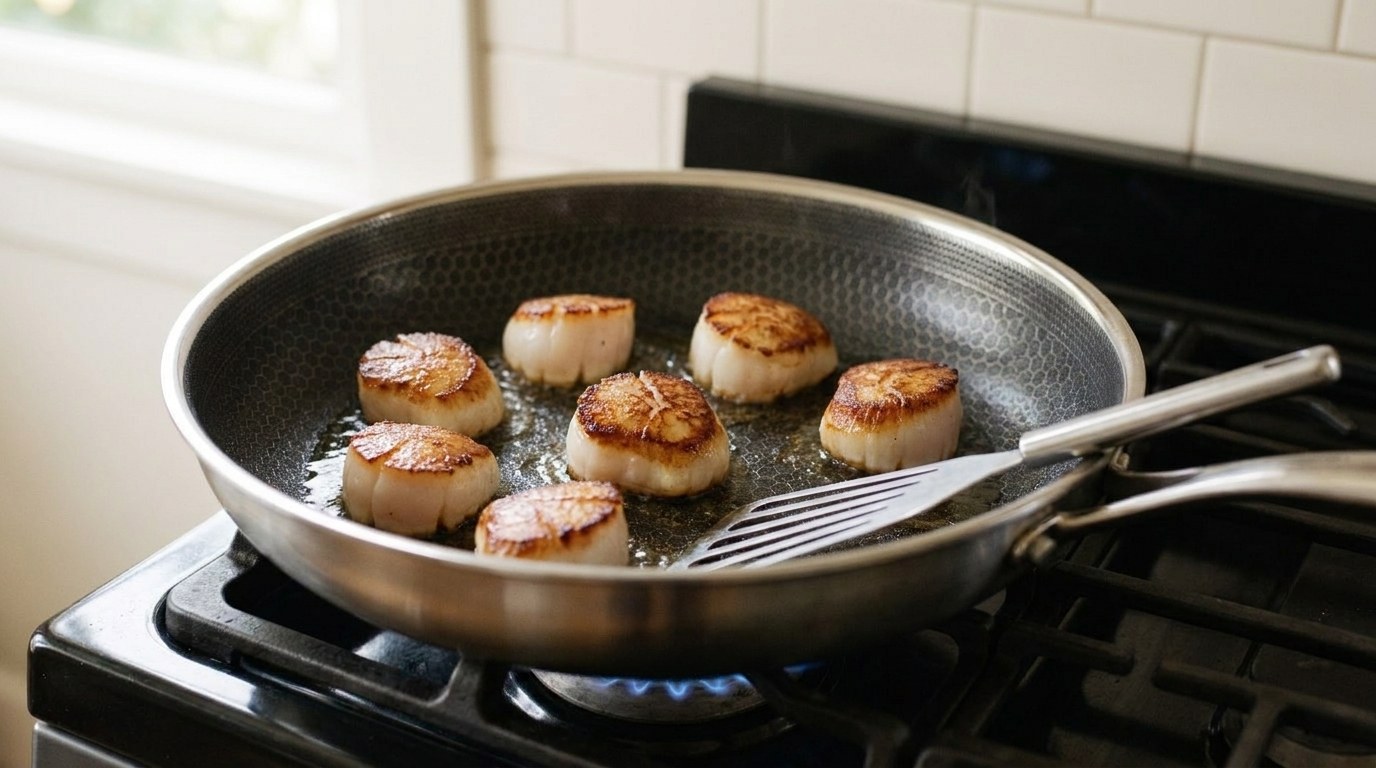
Sear scallops in a very hot pan for about 90 seconds to 2 minutes on the first side and a minute on the second, after drying them thoroughly. The dry surface is the whole game. Browning (the Maillard reaction) starts at about 284°F, but any water on the scallop holds the surface at 212°F, the boiling point, until it has evaporated, so a wet scallop steams and goes pale. Searing is for that golden, savory crust; it does not seal in juices.
Buy dry-packed scallops. Many scallops are soaked in a phosphate solution so they hold extra water, and America's Test Kitchen found they release about 25 percent more moisture in the pan, which drops the temperature and stops browning. Their test: microwave one scallop on a paper towel for 15 seconds; a dry scallop leaves very little water, a treated one leaves a ring. Ramsay makes the same point in his MasterClass lesson on shellfish: never leave scallops sitting in water, because they soak it up like a sponge and will not color. He judges freshness by a bright sheen and plump, firm, white flesh.
Pull off the small, tough side muscle, pat the scallops dry, and salt them just before they go in. Heat a 12-inch skillet until it is properly hot, then add the oil, and lay the scallops flat side down with space between them, in two batches if your pan is smaller. Leave them alone until the crust releases. Scallops are delicate: seafood proteins begin to set at about 104 to 122°F, far below meat, which is why a scallop goes from just right to rubbery in a minute. The FDA advises cooking seafood to 145°F, and describes cooked scallops as firm, pearly and opaque.
Coconut Lemongrass Sauce for Fish, Shrimp and More
Coconut lemongrass sauce works as a coconut sauce for fish exactly as it does for scallops: spoon it onto warm plates and set the fish on top so any crisp skin stays crisp. Thick white fillets like cod and halibut suit it best; try it with the pan-seared halibut or crispy-skin salmon in place of their butter sauces. It is also good with garlic butter shrimp (skip the butter at the end), and with the Hell's Kitchen scallops if you want a lighter sauce than their purée. Plain jasmine rice or rice noodles soak up the extra; the egg fried rice makes it a full dinner. More ideas are in the Gordon Ramsay fish recipes roundup.
For variations, add a thinly sliced red chile with the aromatics for heat, or a teaspoon of red or green curry paste for a quick curry sauce (fry it in the oil before the coconut milk goes in). For a fish dinner in one pan, poach fillets of cod right in the strained sauce over low heat, covered, until they flake, about 8 to 10 minutes for an inch-thick piece. If you want a Thai sauce with no coconut at all, the crying tiger sauce is the sharp, chile-and-lime dipping sauce for grilled steak.
The sauce keeps well, which makes it easy to get ahead. Cool it and refrigerate it within 2 hours, covered, for up to 3 days. It thickens and may separate a little in the fridge; rewarm it gently over low heat, whisking, with a splash of water, and add the lime juice after reheating. Freezing tends to leave coconut milk grainy, so make it fresh when you can. Make coconut lemongrass sauce once and it becomes the fastest way to dress up any seared scallop or fish fillet: bruise, bloom in oil, simmer gently, strain, lime last.
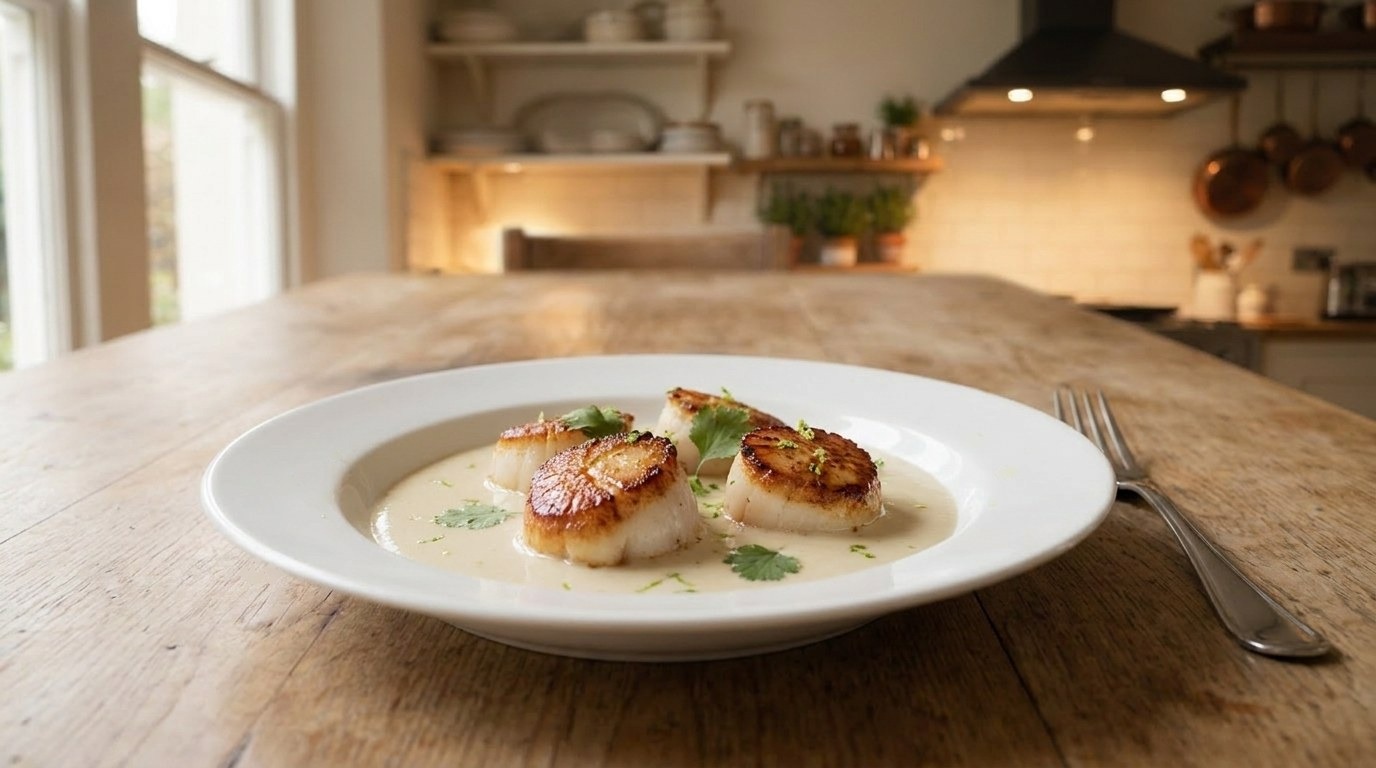
Coconut Lemongrass Sauce with Seared Scallops
Ingredients
For the sauce
- 2 stalks fresh lemongrass
- 1 tbsp neutral oil or coconut oil
- 1 small shallot, finely minced (about 2 tbsp)
- 2 cloves garlic, minced
- 1 tbsp fresh ginger, finely grated
- 1 can (13.5 oz / 400 ml) full-fat coconut milk, shaken well
- 1 tsp light brown sugar or palm sugar
- 2 tsp fish sauce, plus more to taste
- 1 lime: 3/4 tsp finely grated zest and 1 to 2 tbsp juice
For the scallops
- 1¼ lb large dry-packed sea scallops (about 16), side muscles removed
- 1 tbsp neutral oil with a high smoke point (grapeseed or avocado)
- kosher salt
To finish
- small fresh cilantro leaves
Instructions
- Trim the lemongrass: cut off the root end and the dry top, keeping the lower 5 to 6 inches, and peel off the tough outer layers. Press along each stalk with the back of a heavy knife to bruise it, then slice thinly and mince.
- Heat the oil in a saucepan over medium-low heat. Add the lemongrass, shallot, garlic and ginger and cook, stirring, until soft and fragrant but not browned, 2 to 3 minutes.
- Pour in the coconut milk, add the sugar and bring to a bare simmer. Simmer gently, stirring now and then, until reduced to about 1 1/4 cups and thick enough to coat a spoon, 10 to 12 minutes. Do not let it boil hard.
- Pour the sauce through a fine-mesh sieve into a bowl, pressing hard on the solids, and return it to the rinsed pan. Stir in the fish sauce and 1/2 teaspoon of the lime zest and keep warm over the lowest heat.
- Pat the scallops very dry with paper towels and season with salt just before cooking. Heat a 12-inch skillet over medium-high heat until hot, then add the oil.
- Lay the scallops flat side down with space between them (cook in two batches if needed). Leave them untouched until a deep golden crust forms and they release, 1 1/2 to 2 minutes. Turn and cook 1 minute more, until firm and opaque at the sides (145°F).
- Take the sauce off the heat and stir in 1 tablespoon of lime juice. Taste and add more lime, fish sauce or salt as needed. Spoon the sauce onto warm plates, set the scallops on top, crust side up, and finish with cilantro leaves and the remaining lime zest.
Notes
Coconut Lemongrass Sauce FAQs
The questions that come up most: what coconut lemongrass sauce is made of, how to make a coconut sauce for fish, why coconut milk sauce splits, how to bruise lemongrass, how to thicken the sauce, whether lime curdles coconut milk, what to use instead of fish sauce, and whether it can be made ahead.
What is coconut lemongrass sauce made of?
Full-fat coconut milk simmered with lemongrass, ginger, garlic and shallot that were first softened in a little oil, then strained and seasoned with fish sauce, a pinch of sugar, lime zest and lime juice. Cilantro leaves are a common finish.
How do you make a coconut sauce for fish?
Soften minced lemongrass, shallot, garlic and ginger in a tablespoon of oil, add a 13.5-ounce can of coconut milk and a teaspoon of sugar, and simmer gently for 10 to 12 minutes until it coats a spoon. Strain it, stir in 2 teaspoons of fish sauce and lime zest, and add lime juice off the heat. Spoon it under seared or poached fish cooked to 145°F.
Why did my coconut milk sauce split?
It boiled too hard, or acid went into it while it was bubbling. Coconut milk is an emulsion with about 21 percent fat, and a rolling boil drives off water and pushes the fat droplets together until oil floats out. Take it off the heat and whisk hard or use a stick blender, then keep it at a bare simmer and add lime last.
How do you bruise lemongrass?
Trim the root end and the dry top, peel off the tough outer layers, then lay the pale stalk flat and press or tap along its length with the back of a heavy knife until it splits and smells lemony. Slice it thinly and mince it, or leave it in two-inch lengths to simmer and remove.
How do you thicken coconut cream sauce?
Simmer it gently a few minutes longer so more water evaporates; a 13.5-ounce can reduces to about 1 1/4 cups in 10 to 12 minutes. Use full-fat coconut milk, not light. A teaspoon of cornstarch slurry works in a pinch, but a reduced full-fat sauce rarely needs it.
Will lime juice curdle coconut milk?
It can if you add it to a boiling sauce, because coconut milk has less fat than the roughly 25 percent that keeps cream stable under heat and acid. Stir the lime juice in off the heat at the end and it stays smooth, and the lime tastes fresher too.
What can I use instead of fish sauce?
Soy sauce is the closest swap, used in the same amount. Coconut aminos work too but are milder and sweeter, so use more and add a pinch of salt. Taste at the end either way.
Can you make coconut lemongrass sauce ahead?
Yes. Refrigerate it within 2 hours and use it within 3 days. Rewarm it gently over low heat, whisking, with a splash of water, and add the lime juice after reheating. Freezing tends to make coconut milk grainy.

About the Author
John Siracusa is the founder of Hell’s Kitchen Recipes. He focuses on technique-first, reproducible home cooking and researches recipes & kitchen equipment from published food science and professional chef methods since 2016.