Egg fried rice comes down to two things: cold, day-old rice and a pan hot enough to toast it. Leftover rice that has sat in the fridge overnight has firmed up and dried on the surface, so the grains stay separate and pick up golden, crisp edges instead of turning to paste. With everything chopped before the heat goes on, this Gordon Ramsay-style version is on the table in about 15 minutes.
Ramsay's first rule applies twice over here, because once the pan is hot nothing waits: get organized. Dice the vegetables, beat the eggs, stir the soy and oyster sauce together in a cup, and break the cold rice up with your fingers so no clumps go in. Then it is ten minutes of steady tossing.
Why Day-Old Rice Makes Better Fried Rice
Freshly cooked rice is soft because its starch has gelatinized: once the grains pass roughly 150°F in the pot, the starch granules soak up water and swell into a soft gel, and the surface of each grain is wet and sticky. Stir-fry it straight away and that sticky starch glues the grains together. Chill it, and the process partly reverses. As cooked starch cools it slowly recrystallizes, called retrogradation (the same reason bread goes stale), which firms each grain, while the fridge dries the surface. That firm, dry grain is exactly what you want hitting a hot pan.
No leftovers? Spread freshly cooked rice in a thin layer on a tray and chill it uncovered for an hour or so. It will not be quite as firm as overnight rice, but it fries far better than rice straight from the pot.
Cool the Rice Fast: The Food Safety Part
Rice is the one leftover where speed matters more than people think. Uncooked rice can carry spores of Bacillus cereus, which survive cooking; if cooked rice then sits warm, they germinate and make toxins that reheating will not destroy; the FDA's Bad Bug Book links this vomiting-type illness to starchy foods such as rice. The UK Food Standards Agency advises chilling leftover rice as quickly as possible, ideally within an hour, and never reheating it more than once. So for fried rice: cool the rice fast in a shallow layer, keep it cold, and eat the finished dish hot the same day or refrigerate it promptly.
High Heat and Room in the Pan: Where the Flavor Comes From
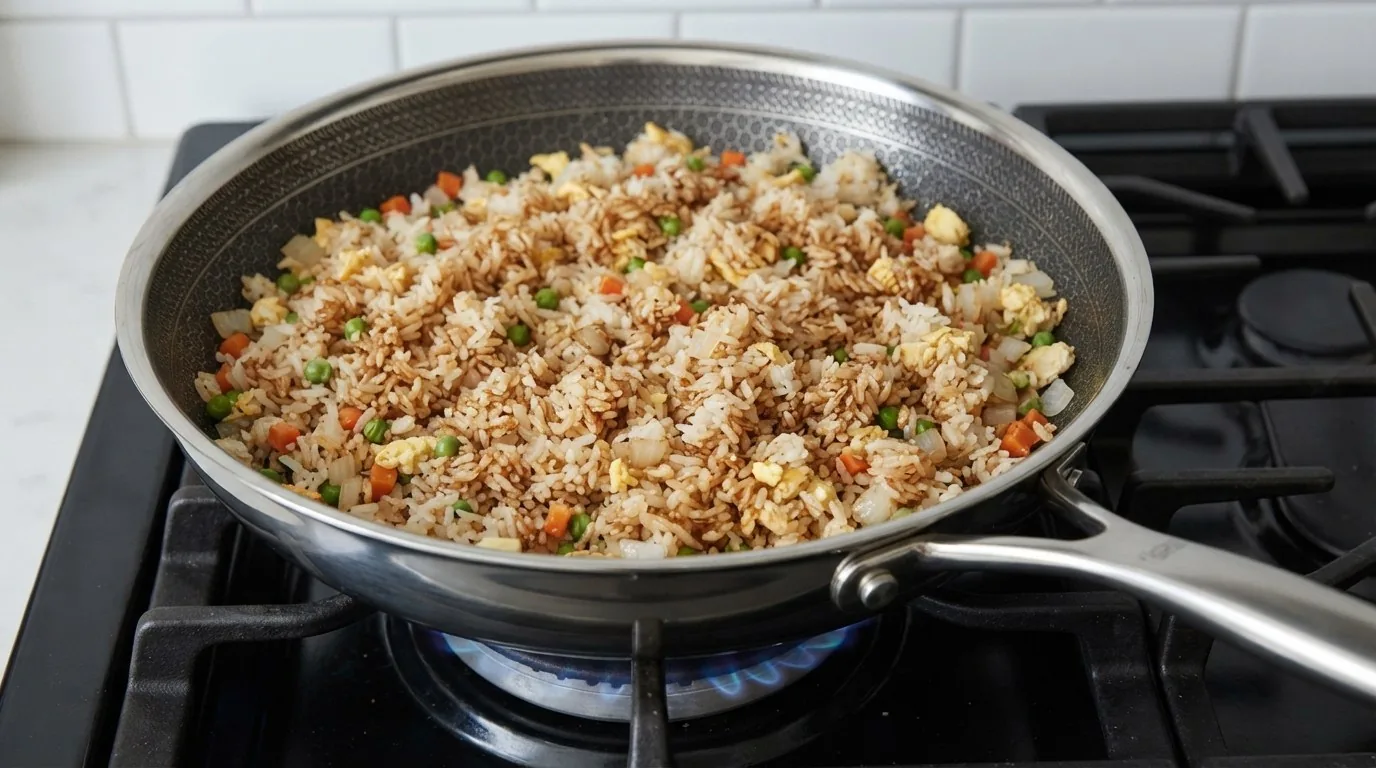
The toasty flavor of good fried rice is the Maillard reaction on the surface of each grain, and it needs the grain surface above about 284°F. Water caps at 212°F, so anything that makes the pan wet stops the browning: too much rice at once, rice that is still damp, or sauce poured into the middle. A home burner puts out far less heat than a restaurant wok burner, so work with it. Use the largest pan you have, spread the rice out, and let it sit untouched for a minute before tossing so the bottom layer can toast. Pour the soy and oyster sauce around the hot edge of the pan rather than onto the rice; it sizzles, reduces and caramelizes on the metal instead of soaking the grains.
This is also why the frying is done in oil, not butter. Ramsay's habit is hot pan first, then oil, and a neutral oil like grapeseed or vegetable handles stir-fry heat, while butter's milk solids scorch and turn bitter well before the pan is hot enough to toast rice. A spoonful of butter still goes in at the end, off the high heat, purely for flavor.
HexClad
HexClad 12-Inch Hybrid Nonstick Frying Pan
- Stainless steel and ceramic nonstick hybrid surface, built to sear hard and release easily
- Tri-ply with an aluminum core for quick, even heat; works on induction
- Oven safe to 900°F and metal-utensil safe (lid not included)
The Eggs: Soft, and Salted Last
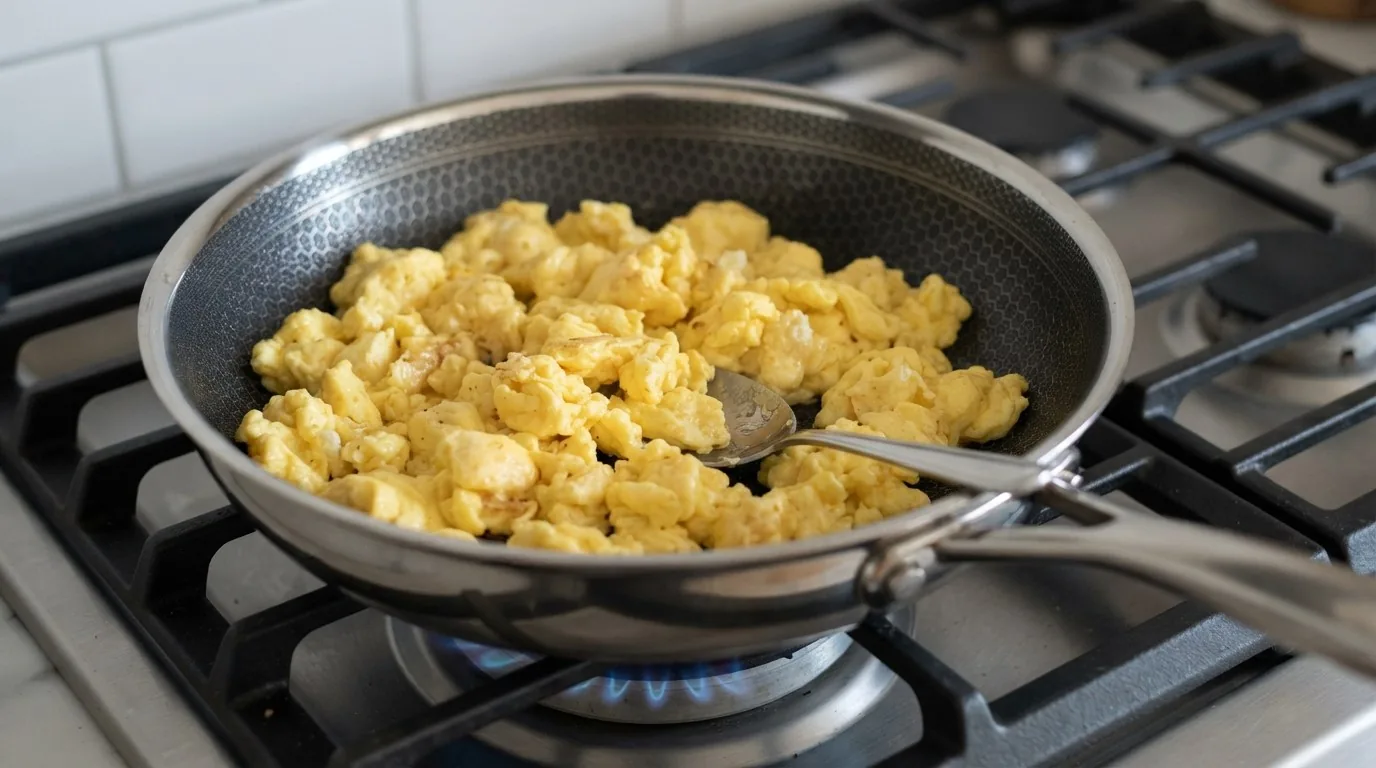
Scramble the eggs first, on their own, and take them out while they are still soft. Egg proteins start setting at about 140°F, and these pieces go back into a very hot pan at the end, so they finish cooking there; eggs that are fully firm at the start come out rubbery. Follow Ramsay's egg rule from his scrambled eggs lesson and do not salt the eggs before they cook. The soy sauce seasons them in the end. For the full technique, see our Gordon Ramsay scrambled eggs.
Fixing Mushy, Bland or Greasy Fried Rice
Mushy fried rice means too much moisture: rice that was freshly cooked, a crowded pan that steamed, or too much sauce. Use cold rice, cook in two batches if your pan is small, and keep the sauce to a few tablespoons. Bland fried rice usually needs more of the savory side: the oyster sauce adds depth, and a final taste with an extra splash of soy or a pinch of salt fixes most of it. Greasy fried rice means too much oil; two tablespoons is plenty for four cups of rice.
Variations and What to Serve With It
Fried rice takes leftovers well. Add diced cooked chicken with the vegetables, as in our chicken and rice, or shrimp for the last two minutes. For a Korean-style kimchi fried rice, stir in chopped kimchi and a little of its juice with the rice and add a pinch of gochugaru for heat. Serve it on its own as a quick dinner or next to stir-fried greens. A large, heavy skillet that holds its heat does most of the work; the pans we recommend are in our Gordon Ramsay cookware guide.
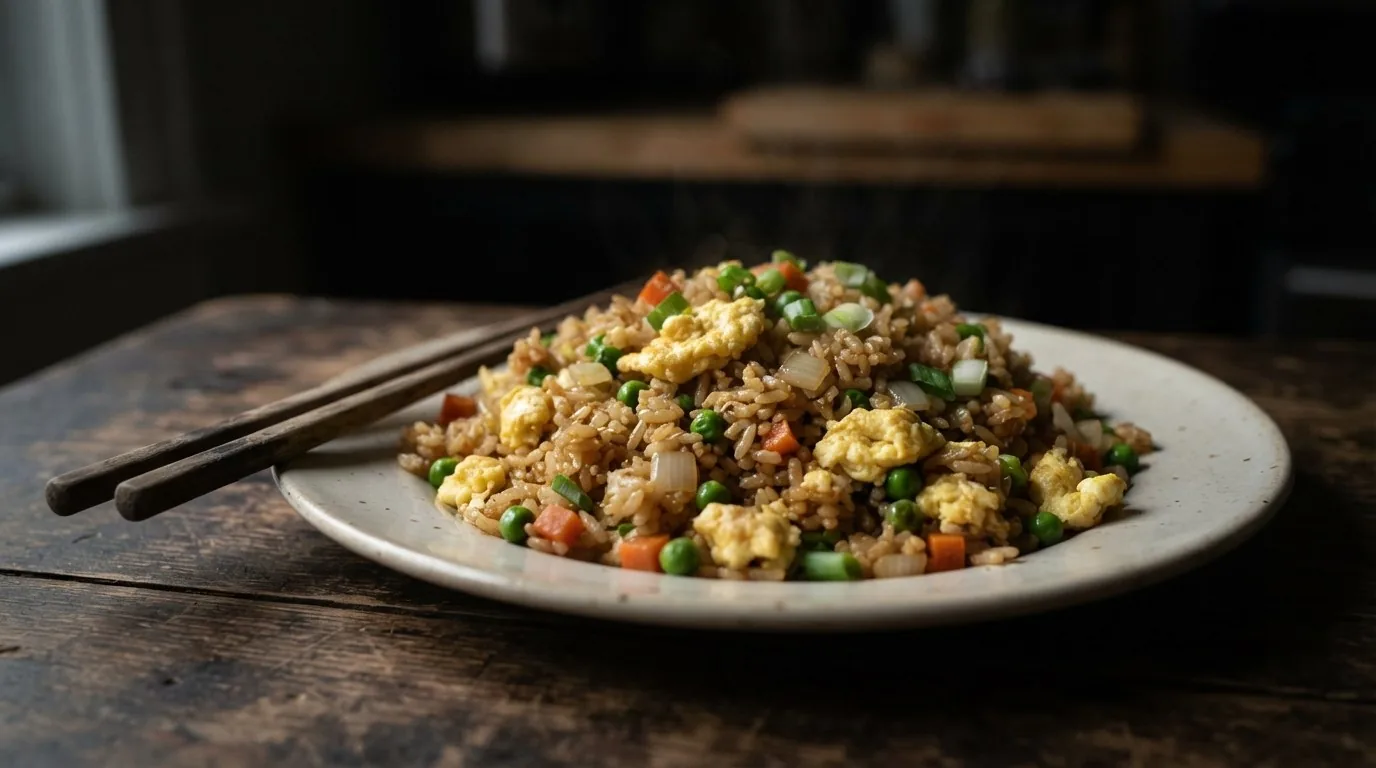
Gordon Ramsay-Style Egg Fried Rice
Ingredients
- 4 cups cooked long-grain or jasmine rice, chilled overnight
- 2 large eggs, beaten
- 2 Tbsp grapeseed or vegetable oil, divided
- 2 medium carrots, diced small
- 1 small white onion, diced
- 2 garlic cloves, minced
- 1 cup frozen peas
- 3 Tbsp soy sauce
- 1 Tbsp oyster sauce
- 1 Tbsp butter
- 2 tsp toasted sesame oil
- 3 green onions, thinly sliced
- Salt and pepper, to taste
Instructions
- Get organized: dice the vegetables, beat the eggs, stir the soy and oyster sauce together in a cup, and break the cold rice up with your fingers.
- Heat a large heavy skillet or wok over high heat until very hot, then add 1 tablespoon oil. Add the eggs and scramble into soft curds, about 1 minute, until just set. Tip onto a plate.
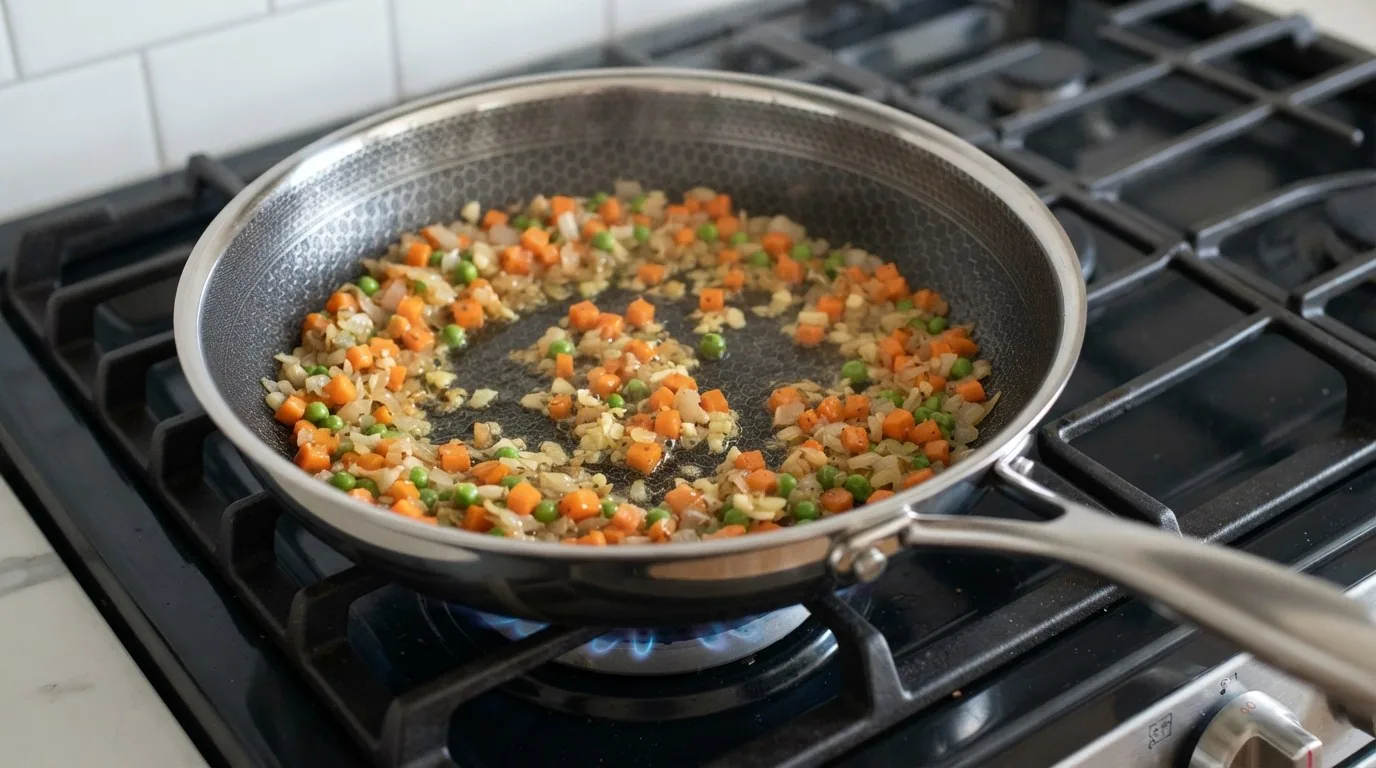
- Add the remaining oil, the carrots and onion, and stir-fry 3 to 4 minutes until the onion is translucent. Add the garlic and peas and cook 1 minute more.
- Add the rice, spread it out, and leave it untouched for 1 minute so the bottom toasts. Toss and repeat for 4 to 5 minutes, until the rice is hot through and some grains are golden and crisp.
- Pour the sauce around the hot edge of the pan and toss everything together. Return the eggs, add the butter, and toss 1 minute more.
- Off the heat, stir in the sesame oil and green onions. Taste, season with salt and pepper, and serve hot.
Notes
Egg Fried Rice FAQs
The questions that come up most: why day-old rice works better, whether you can use fresh rice, wok or skillet, and how to store and reheat fried rice safely.
Why is day-old rice better for fried rice?
Chilled cooked rice firms up as its starch recrystallizes and its surface dries in the fridge, so the grains stay separate and toast in a hot pan. Freshly cooked rice is soft and sticky on the surface and tends to clump and turn mushy.
Can I make fried rice with freshly cooked rice?
Yes, with a shortcut. Spread the hot rice thinly on a tray and chill it uncovered for about an hour so the surface dries and the grains firm up. It works far better than using rice straight from the pot.
Do I need a wok to make fried rice?
No. A large, heavy skillet works well on a home stove, because it has more flat surface in contact with the burner. The key is a very hot pan and not overcrowding it, so the rice toasts instead of steaming.
Why is my fried rice mushy?
Too much moisture: freshly cooked rice, a crowded pan that steamed instead of fried, or too much sauce. Use cold day-old rice, cook in batches if needed, and pour the sauce around the hot edge of the pan.
Is it safe to reheat fried rice?
Yes, if the rice was cooled quickly and kept in the fridge. The UK Food Standards Agency advises chilling cooked rice within about an hour and never reheating rice more than once, because Bacillus cereus toxins survive reheating. Reheat it until steaming hot all the way through.
What oil is best for fried rice?
A neutral oil that handles high heat, such as grapeseed, vegetable or peanut oil. Butter scorches at stir-fry temperatures, so add it only at the end for flavor. Toasted sesame oil goes in off the heat as a seasoning, not for frying.
How long does fried rice keep?
Refrigerate it within an hour of cooking and eat it within a day. Rice is the leftover to be strict about, because of the Bacillus cereus risk.

About the Author
John Siracusa is the founder of Hell’s Kitchen Recipes. He focuses on technique-first, reproducible home cooking and researches recipes & kitchen equipment from published food science and professional chef methods since 2016.