The difference between silky mac and cheese and a greasy, grainy one is not the cheese; it is the sauce underneath it. Gordon Ramsay builds his on a roux, cooks it into a smooth cheese sauce in a heavy-bottomed saucepan, and adds cauliflower for a lighter twist on the British classic. Get the sauce right and the dish is foolproof.
This guide explains the one bit that trips people up, keeping the cheese sauce smooth, plus which cheeses to use and why fresh-grated matters.
The Sauce Is Everything

A great cheese sauce starts with a roux: equal parts butter and flour cooked together for a couple of minutes, then whisked with milk into a smooth béchamel. Melt cheese into that béchamel and you have a Mornay sauce, the classic base for mac and cheese.
The roux does more than thicken; it is your insurance. Cheese is an emulsion of fat, protein, and water, and when you heat it hard the proteins clump and squeeze the fat out, which is what makes a sauce turn greasy and grainy. The starch from the flour coats those proteins and keeps them apart, so the cheese melts in smoothly and stays that way. Add the cheese off the heat or over low heat, a handful at a time, and never let a cheese sauce boil.
Choosing and Grating the Cheese
Ramsay uses a blend: sharp Cheddar for bold flavor, buttery Lancashire, and tangy, crumbly Cheshire. A good aged Cheddar (12 months or more) brings the punch, while the softer English cheeses melt smoothly. If you cannot find Lancashire and Cheshire, lean on a well-aged Cheddar with a little Gruyère.
Grate the cheese fresh, and do not reach for the pre-shredded bag. Pre-shredded cheese is dusted with anti-caking starch (usually cellulose) that keeps the shreds separate on the shelf but also stops them melting cleanly, so the sauce turns grainy. As The Kitchn notes, a Mornay is simply béchamel plus cheese, and it rewards good cheese grated by hand. A little English mustard powder and a pinch of cayenne cut the richness.
The Cauliflower Twist and the Bake
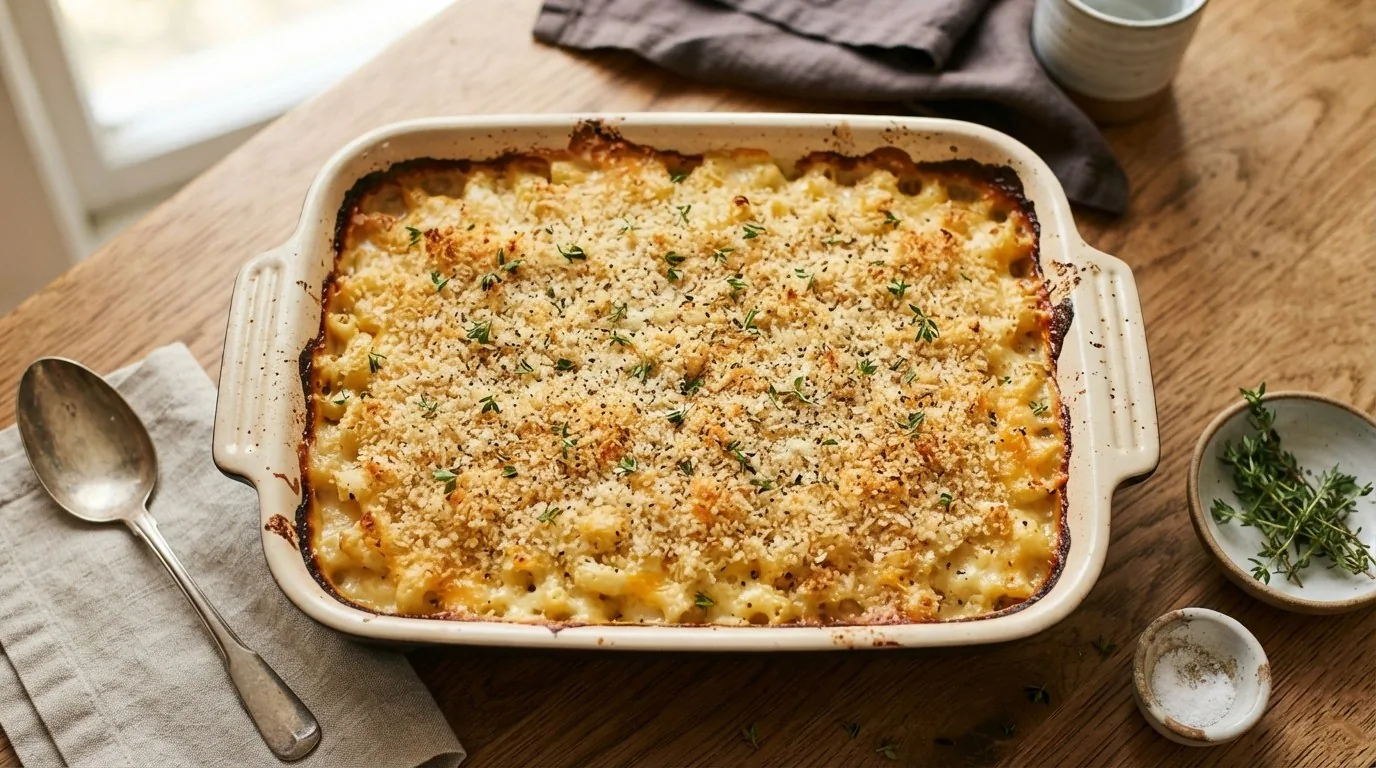
Ramsay's version folds cauliflower florets in with the pasta, which lightens the dish and adds a subtle nuttiness. Cook the macaroni to just al dente and add the cauliflower for the last few minutes so both finish together. Combine with the sauce (keep it a touch loose, since it thickens in the oven), top with breadcrumbs and thyme, and bake at 375°F until golden and bubbling. If the top browns too fast, tent it with foil.
A Short History
Pasta baked with cheese is old, but the earliest recorded recipe appears in the 14th-century Italian cookbook Liber de Coquina. The dish traveled through European kitchens and reached America famously through Thomas Jefferson, who served a version at a state dinner after encountering it in Europe. The full story is well documented in the history of macaroni and cheese. Ramsay's English, cauliflower-laced version is a modern turn on that long tradition.
Make-Ahead and Storage
You can assemble the dish ahead and refrigerate it unbaked, then bake it when you need it (add a few extra minutes from cold). Cool leftovers within two hours and refrigerate them up to 3 to 4 days, in line with USDA leftovers guidance, or freeze for up to 3 months. Reheat gently with a splash of milk to loosen the sauce.
For more comfort classics, try our French onion soup or chicken cordon bleu, or browse the full recipes collection.

Gordon Ramsay's Creamy Mac and Cheese
Ingredients
- 1 lb elbow macaroni
- 1 medium cauliflower, cut into florets
- 4 Tbsp butter
- 4 Tbsp all-purpose flour
- 2 tsp English mustard powder
- 3 cups whole milk
- 1 cup sharp Cheddar cheese, grated
- 1 cup Lancashire cheese, grated
- 1 cup Cheshire cheese, grated
- 1 cup breadcrumbs
- 2 Tbsp fresh thyme leaves
- 1/4 tsp cayenne pepper
- Salt and black pepper, to taste
Instructions
- Cook the macaroni in salted water until just al dente, adding the cauliflower florets for the last 3 minutes. Drain.
- Meanwhile, make the roux: melt the butter in a saucepan, whisk in the flour and mustard powder, and cook 2 minutes.
- Gradually whisk in the milk until smooth and thickened into a béchamel.
- Off the heat (or over low heat), stir in the grated cheeses a handful at a time until melted and smooth. Season with cayenne, salt, and pepper. Keep the sauce slightly loose.
- Fold the sauce through the drained pasta and cauliflower, then transfer to a baking dish.
- Top with breadcrumbs and thyme and bake at 375°F for 20 to 25 minutes, until golden and bubbling. Tent with foil if the top browns too fast.
Notes
Mac and Cheese FAQs
The questions that come up most: why cheese sauce turns grainy, which cheeses melt best, why a roux matters, and whether you can make it ahead.
Why is my mac and cheese grainy or greasy?
The cheese sauce got too hot and the cheese proteins clumped and squeezed out the fat. Build the sauce on a roux (the starch keeps the proteins apart), add cheese off the heat a handful at a time, and never let a cheese sauce boil.
What are the best cheeses for mac and cheese?
A blend works best: a sharp aged Cheddar for flavor plus a good melter. Ramsay uses Cheddar, Lancashire, and Cheshire; if you cannot find the English cheeses, use aged Cheddar with a little Gruyère.
Why does a roux matter in mac and cheese?
The roux (butter and flour) thickens the milk into a béchamel and, once you add cheese, a Mornay sauce. Its starch stabilizes the cheese so it melts in smoothly instead of breaking into a greasy, grainy mess.
Should I use pre-shredded cheese?
No. Pre-shredded cheese is coated in anti-caking starch that stops it melting cleanly, giving a grainy sauce. Grate your cheese fresh from a block.
Do you have to bake mac and cheese?
No. It is creamiest straight off the stovetop. Baking with a breadcrumb top adds a golden, crisp crust and is the classic presentation, but a stovetop version is faster and just as smooth.
Can you make mac and cheese ahead of time?
Yes. Assemble it unbaked and refrigerate, then bake from cold with a few extra minutes. Leftovers keep 3 to 4 days refrigerated; reheat gently with a splash of milk to bring the sauce back.
Why does Gordon Ramsay add cauliflower?
The cauliflower lightens the dish and adds a subtle nutty flavor without changing the comfort-food character. Cook it with the pasta for the last few minutes so both are done at once.

About the Author
John Siracusa is the founder of Hell’s Kitchen Recipes. He focuses on technique-first, reproducible home cooking and researches recipes & kitchen equipment from published food science and professional chef methods since 2016.