Strawberry caprese salad swaps the tomatoes of a classic caprese for ripe strawberries, and pairs them with a ball of burrata, torn basil, olive oil and a balsamic glaze. It takes 15 minutes to put together and needs no cooking beyond an optional balsamic reduction. Three things make or break it: berries that were picked ripe, salt added at the very last minute, and a salad served cool rather than straight from the fridge.
Treat it the way Gordon Ramsay treats any plate built on raw ingredients: get organized first, taste the fruit before you season it, and add the herbs last. With so few ingredients there is nothing to hide behind, so the shopping matters more than the technique.
What Is Strawberry Caprese Salad?
Strawberry caprese salad is a modern take on insalata caprese, the tomato, mozzarella and basil salad named after the island of Capri. The strawberries bring the same mix of sugar and acid a ripe tomato does, just sweeter and brighter, so the salad sits somewhere between a starter and a light dessert. Burrata replaces the sliced mozzarella: it is a pouch of fresh mozzarella filled with stracciatella, shreds of curd soaked in cream, so when you tear it open the center spills over the fruit and acts as the dressing.
Choosing Strawberries for Caprese (They Won't Ripen on the Counter)
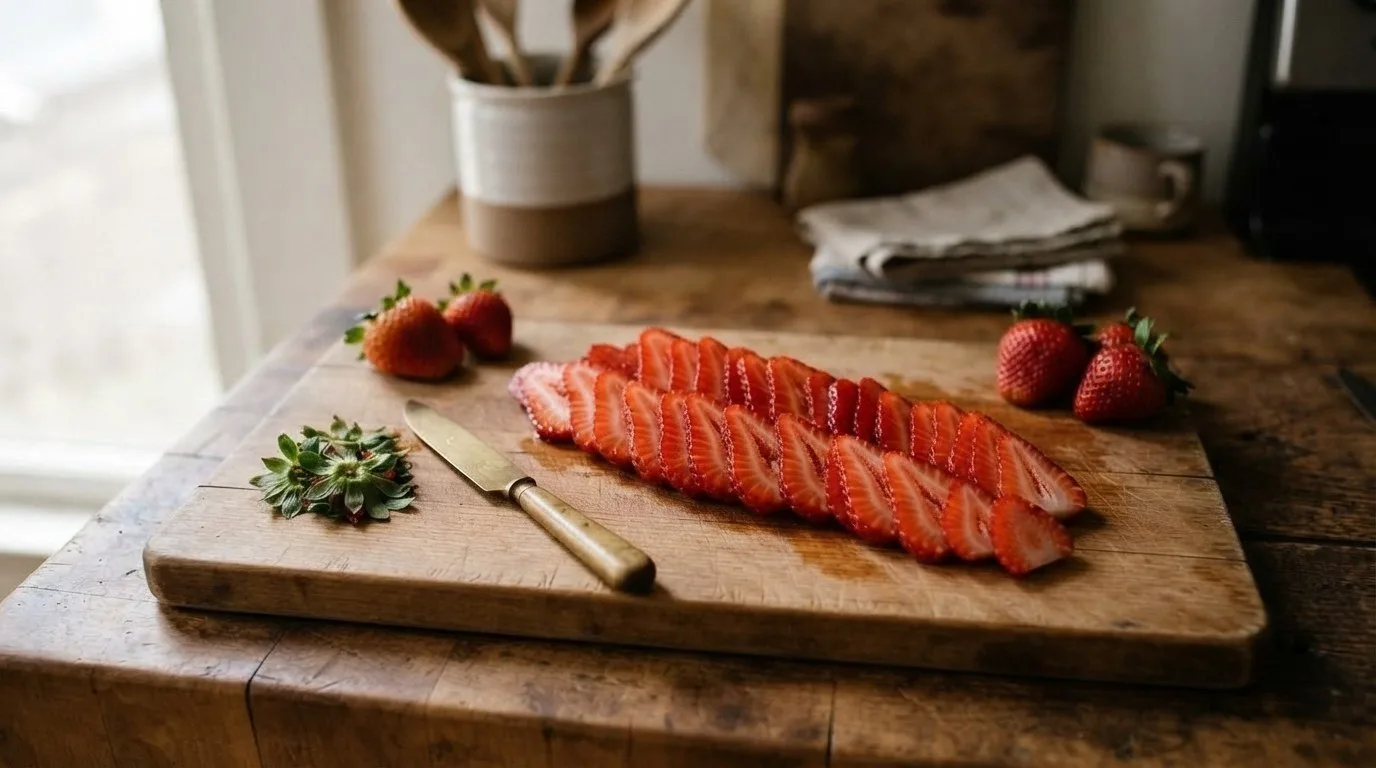
Buy strawberries that are already fully red and fragrant, because they will not get any sweeter at home. Strawberries are non-climacteric fruit, the University of Maryland Extension explains, meaning they do not keep ripening after harvest the way bananas or peaches do. A berry with white shoulders was picked early and will stay tart; leaving it on the counter only softens it.
Look for berries red right up to the green cap, firm enough to slice cleanly, and sweet-smelling from a foot away. Local berries in their spring and early summer season usually beat long-haul supermarket ones bred for shipping. Taste one before you build the salad: if they are on the tart side, you will want a little more glaze. Slice them lengthwise, from the hulled top down to the tip, so every slice keeps the strawberry's heart shape; crosswise rounds look like tomato slices and lose the point of using strawberries. Use a small, sharp blade, because a dull one crushes the fruit and starts the juice running before the salad reaches the table.
Victorinox
Victorinox Swiss Classic 3.25-Inch Paring Knife
- Short, sharp spear-point blade for hulling and slicing soft fruit cleanly
- Textured non-slip handle that stays secure when wet
- NSF approved and dishwasher safe
Burrata vs Mozzarella for Strawberry Caprese
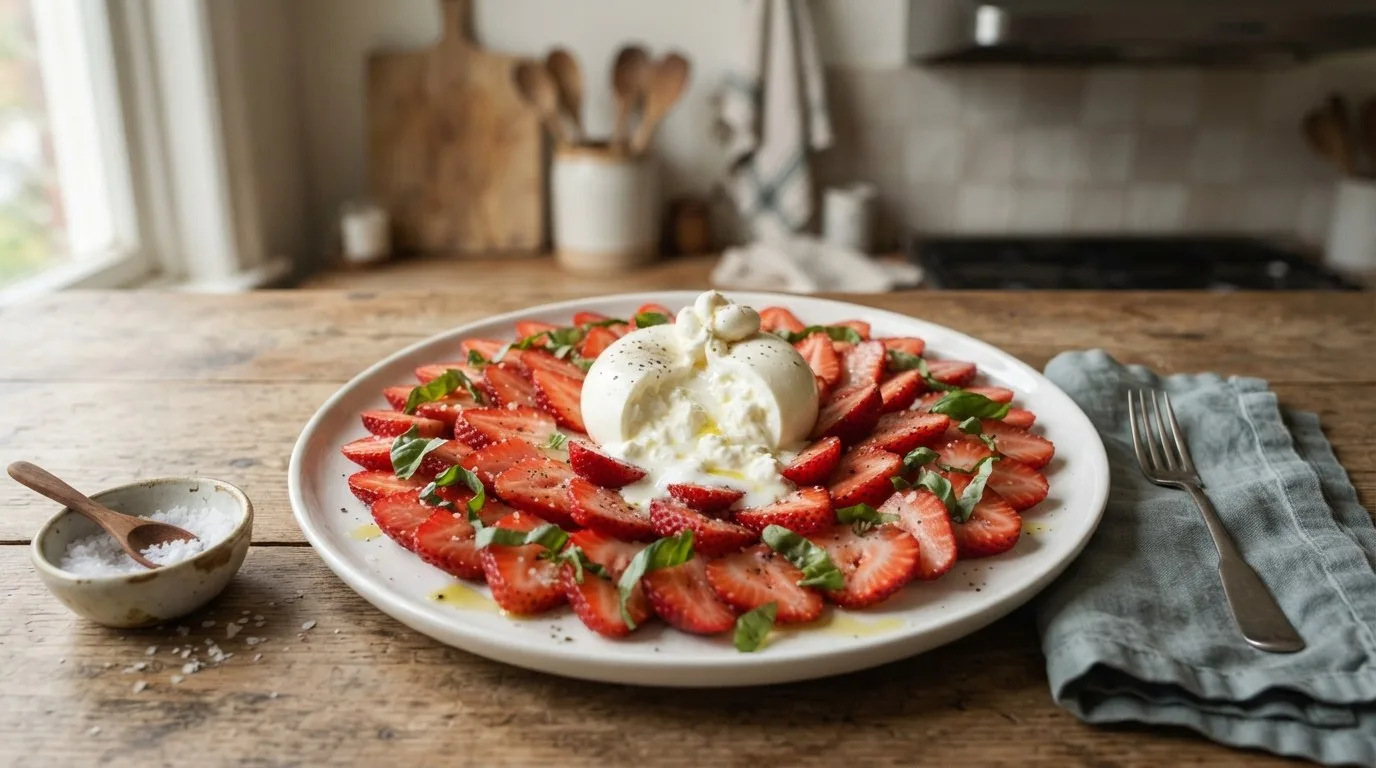
Burrata is the better cheese for strawberry caprese when you are serving it to share, because its cream coats the fruit and carries the balsamic into every bite. Fresh mozzarella is the better pick for neat individual plates or a salad that has to sit on a buffet, since it slices cleanly and holds its shape. Buffalo mozzarella is the middle ground: softer and tangier than cow's-milk mozzarella, with more flavor of its own.
| Cheese | Texture | Richness | Best for | How to serve it |
|---|---|---|---|---|
| Burrata | Soft shell, creamy stracciatella center | Highest | A shared platter, the tear-it-open moment | Whole in the center, torn at the table |
| Fresh mozzarella (fior di latte) | Springy, semi-firm | Moderate | Plated portions, make-ahead trays | Sliced into rounds, layered with the berries |
| Buffalo mozzarella | Softer, slightly grainy | High | A bolder, tangier salad | Torn into pieces |
| Mozzarella pearls (ciliegine) | Firm, bite-size | Moderate | Skewers and kids' plates | Halved and tossed with the berries |
For most people making this at home, burrata is worth the extra cost for a platter, and fresh mozzarella wins everywhere else.
Balsamic Glaze: Why a Reduction Clings and Vinegar Runs
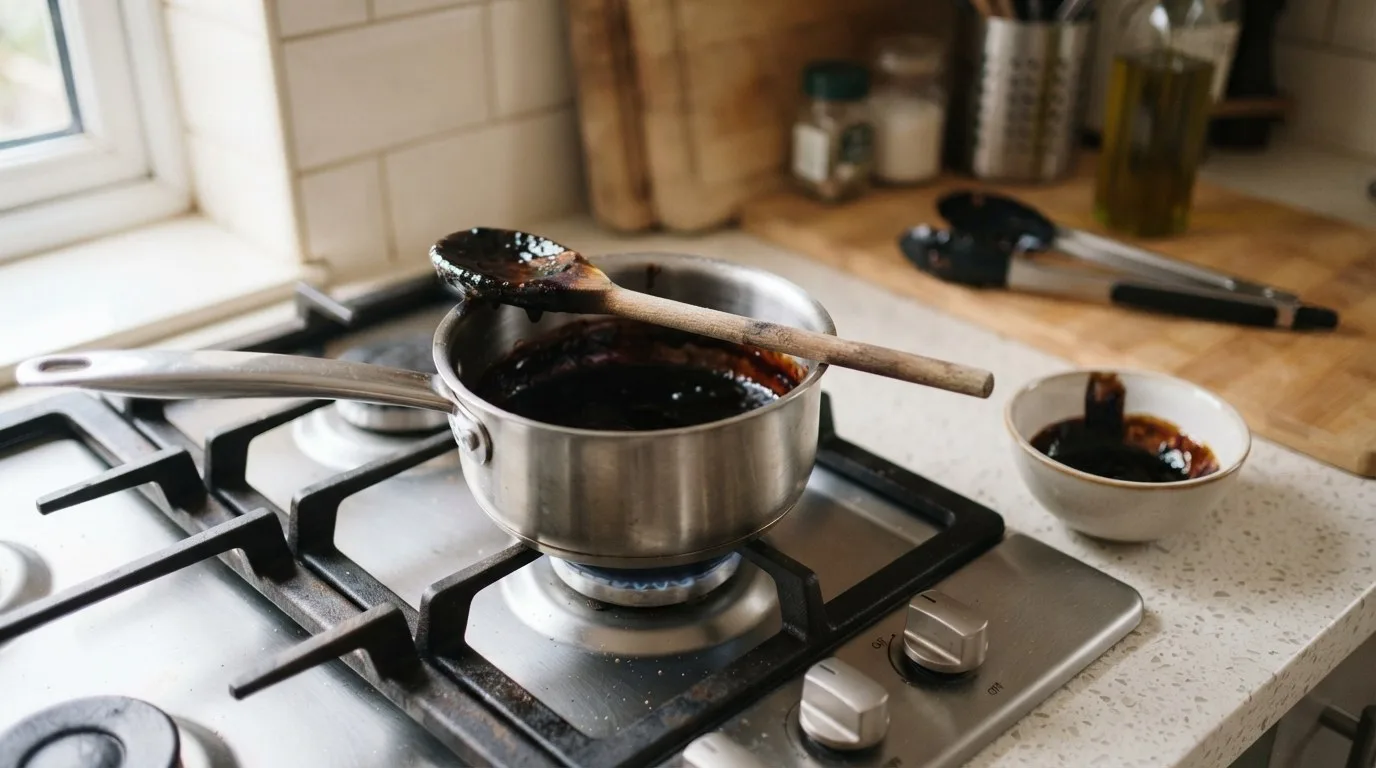
Use a balsamic glaze or a quick homemade reduction, never thin balsamic straight from the bottle, which runs off the berries and pools on the plate. Balsamic Vinegar of Modena is made from cooked or concentrated grape must blended with wine vinegar and matured in wood for at least 60 days, according to the Consorzio Tutela Aceto Balsamico di Modena. That grape must is why it reduces into a syrup rather than just getting sharper.
The reduction works by evaporation. A gentle simmer drives off water while the grape sugars stay behind, so the liquid thickens and the sweetness concentrates. As the sugar concentration climbs, so does the boiling point, which is why a reduction left too long can go from syrup to scorched in a couple of minutes. Pull it when it has reduced by about half and just coats a spoon: sugar syrups thicken a lot as they cool, so a glaze that looks right in the pan sets too thick on the plate. Keep the heat low, well short of the 320°F or so where sugar starts to caramelize and turn bitter.
Serve It Cool, Not Cold
Serve strawberry caprese at cool room temperature, not straight from the fridge. Your taste receptors are most responsive between about 86°F and 95°F, and cold food numbs them, which is why a fridge-cold strawberry tastes flat and a sun-warm one tastes sweet. Chilling also dulls the aroma of both the fruit and the cream. Take the burrata out about 20 minutes before serving and keep the berries on the counter once they are sliced.
Keep the basil out of the fridge, too. Basil is chilling-sensitive and should be stored above 50°F, according to the UC Davis Postharvest Center; below that the leaves blacken and lose their smell. Tear or slice it just before it goes on the plate, since bruised leaves start to darken within minutes.
Cool is not the same as sitting out all afternoon. Burrata is a fresh, perishable cheese, and the USDA's Food Safety and Inspection Service says perishable food should not stay out of the fridge for more than 2 hours, or 1 hour when it is above 90°F, because bacteria multiply fastest between 40°F and 140°F. At an outdoor summer lunch, put the platter out when people sit down, not an hour before.
Salt Last: What Salt Does to Strawberries
Add the flaky salt right before serving, because salt starts pulling juice out of the strawberries the moment it lands. That is osmosis: water moves out of the fruit toward the salty surface, and within ten minutes the berries soften and a pink puddle forms on the platter. At the table that is a good thing, since the juice mixes with the olive oil and glaze into a loose, quick emulsion that you mop up with bread. Made an hour ahead, it turns into soggy berries sitting in liquid.
The salt also makes the strawberries taste sweeter and takes the edge off any bitterness in the basil and oil. Use flaky sea salt so you get small crunchy bursts instead of an even saltiness, and finish with a few turns of black pepper, which works with strawberries the same way it does with tomatoes. If you need to get ahead, slice the berries and arrange them up to an hour early, then add the burrata, basil, oil, glaze and salt in the last few minutes.
Variations and What to Serve With It
Strawberry caprese salad works as a starter, a side for grilled meat or fish, or a light lunch with bread. A few variations that keep the same balance of sweet, rich and sharp:
- Watermelon strawberry caprese: add cubes of cold watermelon and swap the burrata for crumbled feta for a saltier, more summery bowl.
- Strawberry and tomato: mix halved cherry tomatoes with the berries for a salad that sits halfway between the classic and this version.
- Peach or fig caprese: ripe peaches in midsummer or figs in early fall take the strawberries' place with the same method.
- Prosciutto: drape a few thin slices alongside for a salty, savory contrast.
- Hot honey: a thin drizzle instead of some of the glaze adds sweet heat.
Serve it with crusty bread to scoop up the burrata cream, next to our 10-minute garlic butter shrimp for an easy summer dinner, or as one of a spread of Gordon Ramsay-style dinner party appetizers. If you are slicing a lot of fruit and vegetables for a spread, our guide to the best knife for cutting vegetables covers the blades worth owning.
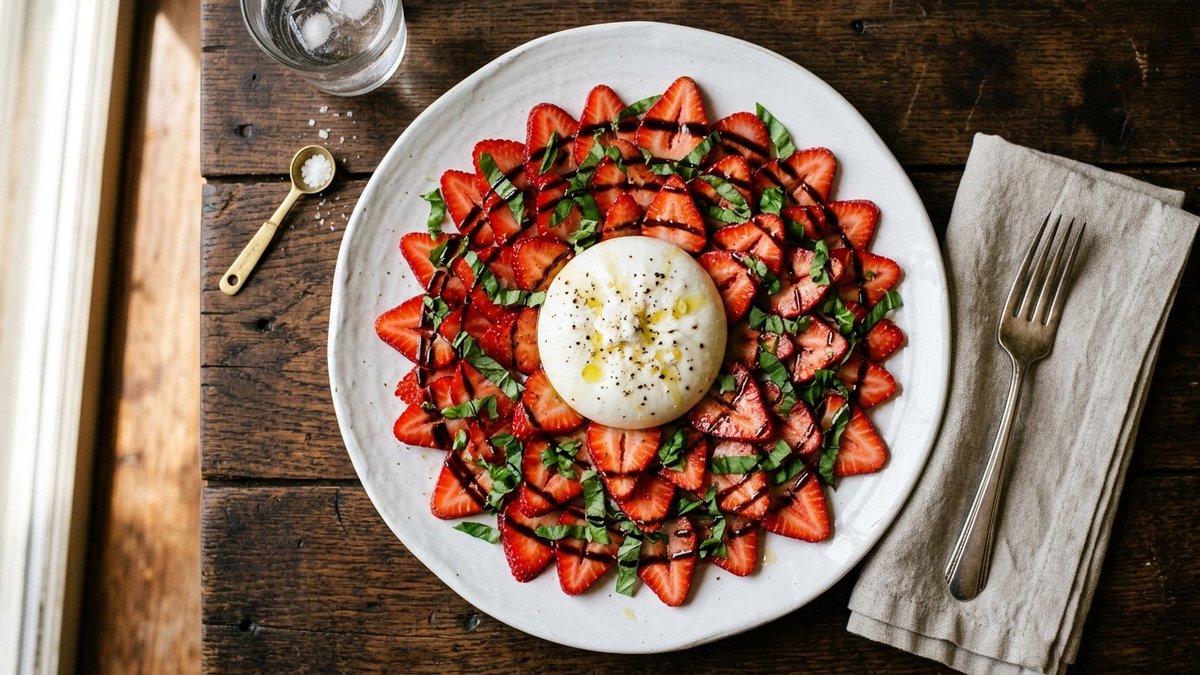
Strawberry Caprese Salad With Burrata
Ingredients
- 1 lb ripe strawberries (about 450 g)
- 1 ball burrata (8 oz / 225 g)
- 10 large fresh basil leaves
- 2 tbsp extra-virgin olive oil
- 1 cup balsamic vinegar of Modena (or 1/4 cup store-bought balsamic glaze)
- flaky sea salt, to finish
- freshly ground black pepper
Instructions
- Make the reduction (skip if using store-bought glaze): simmer the balsamic vinegar gently in a small saucepan over medium-low heat for 15 to 20 minutes, until reduced by about half and it coats the back of a spoon. Let it cool completely; it thickens as it cools.
- Take the burrata out of the fridge about 20 minutes before serving.
- Hull the strawberries and slice them lengthwise, top to tip, about 1/4 inch thick, so each slice keeps its heart shape.
- Arrange the strawberries in overlapping circles on a platter, leaving space in the center. Set the burrata in the middle.
- Tear the basil leaves and tuck them between the strawberries.
- Just before serving, drizzle with the olive oil and a few lines of balsamic glaze, then finish with flaky salt and black pepper. Tear the burrata open at the table.
Notes
Strawberry Caprese Salad FAQs
The questions that come up most: what strawberry caprese salad is, whether you can use mozzarella instead of burrata, how far ahead you can make it, whether it is served cold, which dressing to use, and what to serve with it.
What is strawberry caprese salad?
A modern version of the Italian caprese salad that uses ripe strawberries in place of tomatoes, with fresh mozzarella or burrata, basil, olive oil and balsamic glaze. It keeps the classic balance of fruit, fresh cheese and herbs, just sweeter.
Can I use mozzarella instead of burrata?
Yes. Fresh mozzarella sliced into rounds works well and holds its shape better on plated portions or a buffet. You lose the creamy center, so add a little more olive oil. Buffalo mozzarella is the softer, tangier option.
How far ahead can I make strawberry caprese salad?
Slice and arrange the strawberries up to an hour ahead, but add the burrata, basil, oil, glaze and salt just before serving. Salt draws juice out of the berries, so a fully dressed salad goes soggy within about half an hour.
Is caprese salad served cold?
It is best at cool room temperature. Cold numbs your taste buds and dulls the aroma of the fruit and cheese, so take the burrata out of the fridge about 20 minutes before serving. Do not leave it out more than 2 hours, or 1 hour above 90°F.
What dressing goes on strawberry caprese?
Extra-virgin olive oil and a thick balsamic glaze or homemade reduction, finished with flaky salt and black pepper. Thin balsamic vinegar straight from the bottle runs off the fruit.
How long does caprese salad last in the fridge?
Once dressed it is best eaten the same day, because the berries soften and weep. Store leftover burrata and undressed berries separately in the fridge and use the burrata within a day or two of opening.
What goes well with strawberry caprese salad?
Crusty bread for the burrata cream, prosciutto, grilled chicken, shrimp or fish, or a glass of chilled rosé or sparkling wine. It also works as part of an appetizer spread.

About the Author
John Siracusa is the founder of Hell’s Kitchen Recipes. He focuses on technique-first, reproducible home cooking and researches recipes & kitchen equipment from published food science and professional chef methods since 2016.