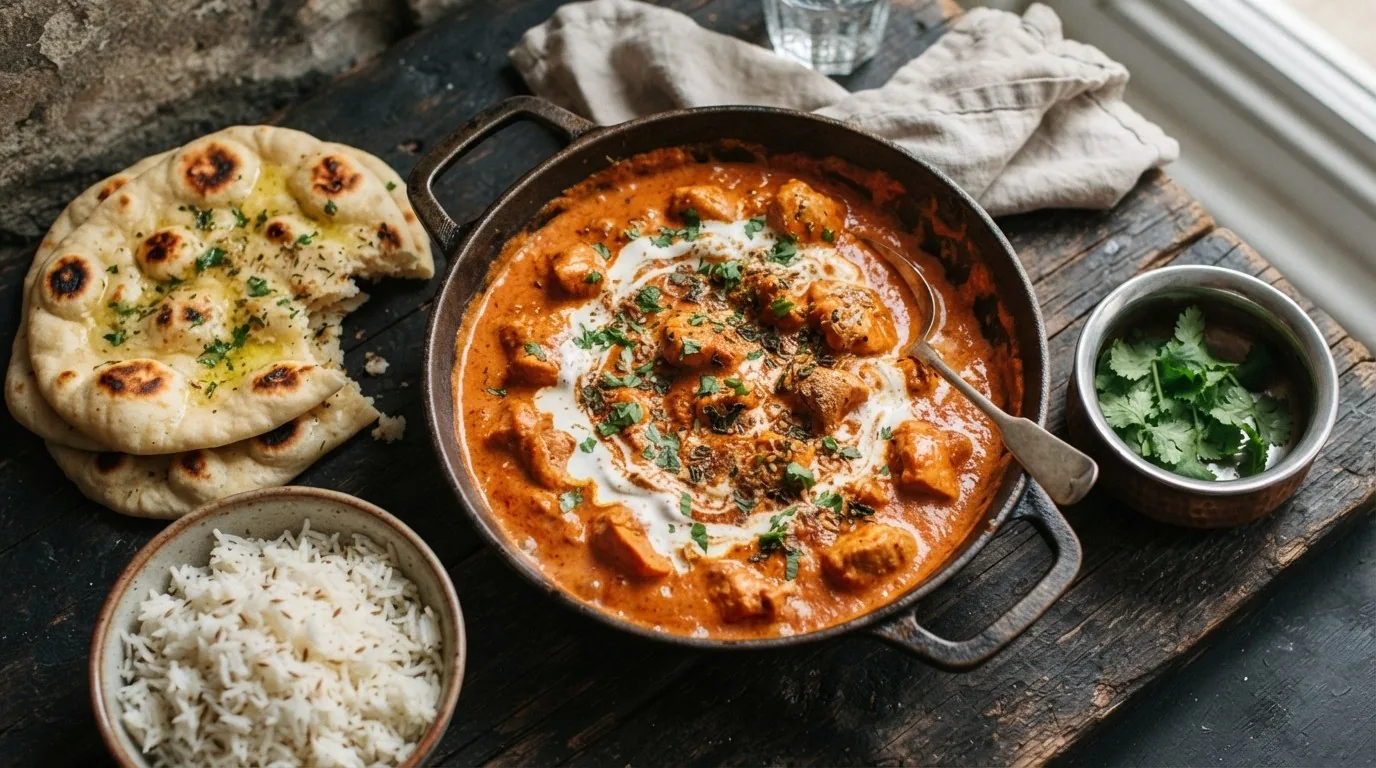
Butter chicken, or murgh makhani, is marinated chicken charred over high heat and finished in a creamy, mildly spiced tomato-and-butter sauce. It is an Indian restaurant classic, not a Gordon Ramsay invention, and getting it right at home comes down to three moves: a proper yogurt marinade, a real char on the chicken, and a sauce that stays silky instead of splitting.
None of it is hard, but each step is doing a specific job, and skipping any one shows in the bowl. Here is the method, the food science behind it, and the fixes for the two things that go wrong most: dry chicken and a broken sauce.
What Is Butter Chicken (Murgh Makhani)?
Butter chicken is tender pieces of marinated chicken in a smooth, buttery tomato sauce enriched with cream. It is mild, not fiery, with warmth from garam masala rather than heat. It was created in the 1950s at the Moti Mahal restaurant in Delhi, where Kundan Lal Gujral folded leftover tandoori chicken into a rich tomato-butter gravy so it would not dry out, as the documented history records. "Makhani" means buttery, which is exactly what the sauce is built on.
Because the flavor is layered, not just spiced, the two-stage method matters: the chicken is marinated and charred on its own, then simmered in a sauce made separately. That is how the restaurants do it, and it is what separates a real butter chicken from a generic creamy curry.
Butter Chicken vs Tikka Masala
The most common question about butter chicken is how it differs from chicken tikka masala, because they look almost identical in the bowl. The short answer: butter chicken is Indian and sweeter, tikka masala is British and more spiced, and korma is a different animal entirely.
| Dish | Origin | Sauce base | Spice & flavor |
|---|---|---|---|
| Butter chicken (murgh makhani) | Delhi, 1950s | Tomato, butter, cream | Mild, sweet-tangy, buttery |
| Chicken tikka masala | Britain, ~1970s | Tomato and cream, more spiced | Mild to medium, savory, less sweet |
| Korma | Mughlai | Yogurt or cream and ground nuts, no tomato | Mild, nutty, delicate |
So if a recipe leans sweet and buttery on a tomato base, it is butter chicken; if it is more assertively spiced and less sweet, it has drifted toward tikka masala. Both start from the same marinated, charred chicken.
The Yogurt Marinade Does Two Jobs
The yogurt marinade tenderizes and seasons at the same time. Its lactic acid and calcium loosen the proteins on the surface of the meat, and the salt and spice season it, which is why even quick-cooking pieces come out tender and flavored through. What a marinade does not do is soak deep into the meat; as Michigan State University Extension notes, marinades mostly work on the surface, so cutting the chicken into pieces gives the marinade far more surface to act on.
Give it at least four hours, and overnight if you can. Use boneless, skinless thighs, not breast: thighs have the fat and connective tissue to stay juicy through the char and the simmer, while breast dries out. Ramsay's rule of seasoning early is the whole point of this step.

Char the Chicken First
The smoky depth in butter chicken comes from charring the marinated chicken hard before it ever touches the sauce. That char is the Maillard reaction, the browning between the meat's proteins and sugars that kicks off above about 284°F/140°C on a dry surface, described in the science of the Maillard reaction. A tandoor does it with ferocious heat; a home oven set to 450°F or a broiler gets you most of the way.
Shake the excess marinade off first so the surface can dry and brown instead of steam, and do not cook the chicken through at this stage. You want charred edges and a raw-ish center, because it finishes in the sauce. Crowding the tray steams the pieces grey, so give them room.
Bloom the Spices, and Use Ghee
Ground spices taste dusty and flat until you cook them in fat, which is why the garam masala and cardamom go into the hot ghee with the tomato paste and get a minute to bloom before the tomatoes join. The fat pulls out and carries the spices' fat-soluble aromas in a way water never can.
Use ghee rather than regular butter for that step. Ghee is clarified, so it has no milk solids to scorch, and it takes the heat that browning onions and blooming spices need; plain butter's milk solids burn and turn bitter. It is the small swap that gives the sauce its clean, rich backbone.
Why the Sauce Splits, and How to Keep It Silky
A grainy, oily butter chicken sauce is split cream. Cream is an emulsion of fat in water held together by milk proteins, and when it gets too hot, or meets the tomato's acidity at a hard boil, the casein proteins clump and wring out the fat. Heavy cream, at around 36 percent fat, is far more heat-stable than low-fat dairy, but it is not boil-proof.
So add the cream with the heat turned down, stir it through, and never let the sauce come to a rolling boil after it goes in. For the classic velvety texture, blend the tomato-onion base smooth before the cream and chicken go in. If it tightens up, loosen it with a splash of warm water, not more heat.

Make Ahead, Store, and Serve
Butter chicken is one of the rare dishes that is better the next day, once the spices have had time to settle, so it is a strong make-ahead. It keeps three to four days covered in the fridge and freezes well for up to three months; reheat it gently, over low heat, so the cream does not split on the way back up.
Serve it with warm naan and basmati rice to catch the sauce. For more of the same creamy-sauce technique, our carbonara runs on the same do-not-boil-the-dairy rule, and there is more poultry method in the bone-in chicken breast guide and the full recipe collection.
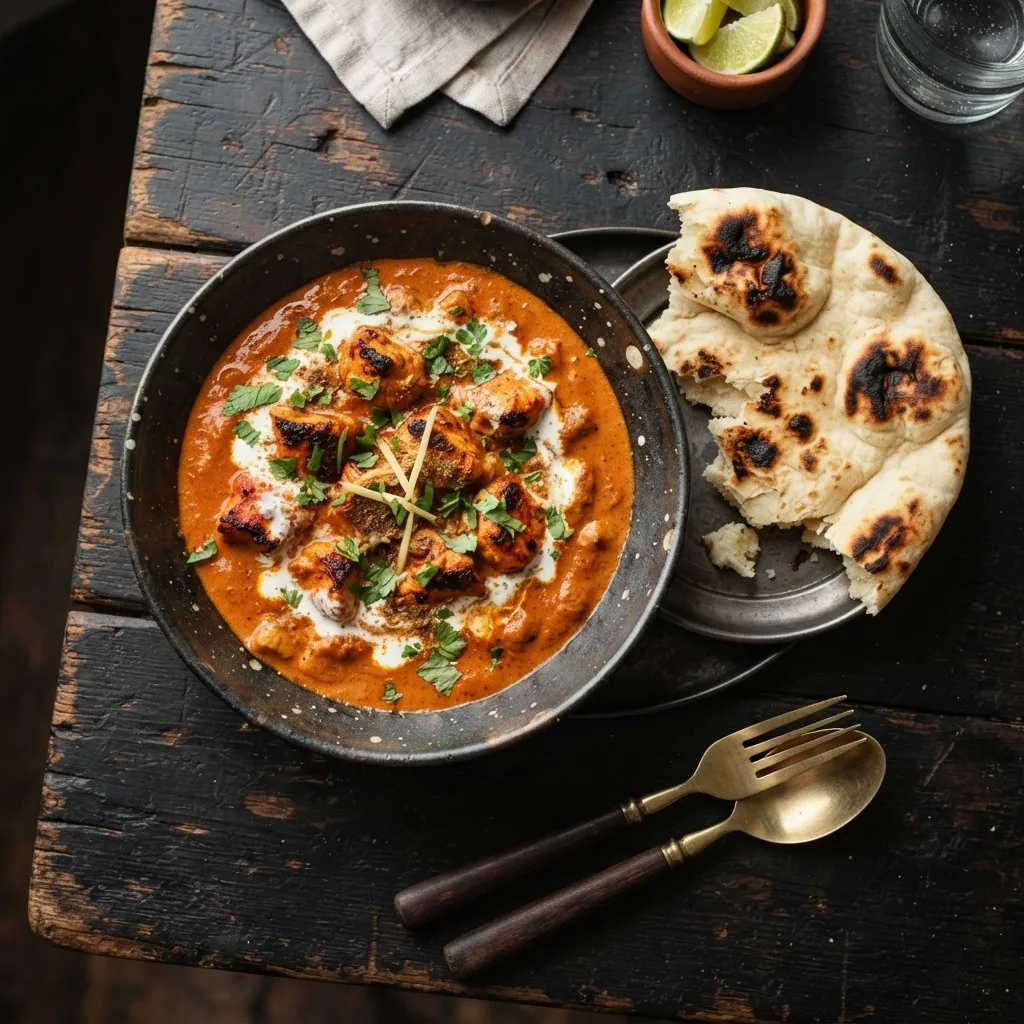
Gordon Ramsay Butter Chicken (Murgh Makhani)
Ingredients
Marinade
- 2 lb boneless, skinless chicken thighs, cut into large pieces
- 1 cup plain whole-milk yogurt
- 2 Tbsp lemon juice
- 2 tsp garam masala
- 2 tsp ground cumin
- 1 tsp turmeric
- 1 tsp red chili powder (to taste)
- 1 Tbsp grated fresh ginger
- 4 cloves garlic, minced
- 1 tsp salt
Makhani sauce
- 3 Tbsp ghee (or unsalted butter)
- 1 large onion, finely chopped
- 2 Tbsp tomato paste
- 2 cups tomato puree (passata)
- 1 tsp garam masala
- 1/2 tsp ground cardamom
- 1 cup heavy cream
- Salt, to taste
To serve
- Fresh coriander, naan, and basmati rice
Instructions
- Marinate: stir the yogurt, lemon juice, garam masala, cumin, turmeric, chili powder, ginger, garlic, and salt together, add the chicken, and coat well. Cover and chill at least 4 hours, or overnight for the best result.
- Char: heat the oven to 450°F (230°C) or the broiler. Shake the excess marinade off the chicken and spread it out on a rack or lined tray. Roast or broil 12 to 15 minutes, until charred at the edges. It will not be cooked through; it finishes in the sauce.
- Sauce: melt the ghee in a large pan over medium heat and cook the onion until deep golden, 8 to 10 minutes. Stir in the tomato paste, garam masala, and cardamom, and let the spices bloom for 1 minute.
- Add the tomato puree and simmer 15 minutes, until thick and the fat separates. For a velvety sauce, blend it smooth, then return it to the pan.
- Lower the heat and stir in the cream, then add the charred chicken. Simmer gently, without boiling, 8 to 10 minutes, until the chicken is cooked through and the sauce is silky. Season with salt.
- Finish with fresh coriander and serve with warm naan and basmati rice.
Notes
Butter Chicken FAQs
The questions that come up most: whether butter chicken is spicy, how it differs from tikka masala, which chicken to use, and why the sauce splits.
Is butter chicken spicy?
No. Butter chicken is mild and creamy, with warmth from garam masala rather than chili heat. If you want it hotter, add more red chili powder to the marinade or a fresh chili to the sauce.
What is the difference between butter chicken and tikka masala?
Butter chicken is Indian, from Delhi, with a sweeter, buttery tomato-cream sauce. Chicken tikka masala is British in origin and more assertively spiced and less sweet. Both use marinated, grilled chicken in a creamy tomato sauce, which is why they look so similar.
Why is it called butter chicken?
"Makhani" means buttery, and the sauce is built on butter or ghee, tomato, and cream. It was created at Delhi's Moti Mahal restaurant in the 1950s to use up leftover tandoori chicken.
Should I use chicken thighs or breast?
Thighs. Boneless, skinless thighs have enough fat and connective tissue to stay tender through the marinate, char, and simmer. Chicken breast dries out over the same steps.
Why did my butter chicken sauce split, and can I make it without cream?
The cream got too hot or boiled against the acidic tomato, so it curdled. Add the cream with the heat low and never boil it after. For a lighter version, use full-fat coconut milk, or temper a spoon of yogurt in off the heat.
Can I make butter chicken ahead of time or freeze it?
Yes. It keeps three to four days in the fridge and actually tastes better the next day, and it freezes for up to three months. Reheat it gently over low heat so the sauce stays silky.

About the Author
John Siracusa is the founder of Hell’s Kitchen Recipes. He focuses on technique-first, reproducible home cooking and researches recipes & kitchen equipment from published food science and professional chef methods since 2016.