Soft, chewy chocolate chip cookies are not luck; they are a few deliberate choices about sugar, fat, and heat. Gordon Ramsay's version leans on all of them: melted butter instead of creamed, an extra egg yolk, a heavy hand of brown sugar, and a rest in the fridge before baking. Each one nudges the cookie toward chewy and away from cakey or crisp.
This guide explains why each choice works, so you can steer the cookie toward the exact texture you want, and fix a batch that spreads too thin or bakes up dry.
What Makes These Cookies Chewy
Chewiness comes down to three things, and this recipe stacks all three. First, brown sugar: it is hygroscopic, meaning it holds onto water, so a dough heavy in brown sugar bakes into a softer, chewier cookie that stays moist. White sugar does the opposite, encouraging spread and crisp edges, which is why the ratio here tips toward brown.
Second, melted butter. Creaming softened butter whips air into the dough for a lighter, cakier cookie; melting the butter skips that aeration, so the crumb bakes denser and chewier. Third, the extra egg yolk. Yolks are fat and emulsifier (lecithin) with no drying egg white, so an extra yolk adds richness and tenderness. Food writers who have tested this to death, like Serious Eats and King Arthur Baking, land on the same levers.
Why You Chill the Dough
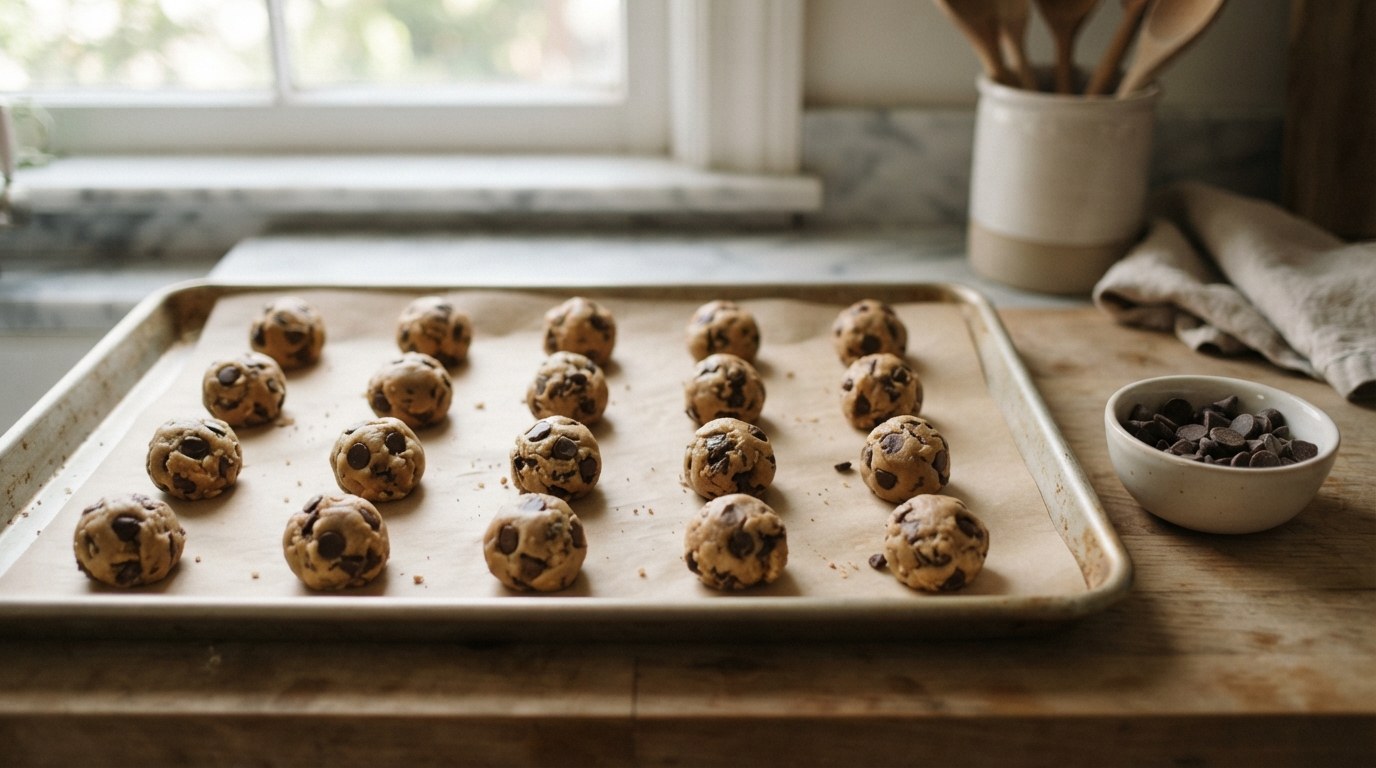
Chilling is the step people skip and then wonder why their cookies spread into thin wafers. Resting the dough for at least 30 minutes does two jobs. It firms the butter, so the cookies hold their shape and spread less in the first minutes of baking, giving you a thicker cookie. It also lets the flour fully hydrate and the flavors deepen, so a chilled dough bakes up with a rounder, more toffee-like taste.
If you have time, an overnight chill is even better. If you are in a hurry, 30 minutes in the fridge (or 15 in the freezer) is enough to see the difference.
Getting the Bake Right
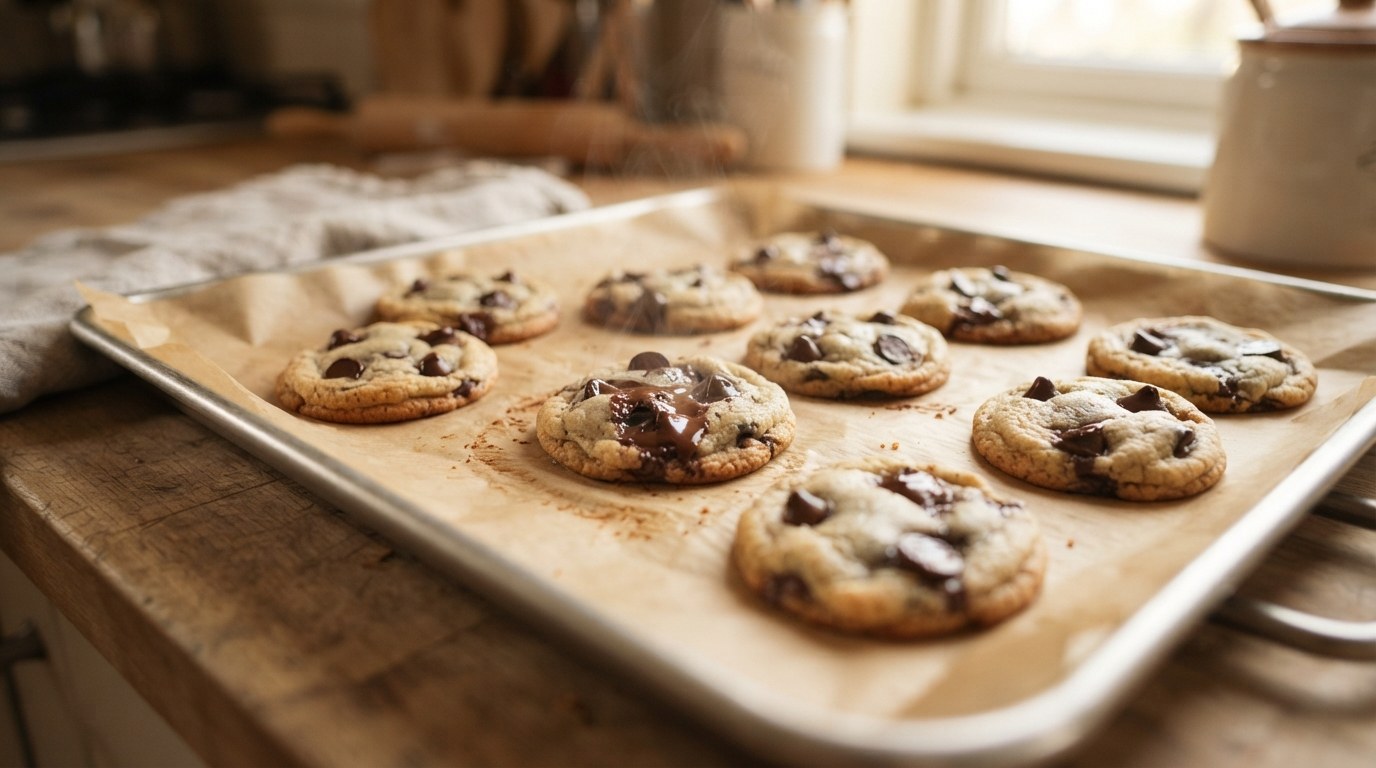
Bake at a steady 325°F and pull the cookies when the edges are lightly golden but the centers still look pale and slightly underbaked. That golden edge is the Maillard reaction plus caramelizing sugar, which is where the toffee flavor lives. The pale center is on purpose: the cookies keep cooking on the hot sheet for about five minutes after they come out, and that carryover sets the middle to chewy rather than dry.
Ovens lie, so put a thermometer on the middle rack; many run 25°F off, which is the difference between chewy and crisp. Rotate the sheets halfway through if your oven browns unevenly, and use a scoop so every cookie is the same size and bakes at the same rate.
The Toll House Origin
The chocolate chip cookie was a happy accident. In the 1930s, Ruth Wakefield, who ran the Toll House Inn in Whitman, Massachusetts, chopped a bar of Nestlé semi-sweet chocolate into a cookie dough expecting it to melt through, and instead the pieces held their shape. The chocolate chip cookie was born, and Nestlé later printed her recipe on the Toll House package, where it still lives. Ramsay's version keeps her core recipe and tilts it toward chewy.
White Chocolate Macadamia Variation
For a twist, swap the chocolate chips for 2 cups of white chocolate chips and fold in 1½ cups of coarsely chopped macadamia nuts. Toast the nuts first at 350°F for 8 to 10 minutes and cool them before mixing, which deepens their flavor. White chocolate melts differently, so the cookies may need an extra minute in the oven.
How to Store Them
Cool the cookies completely, then keep them in an airtight container with a sheet of parchment between layers. At room temperature they stay soft for up to seven days, because the brown sugar keeps pulling in moisture. Cookies eventually harden as their starch recrystallizes, so if you want to hold them longer, freeze the baked cookies or the scooped dough balls and bake from frozen with an extra minute or two.
For more baking, try our Gordon Ramsay banoffee pie or a tres leches cake, or browse the full baking and desserts collection.
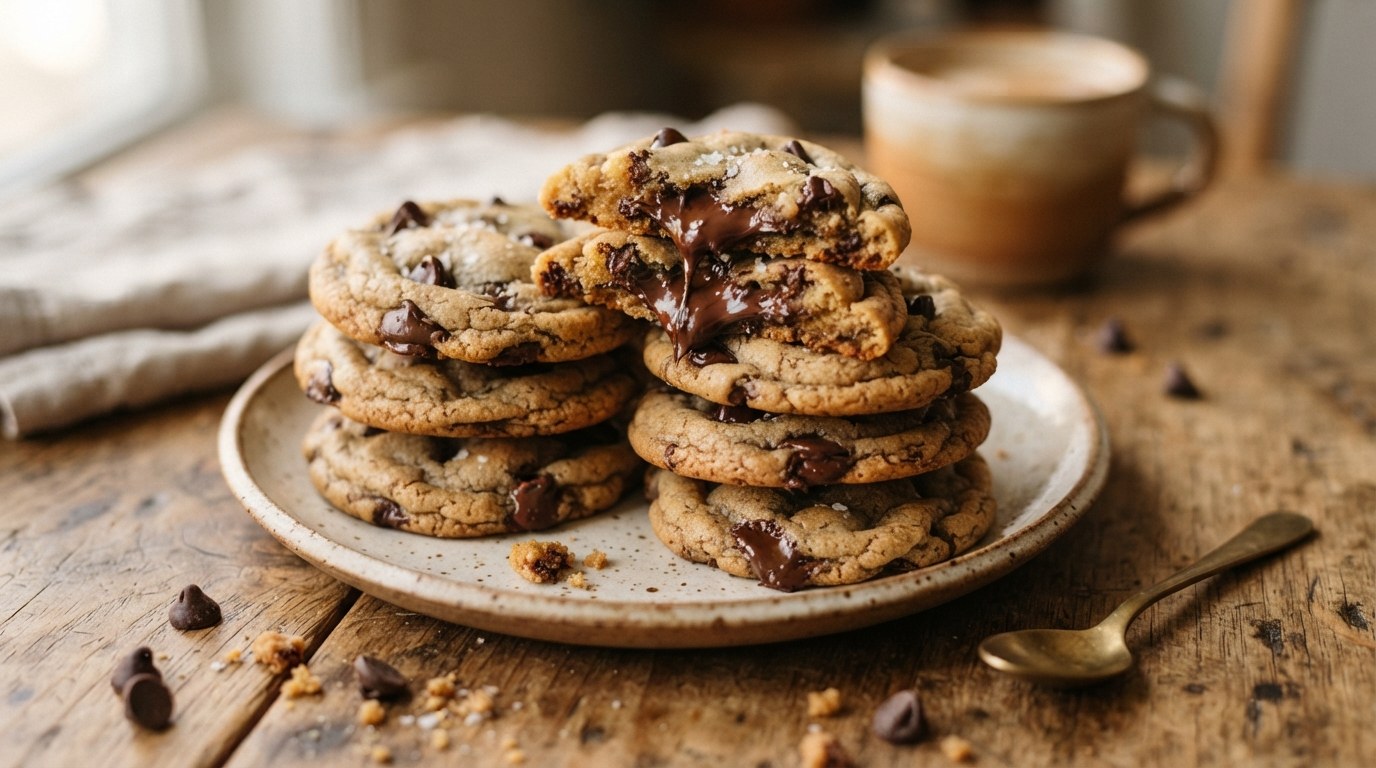
Gordon Ramsay's Chocolate Chip Cookies
Ingredients
- 2 1/4 cups all-purpose flour
- 1 tsp baking soda
- 1 tsp salt
- 1 cup unsalted butter, melted and cooled slightly
- 1 cup packed brown sugar
- 1/2 cup granulated sugar
- 1 Tbsp vanilla extract
- 1 large egg
- 1 large egg yolk
- 2 cups semisweet chocolate chips
Instructions
- Whisk the flour, baking soda, and salt in a medium bowl. In a large bowl, stir the melted, cooled butter with both sugars until smooth, about 2 to 3 minutes.
- Beat in the vanilla, whole egg, and egg yolk until the mixture looks light and creamy.
- Stir the dry ingredients into the wet until just combined, then fold in the chocolate chips. Do not overmix.
- Chill the dough for at least 30 minutes (or overnight) so it firms up and the cookies hold their shape.
- Heat the oven to 325°F. Scoop the dough onto parchment-lined sheets, spacing them 2 inches apart.
- Bake 13 to 15 minutes, until the edges are lightly golden but the centers still look pale and slightly underbaked.
- Let the cookies set on the hot sheet for 5 minutes (they finish cooking there), then transfer to a wire rack.
Notes
Chocolate Chip Cookie FAQs
The questions that come up most: what makes cookies chewy instead of crispy, why the recipe uses melted butter and an extra yolk, why you chill the dough, and how to keep them soft.
What makes chocolate chip cookies chewy instead of crispy?
More brown sugar (it holds moisture), melted rather than creamed butter (less air), an extra egg yolk (fat, no drying white), and pulling them from the oven while the centers still look underbaked. White sugar and longer baking make them crisp.
Why does this recipe use melted butter?
Creaming softened butter whips in air for a lighter, cakier cookie. Melting the butter skips that step, so the dough bakes up denser and chewier. It is the single biggest lever for a chewy texture.
Why add an extra egg yolk?
Egg yolk is fat and lecithin, an emulsifier, with none of the drying protein of the white. An extra yolk makes the cookies richer and more tender without making them cakey.
Do I have to chill the cookie dough?
It is worth it. Chilling firms the butter so the cookies spread less and bake up thicker, and it lets the flour hydrate for deeper flavor. Thirty minutes in the fridge is enough; overnight is even better.
What temperature do you bake chocolate chip cookies at?
A steady 325°F gives soft centers with lightly golden edges. Use an oven thermometer, since many ovens run 25°F off, which is the difference between chewy and crisp.
Why did my cookies spread too thin and flat?
Usually warm dough or too much white sugar. Chill the dough so the butter is solid before baking, make sure your baking soda is fresh, and do not put dough on a hot sheet.
How do you keep chocolate chip cookies soft?
Store them airtight once fully cool; the brown sugar keeps them moist for up to a week. A slice of sandwich bread in the container helps, as the cookies pull moisture from it as they would from humid air.

About the Author
John Siracusa is the founder of Hell’s Kitchen Recipes. He focuses on technique-first, reproducible home cooking and researches recipes & kitchen equipment from published food science and professional chef methods since 2016.