A cheese log is the cheese ball's better-behaved cousin: the same soft, savory cheese mixture, shaped into a cylinder instead of a sphere, so it slices cleanly onto a cracker instead of collapsing under a knife. This one is built for the holidays: cream cheese, sharp white cheddar and goat cheese beaten together with dried cranberries, chives and orange zest, chilled firm, then rolled in toasted walnuts, more cranberries and parsley so every slice comes with a crunchy, red-and-green edge. It takes 15 minutes of work, it keeps in the refrigerator for most of a week, and it is the appetizer that gets cut into before anyone has taken their coat off.
The recipe card at the bottom has the amounts and numbered steps for one log that serves 12 with crackers. This guide covers the three cheeses and why each is there, the mixing and shaping, the coating and why it goes on last, serving temperature, and make-ahead. It sits in the site's recipes collection with the cranberry cream cheese dip and the rest of the holiday and seasonal cooking.
The Three Cheeses and What Each One Does
Cream cheese is the body. Under the federal standard of identity it contains at least 33 percent milkfat and no more than 55 percent moisture, which makes it a thick emulsion of fat and water that spreads at room temperature and firms hard in the refrigerator. That behavior is the whole engineering of a cheese log: it is soft enough to beat everything else into and firm enough, cold, to hold a cylinder and take a clean slice. A full-fat block is required; the whipped tub kind is aerated and slumps, and low-fat cream cheese has less of the fat that does the holding.
Sharp white cheddar is the flavor, and it should be shredded from a block. Cheddar gets sharper the longer it ages; Cabot Creamery ages its sharp for the better part of a year and its extra sharp longer, and explains that as the cheese ages it loses moisture and its lactose breaks down into lactic acid, which is where the flavor and the crunchy calcium-lactate crystals in an old cheddar come from. Pre-shredded cheddar is dusted with starch or cellulose to keep the shreds from clumping, and that coating turns a cheese log grainy; four ounces off a block takes a minute on a box grater. Goat cheese is the tang. Its lactic sharpness cuts the richness of the other two and reads against the sweet cranberries; if goat cheese is not for your table, crumbled feta does the same job saltier, or use more cheddar.
| Ingredient | What it does | Do not substitute with |
|---|---|---|
| Full-fat block cream cheese, 8 oz | The fat-bound body that shapes cold and spreads warm | Whipped or low-fat cream cheese (slumps) |
| Sharp white cheddar, 4 oz, shredded from a block | Aged cheddar flavor | Pre-shredded cheddar (anti-caking starch makes it grainy) |
| Goat cheese, 4 oz | Tang against the sweet cranberries | Skipping it (flat and rich); feta is the closest swap |
| Dried cranberries, chopped, inside and out | Sweet-tart pockets and the holiday color | Fresh cranberries (raw and sour in a cold cheese) |
| Orange zest, chives, a pinch of cayenne | Lift, onion note, and a background warmth | Dried herbs (dusty in a cold cheese) |
| Toasted walnuts, for the coating | Crunch and toasted flavor on every slice | Raw walnuts (soft, bitter skins, no toast) |
Mixing and Shaping: Soft to Mix, Cold to Roll
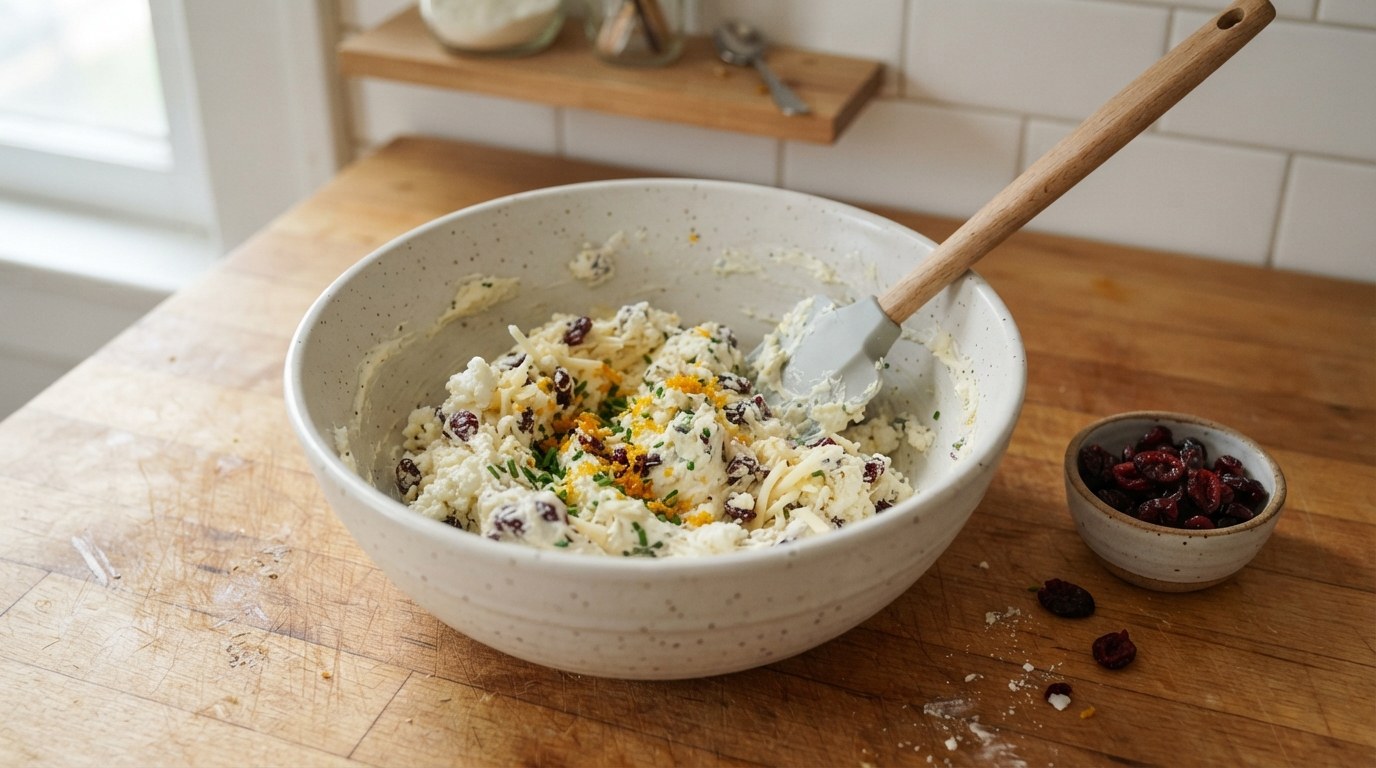
Leave the cream cheese and goat cheese on the counter for an hour first. Cold cream cheese beats into lumps that never smooth out, and the fat has to be soft enough for the shredded cheddar to disperse through it instead of sitting in clumps. Beat the three cheeses with a hand mixer or a sturdy spoon until smooth, then stir in the chopped cranberries, chives, orange zest, salt and cayenne just until mixed; overbeating after the cranberries go in bleeds pink through the cheese. Taste it now. It is the last chance to adjust the salt, and the cold will mute everything slightly, so it should taste a touch bold at room temperature.
Advertisement
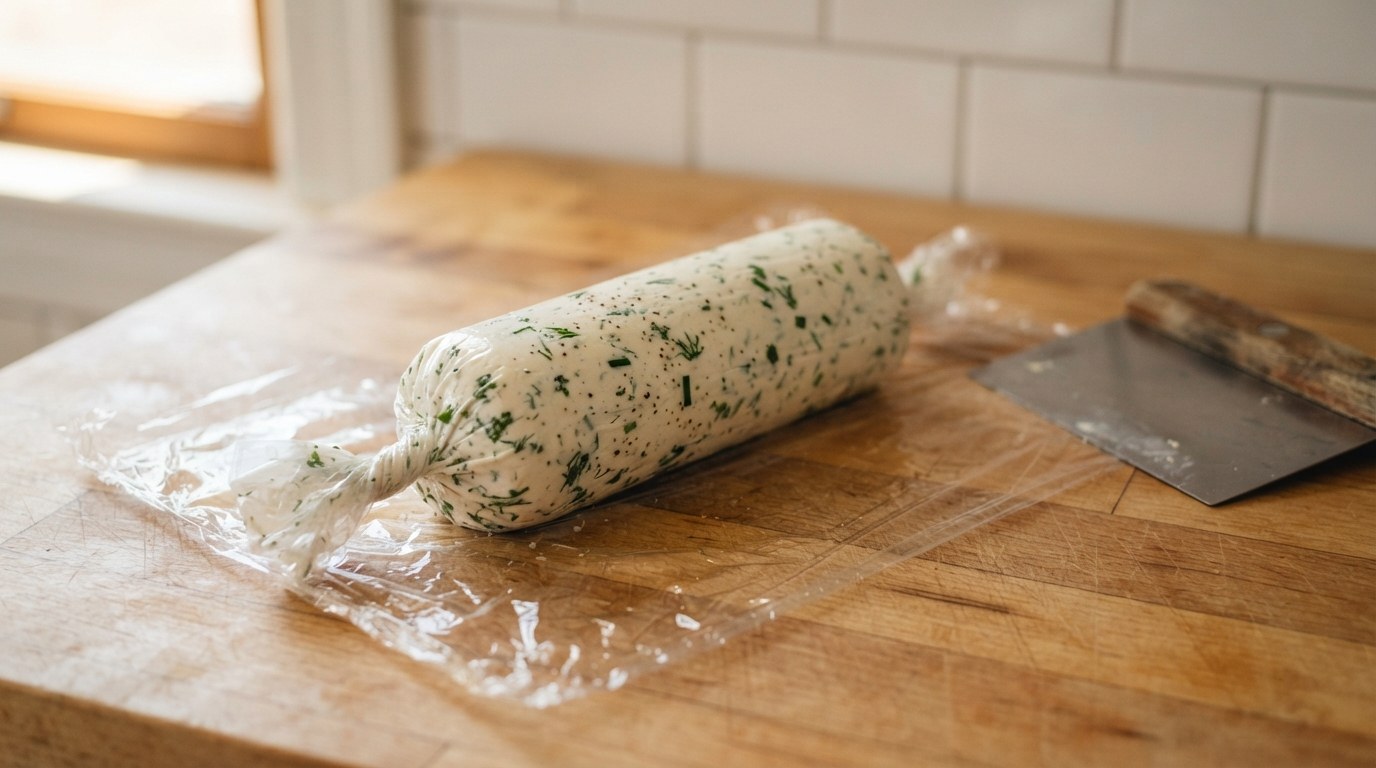
Shaping is a matter of getting the fat cold again. Scrape the mixture onto a sheet of plastic wrap in a rough line, fold the wrap over, and roll it back and forth on the counter to form a log about 8 inches long and 2 inches across, then twist the ends like a candy wrapper to tighten it. It will be soft. Refrigerate it at least an hour, and it will come out firm, because butterfat is solid at refrigerator temperature and the emulsion sets around it. Do not try to coat a soft log: the walnuts sink into it, the shape flattens, and the result is a lumpy loaf instead of a cylinder. The same cold-fat logic shapes a compound butter, and it is the reason the caramelized onion dip is whipped and chilled before serving.
The Coating: Toasted Walnuts, and Why It Goes On Last
Toast the walnuts. Raw walnuts are soft and carry a bitter, tannic skin; ten minutes in a 350°F oven, spread on a sheet pan and stirred once, turns them crisp and nutty as their surface browns and their oils come to the surface, and the difference on the finished log is the difference between a garnish and a flavor. Cool them completely and chop them medium, so the pieces are small enough to stick and large enough to crunch. Walnuts are the most perishable nut in the pantry because they are rich in oil that turns with heat and air; California Walnuts says to refrigerate them once opened, freeze them for storage over a month, and that a rancid walnut smells like paint thinner. Smell them before they go on the log.
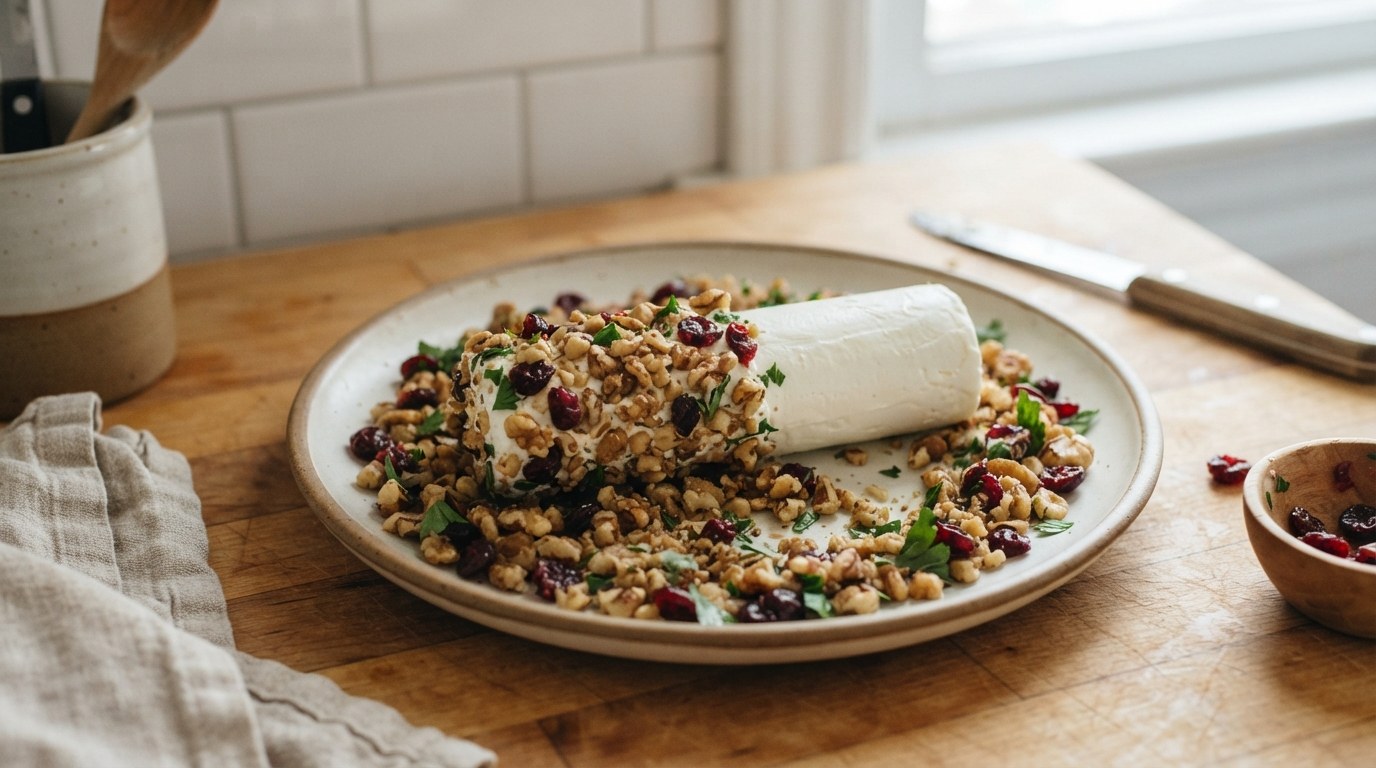
Spread the walnuts on a plate with the remaining chopped cranberries and the parsley, unwrap the cold log, and roll it firmly through the mixture, pressing the coating on with your hands and patching the ends. Then wrap it again and chill until serving. The coating goes on the day you serve, not days ahead, because nuts are porous and pull moisture from the cheese they sit against, and a walnut that has spent three days pressed into cream cheese is a soft walnut. The bare log keeps far longer than the coated one, which is what makes this a true make-ahead appetizer. The fresh cranberries in the cranberry dip come from the same fall harvest, mid-September to late October by the Cape Cod growers' association's calendar, that the dried ones on this log started as.
| Stage | Number | What you see |
|---|---|---|
| Soften the cheeses | 1 hour on the counter | Cream cheese gives to a fingertip |
| Toast the walnuts | 350°F, 8 to 10 minutes | Fragrant, a shade darker; cool completely |
| Shape and chill | At least 1 hour, refrigerated | Log firm enough to hold its shape unwrapped |
| Coat | The day of serving | Walnuts pressed on, still crisp |
| Temper before serving | 20 to 30 minutes on the counter | Slices cleanly, spreads on a cracker |
Serving, Make-Ahead and Variations
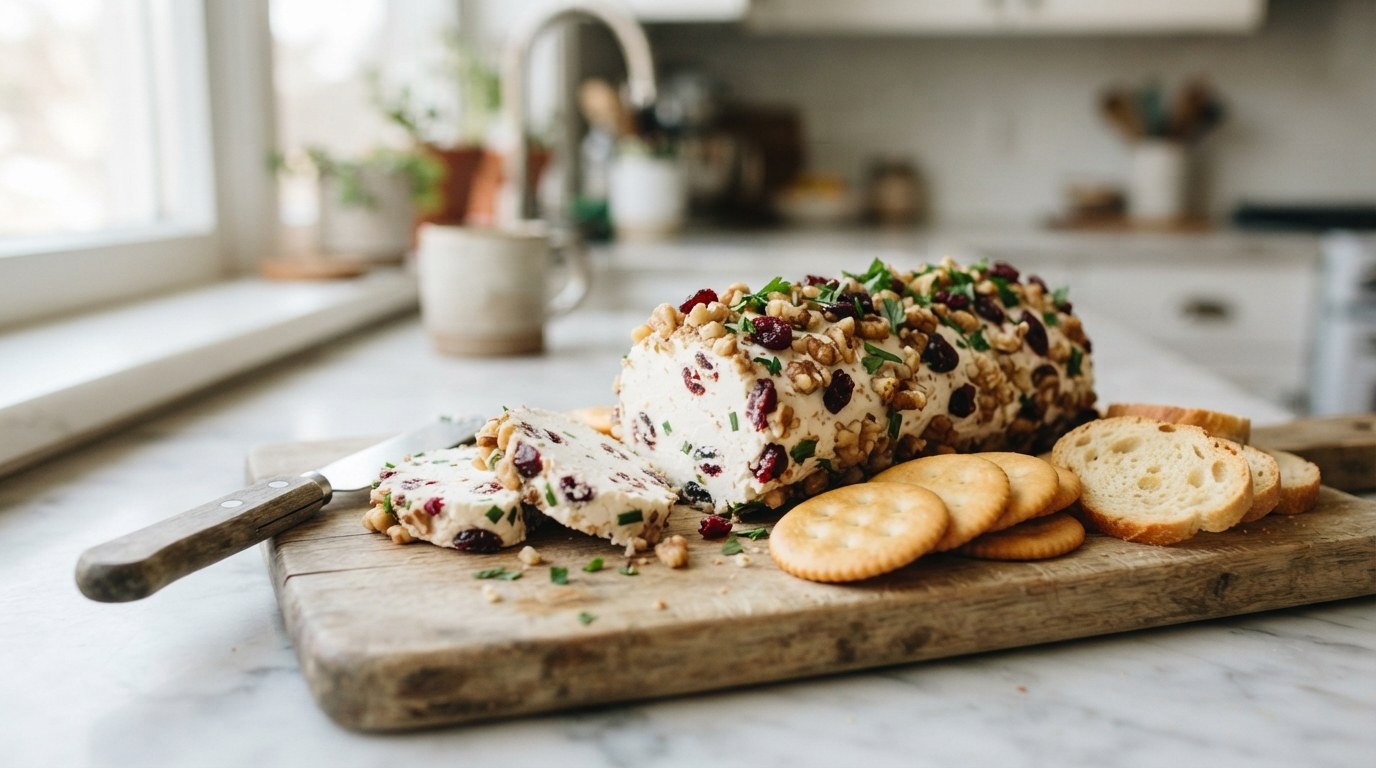
Take the log out of the refrigerator 20 to 30 minutes before serving. Straight from the cold it is firm enough to slice but too stiff to spread, and cold blunts flavor; a little tempering brings the cheddar and orange forward and lets a slice give under a cracker. Serve it on a board with buttery round crackers, toasted baguette, and apple or pear slices, with a small knife beside it. A log this size serves 12 as one of several appetizers. It should not sit out longer than 2 hours; put it back in the refrigerator between rounds.
Advertisement
Make-ahead: the uncoated log, wrapped tight, keeps 5 days in the refrigerator; coat it the day you serve. It freezes uncoated for a month, thawed overnight in the refrigerator, though the texture is a little crumblier after freezing. Variations that hold up: pistachios in place of walnuts for a brighter green; a tablespoon of honey beaten into the cheese for a sweeter log; crumbled cooked bacon in the coating; or the savory turn, with blue cheese in place of the goat cheese and pecans outside. Beside the Boursin stuffed mushrooms and the Ramsay-style appetizers, it is the cold anchor of a holiday table.
Cranberry Walnut Cheese Log
Ingredients
- For the log
- 8 oz full-fat block cream cheese, softened
- 4 oz sharp white cheddar, shredded from a block (about 1 cup)
- 4 oz goat cheese, softened
- ½ cup dried cranberries, chopped
- 2 Tbsp snipped chives
- 1 tsp finely grated orange zest
- ¼ tsp fine sea salt
- 1 pinch cayenne pepper
- For the coating
- ¾ cup walnuts
- ¼ cup dried cranberries, chopped
- 2 Tbsp chopped flat-leaf parsley
- To serve
- Buttery round crackers, toasted baguette slices, apple or pear slices
Instructions
- Toast the walnuts: spread them on a sheet pan and bake at 350°F (175°C) for 8 to 10 minutes, stirring once, until fragrant and a shade darker. Cool completely, then chop medium.
- Beat the cream cheese, cheddar and goat cheese together until smooth. Stir in the ½ cup chopped cranberries, chives, orange zest, salt and cayenne just until mixed. Taste for salt.
- Scrape the mixture onto a sheet of plastic wrap, fold the wrap over, and roll on the counter into a log about 8 inches long and 2 inches across. Twist the ends tight. Refrigerate at least 1 hour, until firm (up to 5 days).
- On the day of serving, mix the walnuts, ¼ cup cranberries and parsley on a plate. Unwrap the cold log and roll it firmly in the coating, pressing it on and patching the ends. Rewrap and chill until 20 to 30 minutes before serving.
- Let stand at room temperature 20 to 30 minutes, then serve on a board with crackers, baguette and fruit.
Notes
Advertisement
Cranberry Walnut Cheese Log FAQs
The questions that come up most: how far ahead it can be made, why it would not hold its shape, whether it can be frozen, what to serve it with, whether pre-shredded cheese works, how to keep the walnuts crunchy, how long it can sit out, and how to make it without goat cheese.
How far ahead can I make a cheese log?
The shaped, uncoated log keeps 5 days wrapped in the refrigerator, and the flavor improves after a day. Roll it in the toasted walnuts and cranberries the day you serve so the nuts stay crisp, then chill until 20 to 30 minutes before it goes on the board.
Why won't my cheese log hold its shape?
It was coated or sliced too soft. Cream cheese is a fat-bound emulsion that firms in the cold and softens warm, so the log needs at least an hour in the refrigerator after shaping before it is rolled, and it should go back in the cold after coating. Whipped or low-fat cream cheese never firms enough; use a full-fat block.
Can you freeze a cheese log?
Yes, uncoated, wrapped tightly, for up to a month; thaw overnight in the refrigerator and coat before serving. The texture is slightly crumblier after freezing, since the emulsion loosens as ice crystals form and melt, so a fresh log is better for a party.
What do you serve with a cheese log?
Buttery round crackers, toasted baguette slices, water crackers, and sliced apple or pear, with a small spreading knife. Firm crackers work better than thin ones because a slice of the log is heavy. Plan on one 8-inch log for 12 people as one of several appetizers.
Can I use pre-shredded cheddar?
It works but the log turns grainy. Bagged shredded cheese is coated with starch or cellulose to stop the shreds clumping, and that powder does not dissolve into cream cheese. Shredding 4 ounces from a block on a box grater takes a minute and gives a smooth log.
How do I keep the walnut coating crunchy?
Toast the walnuts, cool them completely, and press them on the day you serve. Nuts pull moisture from the cheese they touch, so a log coated days ahead has soft walnuts. Store opened walnuts in the refrigerator or freezer; stale ones smell like paint thinner.
How long can a cheese log sit out?
Two hours at most, like any soft cheese. Take it out 20 to 30 minutes before serving so it spreads and the flavor comes forward, and return it to the refrigerator between rounds at a long party.
Can I make it without goat cheese?
Yes. Use 4 ounces of crumbled feta for a saltier tang, or replace it with another 4 ounces of sharp cheddar for a milder, richer log and add a teaspoon of lemon juice to keep some brightness. The goat cheese is there to cut the richness against the sweet cranberries.

About the Author
John Siracusa is the founder of Hell’s Kitchen Recipes. He focuses on technique-first, reproducible home cooking and researches recipes & kitchen equipment from published food science and professional chef methods since 2016.